The One Hydrangea Job To Do Before The First Hard Freeze
Plants can struggle with drought in the middle of a snowy winter. Frozen ground locks water away from roots, while dry winds keep pulling moisture from stems and buds.
I learned this the hard way one spring. My bigleaf shrubs leafed out from the base, but the flower buds up top had dried to brown crumbs.
Turns out the fix was simple and almost free. One task in late fall gives roots a full tank before the soil turns to stone.
You might already own everything you need for it. Most gardeners skip it anyway, and their plants pay the price in spring.
Those Hydrangea Roots Need One Last Big Drink
A deep, slow watering before the ground freezes is the job that matters most. It sounds too simple, yet it protects roots, stems, and next year’s flower buds all at once.
Hydrangeas are thirsty shrubs. Their name even comes from Greek words that roughly mean water vessel, which fits their big appetite for moisture. That need does not switch off when the leaves drop.
Winter brings a sneaky problem called desiccation. Cold, dry wind pulls water out of stems and buds, but frozen soil keeps roots from replacing it.
Extension experts in cold regions often point to dry winter conditions as a reason woody plants struggle by spring.
A plant that goes into winter well hydrated has more moisture stored in its tissues. Moist soil also holds heat better than dry soil, so roots get a little extra buffer from the cold.
Think of it as packing a water bottle before a long hike. Your hydrangea cannot ask for a refill in January, so you give it one now.
The rest of the season’s chores help, too. Still, this single soak is the one I would never want you to skip.
Timing Your Hydrangea Soak Before The Soil Locks Up
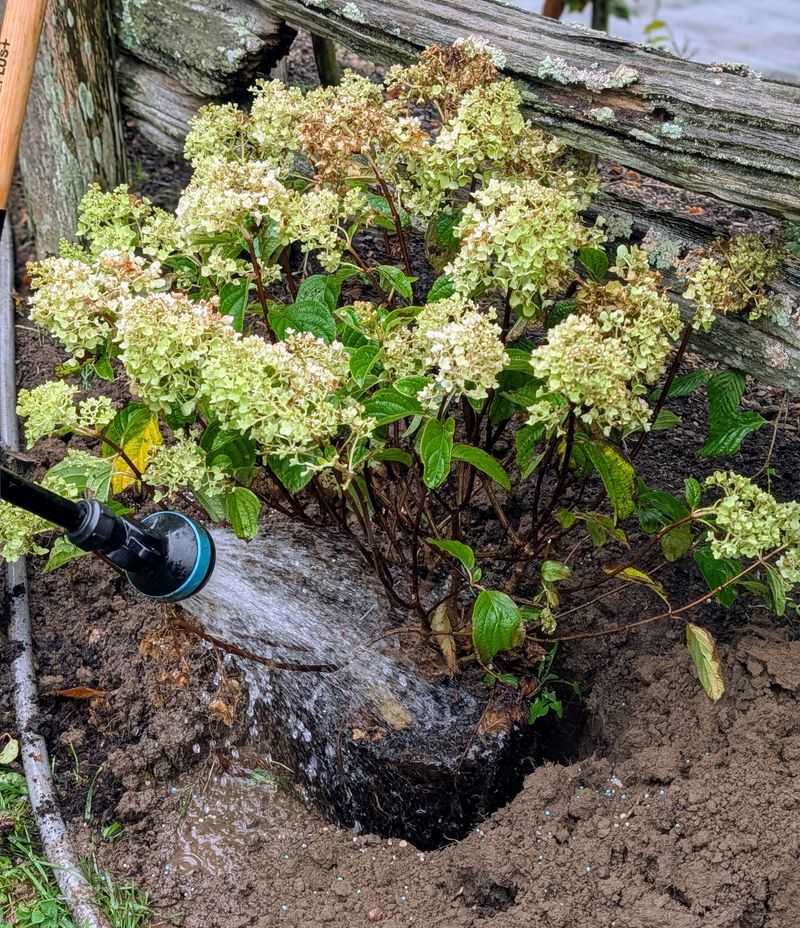
Late fall is your window, usually the weeks before the ground freezes solid. In many cold-winter regions, that often falls between late fall and early winter, depending on where you live.
Watch the weather more than the calendar. A dry autumn makes this job extra urgent, because the soil may be parched even after the leaves look fine.
Here is a quick check I use. Push a finger or a trowel two to three inches into the soil near the shrub. If it feels dry and crumbly, your plant needs a drink.
Water on a mild day when temperatures sit above freezing. Morning works best, since water has time to sink in before night chills arrive.
Northern and higher-elevation spots often freeze earlier than nearby river valleys. Your neighbor across the region may be a few weeks ahead or behind you.
If autumn rains have been steady, you may only need one final soak. During a dry spell, give your shrubs a deep watering every week or so until the ground firms up. Once the soil freezes hard, stop. Water will just pool or run off.
A Slow Hose Beats A Quick Sprinkle Every Time
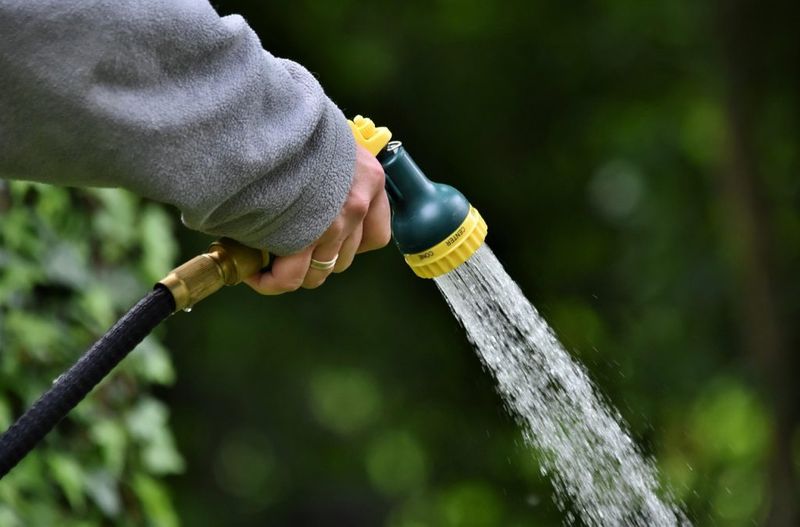
Quick splashes from a watering can feel helpful. Sadly, most of that water stays in the top inch of soil, far from where the roots really live.
Slow and deep is the goal. Lay a hose at the base of the shrub and let it trickle for 20 to 30 minutes, or wrap a soaker hose around the root zone.
Aim to wet the soil about 6 to 12 inches down. Many extension guides suggest roughly an inch of water for established shrubs, and a bit more for large ones.
Spread the water out instead of dumping it in one spot. Roots reach well beyond the stems, often out to the edge of the branches.
Skip the overhead sprinkler for this job. Wet leaves and stems late in the season do not help, and much of the spray drifts away.
Check your work an hour later. Dig a small test hole with a trowel and feel the soil. It should be damp and cool, not soupy.
Heavy clay soil drains slowly, so water in two shorter rounds. Sandy soil drains fast, so you may need a second soak a few days later.
Too Much Water Around Hydrangeas Can Harm Them
Soggy is not the same as hydrated. Roots need air as well as water, and a flooded bed can leave them gasping.
Hydrangeas like moist, well-drained soil. When water sits for days, roots can rot, and rot often shows up as weak growth next spring. Wilting despite wet soil and a musty smell near the base are early warning signs.
So how do you know when enough is enough? Stop once the soil is evenly damp several inches down and water starts to pool on the surface.
Low spots in the yard deserve extra caution. If puddles linger after rain, that shrub probably does not need any help from your hose.
Containers are a different story. Potted hydrangeas dry out faster in fall wind, yet their drainage holes can freeze shut later.
Water them well, then move pots to an unheated garage or a sheltered wall once nights turn bitter.
One more tip from my own mistakes. Do not keep watering on a schedule if Mother Nature already did the job.
A rain gauge costs a few dollars and takes the guessing out of it. One inch of rain in a week usually means you can take that week off. Give your hydrangeas a drink, not a swim.
Shredded Leaf Mulch Keeps That Moisture Locked In
Fresh mulch is the best partner for your watering job. It acts like a lid on a pot, holding moisture where roots can reach it.
Wait until after your deep soak, then spread mulch over damp soil. Shredded leaves, pine straw, or bark chips all work well.
A layer of 2 to 4 inches covers most gardens nicely. In colder regions, some gardeners pile a little more around tender bigleaf types after the ground starts to freeze.
Keep the mulch a few inches away from the stems. Mulch piled against bark traps moisture and invites rot, mice, and other trouble.
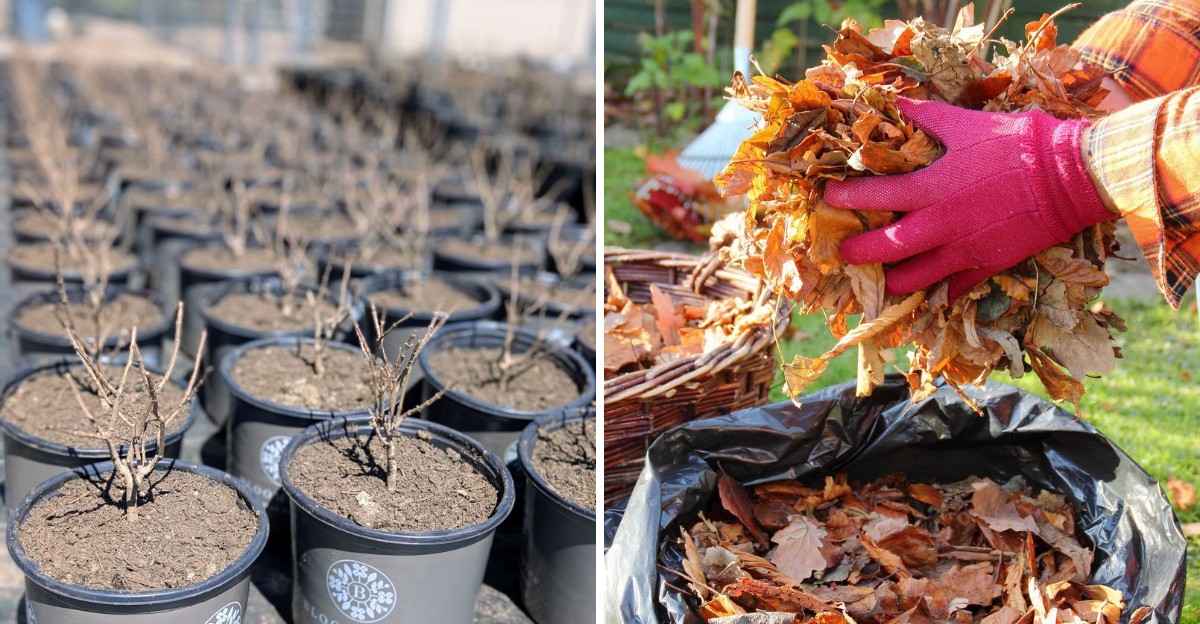
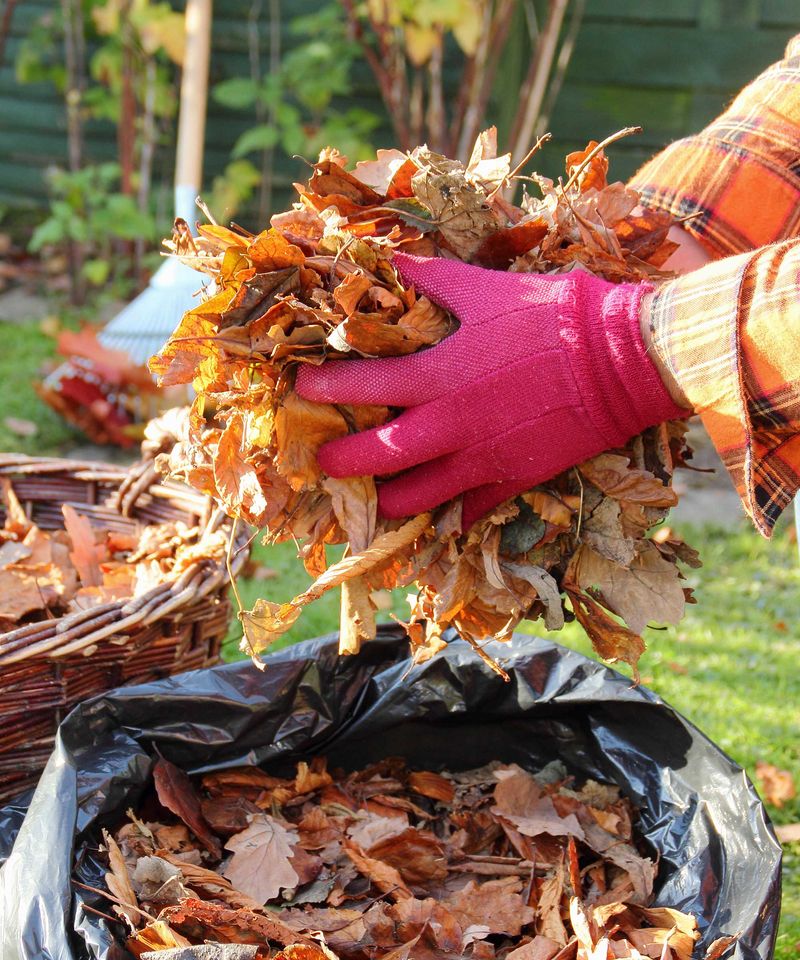
Fallen leaves from your own yard are free gold. Run them over with a mower first, because whole leaves can mat down into a soggy layer that blocks air.
Mulch also slows the freeze and thaw cycles that heave shallow roots. Those swings are common in many winters, when a warm spell can follow a deep cold snap.
By spring, part of that mulch has broken down into the soil. You get better soil structure as a bonus, and your hydrangeas get a softer start.
Put Down The Pruners On Bigleaf Hydrangeas
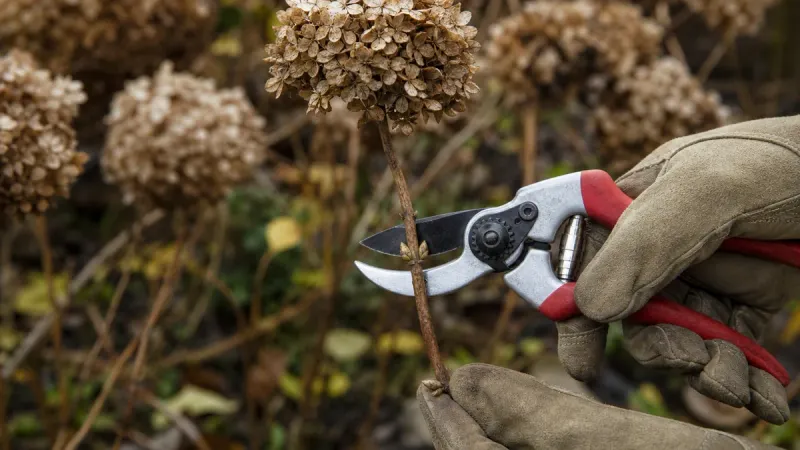
Fall tidying can quietly erase next summer’s flowers. Bigleaf hydrangeas, the classic blue and pink mopheads, usually set their flower buds on old wood in late summer.
Cut those stems now, and the buds go straight into the yard waste bin. Oakleaf and mountain hydrangeas work the same way, so they deserve the same restraint.
Panicle and smooth hydrangeas are more forgiving. Types like Limelight and Annabelle bloom on new wood, so you can trim them in late winter or early spring instead.
Not sure what you have? Look at the leaves and flowers. Big glossy leaves with round or lacecap blooms usually mean bigleaf, while cone-shaped flowers point to panicle.
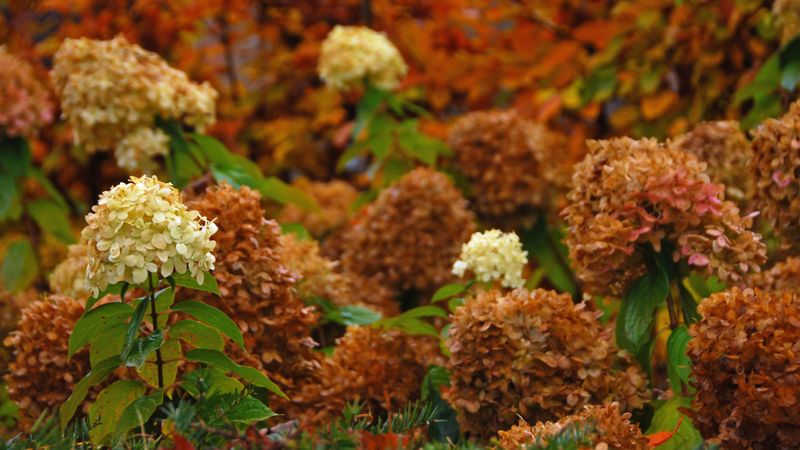
Those dry flower heads have a purpose, too. Many gardeners leave them on because they look lovely dusted with frost, and they may offer a little shelter to the buds below.
Fun detail: the color of bigleaf blooms depends on soil chemistry. Acidic soil tends to turn them blue, while alkaline soil leans pink.
Remove only clearly broken or diseased stems this time of year. Save the real shaping for spring, after you can see which buds made it through the winter. Patience now means far more blooms later.
Skip Fall Fertilizer And Let Your Hydrangeas Rest
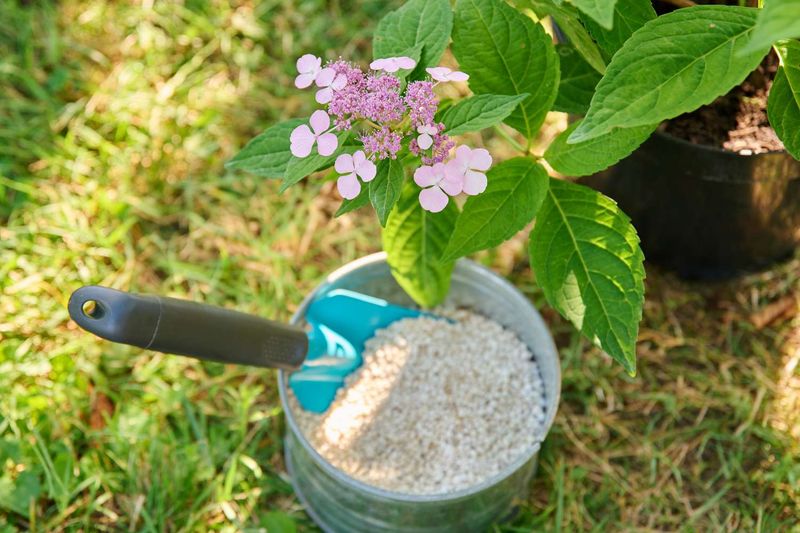
Feeding a shrub in late fall sends mixed signals. Extra nitrogen can push soft new growth that has no time to toughen up before hard freezes arrive.
Most guides suggest stopping fertilizer by late summer, often around August or early September. After that, let your hydrangeas slow down and harden off on their own.
Spring is the better feeding time. Once new leaves appear, a light dose of balanced, slow-release fertilizer gives roots a steady meal for the season ahead.
So what does your fall checklist really look like? Water deeply before the ground freezes, mulch afterward, and keep the pruners on the hook for bigleaf types.
A soil test through your county extension office can save you money. It tells you what your soil already has, so you only add what is missing.
Jot down the date of your final soak this year. Next fall, you will have a handy reminder and a way to compare how the plants bounced back.
Small habits like these add up quickly. Come summer, those full, bright blooms will tell you the extra fall effort paid off.