Those Long Wispy Legs On Your Minnesota Basement Ceiling Belong To A Surprising Predator
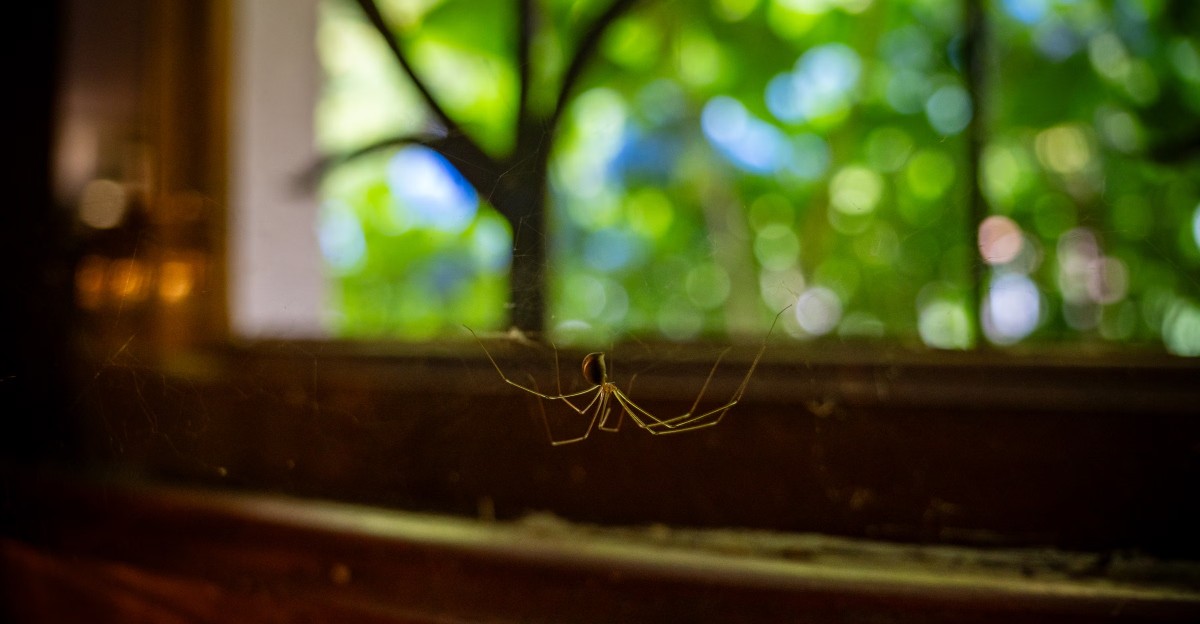
Some of the spindly creatures dangling from basement ceilings will sneak into another spider’s web, twitch the silk like trapped prey, and then eat the owner who comes to check.
I learned that fact while hunting for seed trays in my own basement. I stopped mid-reach and stared at the tiny, see-through body above my head for a long time.
You might notice these residents most in quiet corners near the furnace, the laundry sink, or old canning shelves.
Here in Minnesota, our long winters push plenty of small insects indoors, and that steady supply keeps these hunters well fed. Their loose, tangled webs look careless, yet they work better than you would expect.
So who is this fragile-looking tenant, and should it stay or go? The answer surprised me more than any Minnesota garden pest has in years.
That Pale Long-Legged Spider Hanging Upside Down Has a Secret Job
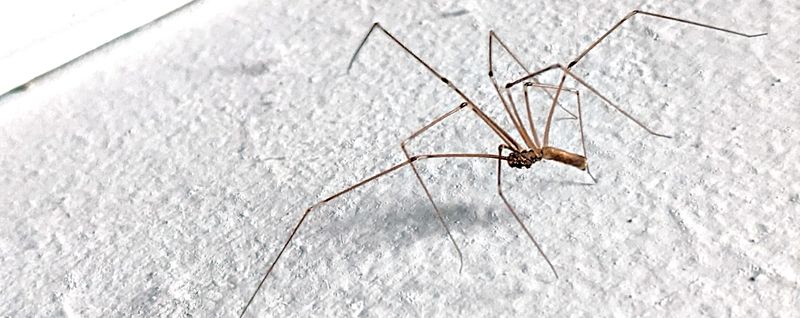
Hanging belly-up like a tiny acrobat, the creature on your basement ceiling looks more like a puff of lint than a hunter. Most folks glance up, shrug, and grab the broom.
I used to do the same thing. Then I started watching one near my seed-starting shelf, and I noticed how still it stayed for hours, waiting with its legs spread wide across a messy web.
The web itself is the first clue that something interesting is going on. It has no neat spiral and no tidy pattern.
Instead, it looks like a loose tangle of threads stretched between joists, pipes, and window frames.
That tangle is not laziness. It works like a trap of crossing lines that slows down anything wandering through.
Small insects bumble in, get confused, and stay stuck long enough for the owner to arrive.
You will often find several of these webs in one basement, especially in damp, dim, quiet spots. Corners near floor drains, sump pits, and unused storage areas are favorite hangouts.
So that ghostly little figure is not just decorating the ceiling. It has a real job in your home, and its methods are stranger than most people would guess. The identity comes next.
Meet the Cellar Spider, Not the Garden Harvestman
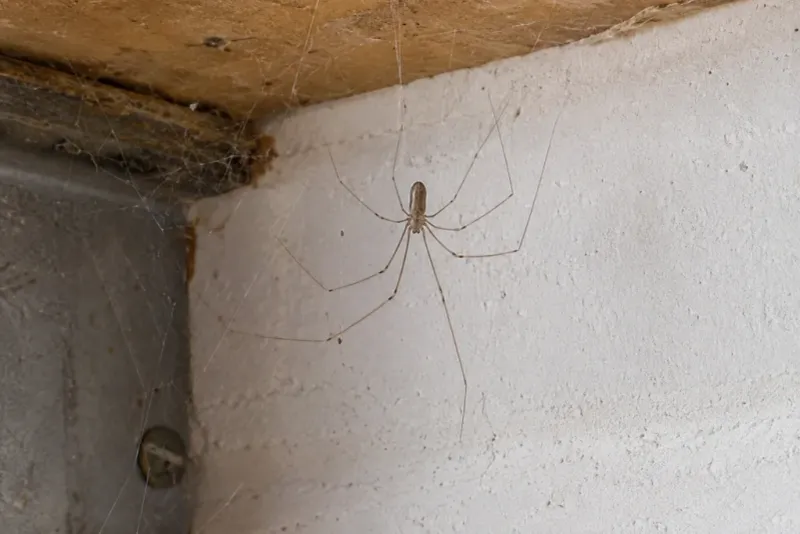
Ask five people what that spindly thing is and at least three will say daddy longlegs. They are partly right, which is exactly why it gets confusing.
Your basement guest is a cellar spider, often the long-bodied cellar spider, Pholcus phalangioides. Its body is usually less than a third of an inch long, but its legs can stretch close to two inches across.
The color runs from pale tan to grayish, and the body often looks almost see-through. The name daddy longlegs also gets tossed at two other critters. Harvestmen, which you see in the garden, have one round, fused body and no silk.
They are relatives of spiders but not true spiders at all. Crane flies earn the nickname too. They are flying insects with two wings and look like giant mosquitoes, though they do not bite people.
A quick way to tell them apart is location and webs. If it lives indoors, hangs in silk, and has a two-part body with a tiny head end and a slightly longer abdomen, you are looking at a cellar spider.
Getting the name right matters, because each one behaves differently and needs different handling.
Those Thin Spider Legs Wrap Prey Faster Than You Can Blink
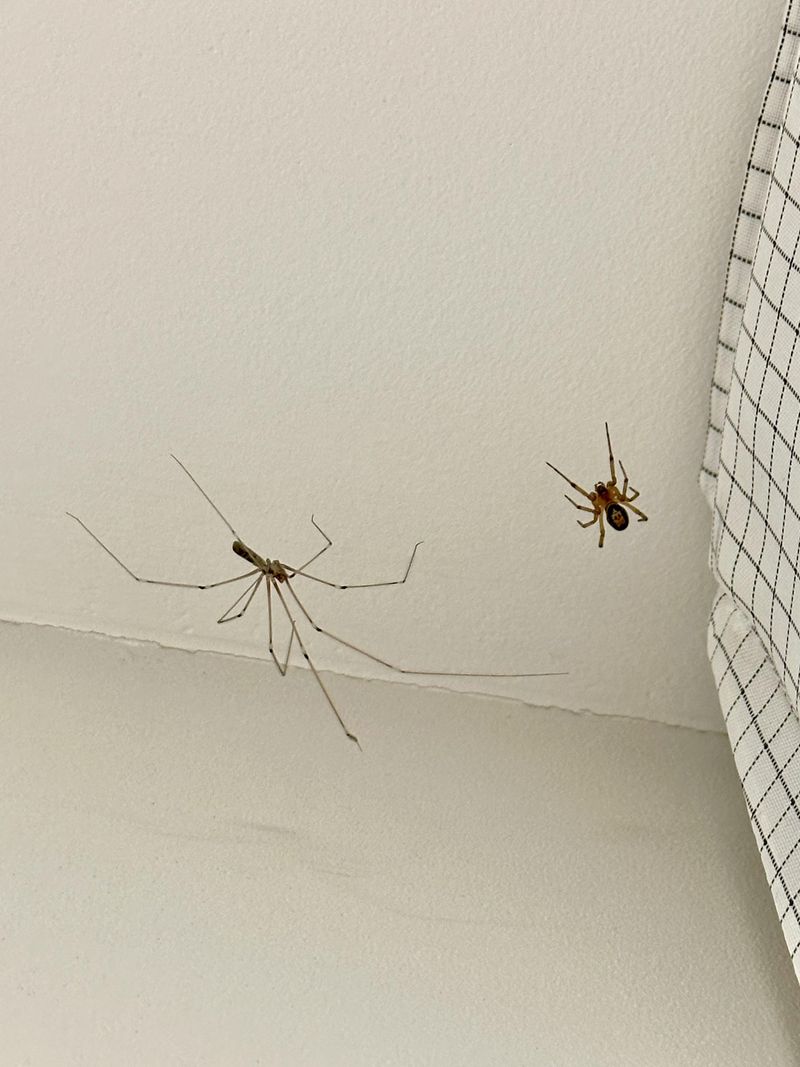
Watch closely when a gnat blunders into one of these tangled webs. The spider moves from stillness to full speed in a heartbeat, and the show is worth a few minutes of your time.
Cellar spider silk is not especially sticky. The web catches prey mostly by tangling it, like a ball of loose thread snagging a passing sock.
Once something gets caught, the spider rushes over and keeps its distance. Those long legs let it fling silk onto the struggling insect from a safe reach, rolling and wrapping it quickly.
After the prey is secured, the spider bites and injects venom to subdue it. Then it settles in for a meal, sometimes for quite a while.
I find this part fascinating because the long legs act like built-in tongs. The spider stays clear of kicking legs, stinging tails, or snapping jaws.
One more quirky trick deserves a mention. When disturbed, many cellar spiders shake their bodies and webs so fast they turn into a blur.
Scientists think this whirling helps them avoid being grabbed by predators. Give your web a gentle tap and you may see the dance yourself.
Other Basement Spiders Are on the Cellar Spider Menu
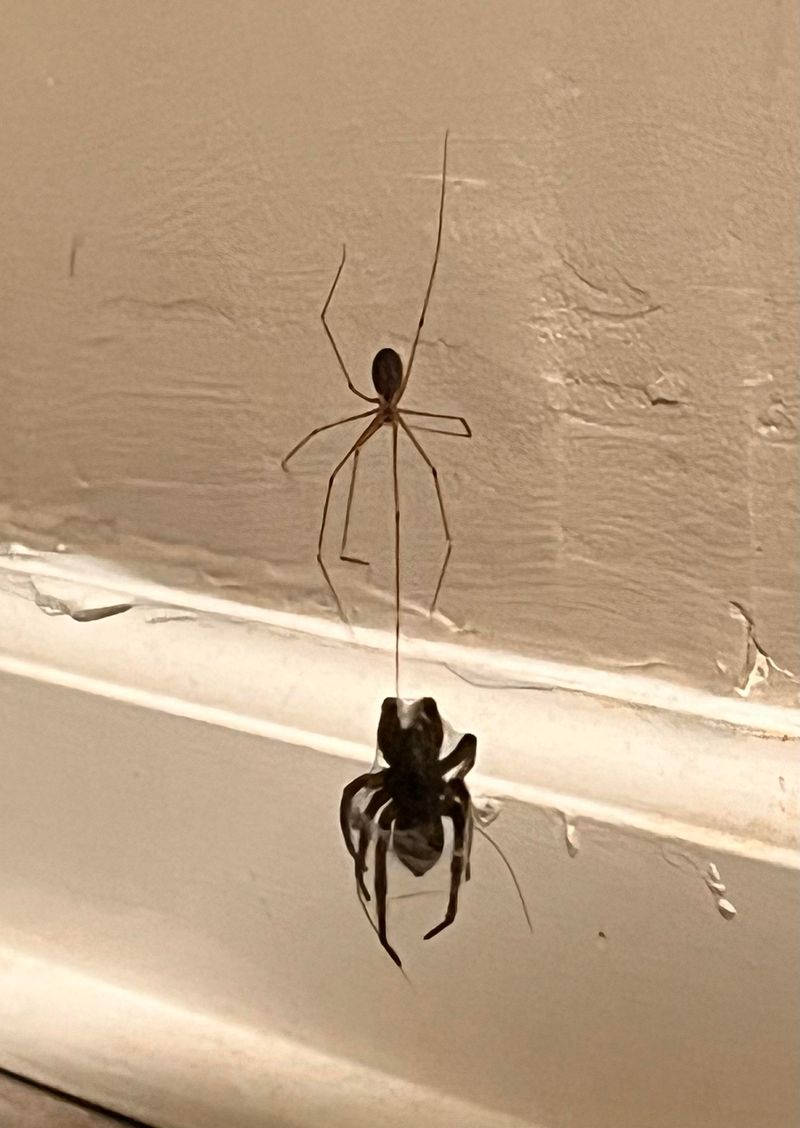
Spider eats spider, and that is the real surprise hiding on your ceiling. This is the twist that turned me from a broom-swinger into a fan.
Cellar spiders happily eat flies, mosquitoes, gnats, small moths, and other insects. But researchers have also documented them hunting other spiders, including house spiders that are bigger and bulkier than they are.
Their method is sneaky. A cellar spider may creep into another spider’s web and pluck the threads to mimic a trapped insect.
When the curious owner comes out to investigate, the visitor strikes. Those long legs help here too. The cellar spider can wrap its target in silk while staying out of biting range.
There are reports of them taking on widow spiders as well. Widows are not common indoors in most of Minnesota, so do not expect a basement showdown, but the ability is impressive.
They are not picky about family either. When food runs short, cellar spiders will eat each other.
For a gardener, this is a familiar idea. A good predator keeps other populations in check, whether it is a lady beetle in the tomatoes or a wispy hunter above the furnace.
The Famous Venom Myth Falls Apart Under a Microscope
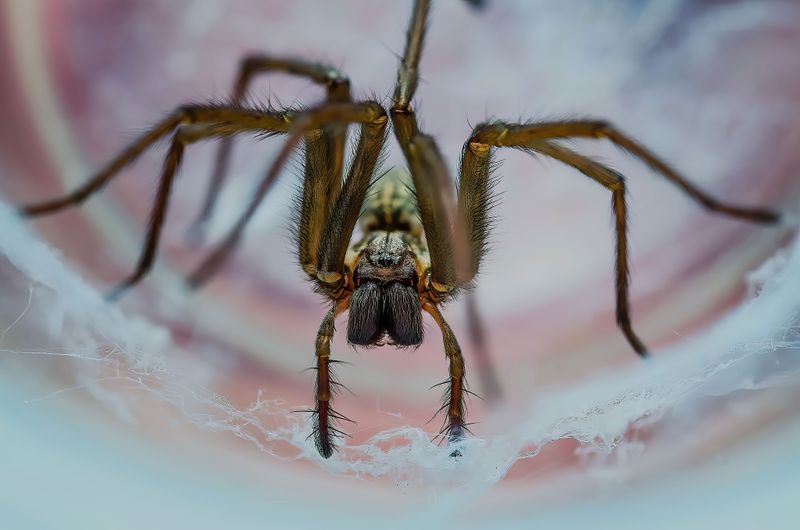
Almost everyone has heard the playground tale. Daddy longlegs supposedly carry the strongest venom in the world, but their fangs are too short to bite people.
It makes a great story around a campfire. Sadly for drama fans, it does not hold up. Cellar spiders do have fangs and venom glands, as nearly all spiders do. Their venom is made for small insects, and no study has shown it to be a serious risk to people.
A well-known episode of the TV show MythBusters even tested the bite, and the host reported only a brief, mild sting.
Bites are rare anyway. These spiders prefer to shake, drop, or retreat rather than confront a giant hand.
Harvestmen, the garden version of daddy longlegs, have no venom glands at all. So neither critter fits the legend.
If you ever do get nipped, wash the spot with soap and water. Watch for redness or swelling, and contact a doctor if anything seems unusual or you have allergy concerns.
Knowing the truth makes basement trips a lot calmer. You can admire these hunters without worrying that a monster is waiting overhead.
Damp Minnesota Basements Make a Cozy Spider Hotel
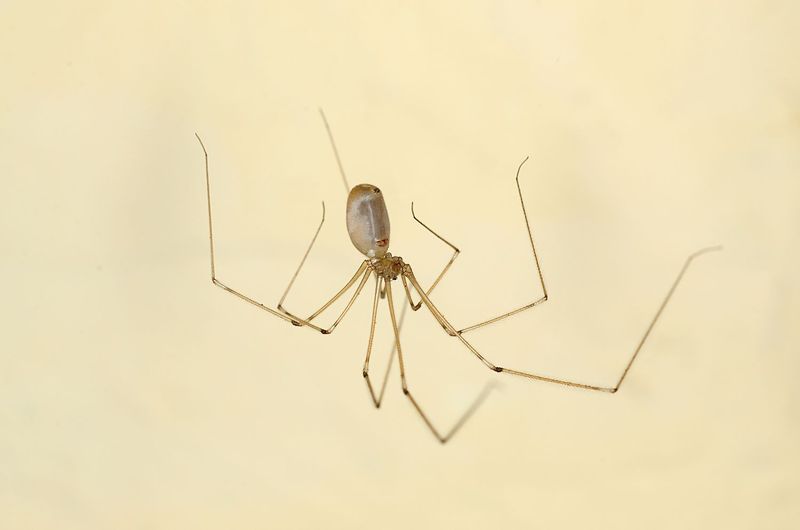
Cool, quiet, and a little humid, the average basement checks every box on a cellar spider’s wish list. No wonder they move in and stay for years.
These spiders like sheltered, undisturbed spaces with steady temperatures. Basements, crawl spaces, garages, and storage rooms fit that description well.
Here in Minnesota, outdoor insects slip indoors through gaps around windows, doors, and foundation cracks. A heated basement keeps them active through the cold months, and that gives the spiders a reliable snack bar.
Cellar spiders can live a long time for spiders, often two years or more. Females carry their round egg sacs in their jaws until the babies hatch, so you might spot one hauling a little bundle around.
Moisture matters too. Damp areas attract springtails, fungus gnats, and other small prey, which in turn attract the hunters.
Spotting lots of webs can be a helpful clue. A big spider population often means a healthy supply of insects is getting inside.
I treat a busy corner as a signal to check for leaks, standing water, or gaps. Fixing those helps your house and your stored garden supplies, and the spiders naturally thin out as food shrinks.
A Broom, a Caulk Gun, and a Little Patience Keep Cellar Spiders in Balance
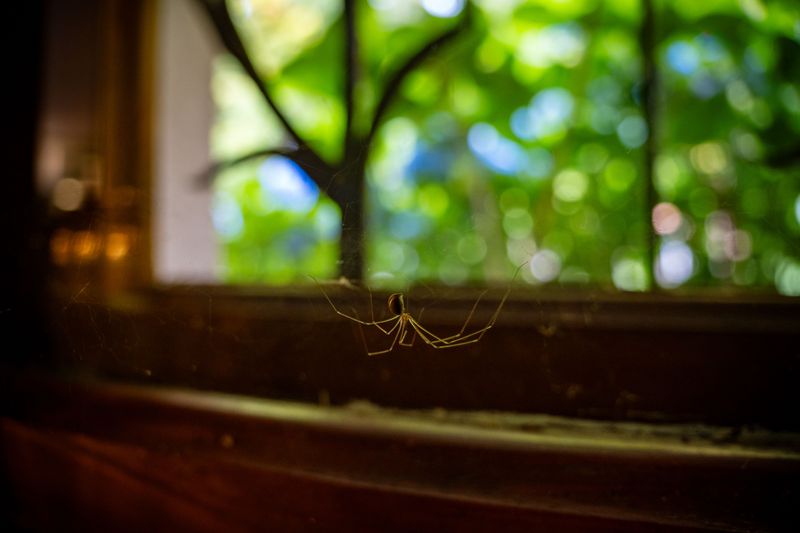
Peace with your eight-legged roommates is easier than you might expect. You do not need sprays or a pest company for these harmless hunters.
University of Minnesota Extension notes that spiders are helpful because they eat so many insects. Cellar spiders do not damage wood, chew wires, or spread disease, so the main issue is cobwebs.
If the webs bother you, sweep or vacuum them away. A vacuum with a long wand handles high corners and also picks up egg sacs.
Want fewer spiders overall? Cut down on their food supply instead of chasing them one by one.
Seal gaps around windows, pipes, and doors with caulk or weatherstripping. Repair torn screens, and run a dehumidifier to dry out damp corners.
Clearing clutter helps too. Cardboard boxes and piles of old pots create perfect hiding spots.
Outdoor lights near basement windows draw night-flying insects, so try yellow bulbs or switch lights off when not needed.
My approach is simple. I leave a few spiders in quiet corners where they work for free, and I clear webs where I spend time. That balance keeps the basement tidy and the bug count low.