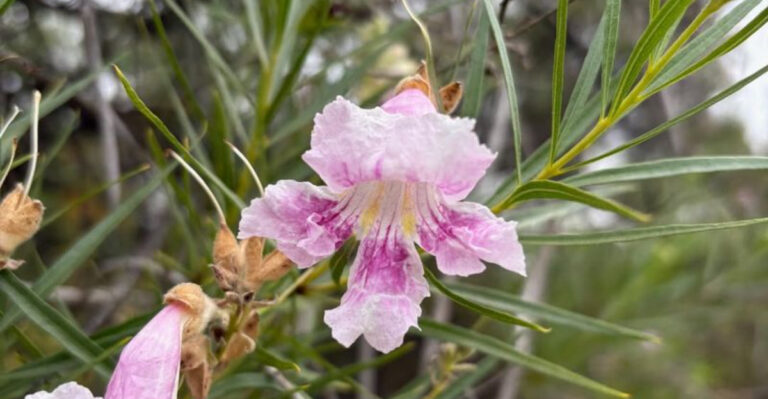
9 Fast-Spreading Perennials That Won’t Take Over Your Arizona Yard
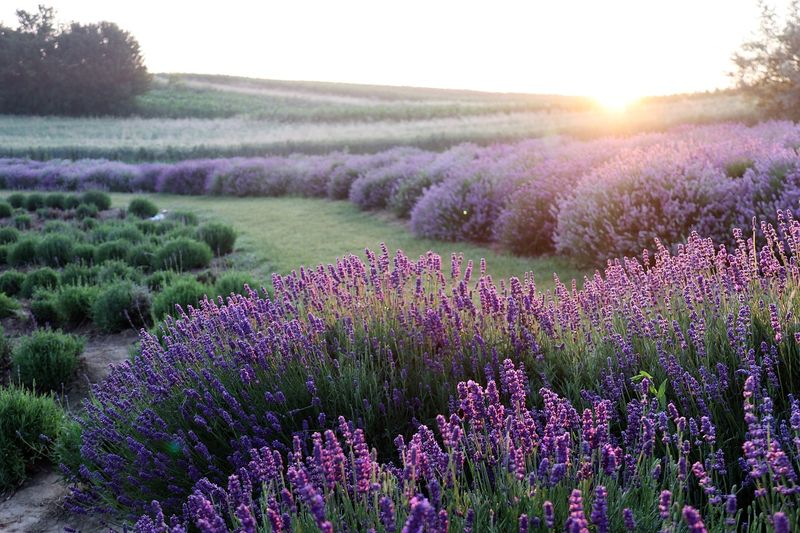
One tiny native groundcover in the desert feeds hungry buckeye caterpillars and still shrugs off summer heat above 110 degrees. That combination stopped me in my tracks, because most tough plants I know offer little to local wildlife.
Fast spreaders usually earn a bad reputation in Arizona yards, mostly because a few aggressive types refuse to stay put. Plenty of well-behaved perennials fill bare ground quickly, then politely stop where you want them to stop.
I love how the right spreaders shade hot soil and pull in busy bees and butterflies all season. You also skip the endless weekend battles with runners creeping under fences and into your neighbor’s gravel.
October happens to be prime planting time across much of Arizona, since roots settle in before next summer. So which nine plants actually spread fast but still know their limits in a desert garden?
1. Goodding’s Verbena
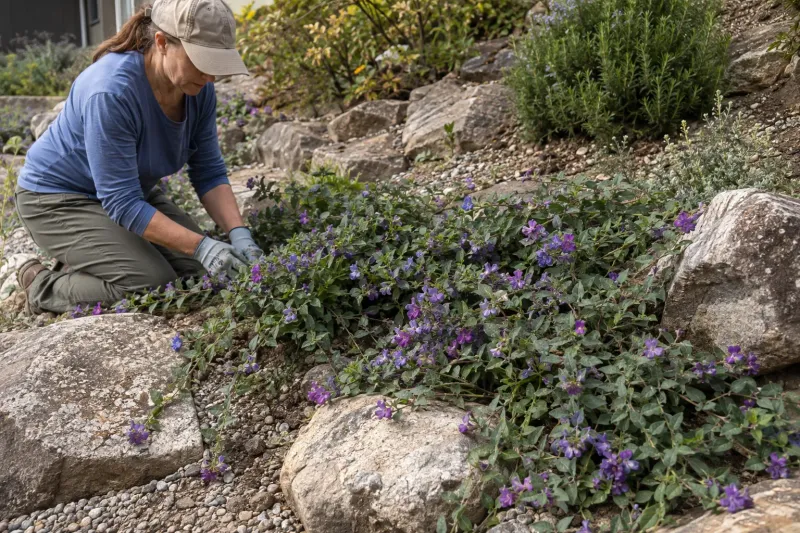
Lilac flower clusters smelling faintly sweet tend to pop up wherever this scrappy native finds a sunny patch of ground. I like how it softens hard gravel edges with fuzzy leaves that look almost silvery green in morning light.
Each plant usually stays six to twelve inches tall but can sprawl about three feet wide in one season. Blooms often run from spring well into fall, especially when you offer a little extra water during long dry spells.
Individual plants are fairly short-lived, often lasting around three years before they fade and need replacing by their own seedlings. That reseeding habit keeps the patch going, yet stray volunteers pull out easily with two fingers and little effort.
Butterflies and native bees visit the flowers constantly, and hummingbirds stop by for quick sips on warm afternoons. Rabbits may nibble young transplants, so a simple wire cage helps until the roots settle and stems toughen up.
October planting gives this verbena cool months to build roots before next summer’s heat rolls back into the valley. Personally, I tuck it near boulders, where the reflected warmth seems to encourage even more of those cheerful blossoms.
2. Frogfruit
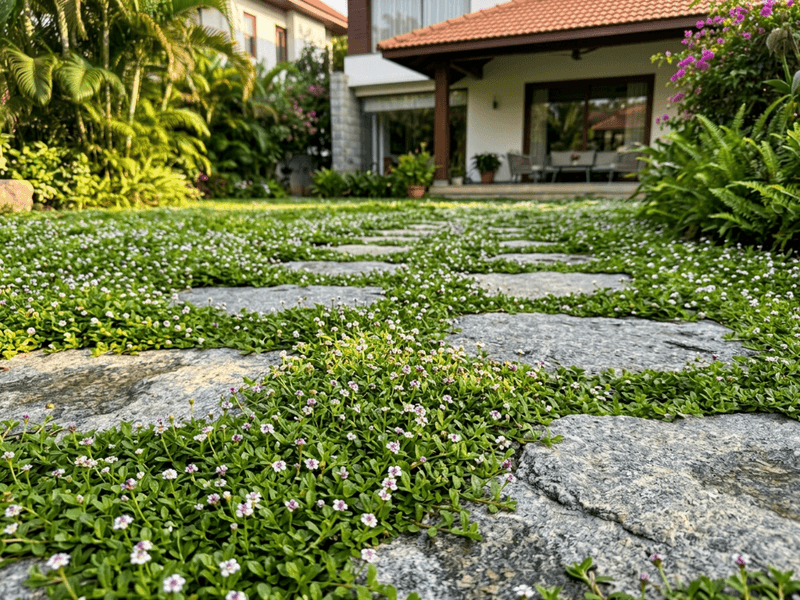
Few groundcovers can take a stroll from your sandals and still bloom the next morning without any sulking at all. Frogfruit handles light foot traffic, so it fits nicely between stepping stones where tender plants would quickly get flattened.
It stays around six inches tall and spreads by runners that root as they go across bare soil. Tiny white to purple button flowers appear for much of the year, especially when winters stay mild and frost-free.
What surprises me most is how well it handles alkaline soil and heat above 110 degrees once established. Runners and occasional seedlings can wander, but a quick tug or edge trim keeps them right where you want.
Buckeye butterflies use frogfruit as a host plant, laying eggs so their caterpillars can munch the leaves safely. You might notice those eyespot-covered wings fluttering low over the mat during warm days, which feels like a small reward.
Planting from October into early November lets roots grab hold before the hottest stretch of next year arrives. Water regularly the first few months, then ease back as the mat thickens and starts shading the ground.
3. Blackfoot Daisy
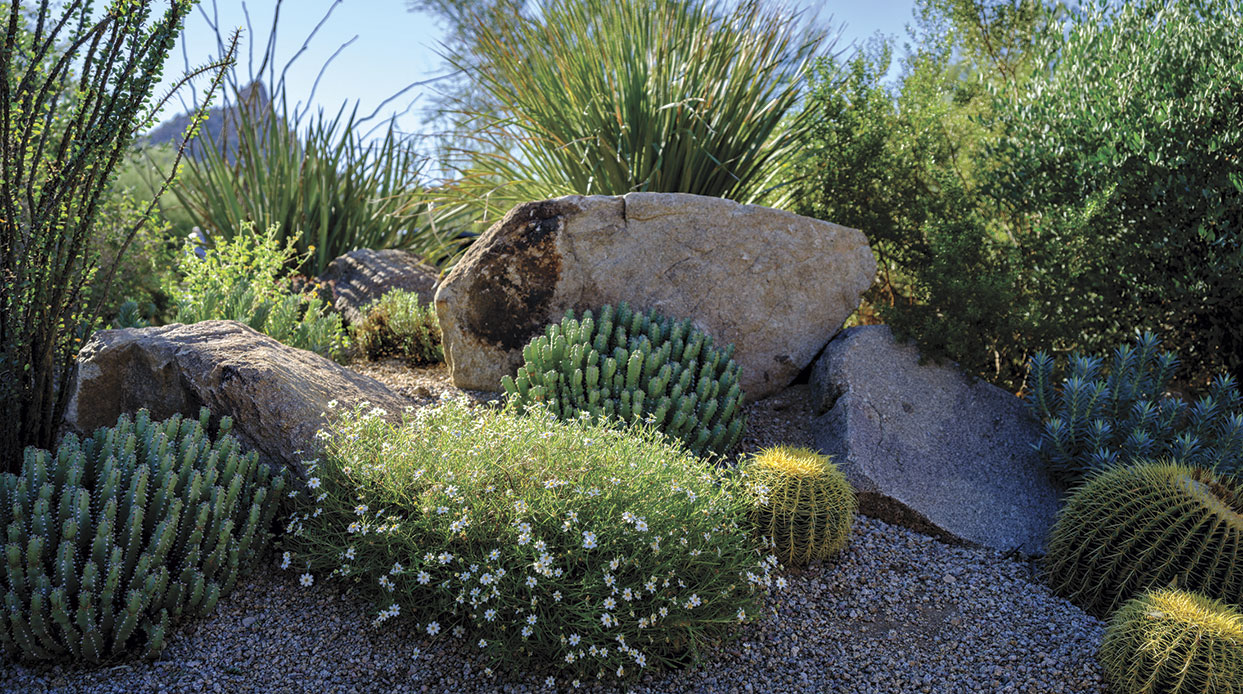
Sniff a blackfoot daisy on a warm afternoon and catch a soft honey scent drifting off tiny white petals. Those cheerful flowers with butter-yellow centers cover tidy mounds from spring into late fall in many desert gardens.
Plants usually reach six to twelve inches tall and spread one to two feet wide without wandering off. It spreads outward quickly enough to fill gaps, yet it keeps a neat rounded shape that rarely needs correcting.
I have to admit this little native taught me a hard lesson about overwatering during my first desert summer. Soggy soil shortens its life, so give it lean, gritty, or rocky ground with sharp drainage and full sun.
Once established, a few deep soakings each month usually keep it blooming, even during long stretches without rain. Butterflies and bees work the flowers steadily, and sphinx moths sometimes visit around dusk when the air cools.
October or November planting lets roots spread through cool soil before next summer’s heat makes life tougher. Trimming older plants back by about half in late winter keeps them compact and full of fresh buds.
4. Desert Marigold
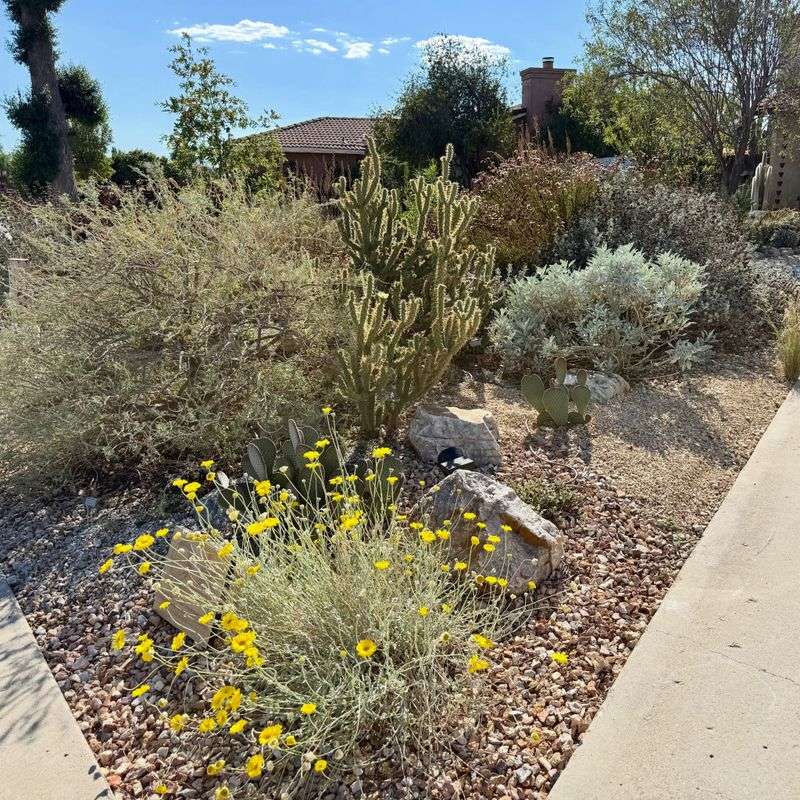
Bright yellow blooms that feel like crisp paper glow against woolly silver leaves along countless desert roadsides each spring. Desert marigold looks like sunshine on a stem, and it asks for very little water once it settles in.
Clumps generally grow one to two feet tall and wide, with flowers roughly two inches across on slender stalks. Blooms appear in spring, then return after rains and often continue through much of the year in warm areas.
It reseeds readily, so new plants pop up nearby, yet it rarely becomes a nuisance in a planted bed. Leave some spent flowers on the stems so seeds can ripen, and snip the rest to encourage fresh buds.
Native bees and butterflies love the flowers, while birds like black-throated sparrows pick through the seed heads later. I believe a few clumps near a window turn morning coffee into a quiet bird-watching session worth slowing down for.
Fall through winter is ideal for planting, so October gives seedlings a long cool runway before summer returns. Choose full sun with sandy or gravelly soil, since rich, soggy beds tend to shorten its lifespan noticeably.
5. Penstemon
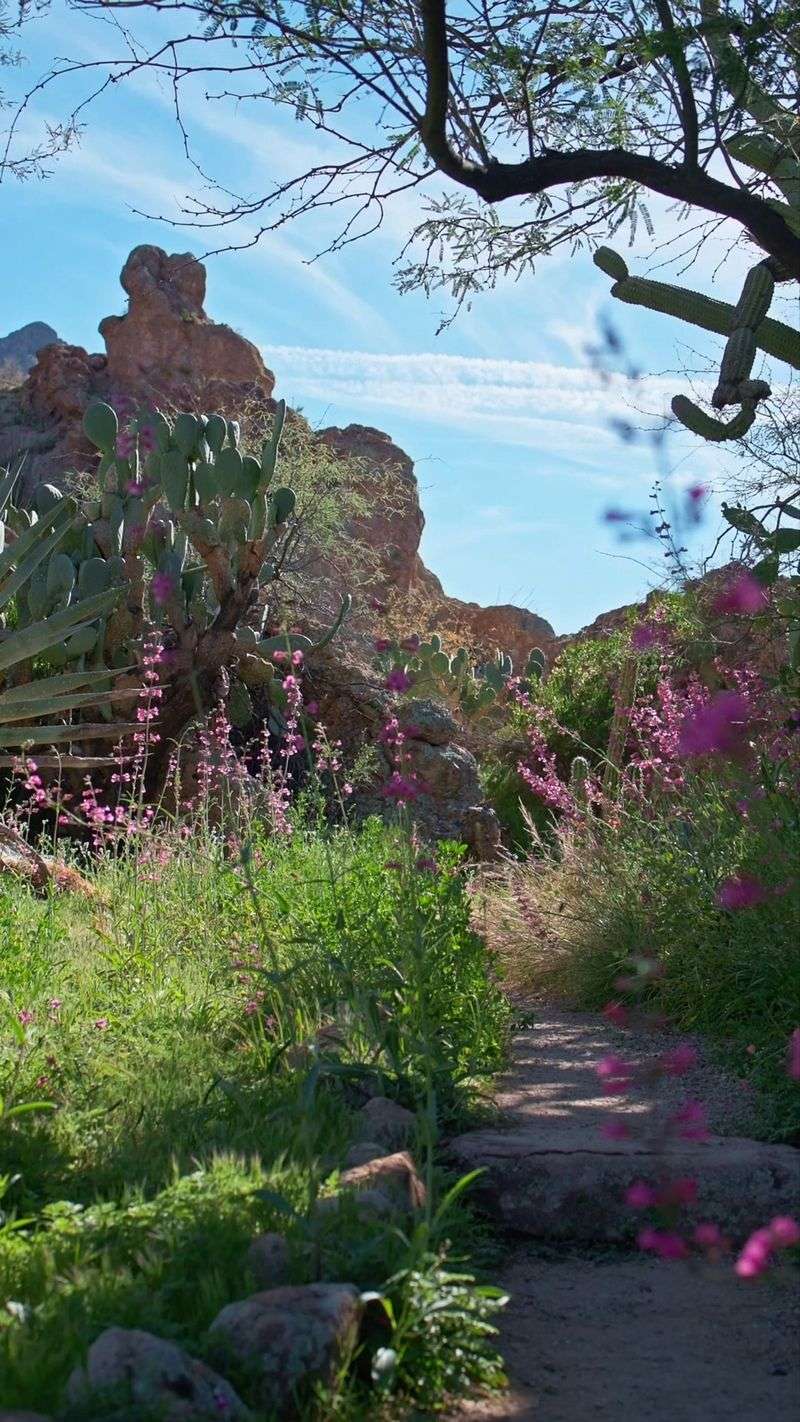
More than fifty wild penstemon species grow across Arizona and New Mexico, giving desert gardeners a huge palette to explore. Their tubular blooms look custom-built for hummingbird beaks, and the birds seem to agree every spring without fail.
Parry’s penstemon sends up rosy pink spikes from late February into April, sometimes reaching about four feet tall. Other species stay lower, so you can mix heights and stretch the color show across several months each year.
Many plants live only two to five years, but they reseed politely and slowly spread into fresh drifts. Seedlings are easy to spot and move, so the patch grows fuller without crowding out its garden neighbors.
Red and pink flowers pull in hummingbirds, while white, blue, and purple blooms attract many native bees instead. In the low desert, a bit of afternoon shade helps, and fast-draining sandy soil prevents rotting roots.
Overwatering in summer causes more trouble than heat, so let the soil dry between deep, occasional drinks. Personally, I plant penstemons in October or November, giving roots several cool months before those spring flower spikes rise.
6. Yarrow
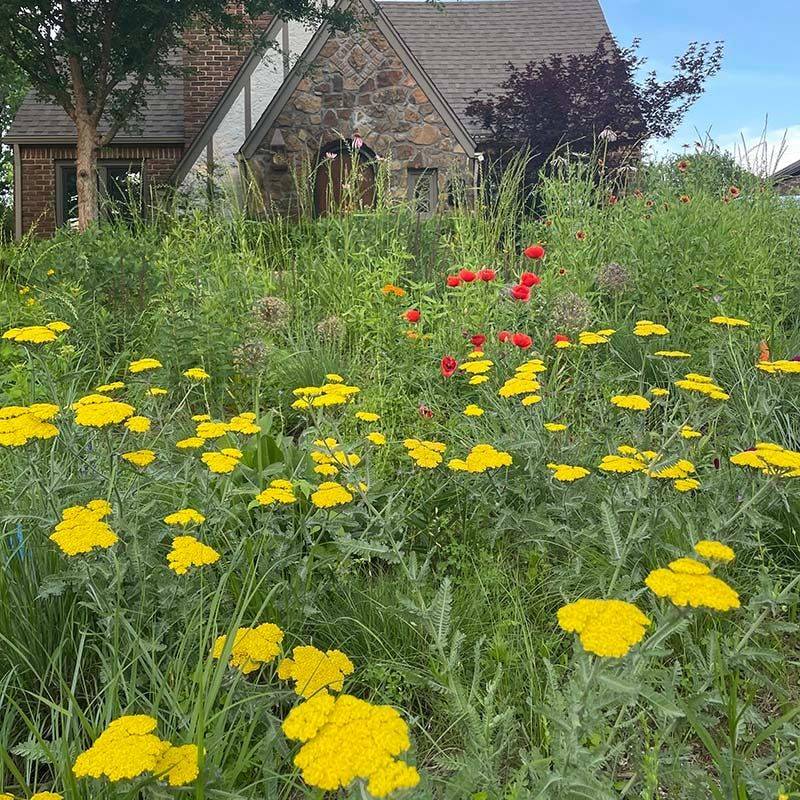
Feathery yarrow leaves release a sharp herbal scent when brushed, and flat flower clusters act like tiny landing pads. Hoverflies and small predatory wasps land there constantly, and many of them hunt aphids around the rest of your garden.
Common yarrow is native to North America and usually grows one to three feet tall and wide. Flowers come in white, pink, red, yellow, or peach, mostly blooming through summer with a possible second flush later.
Creeping rhizomes and self-seeding help it spread quickly, which is exactly why some gardeners hesitate to plant it. Pulling wandering stems in spring and snipping faded flowers keeps the patch tidy and well within its borders.
Compact cultivars such as the Desert Eve series offer a calmer option if you want color with less spreading. Give yarrow full sun, at least six hours daily, and average or poor soil with good drainage.
Fall is a smart time to divide crowded clumps, which renews their vigor and gives you free plants to share. You need very little water once roots settle, making it a thrifty choice for sunny strips near sidewalks.
7. Prostrate Rosemary
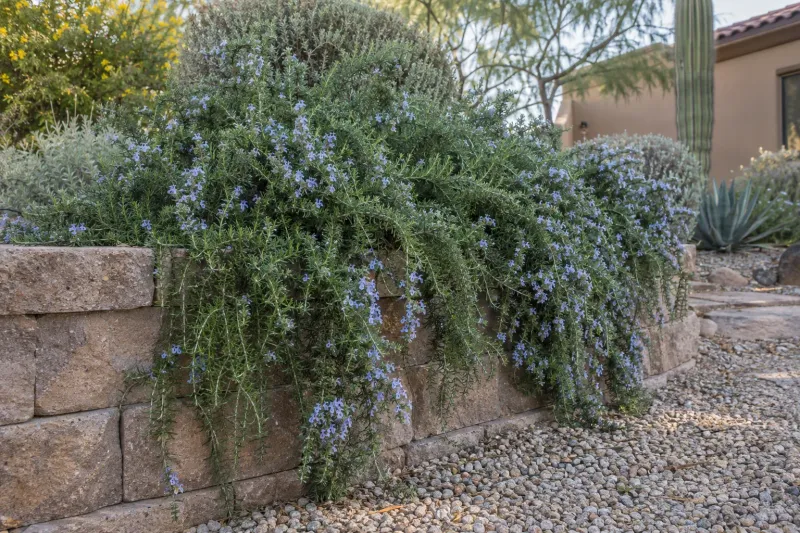
Brush your ankle against prostrate rosemary along a sunny walkway and the whole path suddenly smells like a cozy kitchen. I can’t imagine a friendlier groundcover, since you can snip a sprig for dinner while you tidy the edges.
Low cultivars of Salvia rosmarinus spill over walls and slopes, often reaching three to eight feet across over time. Height usually stays low, so the evergreen branches form a dense blanket that shades hot soil all year.
Small pale blue flowers appear mostly in cooler months, giving bees something to visit when little else blooms nearby. It handles intense heat and alkaline soil well, as long as the ground drains quickly after storms.
Branches widen steadily but stay put, so an occasional pruning cut keeps it off paths and out of beds. Skip heavy fertilizer, since lean soil keeps growth compact and the fragrance stronger in my experience.
October planting works well, letting roots grow during mild weather before next summer’s long stretch of triple-digit days. Water deeply every week or two at first, then taper off once fresh growth shows the plant has settled.
8. Lavender
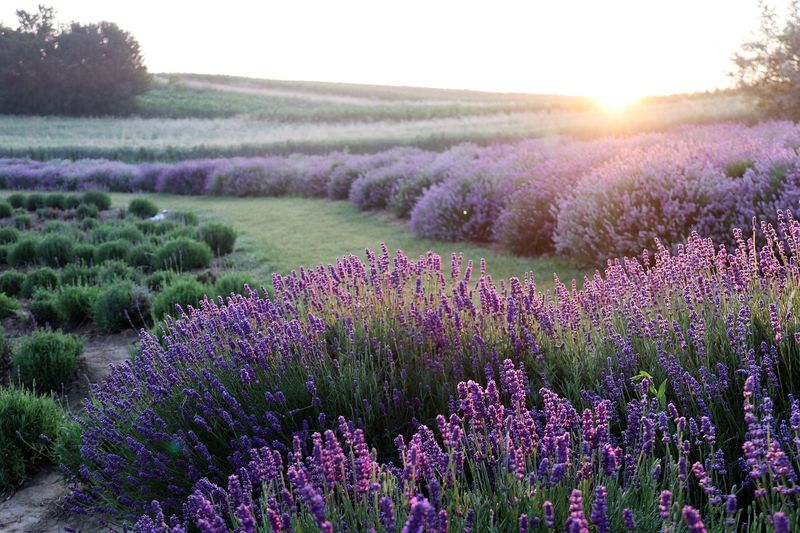
Lavender loves sunshine, yet soggy roots can send it into a sulk faster than almost anything else can. That quirk makes drainage the real secret, and it explains why many desert gardeners plant it on raised mounds.
Spanish, French, and hybrid types handle low desert heat best, while English lavender prefers cooler, higher elevations instead. Most form mounds one to three feet tall and two to four feet wide, filling space quickly.
Set the crown a few inches above grade on gritty soil, especially before monsoon storms bring heavy, sudden rain. Water at the base rather than overhead, because damp foliage invites fungal trouble in humid summer weather.
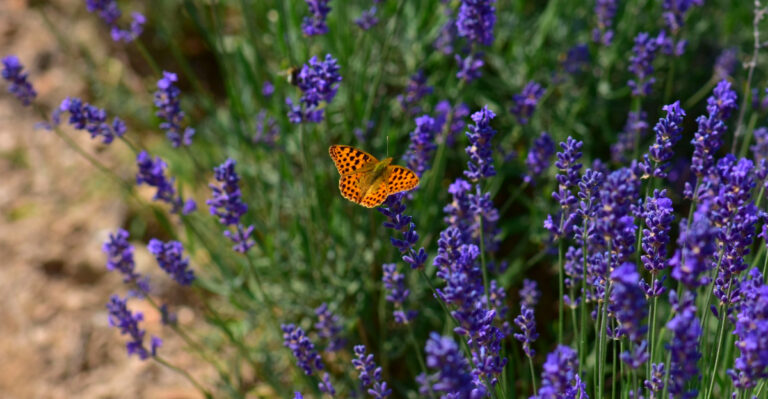
Bees and butterflies swarm the purple spikes, and ladybugs and lacewings often patrol nearby for aphids and mites. You might notice deer usually ignore the fragrant silvery leaves, which feels like a welcome break in foothill neighborhoods.
October is a great planting window, giving roots several months of mild weather before summer heat returns. Trim lightly after flowering to keep the mounds tidy, but avoid cutting deep into old woody stems.
9. Creeping Thyme
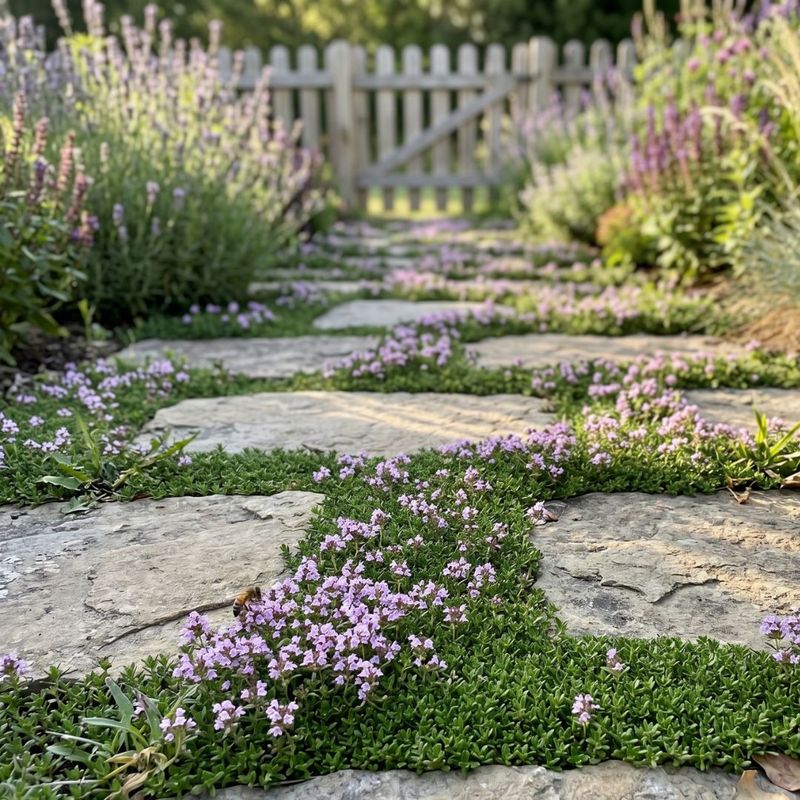
Step on creeping thyme and a warm, savory scent floats up from a mat barely taller than your shoe sole. It stays one to three inches tall, which makes it a charming filler between flagstones and stepping stones.
Each plant spreads about twelve to eighteen inches or more, knitting together into a dense evergreen carpet fairly quickly. Tiny lilac to purple flowers cover the foliage from late spring into summer, and bees visit them eagerly.
Thyme is happiest in Arizona’s higher, cooler towns like Flagstaff and Prescott, where full sun suits it well. In the low desert, give it morning sun and afternoon shade, plus regular watering through the hottest months.
Lean, sandy, or rocky soil with excellent drainage keeps the roots healthy and the mat compact and tight. Serious pest and disease problems are rare, and deer generally find the aromatic leaves unappealing to munch on.
I like shearing it lightly after the main bloom, since a quick trim keeps the carpet neat and dense. Fall planting helps it settle, though higher elevations should plant early in October before the first hard frost.