Does Planting Basil Next to Arizona Tomatoes Actually Keep Hornworms Away?
Gardeners across the Phoenix and Tucson areas have heard the tip a hundred times: plant basil next to your tomatoes and the hornworms will leave. The idea sounds simple, and basil genuinely does belong in an Arizona vegetable garden.
Before you rely on a single herb to protect your tomatoes, though, it helps to know what the research actually says and what it does not.
The four-inch detail belongs to the hornworm, not the basil
Somewhere along the way, a piece of garden advice got its measurements mixed up. The four-inch figure that shows up in claims about basil and tomatoes does not describe a basil seedling.
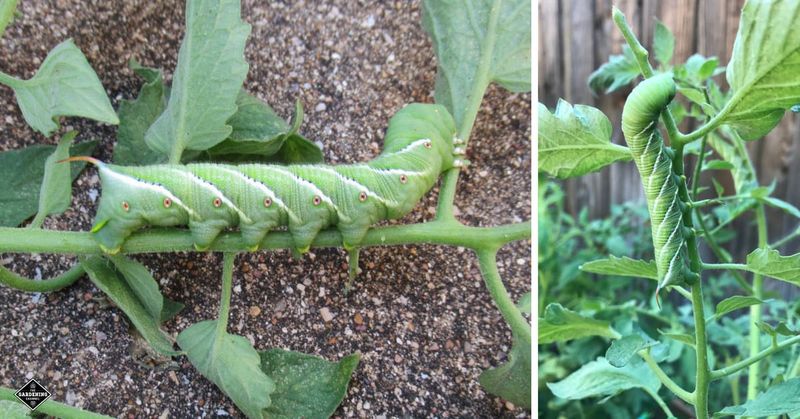
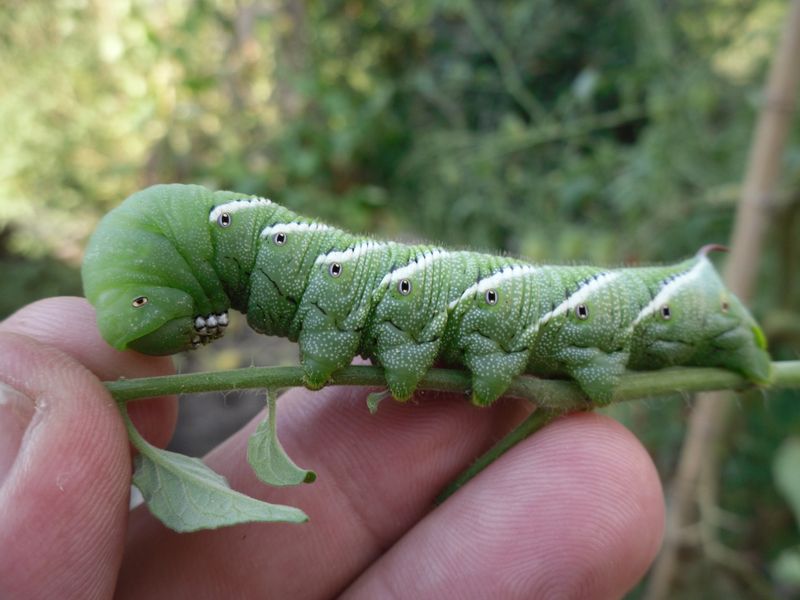
It describes a mature tomato hornworm, a caterpillar that University of Minnesota Extension identifies as capable of reaching roughly four inches in length before it finishes feeding.
Tomato hornworms are the larvae of large sphinx moths. They hatch from eggs laid on tomato foliage and spend their entire larval stage eating, which they do with remarkable speed.
A single caterpillar can strip whole branches before most gardeners notice anything is wrong.
Part of what makes them so hard to catch early is their camouflage. The caterpillars are the same bright green as tomato stems and leaves, and they press themselves against the plant in ways that make them nearly invisible until the damage becomes obvious.
Infestations can also be patchy, meaning one plant may have several hornworms while a neighboring plant has none.
This article is going to test the claim that a small basil plant can make those caterpillars go elsewhere. Understanding the pest itself is the right place to start, because knowing what you are actually dealing with shapes every decision that follows.
What basil’s airborne chemistry can—and cannot—establish
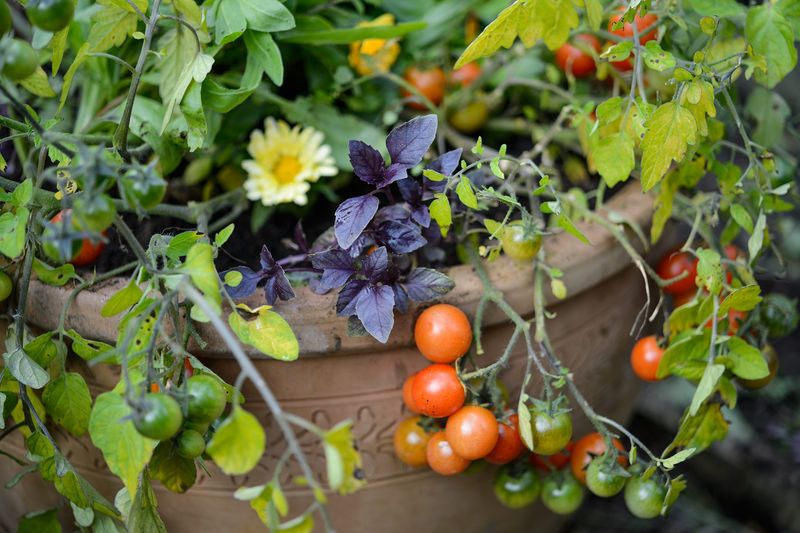
Basil produces strong aromatic compounds, and that part of the story is real. Plants release volatile chemicals into the air around them, and those chemicals can influence how insects navigate, locate host plants, or decide where to lay eggs.
The question is whether that general biological fact translates into reliable hornworm protection in an Arizona backyard.
It does not, at least not based on what peer-reviewed research has actually tested. University of Delaware Cooperative Extension notes that insect responses to companion plants depend on species, plant density, wind, temperature, crop arrangement, and whether the pest is searching for foliage, flowers, or an egg-laying site.
Changing one of those variables can change the outcome entirely.
The studies most often cited in support of basil as a pest deterrent involve whiteflies in Kenyan field trials using protective netting, or greenhouse banker-plant systems where basil was one of several variables. Neither of those settings maps cleanly onto an open raised bed in Phoenix or Tucson in April.
A University of Arizona Cooperative Extension companion-planting presentation does repeat the claim that basil may repel tomato hornworms, but the slide credits a gardening website rather than a peer-reviewed experiment. Penn State Extension suggests that surrounding tomatoes with basil may reduce adult hornworm egg-laying, but does not point to a specific study that can be independently verified.
Your Arizona Garden Changes Every Week. Your Plan Should Too.
Gardening in Arizona changes quickly throughout the season. Every Friday you’ll receive a simple weekly plan showing exactly what to plant, prune, fertilize, harvest, and protect so you never miss the right timing.
Both claims are worth knowing about, and neither one is strong enough to treat as a guarantee.
Basil’s scent may alter something in the air around your tomato plant. Whether that alteration meaningfully discourages sphinx moth egg-laying in low-desert conditions remains an open question.
Heat can reduce fruit set, but basil’s yield effect remains unproven

Low-desert Arizona tomato growers already know that summer heat is the main obstacle to a good harvest, and the plant biology backs that up. University of Arizona Cooperative Extension explains that temperatures above 90 degrees Fahrenheit can reduce tomato pollen viability and fruit formation, which is why the region’s tomato season is split into two shorter windows rather than one long summer run.
Spring planting in the Phoenix and Tucson areas typically runs from mid-March through late June. A second opportunity opens around September, after the worst heat has passed.
Variety selection, planting timing, and some protection from afternoon sun all influence how many tomatoes actually set before conditions turn against the plant.
When gardeners add basil to that equation and then notice more tomatoes, heat timing and variety choice are far more likely explanations than basil’s airborne chemistry. Intercropping research conducted in other climates and growing systems shows mixed results, and no Arizona study has isolated a single basil plant as the cause of a higher tomato yield here.
A 2024 organic-field study actually reported reduced tomato yield and more late-blight symptoms in one basil-intercropping arrangement, which is a reminder that adding a companion plant is not automatically a benefit.
Planting time, shade, soil fertility, irrigation, disease pressure, and crop arrangement all affect what a tomato plant produces. Basil’s effect on Arizona tomato yield is unproven, and the heat that arrives in June is a well-documented and plausible reason fruit set slows or stops.
Basil and tomatoes can share a bed without becoming a control system
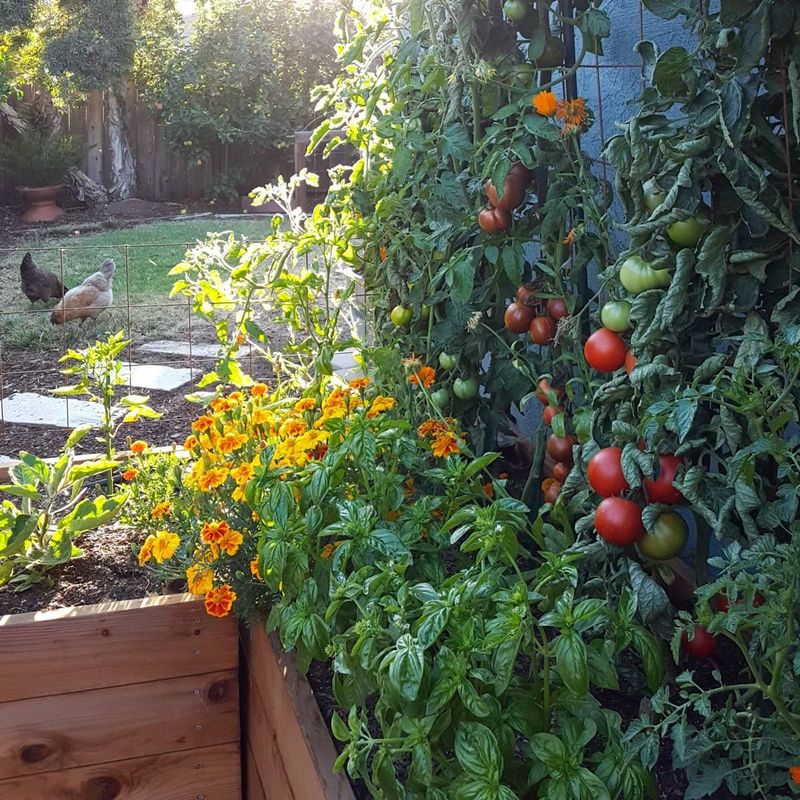
Growing basil alongside tomatoes makes practical sense for reasons that have nothing to do with pest control. Both plants want full sun, warm soil, regular water, and good drainage, which means they can coexist in the same bed without one working against the other, provided they have enough room.
University of Arizona Cooperative Extension recommends giving basil full sun, well-drained soil, and spacing of 6 to 12 inches, with consistent irrigation until summer monsoon rains arrive. Container-grown basil dries out faster than basil planted in garden soil, so pots need more frequent attention during the dry weeks before the monsoon season begins in July.
The culinary case for the pairing is solid. Fresh basil a few steps from your tomato harvest is genuinely useful, and growing two crops in a shared space can add some ecological variety to the garden.
Those are real benefits that hold up regardless of what happens with hornworms.
The pest-control case is weaker and more complicated. Research on tomato-basil intercropping, including a three-year greenhouse study and field work reviewed by West Virginia University, shows that outcomes shift with planting density, crop ratio, timing, shade, fertility, and disease pressure.
Adding basil does not automatically reduce pest pressure, and in some arrangements it can compete with tomatoes for light, water, and nutrients.
Plant basil beside your tomatoes if you want fresh herbs and a more diverse garden. Just do not expect the herb to carry the load that inspection and hands-on management are better suited to handle.
How to find a hornworm before it strips the tomato
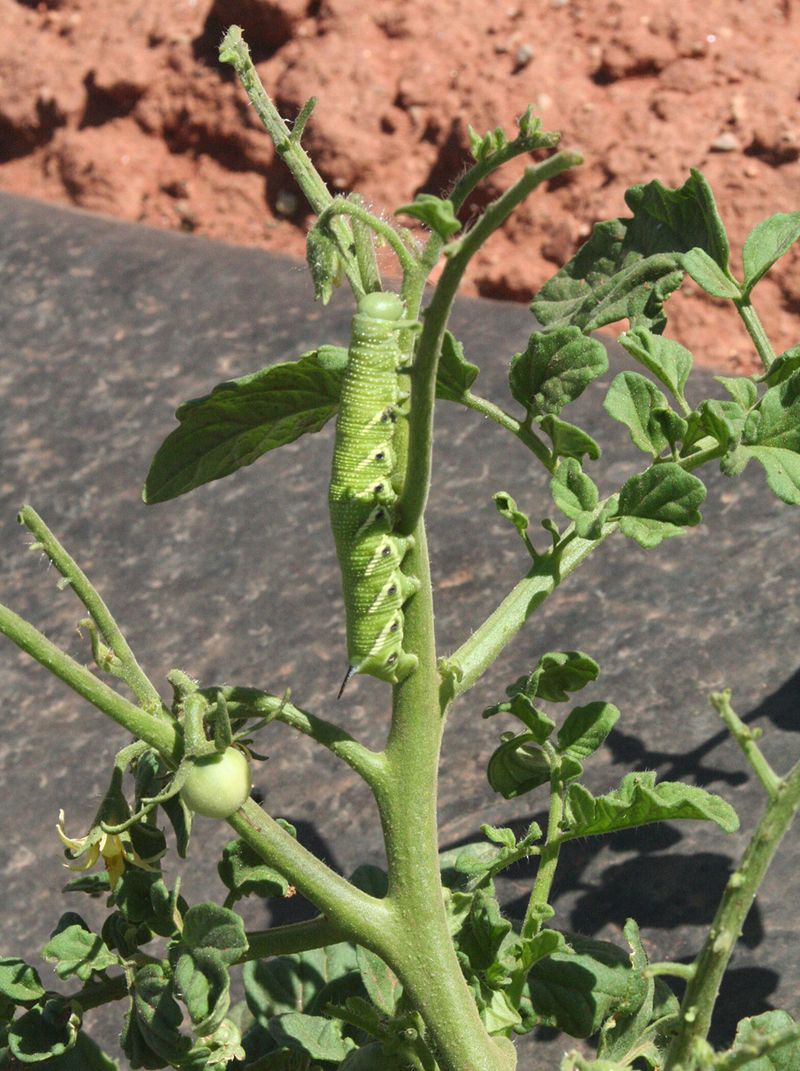
Regular inspection is the most reliable tool a low-desert tomato grower has against hornworms, and it works in a way that no companion plant can replicate. Hornworms feed fast, and waiting until damage is obvious often means waiting until a caterpillar has already eaten a significant portion of the plant.
UC IPM guidance on tomato hornworms points to three reliable signs: missing or chewed leaves, ragged damage to fruit, and dark green or black frass on foliage or on the soil directly beneath the plant. Frass is often the easiest clue to spot, especially early in an infestation when the caterpillar itself is still small enough to miss.
Once you spot frass or chewed leaves, look up. Hornworms tend to feed from the inside of the plant outward, so they are usually closer to the main stem than to the leaf tip.
Work slowly and look for the diagonal white stripes along the caterpillar’s side, which are easier to see than the green body against green foliage.
Checking plants two or three times a week during the spring season gives you the best chance of catching a hornworm while it is still small. Basil nearby does not replace that routine.
A garden that gets regular, close attention will catch problems that an unmonitored garden misses, regardless of what is planted beside it.
Hand-picking works—and some hornworms should stay put
Finding a hornworm on your tomato plant is not a reason to panic. In a home garden, hand removal is usually all that is needed, and it works immediately without any risk to bees, beneficial insects, or the tomatoes themselves.
Pick the caterpillar off the plant and drop it into a bucket of soapy water, or relocate it well away from the garden. Gloves make the job easier, though hornworms cannot bite or sting.
Check the surrounding stems and leaves carefully, because a plant with one hornworm sometimes has others nearby.
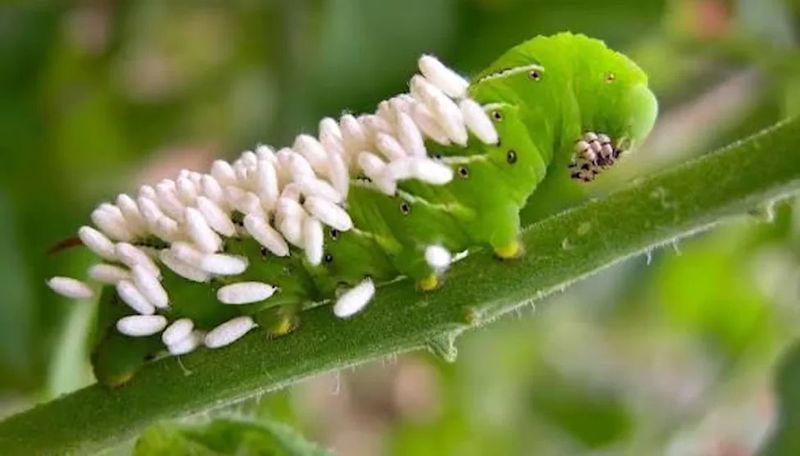
Before removing any caterpillar, look at its back. University of Minnesota Extension explains that hornworms sometimes carry white, rice-shaped cocoons protruding from their bodies.
Those cocoons belong to braconid wasps, a group of parasitic beneficial insects that laid their eggs inside the caterpillar. The larvae feed inside the hornworm and then emerge to spin those tiny white cases before developing into adult wasps.
A hornworm carrying cocoons is already dying. Leave it on the plant and the wasps that emerge will go on to parasitize other hornworms in the area, giving you a natural check on the next generation.
Removing or killing a parasitized hornworm eliminates that benefit. If you find one, treat it as a sign that beneficial insects are already working in your garden and give them the chance to finish the job.
When treatment is justified, choose the least disruptive option
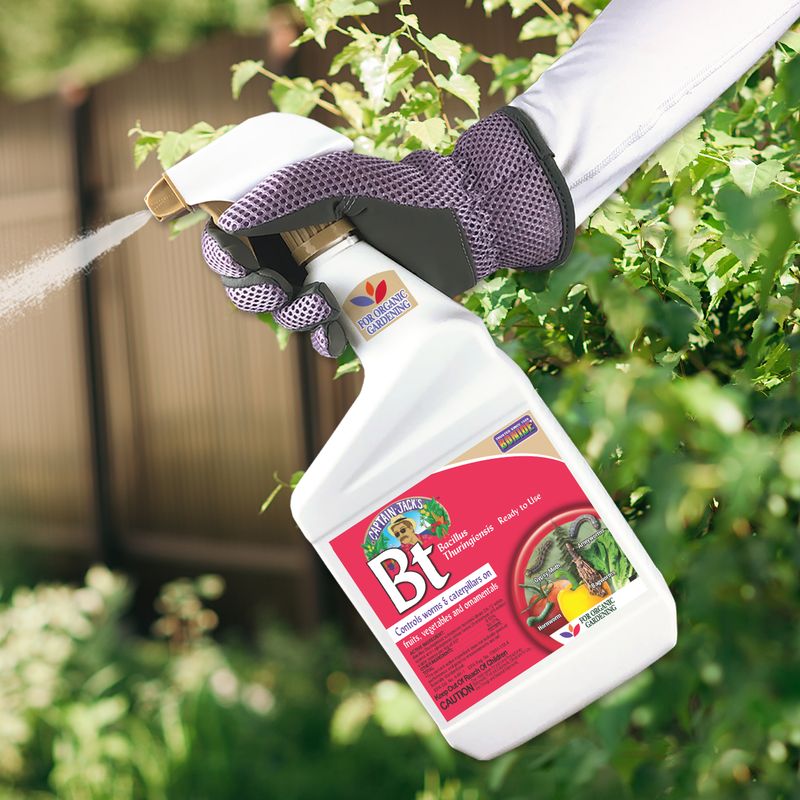
Most hornworm problems in a home garden can be resolved with hand-picking and regular monitoring. When an infestation is large enough that manual removal is not keeping up, or when plants are being defoliated faster than you can check them, a targeted treatment may be warranted.
University of Arizona Cooperative Extension lists two options appropriate for hornworm larvae in home gardens: Bacillus thuringiensis var. kurstaki, commonly called Btk or Bt, and spinosad. Btk is a naturally occurring soil bacterium that disrupts the digestive system of caterpillars when they ingest it.
It has no meaningful effect on bees, birds, or most other garden visitors, which makes it a practical first choice when caterpillar pressure is beyond what hand-picking can manage.
Spinosad is derived from another soil organism and is also effective against hornworm larvae, but it carries a critical safety requirement. University of Arizona Extension guidance on alternative pesticide options states that spinosad is toxic to bees and should not be applied while bees are actively foraging.
Apply it in the early morning or evening when bee activity is low, and follow the product label exactly for timing, rates, and re-entry intervals.
Neither product should be applied automatically or as a substitute for inspection. Confirm that caterpillars are still actively feeding before treating, avoid products on hornworms that carry braconid-wasp cocoons, and never use a pesticide rate that is not listed on the label you have in hand, since formulations vary and legal directions differ between products.
Use basil for the harvest, not a guarantee

Basil earns its place in an Arizona tomato garden as a culinary crop and a companion that adds variety to the bed. Plant it when you can give it full sun, consistent irrigation, good drainage, and enough space to grow without crowding the tomatoes.
In containers, water more often than you think you need to, especially during the dry weeks before monsoon rains begin.
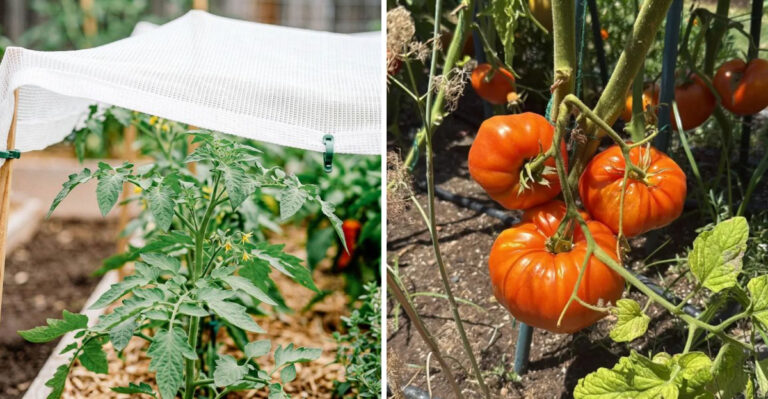
Measure success by what you actually harvest: fresh herbs for the kitchen and a tomato crop that you managed well through the season. That means choosing short-season varieties suited to low-desert conditions, timing your plantings to avoid the worst summer heat, and using shade cloth if afternoon sun is burning fruit or stressing the plant.
University of Arizona Extension recommends 40 to 60 percent shade cloth for heat and sunburn protection during the hottest weeks.
Keep inspecting your tomato plants two or three times a week regardless of what is growing beside them. Hand-pick hornworms when you find them, leave any caterpillar carrying braconid-wasp cocoons in place, and reach for Btk or spinosad only when manual removal is not enough.
If you use spinosad, apply it when bees are not foraging and read the label before measuring anything.
Basil will not send hornworms somewhere else. What it will do is give you something good to cook with while you grow tomatoes the way low-desert Arizona actually requires: with attention, seasonal timing, and realistic expectations.