7 Tricks to Keep Your Amaryllis From Toppling Over in a New York Apartment
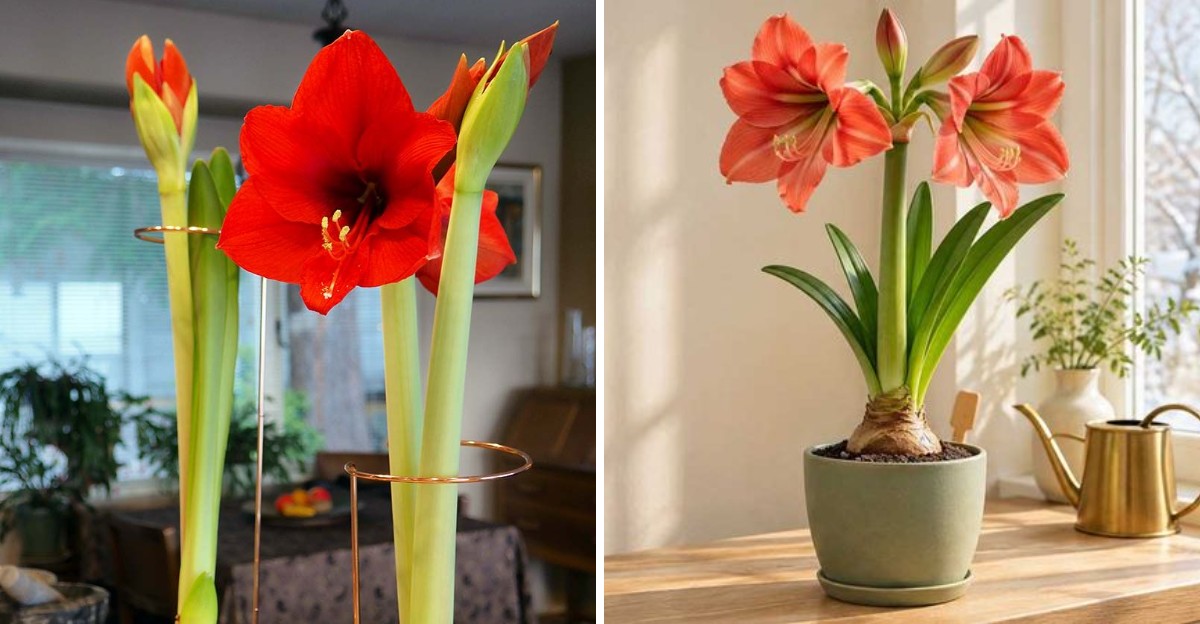
A single flower stalk on this holiday bulb can stretch past two feet tall and carry four huge blooms at once. That’s a lot of weight for one hollow stem, which makes for a very wobbly balancing act on a windowsill.
Radiator heat and dim winter windows in New York apartments only make things harder. Warm, shady rooms push stems to grow fast and thin, so they lean hard toward whatever light they can find.
In my experience, most toppled pots trace back to small choices made at planting time. Luckily, you probably have everything you need already, from a heavy pot to a spare bamboo stick tucked in a drawer.
Best of all, many of these fixes take less than a minute a week. Which simple habit could keep your tall New York bloom standing proud until the very last petal opens?
1. Choose A Heavy Snug Pot For Your Amaryllis Bulb
My first amaryllis lived in a cute plastic pot, and it face-planted onto the radiator cover within a week. That flimsy container weighed almost nothing, while the bloom on top weighed more than I expected.
University of Minnesota Extension suggests a pot only about one or two inches wider than the bulb itself. That snug fit keeps the bulb steady and lets roots grip the soil quickly as the stem grows.
Material matters just as much as size when you want a stable base on a narrow apartment sill. Terra cotta or glazed ceramic adds real weight at the bottom, which helps balance a tall stalk above.
Plastic pots are fine for growing, but you can slip them inside a heavier decorative pot for extra support. A few smooth stones tucked between the two pots can lower the center of gravity even more.
Drainage holes are a must, since soggy soil softens roots and weakens the anchor holding your plant upright. If your favorite pot lacks holes, use it as an outer sleeve and keep the real pot inside.
Depth counts too, because roots need room to spread downward and form a firm grip below the bulb. A pot that is taller than it is wide often feels steadier than a shallow, bowl-shaped dish.
Honestly, choosing the right pot feels like a small detail until you watch a stalk tip over at midnight. Spend a few extra minutes picking a heavy container, and your future self will thank you later.
2. Plant The Amaryllis Bulb With Its Shoulders Showing
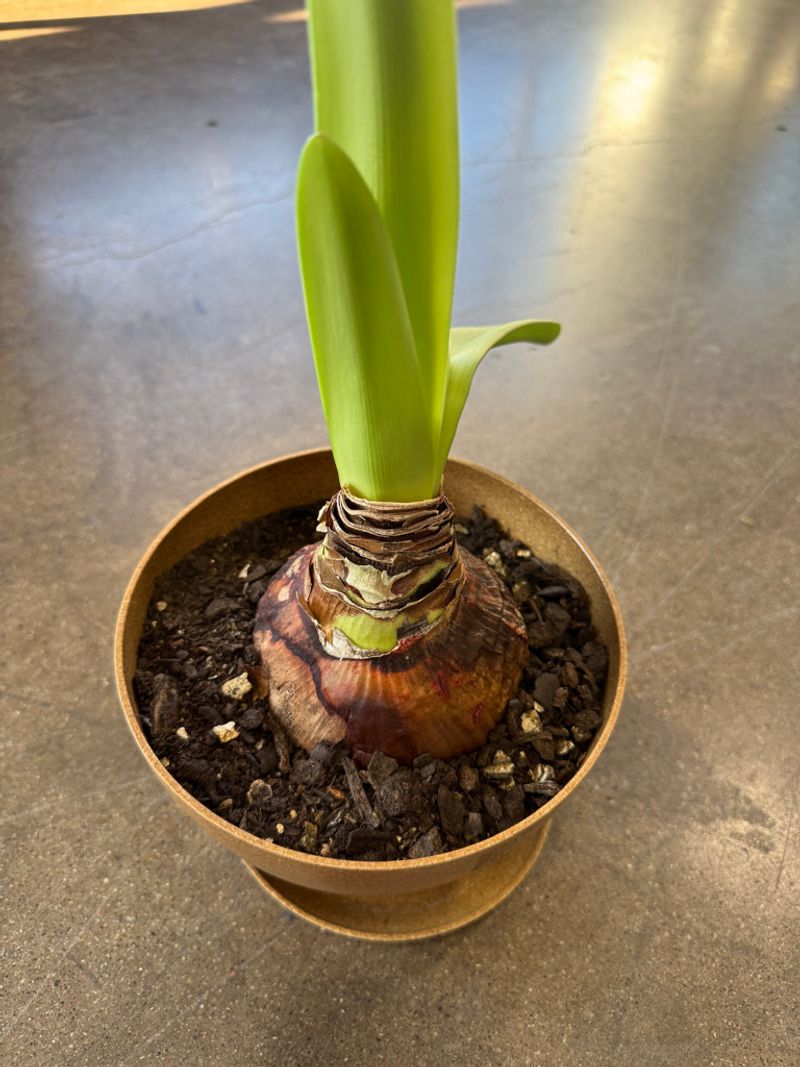
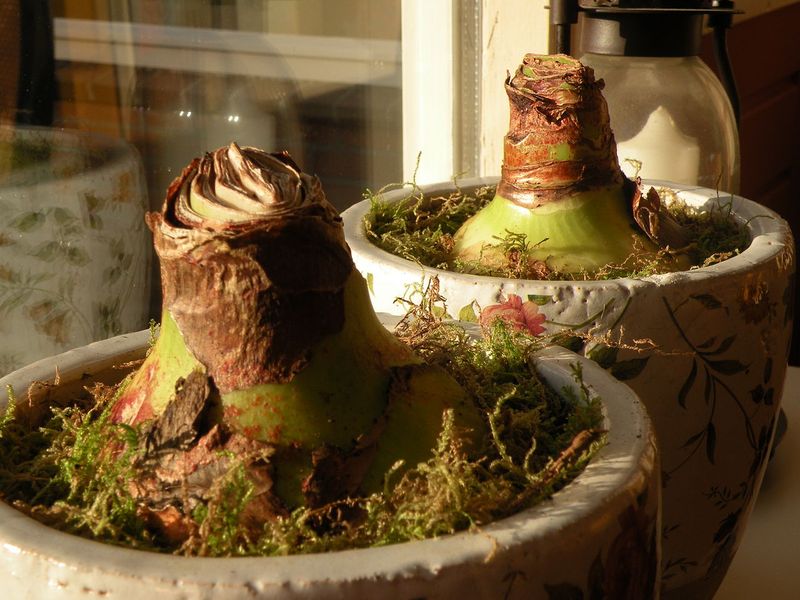
Few bulbs like to show off their shoulders the way this one does above the soil line. Experts recommend leaving the top third of the bulb exposed, which looks odd at first but works beautifully.
Burying the bulb too deep can trap moisture around its neck and invite rot over the following weeks. A softening bulb cannot hold a heavy stalk steady, so planting depth connects straight to stability later on.
Start with a fresh, well-draining potting mix rather than heavy garden soil scooped from a park planter. Lightly moisten the mix first until it feels like a squeezed sponge, damp but not dripping in your hand.
Set the bulb pointed end up and spread its roots gently over a small mound of soil in the pot. Then fill around the sides, pressing firmly with your fingers so the bulb cannot rock back and forth.
That gentle firming matters more than you might expect for a plant that grows this tall indoors. Loose soil lets the bulb shift as the stalk gains height, and that tiny wobble can grow into a lean.
Don’t be surprised if roots peek out at the top or along the sides after a few weeks. Simply add a little more mix around them while keeping those shoulders visible above the surface.
I like checking the exposed bulb every few days, because it should feel firm, smooth, and dry to the touch. Any mushy spots are an early warning that the soil is staying too wet for comfort.
3. Set Your Amaryllis In Your Sunniest Apartment Window
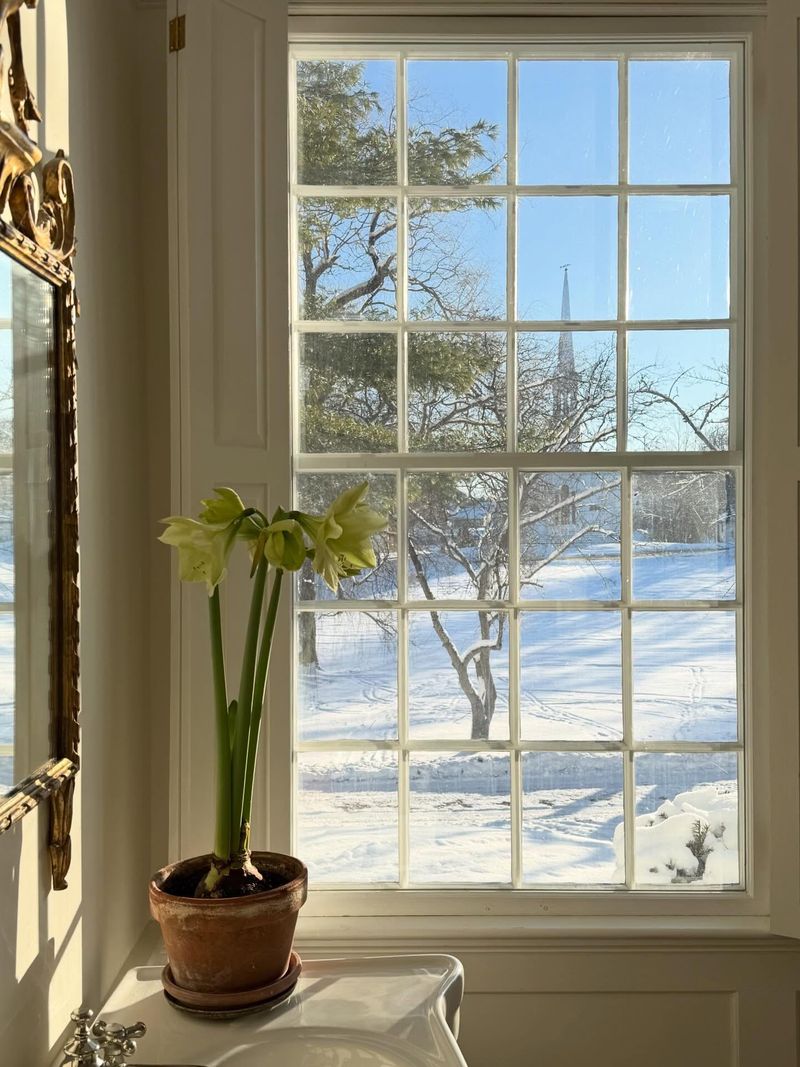
Stems on this plant behave like sunflowers with a serious crush on your window, bending hard toward the brightest light. In a dim apartment, that crush turns into a dramatic lean that can tip the whole pot over.
Low light makes stems stretch long and thin as they hunt for brightness, a process gardeners call etiolation. Those pale, skinny stalks struggle to support big blooms, so light matters as much as any stake you add later.
A south or west window usually gives the strongest winter light in a typical New York apartment. Bright, indirect light during the day helps the stalk grow thicker and shorter, which is just what you want.
Cooler rooms help as well, because growth slows down and stems have time to firm up properly. Try keeping the plant away from hot radiators, since steady heat pushes quick, floppy growth that leans easily.
If your only window faces a brick wall or an airshaft, a small LED grow light can help a lot. Position it a foot or so above the plant and run it for several hours each day.
What I find interesting is how much a white wall or simple foil-covered board can bounce extra light back. Prop one behind the pot, and the shadowed side gets a gentle boost from reflected brightness.
Once the flowers open, you can move the plant somewhere cooler and slightly shadier to make blooms last longer. By then the stalk has hardened, so a short break from strong light rarely causes new leaning.
4. Turn The Amaryllis Pot A Little Every Day
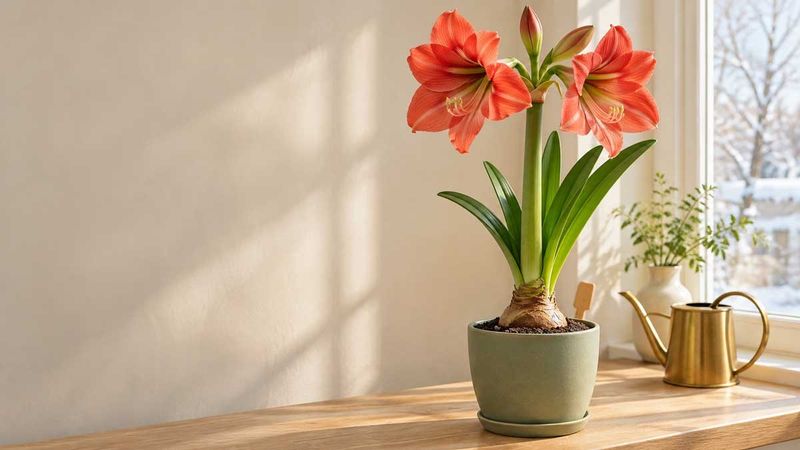
Spinning a flowerpot sounds silly, yet this tiny habit is one of the most reliable fixes you can try. A quarter or half turn each day keeps the stalk from bending in one steady direction toward the glass.
Plants grow toward light because cells on the shady side of the stem stretch faster than the sunny side. Rotating the pot evens out that stretching, so the stem keeps reaching straight up instead of sideways.
I tie the habit to my morning coffee, which makes it surprisingly easy to remember every single day. You could link it to feeding a pet, checking the mail, or opening the blinds after you wake up.
Start turning as soon as the flower bud pokes out of the bulb, because young stems respond quickly. Waiting until the stalk already curves makes it much harder to coax back into a neat, upright line.
A small piece of tape on the pot rim helps you track which side faced the window yesterday. That simple marker saves you from accidentally turning the pot back and forth in the same position all week.
You might want to think twice about big, sudden turns once buds start swelling near the top. Slow, steady rotation keeps the stalk balanced without making the heavy bud swing around or stress the stem.
Combined with a bright window, this one habit often removes the need for a stake on shorter varieties. It costs nothing, takes two seconds, and gives you a reason to admire your plant each morning.
5. Water Your Amaryllis Sparingly Until Green Shoots Appear
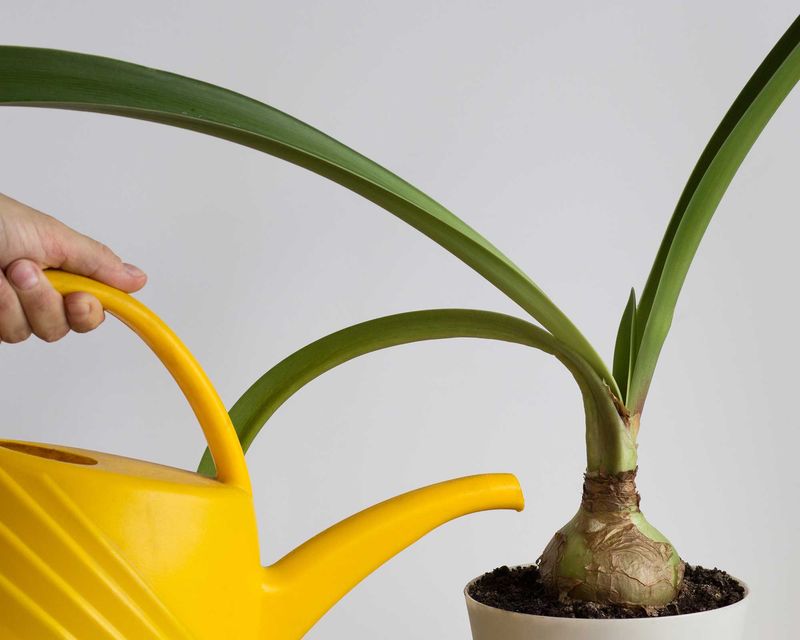
Overeager watering ranks high among the sneaky reasons these tall bulbs end up lying sideways on the floor. A soggy pot softens roots, and weak roots cannot hold a heavy stalk steady for long.
After planting, give the soil one thorough soak so it settles snugly around the roots and bulb base. Then hold back and water only lightly until you spot the first green tip poking up from the bulb.
Once growth takes off, check moisture by pushing a finger about an inch into the potting mix. If it still feels damp, wait another day or two before reaching for your watering can again.
Steam heat in older city buildings can dry pots faster than you expect, especially near a hissing radiator. Checking every few days helps you spot thirsty soil before the stem starts to droop from stress.
Pour water around the edge of the pot rather than over the exposed bulb itself. That keeps the neck dry and reduces the chance of rot creeping in where leaves and stalk emerge.
Empty the saucer about fifteen minutes after watering so the roots are not sitting in a puddle. Standing water slowly starves roots of air, and the plant often responds with yellow leaves and weak growth.
I could be wrong, but I think most of us water from love rather than real need. Your amaryllis prefers a calm, slightly dry routine, and its sturdy posture will show that patience paid off.
6. Stake The Tall Amaryllis Stalk Before It Leans
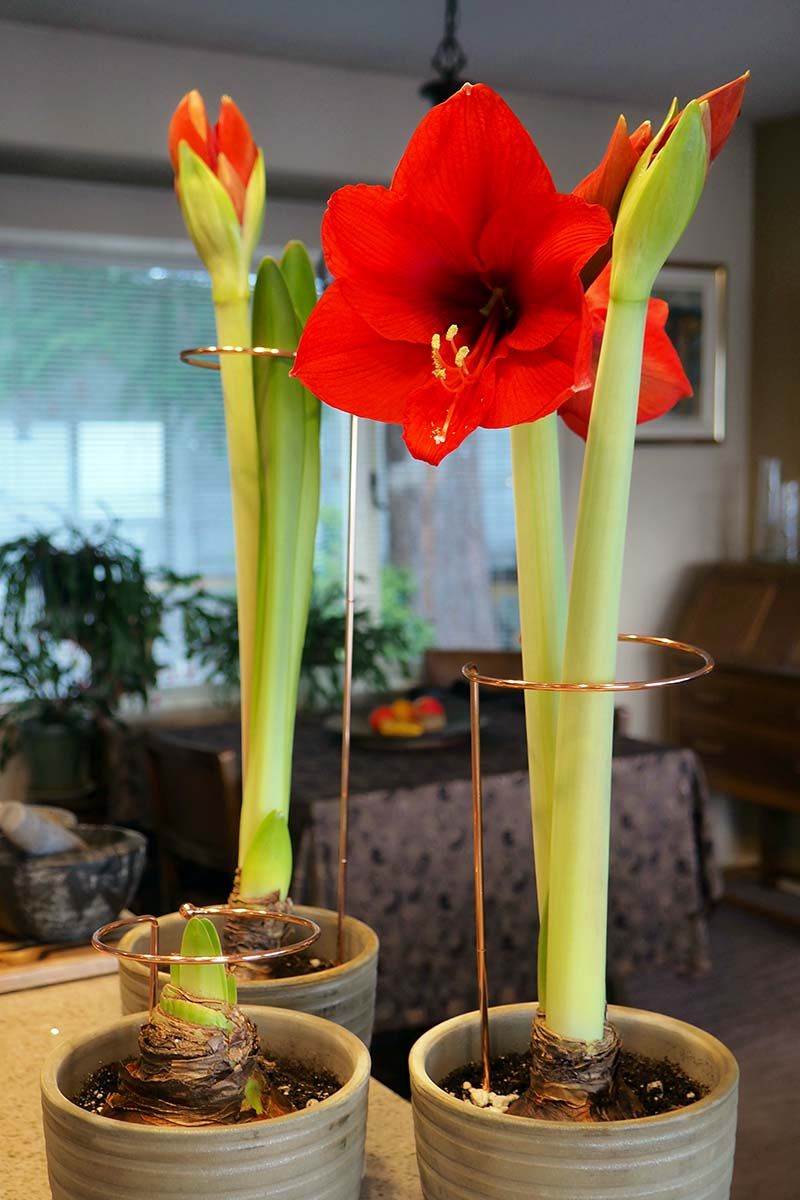
Big hybrid blooms can be so heavy that even a perfectly grown stalk needs a quiet helper beside it. A thin stake hidden behind the stem works like a friendly hand on the shoulder.
Timing matters, so add support when the stalk is roughly half its final height, not after it starts leaning. Inserting a stake late can pierce roots or the bulb, and a bent stem rarely straightens fully again.
Push a slim bamboo or green metal stake into the soil near the pot edge, away from the bulb. Angling it slightly outward at first helps you avoid the roots hiding just below the surface of the mix.
Tie the stalk loosely with soft twine or a strip of fabric in a figure-eight loop around both. That crossed loop cushions the stem and lets it thicken without the tie cutting into its hollow tissue.
Add another tie higher up as the stalk grows, keeping each one just below the developing flower bud. Two or three gentle ties usually hold even a heavy cluster of blooms upright through the show.
Some growers like decorative stakes with a curly top, and they can look charming in a holiday window. Birch twigs from a florist also blend nicely while giving the stalk solid support.
Don’t be surprised if your plant sends up a second stalk later, because many large bulbs do this. Simply repeat the process early, and both stems can stand tall side by side.
7. Feed And Rest Your Amaryllis For Sturdier Stalks Next Year
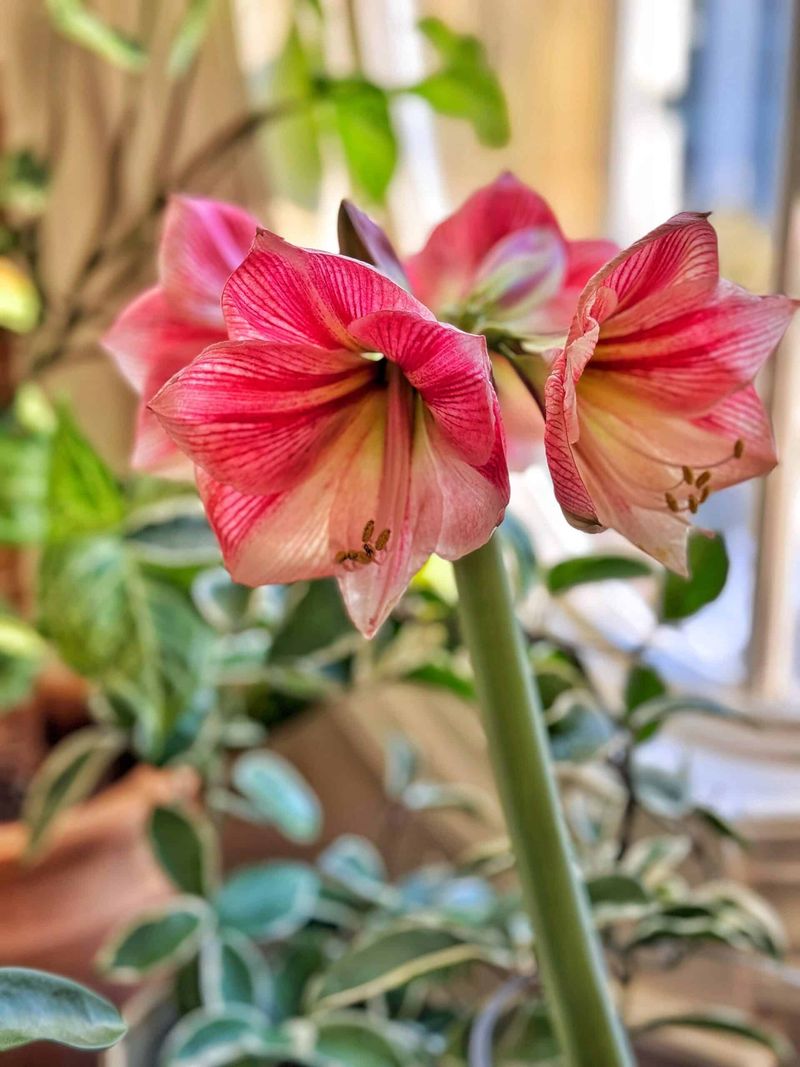
Next winter’s stalk is quietly built this year, inside those long strap-shaped leaves after the flowers fade. Treating the leaves well is how you grow a fatter bulb that pushes up thicker, steadier stems.
Snip off faded flowers near the top of the stalk so the plant does not waste energy making seeds. Let the green stalk stay until it yellows, because it still helps feed the bulb.
Keep the pot in bright light and feed it with a balanced houseplant fertilizer about every few weeks. Many growers move pots onto a sunny fire escape or balcony once nights stay safely warm in late spring.
Check New York building rules before using a fire escape, since many buildings ban anything blocking that exit path. A bright windowsill indoors works perfectly well if outdoor space is not allowed where you live.
Toward late summer, stop feeding and gradually reduce watering so the leaves slowly yellow and fade back. Then trim them off and store the pot somewhere cool, dark, and dry for about eight to ten weeks.
Here’s what caught my attention: a well-fed bulb often comes back larger, and larger bulbs tend to make sturdier stalks. That makes summer care one of the best long-term fixes for floppy growth.
After the rest, bring the pot back into light and water lightly to wake it gently. With good care, your old bulb can bloom again and stand tall for many winters to come.