Your Neighbor’s Tree Roots Are Cracking Your Driveway in Virginia. Who Pays for the Damage?
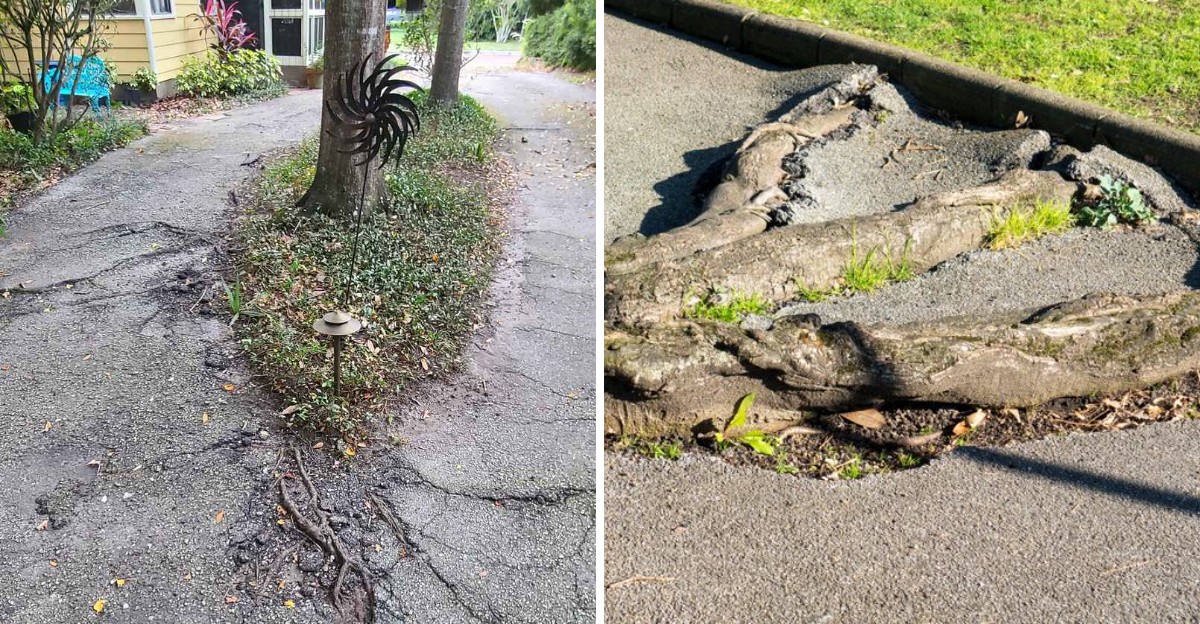
A single sweetgum in Fairfax County rewrote the rules for every property owner in Virginia. Its hidden growth crept under the townhouse next door, buckling a retaining wall and cracking pipes. The fight went all the way to the state Supreme Court in 2007.
Funny thing is, I used to think anything growing across the fence was simply my problem. For decades, that was pretty much the law here, too. You could snip whatever crossed the line, and that was about it.
Now the picture looks different. A neighbor’s tree can turn into their legal headache when it does real harm to your property. That shift matters a lot when a concrete repair can run into the thousands.
Still, a crack in the driveway does not automatically mean a check in your mailbox. So who really pays when the pavement starts to lift and split?
One Sweetgum Tree Changed the Rules Under Your Driveway
Before 2007, Virginia homeowners lived under a rule borrowed from Massachusetts. If a neighbor’s branches or roots crossed into your yard, your only remedy was to cut them back yourself.
The tree owner owed you nothing, even if the damage was serious.
That changed with a case called Fancher v. Fagella.
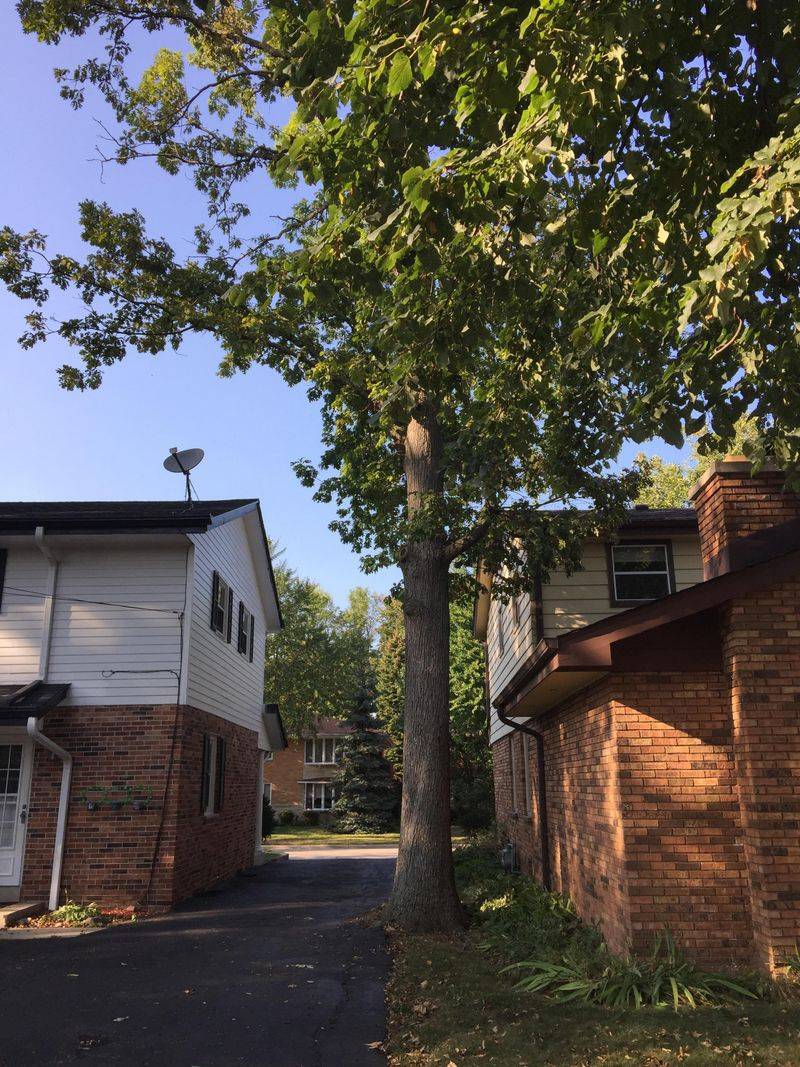
A sweetgum tree growing close to a Fairfax County townhouse sent roots under the house next door. The roots damaged a retaining wall, clogged drain and sewer pipes, and threatened the foundation.
The owner of the damaged home asked the court to order the tree removed. Lower courts said no, pointing to the old rule.
The Supreme Court of Virginia disagreed and tossed out the decades-old approach.
The justices adopted what lawyers call the Hawaii Rule. Under it, encroaching trees and plants are not a nuisance just because they drop leaves, cast shade, or send twigs over the fence.
They can become a legal nuisance once they cause actual harm or pose an imminent danger of actual harm to a neighbor’s property.
Funny how one stubborn sweetgum can shift the law for a whole state. For anyone staring at a buckled driveway, that ruling is the reason you might have real options today.
Before 2007, you mostly had a saw, a sigh, and a repair bill with your name on it.
Cracked Concrete Has to Show Real Harm Before the Tree Owner Pays
Short answer first. If your neighbor’s tree roots are causing actual damage to your driveway, the tree owner may be responsible for the cost.
The key word is actual, and courts take it seriously.
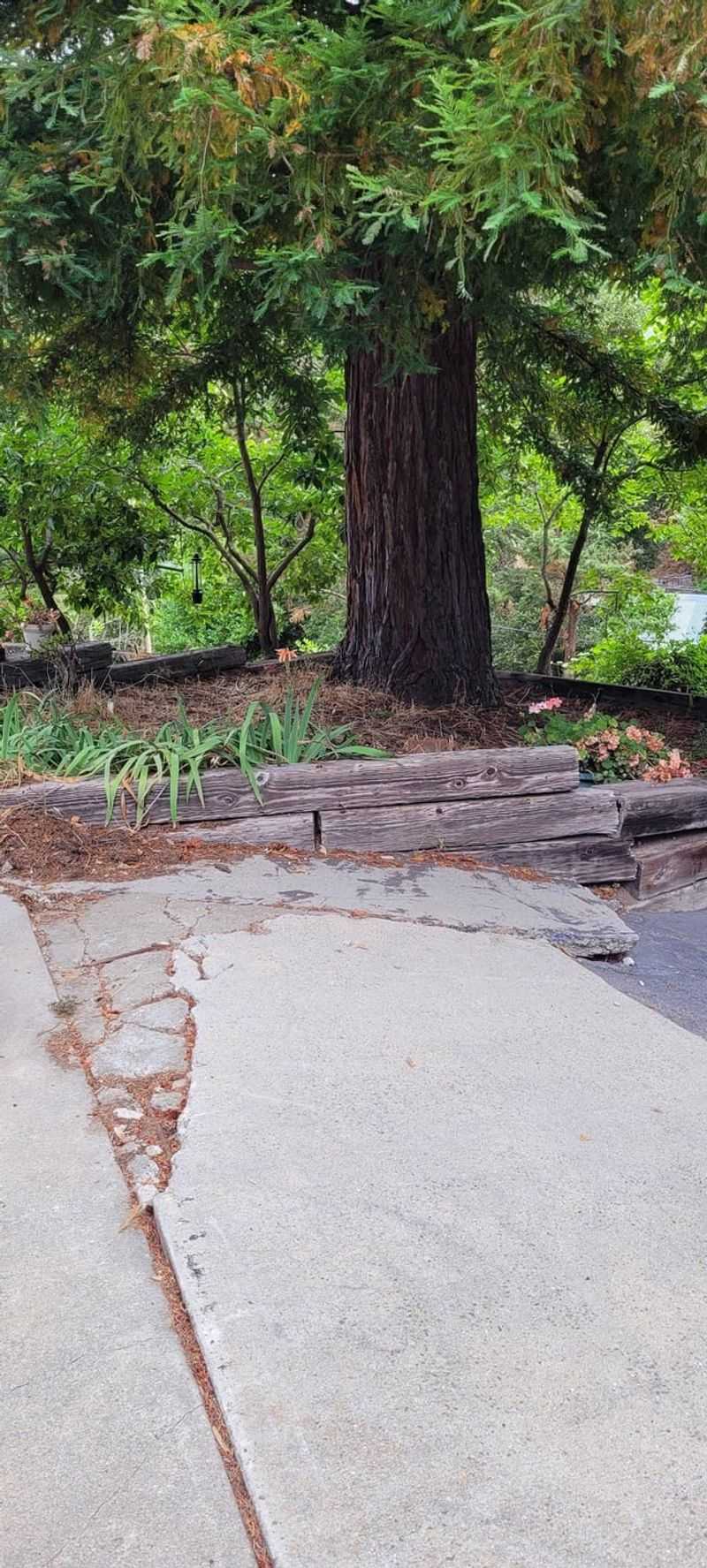
A few hairline cracks or a slightly uneven slab may not clear the bar. A driveway that has heaved, split, or become a tripping hazard is a much stronger case.
Proof that the roots belong to the neighbor’s tree, and not to a tree on your side, matters too.
Under the Fancher ruling, a court can do two things. It can award money damages to cover repairs, and it can order the owner to cut back or even remove the tree.
Judges weigh both choices carefully, and removal is usually a last resort.
Between you and me, the hardest part is often proving cause. Concrete also cracks from settling soil, freeze and thaw cycles, poor base work, and heavy trucks.
A good lawyer or arborist will want to rule those out first.
Fairness counts as well. If you poured the driveway right up against a tree that was already there, expect questions.
Every case turns on its own facts, so a quick chat with a local real estate attorney is money well spent.
Grab Your Phone and Photograph Every Lifted Slab
Don’t make my mistake of waiting until the cracks look dramatic. Evidence builds over time, and a clear record can carry more weight than any angry conversation.
Start a simple file the day you notice the first lift.
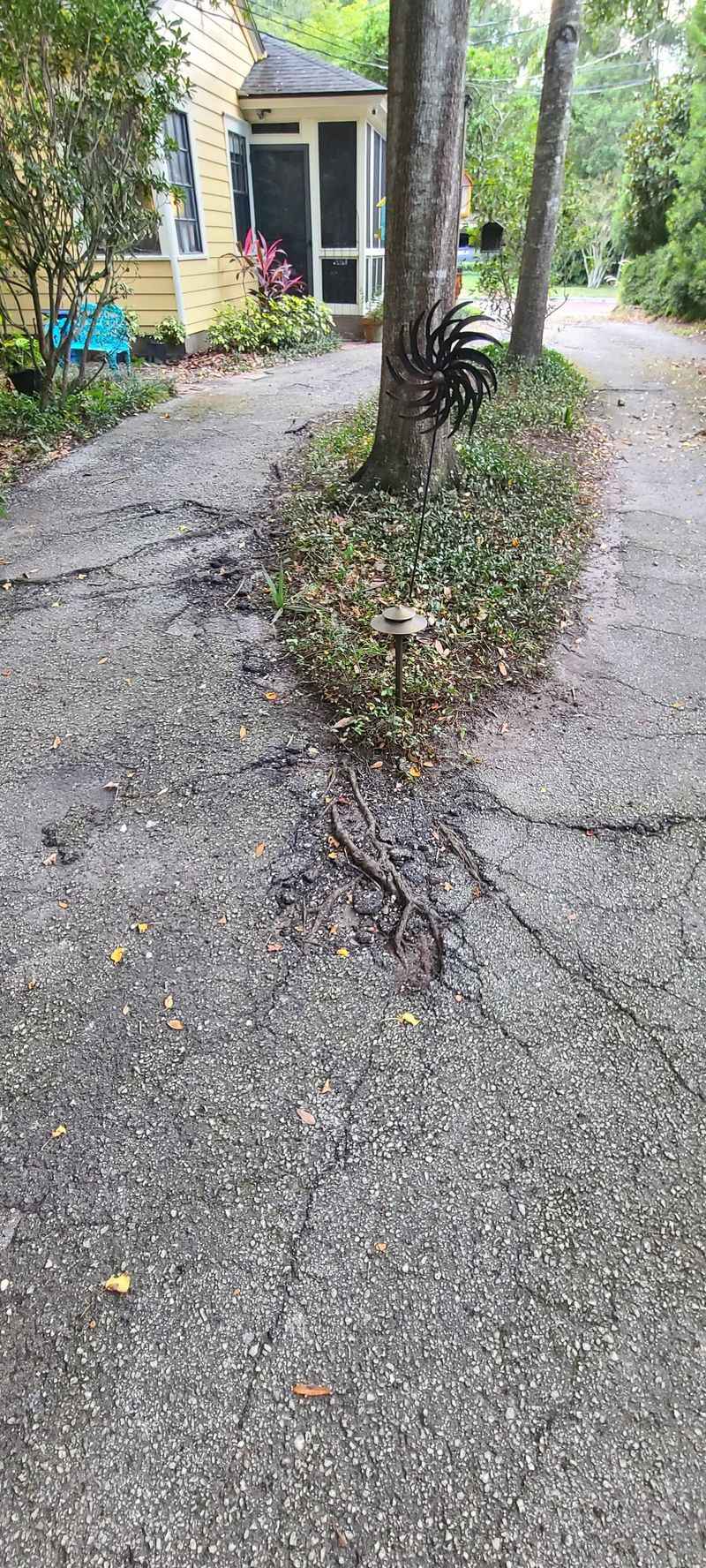
Snap dated photos of the cracks from several angles, with a tape measure or ruler for scale. Take wide shots that show the tree, the property line, and the driveway in one frame.
Repeat every few months so the progression is obvious.
Next, gather the paper trail. Keep a copy of your plat or survey so the tree’s location is clear, and save every repair estimate.
Two or three written quotes from concrete contractors make your costs easy to understand.
A certified arborist report can be the strongest piece of the puzzle. An arborist can trace which tree the roots come from and explain how they caused the heaving.
The International Society of Arboriculture has a free search tool for finding certified pros near you.
Finally, put your concerns in writing to your neighbor. A polite letter or email describing the problem shows you gave notice and a chance to fix it.
Keep it factual, skip the blame, and save a copy for your records.
Trimming Roots on Your Side of the Line Comes With Strings Attached
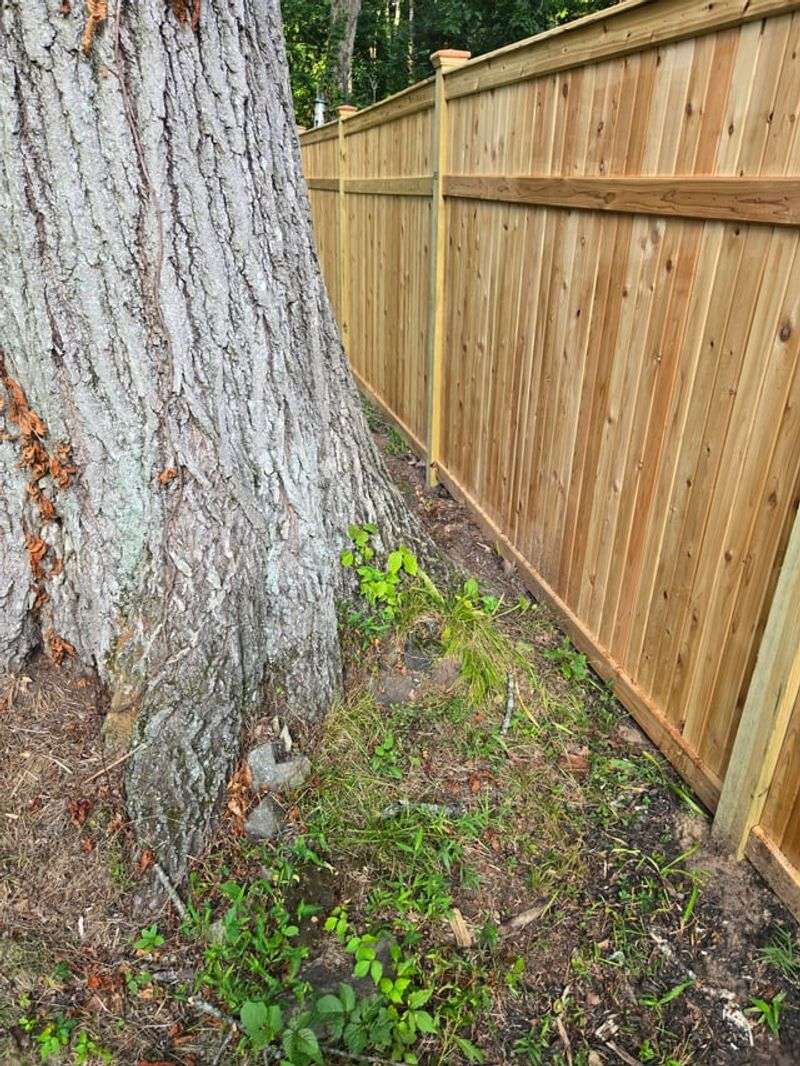
Self-help is still legal in Virginia. You can cut roots and branches that cross onto your land, right up to the property line, at your own expense.
That right survived the 2007 ruling.
The catch is how far you go. Cutting a big anchor root close to the trunk can leave a tree unstable or in serious decline, and a toppled tree is a far bigger problem than a cracked slab.
You also can’t step onto your neighbor’s yard to do the work without permission.
Harming a neighbor’s tree can backfire fast. Wrongful cutting can lead to a lawsuit, and some state laws allow extra penalties beyond the tree’s value.
Courts look closely at whether you acted reasonably and stayed on your side.
For what it’s worth, an arborist should guide any root pruning near a mature tree. Many experts suggest keeping cuts as far from the trunk as possible, often several times the trunk diameter away.
Clean cuts with a root saw are easier on the tree than ragged tears from a backhoe.
Timing helps a lot too. Late winter or early spring, before heavy summer heat and drought stress set in, is often gentler on the tree.
And please keep the cuttings on your side, because tossing them back over the fence can count as dumping.
Homeowners Insurance Rarely Covers a Root-Lifted Driveway
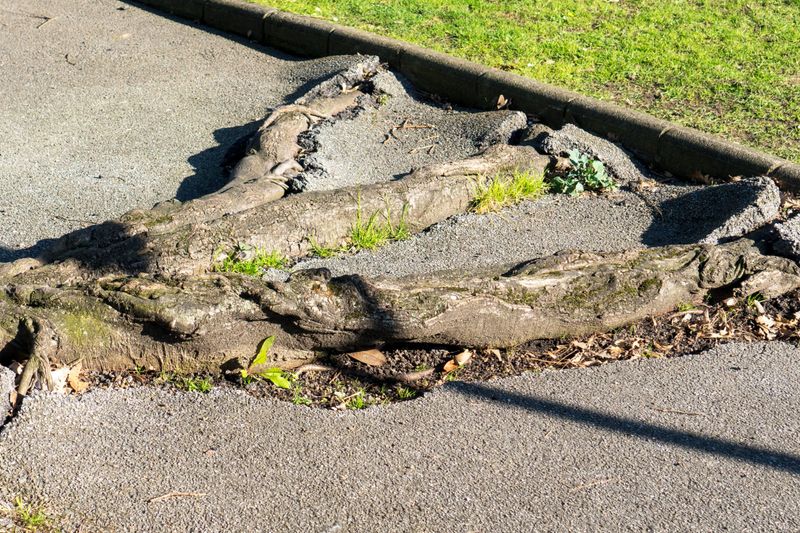
Plenty of people assume their insurance will step in. Sadly, most standard homeowners policies exclude damage that happens slowly over time, and creeping roots fit that description.
Insurers tend to treat it like wear and tear.
A sudden event is different. If a storm topples a neighbor’s tree onto your driveway or car, your own policy often handles the claim first.
Your insurer may then try to recover costs from the neighbor if the tree was clearly unhealthy beforehand.
Root damage under pavement is a slower story. That is exactly why the Fancher ruling matters so much to homeowners.
Your path to repayment usually runs through the tree owner, not your insurance company.
Still, call your agent and ask directly. Policies vary, and some include optional coverage for things like sewer line damage that roots can cause.
Ask for answers in writing so nothing gets lost later.
Your neighbor’s liability coverage might also come into play. If a court finds the tree owner responsible, their homeowners policy may help pay, depending on its terms.
Mentioning that gently can lower the temperature, because the money may not come straight from their wallet.
One more tip from my own yard. Check whether your drain or sewer lines run near that tree, since roots that lift concrete often hunt for water in pipes too.
Catching both problems at once can save a second headache.
Silver Maples, Willows, and Sweetgums Are Notorious Driveway Lifters
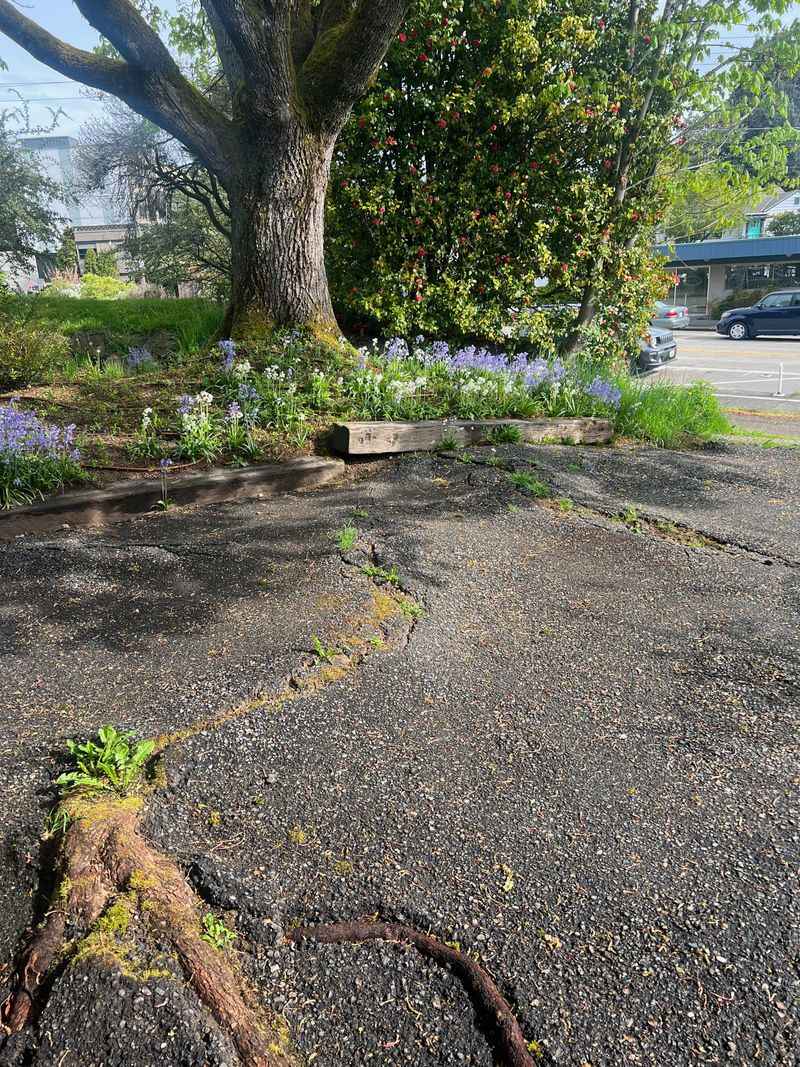
Some trees are worse offenders than others. Silver maples, willows, poplars, and sweetgums are well known for shallow, muscular roots that buckle pavement.
Even a stately red maple or a big pin oak can cause trouble when it grows close to a slab.
Most tree roots live in the top 12 to 18 inches of soil, not deep underground like many people picture. They also spread far, often two to three times wider than the canopy.
That means a tree twenty feet away can easily reach under your driveway.
Soil plays a big role here. Much of central Virginia sits on heavy red clay, which packs down hard and holds little oxygen deep down.
Roots stay near the surface where air and water are easier to find.
Pavement creates a cozy spot for them, too. Moisture collects under concrete and asphalt, so roots follow it and thicken year after year.
As they grow, they press upward with surprising force.
What surprised me most is how differently each surface reacts. Asphalt often shows trouble first as a soft bump or ridge, while concrete tends to crack and tilt in sections.
Gaps along the edge of the drive are another early clue.
A Friendly Talk Over the Backyard Fence Beats a Courtroom
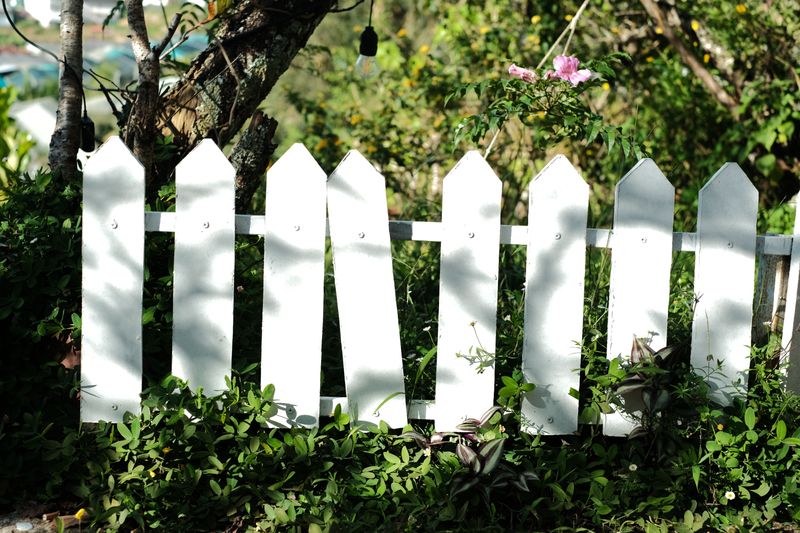
Let’s just say lawsuits between neighbors rarely leave anyone smiling. Before you call a lawyer, try knocking on the door with your photos in hand.
Many tree owners have no idea their roots are causing trouble next door.
Suggest splitting the cost of an arborist visit so you both hear the same facts. Options might include root pruning, a root barrier, sharing repair costs, or removing a struggling tree.
A written agreement, even a simple one, keeps everyone on the same page.
If talks stall, mediation is a solid next step. Many Virginia communities offer low-cost dispute resolution centers, and the state court system keeps a list of certified mediators.
A neutral person can calm tempers fast.
Court is the last stop. General district courts handle claims up to 25,000 dollars, and a small claims division takes cases up to 5,000 dollars without lawyers.
Bigger repairs or requests to remove a tree may belong in circuit court.
Watch the clock as well. Property damage claims in the state generally have a five-year deadline, though ongoing root damage can complicate the math.
A local attorney can tell you exactly where you stand.
Take it from someone who has drafted a few cranky emails, and keep your tone calm. Judges notice who tried to solve the problem reasonably.
You still have to live next to these folks after the dust settles.
Root Barriers and Smart Tree Spacing Protect Your Next Driveway
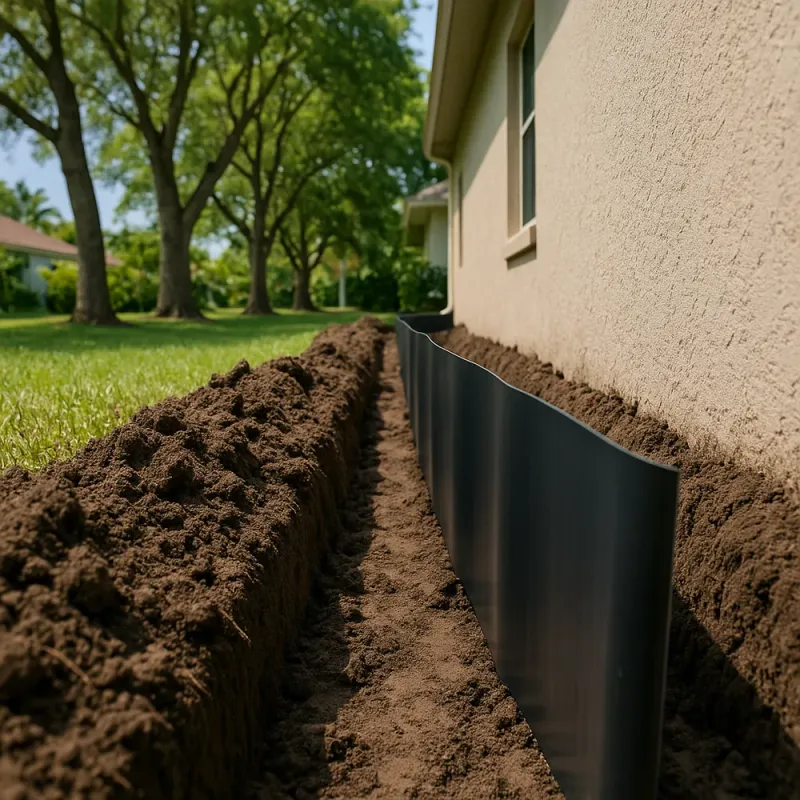
Prevention costs far less than tearing out concrete. If you’re repaving, install a root barrier along the edge of the new driveway.
Rigid plastic panels set 18 to 30 inches deep steer roots downward and away from the slab.
Talk to your neighbor about adding one on their side, too, near the property line. Barriers work best before roots arrive, though an arborist can sometimes install one after careful root pruning.
Planting something new yourself? Give large shade trees plenty of room, often 20 feet or more from pavement.
For tight spots, consider smaller natives like serviceberry, redbud, or fringetree, which are far gentler on hardscapes.
Thicker driveways help as well. A well-compacted gravel base and reinforced concrete resist heaving better than a thin slab poured over loose fill.
Ask your contractor about it before the trucks arrive.
Late fall through early spring is a great window for planting trees across most of Virginia, when cooler weather helps roots settle in. Mulch wide, water well the first summer, and check spacing twice before you dig.
My garden taught me that trees and pavement can share a yard peacefully with a little planning. Know your rights under the 2007 ruling, keep good records, and talk early with the folks next door.
Do that, and a cracked driveway becomes a fixable problem instead of a feud.