Why Forsythia and Lilacs Are Blooming in New York in November
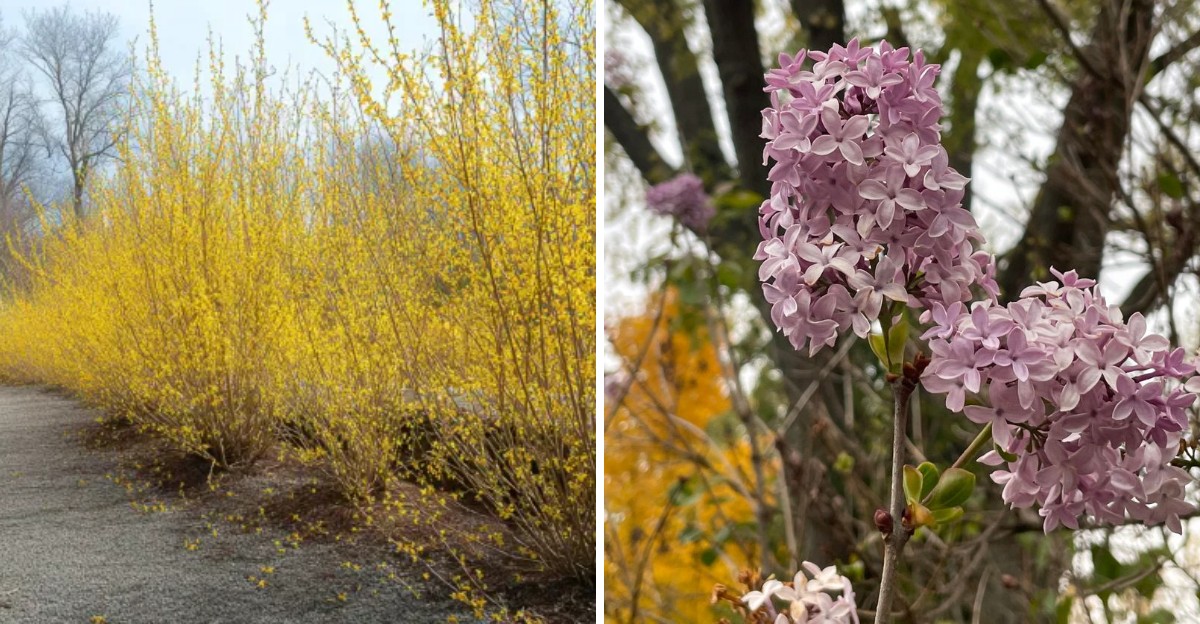
A few yellow flowers popped open on a bare shrub last week, right next to a pile of raked leaves. My first thought was that my eyes were playing tricks on me.
Those blossoms were supposed to wait until April. Spring shrubs build next year’s flower buds way back in early summer, and they usually sit tight through the cold. Some years, a handful of them simply refuse to wait.
I’ve noticed this happens after certain kinds of summers. Reports of surprise November flowers pop up across New York in years like that, from the Hudson Valley to western towns. Gardeners post photos, and the comments fill with worry and wonder.
So is your shrub confused, sick, or just showing off? The answer says a lot about your summer, your pruning shears, and how your yard might look next spring.
Those November Forsythia Flowers Were Meant for Next April
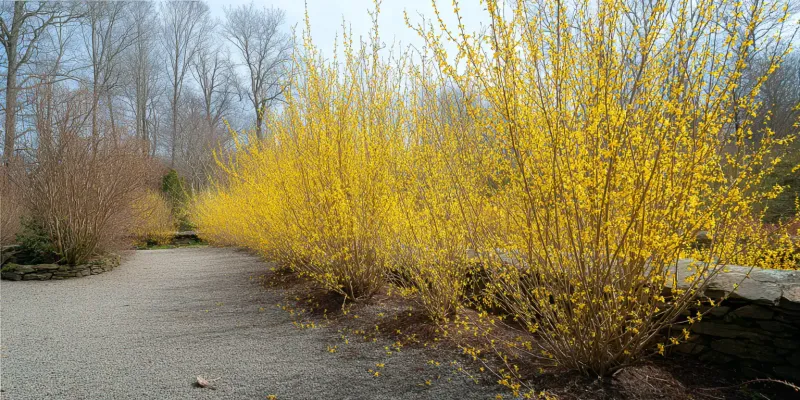
Every flower you see right now was already packed and ready for spring. Forsythia and lilacs set their flower buds in early summer, just weeks after their big spring show ends.
Those tiny buds then sit on the branches through fall and winter. They are built to open only after a long stretch of cold, followed by the warmth and longer days of spring.
Usually, that system works like a charm. The cold acts like a lock, and spring warmth acts like the key.
Sometimes, though, a few buds lose track of the calendar. When that happens, you get a scattering of yellow forsythia blooms or a lonely lilac cluster on a nearly bare shrub in November.
For what it’s worth, it is rarely the whole plant. Most of the time, you will spot just a few sprigs of flowers here and there, often on the sunniest side of the shrub.
Gardeners sometimes call this out-of-season flowering. It looks odd, but it is a known pattern that horticulturists at university extensions have explained for years.
So that bright surprise is not new growth from nowhere. It is a piece of next spring’s show arriving way too early, and understanding why it happened is the first step to keeping more flowers for April.
A Chilly Snap Then a Warm Spell Can Fool Lilac Buds
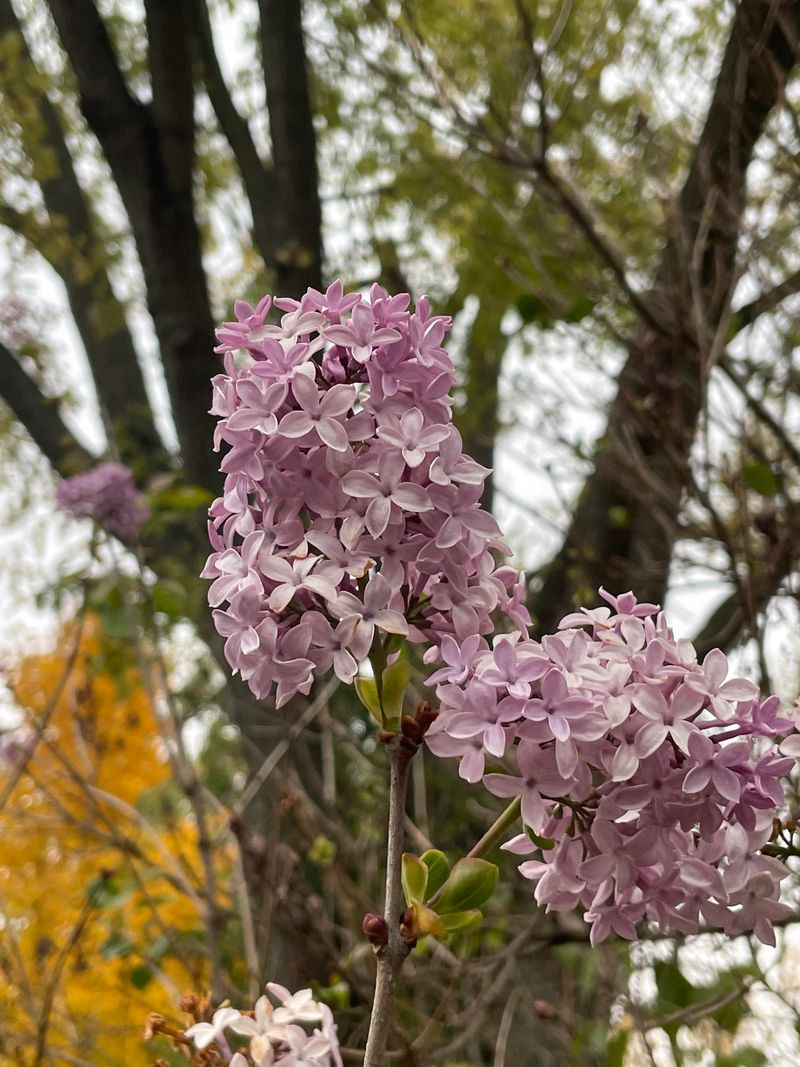
Weather whiplash is the biggest trigger behind these surprise blooms. A string of cool fall nights can feel a bit like winter to a shrub’s buds.
Then comes a run of warm, sunny November days. To a lilac or forsythia, that combo can look a lot like the end of winter and the start of spring.
Let’s just say the buds do not have a calendar. They respond to temperature signals, and a cool-then-warm pattern can nudge some of them to open.
Lilacs are famous for this kind of sensitivity. Scientists who study phenology, the timing of natural events, use lilacs as indicator plants because their flowering tracks temperature so closely.
Not every bud gets fooled. Most buds still need a much longer chill before they are truly ready, so only a few on the plant usually respond.
In New York, late fall warm spells are common enough that a handful of blooms show up somewhere in the state many years. Hudson Valley and downstate yards often see it, but western and northern gardens can too.
If you noticed flowers right after a mild week, the timing is your clue. Your shrub likely felt a mini winter, then got tricked by a sunny warm stretch.
Last Summer’s Heat and Drought Set the Stage for Your Shrubs
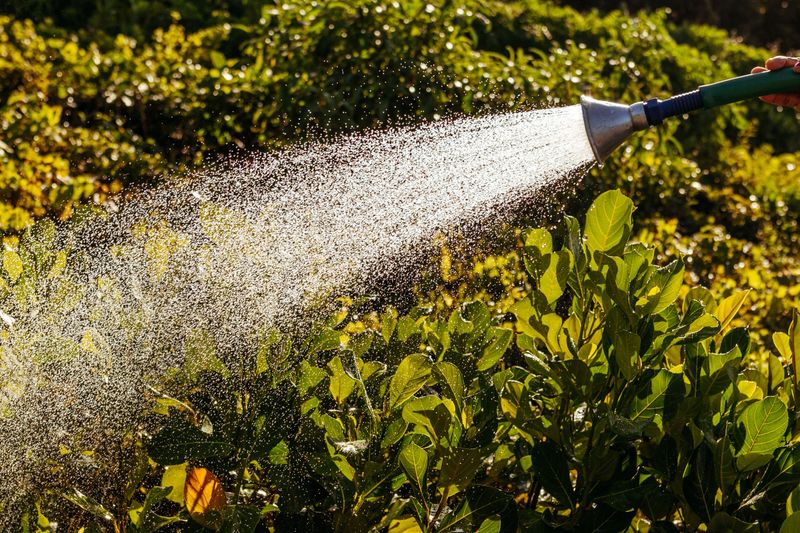
Here’s what caught my attention after a tough summer in my own garden. The shrubs that struggled most in July were the ones flowering in November.
Extension experts point to summer stress as a key piece of this puzzle. Long periods of heat and drought, especially without extra watering, can throw a shrub’s internal timing off.
Stressed plants sometimes go into an early, partial rest. Then, when fall brings cool weather followed by warmth, some buds act as if winter has already passed.
That is why the same weather can bring blooms to one forsythia and not the one down the street. The neighbor with the hose running in August may see nothing unusual at all.
Signs your shrub had a rough summer include crispy leaf edges, early yellowing, and leaves dropping well before fall. Lilacs in full sun with shallow, sandy soil often show these signs first.
Between you and me, many of us forget about established shrubs once they look settled. They seem tough, so they get skipped when we water the tomatoes.
Looking back, a deep soak once a week during dry spells would have helped my plants. Watering deeply at the base encourages strong roots that ride out heat waves far better.
Spotty Lilac Leaves Could Be Part of the Story
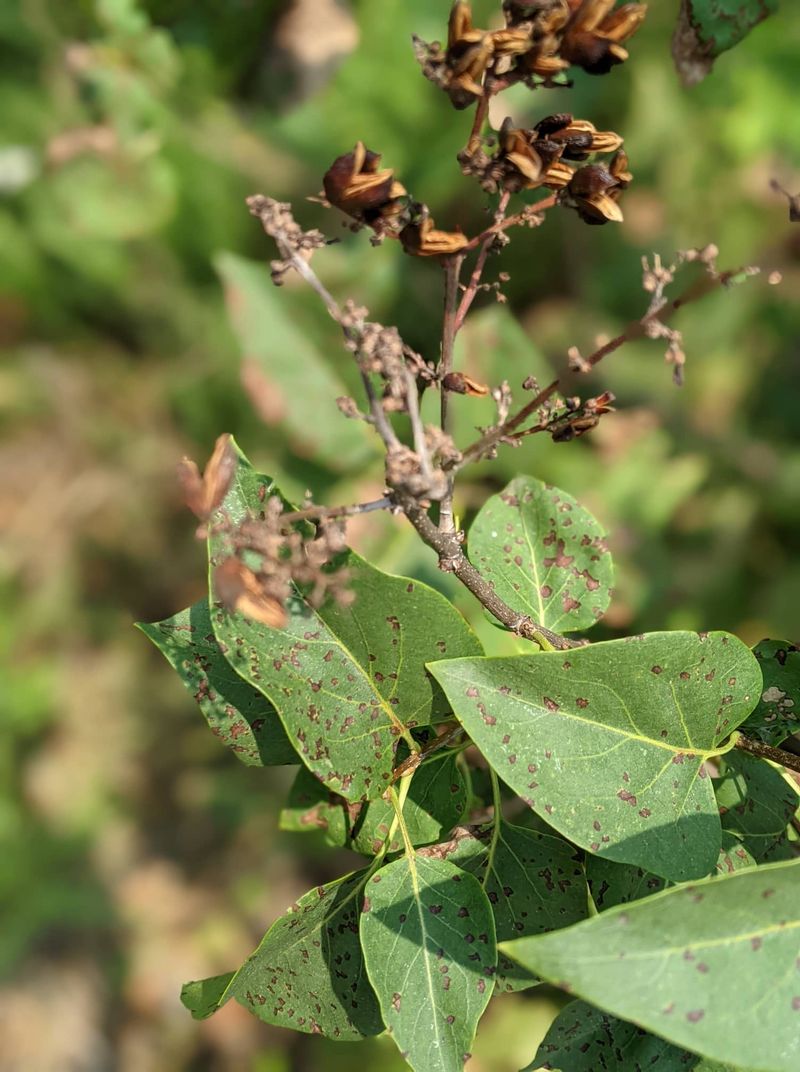
Brown, blotchy lilac leaves in late summer are more than an eyesore. Losing leaves early can stress a shrub enough to scramble its bloom schedule.
Lilacs are prone to fungal leaf spot problems, including one caused by Pseudocercospora fungi. Anthracnose and other leaf diseases can also cause early leaf drop on many shrubs.
When a plant loses its leaves weeks ahead of schedule, it can act like fall arrived early. Then a warm stretch later on may coax some buds open.
Wet springs and humid summers make these fungi happier. Crowded shrubs with poor airflow tend to have the worst trouble.
My garden taught me that cleanup matters here. Raking up and removing infected fallen leaves in autumn helps reduce the fungus spores waiting to strike next year.
A few other habits help too:
Water at the soil level instead of spraying leaves. Thin out a few of the oldest stems after spring bloom so air can flow through the shrub.
Give new lilacs plenty of sun and space when planting. A well-spaced lilac dries off faster after rain, which leaves fungi less time to settle in.
A Fall Haircut on Forsythia Can Backfire
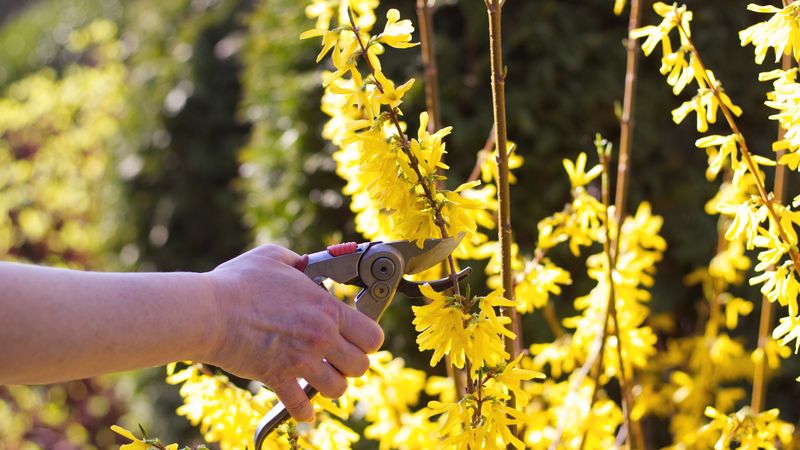
Pruning shears can cause more trouble than you’d expect. Heavy or badly timed cuts add stress, and stressed shrubs are more likely to bloom out of step.
Forsythia and lilacs both bloom on old wood. That means next spring’s flower buds are already sitting on the branches you see right now.
Cut them back in late summer, fall, or winter, and you’re tossing out next year’s flowers. You also push the plant to react to a sudden loss of branches.
The best time to prune both shrubs is right after they finish blooming in spring. That gives them the whole summer to grow new stems and set fresh buds.
Don’t make my mistake of shearing forsythia into a tidy box. It loses its natural fountain shape and ends up with fewer flowers along the outer edges.
A gentler approach works better. Each year after bloom, remove a few of the oldest, thickest stems right at the ground.
For overgrown lilacs, spread the renewal over about three years. Taking out roughly one third of the oldest stems each spring keeps the plant healthy without shocking it.
So if the urge to tidy hits this month, set the shears down. Your April flowers will thank you.
Fewer Spring Blossoms May Follow These Early Lilac Flowers
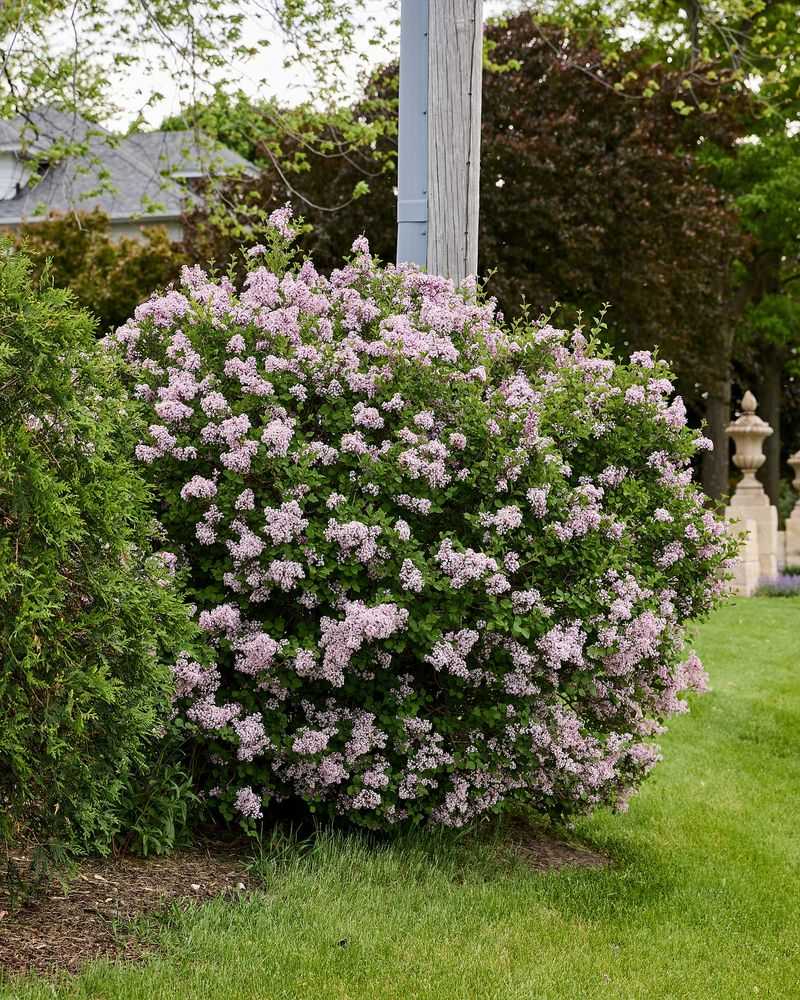
Every November flower comes with a small price tag. The buds that open now won’t open again in spring.
Most of the time, only a few buds jump the gun, so the change in April is easy to miss. If a lot of buds opened, though, your spring display could look noticeably thinner.
Relax about your shrub’s overall health. A fall bloom rarely causes serious harm, and the plant carries on just fine.
Freezing nights will quickly brown those early flowers. That is normal and nothing to panic about.
Repeated rounds of premature blooming followed by hard freezes can add stress over time. Still, extension specialists say serious damage is unlikely unless the plant was already weak.
There’s also a wildlife angle worth knowing. Very few pollinators are active in late fall, so these flowers offer little food and produce little seed.
If spring blooms come in lighter, early-season bees lose a bit of their menu too. That’s one more reason to keep your shrubs well cared for.
If you ask me, the best move is simply enjoying the odd November bouquet. Snip a sprig for a vase if you like, since those flowers won’t last outdoors anyway.
Witch Hazel and Reblooming Lilacs Are Supposed to Flower Now
Not every late flower is a confused one. Some plants are right on schedule in November.
Common witch hazel is the star example. This native New York shrub produces spidery, ribbon-like yellow flowers in fall, sometimes as late as November.
From a distance, those yellow blooms can look a bit like forsythia. Up close, the thin, crinkly petals give witch hazel away.
Asters, goldenrod, and Japanese anemones are other normal fall bloomers. Seeing them flower now is expected and nothing to puzzle over.
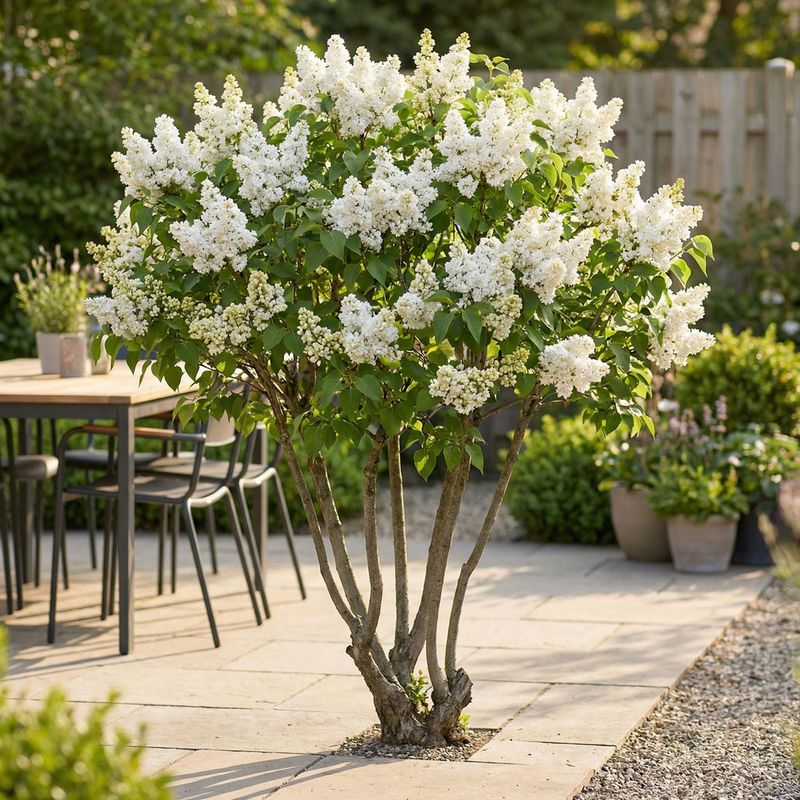
Then there are reblooming lilacs. Varieties like Bloomerang lilac were bred to flower in spring and again from late summer into fall.
If you planted one of these, a second round of purple flowers is exactly what you paid for. Check your old plant tag or nursery receipt if you aren’t sure what you have.
Fun fact for your next garden chat. Witch hazel is one of the few native shrubs that blooms so late, and its seed capsules can later pop open and fling seeds several feet.
So before you worry, take a closer look at the flower shape and the plant itself. You might be admiring a shrub doing precisely what nature intended.
Deep Watering and Mulch Help Your Forsythia Rest Easy This Winter
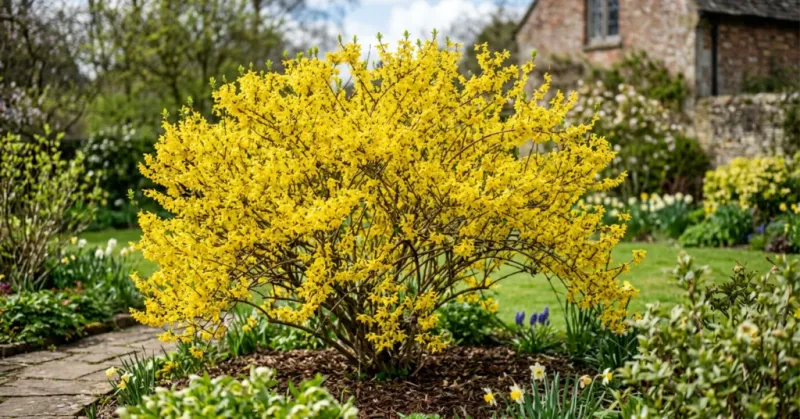
A little care right now can make next spring brighter. The goal is a calm, well-hydrated shrub heading into winter.
Keep watering trees and shrubs during dry spells until the ground freezes or a hard frost arrives. Well-hydrated plants handle winter wind and cold much better.
Next, add a 2 to 3 inch layer of shredded bark or wood chips around the base. Keep the mulch pulled back a few inches from the stems to prevent rot and rodent damage.
That mulch blanket holds moisture and evens out soil temperature swings. It’s a cheap, simple fix with big payoffs.
Plan ahead for summer too. Deep watering during droughts and quick cleanup of diseased lilac leaves lower the stress that leads to odd timing.
Lilacs are also a fun way to join citizen science. The USA National Phenology Network tracks bloom timing, and its data shows spring arriving about 2.5 days earlier per decade in many places.
Logging your lilac’s flowers through their Nature’s Notebook program helps scientists follow those shifting seasons. It turns your backyard into a tiny research station.
Most of all, enjoy the surprise. A few November blooms are a fun reminder that your shrubs are paying close attention to the weather, just like you.