Never Burn a Leaf Pile With Poison Ivy in It in North Carolina, and Here’s Why
One drop of a certain plant oil can make your skin itch for weeks, and fire does not break it down. Flames just set it loose. The oil hitches a ride on smoke and drifts wherever the breeze goes.
That surprised me the first time I read it. Most of us treat a leaf fire like a cozy fall ritual, with crackling sticks and that sweet, earthy smell. Few people stop to check what else got raked into the pile.
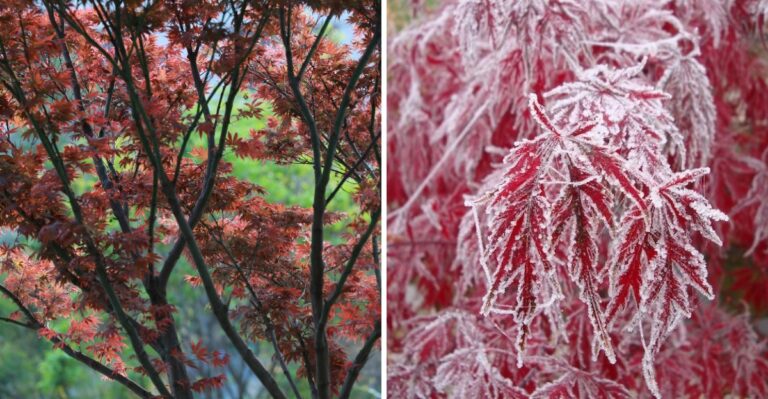
In North Carolina, autumn leaves pile up right along fence lines and woodland edges. That is prime territory for a sneaky vine that turns brilliant red in October and blends in with every maple leaf you sweep up. Its stems stay risky even after the leaves drop.
1. That Smoky Leaf Pile Carries More Than Just Ash
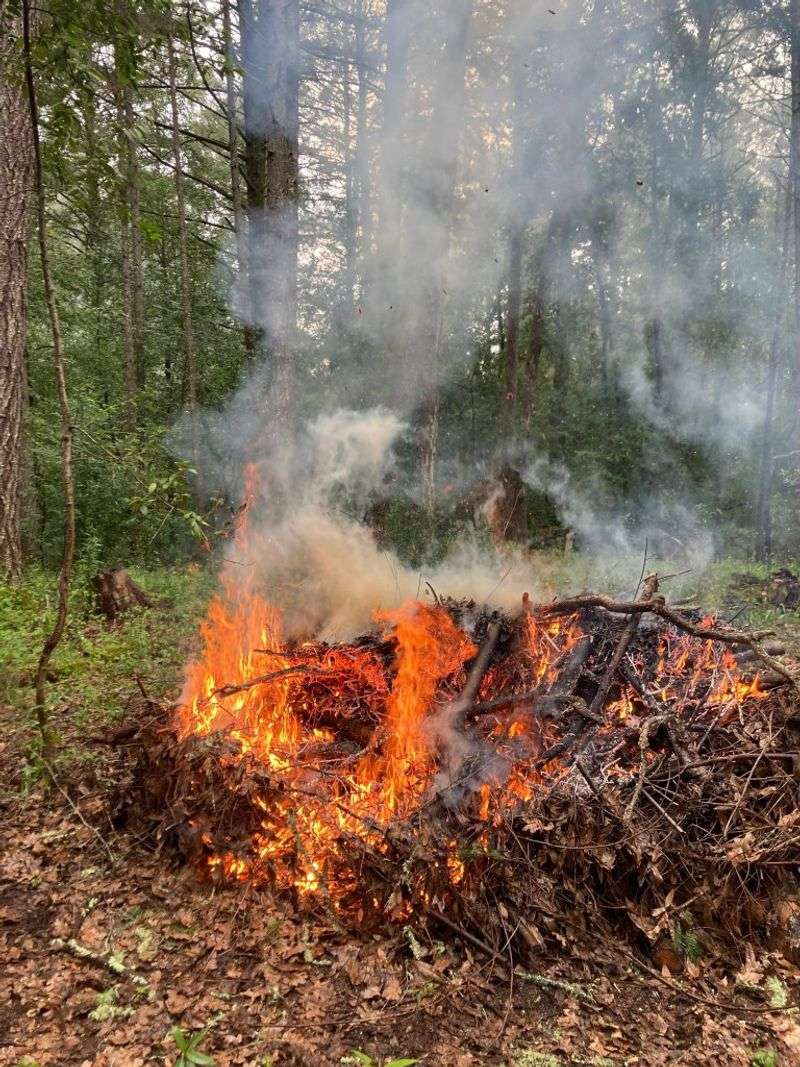
Flames feel like the ultimate cleanup tool. Toss it in, watch it burn, and the problem is gone, right? Not with this vine.
Poison ivy gets its itch from urushiol, an oily resin found in its leaves, stems, roots, and berries. Heat does not break urushiol down the way it breaks down paper or wood. When the plant burns, tiny droplets of the oil cling to smoke particles and float away.
One hidden vine can turn a whole bonfire into a cloud of airborne allergen. Anyone standing downwind can breathe it in or get it on their skin. Kids roasting marshmallows and dogs sniffing around the fire are at risk too.
The American Academy of Dermatology estimates that roughly 50 million Americans react to urushiol each year. Experts also figure most adults, around 80 to 90 percent, are sensitive to it. So the odds are high that somebody near your fire will react.
Personally, I treat any mystery vine in a leaf pile as guilty until proven innocent. If you cannot confirm what is in there, skip the match. Pull the suspicious stuff out first, or choose a safer way to handle your leaves this fall.
2. Poison Ivy Smoke Can Inflame Your Throat And Lungs
Your lungs are not built to handle urushiol. Skin has a tough outer layer, but the lining of your nose, throat, and airways is thin and sensitive.
When someone breathes poison ivy smoke, the oil can trigger the same allergic reaction that causes a skin rash.
Only now it happens inside the body. Doctors and poison control centers report coughing, wheezing, a scratchy or swollen throat, and trouble breathing.
In serious cases, the airways can swell enough to need hospital care. The Mayo Clinic and America’s Poison Centers both warn that inhaling this smoke can lead to severe lung irritation.
Wildland firefighters know this risk well, since brush fires often burn through thick poison ivy patches.
Reactions vary from person to person. Some folks get a mild cough that fades, while others struggle for days. People with asthma or other lung conditions may have a harder time.
My personal rule is simple. If I smell smoke drifting from a burn pile that might hold vines, I move upwind and stay there. You need to do the same, especially with children around, because their smaller airways can react quickly.
3. Call For Help If Breathing Gets Hard After A Leaf Fire
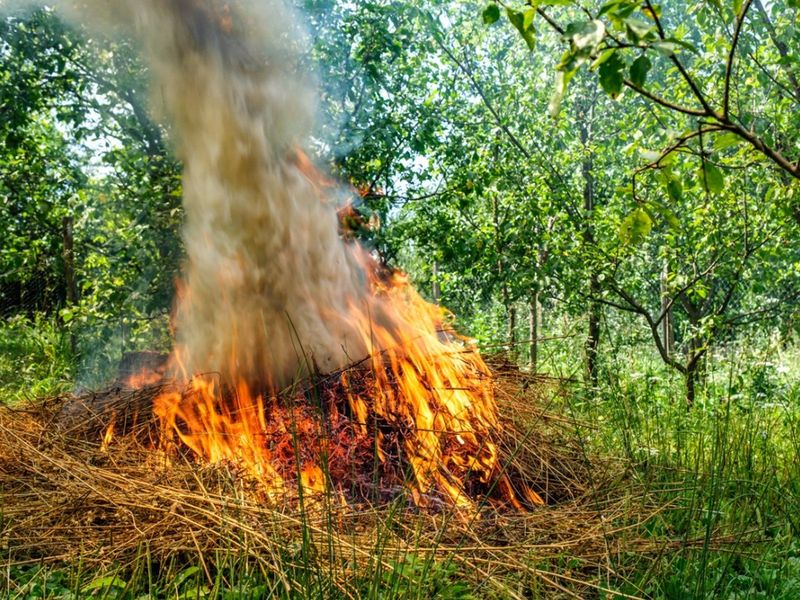
Trouble breathing is not a wait-and-see symptom. If anyone has a tight chest, wheezing, a swollen throat, or a hoarse voice after being near burning brush, call 911 or head to the emergency room right away.
For questions that are not emergencies, the Poison Help line at 1-800-222-1222 connects you to experts any time of day. The call is free and confidential. I keep that number saved in my phone during yard cleanup season.
Skin symptoms can also call for a doctor. Get checked if a rash covers a large part of your body or shows up on your face, eyes, mouth, or genitals. Swelling that shuts an eye or blisters that ooze pus are also red flags.
A doctor may prescribe steroid pills or strong creams to calm the reaction. If scratching opens the skin and causes infection, antibiotics might be needed too.
For milder cases at home, cool compresses, calamine lotion, and oatmeal baths can ease the itch. Oral antihistamines may help you sleep, though they do little for the rash itself. Keep fingernails short so late-night scratching does less harm.
4. Drifting Smoke Can Spread The Poison Ivy Rash Far And Wide
Standing ten feet back from the fire does not guarantee safety. Smoke settles on whatever it touches, and that includes your arms, neck, face, and clothes.
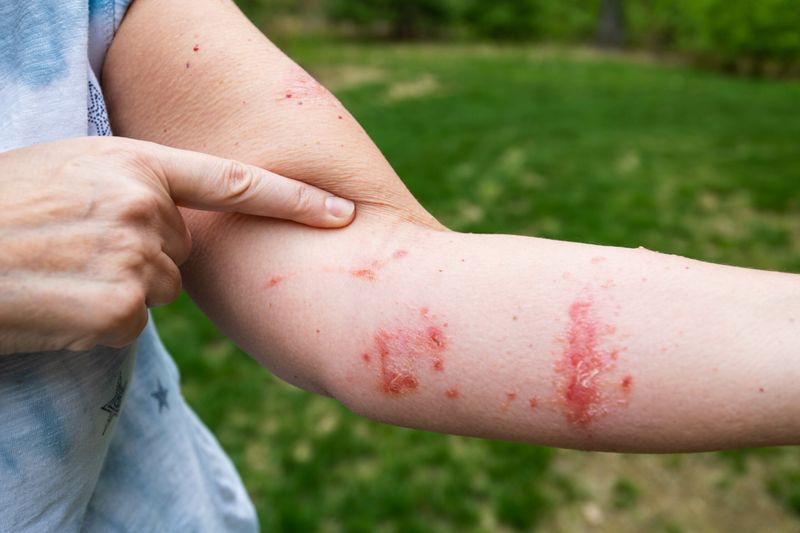
Since the oil lands everywhere at once, a smoke-related rash can spread over much larger areas than a quick brush against a leaf.
Instead of a neat streak on one ankle, you might find itchy patches across your cheeks and eyelids. That is miserable, and it can take weeks to heal.
Symptoms usually show up within 12 to 48 hours. Expect redness, itching, swelling, and sometimes fluid-filled blisters. The rash can keep popping up in new spots for several days, which fools people into thinking it is spreading.
Fun fact, the blister fluid does not spread the rash at all. New patches appear because some skin absorbed more oil or reacts slower than other spots. Leftover oil on clothes, hats, or pet fur can also cause fresh contact.
If you were near a suspicious fire, wash exposed skin with soap and cool water as soon as you can. Acting within the first hour gives you the best shot at removing oil before it binds to skin.
5. Bare Winter Vines And Brown Leaves Still Carry The Oil
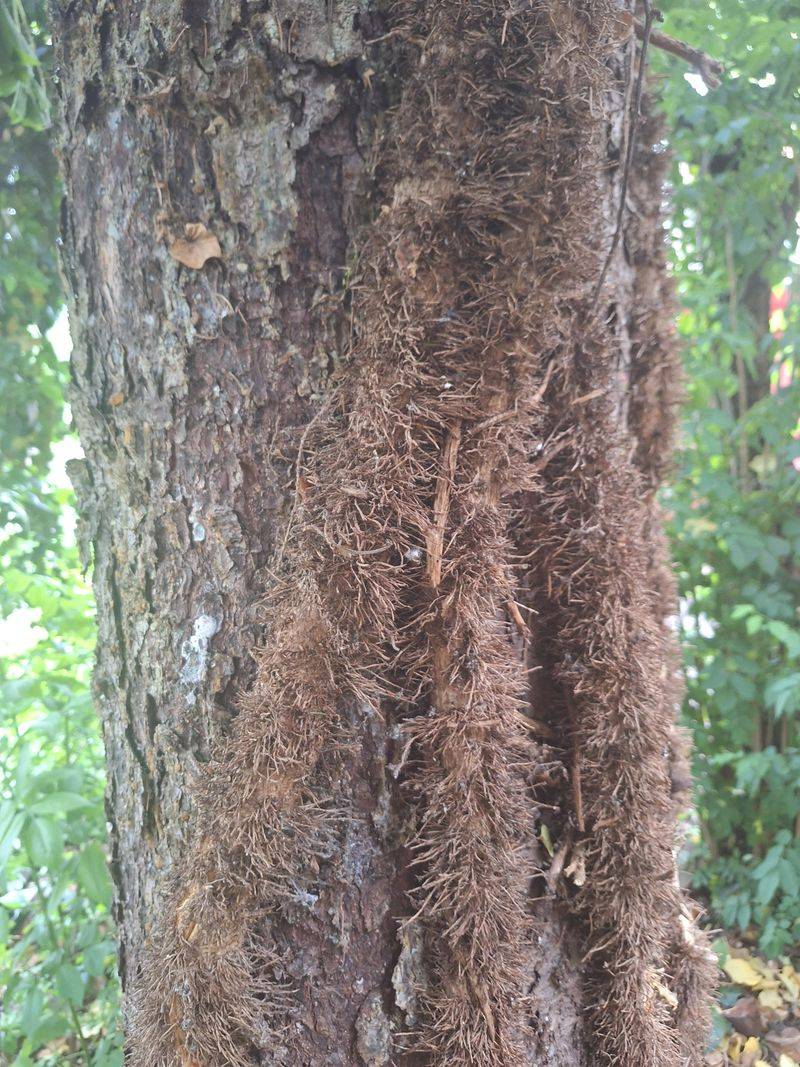
Late fall tricks a lot of gardeners. The bright red leaves drop, the vines look like plain brown rope, and suddenly the plant seems harmless.
It is not. Urushiol stays in the stems and roots all year, and even long-withered plants can cause a reaction. Extension specialists point out that the hairy aerial roots on older vines are just as risky as the leaves.
In North Carolina, poison ivy grows in sun or shade, along fences, stone walls, tree trunks, and woodland edges.
By November, many of those vines are buried under maple and oak leaves you are busy raking. That is how they end up in burn piles without anyone noticing.
The oil is surprisingly durable. Urushiol on tools, gloves, and other surfaces can stay active for years if nobody cleans it off. Old vine pieces in a brush pile can still cause trouble the next spring.
Leafless vines often show off small clusters of whitish berries, too. I like to walk my fence lines before the big leaf drop, while vines are still easy to spot. Flag them with bright tape or a stake, and you will know exactly which corners need gloves later.
6. Learn To Spot Poison Ivy’s Hairy Vine And Three Leaflets
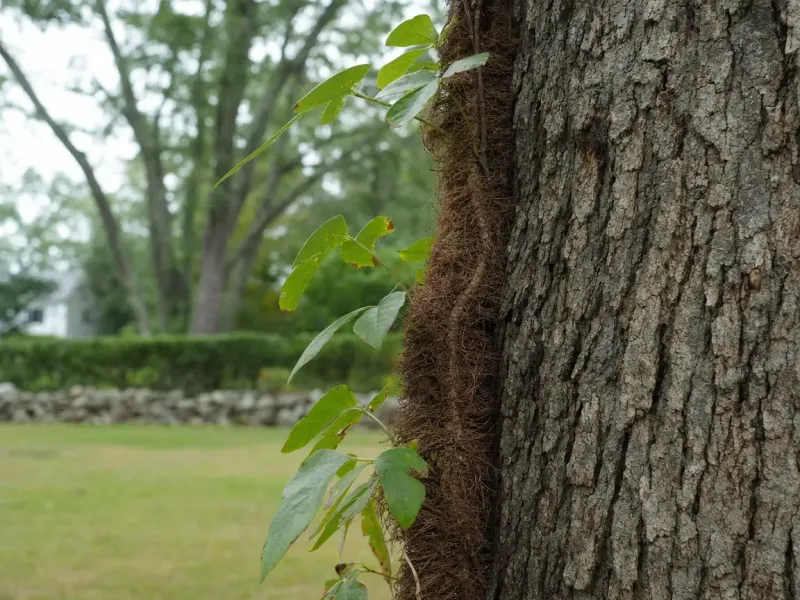
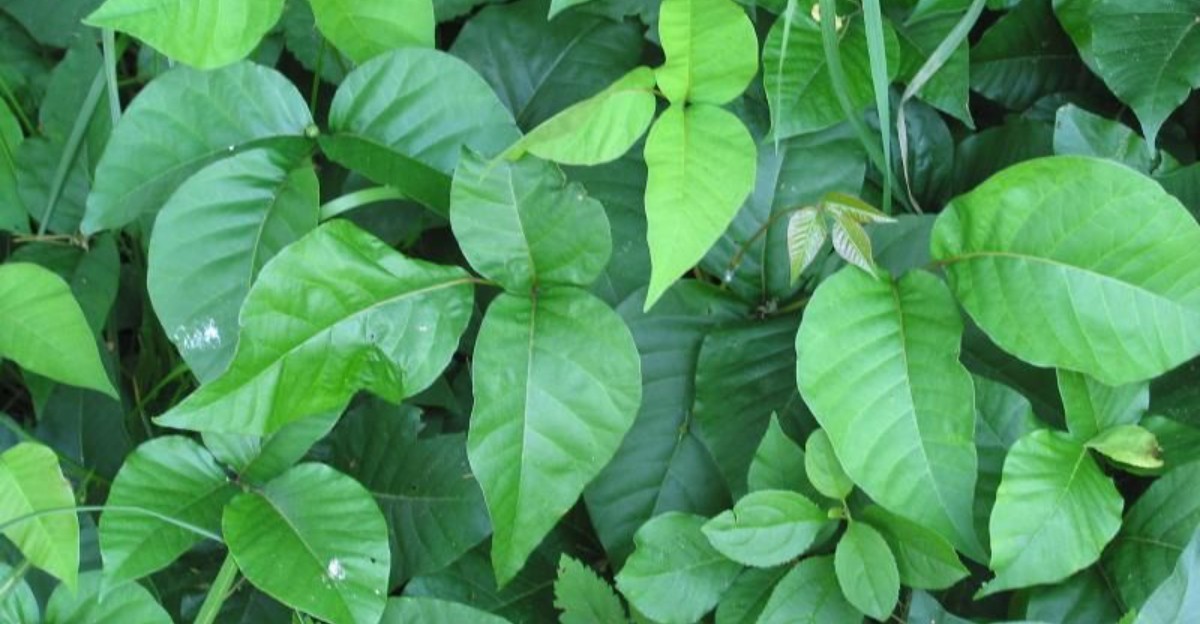
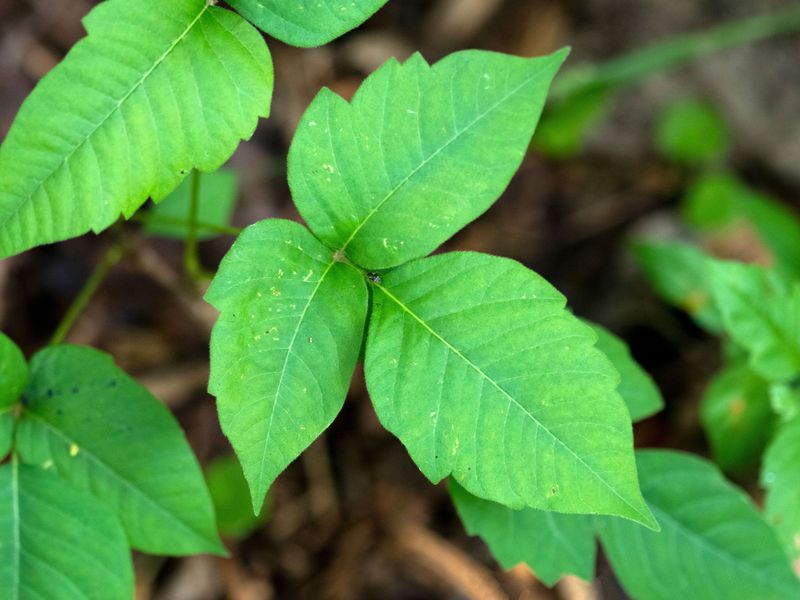
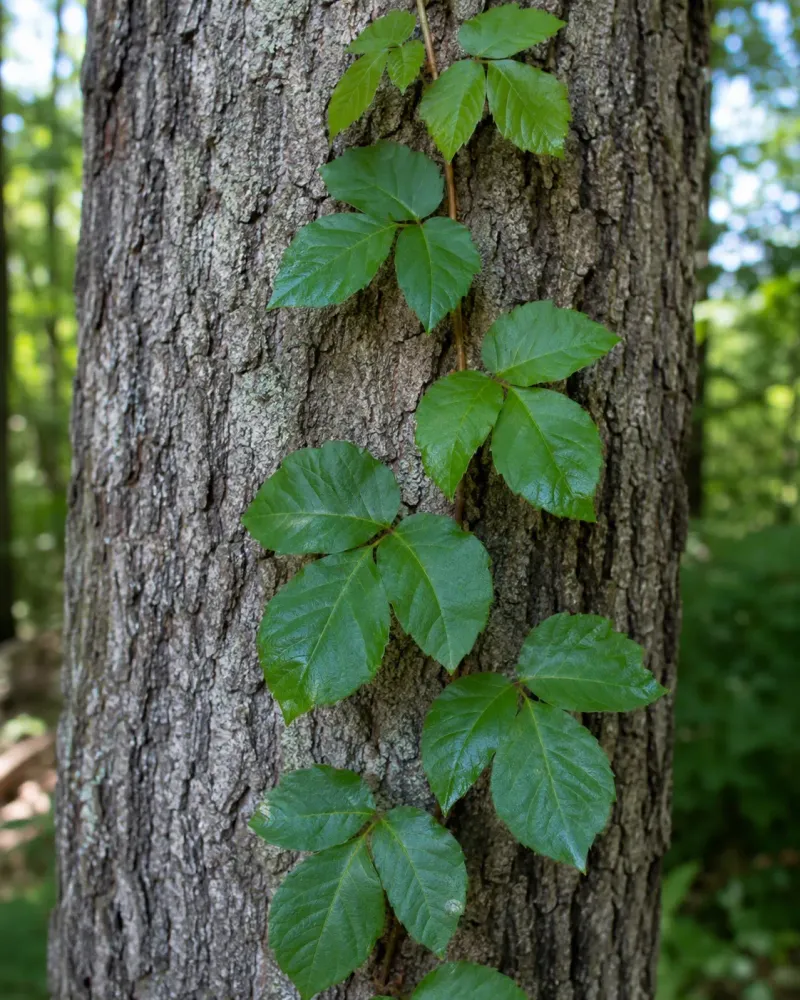
Leaves of three, let it be. The old rhyme still works, but poison ivy has a few more clues worth learning. Each leaf has three leaflets, and the middle one sits on a longer stalk than the two side leaflets.
Edges can be smooth, toothed, or lobed, which confuses plenty of people. In fall, the leaves turn shades of red, orange, and yellow, blending right into a pile of autumn foliage.
The plant can grow as a ground cover, a small shrub, or a climbing vine. Older vines on trees look fuzzy, almost like a rope covered in brown hair. Clusters of small whitish or grayish berries hang on into winter, and birds happily eat them.
Several harmless plants get mistaken for it. Virginia creeper usually has five leaflets, and boxelder seedlings have leaves arranged in opposite pairs.
Poison ivy leaves grow in an alternate pattern along the stem, though young boxelder can look shockingly similar at first.
Not sure? Snap a photo and compare it with an extension guide, or ask your county NC State Extension office. Both beat guessing with a rake in your hand and a lighter in your pocket.
7. Bag Poison Ivy Vines Instead Of Tossing Them In The Fire
Safe disposal starts before the rake ever comes out. Pull or cut poison ivy separately, so it stays out of your leaf pile. That simple habit keeps the rest of your fall leaves clean and usable for mulch.
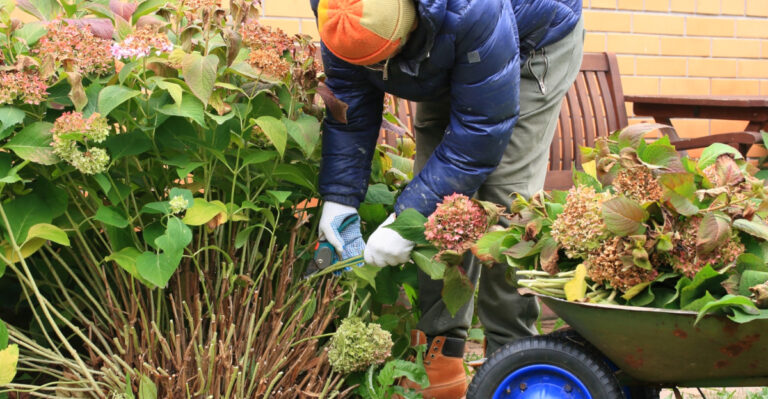
Dress like you mean it. Wear long sleeves, long pants, boots, and heavy waterproof gloves, or slip plastic bags over cotton gloves. Moist soil after a rain makes pulling roots much easier.
Drop vines, roots, and leaves straight into heavy plastic bags, then double-bag and seal them tight.
Most extension services, including NC State, recommend putting the bags in household trash. Keep poison ivy out of compost piles and curbside leaf collection, where workers and future gardeners could touch it.
For big patches, herbicides with glyphosate or triclopyr can help, especially as a cut-stem treatment. Follow every label direction and keep spray away from plants you want to keep. Treated vines still hold urushiol, so handle the remains just as carefully.
Leaf burning rules also matter. North Carolina only allows burning leaves where local ordinances permit it and public pickup isn’t available, and many towns ban it outright. Check with your municipality first, since many offer leaf pickup or drop-off sites.
8. Scrub Your Rake, Gloves, And Skin Before The Oil Spreads

Cleanup does not end when the bags are tied. Urushiol clings to rake handles, pruners, boots, and work gloves, and it can stay active for a long time on untouched surfaces.
Wipe tools with rubbing alcohol or scrub them with dish soap and water while wearing disposable gloves. Do not forget wheelbarrow handles, doorknobs, and car steering wheels you touched along the way. Those spots get overlooked all the time.
Wash work clothes separately in warm water with regular detergent. Pets deserve a bath too if they roamed through the patch, since the oil rides on fur and transfers to your hands during a friendly pat.
For your own skin, rinse with lukewarm water and soap as soon as possible. Dish soap or a special urushiol cleanser can cut the oily resin. Scrub under your fingernails, where the oil loves to hide.
Showers beat baths here, since sitting in a tub can move oil around your body. Cool or lukewarm water also feels better on irritated skin.
My best takeaway is simple. Treat poison ivy as something to remove and bag, not something to burn. Your lungs, your skin, and everyone sharing your backyard this fall will thank you.