How To Set Up A Rain Barrel In California Before The Rainy Season
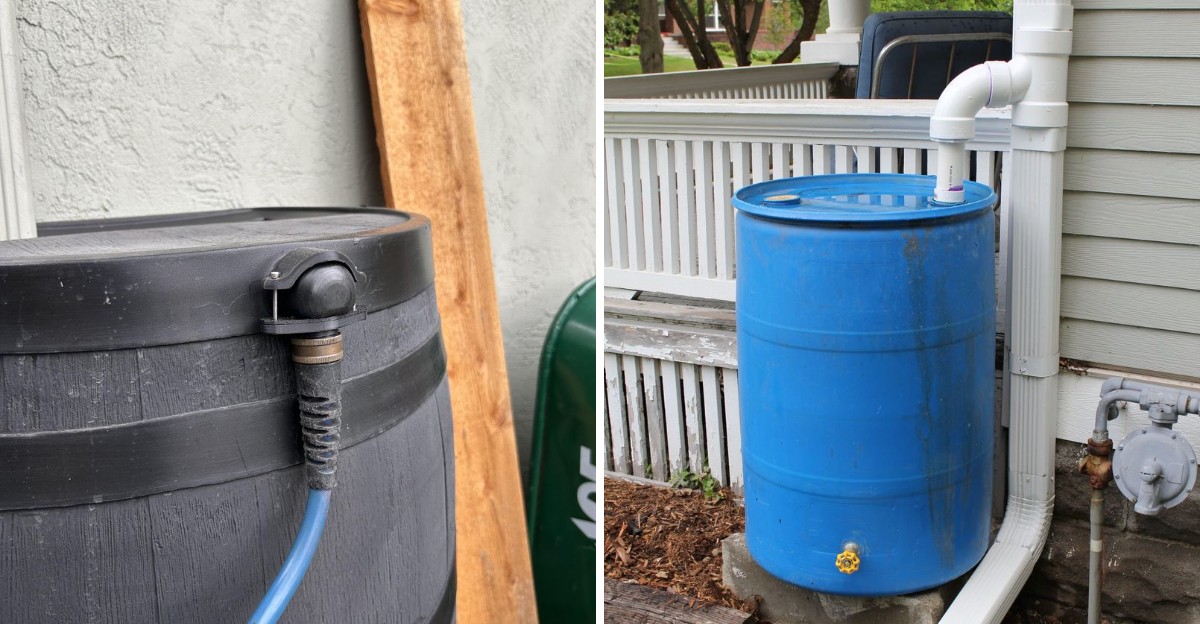
Just one inch of rain falling on a 1,000-square-foot roof adds up to roughly 600 gallons of water. That is enough to fill about eleven standard barrels from a single storm.
Most of that water races down the gutters and into the street. Along the way, it picks up oil, pet waste, and fertilizer before heading toward creeks and the ocean.
Personally, I love the idea of catching some of that bounty for my garden.
Rainwater is naturally soft and free of the chlorine found in tap water, and my potted plants seem to perk right up after a drink of it.
Here in California, most of our yearly rain arrives between November and March, so fall is the perfect time to get ready.
So what does it take to turn your downspout into a free water supply? You might be surprised how simple it is.
That Busy Gutter Downspout Is Already Doing Half The Work
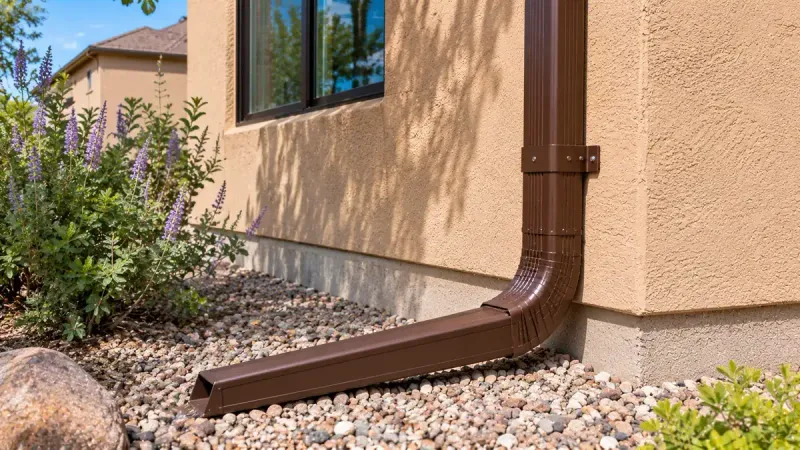
Stand outside during the next good rainstorm and watch your downspout. That gushing stream is the starting point for your whole rain barrel system.
Most homes already have everything needed to collect water. The roof catches the rain, the gutters gather it, and the downspout funnels it to one spot. All you add is a container to hold it.
The first step is picking the right downspout. Look for one that drains a large section of roof, since more roof area means more water. A simple rule helps here: every inch of rain on 1,000 square feet of roof yields about 600 gallons.
Choose a downspout close to the plants you water most. Carrying heavy watering cans across the yard gets old fast. A barrel near your vegetable beds or flower borders saves your back and your time.
Also check what your roof is made of. Asphalt shingles, metal, and tile are common choices for rain collection. Older roofs treated with certain chemicals, or wood shakes with preservatives, may leach unwanted substances into the water.
Once you spot the best downspout, take a few photos and measurements. Those notes will make shopping for a barrel and fittings much easier later on.
A Level Base Keeps A 400-Pound Rain Barrel From Tipping
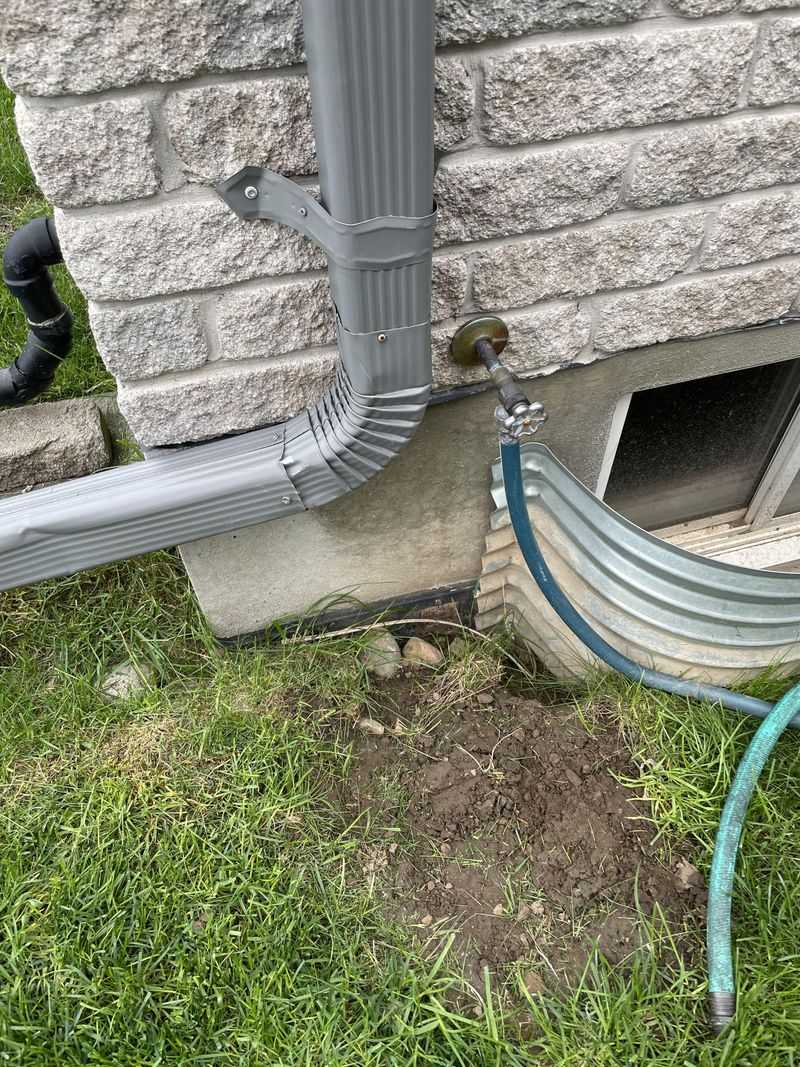
Water is heavier than most people expect. A full 55-gallon barrel weighs over 450 pounds, which is about as much as a vending machine.
That weight is why a strong, level base matters so much. Soft soil can sink unevenly after a storm, and a leaning barrel can topple over. A tipping barrel can hurt someone or damage your home.
Start by clearing the spot and raking it flat. Add a few inches of compacted gravel or set down sturdy pavers. Check your work with a carpenter’s level before moving on.
Next, raise the barrel on concrete blocks or a purpose-built stand. Lifting it about 12 to 18 inches gives you room to slip a watering can under the spigot. Height also adds a bit of gravity pressure for a garden hose.
I like to set the blocks so their holes face sideways. That way, the solid sides carry the load and stay steadier.
Finally, place the base close enough to the downspout for an easy connection. If you live on a slope, as many folks do in hilly areas, take extra care to dig the pad level instead of just stacking more blocks on the low side.
Cutting The Downspout Or Adding A Diverter Gets Water Flowing In
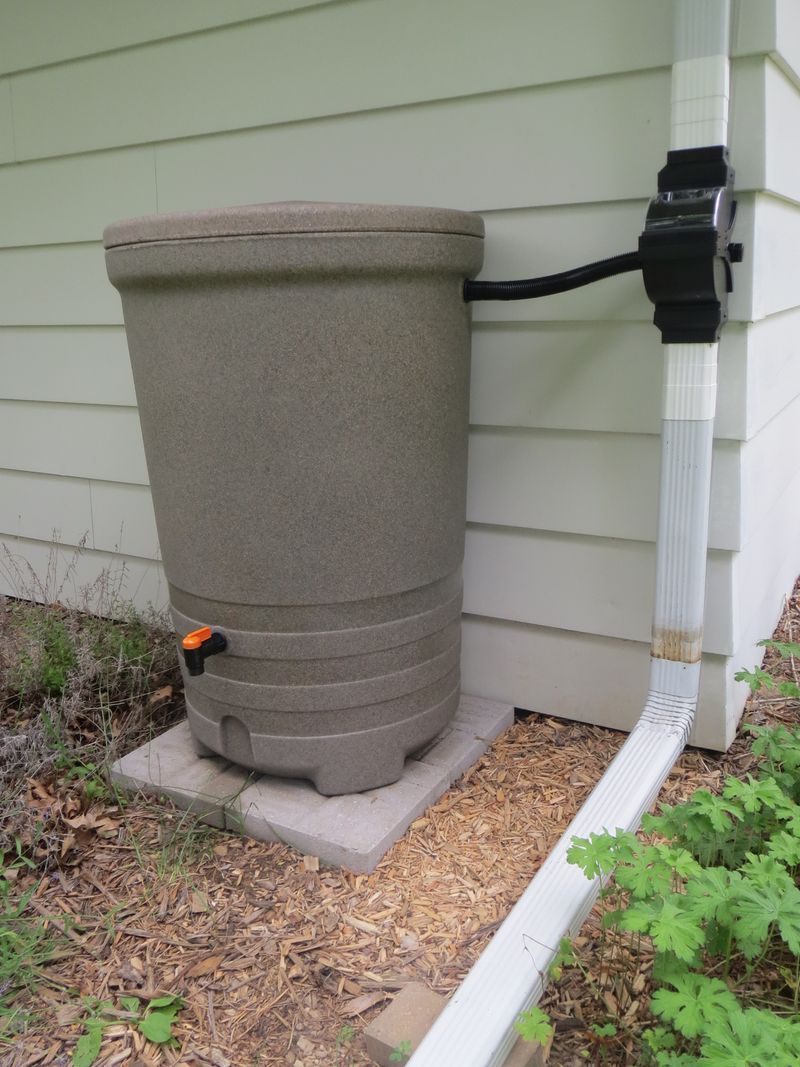
Here comes the satisfying part. Connecting the downspout to your barrel takes about an hour with basic tools.
You have two main choices. The first is cutting the downspout a few inches above the barrel lid and adding a flexible elbow that points into the inlet. A hacksaw and a few sheet metal screws handle this job nicely.
The second option is a diverter kit. These fit right into the downspout and send water through a small hose into the barrel. Many diverters automatically return water to the downspout once the barrel fills, which is a handy bonus.
Either way, measure twice before cutting. A sloppy cut can leave gaps where water sprays onto your siding.
Keep the connection snug and slightly angled so water flows smoothly without splashing. Seal any joints with outdoor-rated silicone if needed.
Do you rent your home or live in an HOA? Check with your landlord or association first. California law supports residential rain barrels, but rules about appearance and placement can still apply.
Many local water agencies also offer rebates on barrels and parts. A quick look at your water district website could save you some money.
Fine Mesh Screens Stop Mosquitoes From Moving Into Your Barrel
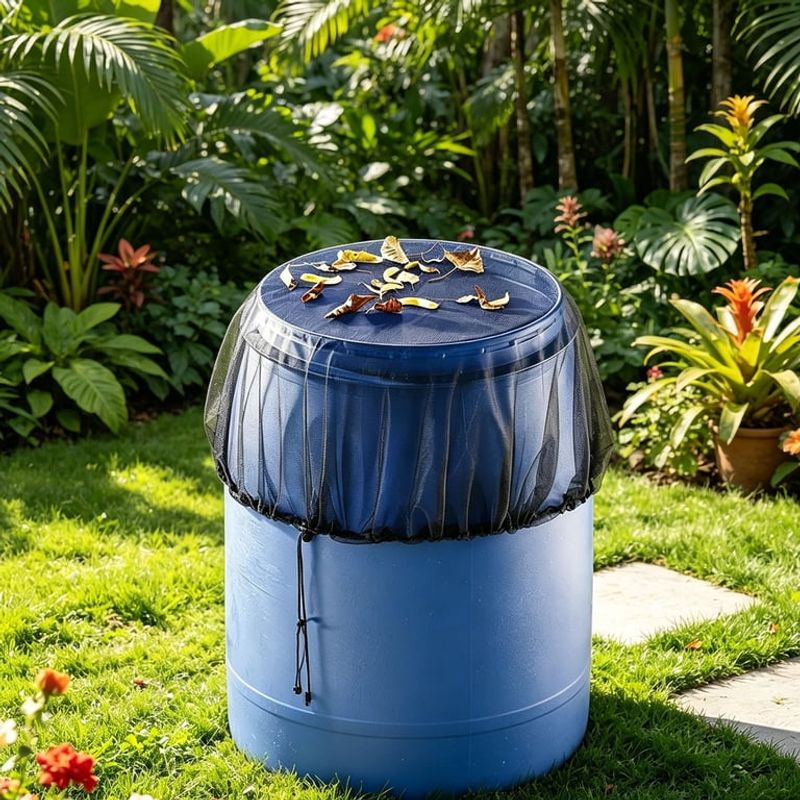
Mosquitoes need only a tiny bit of standing water to lay eggs. A wiggling batch of larvae can grow into biting adults in about a week.
Your rain barrel must stay sealed against these pests. Every opening, including the inlet and overflow port, should be covered with fine mesh. California mosquito control districts often recommend screen around 1/16 inch or smaller.
Window screen works well and costs very little. Secure it tightly with a bungee cord, clamp, or the barrel lid so no gaps form at the edges.
Check your screens every few weeks during the rainy months. Leaves, twigs, and roof grit pile up quickly and can tear the mesh. A quick brush keeps water flowing freely.
Spot larvae swimming inside anyway? Drain the water onto your landscape, fix the gap, and start fresh. Some gardeners also add mosquito dunks containing Bti, a natural bacterium that targets larvae but spares pets, birds, and plants.
Good screening does double duty. It keeps out mosquitoes, and it also blocks debris that clogs spigots. Your local vector control district is a great source for free advice, and some even offer free mosquito fish for ponds.
An Overflow Hose Sends Extra Rain Away From Your Foundation
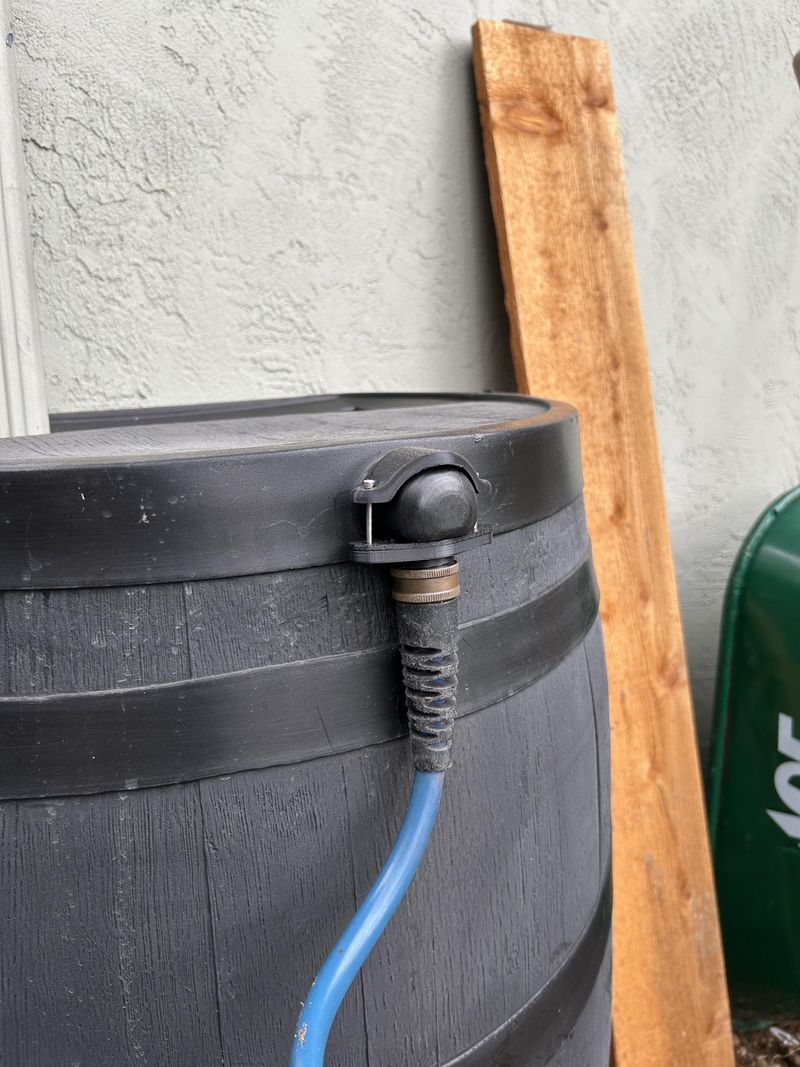
One heavy winter storm can fill a 55-gallon barrel in minutes. After that, the water has to go somewhere.
Without a plan, overflow spills right next to your house. Soggy soil near the foundation can lead to cracks, leaks, and a damp crawlspace.
Most barrels come with an overflow port near the top. Attach a hose or pipe at least as wide as your inlet so it can keep up with fast-flowing water.
Run that hose at least four feet away from your home. Point it toward a lawn, mulched bed, or rain garden where water soaks into the ground.
I really enjoy watching overflow trickle into a shallow rain garden planted with tough natives like California fuchsia or deer grass. Those plants handle brief wet spells and the long dry summers that follow.
Want more storage? Link two or three barrels together with short connector hoses. When the first fills, water moves into the next one.
Avoid sending overflow onto a neighbor’s property or directly onto steep slopes. Hillside soil can slide when it gets too wet, so spreading water gently across flat areas is a smarter move.
A First-Flush Diverter Catches The Dirtiest Roof Runoff
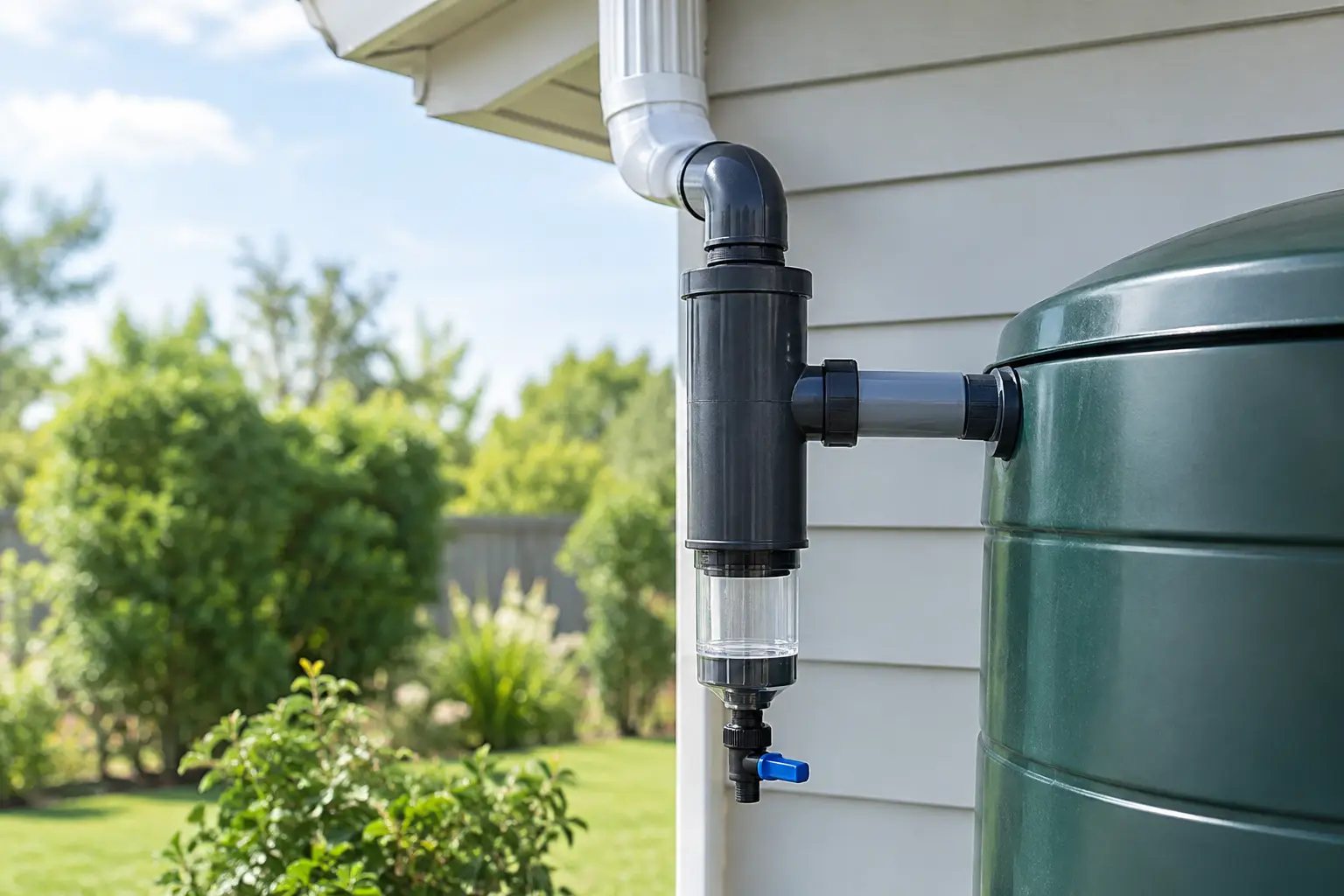
California roofs collect a lot of grime during months without rain. Dust, pollen, bird droppings, and leaves settle on top, waiting for that first storm.
The opening minutes of rain wash most of that mess into the gutters. A first-flush diverter grabs this dirty water before it reaches your barrel.
The design is clever and simple. A vertical pipe fills with early runoff, and a floating ball seals it off once full. Cleaner water then flows past and into your barrel.
A common guideline is diverting about 10 gallons for every 1,000 square feet of roof. Your diverter kit instructions will usually include sizing advice.
Remember to empty the diverter after each storm. Most models have a small cap or slow-drip valve at the bottom for this job.
Is this step required? Not at all. Plenty of gardeners skip it and rely on screens alone.
Still, cleaner water means less sludge in the barrel and fewer clogged spigots. It also helps if you water edible plants, since less debris reaches your soil. For a small upgrade, it pays off nicely during our first storms of fall.
Fall Gutter Cleaning Makes Your Rain Barrel Work Better
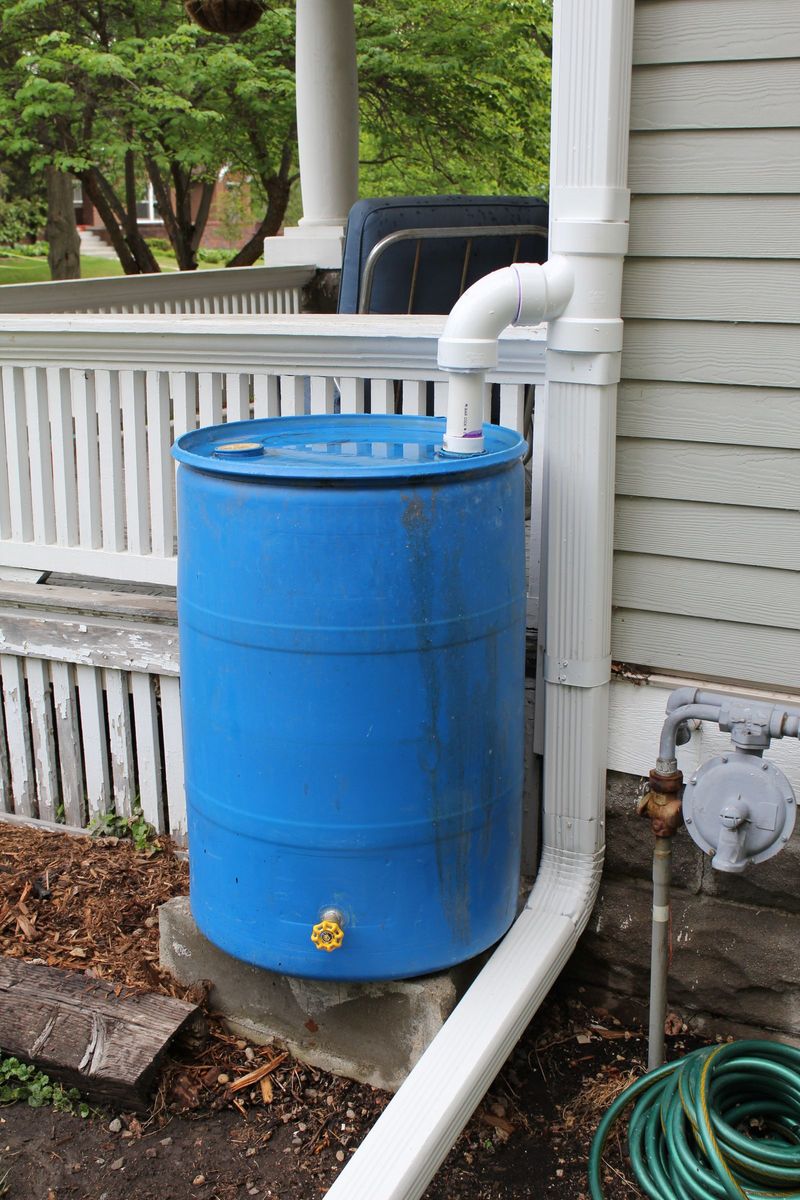
Late summer is my favorite time for barrel prep. The barrel is often empty, the weather is dry, and the first storms are still weeks away.
Start up high with the gutters. Scoop out leaves, pine needles, and seed pods by hand or with a gutter scoop. Flush them with a hose to spot any leaks or sagging sections.
Clogged gutters overflow at the edges, so rain never reaches your barrel. Cleaning them before the first storm keeps every drop moving in the right direction.
Next, look inside the barrel. Scrub away algae or sludge with a stiff brush and a mild solution of water and white vinegar. Rinse well and let it air out.
Inspect the spigot, hoses, and screens for cracks. Replace worn washers so the valve does not drip.
Once storms arrive, do quick checks after big rains. Clear leaves from screens and empty the first-flush diverter.
In colder mountain areas, freezing water can crack a barrel. Gardeners in places like Lake Tahoe often drain barrels or disconnect them during hard freezes. Along the coast and in the valleys, that worry rarely comes up.