8 Invasive Plants That Cause Neighbor Disputes in Virginia
A Northern Virginia county now fines homeowners up to two thousand dollars when one backyard plant sneaks next door. Owners can even face penalties for a plant they did not choose, because a previous owner put it in.
Roots and runners respect no survey markers, so a single green screen can spill into three neighboring yards. Birds make matters worse by dropping seeds from fruit they swallowed in one garden into another garden nearby.
I have to admit that I once admired a few of these plants before learning how far they travel. You might notice some of them still sitting on nursery shelves, looking innocent with glossy leaves and sweet flowers.
Across Virginia, neighbors have argued over fences cracked by roots and trees bent low by heavy climbing vines. So which green invaders deserve the blame, and could one of them already be creeping across your lawn?
1. Running Bamboo

Few sounds are as calming as bamboo rustling in a breeze, until those canes pop up in your neighbor’s lawn. Running bamboo spreads through underground stems called rhizomes, and they can travel fifteen feet or more in one year.
Golden bamboo and yellow groove bamboo are common culprits, and both handle cold winters across the region with ease. Each new cane reaches its full height in a single season, sometimes towering between twenty and fifty feet tall.
I understand why people plant it for privacy, because a thick green wall appears faster than any fence crew. Trouble starts when rhizomes slip under fences, push through cracked pavement, and invade drains on the other side.
Fairfax County adopted a bamboo ordinance in January 2023, with fines ranging from fifty to two thousand dollars. State law lets localities require owners to contain running bamboo, even when someone else planted it years ago.
You need a sturdy root barrier about thirty-six inches tall, with thirty inches buried and six inches showing. That exposed edge lets you spot sneaky rhizomes trying to hop over the top before they escape your yard.
Removal takes patience, since tiny rhizome pieces left in the soil will often send up fresh shoots later. Repeated mowing weakens the plant, and herbicides work best on tender new leaves that sprout after cutting.
Personally, I would talk with my neighbor before digging, because shared bamboo problems are easier to solve together. Clumping bamboo or native shrubs make friendlier screens that stay put instead of wandering across the property line.
2. English Ivy
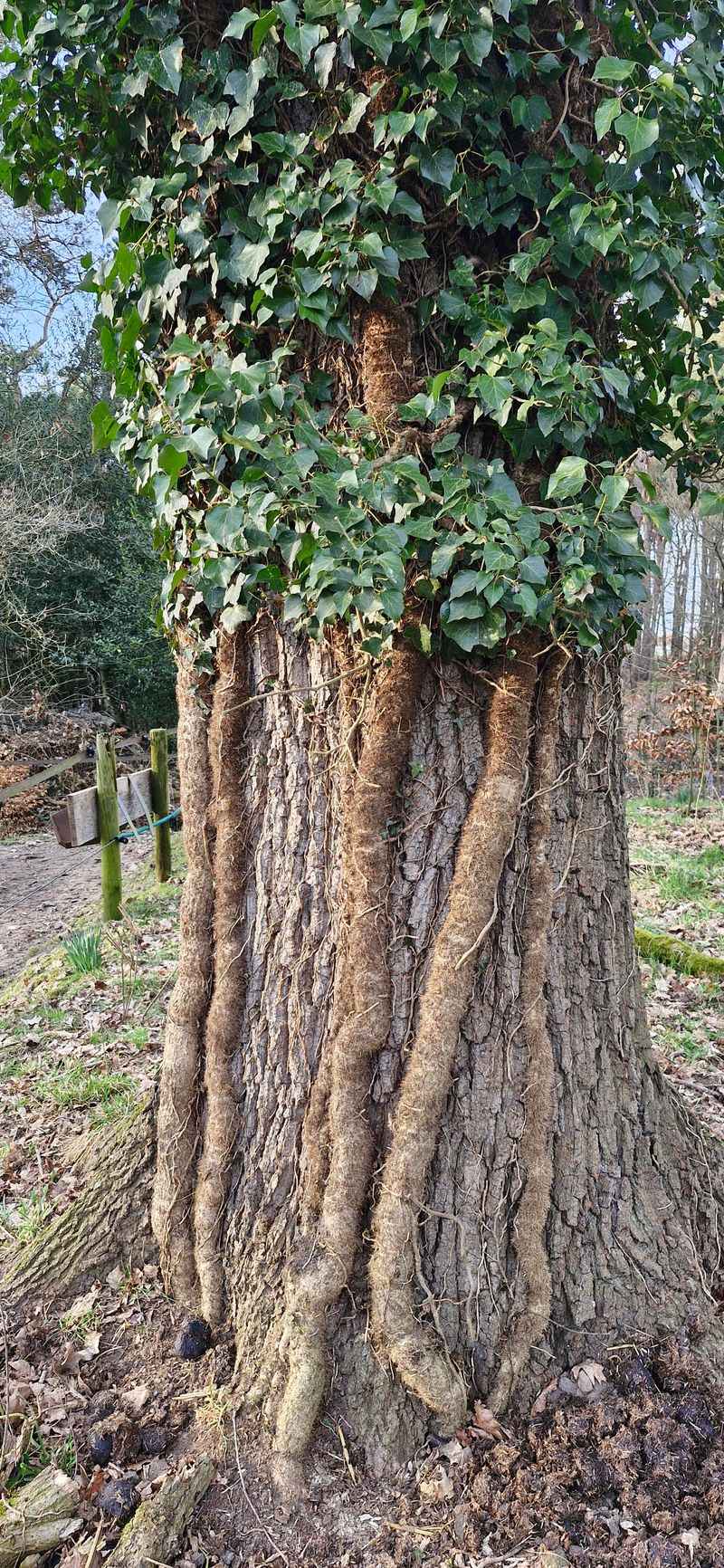
Those cozy storybook cottages covered in ivy hide a secret, because the same vine can weaken trees and walls. English ivy climbs with tiny aerial rootlets that release a sticky glue, gripping bark and brick with surprising strength.
As a groundcover it stays under a foot tall, yet it can spread a hundred feet across shady yards. Climbing stems may reach ninety feet, smothering tree canopies and blocking the sunlight that leaves need to make food.
Weakened trees become more likely to topple in storms, and heavy ivy adds extra weight to every branch. You can see why a neighbor gets nervous when an ivy-draped oak leans over their roof.
Mature vines switch to a shrubby adult form with unlobed leaves, then flower in late summer and early fall. Birds gobble the dark blue-black berries and carry the seeds into woodlands far from the original planting.
Ivy also loosens old mortar and damages wood siding, and dense mats can shelter rats and mosquitoes nearby. The leaves and berries are toxic if eaten, and the sap may irritate skin, so wear gloves.
For trees, cut each vine at the base and again at shoulder height, creating a clear band. Leave the upper vines alone to wither naturally, since yanking them off can tear the bark underneath.
I find pulling ivy most satisfying after a soaking rain, when roots slide free from soft, moist soil. Waxy leaves shrug off many herbicides, so expect a few seasons of steady work before the patch finally fades.
3. Tree-Of-Heaven
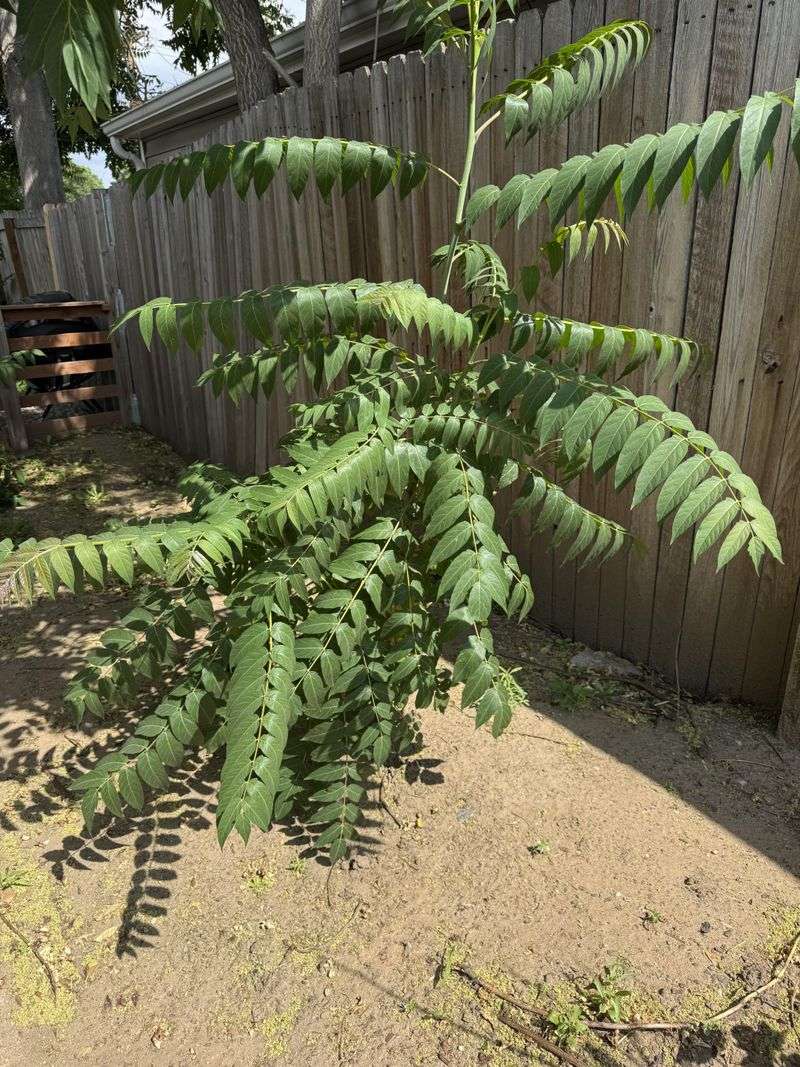
Crush a leaf from this tree and you might smell rancid peanut butter, which is hardly a heavenly scent. Tree-of-heaven, or Ailanthus altissima, grows shockingly fast and can eventually tower eighty to one hundred feet tall.
Its compound leaves stretch one to four feet long, packed with ten to forty-one leaflets lined up neatly. The bark starts smooth and gray, then develops light ridges that look a bit like cantaloupe skin with age.
A single female tree can release over three hundred thousand winged seeds each year, scattering them on the wind. Roots also send up suckers as far as fifty feet away, which is where many neighbor quarrels begin.
Those aggressive roots can damage sewer lines and foundations, turning a free shade tree into an expensive headache. The tree also releases chemicals that suppress nearby plants, helping it crowd out flowers and native seedlings.
What worries me most is the spotted lanternfly, an invasive pest that strongly prefers this tree as a host. Lanternflies threaten vineyards and orchards, so removing tree-of-heaven helps farmers as well as your own backyard.
Cutting it down without herbicide usually backfires, because the stump and roots respond with a flood of new sprouts. Experts recommend treatments like hack-and-squirt or basal bark sprays with triclopyr or glyphosate on larger trees.
Pull young seedlings by hand while they are small, making sure the whole root comes out with them. Researchers are also testing a native fungus called Verticillium nonalfalfae that may weaken these stubborn trees over time.
4. Japanese Honeysuckle
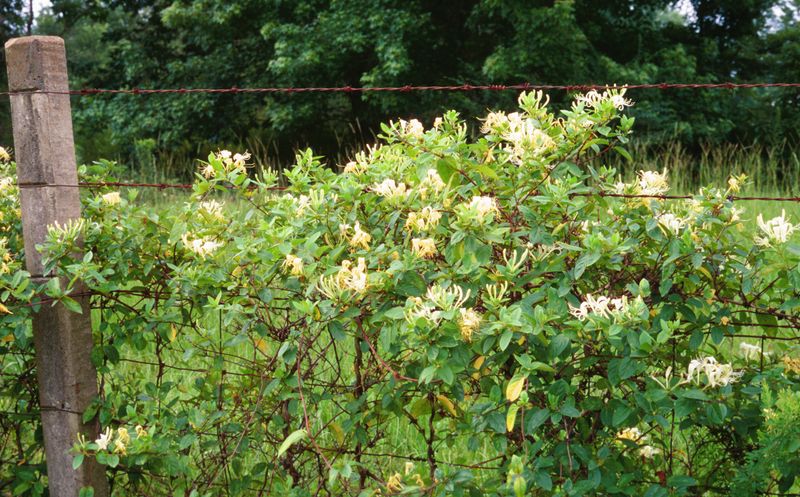
Plenty of us grew up pinching honeysuckle blossoms to sip their sweet nectar on warm summer afternoons. That nostalgic vine is often Japanese honeysuckle, and it is far more aggressive than those childhood memories suggest.
Fragrant white flowers open from late spring through summer, slowly turning yellow as each blossom ages. Small black berries follow in late summer or fall, and birds happily spread the seeds across the countryside.
The vine also travels by underground rhizomes and surface runners, so it spreads in more than one direction. Climbing stems can stretch sixteen to thirty feet, twining tightly around young trees and shrubs along fence lines.
That tight twining can girdle small trees, and the heavy mass of vines may bend them to the ground. Your neighbor’s prized dogwood or azalea could end up buried under a tangled green blanket within a few seasons.
Hand-pulling works well for small patches, but every root fragment must come out to prevent quick regrowth. On fences and trees, cut vines at the base and gently unwrap the stems instead of yanking hard.
Larger infestations often need glyphosate, applied to foliage or cut stems in late fall after native plants go dormant. The vine stays green longer than most neighbors, making it easy to target once surrounding plants drop leaves.
I suggest replacing it with native coral honeysuckle, Lonicera sempervirens, which hummingbirds adore and which behaves politely. You still get tubular blossoms and summer charm, minus the takeover drama spreading into the yard next door.
5. Callery Pear
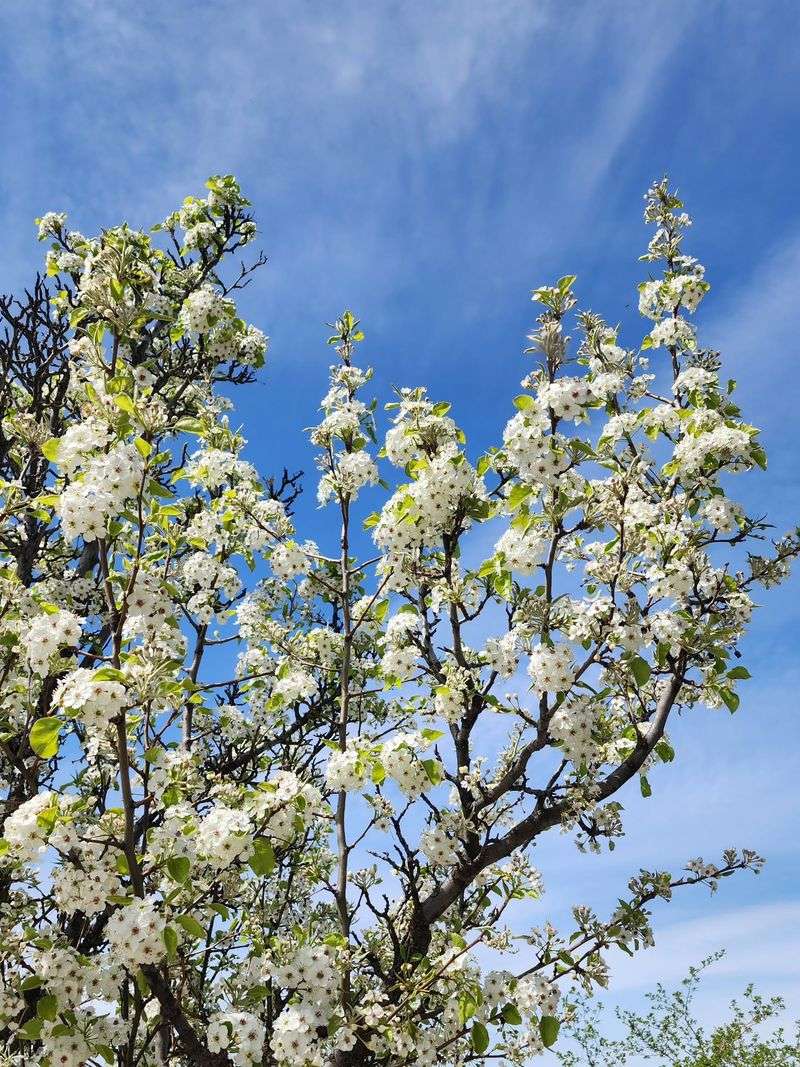
Every spring, roadsides burst with snowy white blossoms that smell oddly like spoiled fish drifting on the breeze. Callery pear, including the famous Bradford variety, put on that early show before most other trees leaf out.
Nurseries once sold these trees as tidy, sterile ornamentals, but different cultivars cross-pollinate and produce fertile seeds. Birds eat the tiny fruits and spread the seeds, creating wild thickets along highways and abandoned farm fields.
Wild seedlings often grow stiff thorns up to three inches long, sharp enough to puncture shoes and tires. Those thorny thickets crowd out native plants and offer very little food for local wildlife throughout the year.
Weak branch angles make these trees split easily, especially during windstorms or heavy loads of ice and snow. A falling limb onto a neighbor’s car or roof can quickly turn a pretty tree into a legal headache.
Virginia will require Callery pear labeling starting in 2027, while Ohio and Pennsylvania have banned sales outright. The state also promotes removal through a Callery Pear Exchange Program that encourages planting native trees instead.
Cutting alone triggers vigorous sprouts from stumps and roots, so larger trees usually need an herbicide treatment. Fall is the most effective season for cut stump or basal bark applications using glyphosate or triclopyr.
I love swapping these trees for native serviceberry, which offers white spring flowers without the fishy odor. Eastern redbud is another cheerful choice, painting early spring branches bright pink while feeding hungry pollinators.
6. Oriental Bittersweet
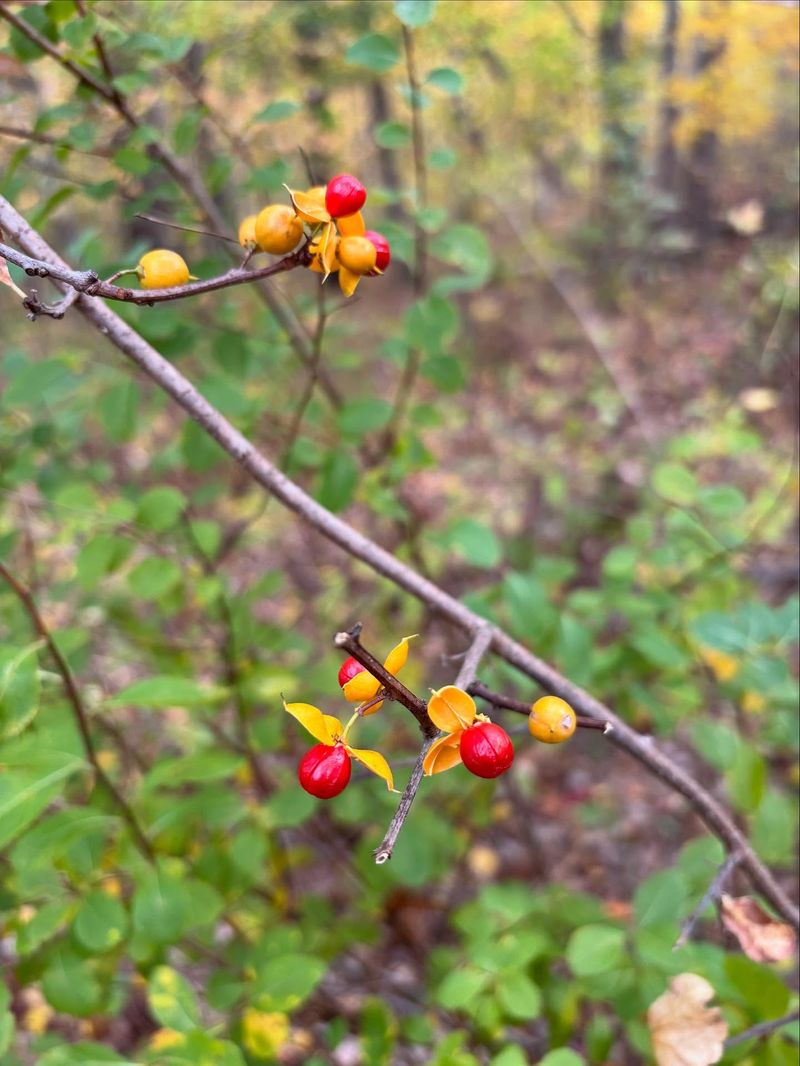
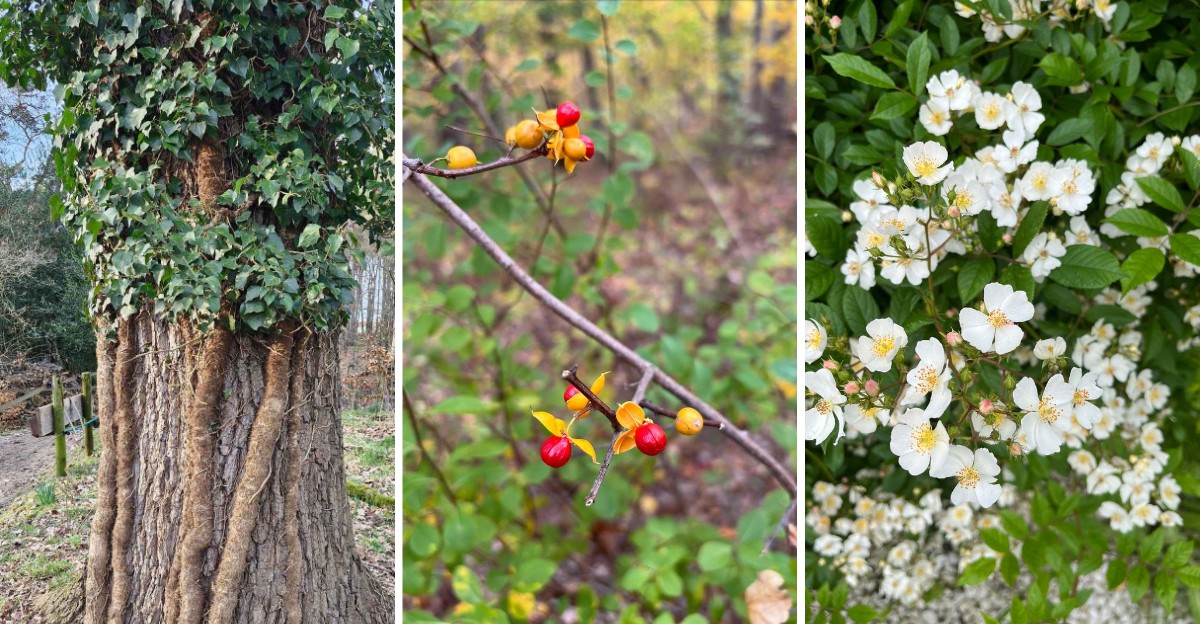
Crafters love the red-orange berries tucked inside yellow husks, and wreaths made from them look festive each fall. Sadly, those cheerful decorations often come from Oriental bittersweet, a vine that squeezes trees like a stubborn python.
Celastrus orbiculatus can climb sixty feet or more, and older stems may thicken to several inches across. Its round, glossy leaves turn butter yellow in autumn, which makes infested hedgerows surprisingly easy to spot.
The vine coils tightly around trunks and branches, choking nutrient flow and loading trees with extra weight. Ice storms then snap those burdened limbs, sometimes dropping them right across a property line or fence.
Only female plants produce berries, but birds spread those seeds widely, and roots send up new suckers too. It also hybridizes with native American bittersweet, threatening the genetic purity of our own homegrown species.
You might feel tempted to just snip the vines, but simple cutting usually sparks even stronger regrowth from roots. Cut at ground level instead, then immediately paint the fresh stump with triclopyr or glyphosate for better results.
Small seedlings can be hand-pulled, as long as you remove every piece of root along with the stem. Bag any berry-laden stems and toss them in the trash, because composting them can spread seeds around.
Personally, I skip bittersweet wreaths altogether and use winterberry holly branches for the same bright seasonal pop. The berries are also toxic if eaten, which gives one more reason to keep these vines out of holiday decor.
7. Multiflora Rose
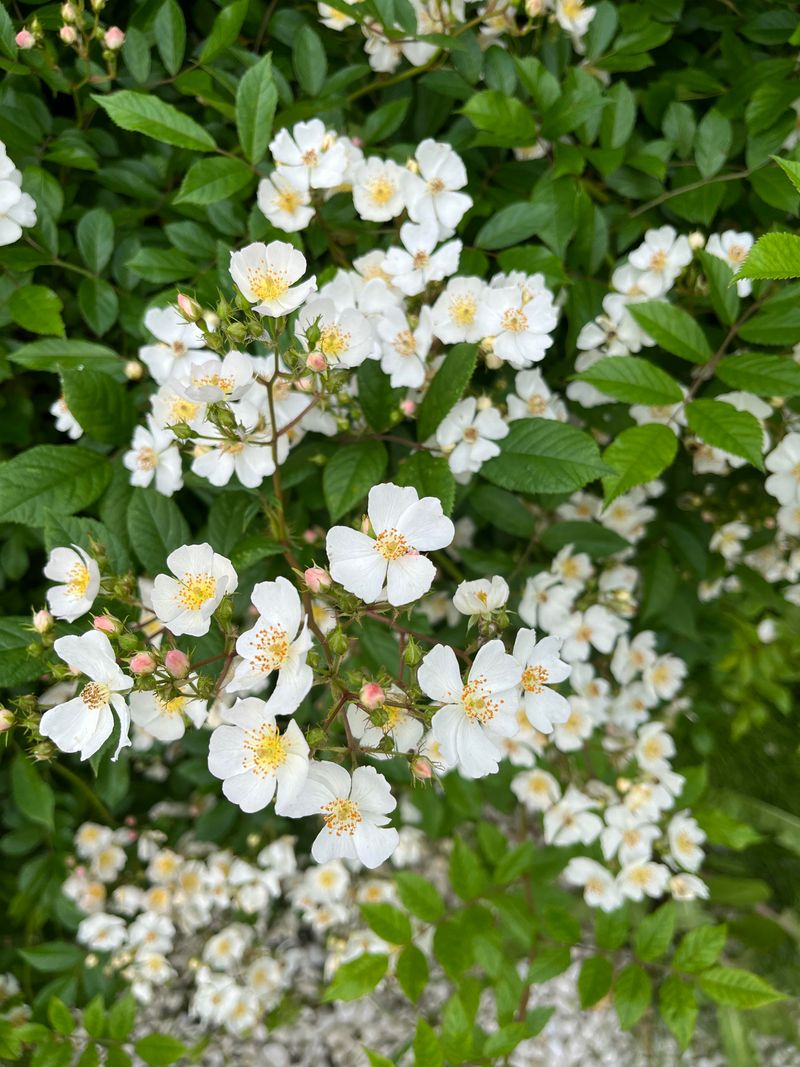
Roses usually signal romance, but this thorny shrub is more likely to snag your jeans than steal your heart. Multiflora rose is officially listed as a noxious weed in Virginia, and farmers have struggled with it for generations.
Its arching canes can stretch fifteen feet, and their tips root wherever they touch the soil below. Before long, one shrub becomes a dense hedge that blocks walkways and creeps beneath shared fences.
Look for clusters of small white flowers in May and June, along with fringed stipules at each leaf base. Red hips appear in early fall and linger into winter, attracting birds that carry seeds to new places.
A single plant can produce half a million seeds each year, and they may survive in soil for twenty years. That long-lived seed bank explains why a cleared patch can sprout fresh roses seasons after removal.
Sharp curved prickles can gash skin and even puncture tires on tractors and other farm equipment. Dense thickets may also create favorable habitat for ticks that carry Lyme disease, so check yourself after weeding.
Small plants pull or dig out easily, but heavy leather gloves and long sleeves will save your arms. Repeated mowing several times a season for a few years can drain the roots and slowly weaken large clumps.
For stubborn thickets, cut stump or basal bark treatments with triclopyr give reliable results in the growing season. I find it fun that hungry goats happily munch multiflora rose, making them helpful partners for pasture cleanup.
8. Japanese Stiltgrass
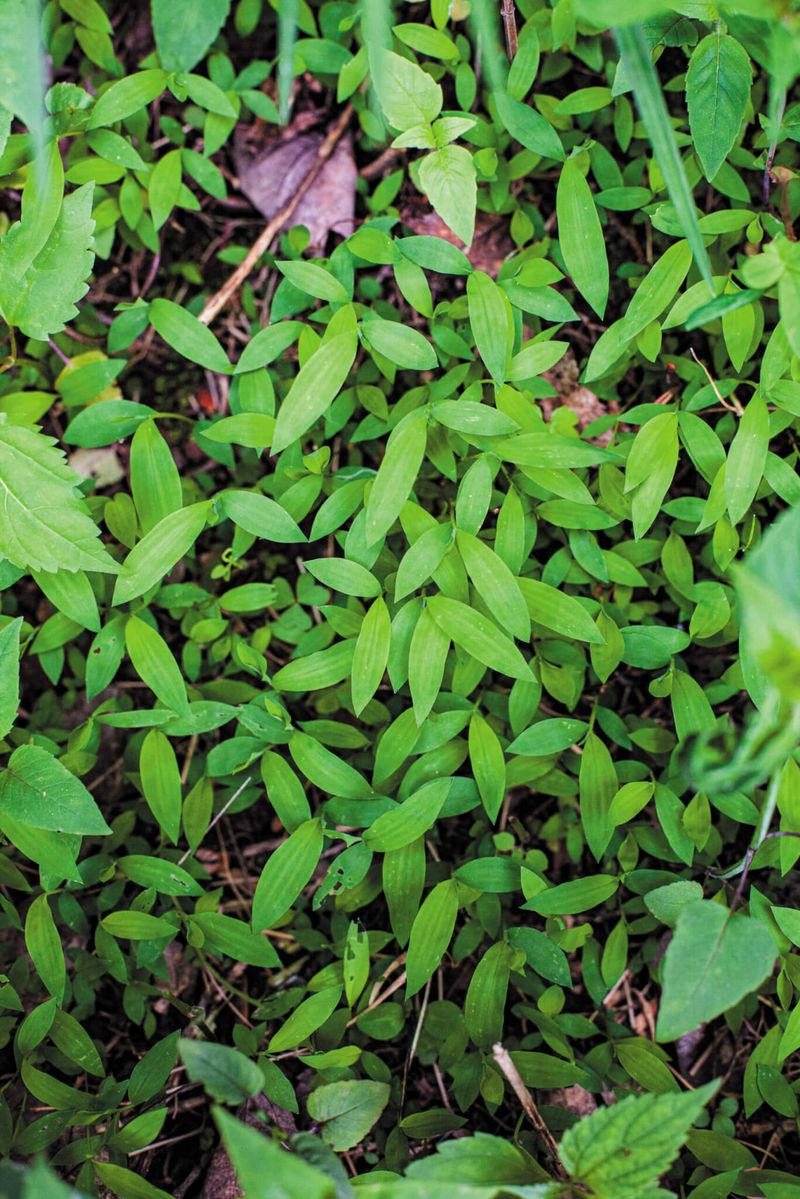
Experts believe this grass likely reached America as packing material for porcelain shipped from Asia in the early 1900s. Japanese stiltgrass now carpets shady yards and woodland trails across the eastern states, including much of Virginia.
Look for pale green, lance-shaped leaves with a shiny, slightly off-center silvery stripe running down the middle. Thin stems root at lower joints, forming little prop roots that make each plant seem to stand on stilts.
As an annual, it sprouts in spring, flowers from August through October, and fades after the first frost. Each plant may release up to one thousand seeds, which can stay viable in soil for several years.
Seeds hitch rides on shoes, pets, mowers, and flowing water, so one infested yard quickly seeds the next. Deer usually ignore it while munching on native plants, which gives stiltgrass an even bigger advantage.
Dense mats smother wildflowers and tree seedlings, and the grass can alter soil chemistry over time. Fortunately, its shallow roots make hand-pulling easy, especially when you work before the plants drop their seeds.
You need to time your mowing for late summer, right before flowering, so the plant cannot set seed. A pre-emergent herbicide in early spring works much like crabgrass control, stopping new seeds from sprouting.
Bag pulled plants for the trash instead of the compost pile, since hidden seeds can survive and spread. Honestly, I think chatting with neighbors and pulling stiltgrass together makes the job faster and far less lonely.