Thanksgiving Cactus vs. Christmas Cactus: 7 Ways Florida Gardeners Can Tell Them Apart
Most plants sold as a certain December houseplant are actually a different species that blooms weeks earlier. Growers favor it because it flowers in time for November sales, so the label tells only half the story.
I love that this mix-up has been sitting on windowsills for decades. Your grandmother’s treasured holiday plant might carry a name it never earned. Personally, I find that a little hilarious and a lot charming.
Both plants come from the misty mountain forests of coastal Brazil. They grow on tree branches there, not in sandy deserts. That alone explains why a sunny Florida patio can treat them so differently from a typical cactus.
You only need a few seconds and a sharp eye to solve the puzzle. The clues hide in the stem edges, the flower centers, and even the calendar. So which holiday guest is really living in your pot?
1. Those Stem Segment Edges Hold the Biggest Clue
Grab your plant and run a fingertip along one of those flat green pads. Those pads are not leaves at all.
They are flattened stem segments, and their edges give away the answer faster than anything else.
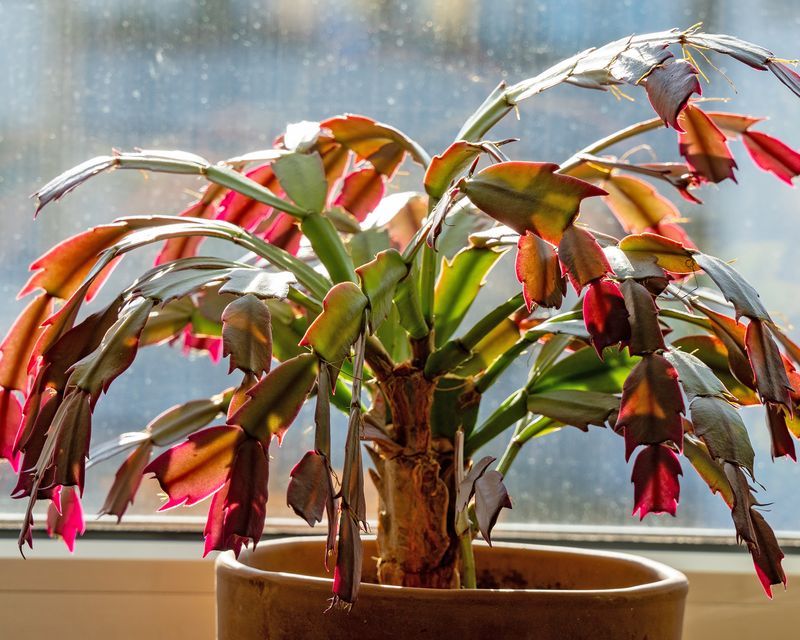
A Thanksgiving cactus, Schlumbergera truncata, has two to four sharp, pointed teeth along each side of a segment. Some gardeners call them claws, and that name fits.
The tips at the end of each segment often look like little crab pincers too, which is why folks sometimes call it crab cactus.
A true Christmas cactus, Schlumbergera x buckleyi, looks much softer. Its segment edges have gentle, rounded scallops with no real points.
Picture the edge of a pie crust instead of a saw blade.
I like this clue best because it works all year. You do not need flowers, special timing, or a magnifying glass.
Even a single broken piece from a friend’s plant can be identified in seconds.
Check several segments, not just one. Older or damaged pads sometimes look a bit worn, and a few hybrids land in between.
When most of the pads show sharp teeth, you can feel confident about what you are growing.
2. Peek at the Pollen Inside Each Holiday Cactus Bloom
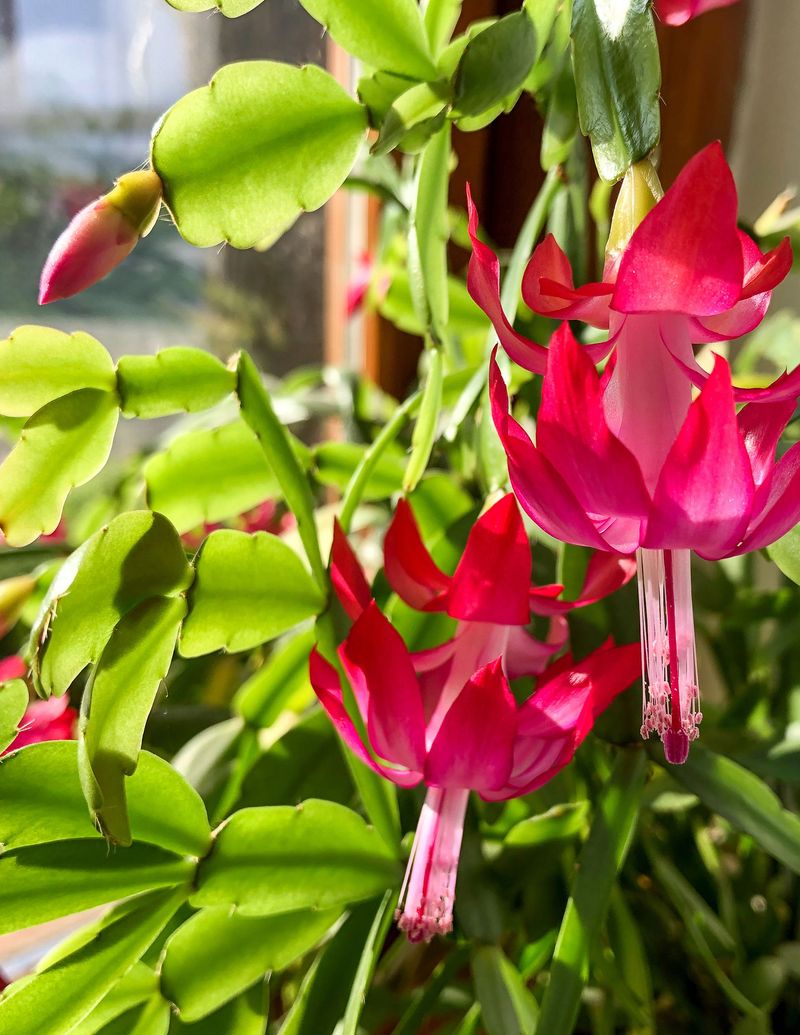
Flower season brings a second test, and it feels a bit like detective work. Lean in close to an open blossom and look at the tips of the stamens.
Those tips are the anthers, the parts that carry pollen.
On a Thanksgiving cactus, the anthers are yellow. On a Christmas cactus, they usually turn a purplish brown or dusky pink.
The difference is small, but once you notice it, you will spot it every time.
Morning light makes this check much easier. A phone camera on zoom works great too, especially if your eyes are like mine and prefer a little help.
Fun fact: the Christmas cactus is a hybrid made in England in the 1840s. Gardeners crossed S. truncata with S. russelliana, and that purple pollen color comes along from the second parent.
Use this clue together with the stem edges rather than alone. Plant breeders have created many modern hybrids, and a few blur the lines.
When the teeth and the yellow pollen both agree, though, you can call it solved and enjoy the show.
3. Your Holiday Cactus Bloom Calendar Drops a Strong Hint
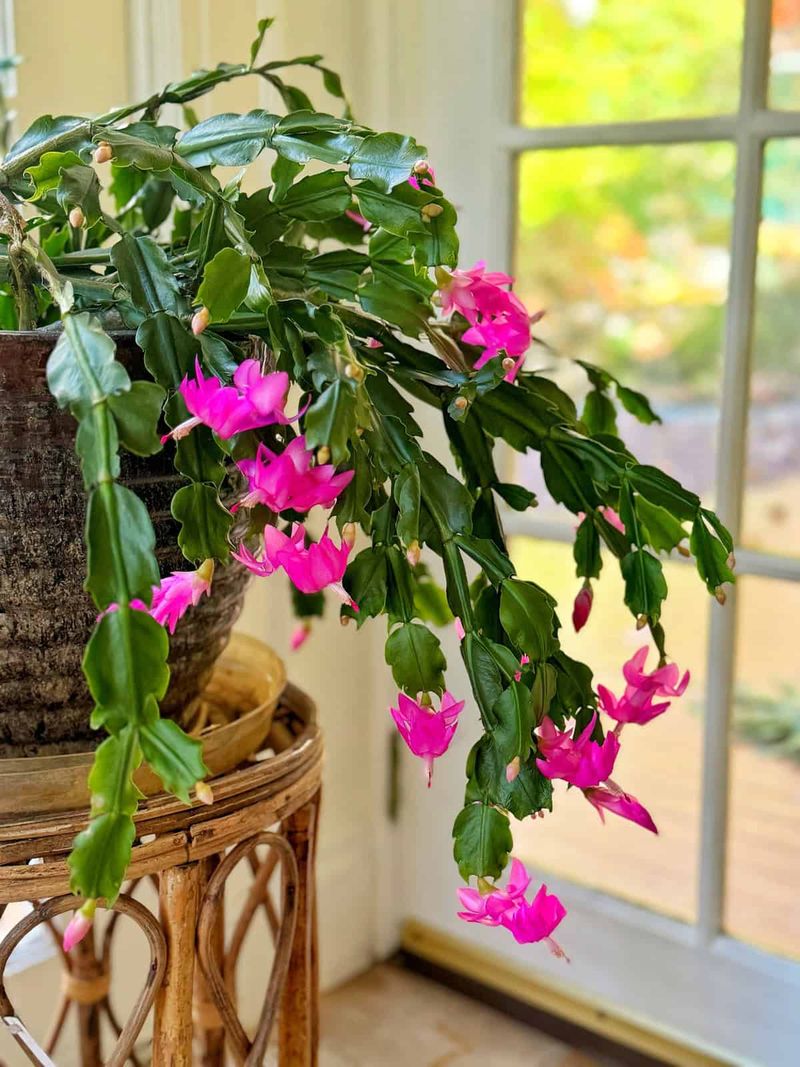
Bloom timing is the reason these plants earned their names in the first place. A Thanksgiving cactus usually opens buds from mid-November into early December.
A Christmas cactus tends to follow a few weeks later, from late December into January.
In Florida, timing can wobble. Both plants set buds when nights get long and cool, ideally around 50 to 60 degrees.
A mild fall in Miami may push blooms later than you expect, while a cool snap in Tallahassee can speed things up.
Indoor lighting also plays a role. A lamp or porch light shining at night can confuse the plant and delay buds.
Many gardeners give their pots about 12 to 14 hours of darkness each night starting in early fall.
Keep a simple note on your phone each year with the date the first flower opens. After two seasons, you will see a pattern that tells you plenty.
Still, treat the calendar as a supporting clue. Overlap happens often, and plenty of plants bloom a second time in spring.
The stems and pollen give a firmer answer.
4. Store Labels on Christmas Cactus Pots Can Mislead You
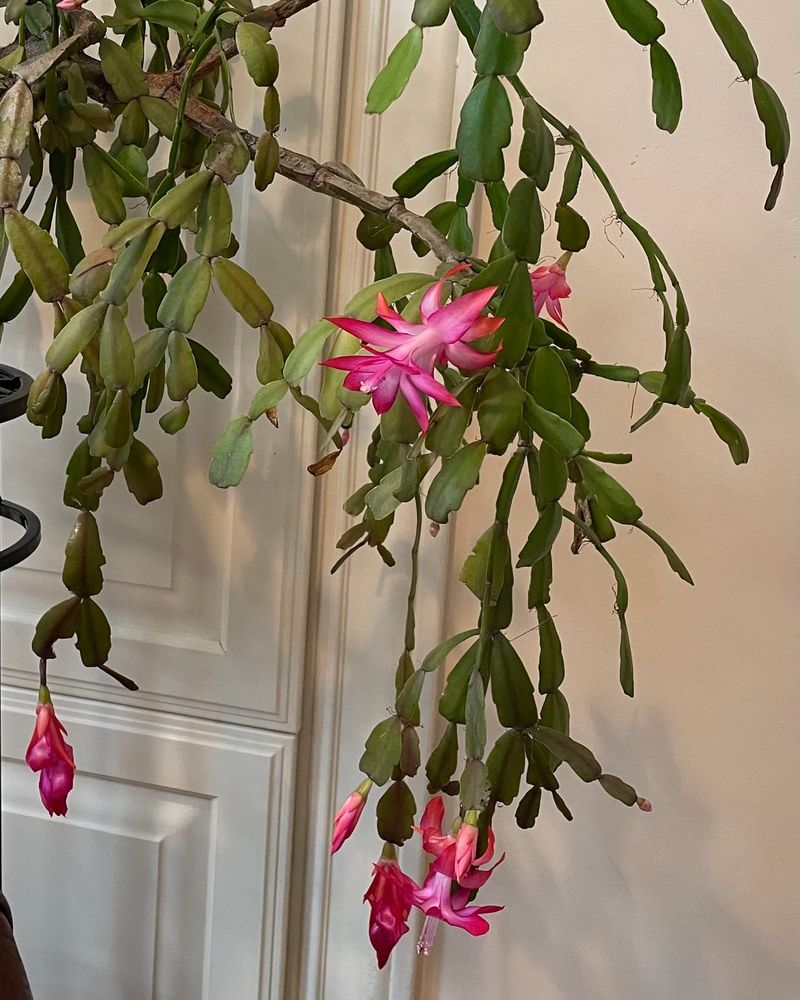
Garden center shelves fill up with blooming holiday cacti by early November. Here is the funny part.
Many of the pots labeled Christmas cactus are actually Thanksgiving cacti.
Commercial growers prefer S. truncata because it blooms earlier and ships well. Plants that flower in November hit stores just as holiday shoppers arrive.
Some tags simply say holiday cactus, which is honest and handy.
You can test any pot in the aisle in a few seconds. Check the segment edges for those pointy teeth.
Most of the time, you will find them.
Personally, I love this little reveal. A shopper gets a lovely plant either way, and the care routine is nearly the same.
Still, knowing the real identity helps you predict bloom time next year.
Look for plants with plenty of tight buds and only a few open flowers. Those buds will open at home and stretch the show.
Skip pots with yellowing, limp segments or soggy soil, since those signs often point to root trouble.
Bud drop can happen after a sudden move, so keep your new plant away from drafts.
5. Watch Which Way the Tubular Flowers Point
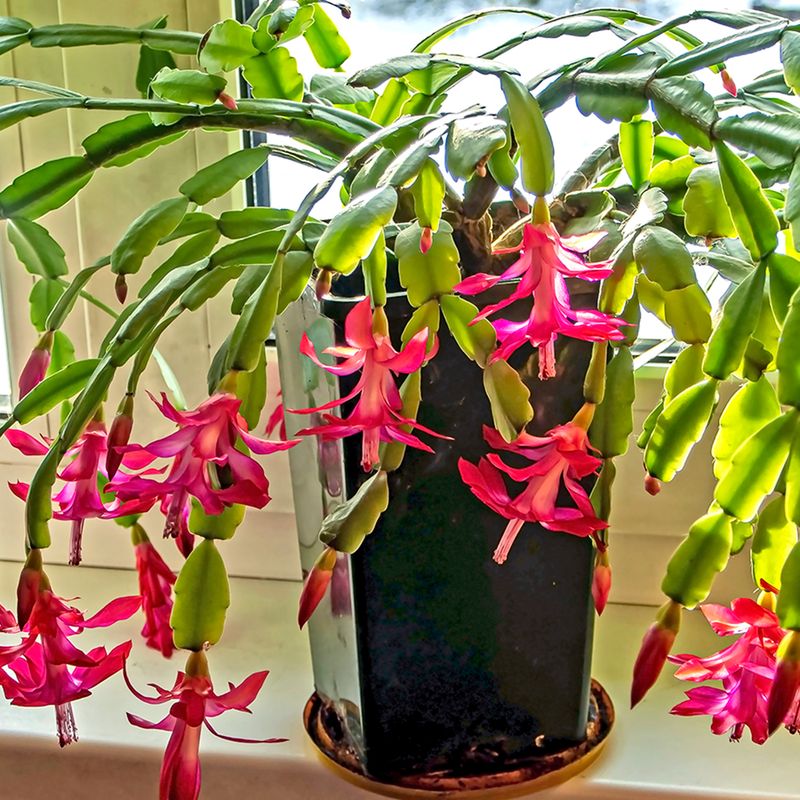
Step back from the plant for a moment and look at the whole flower display. The angle of the blossoms offers a quieter clue that many gardeners miss.
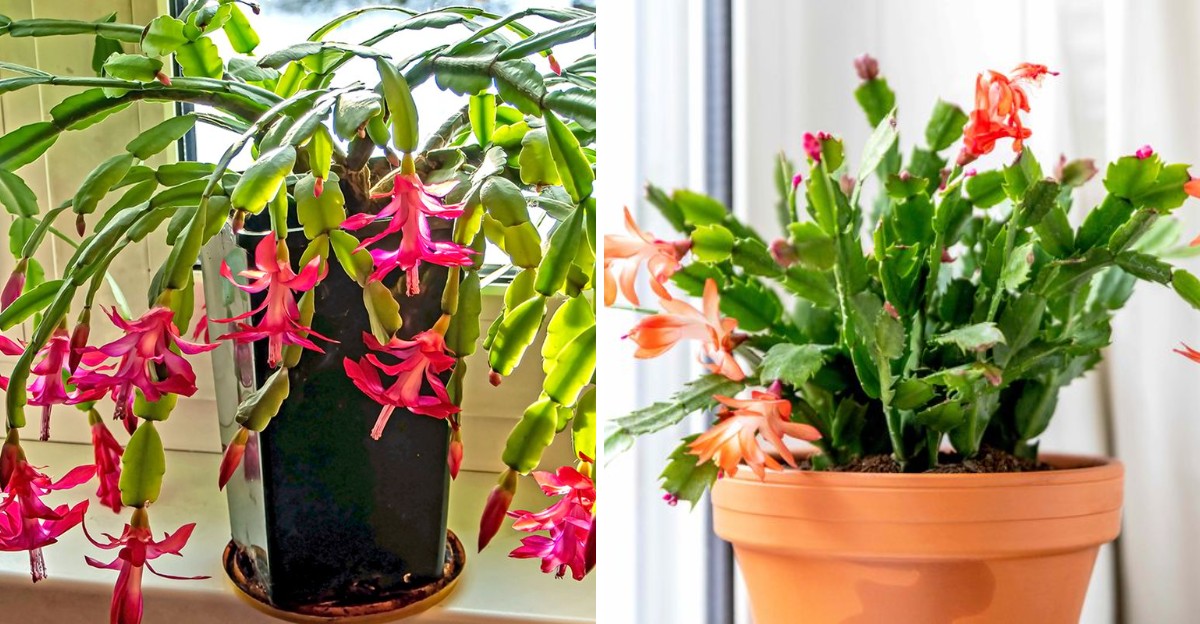
Thanksgiving cactus flowers usually stick out sideways or tilt slightly upward. They look a bit like tiny trumpets aimed at the room.
The flowers are also slightly lopsided, with the upper petals and lower petals shaped a little differently.
Christmas cactus blooms tend to hang down. They droop from the stem tips with more symmetrical petals that flare outward.
The overall look feels softer, almost like little lanterns.
I enjoy using this clue from across the room. A quick glance at a neighbor’s porch plant can tell you plenty before you ever touch it.
Flower color will not help here. Both plants come in red, pink, white, salmon, purple, and even yellow.
Breeders have mixed colors so much that shade tells you almost nothing.
Combine flower angle with a stem check for the best result. A plant with toothed pads and sideways blooms is a confident Thanksgiving cactus match.
6. Arching Holiday Cactus Stems Reveal Each Plant’s Growth Habit
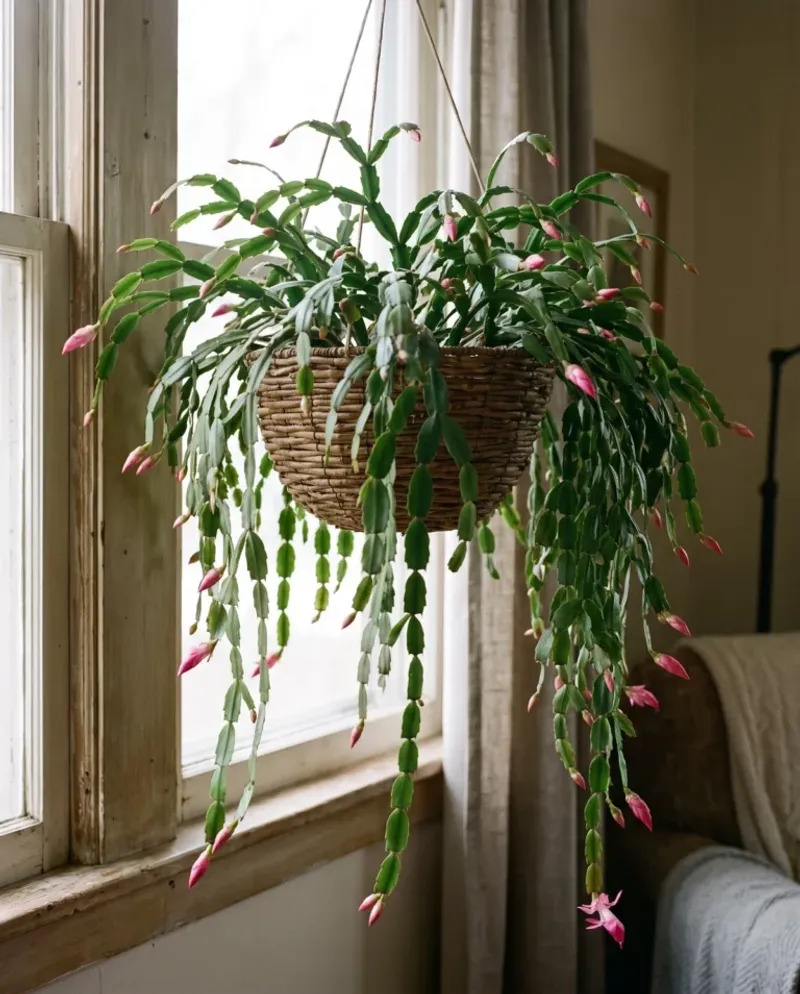
Shape matters too. Over time, each plant develops its own posture, and you can read it like body language.
Thanksgiving cacti often grow more upright and spreading, with stems that reach outward before bending. Christmas cacti usually arch and cascade more, making them a natural fit for hanging baskets.
Remember where these plants come from. In the coastal mountains of Brazil, they grow as epiphytes on tree branches, much like orchids and bromeliads.
Hanging from bark explains that trailing habit.
In Florida, that background is helpful. Both plants enjoy bright, filtered light rather than harsh afternoon sun.
A shaded porch or a spot under a tree canopy often keeps segments green instead of red and stressed.
Heavy summer rain needs attention. Use a fast-draining mix, such as potting soil blended with orchid bark or perlite.
Make sure the pot has drainage holes so roots stay healthy.
Growth habit alone is not a final answer, since pruning, light, and age change shape. Treat it as a fun bonus clue that rounds out your detective kit.
7. Schlumbergera Care Tips That Keep Both Holiday Cacti Blooming
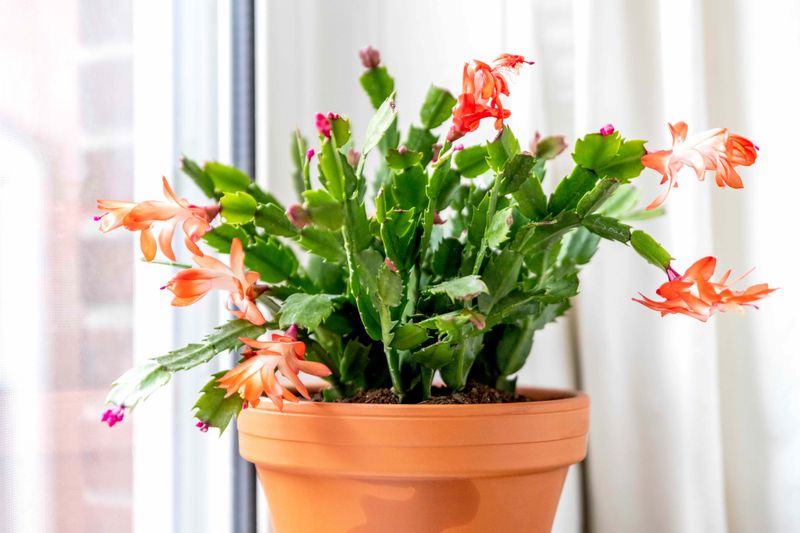
Once you know which plant you have, the fun part begins. Happily, both species need nearly the same care, so mistakes rarely matter much.
Water when the top inch of soil feels dry. Soggy roots cause more trouble than thirst, especially in humid Florida summers.
Feed lightly with a balanced houseplant fertilizer from spring through late summer, then stop in early fall.
Bud setting depends on cool nights and long darkness. In North and Central Florida, a covered porch in October often provides both.
South Florida growers may need an unlit room inside to give that nightly darkness.
Watch the forecast in winter. Temperatures below about 40 degrees can harm these tropical plants, so bring pots indoors on chilly nights.
Sharing is easy too. Twist off a piece with two or three segments, let it dry a day, then set it in moist potting mix.
Roots usually form within a few weeks.
My favorite tip is simple. Label your plant with its true name and bloom date.
Your future self, and every curious visitor, will thank you.