Uninvited Guests Riding Into Indiana Homes On Fresh Christmas Trees
A single walnut-sized egg case tucked on a fir branch can hold up to 200 tiny babies. Bring it into a warm living room, and they may hatch weeks after the tree goes up.
I didn’t expect my holiday tree to double as a nursery. Truth is, farm-grown evergreens spend six to ten years outdoors before they reach your stand. Bugs tuck themselves into the bark, needles, and branch joints to ride out the cold.
Indiana tree farms do a careful job, but no grower can inspect every twig. Indoor heat acts like a fake spring, and sleepy critters start to stir. Most of them are harmless, which honestly surprised me.
So what exactly might be crawling across your ornaments this December? A few of these little stowaways are far more interesting than you’d guess.
Those Dark Specks Crawling On Your Fir Needles Are Waking Up
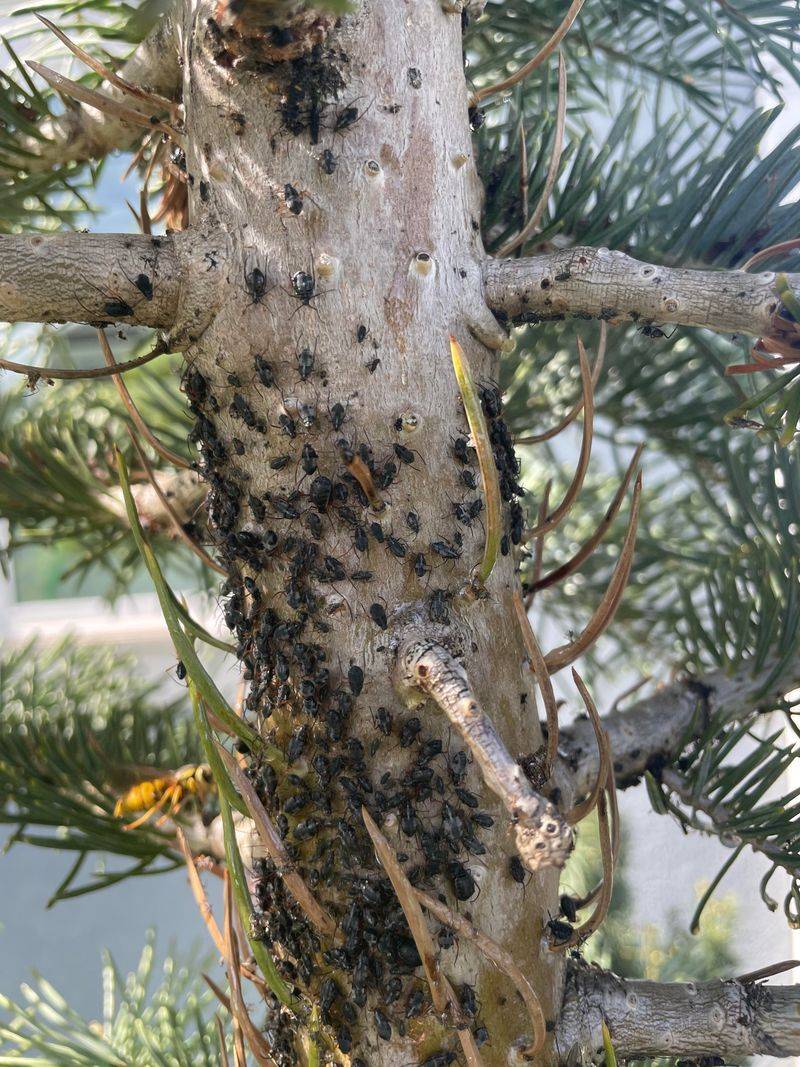
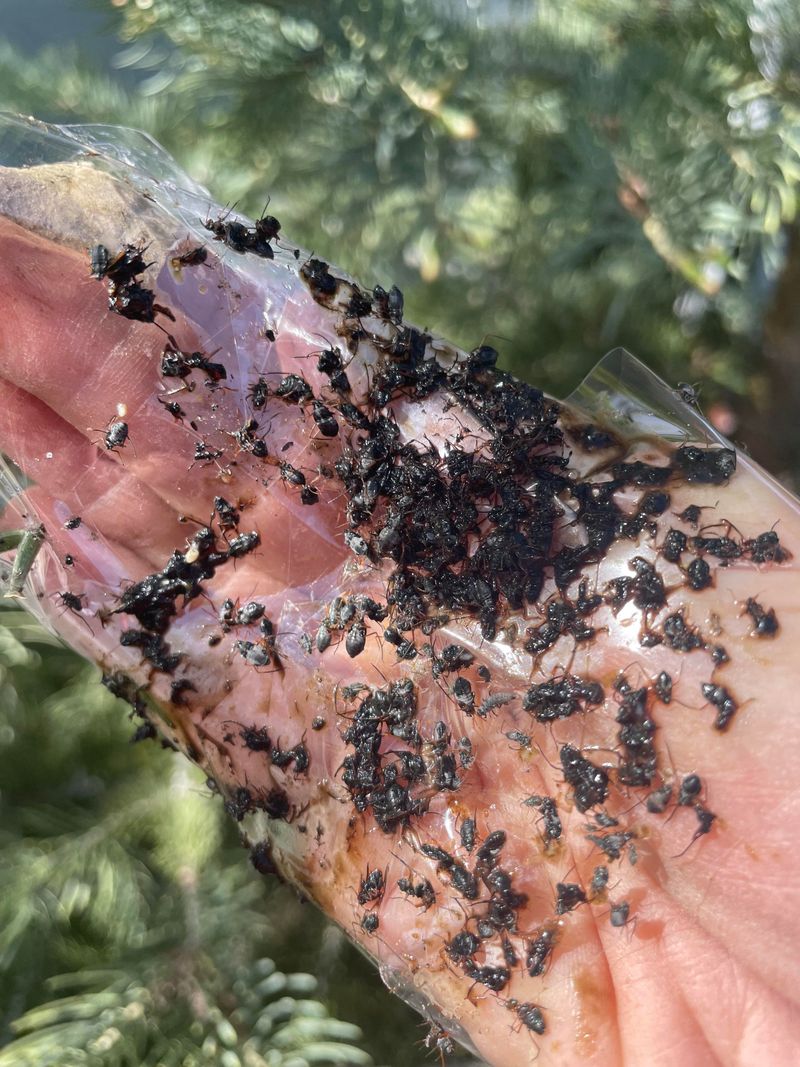
Spot a cluster of dark, leggy bugs on the branches a few days after decorating? You’re probably looking at giant conifer aphids. Penn State and NC State Extension experts list them as one of the most common Christmas tree hitchhikers.
Giant conifer aphids are big for aphids, about one-eighth of an inch long. Most are black, gray, or brown, with long legs that make them look a bit like spiders or ticks. Count the legs, though, and you’ll find six instead of eight.
Outdoors, they spend winter as eggs or sluggish adults on the bark. Your cozy living room tricks them into acting like spring has arrived. They wander around, and some even try to find new branches to feed on.
They don’t bite people or pets, and they can’t harm your furniture. The one catch is staining. Squash one on a light carpet or tree skirt, and you may get a reddish or purple smudge.
Gently pick them off with a tissue or use a vacuum hose. A small cluster is normal and doesn’t mean your tree is unhealthy. Most will settle down or fade away within days in the dry indoor air.
Give That Fresh Fir A Hard Shake Before It Comes Inside
I learned the hard way that skipping the shake is a rookie move. One extra minute at the tree lot can save you a week of chasing bugs across the coffee table.
Many Indiana tree farms and lots have a mechanical shaker. The tree gets clamped and rattled hard, which knocks loose dry needles, old bird nests, and many insects. Ask for it, even if you think your tree looks clean.
No shaker? Do it yourself in the driveway. Lift the tree a few inches and bounce the trunk on the ground several times. A friend holding the other end makes it much easier.
Next, lay down a white sheet and shake the branches over it. Dark aphids, spiders, and beetles show up clearly on white fabric. Look closely at the inner branches near the trunk, since that’s where critters like to hide.
Letting the tree sit in a garage or porch for a day can also help. Some bugs will crawl out there instead of in your living room. Just keep the trunk in a bucket of water so it stays fresh and fragrant through the season.
A Walnut-Sized Praying Mantis Egg Case Could Hatch Hundreds
Here’s the hitchhiker that makes the best story. A praying mantis egg case, called an ootheca, looks like a lump of tan, dried foam about the size of a walnut.
Female mantises lay these in fall, and the eggs are built to wait out winter. A warm house can fool them into hatching weeks or months early. One case can release a hundred or more tiny mantises.
The babies won’t hurt anyone. They have nothing to eat indoors, though, so they won’t last long in your house. That’s a sad end for insects that gardeners love for eating pests.
Check your tree carefully before setting it up. Mantis cases often sit on small twigs or where branches meet. If you find one, snip off the twig with pruners.
Then tie or tuck the twig into a shrub outdoors, a few feet off the ground. Choose a protected spot where it can stay cold until spring. Your garden will gain a crew of natural pest hunters when warm weather returns in May or June.
Don’t keep the case in a warm garage or shed. Steady cold matters most.
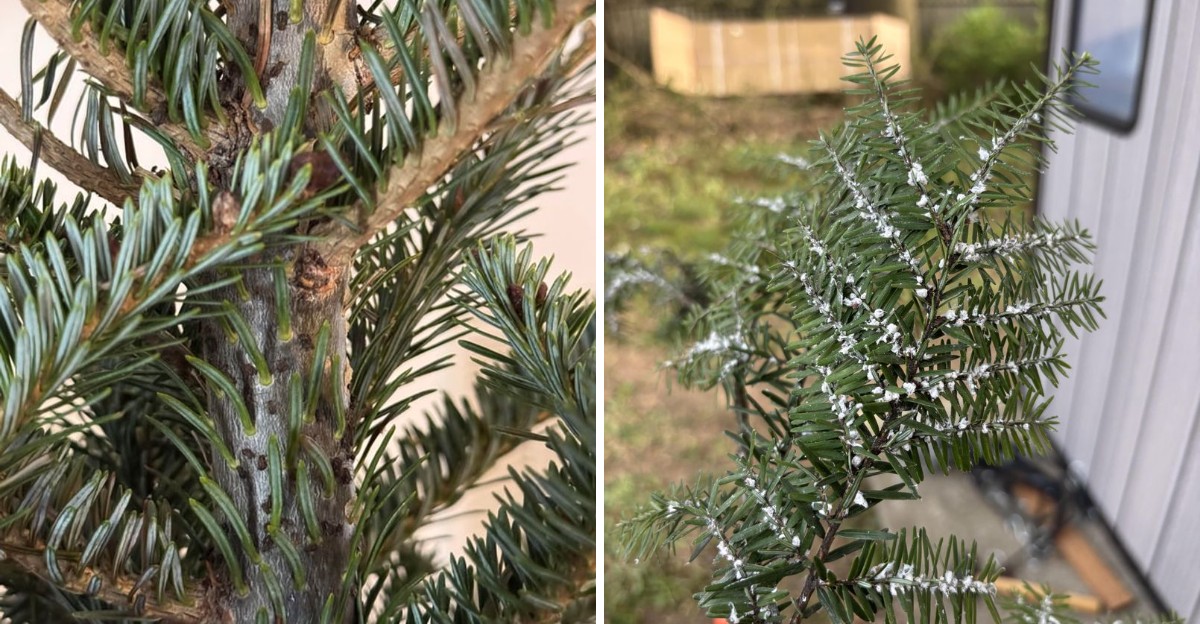
Cottony White Fluff On Pine And Fir Bark Means Adelgids
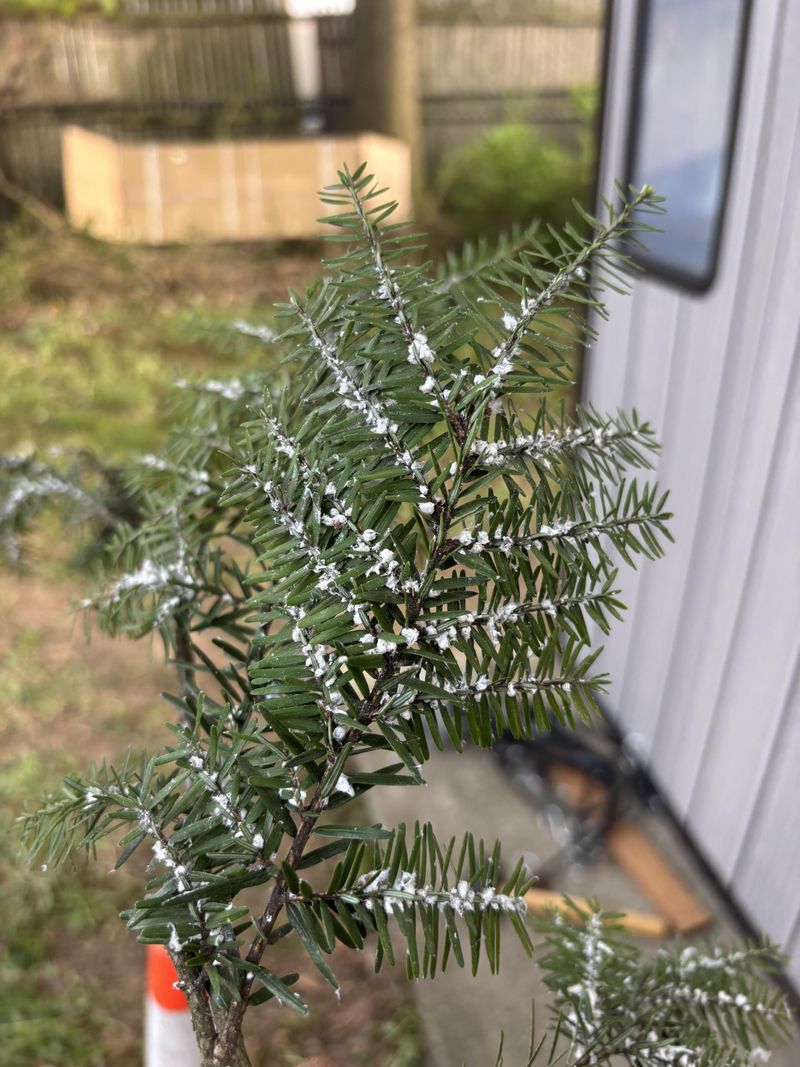
Don’t laugh, but I once thought the white fuzz on my pine was fake snow from the farm. It turned out to be living insects tucked inside waxy wool.
Adelgids are tiny relatives of aphids. They suck sap and coat themselves in white, cottony wax for protection. Pine bark adelgids often show up on white pines, while balsam woolly adelgids can appear on firs.
Unlike aphids, they mostly stay put. You won’t find them strolling across your mantel or crawling up the walls. They simply sit on the bark and needles where they hatched.
They pose no threat to people, pets, or houseplants. A cut tree is only staying for a few weeks, so the damage they do to it barely matters. Your holiday display won’t suffer.
If the fluff bothers you, wipe it off with a damp paper towel. A quick, gentle brush with an old toothbrush works on bark too.
One fun fact makes them worth a closer look. Under a magnifying glass, you can sometimes see the tiny purple-brown insect hiding inside its wool. Kids find that part fascinating.
Spiders And Silky Egg Sacs Like Hiding In Dense Evergreen Branches
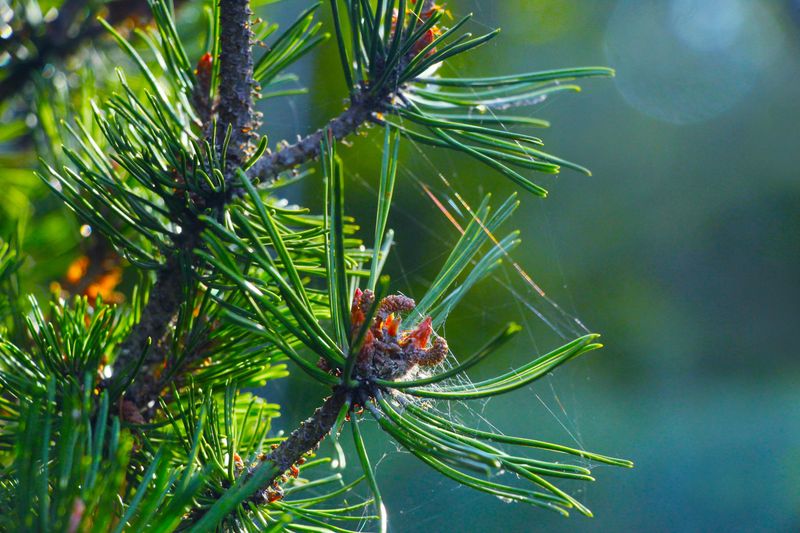
Not going to lie, a spider zipping past a glass ornament makes me jump. Thick evergreen branches make perfect winter shelters, so spiders are common riders on fresh trees.
The usual suspects are small outdoor types. Jumping spiders, orb weavers, and some little hunting spiders tuck into the foliage. They are not interested in people and rarely bite.
You might also find small, silky egg sacs. These can be white, tan, or greenish, and they often stick to twigs or needle clusters. Warm air can trigger them to hatch.
Baby spiders are tiny and harmless too. Most will struggle to find food or moisture inside a heated home. Many wander off, hide, or simply fade away within a short time.
A vacuum handles strays quickly and cleanly. You can also scoop a spider into a cup and release it on a porch or in a garage. Picking off visible egg sacs before decorating is an easy step.
Here’s a nice twist. Some cultures in Eastern Europe hang spider web ornaments for good luck, based on an old folk tale. Maybe your eight-legged guest is just being traditional.
Bark Beetles And Scale Bumps Sometimes Tag Along On The Trunk
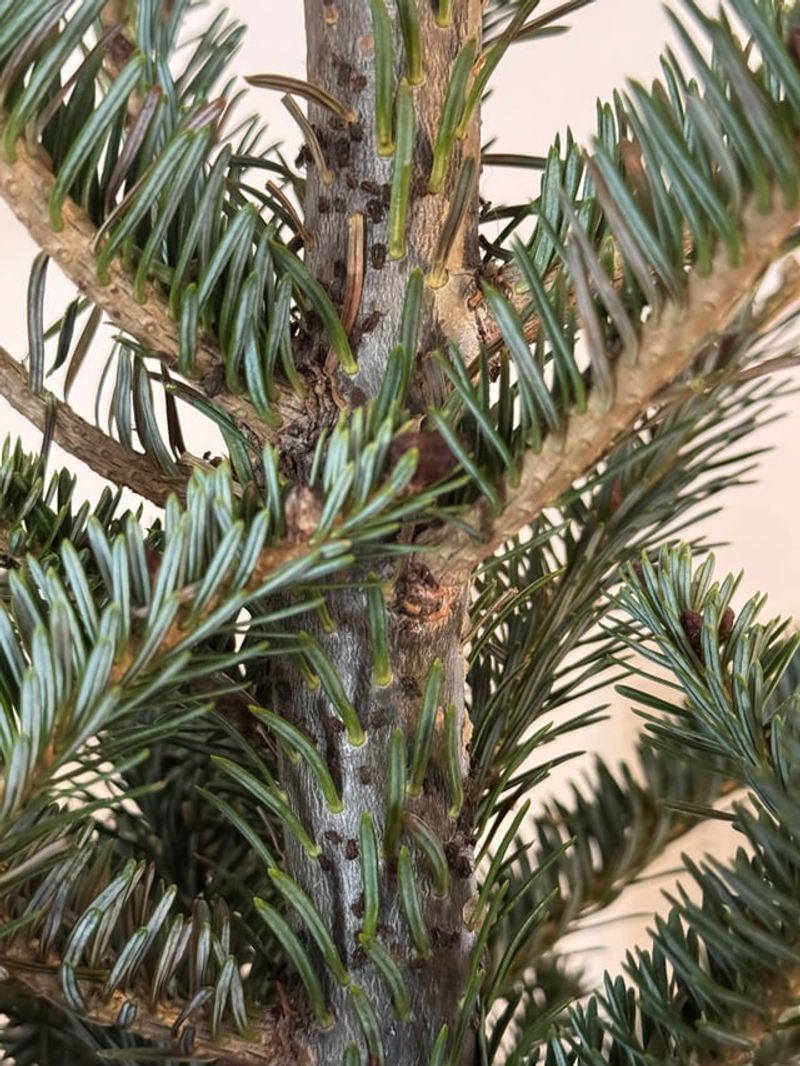
Fine sawdust under your tree stand might look alarming. Before you worry about your house, check the trunk for tiny round holes.
Bark beetles are small brown, cylinder-shaped beetles that tunnel under bark. Warm indoor temperatures can wake them, and you may see a few crawling near windows. The good news for homeowners is solid.
Extension entomologists explain these beetles need moist, living or freshly cut wood. Dry furniture, floors, and framing in your home can’t support them. They can’t spread to your house, and most fade quickly in the dry air.
Scale insects are another quiet passenger. They look like flat or domed bumps, often white, brown, or gray, stuck to twigs and needles. Most adults don’t move, but tiny crawlers may hatch indoors.
Those crawlers look like moving specks of dust. They can’t feed on your furniture and won’t infest healthy houseplants placed far from the tree. Still, it’s smart to keep potted plants a few feet away.
A damp cloth or vacuum handles both easily. Then, when the season ends, take the tree outside promptly. That sends any lingering riders back where they belong.
Skip The Bug Spray And Grab The Vacuum For Tree Visitors

Trust me on this one, the spray can belongs back in the cabinet. Many aerosol bug sprays are flammable, and your tree is wrapped in electric lights.
Extension specialists advise against spraying pesticides on indoor Christmas trees. Fumes linger in closed winter rooms where kids and pets play. Sprays can also damage the needles and shorten your tree’s fresh look.
A vacuum with a hose attachment does the job safely. Run it along the floor, tree skirt, and nearby walls every day or two. Empty the canister or toss the bag outside afterward.
Remember that nearly every one of these critters is an outdoor creature. They can’t survive long in Indiana homes during heating season. Dry air and missing food sources handle most of the problem for you.
Keep the tree watered, too. A well-hydrated tree stays fresher, sheds less, and holds up better against heat from lights.
Here’s my takeaway after years of real trees. A few bugs are a small trade for that piney smell. Shake it, check it, vacuum the strays, and enjoy the season. Then compost or recycle the tree through your local program in January.