Poinsettia Dropping Leaves? These Mistakes Are Probably The Cause
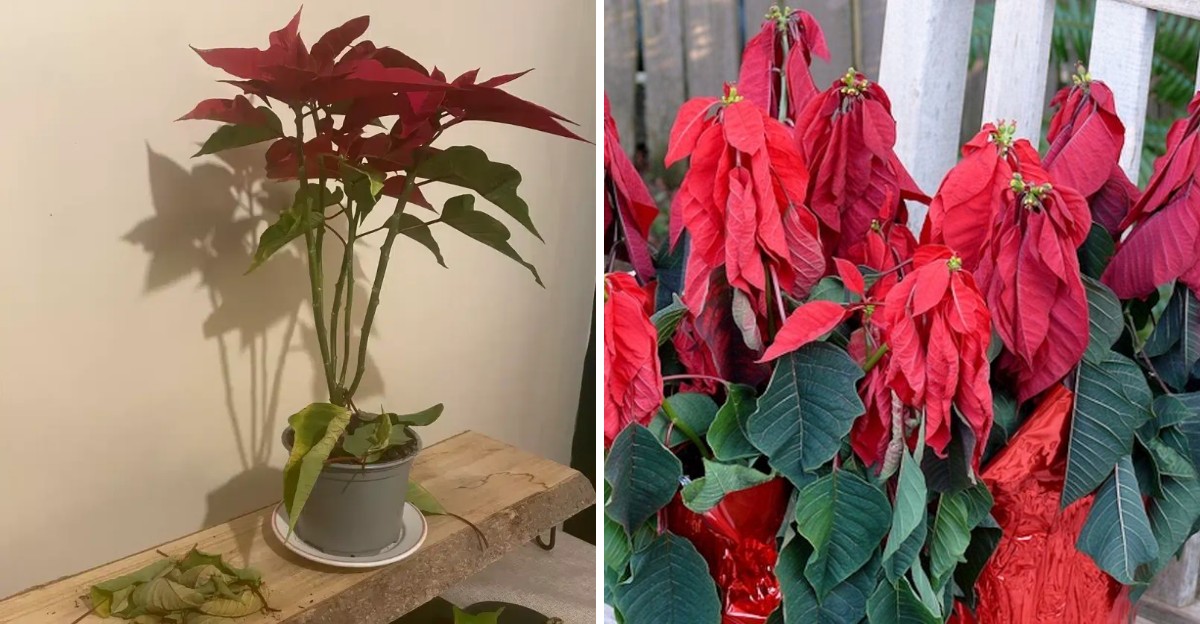
Those glowing red petals on your favorite holiday plant are not petals at all, but colorful leaves called bracts. The real flowers are tiny yellow buds hiding in the center, and most people walk right past them.
This shrub grows wild on warm, sunny hillsides, where it can stretch taller than a basketball hoop. Inside our homes, it faces dry furnace air and gardeners who mean well but pour on too much water.
I lost a whole pile of green leaves one December, right after I set my plant beside the door. You might notice the same sad shower on your own carpet, and it usually starts with a simple mistake.
Most of these slipups are easy to fix once you know what the plant is quietly trying to say. So which habit is secretly stripping your holiday showpiece bare, and how fast can you turn it around?
1. Wilting Poinsettia Stems In Bone Dry Potting Mix
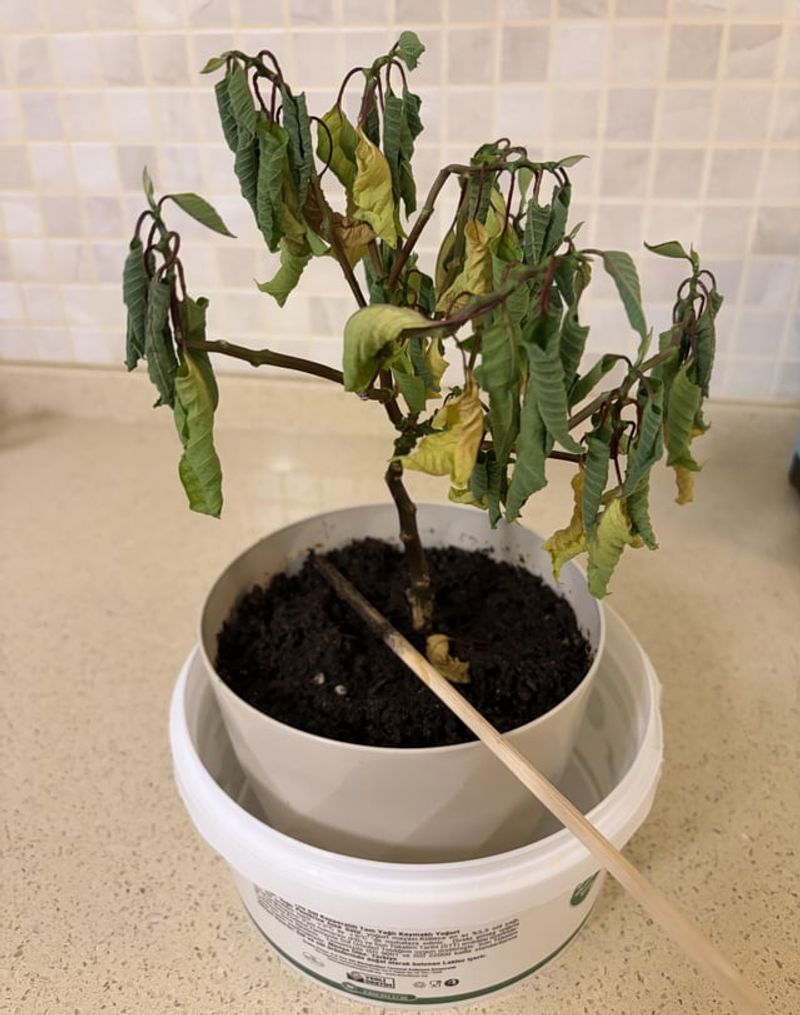
A thirsty poinsettia can flop over so dramatically that it looks like it fainted on the coffee table. Overwatering gets most of the blame, yet letting the pot dry out too far causes leaf drop too.
These plants like soil that stays evenly moist, somewhere between a wrung out sponge and a muddy puddle. Small pots and warm rooms can dry the soil surprisingly fast, sometimes in just a day or two.
Look for drooping leaves that curl slightly and then turn dry and crispy before they finally let go. Lift the pot as well, because a container that feels oddly light is a strong clue that it is thirsty.
You may also see the potting mix shrinking away from the sides of the pot, leaving a gap. Water poured into that gap can rush straight past the roots and out the bottom without soaking in.
I fix this by setting the pot in a bowl of water for about twenty minutes to rehydrate. After that, I let it drain well, so the roots get moisture without sitting in leftover water.
Check your plant every day or two, especially during cold snaps when the furnace runs more often than usual. Repeated severe wilting weakens roots over time, so catching thirst early keeps your plant much happier and fuller.
Try pairing your soil check with a daily habit, like making breakfast or feeding the family dog. That tiny routine keeps the roots steady and saves your bracts from looking tired before the holidays end.
2. Soggy Soil Trapped Under Shiny Foil Wrap
That shiny holiday foil looks festive, but it can turn your pot into a tiny bathtub without you knowing. Water drains through the soil and pools inside the wrapper, leaving the roots sitting in a soggy puddle.
Roots need air pockets in the soil to breathe, and constant wetness pushes that oxygen right out. Without air, roots begin to rot, and the plant responds by yellowing and dropping its lower leaves.
Overwatered leaves often feel soft and limp, and they may fall off with the lightest touch of your hand. The soil stays dark and heavy for days, and stems near the base can turn mushy in serious cases.
I once poked holes in the bottom of a foil sleeve and found nearly half a cup of water hiding. My plant perked up within a week after I removed the wrap and let the extra moisture drain away.
Before watering, push a finger about an inch into the potting mix and feel for dryness first. If it still feels damp, wait another day and check again rather than following a strict calendar schedule.
When it is time, water slowly at the sink until extra liquid flows out of the drainage holes. Let the pot drip for a few minutes, then return it to the decorative wrap or saucer.
Empty any saucer that collects water within about ten minutes, so the roots are not soaking for hours. A light pot after watering usually means good drainage, while a heavy, dripping pot signals trouble ahead.
3. Picking A Poinsettia Without Missing Lower Leaves
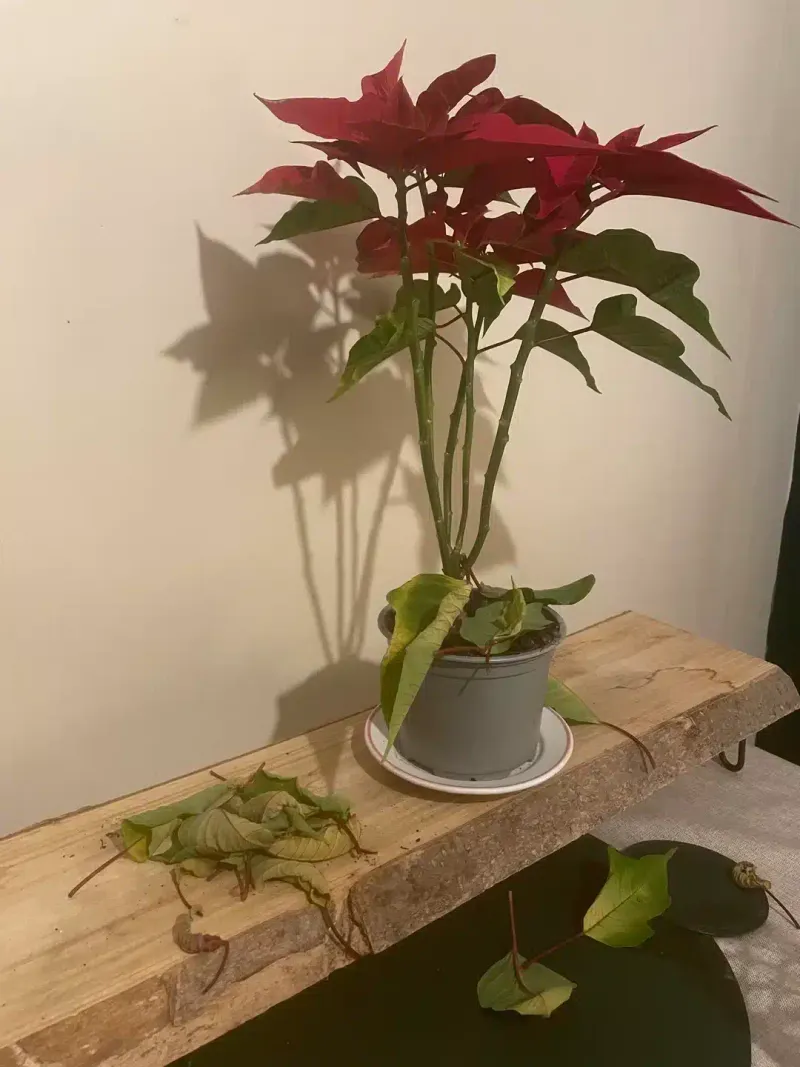
Plenty of leaf trouble starts in the store aisle, long before your plant ever rides home in the car. I have seen sad poinsettias parked near sliding doors, catching cold blasts every time a shopper walks inside.
Your first job is a careful inspection, starting with the leaves that grow closest to the soil line. Healthy plants keep dark green foliage all the way down the stems, with no bare patches or droopy spots.
Next, peek into the center of the colorful bracts and look for the tiny true flowers, called cyathia. Tight green or red buds with little yellow tips mean the plant is fresh and ready for weeks of color.
If those buds are already shedding yellow pollen, the plant is older and its show will fade sooner. That detail comes straight from university extension advice, and it saved me from buying a tired plant last year.
Avoid plants squeezed tightly into paper sleeves on the display shelf, because crowded stems stress quickly and start drooping. Sleeves are handy for the trip home, but long storage inside them can cause the leaves to sag.
Give the soil a quick touch as well, since a soggy or bone dry pot hints at rough care. Wilted plants sitting in puddles of water often carry hidden root problems that show up days later at home.
A few extra minutes of checking can spare you a lot of disappointment by the middle of December. Choose the sturdiest plant in the bunch, even if it costs a little more than the bargain table option.
4. Chilly Car Rides And Cold Window Drafts
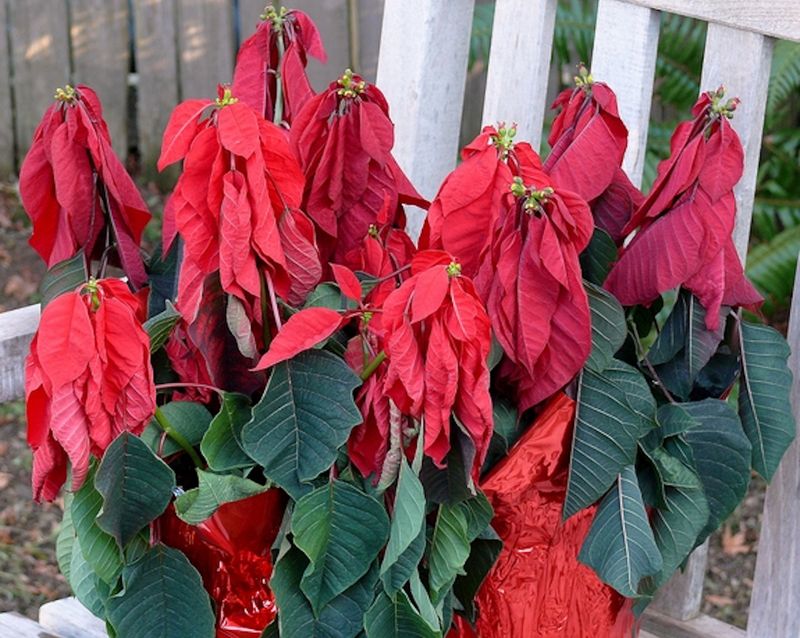
A two minute walk across a freezing parking lot can be enough to send poinsettia leaves tumbling later. These tropical shrubs come from warm, sunny hillsides, so even brief cold exposure leaves a lasting mark.
Temperatures below about 50 degrees Fahrenheit can damage leaf cells, and the plant may not show trouble right away. Many folks notice yellowing and leaf drop several days after the cold hit, which makes the cause hard to spot.
I learned this the hard way when I left a new plant in my trunk while running one more errand. By the weekend, it was shedding leaves like a nervous cat sheds fur at the vet.
Ask the store to wrap your plant in a sleeve or large paper bag before you head outside. Warm up the car first, then drive straight home instead of making extra stops along the way.
Once inside, keep the pot away from frosty window glass and exterior doors that swing open all day long. Leaves touching a cold pane can get chilled even when the rest of the room feels cozy.
Aim for daytime temperatures between 65 and 75 degrees, with nights staying around 60 degrees or a bit warmer. Slightly cooler nights can help the bracts hold color, but steady chilly air is a different story.
Unwrap the plant gently after you arrive, and give it a calm spot to settle in for a while. A little caution during that first trip pays off with weeks of bright color and full green foliage.
5. Dry Winter Air From Indoor Heating
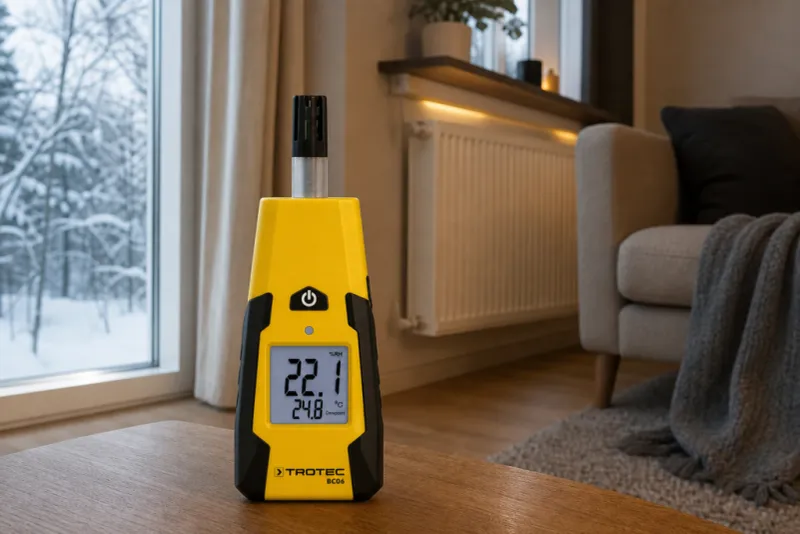
Winter air inside a heated home can be drier than some deserts, and your poinsettia feels every bit of it. Its leaves lose moisture faster than the roots can replace it, so the plant starts shedding to cope.
Poinsettias tend to do best with humidity around 40 to 60 percent. Many heated homes dip far lower during cold months, sometimes reaching only 20 or 30 percent indoors.
Dry air damage often sneaks up gradually, with leaf tips and edges curling and turning crisp first. Leaves may fall while still green, which confuses plenty of owners who expect yellowing before any drop.
My favorite fix is a simple pebble tray made from a shallow dish filled with small stones and water. Set the pot on top of the pebbles so it sits above the waterline, not soaking in it.
As the water slowly evaporates, it raises the moisture level right around the leaves where it matters most. Refill the tray every few days, and rinse the stones now and then to keep things fresh.
A small room humidifier works even better, and your skin and sinuses will probably thank you as well. Grouping several houseplants together also helps, since leaves release moisture that neighboring plants can share nearby.
Misting gets a lot of buzz online, but its effect fades within minutes and rarely solves the problem. Steady humidity from a tray or humidifier gives your plant longer relief through those dry winter weeks.
6. A Dim Corner Far From The Window
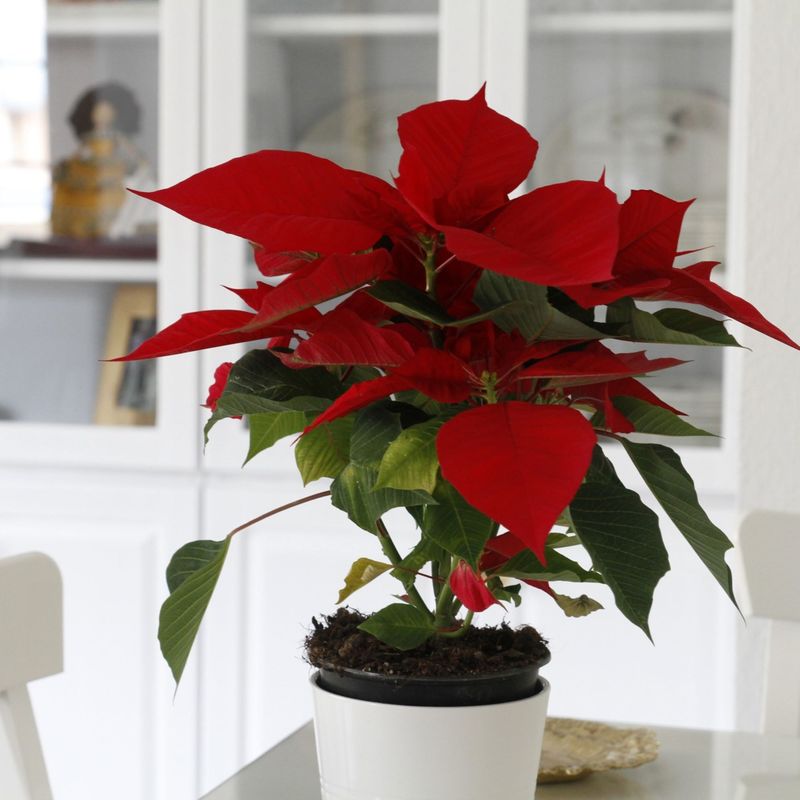
Tucking a poinsettia into a dim hallway corner looks charming, but the plant quietly starts going hungry for light. Leaves are tiny food factories, and without enough sunshine they cannot keep the whole plant fed.
These shrubs want bright, indirect light for about six hours or more each day to stay full and colorful. Short winter days already limit sunshine indoors, so a shadowy spot makes that shortage much worse.
Watch for lower leaves turning yellow and falling, along with stems that stretch toward the nearest light source. The red bracts may fade too, and some can even slip back toward green after weeks in dimness.
I moved one struggling plant from a bookshelf to a bright east window, and new leaf drop slowed quickly. That change cost me nothing except a little shuffling of picture frames and a candle holder.
East, west, or south facing windows usually work well, as long as the light stays mostly indirect. Keep the pot about six to twelve inches back from the glass to avoid chilly temperatures on cold nights.
Rotate the pot a quarter turn every week so each side gets its fair share of brightness. Otherwise, the plant leans like a sunflower chasing the sun, and one side looks thin and patchy.
If your home is naturally dark, a simple LED grow light can fill the gap during short days. Place it a foot or so above the plant, and run it on a timer for consistency.
7. Harsh Midday Sun Scorching Poinsettia Bracts
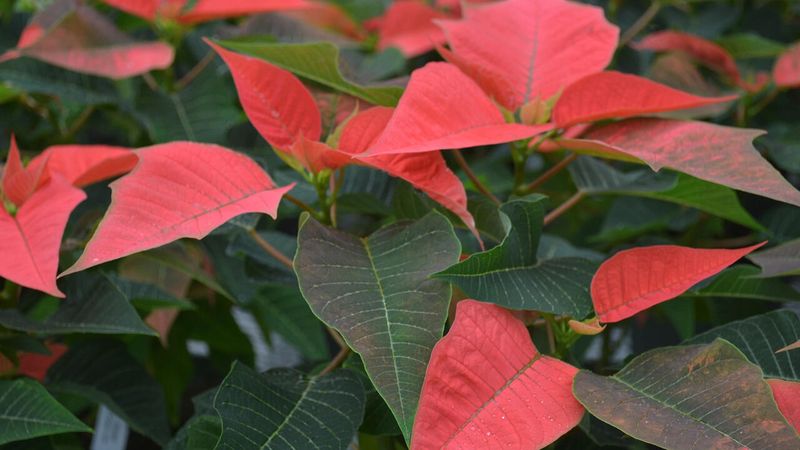
Surprisingly, a poinsettia can get a sunburn indoors, even while snow piles up outside your window. Too much direct sun can bleach the bracts and scorch the leaves, which eventually leads to more leaf drop.
In the wild, these shrubs grow in bright, warm settings, which explains why they enjoy brightness but prefer it softened rather than blasting straight through clear glass. That background explains why they enjoy brightness but prefer it softened rather than blasting straight through clear glass.
Scorched leaves look pale or washed out at first, and brown, crispy patches can appear along the edges. Bracts may fade from rich red to a dull pinkish tone, losing much of their holiday charm.
South and west windows can heat up quickly in the afternoon, especially when sunlight reflects off snow outside. I noticed my plant’s top leaves crisping after a week on a sunny sill, so I pulled the curtain.
A sheer curtain or light blind is a simple fix that diffuses the rays without making the room gloomy. You can also slide the pot a few feet back so it catches bright light without direct beams.
Feel the leaves around midday if you are unsure, since foliage that is hot to the touch is a helpful warning sign. Rotating the pot regularly also prevents one side from taking all the sun while the other stays shaded.
Finding the right balance takes a little trial and error, but your plant will show you quickly. Steady, filtered brightness keeps both the green leaves and the colorful bracts looking their best for weeks.
8. Poinsettias Sitting Near Heat Vents And Fireplaces
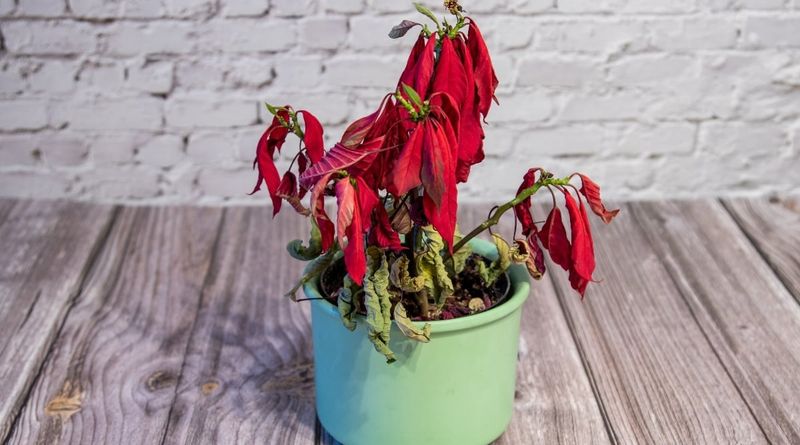
A crackling fireplace makes a gorgeous backdrop for holiday photos, but your poinsettia would rather sit across the room. Blasts of hot, dry air pull moisture from the leaves so fast that the roots cannot keep up.
Heat vents and radiators cause the same trouble, even when the rest of the room feels comfortable to you. Sudden temperature swings stress the plant, and leaf drop is its usual way of saying something is wrong.
Leaves near the heat source often wilt first, then turn crisp and fall faster than you would expect. The colorful bracts may also fade early, which shortens your display by days or even several weeks.
My mantel looked perfect with a poinsettia on each end, until the leaves started raining onto the hearth. Moving them to a side table a few feet away stopped the shedding within about a week.
Before choosing a spot, hold your hand near the area and feel for warm currents rising from vents. Ceiling fans and heater fans can push warm air farther than you might expect, so check carefully.
Try to keep room temperatures steady, ideally in that comfortable range of 65 to 75 degrees during the day. Avoid placing the plant on top of televisions or appliances, since they give off surprising amounts of warmth.
A good spot is bright and steady, well away from hot gusts as well as cold drafts near doors. With a little planning, your poinsettia can stay full and cheerful well past New Year celebrations.