Bobcats Are Turning Up Closer to New York Homes. Here’s What It Means
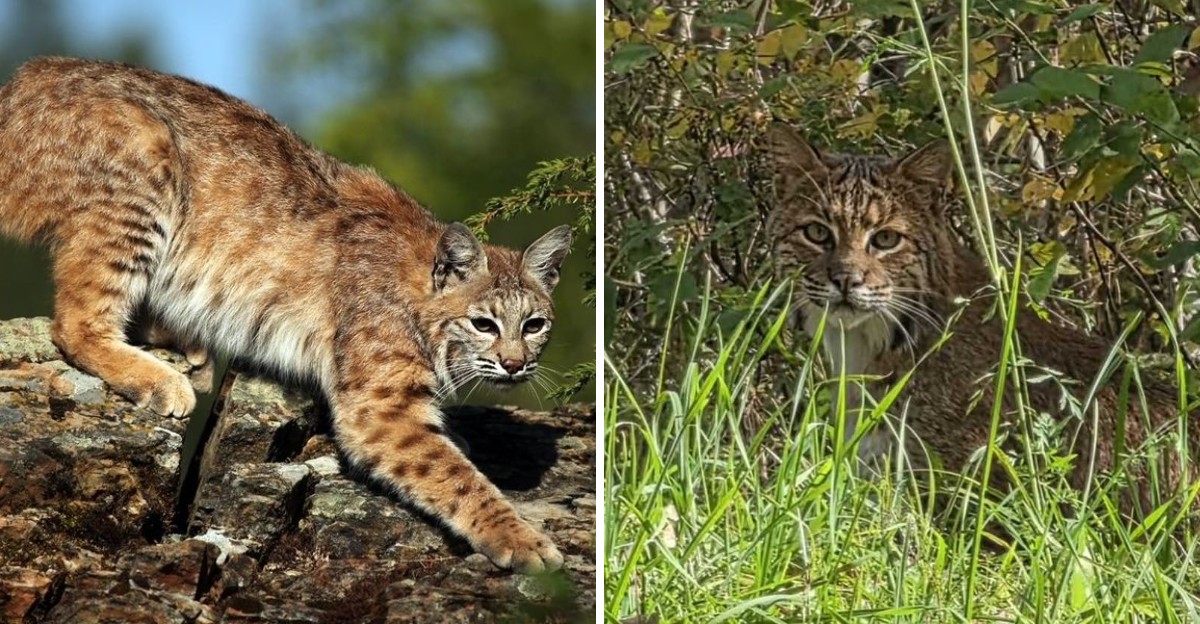
A wild cat with tufted ears and a stubby tail strolled past a doorbell camera in Westchester County, just steps from a front porch. That clip made me spill my coffee.
These cats were once rare in much of New York. Now people report them in suburbs, on hiking trails, and even near busy roads in the lower Hudson Valley.
I can’t imagine a stranger sight while weeding the tomato bed. Let me be straight with you, though, because my first reaction was mostly nerves. Then I learned how shy these animals really are.
They weigh less than many family dogs. They hunt rabbits, mice, and squirrels, the same critters that nibble my lettuce. So should we worry, or should we quietly cheer when one slips through the backyard?
That Bobtailed Cat in Your Yard Has a Comeback Story
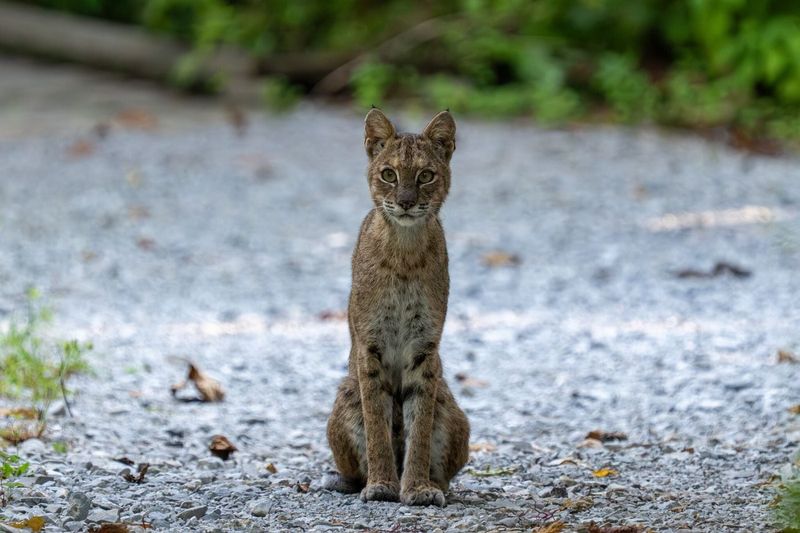
Fifty years ago, spotting one of these cats in much of the state felt about as likely as finding a palm tree in Buffalo. Heavy trapping and lost forest had pushed bobcats into remote corners of the state.
Things slowly changed. Old farm fields grew back into young woods and brushy edges, which happen to be perfect bobcat country.
The New York State Department of Environmental Conservation also manages the species with regulated seasons, and state surveys show populations stable or growing in many regions.
Historically, the strongholds were the Adirondacks, the Catskills, and the Taconic highlands along the eastern border. Now the cats are filling in gaps between those areas.
Young bobcats leave their mothers and wander to find their own territory, sometimes traveling many miles.
Those wandering youngsters explain a lot of the surprise sightings. A cat passing through your neighborhood may be looking for a home range, not planning to move into your shed.
So the honest answer is fairly calm. More sightings mostly reflect a recovering native animal, plus far more doorbell and trail cameras catching what used to slip by unseen.
Did you know? A bobcat gets its name from its short, bobbed tail, which usually measures only about five or six inches long.
A Bobcat Sighting Usually Means Calm, Not Panic
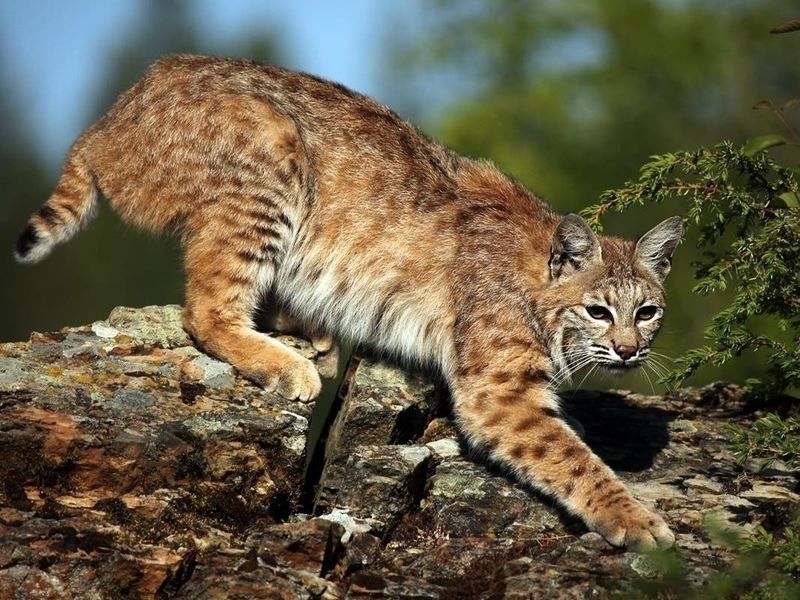
My first sighting lasted about four seconds. The cat looked at me, decided I was boring, and melted into the brush behind the compost pile.
That reaction is typical. Bobcats are secretive and generally avoid people, and attacks on humans are extremely rare.
Most reported cases involve a sick animal, often one with rabies, which makes any bold or strange behavior worth noticing.
Healthy bobcats seen in daylight are not automatically a problem. They hunt at dawn and dusk, but they also move around during the day, especially in winter or when raising kittens.
A daytime stroll across a lawn is normal behavior.
Pay attention, though, if a bobcat stumbles, circles, seems unafraid, or approaches people. Those are reasons to keep away and call local police or your regional DEC office right away.
For a normal encounter, stay calm and give the cat room. Stand tall, make noise, clap your hands, and back away slowly.
Avoid running, since quick movement can trigger a chase response in many predators.
If you ask me, the best move is often simply grabbing your phone for a quick photo from a safe distance. Then go inside and enjoy the story, because you just saw one of the shyest predators in the Northeast.
Small Pets and Backyard Chickens Need Extra Protection
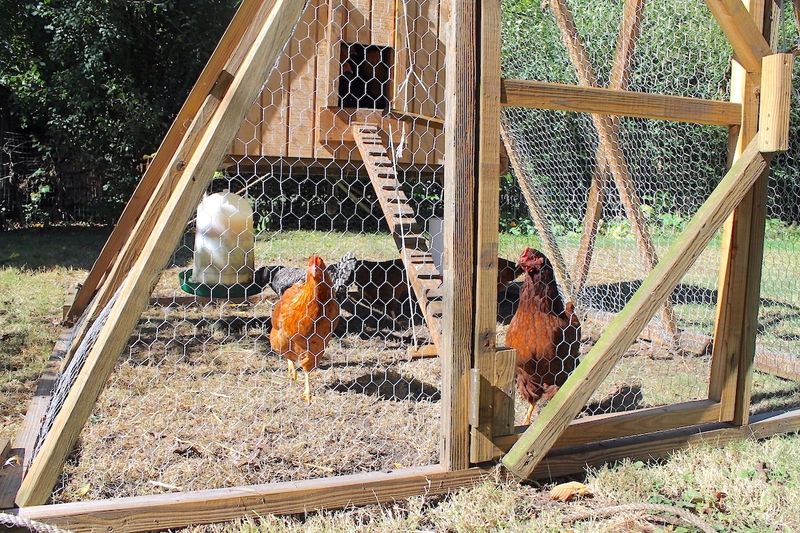
Here comes the part where I get a little protective. Bobcats are not a big threat to people, but small animals left outside are another matter.
An adult bobcat in New York usually weighs about 15 to 35 pounds. It can take prey like rabbits, chickens, ducks, and occasionally outdoor cats or very small dogs.
Losses are not common, yet they do happen, especially at night.
Chicken keepers should treat a coop like a vault. Use hardware cloth instead of chicken wire, which bobcats and raccoons can tear.
Cover the run with a solid roof or strong mesh, because these cats are excellent climbers and jumpers.
Bury an apron of wire along the bottom of the fence to block digging. Lock birds inside a closed coop every evening before dusk.
For pets, keep cats indoors, especially overnight. Walk small dogs on a leash in early morning and evening, and stay close in fenced yards that border woods.
Rabbits and guinea pigs in outdoor hutches need sturdy latches and solid construction too. One mistake I won’t repeat is trusting a flimsy latch because nothing had ever bothered my birds before.
A few hours of coop upgrades can save a lot of heartache later.
Rabbits Nibbling Your Lettuce Might Be the Real Attraction
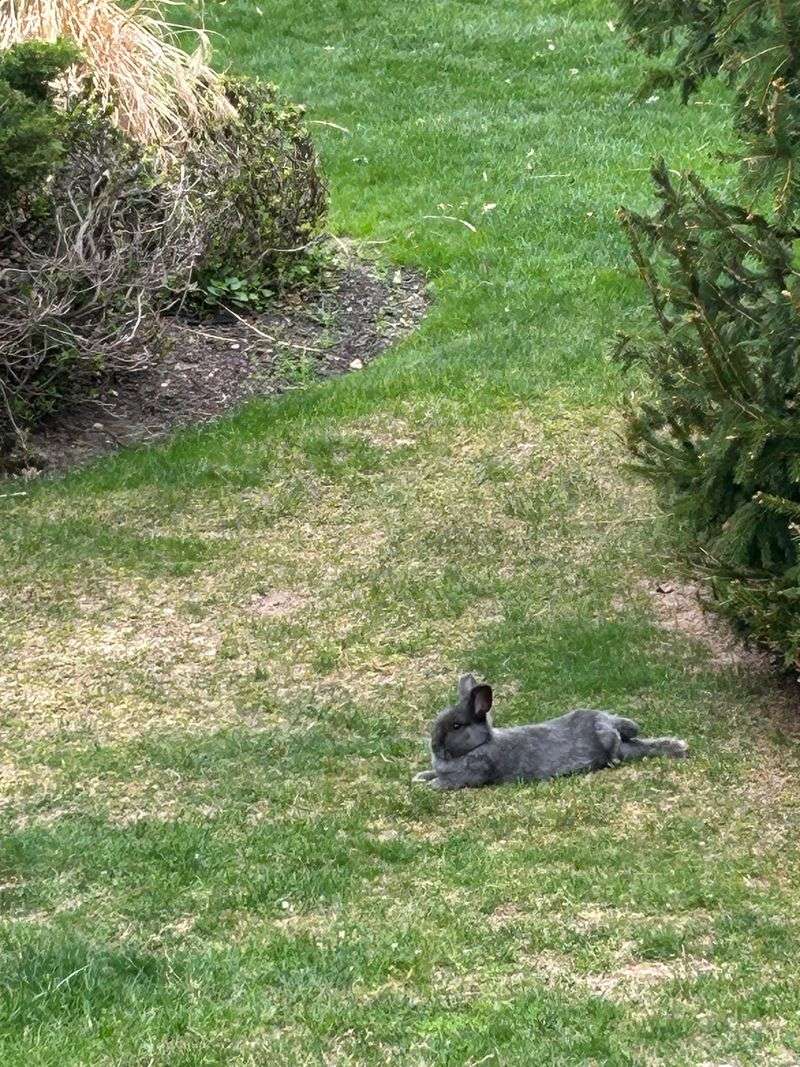
Funny thing about my bunny problem. The same cottontails munching my bean seedlings are exactly what a bobcat wants for dinner.
Bobcats eat mostly small mammals. Cottontail rabbits, snowshoe hares in the north, squirrels, mice, voles, and chipmunks make up much of their diet.
They also take birds and, in winter, sometimes deer, often fawns or weakened animals.
Suburban yards can be packed with that prey. Bird feeders scatter seed that draws squirrels and mice.
Thick shrubs shelter rabbits, and vegetable gardens feed them all season.
So when a bobcat strolls past, it may simply be following the menu. That is not a bad thing from a gardener’s point of view, since a little natural rodent control rarely hurts.
Still, you can make your yard less of a hotspot. Clean up spilled seed under feeders, or bring feeders in at night.
Store birdseed and pet food in sealed metal bins.
Fencing your vegetable beds with low wire mesh keeps rabbits from setting up shop. Fewer rabbits mean fewer reasons for a hungry predator to linger.
Let me save you some trouble: the goal is balance. You want your plants protected without inviting a full wildlife buffet next to the patio.
Brush Piles and Crawl Spaces Make Cozy Bobcat Hideouts
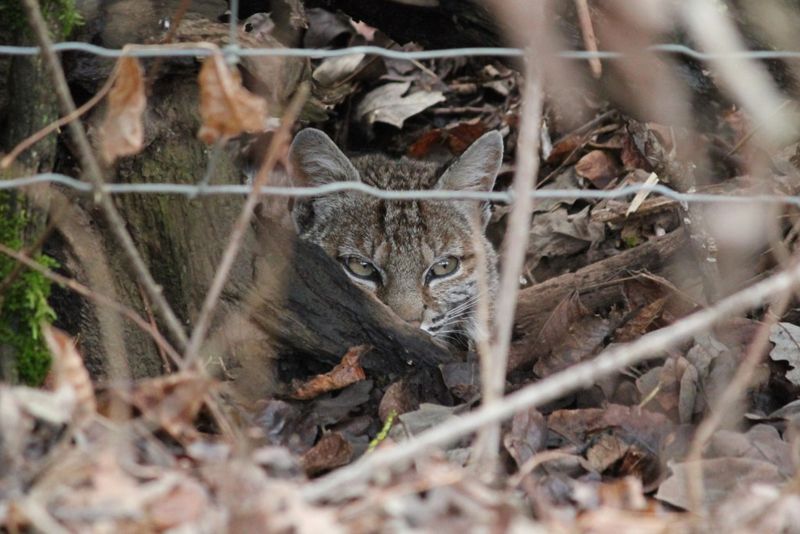
Bobcats love a good hiding spot. Dense brush, rock piles, hollow logs, and the dark space under a deck all look like prime real estate to a cat that hates being seen.
Mother bobcats look for sheltered dens in spring, when kittens are usually born in New York. A quiet, cluttered corner of a large property can occasionally appeal to a female looking for safety.
You can make your yard less inviting without stripping it bare. Close gaps under porches, decks, and sheds with sturdy wire mesh.
Do this outside of spring kitten season, or check carefully first so no animals get trapped inside.
Keep firewood stacked neatly and off the ground. Trim low, tangled shrubs near doors, play areas, and the chicken coop, so nothing can sneak up unnoticed.
Native plantings and wildlife habitat still belong in a healthy yard. Just place thick cover farther from the house and away from pets.
As a rule, I keep my wild corner at the back fence line and the tidy zone near the house. That split gives birds and pollinators a home while leaving fewer shadowy nooks where a bobcat might settle in close to the back door.
Motion Lights and a Loud Clap Send Bobcats Packing
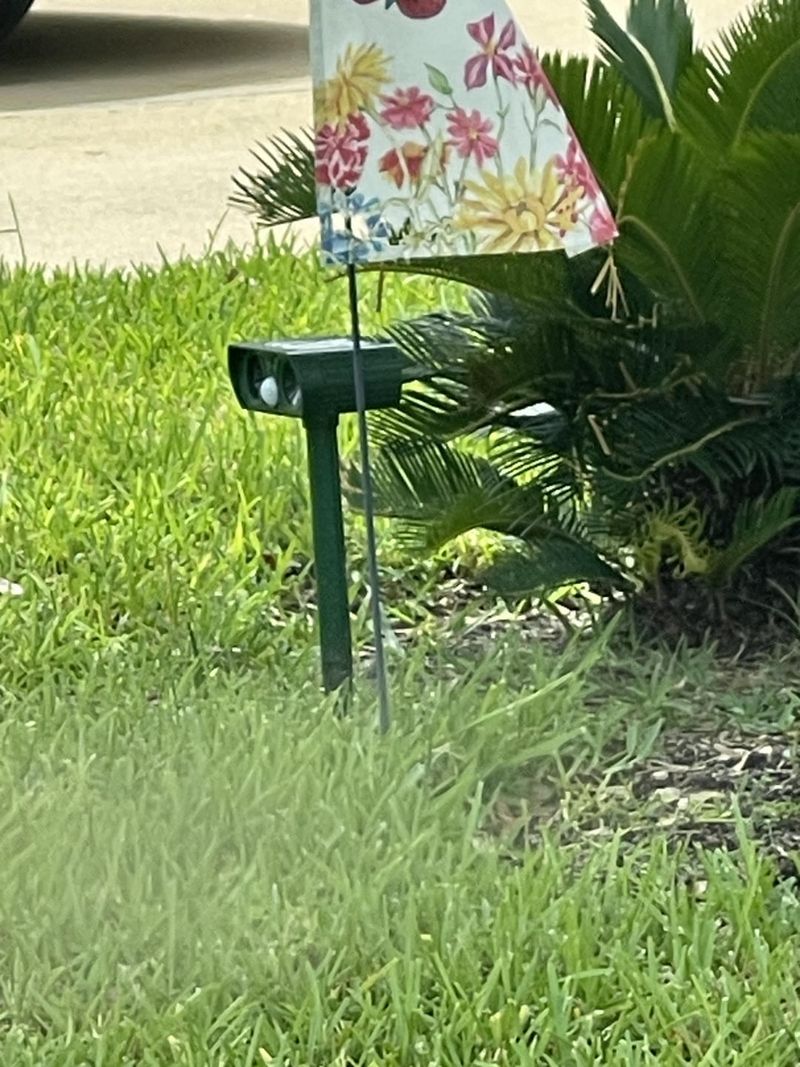
Nothing ruins a sneaky cat’s evening quite like a floodlight popping on. Bobcats rely on stealth, so sudden light and noise make them uneasy.
Motion-activated lights near coops, sheds, and back doors are a simple, affordable fix. Many gardeners also use motion-activated sprinklers, which give a startling splash during warmer months.
Wildlife experts call this hazing, and it teaches animals that a place feels unwelcoming.
If you spot a bobcat lingering, be loud and big. Yell, bang a pot, wave your arms, or spray it with a garden hose from a safe distance.
Most will bolt quickly.
Consistency matters. A cat that gets startled every visit learns to choose a different route, while one that feels relaxed may return.
Do not corner the animal or block its escape. Give it a clear path out of the yard and let it leave.
Now that I think about it, these same tools help with raccoons, skunks, and foxes too. A good motion light by the garden gate has kept more than one masked raider out of my sweet corn.
Fun fact: bobcats can leap about ten feet in a single bound, so a short fence alone rarely stops them.
Tracks in the Snow Can Prove a Bobcat Visited
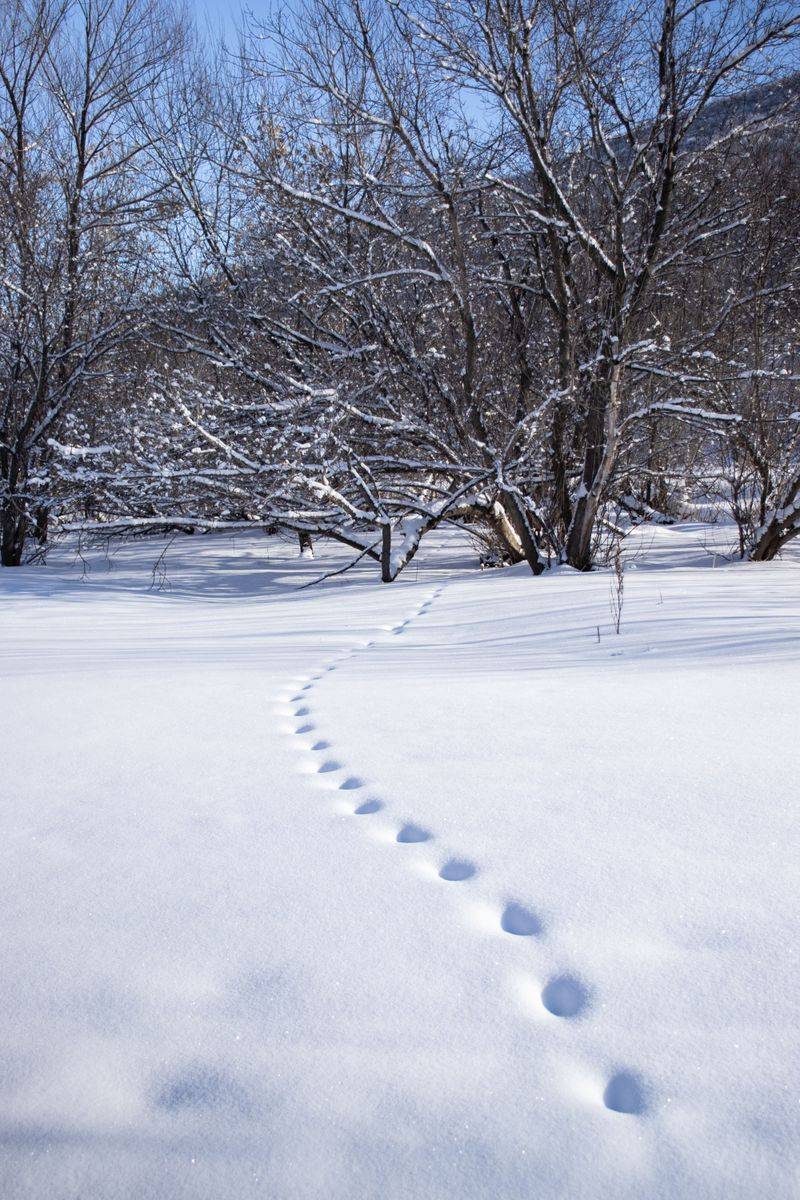
Winter turns every backyard into a guest book. After a fresh snowfall, you might find round paw prints crossing the garden and wonder who stopped by overnight.
Bobcat tracks are about two inches wide and look fairly round. Like house cats, they usually keep their claws pulled in, so you rarely see claw marks.
Dog and coyote tracks are more oval and normally show claw tips.
Look closely at the main heel pad too. On a bobcat, it has three small lobes at the back, while canine pads look more triangular with fewer lobes.
Bobcats often walk in a neat line, setting the back foot almost into the front print. That tidy pattern helps them move quietly.
Other clues include scratch marks on logs and scat left in obvious spots along trails. Keep your distance from any droppings and wash your hands after outdoor chores.
I’ll never forget the morning I matched a set of prints to a field guide over breakfast. It felt like solving a mystery in my own garden.
A trail camera pointed at a fence gap or woodland edge can confirm your suspicions. Many residents have captured surprising footage this way.
Your Bobcat Photos Can Help Wildlife Biologists
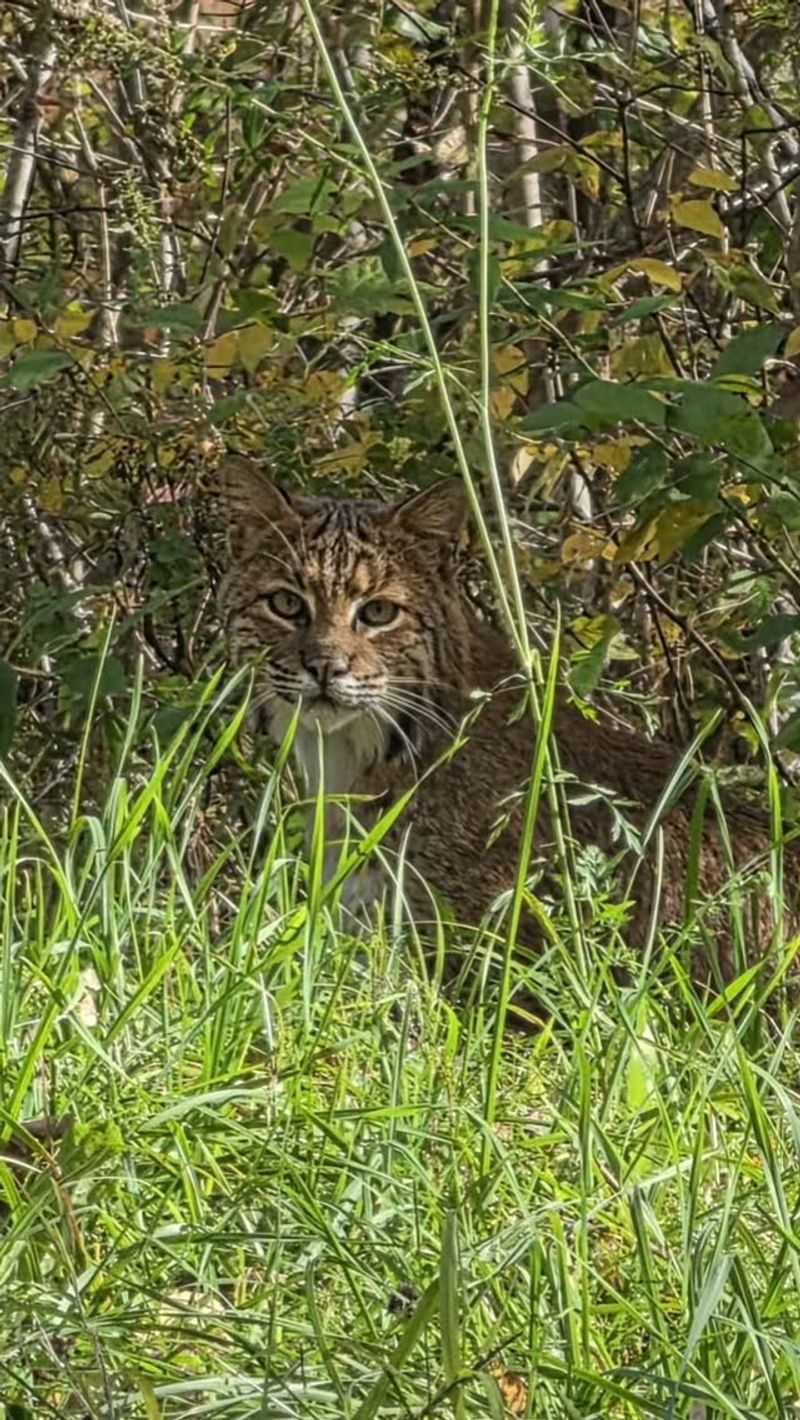
A blurry phone photo of a bobcat might feel like a fun neighborhood brag. It can also be useful information for the people tracking these cats.
The New York State Department of Environmental Conservation has asked the public to share bobcat sightings to help map where populations are expanding. Check the DEC website for current reporting options, since programs can change over time.
Include the date, location, and a photo if possible. Even one clear trail camera image can add a valuable data point.
Remember that bobcats are a protected game species in New York. Hunting and trapping are only legal during regulated seasons with proper licenses and in open areas.
Harming one outside those rules is illegal, and feeding wildlife is a bad idea that can create bold, troublesome animals.
If a bobcat seems sick, injured, or aggressive, call your regional DEC office or local police instead of approaching. Licensed wildlife rehabilitators handle injured animals safely.
My garden taught me that sharing space with wildlife works best with respect and a few smart habits. Secure your pets, tidy hiding spots, add lights, and enjoy the rare thrill of knowing a wild cat is quietly recovering in your corner of the world.