Grow Asparagus Easily In Florida: Plant It Once And Harvest For Years
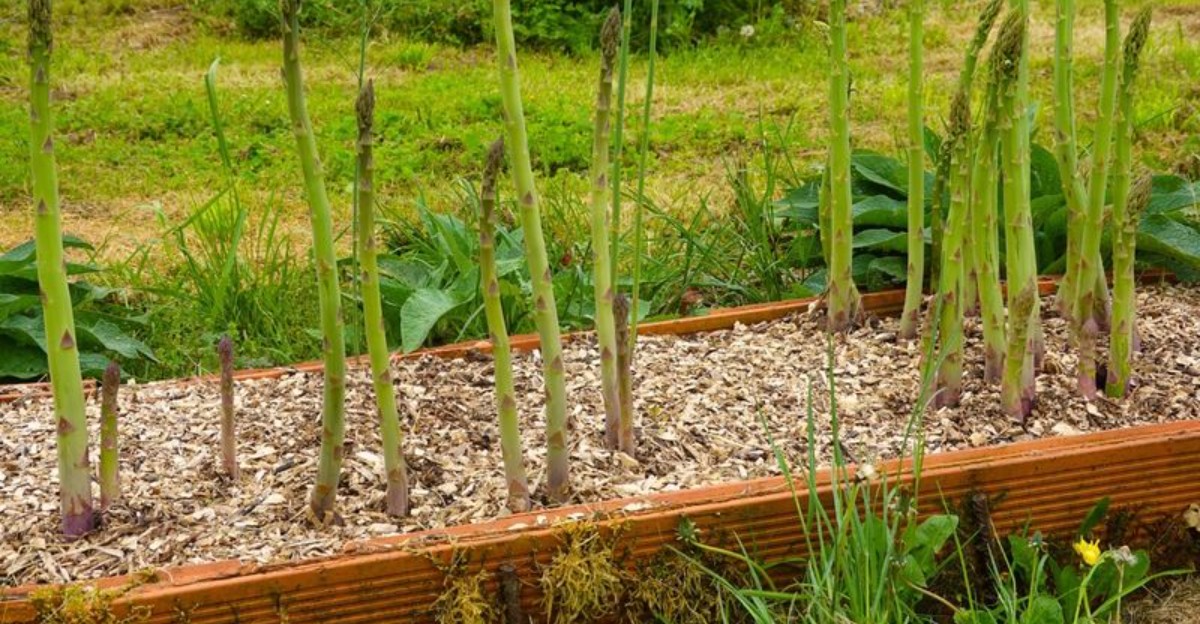
Some vegetable patches outlive the gardeners who plant them. In cold northern regions, a single bed planted once can keep sending up spears for 20 to 30 years.
I still find that a little wild.
The crop is a perennial lily relative that grows from a buried crown with spidery roots. Each spring it pushes up tender shoots, then turns into a feathery green fern taller than most kids.
Florida gardeners face a twist, though. Our warm winters change the rules, and the patch rarely lasts as long here as it does up north.
I believe that only makes the challenge more fun.
You need a sunny spot, some patience, and a few local tricks. Get those right, and you could be snapping fresh spears in your backyard for many springs.
Ready to see how long yours might last?
That 30-Year Asparagus Promise Comes With A Sunshine Twist
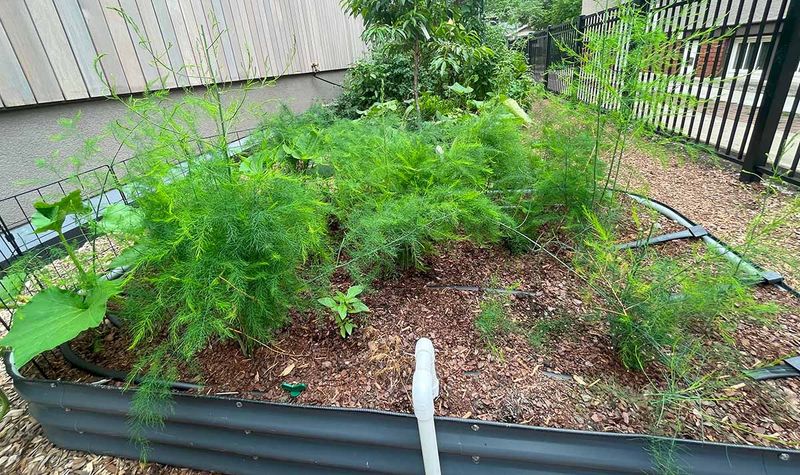
Stories of three-decade asparagus beds are true, but they mostly come from places with real winters. In states like Michigan or Washington, frozen ground gives the plants a long, deep rest every year.
Our state plays by different rules. Many local growers find that beds slow down after roughly 4 to 5 years in North and Central Florida, while careful gardeners report 10 to 15 good years or more.
Results vary a lot by region, soil, and care.
So should you skip it? Not at all.
Even a five-year patch gives you several springs of spears you never had to replant, and that beats buying pricey bundles at the store.
I like to think of the 30-year number as a goal rather than a guarantee. Healthy crowns, good drainage, and smart rest periods all push your patch closer to that dream.
Honest expectations also keep you from feeling disappointed. If your spears start getting thin and sparse after a few seasons, it is not your fault.
It is simply the climate talking.
Plenty of gardeners plant a fresh bed every few years nearby, so one patch is ramping up while the older one slows down. That rotation keeps harvests coming without a gap.
Asparagus Crowns Crave A Winter Nap Florida Rarely Gives
Every asparagus crown runs on a simple cycle of grow, store energy, then rest. Cold weather usually triggers that rest, and the plant uses it to recharge.
Our mild winters often skip that signal. Without a dormant break, plants may keep growing nonstop, which wears out the crown and leads to skinny, weak spears over time.
That explains much of the shorter lifespan here.
Location makes a big difference. North Florida, with its occasional frosts, gives asparagus the most natural rest of anywhere in the state.
Central Florida gets some help in cooler years, while South Florida gets very little.
Gardeners in warmer areas can create a rest on purpose. Cutting back on water in late fall or early winter lets the ferns yellow and slow down, a bit like a drought pause.
Some growers in the tropics use dry seasons this way too.
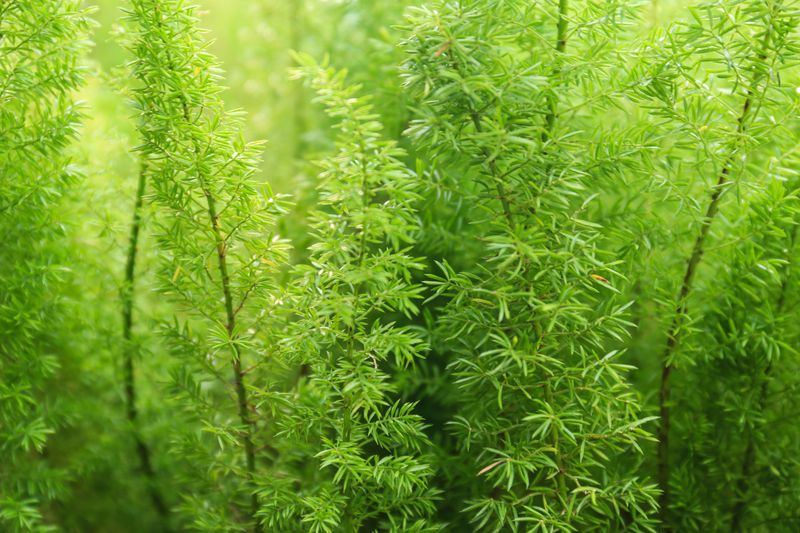
You can watch the ferns for clues. When they turn yellow or brown on their own, the crown is heading into its quiet phase, and that is a healthy sign.
Think of it as tucking your plants into bed. A well-rested crown wakes up stronger and sends up thicker, tastier spears.
Heat-Tolerant Asparagus Varieties Make All The Difference
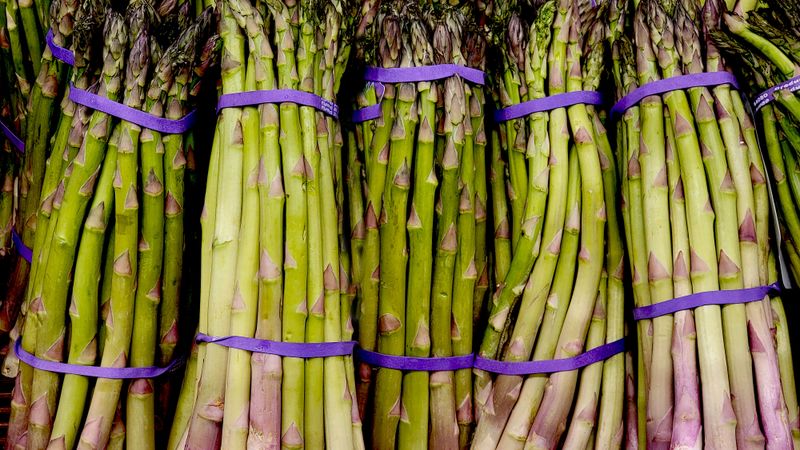
Picking the right variety is half the battle in a hot, humid place. Some types were bred in California’s warm valleys, and they handle heat better than old northern favorites.
UC-157 is a popular pick for warm regions, known for steady yields and good disease resistance. Atlas and Apollo also come from warm-climate breeding programs and show up often on lists for southern gardens.
Classic Mary Washington still grows across much of the South and is easy to find. Jersey types, like Jersey Knight, are all-male hybrids that skip seed production and put more energy into spears, though they were bred for cooler areas.
Purple varieties like Purple Passion add fun color and a sweeter taste. Just know the purple fades to green when you cook it, which surprises a lot of first-time growers.
Personally, I would grab a heat-tolerant type first and maybe a few crowns of a second variety to compare. Your yard will quickly show you which one feels at home.
Buy from a trusted nursery or seed company, and look for firm, healthy crowns. Mushy or moldy roots are a bad start for a plant you hope to keep for years.
A Deep, Well-Drained Raised Bed Keeps Asparagus Roots Happy
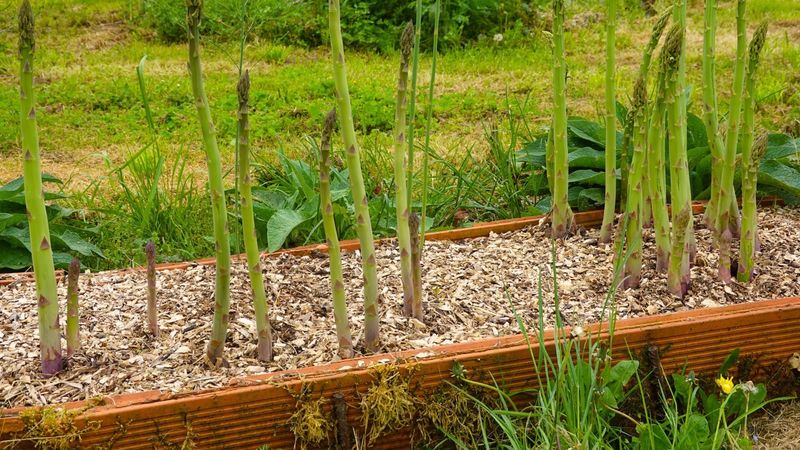
Soggy soil is the enemy of asparagus. The fleshy roots rot fast in standing water, and Florida’s summer downpours can flood a low spot overnight.
That is why many local gardeners build raised beds. A bed 10 to 12 inches tall drains quickly after storms and warms nicely in spring.
Fill it with a mix of native soil, plenty of compost, and some aged manure.
Sandy soil drains well but holds few nutrients. Mixing in lots of organic matter helps it hold water and food longer, which matters for a heavy feeder like this one.
Aim for a pH between about 6.5 and 7.0. A simple soil test through your county UF/IFAS Extension office tells you if you need lime or not, so you are not guessing.
Pick a spot with at least 6 to 8 hours of full sun. Asparagus also gets tall and ferny, so place it at the north edge of the garden where it will not shade shorter crops.
Clear out weeds, especially grasses, before planting. Pulling them later from around the tangled crowns is a real chore you will want to avoid.
Plant Asparagus Crowns In Late Winter For A Strong Start
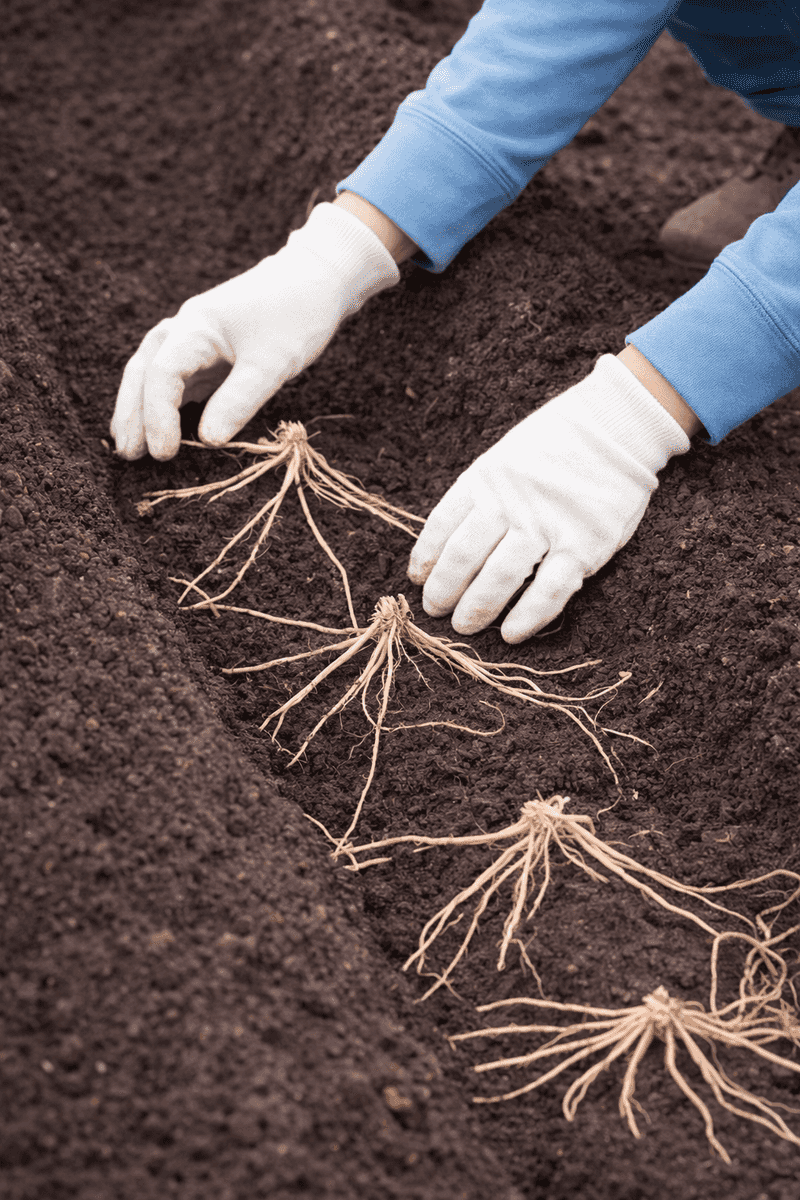
Timing matters more than most people expect. Crowns planted in cool weather settle in and grow roots before the summer heat arrives.
In North and Central Florida, late winter to early spring, around January through March, works well. South Florida gardeners do best in the cooler months, often December or January, before things warm up fast.
Most people plant one-year-old crowns. They look like dried-out spiders, but they jump-start your bed by a full year compared to seeds.
Dig a trench about 6 to 8 inches deep. Set the crowns 12 to 18 inches apart with the roots spread out flat and the bud side facing up.
Cover them with just 2 inches of soil at first. As the shoots grow, add more soil a little at a time until the trench is level, usually over several weeks.
Water right after planting to settle the soil around the roots. Then keep the bed lightly moist while the young shoots come up.
A friendly tip from experience is to label your rows. The bed looks empty for a while, and it is easy to forget where those buried crowns are hiding.
Steady Water And Thick Mulch Help Asparagus Ferns Thrive
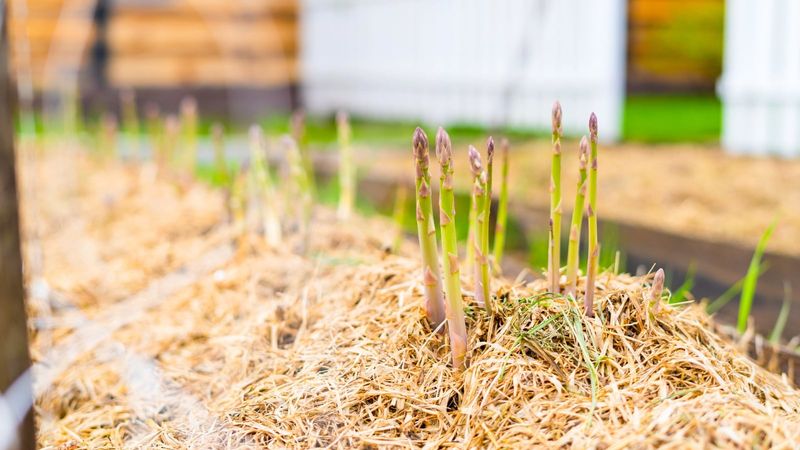
Those feathery ferns are not just pretty. They act like solar panels, making food that gets stored in the crown for next year’s spears.
Keep the soil evenly moist, especially in the first two years and during dry spring weeks. Deep watering once or twice a week usually beats a daily sprinkle, since it pushes roots down where they belong.
Drip lines or soaker hoses work great. They keep water off the ferns, which helps reduce fungal problems in humid weather.
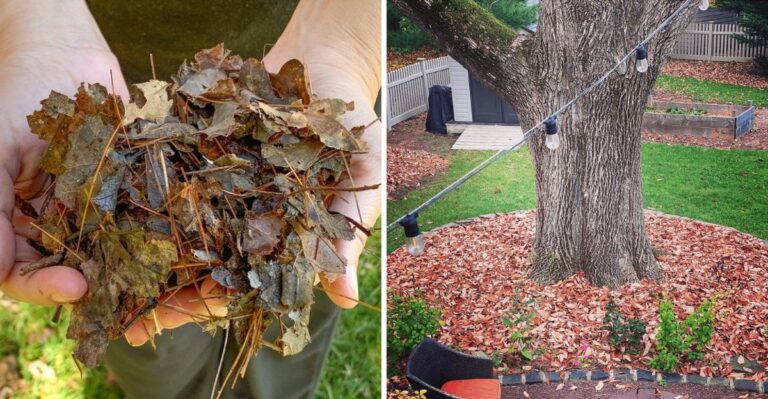
Spread 2 to 4 inches of mulch like pine straw or shredded leaves. Mulch holds moisture, cools the soil, and blocks weeds that compete hard with young plants.
Feed the bed with compost or a balanced fertilizer after your harvest wraps up. That timing fuels fern growth when the plant is refilling its tank.
Watch for asparagus beetles and fungal spots like rust or cercospora. Pick beetles off by hand and remove badly spotted ferns to keep problems small.
Tall ferns can flop in storms. A few stakes and some twine around the bed keep them upright and working through our windy summer afternoons.
Snapping Your First Asparagus Spears Takes A Little Patience
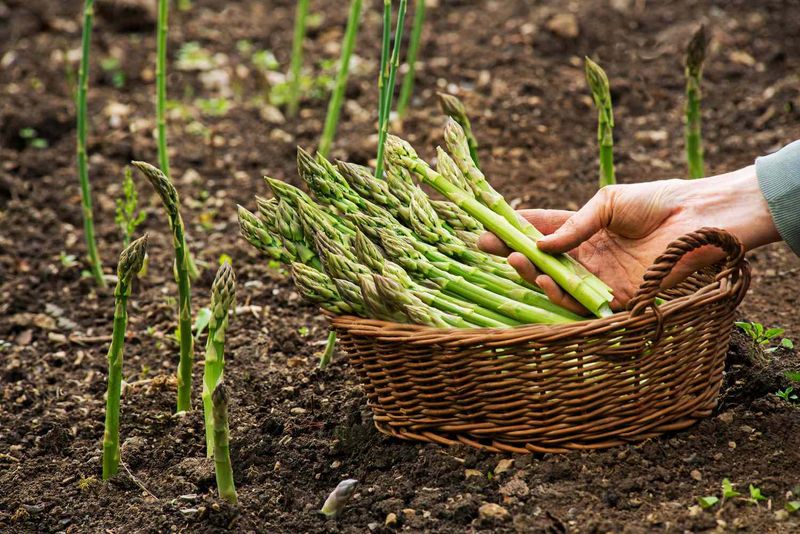
The hardest part of growing asparagus is leaving it alone. That first year, every spear needs to grow into a fern so the crown can build strength.
In year two, you can pick lightly for about 2 to 3 weeks. After that, let the rest grow tall and leafy.
By the third year, most beds are ready for a fuller harvest of around 6 to 8 weeks. In Florida, many gardeners keep it on the shorter side to protect their plants.
Harvest spears when they reach 6 to 8 inches tall and the tips are still tight. Snap them by hand near the soil or cut them just at ground level.
Stop picking when most new spears look thinner than a pencil. That is the crown’s way of saying it needs a break.
On warm days, spears can grow several inches in a single day. I check my patch every morning, because a spear that looked tiny yesterday can be too tall today.
Fresh spears taste sweet and grassy. Cook them quickly or chill them right away, since the sugars start fading soon after picking.
Cutting Back Brown Asparagus Ferns Sets Up Next Spring
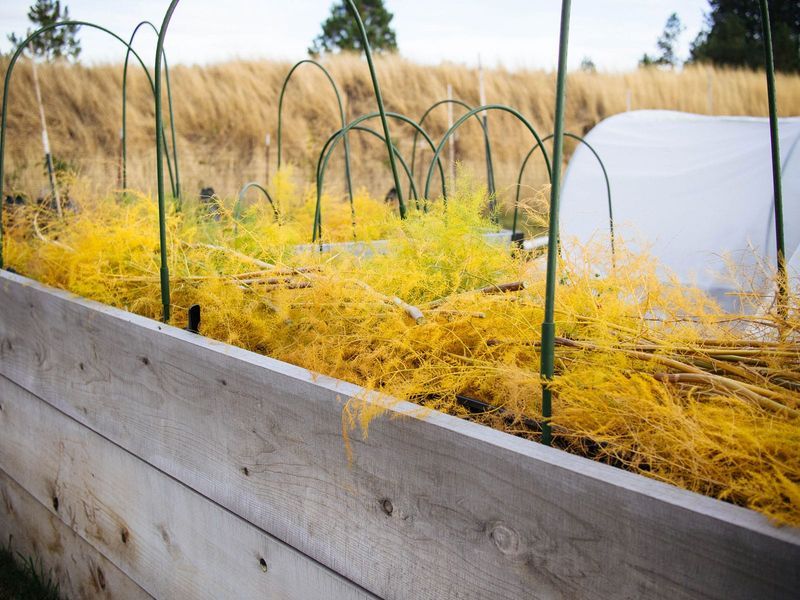
A long-lasting bed comes down to small habits repeated every year. The yearly reset is one of the most helpful ones.
Once the ferns turn yellow or brown in late fall or winter, cut them down to the ground. This clears out old growth where pests and fungal spores like to hide.
Cutting back also signals a fresh start. In warmer parts of the state, pairing this with a short dry spell helps mimic the rest that northern plants get naturally.
Leave the green ferns standing until they fade, though. Cutting them early robs the crown of stored energy.
After cleanup, add a fresh layer of compost and mulch. That feeds the soil and gets the bed ready for the next round of spears.
Keep notes on harvest size each year. When spears get noticeably thinner for two seasons in a row, it may be time to start a new bed nearby.
That rhythm of planting, resting, and renewing is the real secret in our state. You may not hit 30 years with one patch, but you can enjoy homegrown asparagus for a very long time.