8 Desert Plants That Look Their Best in December in Arizona
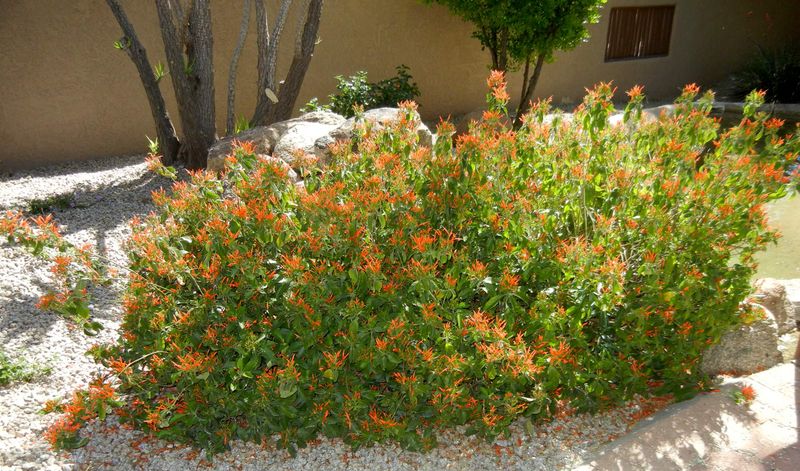
Anna’s hummingbirds live in Arizona year-round, and some of them even start nesting in the middle of winter. That means hungry tiny birds are hunting for nectar while most gardens across the country sit bare and brown.
The low winter sun hangs lower in the sky, which makes silver leaves and red petals glow like lanterns. Many desert shrubs actually save their biggest show for the weeks when northern gardeners are shoveling heavy snow.
I love how a single winter bloomer can turn a quiet Arizona patio into a busy hummingbird runway. You get bright color plus lively wildlife, and the best choices sip water instead of guzzling it.
October is the sweet spot for planting, since cooler soil helps new roots settle before the holidays arrive. So which desert plants truly deserve a spot in your yard before December rolls around this year?
1. Valentine Emu Bush
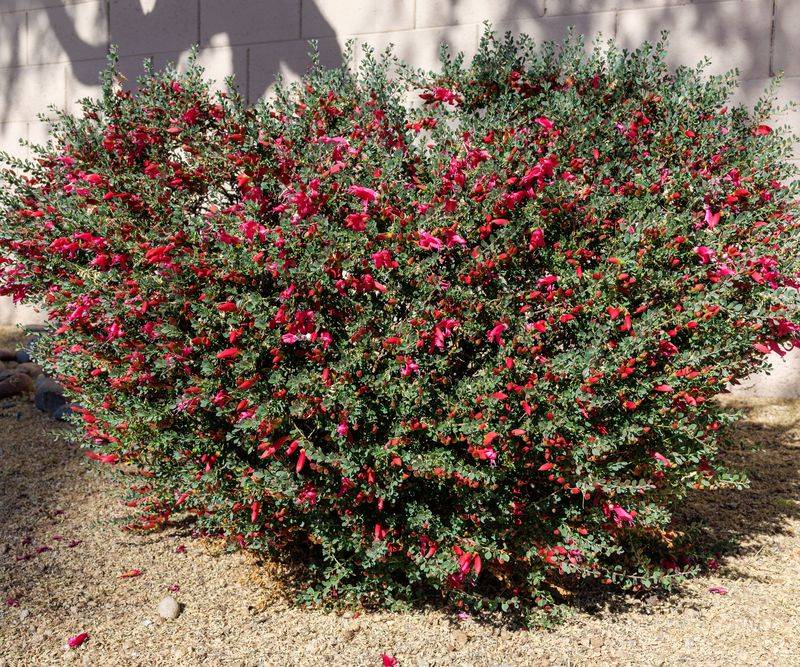
Leave it to an Australian shrub to throw a Valentine party in December, right when hummingbirds need a snack. Eremophila maculata Valentine covers itself in deep red tubular flowers from early winter into spring.
Cool nights also tint its small green leaves with a burgundy blush, so even the foliage dresses up. Personally, I think that color shift makes it one of the prettiest evergreen shrubs for a winter entryway.
Expect a tidy, rounded mound about three to four feet tall and roughly four feet wide over time. It handles full sun and reflected heat, though it also tolerates a bit of afternoon shade.
Water deeply but rarely once it settles in, letting the soil dry out between drinks to protect its roots. Soggy ground is the fastest way to make this tough plant sulk, so skip heavy clay pockets.
October planting gives the roots several mild weeks to spread before the bloom season begins. Wait until spring flowers fade before trimming, because fall pruning removes the buds you want to enjoy.
Hummingbirds treat the shrub like a reliable winter diner, zipping between blossoms on sunny afternoons. I love watching them squabble over it while I sip morning coffee in a light jacket.
2. Cascalote
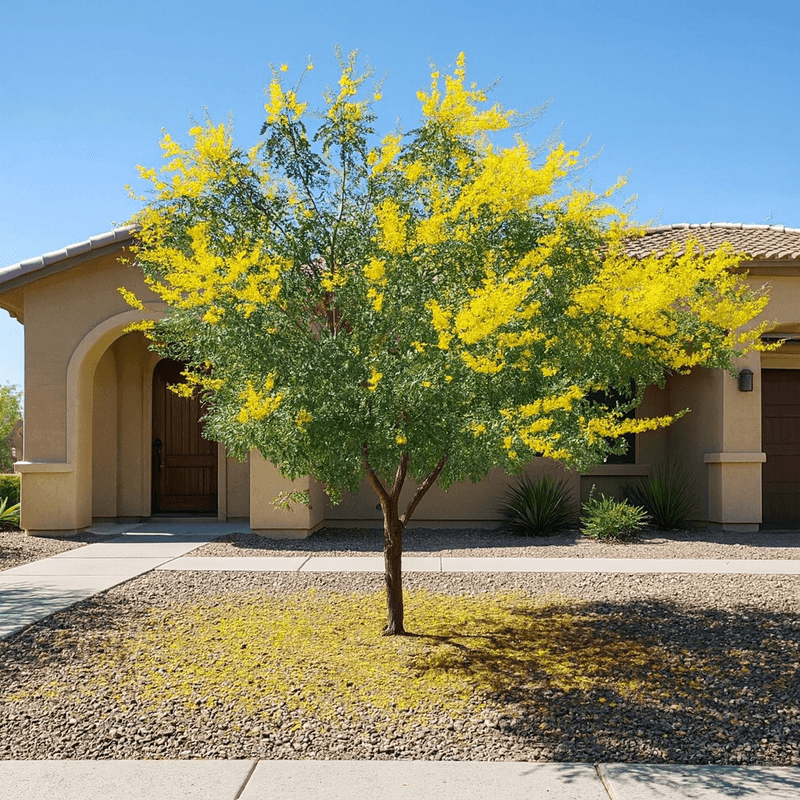
Most trees take a winter nap, yet Cascalote waits for cooler weather to light up with golden flower spikes. Those bright yellow plumes usually appear from late fall well into February across the low desert.
Caesalpinia cacalaco hails from Mexico and grows into a small tree around fifteen to twenty feet tall. Its dark green, finely divided leaves make a handsome backdrop for all that sunny color during cooler months.
I have to admit the wild form has prickly, rose-like thorns along its stems and branches. You can choose the Smoothie selection instead, which offers the same cheerful blooms with far fewer scratches for gardeners.
Give it full sun and room to spread, because reflected heat from walls or pavement barely bothers it. Once established, deep watering every few weeks in winter usually keeps it happy, with more frequent drinks in summer.
Hummingbirds and butterflies visit the flowers on warm afternoons, which feels like a gift during short days. October is a smart time to plant one, since roots grow steadily while the air stays comfortably mild.
3. Desert Marigold
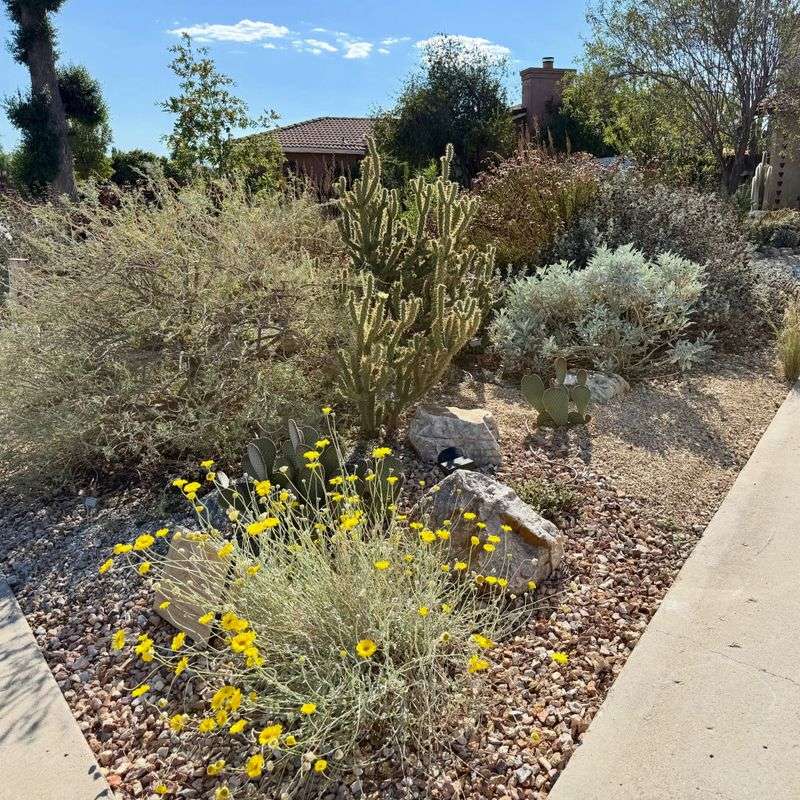
Few wildflowers keep smiling through cold snaps quite like this woolly little native with its sunny yellow daisies. Baileya multiradiata blooms on and off most of the year, and mild winters rarely slow it down much.
Soft silver leaves form a low mound about a foot tall, which looks lovely beside dark boulders. Bright flowers ride above the foliage on slender stems, bobbing in the breeze like tiny suns on sticks.
You need sharp drainage and full sun, because rich soil and heavy watering shorten its life quickly. Personally, I tuck it near driveways where reflected heat and lean soil keep it compact and blooming steadily.
Native bees and butterflies visit the flowers whenever warm afternoons arrive, even during the quieter winter months. Leaving some seed heads in place lets the plant reseed itself, so new seedlings pop up the following year.
October is an excellent month to scatter seeds or set out small nursery plants in open, sunny spots. Light watering helps them sprout, and by December you might notice the first cheerful buds opening near the gravel.
4. Chuparosa
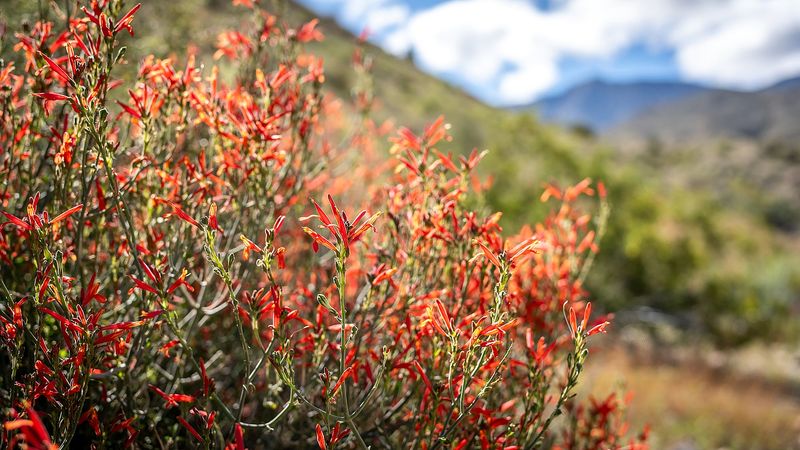
The Spanish name roughly means rose sucker, a cheeky nod to the hummingbirds that mob its scarlet flowers. Justicia californica is a Sonoran Desert native that blooms heavily from winter into spring in warm areas.
Gray-green stems do most of the work, because the small leaves often drop during drought or cold. Those bare stems still photosynthesize, so the shrub stays productive even when it looks a little scruffy.
I like how the red tubes resemble tiny lipsticks clustered along every branch on a sunny December morning. Verdins and orioles sometimes poke at the flowers too, turning a quiet corner into lively bird theater.
Expect a sprawling shrub about three to five feet tall, so give it space near a wash or fence. Full sun and well-drained soil suit it best, and occasional deep watering keeps the stems fuller and greener.
Frost can nip the tips during a hard freeze, but new growth usually returns once spring warmth arrives. Prune lightly after flowering ends, and plant new shrubs in October to catch the coming winter bloom season.
5. Torch Aloe
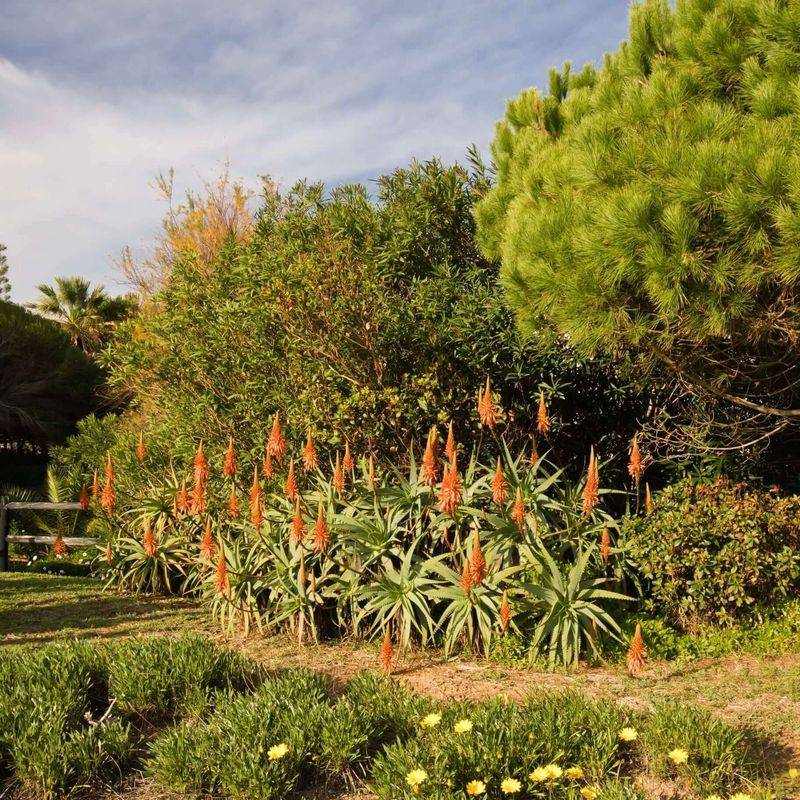
Bright orange-red spikes rise like candles from this succulent right around the holidays, and the timing feels almost festive. Aloe arborescens, often called torch aloe, typically flowers in winter when many succulents look plain and quiet.
Each plant forms a clump of branching rosettes that can eventually reach several feet tall and wide. Toothed leaves add bold structure year-round, so the shrub earns its space even after flowers fade in spring.
What surprises me most is how many hummingbirds find the blooms within days of the first spike opening. You might notice orioles and verdins stopping by as well, especially on calm mornings before the wind picks up.
Hard freezes in the mid-twenties can scar the leaves and flowers, so cold pockets need extra attention. Keep frost cloth handy during chilly snaps, and plant near a warm wall in colder neighborhoods for added protection.
Fast drainage matters most, because soggy roots lead to rot faster than any desert heat wave. Afternoon shade helps during scorching summers, while October is a fine moment to plant and water the clumps in.
6. Mexican Honeysuckle
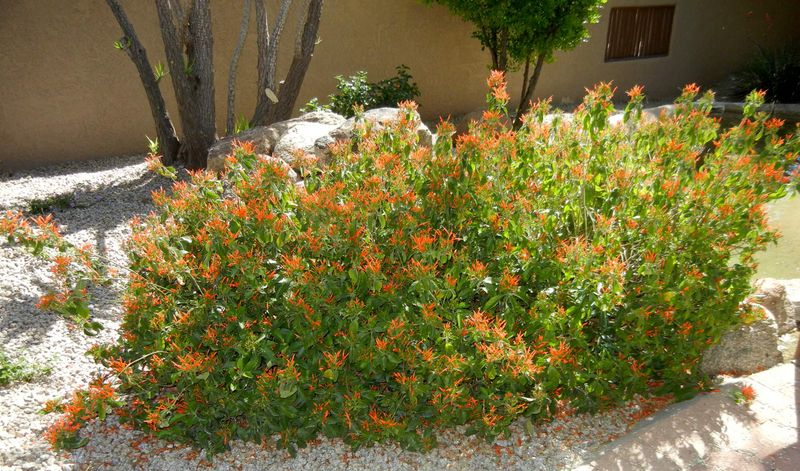
Shady corners rarely get the spotlight in desert yards, but this orange bloomer changes that story each winter. Justicia spicigera tolerates partial shade beautifully, which makes it a clever pick for north walls and patio edges.
Velvety green leaves stay lush much of the year, and tubular orange flowers appear heavily through cooler months. I believe it is one of the easiest ways to add fresh color under a mesquite or palo verde canopy.
Plants usually reach three to four feet tall and wide, forming a soft mound that fills awkward spaces nicely. Regular deep watering works better than light daily sprinkles, especially during the hottest stretches of the year.
Frost can burn the foliage during cold snaps, though roots often push out new growth when spring returns. Placing it under a tree canopy or against a warm wall helps soften those occasional freezing nights.
Hummingbirds visit the flowers steadily, so you get a natural show right outside the kitchen window. October planting gives roots plenty of time to settle before December, when the orange blossoms really start to shine.
7. Golden Barrel Cactus
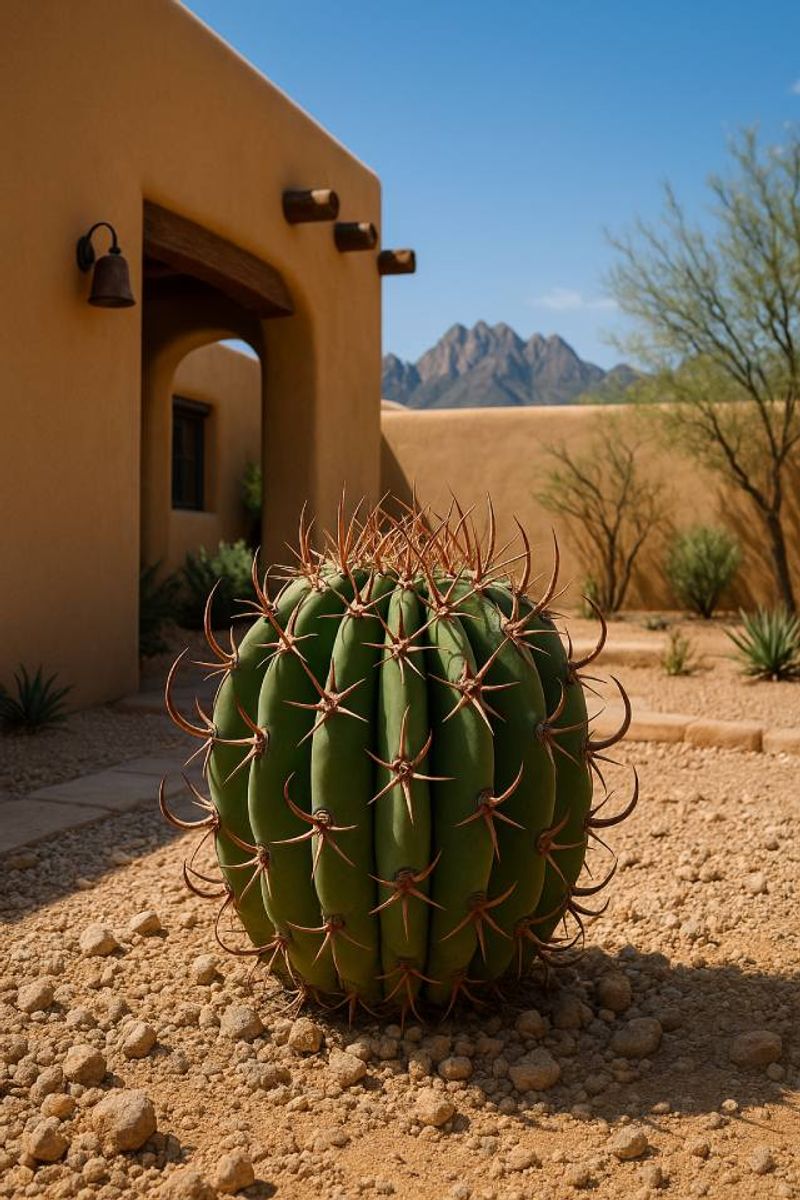
Low December sun turns this round cactus into a glowing lantern, and the effect stops visitors in their tracks. Golden spines catch the slanting light so well that a small cluster almost seems lit from inside.
Echinocactus grusonii is rare in its native Mexican habitat, yet nursery-grown plants are widely available for home gardens. Buying from reputable growers helps protect wild populations while still giving you that bright, sculptural look.
I love how a row of barrels creates instant structure without needing pruning, deadheading, or much fuss at all. Mature plants can eventually reach two to three feet across, so leave room for their slow, steady growth.
Young plants can sunburn if moved suddenly into harsh summer sun, so gradual exposure works best. Plant them in fast-draining gravelly soil, and water sparingly in winter because cool, wet roots rot easily.
October is ideal for planting since the heat has eased but the soil still feels warm. Place them where afternoon winter light hits from behind, and you get that magical glow every December evening.
8. Purple Prickly Pear
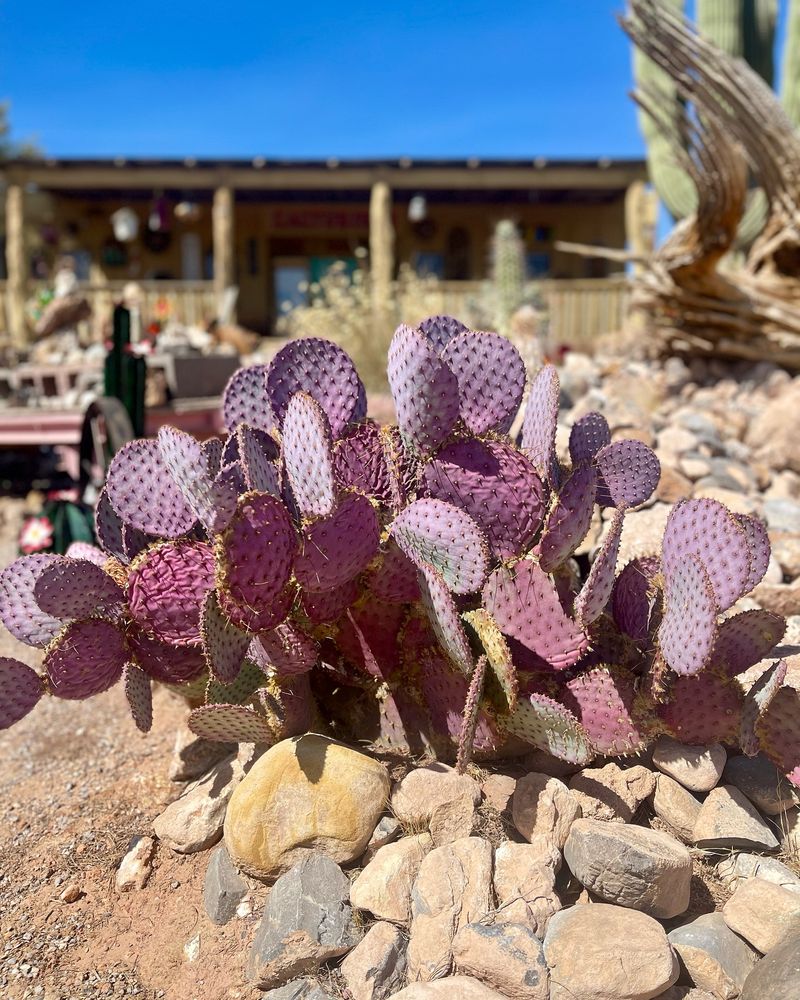
Cold weather paints this cactus purple, so December is when its pads look like they belong in a jewelry box. Opuntia santa-rita, native to southern Arizona, deepens from blue-green to violet as nights chill and water stays scarce.
Round, flat pads stack into a shrubby clump that often reaches about four feet tall and wide. Bright yellow flowers arrive in spring, but the winter color honestly steals the show for many months.
You need full sun to get the richest purple, because shade keeps the pads greener and duller. Well-drained gravelly soil suits it best, and winter watering can be rare once the roots settle in.
Quail and lizards appreciate the spiny shelter, while birds and small mammals snack on the ripe fruit later. I like knowing a single clump quietly supports desert wildlife without asking for much care in return.
October is a great time to plant pads or potted starts, letting them root before cold nights intensify. Wear thick gloves while handling them, since tiny glochids cling to skin and clothing far longer than you expect.