This Native Tree Is Replacing Bradford Pear In Pennsylvania Yards
Those snowy white trees lining so many streets every April can smell a lot like old fish. Botanists have compared the odor to rotting seafood, and plenty of noses agree.
The stranger part is the backstory. Those trees were sold for decades as tidy, seedless ornamentals, yet their cousins now crowd fields and roadsides across Pennsylvania. To my surprise, the state took the unusual step of banning their sale.
I used to admire that early spring glow without a second thought. Now I notice the split trunks after windstorms and the thorny thickets near highway ramps.
A quieter native tree has been stepping into those empty spots. It blooms white at almost the same moment, carries no funky smell, and feeds birds with sweet summer berries.
Gardeners who plant one often say the same thing. Why did nobody mention this option years ago?
Those Fishy-Smelling White Pear Blossoms Had A Hidden Problem
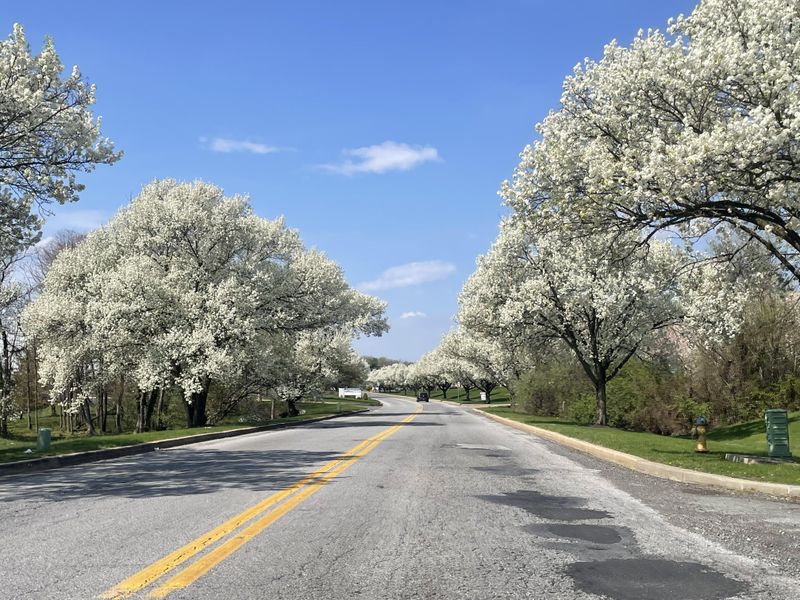
Nobody planned for the Bradford pear to become a headache. Back in the 1960s, nurseries loved it because it grew fast, had a neat teardrop shape, and covered itself in white flowers before most trees woke up.
Trouble showed up slowly. The branches grow upward at tight, narrow angles, and that weak structure often splits apart once a tree hits about 15 to 25 years old.
A heavy snow, an ice storm, or a summer thunderstorm can rip a big tree right down the middle.
The flowers carry their own surprise. Many people describe the scent as rotting fish, and once you notice it, you can’t unnotice it on a warm April afternoon.
Bigger issues were brewing out of sight. Bradford is just one cultivar of Callery pear, and when different cultivars grow near each other, they can cross-pollinate.
The result is fertile fruit that birds happily eat and scatter far from home. I find it a little wild that a tree sold as a tidy yard plant ended up reshaping wild meadows.
Homeowners who once picked it for convenience are now looking for something sturdier, friendlier, and better behaved.
Serviceberry Trees Bring The Same April White Glow Without The Stink
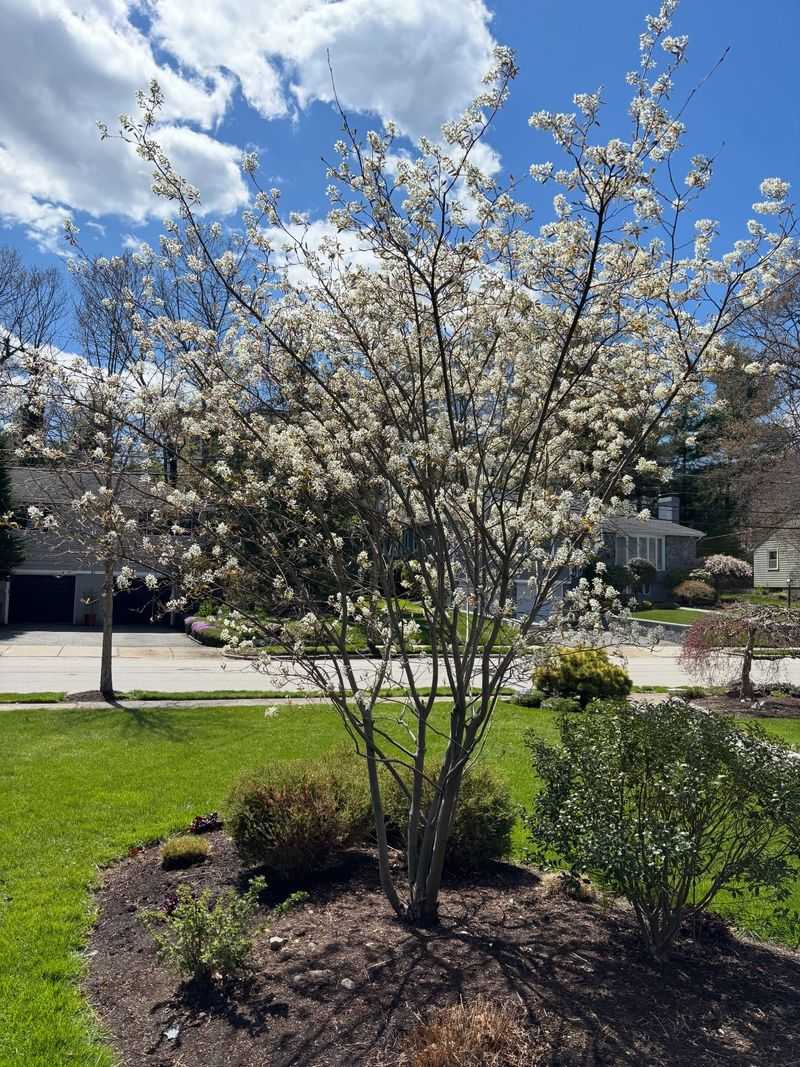
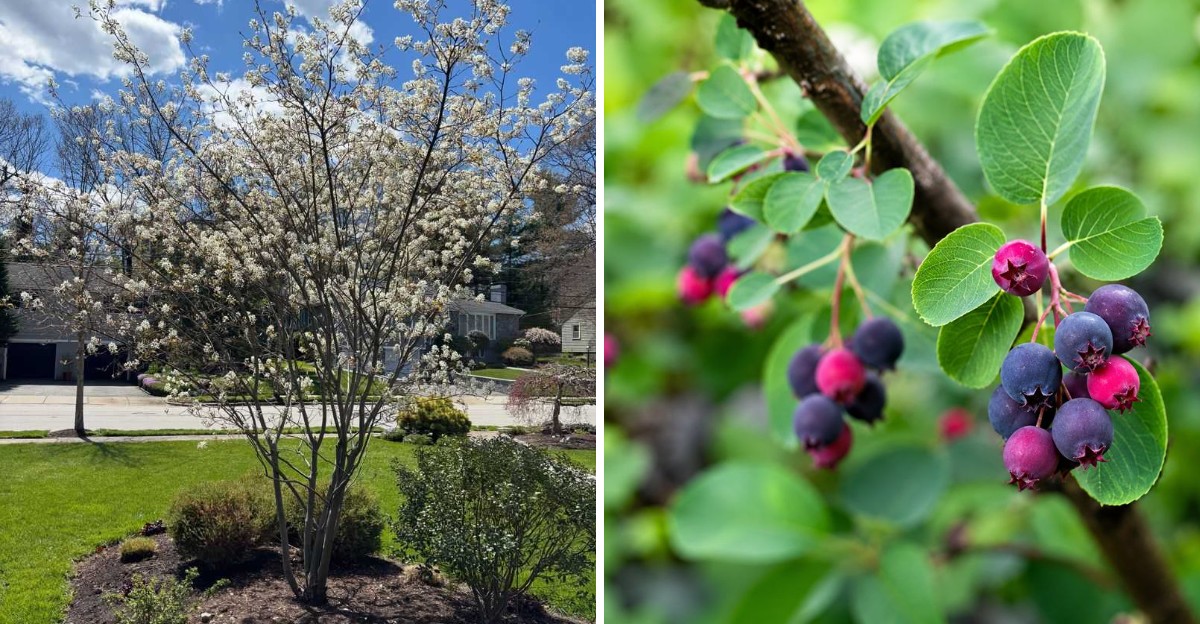
Spring arrives early on a serviceberry, and that’s the whole point. This native small tree, called Amelanchier, opens clouds of delicate white flowers in late March or April, right around the time Callery pears bloom.
Penn State Extension and many native plant groups point to serviceberry as a top swap. Two favorites are Allegheny serviceberry (Amelanchier laevis) and downy serviceberry (Amelanchier arborea), both native to Pennsylvania woods.
You’ll also see a popular hybrid called apple serviceberry (Amelanchier x grandiflora), which nurseries sell in varieties like Autumn Brilliance.
The flowers have long, slender petals that look a bit like little ribbons. They don’t last forever, usually a week or two, but the show is lovely and carries no unpleasant smell.
Size is another win. Most serviceberries reach 15 to 25 feet tall, which fits nicely near a patio, along a driveway, or in a small front yard.
You can buy them as a single-trunk tree or a multi-stem clump. Personally, I like the clump form because the gray trunks look graceful in winter. Either way, you get that bright spring moment without the trouble of an invasive pear.
Pennsylvania Made Callery Pear Sales Illegal
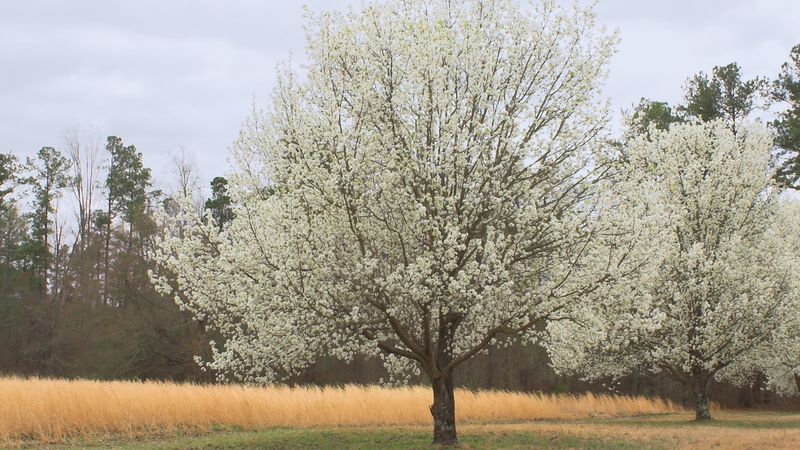
Laws about plants rarely make headlines, but this one did. The Pennsylvania Department of Agriculture added Callery pear, including Bradford and its relatives, to the state’s noxious weed list.
The rule came with a phase-in period. Since February 2024, nurseries and garden centers can no longer sell, propagate, or distribute Callery pear in the state, and that change pushed many shoppers toward native options.
Wondering why officials stepped in? Wild Callery pears now form dense, thorny thickets along roads, in old farm fields, and at forest edges.
They leaf out early and shade out native plants, and the thorns on wild seedlings can be tough enough to puncture tires.
Homeowners aren’t required to cut down an existing tree. The law targets sales and spread, so a pear in your yard can legally stay put for now.
Still, many experts suggest replacing it, especially if it’s near other pears or showing cracks. Some states, like Ohio and South Carolina, have similar bans, and there are even bounty programs in a few places that trade a free native tree for a removed pear.
Check with your local conservation district, because programs like that do pop up from time to time.
Birds Go Wild For Those Purple Serviceberry Fruits
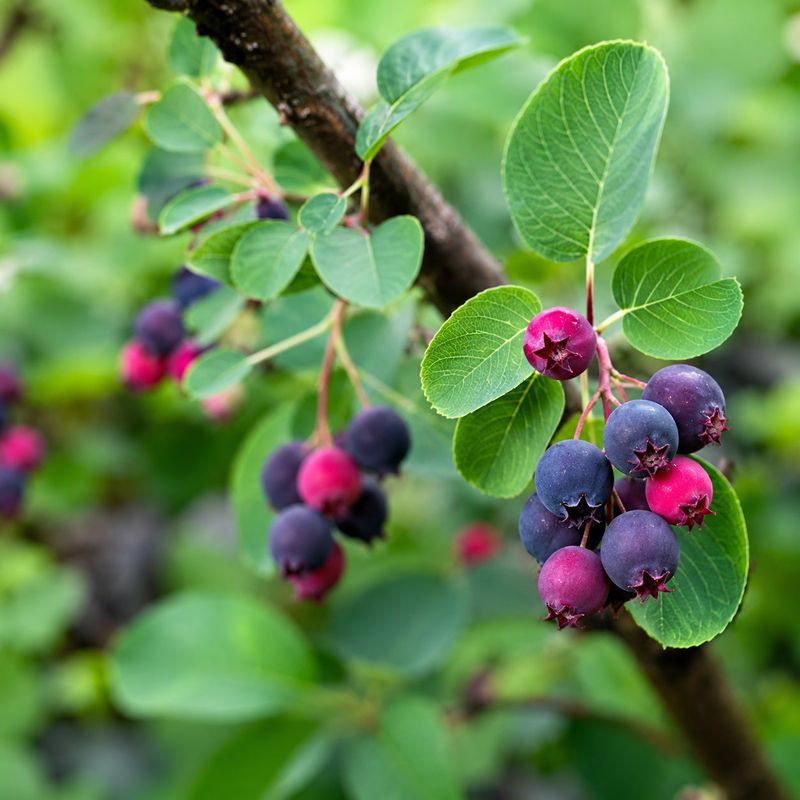
June in my yard sounds like a party, and the serviceberry is the host. Its small round fruits ripen from red to deep purple, and birds show up fast to grab them.
Cedar waxwings, robins, catbirds, orioles, and bluebirds all feast on the berries. Penn State notes that serviceberry is a valuable food source, and the early flowers help bees and other pollinators that wake up hungry in spring.
Insects matter too. Native trees in the rose family support many kinds of caterpillars, and those caterpillars feed baby birds. Callery pear offers far less for local wildlife.
Here’s a fun twist. People can eat the berries too, and they taste like a blend of blueberry and almond. Some folks call the tree Juneberry or shadbush for this reason.
You’ll have to be quick if you want a handful. Birds often clean a tree in a few days. I like picking the lower branches and leaving the top for my feathered visitors.
Try the fruit in muffins, pancakes, or jam. Even a small bowl feels like a treat you grew yourself.
Fiery Orange Serviceberry Leaves Steal The Fall Show
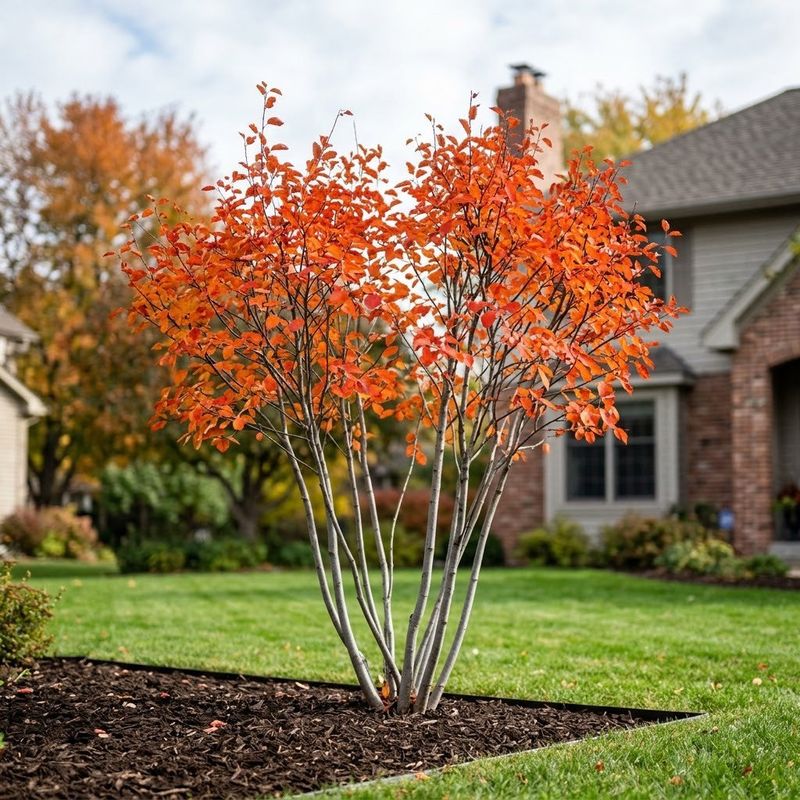
Autumn is when neighbors start asking questions. A serviceberry’s leaves turn shades of orange, red, and gold, and on a sunny October day the color practically glows.
Bradford pears do get fall color, but it often shows up late, and a hard freeze can cut it short. Serviceberries tend to change earlier and give a steadier display.
Winter has its own charm. The bark is smooth and silvery gray with faint streaks, and it stands out nicely against snow. Multi-stem trees look almost sculptural when the leaves are gone.
That makes this tree a true four-season plant. You get flowers in spring, fruit in summer, color in fall, and clean bark in winter, all from one fairly compact tree.
Placement can boost the effect. Plant it where you can see it from a kitchen window or front porch, and you’ll enjoy each change up close.
A dark evergreen backdrop, like a native eastern red cedar or white pine, makes the orange leaves pop even more.
I believe a well-placed serviceberry earns its spot in the yard every single month, which is more than most small trees can claim.
Planting A Serviceberry In Fall Or Early Spring Gives Roots A Head Start
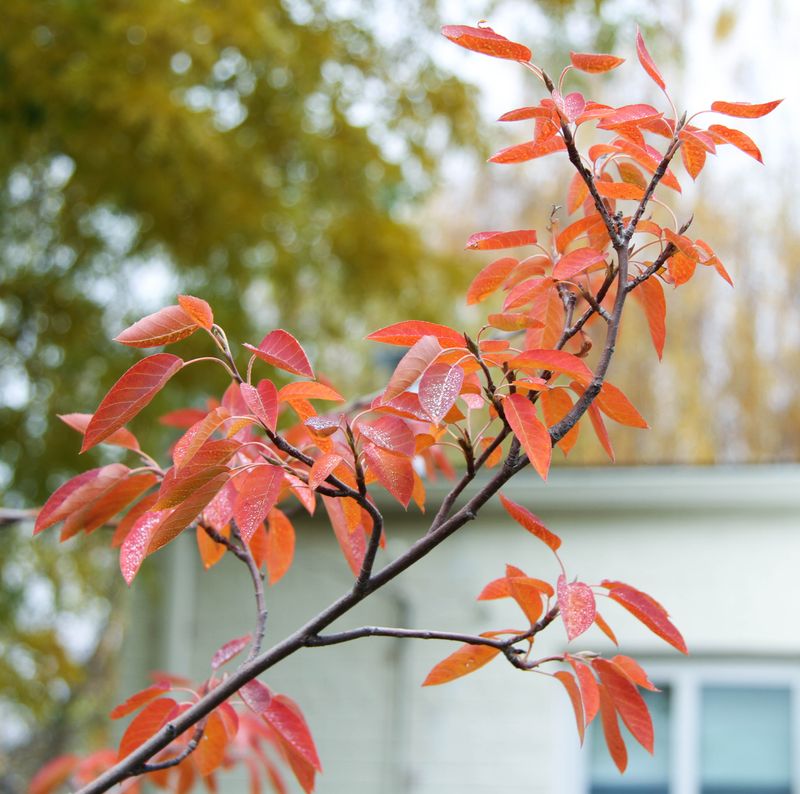
Grab a shovel, because this part is simple. Serviceberries handle much of Pennsylvania’s climate, roughly USDA zones 5 through 7, from Erie to Philadelphia.
Timing helps a lot. Early fall and early spring are ideal planting windows, since cool air and steady rain let roots settle in before summer heat.
Pick a spot with full sun to part shade. More sun usually means more flowers and fruit, while a bit of afternoon shade is fine in hotter areas. Moist, well-drained soil is best, though these trees adapt to many soil types.
Dig a hole two to three times wider than the root ball but no deeper. The top of the root flare should sit at or slightly above ground level.
Add two to three inches of mulch in a wide ring, keeping it a few inches away from the trunk. Water deeply once or twice a week during the first summer, especially in dry spells.
Watch for a few common issues. Cedar-apple type rusts, leaf spots, and Japanese beetles sometimes show up, but they rarely cause serious harm. Good airflow and healthy soil keep most problems minor.
Redbud And Dogwood Make Great Backup Picks For Your Yard
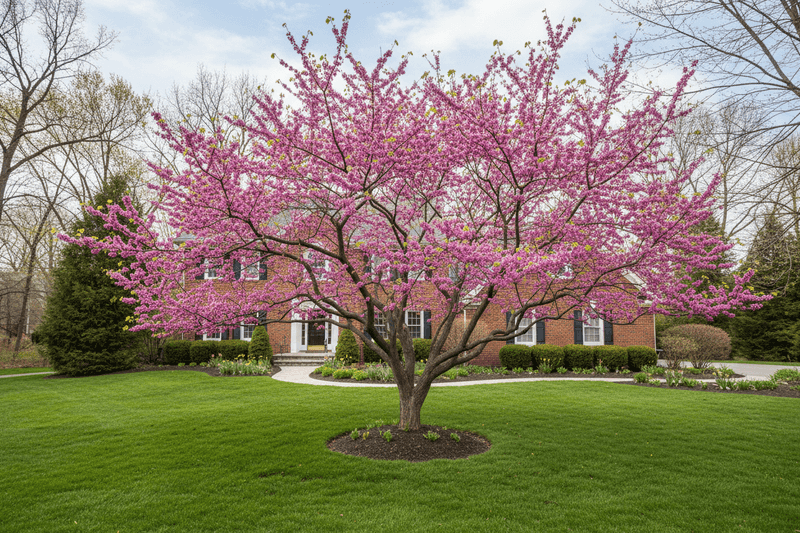
Maybe your yard needs a different look, and that’s okay. Pennsylvania has several native trees that fill the gap left by a removed pear.
Eastern redbud (Cercis canadensis) covers bare branches with bright pink-purple flowers in April. It grows about 20 to 30 feet tall, and its heart-shaped leaves look cheerful all summer.
Flowering dogwood (Cornus florida) offers white or pink blooms, red berries birds love, and rich red fall leaves. It prefers some shade and moist soil, much like its natural spot under taller forest trees.
Need something bigger? Red maple and blackgum are larger natives with excellent fall color, and blackgum’s fruit is a favorite of migrating birds. A few steps make the switch smoother:
Remove an old pear before it splits, and hire a certified arborist for large trees near the house. Grind or treat the stump so it doesn’t sprout back.
Then shop at a native plant nursery or a spring conservation district sale for healthy young trees.
Every native tree you plant adds food and shelter for wildlife. One yard at a time, those small swaps can turn a neighborhood into a much friendlier place for birds and bees.