Never Ignore This Yellow Spotting On Your Pennsylvania Cucumber Leaves
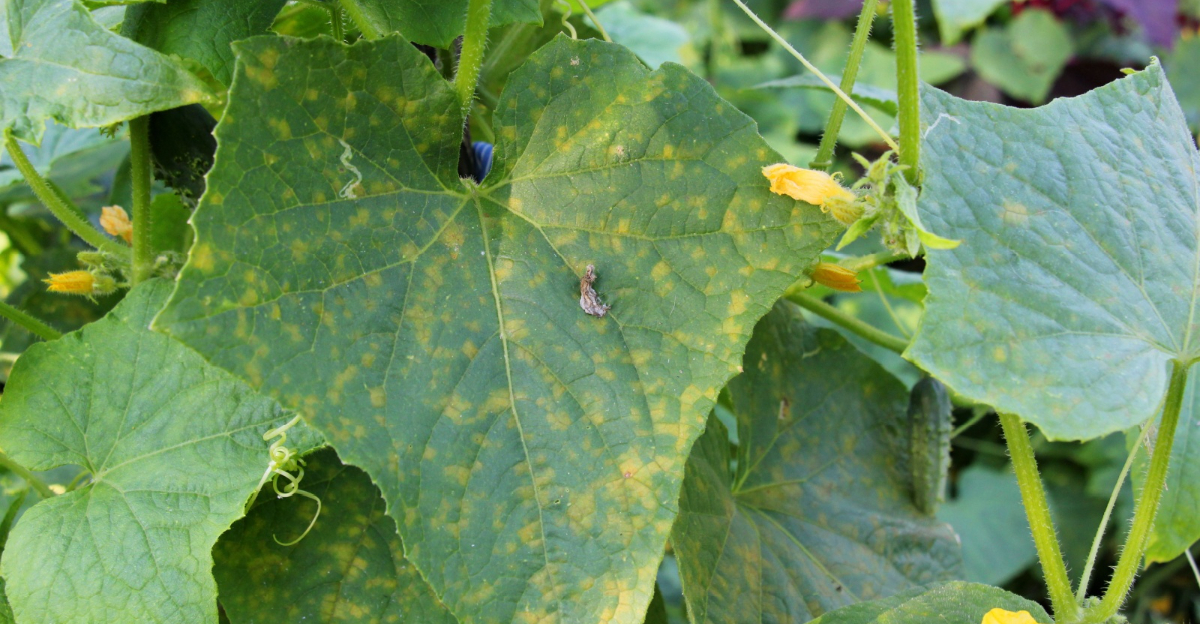
Pale yellow patches showing up on cucumber leaves in a Pennsylvania garden during summer are not something to scroll past and forget about. They are worth a closer look, and sooner rather than later.
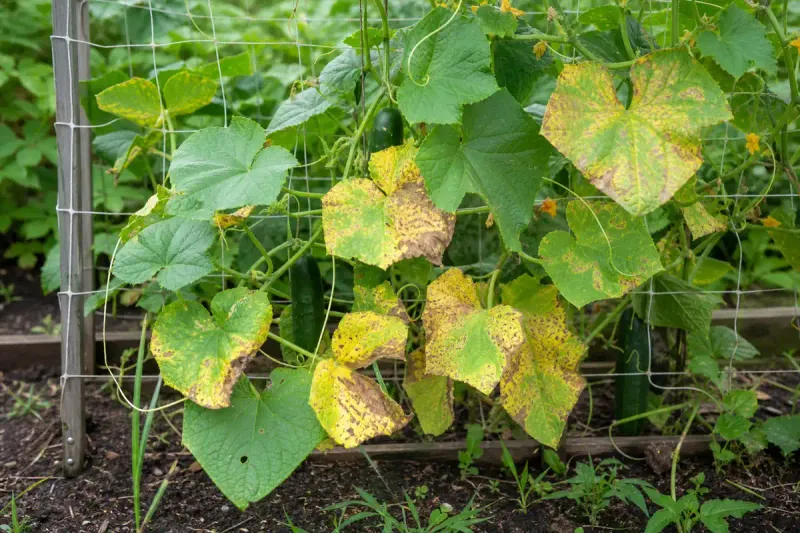
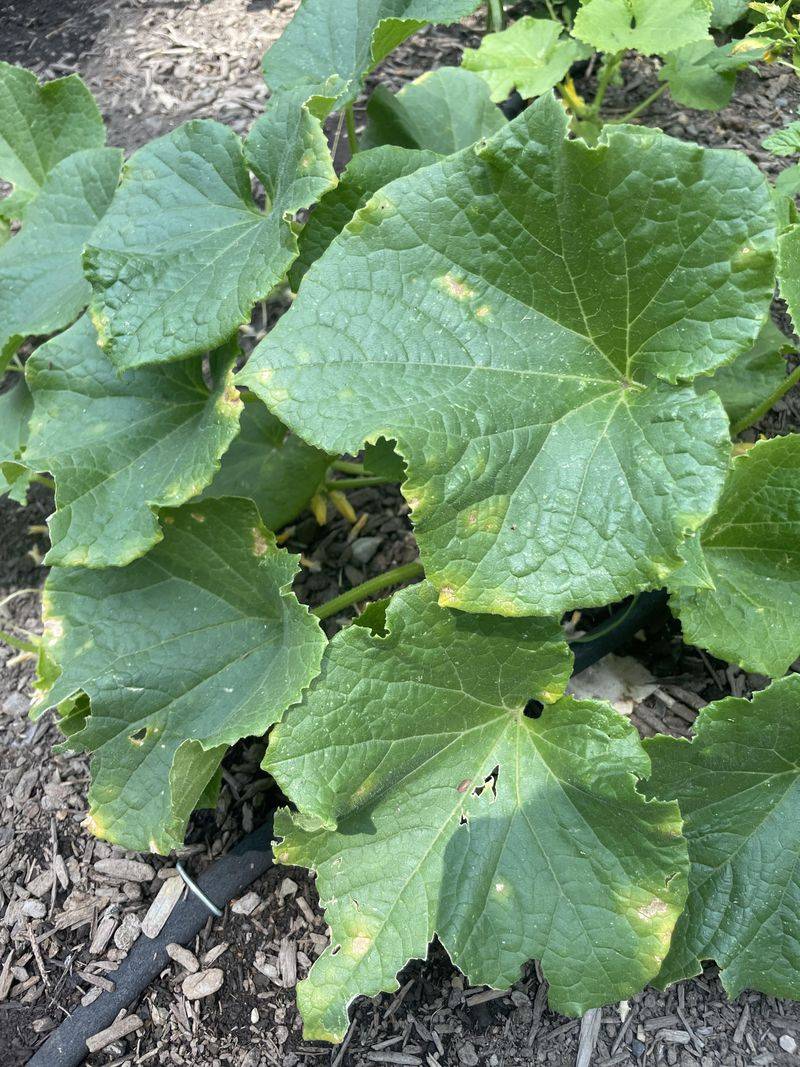
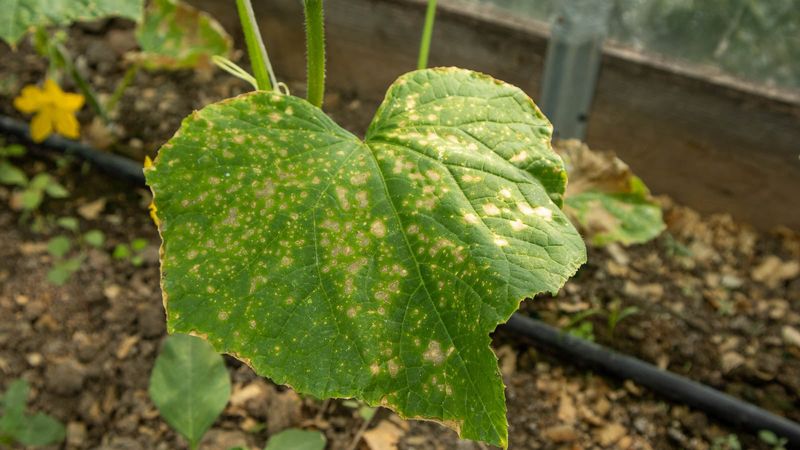
Those angular yellow lesions that seem almost blocked off by the leaf veins, giving them that distinctive boxy shape, can be an early sign of cucurbit downy mildew, a disease caused by a water mold called Pseudoperonospora cubensis.
It is not a true fungus, which matters for how you think about managing it.
Pennsylvania summers, with their warm days, humid nights, and occasional stretches of wet weather, create conditions where this disease can develop and spread faster than most gardeners expect.
Before drawing any conclusions though, checking the undersides of those leaves and considering recent weather patterns is always the smartest first step.
1. Angular Yellow Spots Can Point To Downy Mildew
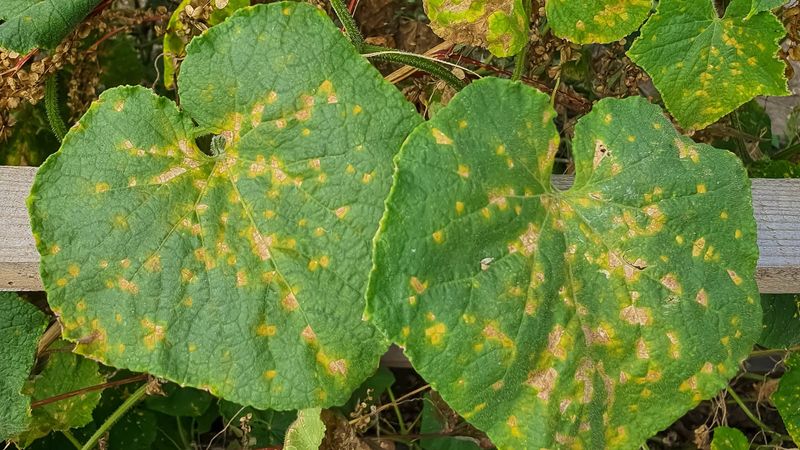
Spotting something unusual on your cucumber leaves during a humid Pennsylvania summer is worth pausing over, especially when the yellow areas look blocky rather than round.
Angular yellow spotting is one of the clearest early warning signs of cucurbit downy mildew, and recognizing it early can help you respond with a clearer head.
Symptoms often begin as pale green patches before shifting to a more noticeable yellow or tan color.
These areas tend to appear between the leaf veins, giving them that characteristic angular outline that sets downy mildew apart from many other leaf problems.
Older leaves on the plant are sometimes where symptoms show up first, but that is not a universal rule. Inspecting the entire plant rather than focusing on one leaf gives you a much better picture of what is happening.
A single yellow mark is not enough to confirm downy mildew on its own.
Look at the shape of the spots, where they sit in relation to the veins, what the underside of the leaf looks like, and how quickly the markings are changing.
Prompt attention matters because this disease can move fast when conditions favor it, though early recognition does not guarantee every plant will continue producing normally.
2. Leaf Veins Give The Spots A Blocky Shape
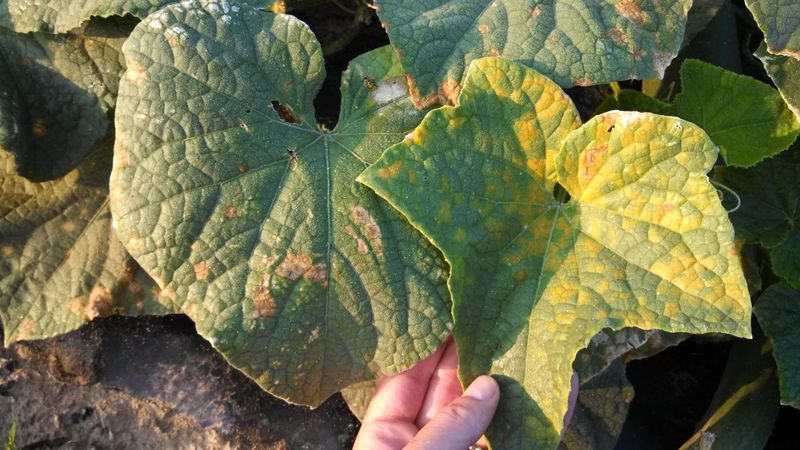
One of the most telling clues about cucurbit downy mildew on Pennsylvania cucumbers is the shape of the lesions themselves.
Blocky, square, or rectangular yellow patches that stop sharply at the leaf veins are characteristic of this disease, and that vein-limited pattern is especially clear on cucumbers compared to other cucurbit crops.
The veins act as visible walls that restrict how the affected tissue spreads, producing a geometric outline that looks quite different from the rounded or irregular spots caused by many other leaf problems.
Holding a leaf gently toward natural light from a few different angles can help you see whether the yellow sections truly stop at the vein lines.
There is no need to tear, scrape, or damage healthy leaf tissue just to get a better look. A careful visual inspection from both sides of the leaf is usually enough to notice this angular pattern.
Your Pennsylvania Garden Changes Every Week. Your Plan Should Too.
Gardening in Pennsylvania changes quickly throughout the season. Every Friday you’ll receive a simple weekly plan showing exactly what to plant, prune, fertilize, harvest, and protect so you never miss the right timing.
Keep in mind that angular leaf spot, which is a bacterial disease, can also produce vein-limited lesions on cucumber. That similarity is worth remembering when you move on to thinking about what else could cause similar markings.
The blocky shape is a useful clue, but it works best when considered alongside other details like underside growth and recent weather.
3. Dark Growth May Appear Beneath The Leaves
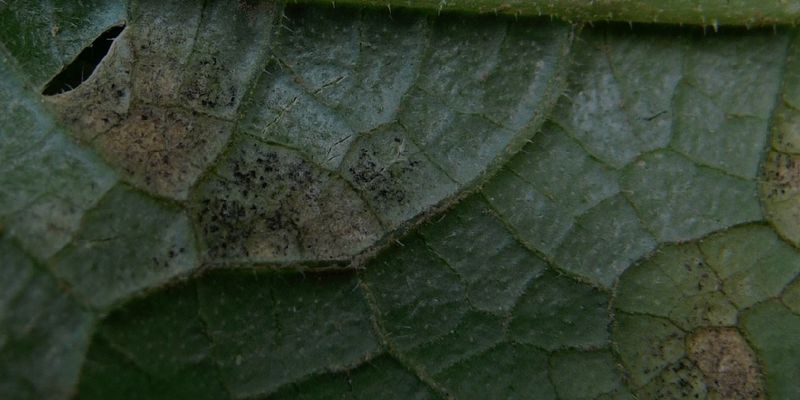
Flipping a cucumber leaf over during a humid Pennsylvania morning can reveal something that catches many gardeners off guard.
A gray, brownish, or dark purplish growth on the underside of affected leaves is a key diagnostic sign of cucurbit downy mildew, and it looks quite different from ordinary leaf texture or soil dust.
This material is sporulation produced by Pseudoperonospora cubensis, and it tends to be more visible after a humid night or during a wet stretch of weather.
Checking undersides early in the morning, before conditions dry out, gives you the best chance of seeing it clearly.
A hand lens can help reveal the texture if you have one available.
Penn State suggests placing a suspicious leaf in a plastic bag with a moist paper towel overnight as a way to encourage sporulation for observation.
This is an identification technique, not a substitute for professional testing when you remain unsure about what you are seeing.
After handling suspicious foliage, washing your hands and cleaning any tools before touching healthy plants is a sensible habit.
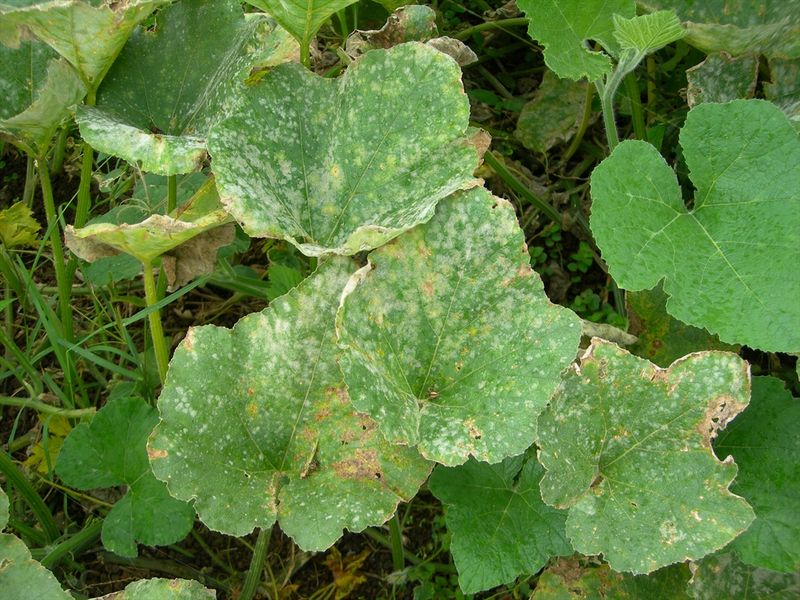
Also, do not confuse this dark purplish growth with powdery mildew, which produces white, powdery colonies on leaf surfaces rather than the grayish or purple material found underneath leaves affected by downy mildew.
4. Humid Weather Can Increase Disease Pressure
Rainy stretches, heavy dew, and persistently humid nights create the kind of conditions that can support cucurbit downy mildew development in Pennsylvania gardens.
Extended leaf wetness combined with mild-to-warm temperatures is generally favorable for the pathogen, though pinning down one exact humidity level or temperature threshold as a firm rule is not something current extension guidance supports.
One important detail that surprises many gardeners is that Pseudoperonospora cubensis does not generally survive Pennsylvania winters outdoors the way some other garden pathogens do.
Spores typically move into northern regions during the growing season, carried on air currents from areas where cucurbit hosts are already present further south.
That means an outbreak in your garden does not necessarily point to leftover debris from last year or poor gardening habits. Spores can travel considerable distances, so the source of an infection is often well outside your yard entirely.
Humid nights and wet foliage can encourage spore germination and disease spread once the pathogen arrives in your area.
However, even gardeners who manage moisture carefully may still see symptoms when regional weather and airborne inoculum combine.
Monitoring Pennsylvania disease reports and forecasting resources during the season helps you stay aware of whether the disease is active near your county.
5. Early Symptoms Can Resemble Other Cucumber Problems
Uncertainty is completely understandable when unfamiliar markings appear on cucumber leaves, because several different problems can produce discoloration that looks similar at first glance.
Penn State lists angular leaf spot, anthracnose, Alternaria leaf blight, and powdery mildew among the conditions that gardeners sometimes confuse with downy mildew.
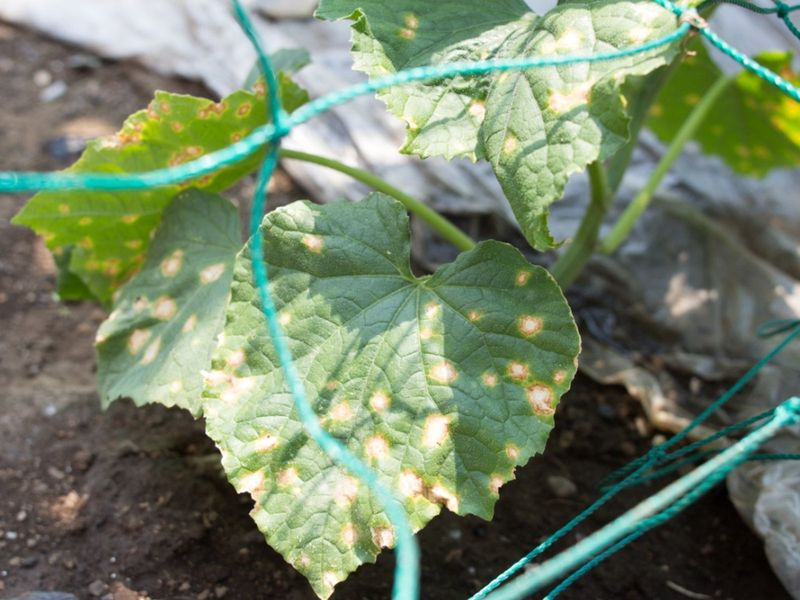
Angular leaf spot is bacterial rather than caused by a water mold, and its lesions can also be vein-limited and appear tan or water-soaked.
One difference is that angular leaf spot does not produce the gray-purple sporulation associated with downy mildew, and some lesions may eventually tear or leave small holes in the leaf.
Powdery mildew is easier to distinguish once it develops because it produces recognizable white, powdery colonies on leaf surfaces. That appearance is quite different from relying only on angular yellow lesions for identification.
Nutrient deficiencies can cause broader, more widespread yellowing across the leaf rather than the characteristic vein-limited patches associated with downy mildew. Avoid trying to diagnose a specific nutrient problem from leaf color alone.
Photographing both the upper and lower surfaces of affected leaves and reaching out to Penn State Extension, a county Master Gardener program, or a plant diagnostic lab is a smart move when symptoms remain unclear.
6. Careful Watering Helps Keep Foliage Drier
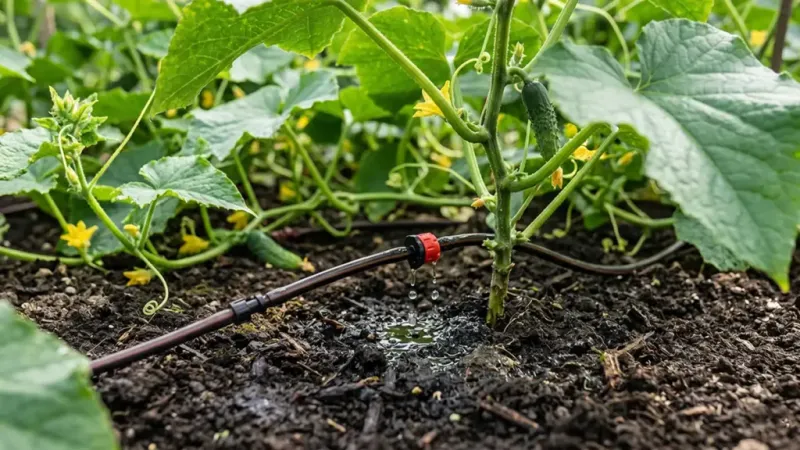
Watering at the soil level rather than spraying vines from overhead is one cultural practice that can help keep cucumber foliage drier during the growing season.
Drip irrigation or soaker hoses deliver moisture directly to the root zone without repeatedly wetting the leaves, which is a meaningful difference when humidity is already elevated.
If overhead watering is the only practical option, timing matters. Watering early enough that leaves have a reasonable chance to dry before nightfall can reduce the hours that foliage stays wet.
Exact timing depends on your location in Pennsylvania, local sunrise, temperature, and whether rain is expected, so there is no single clock time that fits every situation.
Cucumbers still need consistent soil moisture to grow well and support fruit development, so the goal is not to keep plants stressed for water. Checking soil moisture and watering the root zone as needed remains the right approach.
Rain and dew will wet foliage regardless of how carefully you irrigate, and windborne spores can arrive from well outside your garden.
Careful watering is a genuinely useful habit that reduces some additional leaf wetness, but it works best as one part of a broader approach rather than a standalone prevention strategy.
Do not expect irrigation adjustments alone to stop an outbreak already underway.
7. Removing Affected Leaves May Have Limited Value
Pulling off a heavily affected leaf or two might feel like a productive response when you first notice symptoms, and in a small planting it can improve visibility and remove some diseased tissue.
The honest reality is that removing a handful of leaves is unlikely to stop an established downy mildew outbreak in your Pennsylvania yard on its own.
Spores from Pseudoperonospora cubensis may already be present on other leaves before visible symptoms appear, meaning the problem is usually more widespread than what you can see at any given moment.
Repeatedly stripping foliage also reduces the photosynthetic area the plant depends on and can spread spores through handling if you are not careful.
Placing removed material directly into a bag or a suitable disposal container, rather than carrying it through healthy vines, is a sensible precaution.
Composting clearly affected foliage is not advisable unless current local guidance confirms that your composting method will handle the material appropriately.
Garden sanitation is more useful as one piece of a broader response that includes accurate identification, monitoring, appropriate irrigation, resistant varieties where currently available, and properly labeled products when warranted.
Removing affected leaves will not reverse existing lesions or bring damaged tissue back to its original color.
Management focuses on protecting the healthy foliage that remains.
8. Crowded Vines Can Hold Moisture Around Foliage
Dense, tangled cucumber vines in Pennsylvania garden can trap humidity around foliage for longer stretches of time, creating a microenvironment that is more comfortable for disease development.
Keeping vines from piling on top of each other is not just an aesthetic preference; it has real practical value for plant health and for making inspections easier.
Proper spacing from the start, trellising where it suits the variety, and gentle vine training are all reasonable ways to encourage better airflow through the planting.
Bush cucumbers and compact cultivars generally need different amounts of room than vigorous vining types, so following the spacing guidance for your specific variety makes more sense than applying one universal distance.
Even well-spaced plants can develop downy mildew when airborne spores and favorable weather arrive together.
Wider spacing is not a guarantee against the disease, but it does make it easier to spot early symptoms and reduces the time foliage stays wet after rain or dew.
Aggressive pruning is not a standard recommendation for managing cucumber downy mildew. Removing too much foliage at once can stress the plant and leave developing fruit more exposed to intense sunlight.
Keeping weeds from crowding the planting also supports airflow and access, though ordinary garden weeds are not the primary source of the cucumber downy mildew pathogen.
9. Fast Identification Helps Guide The Right Response
Getting a reasonably accurate identification early helps gardeners avoid wasting time and money on treatments that are not suited to the actual problem.
When you know you are likely dealing with cucurbit downy mildew rather than a nutrient issue or a bacterial disease, the decisions you make about the plant become more informed and more targeted.
Checking current Pennsylvania disease reports and forecasting resources is genuinely useful because the timing and geographic spread of cucurbit downy mildew can shift considerably from one season to the next.
A report from a previous year does not confirm what is happening in your county right now, so staying current matters.
Some cucumber varieties carry resistance or improved tolerance to certain pathogen strains, but that resistance is not complete or identical across all varieties.
Current seed descriptions and extension guidance are better references than general claims about resistant types.
If fungicide products are being considered, Cornell notes that many foliar products offer limited curative activity once symptoms are already established, making timing and product selection especially important.
Some general garden products provide little useful activity against this particular pathogen, and resistance to certain fungicides is a documented concern.
Pesticide labels are legal directions and must be followed exactly. Penn State Extension can help you work through an appropriate response for your specific situation.