Heavy Rain Before Thanksgiving Could Leave Georgia Camellias With This Common Problem
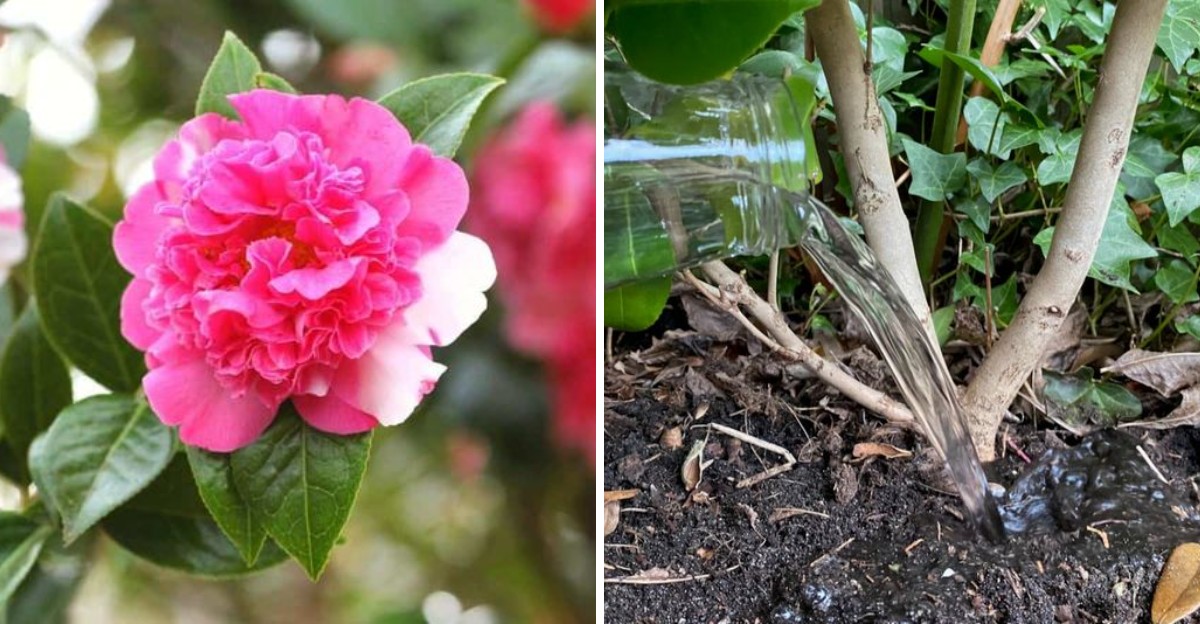
One tiny black lump, smaller than a fingernail, can sit in your flower bed for several years and wait for one soggy week. When it wakes up, it sends out spores that can turn a perfect pink bloom into brown mush in about two days.
That sounds like a plot from a garden horror movie, but it is real.
Late fall in Georgia often brings mild days, gray skies, and long soaking rains, which is the exact weather this troublemaker loves.
I find the timing a little rude. Many fall-blooming shrubs hit their peak right around Thanksgiving, just when family shows up and you want the yard looking its best.
You may already have this sneaky guest hiding under your mulch. How can you spot it before the next big storm rolls through, and what can you do to protect your flowers?
1. Those Brown Camellia Petals After a Soaking Rain Have a Story
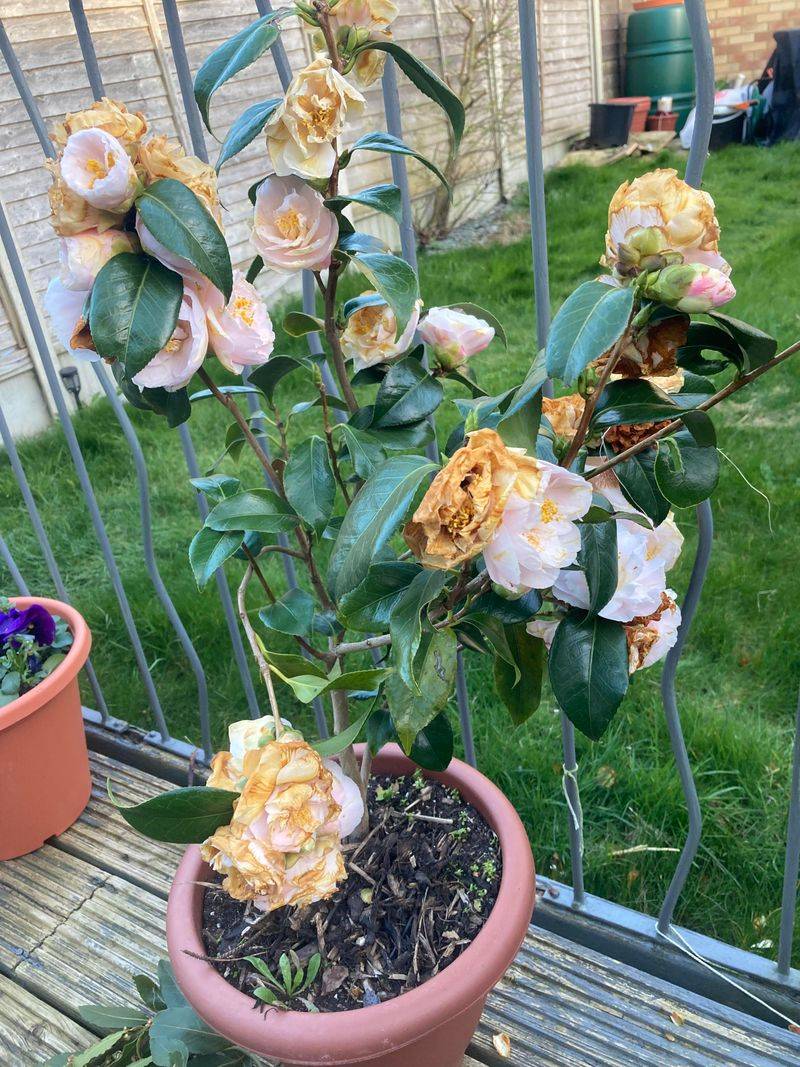
Rain-soaked camellia blooms that suddenly turn brown are often victims of camellia petal blight. A fungus called Ciborinia camelliae causes it, and it only attacks the flowers.
Leaves, stems, and roots stay healthy. That part surprised me the first time I read about it, because the shrub can look terrible in bloom yet be perfectly fine underneath.
The fungus thrives when temperatures sit in the 59 to 70 degree range and the air stays damp. A wet stretch before Thanksgiving in Georgia lines up with those conditions surprisingly often.
Spores land on open petals, and moisture helps them get inside. Within a day or two, a few small spots can spread across most of the flower.
Not every brown bloom means blight, though. Frost, wind, and simple old age can also brown petals, so you need to look a little closer before blaming the fungus.
Blight tends to show up during mild, wet weather rather than right after a hard freeze. Frost damage usually hits the outer edges of petals first and looks crisp, while blight spreads from scattered spots and feels soft or leathery.
Knowing the difference saves you from chasing the wrong fix.
2. Look for Dark Netted Veins Inside the Camellia Bloom
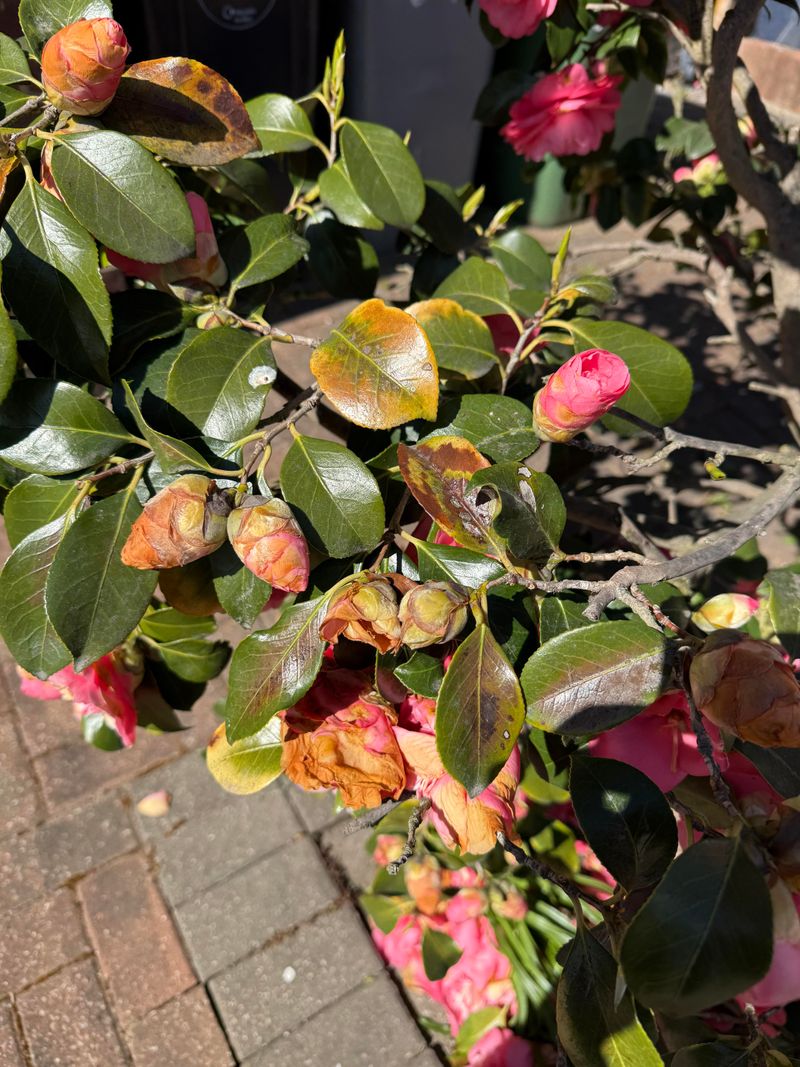
Here is my favorite detective trick for camellia lovers. Hold an affected bloom up to the light and study the brown areas closely.
Petal blight often leaves darker brown veins running through the discolored tissue, creating a netted pattern. Gardeners and plant experts treat this as one of the clearest signs of the disease.
Next, gently pull the flower. Blighted blooms frequently drop from the shrub while still mostly whole, rather than shattering into loose petals.
Now check the base of a fallen flower. If you see a fuzzy white or gray ring of fungal growth near where the petals join, that is another strong clue.
Some infected flowers also feel rubbery or leathery. Healthy fading blooms usually feel limp and papery instead.
Take a few photos of what you find. If you are still unsure, your local UGA Cooperative Extension office can help identify the problem, and many county agents welcome pictures or samples.
Getting a solid answer matters because the cleanup steps for blight are different from the fixes for cold damage or bud drop. A quick five-minute inspection after a rainy week can tell you a lot about what is going on in your beds.
3. Raking Up Fallen Camellia Flowers Is Your Best Defense
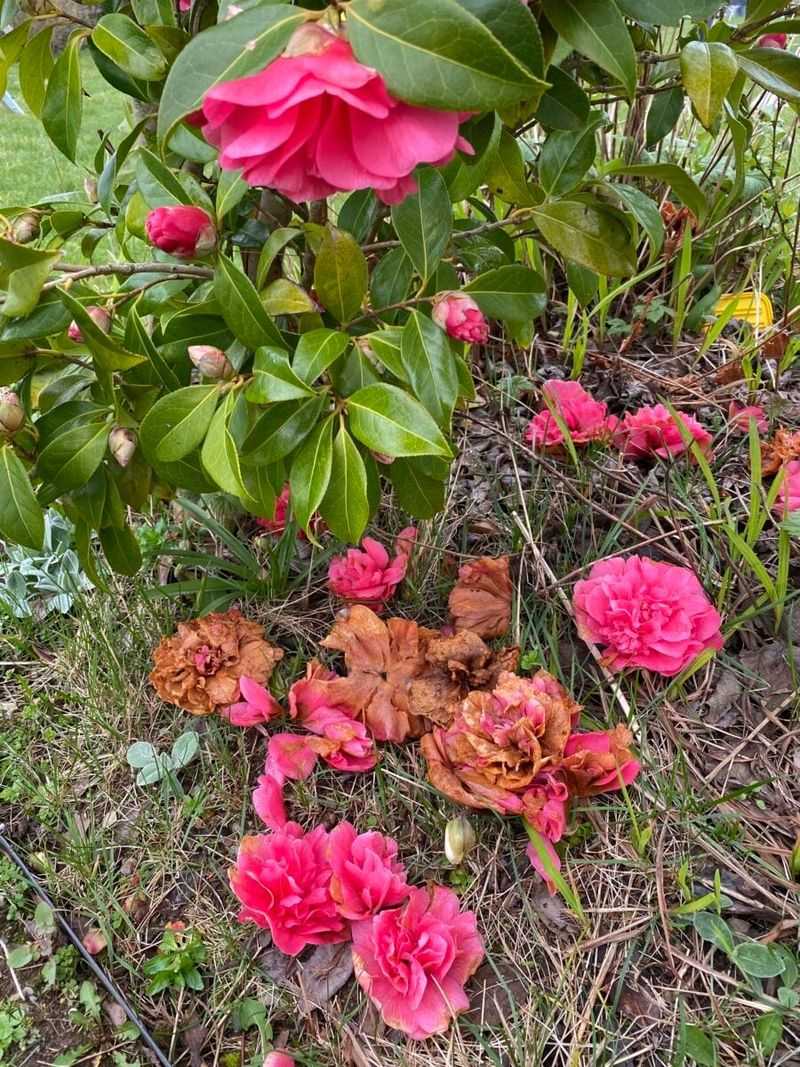
No spray can rescue a flower once blight has infected it. That makes cleanup the single most powerful step you can take.
Inside fallen, infected blooms, the fungus forms hard black structures called sclerotia. They look like little dark pebbles or flattened seeds, and they can survive in the soil for several years.
Each winter, when conditions turn mild and wet, those sclerotia produce small cup-shaped mushrooms. The cups release spores into the air, starting the cycle all over again on new flowers.
So grab a rake, a bucket, and a trash bag. Pick up dropped blooms every few days during the blooming season, especially after a big rain.
You should also snip off any browning flowers still hanging on the shrub. Bag everything and put it out with household trash.
Please skip the compost pile for these blooms. Most home compost does not get hot enough to reliably break down sclerotia, so you could end up spreading the problem around your yard.
I know it feels like a chore during a busy holiday week. Still, a few minutes of tidying now can mean fewer spores and prettier flowers next season.
4. Fresh Mulch Under Your Camellia Shrubs Can Block Hidden Spores
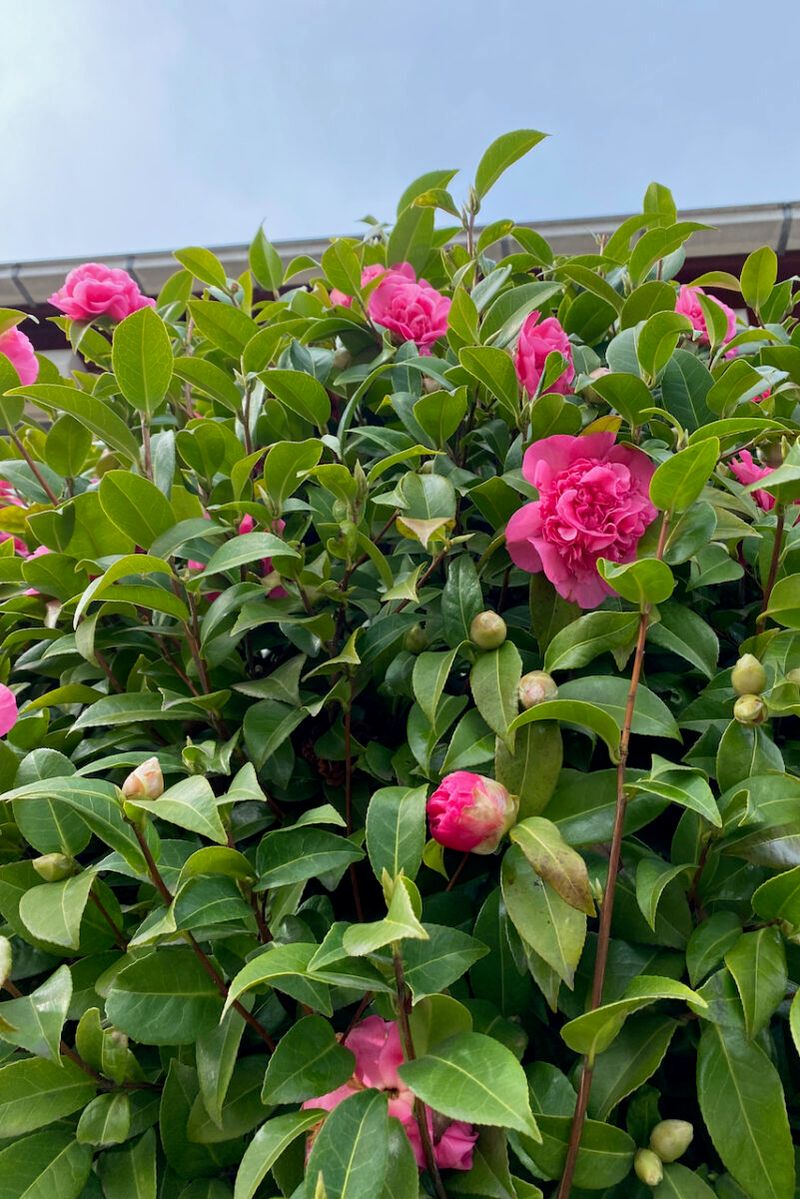
Old mulch can act like a cozy hotel for blight. Sclerotia settle into that layer and wait quietly for the next wet spell.
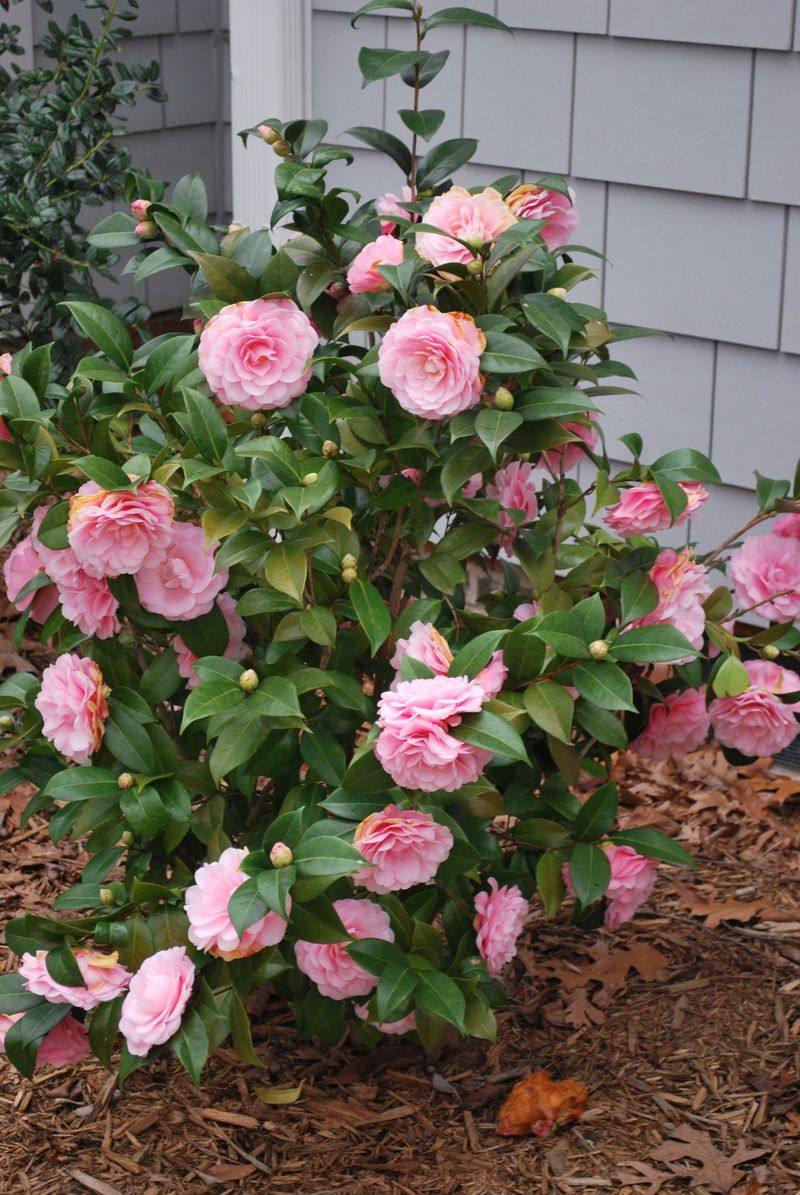
Many experts suggest removing old mulch and fallen leaf litter from under affected camellias. Then spread a fresh layer about 2 to 3 inches deep.
The new layer helps cover sclerotia left in the soil. That makes it harder for the tiny spore-producing cups to reach open air and launch their spores.
Pine straw and pine bark are popular choices across Georgia, and both work well around these acid-loving shrubs. They also help hold steady soil moisture, which camellias appreciate.
Keep the mulch pulled back a few inches from the trunk. Piling it against the stem can trap moisture and invite other problems.
Timing matters too. Refreshing mulch before buds start opening gives you the best shot, though doing it during the season still helps.
Mulch alone will not solve everything, since spores can drift in from a neighbor’s yard on the wind. Combined with regular flower cleanup, though, it makes a real difference.
I like to think of it as tucking your camellias in with a clean blanket.
5. Sasanqua Camellias Bloom Right Into Thanksgiving Wet Weather
Ever wonder why the holiday season gets singled out? Blame the bloom calendar.
Camellia sasanqua varieties usually flower from fall into early winter. In much of Georgia, that puts many of them in full color right around Thanksgiving.
Camellia japonica, the larger and more formal cousin, mostly blooms from mid to late winter and into early spring. Those flowers face blight later, often in January through March.
Since the fungus needs open flowers to infect, timing plays a huge role.
Camellia petal blight primarily affects Camellia japonica and is generally more common during its winter-to-spring flowering season, while sasanquas are less susceptible.
Interestingly, some very early bloomers may dodge much of the trouble. Varieties like Setsugekka often flower before conditions are ideal for the fungus, so they can escape the worst of it.
That gives you a fun planning tip. If you are adding new shrubs, mixing early, mid, and late bloomers can spread out your color and lower the odds that one rainy week ruins everything.
Fall is also a fine time to plant camellias in Georgia. Cooler air and regular rain help new roots settle in before spring growth begins.
6. Camellia Buds Dropping Unopened Could Point to Soggy Roots
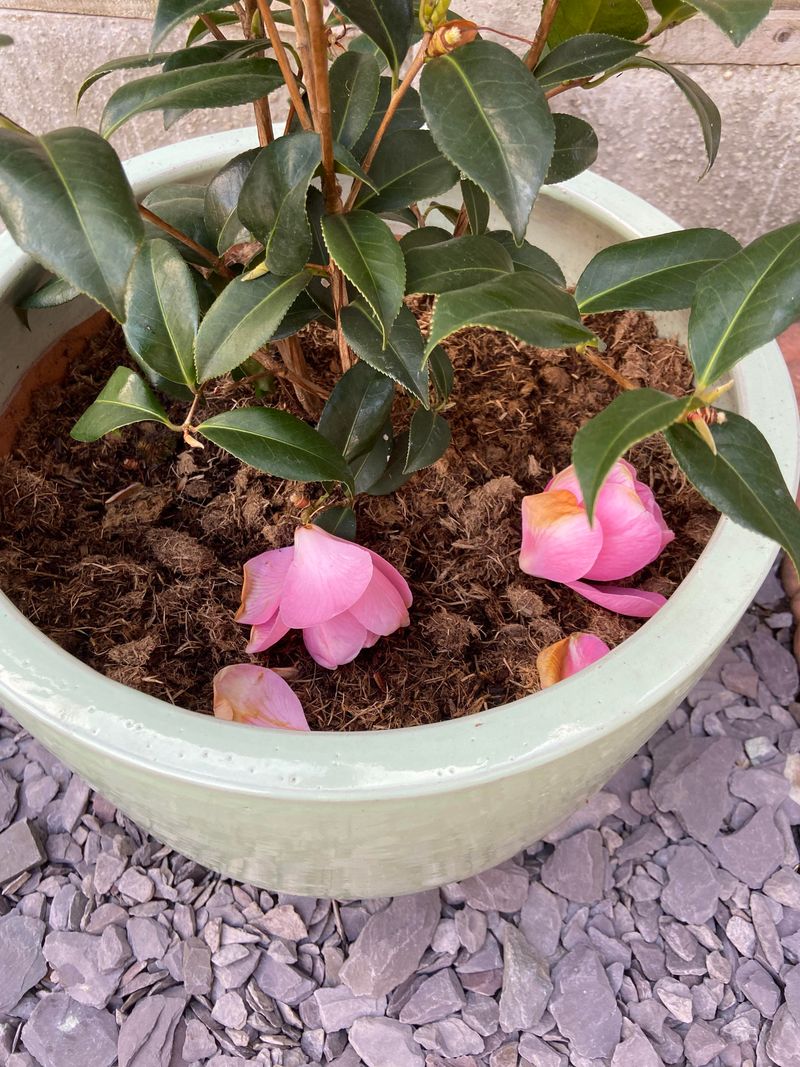
Sometimes the buds fall before they even get a chance to open. That frustrating issue, called bud drop, is a different problem from petal blight.
Bud drop is a stress signal, not a single disease. Heavy rain does not usually cause it alone, but it can expose weak spots in your planting site.
Camellias have shallow roots that like steady moisture. In poorly draining soil, especially heavy Georgia clay, soaking rains can leave roots sitting in water and short on oxygen.
Stressed roots may lead the plant to abort some buds. You might notice buds browning at the base and dropping onto the ground.
The story often starts earlier, too. Flower buds form in late summer and early fall, and dry spells during that window can set the stage for drops later.
A dry summer followed by a sudden deluge is a classic combo. The plant swings from thirsty to soaked, which it does not enjoy.
Other causes include sudden cold snaps and simply having too many buds. Some camellias naturally shed extras.
A few dropped buds are normal, so do not panic. Large numbers falling year after year deserve a closer look at your drainage.
7. Better Drainage and Airflow Help Camellia Shrubs Shrug Off Storms
Good bones make a garden tougher. For camellias, that means soil that drains and branches that breathe.
Check your planting spot after a big rain. If water puddles for hours, consider amending the area with organic matter or moving future plantings to a slightly raised bed.
Camellias like their root area planted at or a little above the surrounding soil level. Burying them too deep can trap water around the stem.
Airflow matters just as much. Light pruning to open the center of a crowded shrub helps petals and leaves dry faster after storms.
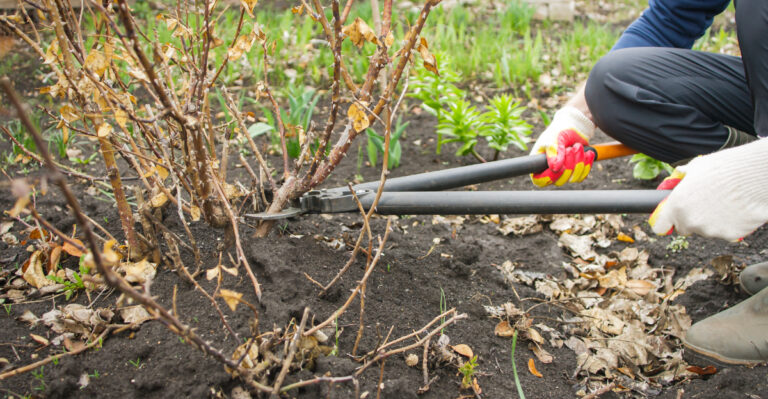
Hold off on heavy pruning right now, though. Most experts recommend pruning camellias soon after they finish blooming, so you do not cut off next season’s buds.
Give shrubs some elbow room too. Plants jammed together hold humidity like a sponge.
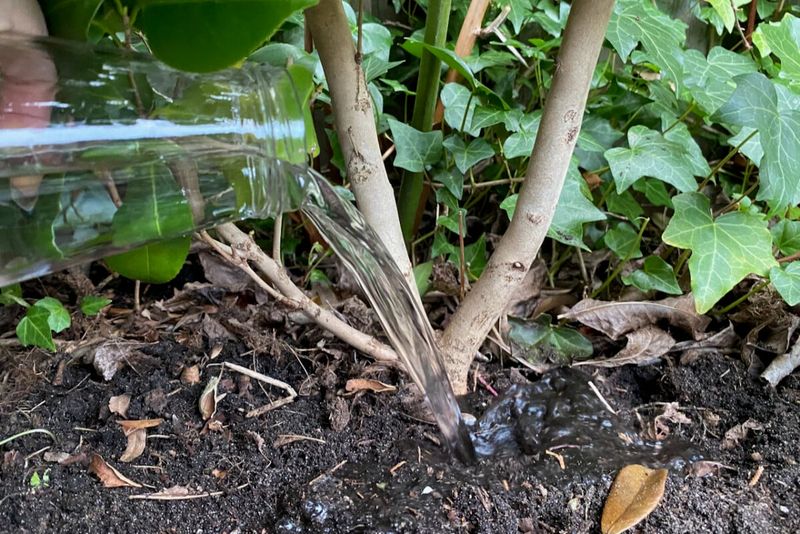
If you water during dry spells, aim at the soil instead of spraying from above. Drip lines or soaker hoses keep flowers dry, which gives blight fewer chances.
A quick finger test works well. Soil a few inches down should feel damp, not dusty or sticky wet.
These small habits add up over time.
8. Plan Ahead So Next Year’s Camellia Blooms Stay Picture Perfect
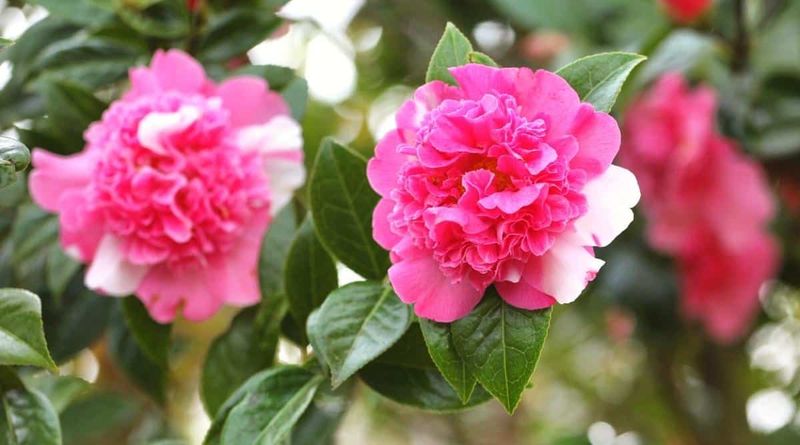
Patience pays off with these shrubs. A season of blight does not mean your camellias are doomed to brown blooms forever.
Start by keeping up the cleanup through the end of blooming. Every infected flower you bag means fewer sclerotia waiting under the shrub next year.
Refresh mulch before buds begin to open next fall. Then stay consistent with water during the summer and early fall bud-setting months.
Some gardeners use preventive fungicide soil drenches a few weeks before buds open. Results vary, so check with your UGA Extension office for current recommendations and always follow the label carefully.
Talk with neighbors who grow camellias too. Spores travel on the breeze, so a whole street tidying up together can make a bigger impact than one yard alone.
When adding new plants, consider early-blooming sasanquas and buy from reputable nurseries. Inspect root balls and avoid bringing home soil with old, fallen flowers mixed in.
Above all, enjoy the blooms you do get. Even in a rainy year, plenty of flowers often open clean and gorgeous.
A little care now sets the stage for a stunning show when the holidays roll around again.