Can You Legally Keep a Box Turtle You Find in Your Ohio Yard?

That slow, spotted visitor nibbling your fallen strawberries may have hatched before you did. Some live well past 50 years, and many spend that whole life within a patch of land smaller than a few football fields.
I still remember the first one I found near my tomato cages. Its shell was domed like a tiny helmet, freckled with orange and gold, and it snapped shut so tightly I could not see a single toe.
I sat in the dirt for twenty minutes waiting for it to peek out again.
Your first instinct might be to grab a shoebox and some lettuce. I get it, because I felt the same tug.
Ohio has some firm rules about wild reptiles, though, and that cute shoebox plan could land you in hot water.
What are you actually allowed to do when one of these armored wanderers strolls past your hostas? The answer surprised me more than I expected.
1. That Domed Shell in Your Garden Belongs to a Protected Neighbor
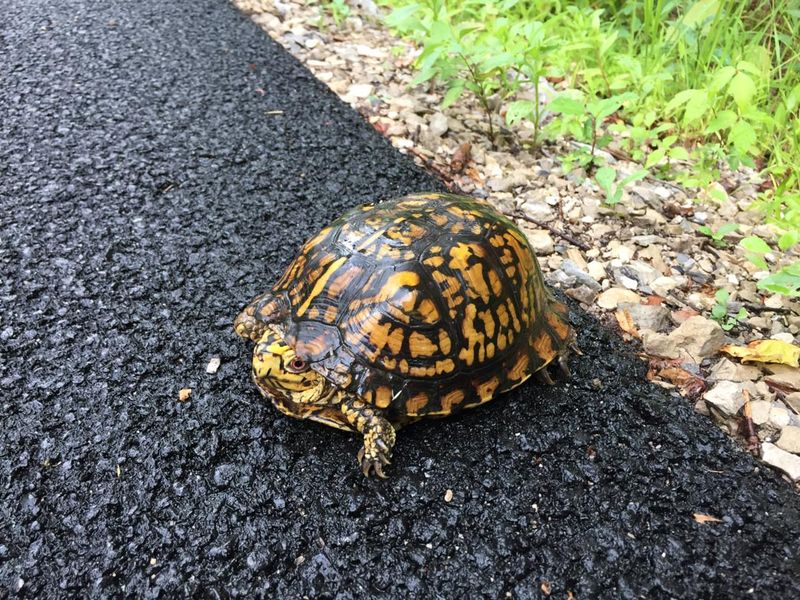
Spotting an Eastern box turtle in the garden feels a bit like finding a living treasure. That high, rounded shell with its splashes of yellow and orange is hard to miss once your eyes catch it.
Here is what most folks do not realize. The Eastern box turtle is listed as a species of concern by the Ohio Department of Natural Resources.
That label means biologists are watching its numbers closely because the population is slipping in many areas.
Box turtles are also the only land-dwelling turtle native to Ohio. Unlike painted turtles or sliders, they spend nearly all their time on dry ground, wandering through woods, meadows, and yes, our vegetable patches.
Their shell has a special hinge on the bottom. When danger shows up, the turtle pulls in its head and legs and closes up like a little locked box, which is how it earned its name.
So that charming critter munching a mushroom by your fence is not a stray pet. It is a wild animal with an important role, spreading seeds and eating slugs.
Knowing its protected status is the first step to treating it right, and it shapes everything else you should do next.
2. Ohio Law Says Box Turtles Stay Wild, Even in Your Yard

Let me answer the big question right away. No, you cannot legally keep a wild box turtle you find in your Ohio yard, even if it wandered onto your own property.
Ohio wildlife rules make it unlawful to collect most native reptiles and amphibians from the wild. Only a small group of species can be taken, such as common snapping turtles and softshell turtles, and those come with licenses, seasons, and limits.
Box turtles are not on that list.
Finding the turtle on your land does not change things. Wild animals belong to the state, not to the person who owns the grass they crawl across.
People sometimes assume a pet store sale or a gift from a neighbor makes keeping one fine. Be careful, because a turtle taken from Ohio woods is still a wild-caught animal, and passing it around does not make it legal.
Penalties for breaking wildlife rules can include fines and confiscation of the animal. For the turtle, captivity often means poor diet, stress, and lost time in its home range.
If you have questions about a specific situation, call your local ODNR Division of Wildlife office. Staff there are friendly and happy to explain the rules.
3. Leave the Box Turtle Right Where You Found It

Honestly, the kindest move is often the laziest one. When a healthy box turtle shows up in your yard, just let it be and enjoy the show.
Grab your phone, snap a photo, and watch from a few steps back. I like to note the date and spot in a little garden journal, because the same turtle may return year after year.
Box turtles usually know exactly where they are going. That one crossing your lawn might be heading toward a favorite berry patch, a damp hiding spot, or a sunny nesting area.
Try not to pick it up unless you have a real reason. Handling causes stress, and a frightened turtle may stay shut inside its shell for a long while instead of eating or warming up.
Keep pets inside or leashed while your visitor passes through. Curious dogs can chew shells, and even a gentle cat can bother a turtle more than you might expect.
Also check before you mow. In late spring and summer, box turtles often rest in taller grass, and a quick walk across the yard first can spare one a nasty injury from mower blades or string trimmers.
4. Helping a Box Turtle Cross the Road the Right Way
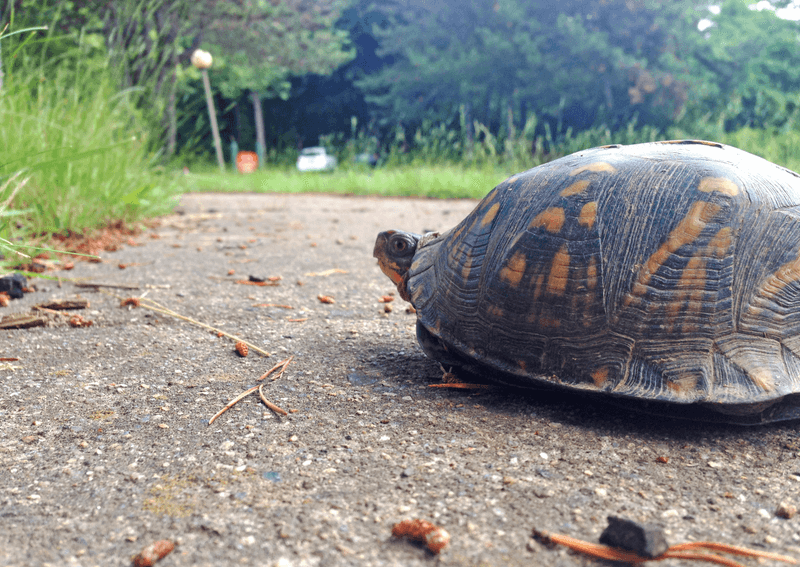
Every June, my drive to the garden center turns into a turtle lookout mission. Roads are one of the biggest threats box turtles face, especially when females are searching for nesting spots.
Ohio allows you to help a turtle across a road when it is in immediate danger. Your safety comes first, so pull over fully, turn on your hazard lights, and only step out when traffic allows.
Hold the turtle gently by the sides of its shell, around the middle. Keep it low to the ground in case it wiggles loose.
Now for the part people get wrong. Carry the turtle in the direction it was already heading, not back where it came from.
If you turn it around, it will likely try crossing again as soon as you leave.
Set it down several feet off the road, near grass or brush. Then step away and let it continue on its own schedule.
Resist the urge to take it home as a rescue. Helping it cross is legal and helpful, but keeping it afterward is not.
Wash your hands too, since reptiles can carry Salmonella bacteria.
5. Moving a Box Turtle Across Town Can Backfire

Plenty of well-meaning gardeners have driven a box turtle to a nearby park, thinking the woods would be a safer home. Sadly, that plan usually works out poorly for the turtle.
Box turtles have a strong attachment to their home range. Research shows many spend their entire lives in an area of just a few acres, learning where to find food, water, and winter shelter.
Drop one in a strange place and it often starts walking, trying to get back home. That journey can lead it across busy streets, through parking lots, and into dangers it would otherwise avoid.
A relocated turtle also loses its mental map. It may struggle to find a safe spot to burrow before cold weather, which matters a lot in Ohio, where box turtles tuck into soil and leaf litter from roughly October until spring.
Disease is another worry. Turtles held in captivity, especially near other reptiles, can pick up illnesses and spread them to wild populations.
So unless a turtle is in true danger, keep it close to where you found it. A short move across a road is fine, but a car ride to a new neighborhood is not.
6. An Injured Box Turtle Needs a Licensed Wildlife Rehabilitator
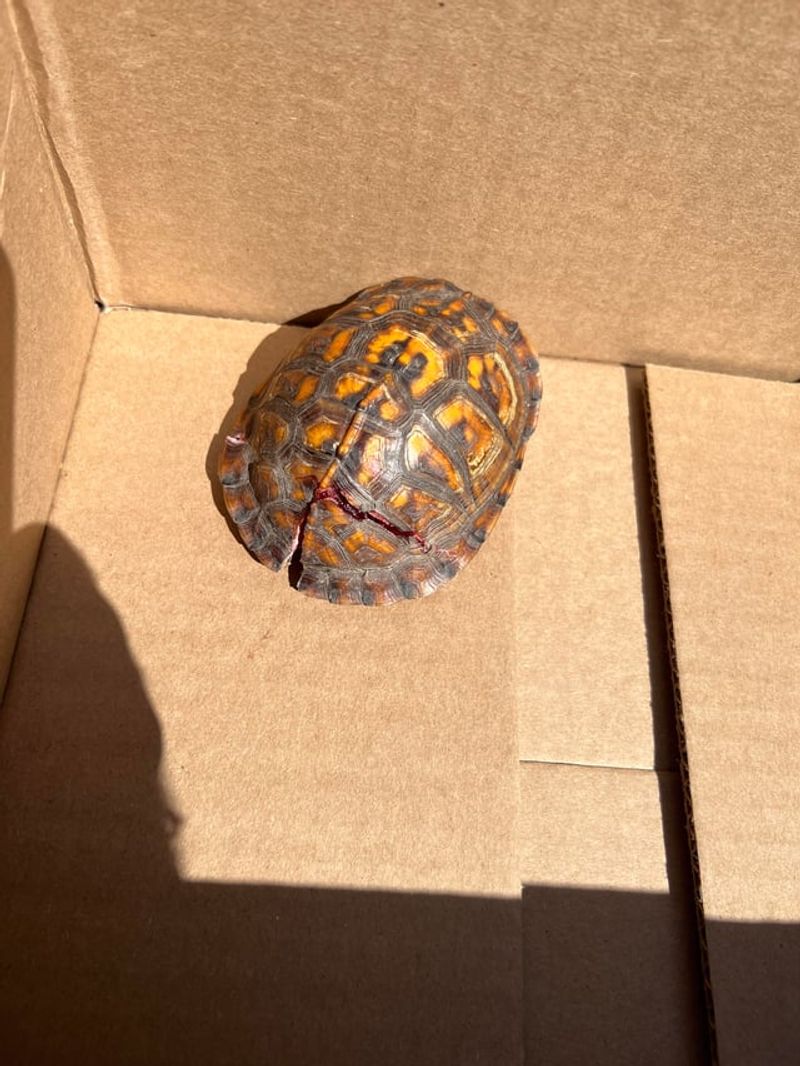
Finding a turtle with a cracked shell is heartbreaking. My stomach dropped the first time I saw one near a neighbor’s driveway, and I wanted to fix it myself.
Ohio rules say private citizens cannot keep and nurse injured wildlife at home. Only licensed wildlife rehabilitators and certain veterinarians have the permits and training to treat wild animals like box turtles.
The encouraging part is that turtles are tough. Shell injuries can often heal with proper care, though treatment may take weeks or even months.
If you find a hurt turtle, place it in a ventilated box lined with a soft towel. Keep it in a quiet, room-temperature spot, and skip food or water for now.
Next, call a rehabilitator right away. ODNR keeps a searchable list of licensed rehabbers by county on its website, and groups like local wildlife rescues can guide you over the phone.
Write down exactly where you found the turtle. Rehabbers aim to release healed box turtles back into their original home range, so that location detail really matters for its future.
Your quick phone call gives that little reptile its best shot at getting back to the woods.
7. Habitat Loss and Busy Roads Are Shrinking Box Turtle Numbers

Slow and steady may win races in fairy tales, but in real life it creates big challenges. Box turtles grow up slowly and reproduce slowly, which makes every adult incredibly valuable.
Females often take seven to ten years or more to reach breeding age. Even then, they lay only a few eggs each year, and raccoons, skunks, and foxes eat many of those nests.
Because of that pace, losing just a few adults can drag down a local population for decades. Scientists say populations struggle to bounce back once numbers fall.
Habitat loss is a major cause. New roads and housing chop woodlands into smaller pieces, forcing turtles to cross more pavement to reach food and mates.
Collection for the pet trade adds pressure too. Every turtle carried away from the wild is one less animal laying eggs for the next generation.
That is why Ohio protects them so firmly. The rules are not meant to frustrate turtle lovers; they are meant to keep these ancient-looking reptiles roaming our forests for years to come.
When you let a yard turtle go about its business, you are part of that effort.
8. Turn Your Backyard Into a Box Turtle Friendly Hangout

Want turtle visitors without breaking any laws? Make your yard the kind of place they love to explore on their own terms.
Start with a little mess. Leaf litter, a brush pile in a quiet corner, and a few logs give box turtles cool hiding spots on hot days and cozy cover in fall.
Plant native species that feed them naturally. Wild strawberries, mayapple, blackberries, and serviceberry offer tasty fruit, and native plants attract the worms, snails, and insects that box turtles also eat.
Cut back on pesticides and slug pellets. Those chemicals can harm turtles directly or poison the critters they snack on.
A shallow dish of water set into the ground helps during dry Ohio summers. Box turtles like to soak, so keep it low enough that they can climb in and out easily.
Check fences and window wells, too. Turtles can get trapped in deep spots, so a small ramp or cover is a simple fix.
Personally, I think the best reward is watching the same turtle return each spring. Keep a photo record of its shell pattern, which is unique like a fingerprint, and you may get to know your wild neighbor for decades.