When to Harvest Broccoli in Arizona: Signs a Head Is Ready
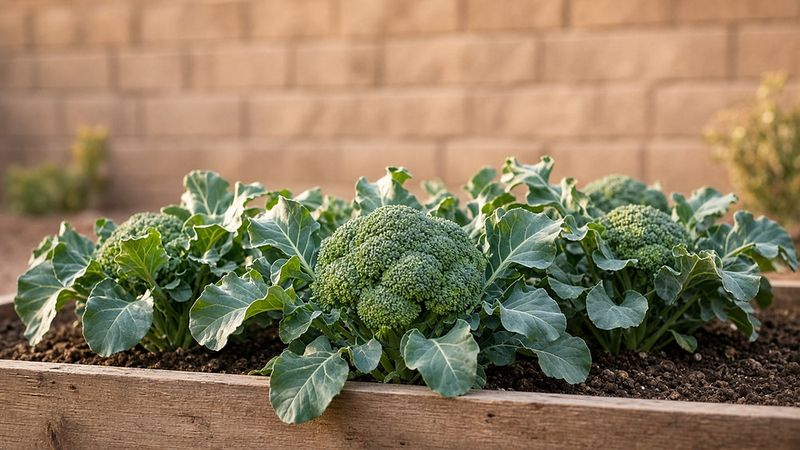
A broccoli head is really a bouquet of flower buds that has not opened yet. That is why timing matters so much.
Pick too late and the bouquet starts to bloom. In Arizona, the plant itself tells you more than the calendar does, so let’s learn how to read it.
Arizona’s Calendar Sets Expectations, Not a Picking Date
Garden calendars are handy, but they are a starting point, not a finish line. The University of Arizona’s Maricopa County calendar lists broccoli as a fall crop and estimates 90 to 100 days from transplant, or 120 to 130 days from seed.
Its fall planting dates stretch from late summer into winter. So a head is not automatically ready in October.
Arizona also is not one climate. That Maricopa County guidance cannot simply be copied to every town in the state.
If you garden at higher elevations, the University of Arizona’s guide for 3,000 to 6,000 feet lists preferred soil temperatures of 50 to 65°F. It also notes daytime highs near 60 to 70°F and nights near 40 to 55°F, and it stresses that microclimates and real temperatures matter.
Your planting date, your elevation, your sunny wall or shady corner, and the weather you actually get all shift the schedule. Use the calendar to know roughly when to start looking.
Then let the plant itself make the call, starting with how it looks and feels.
Use Size and Color as Supporting Clues
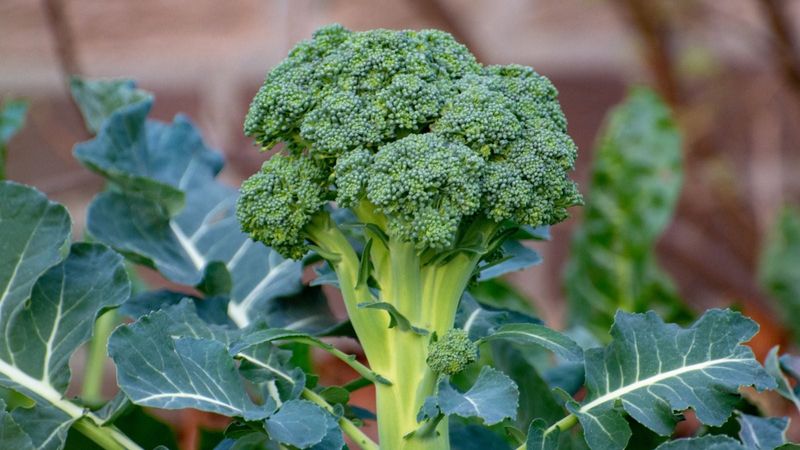
A ruler is tempting, but broccoli heads do not all grow to the same size. Iowa State Extension gives about 6 to 7 inches for a main head, and describes a tight, blue-green head.
Illinois Extension says central heads may be 4 to 6 inches or larger, and that size varies with variety, growing conditions, and season.
Those ranges do not match, and that is the point. Treat size as a hint that a head is getting close, not as a pass or fail test.
Your variety and your weather may produce a smaller or larger head that is still ready.
Color works the same way. Bright green or purplish-green heads can both be normal, so a purple tint alone does not mean a head is unripe or overripe.
A firm, compact, evenly colored head is a good sign, but the buds deserve the final look.
Tight, Closed Buds Carry the Most Weight
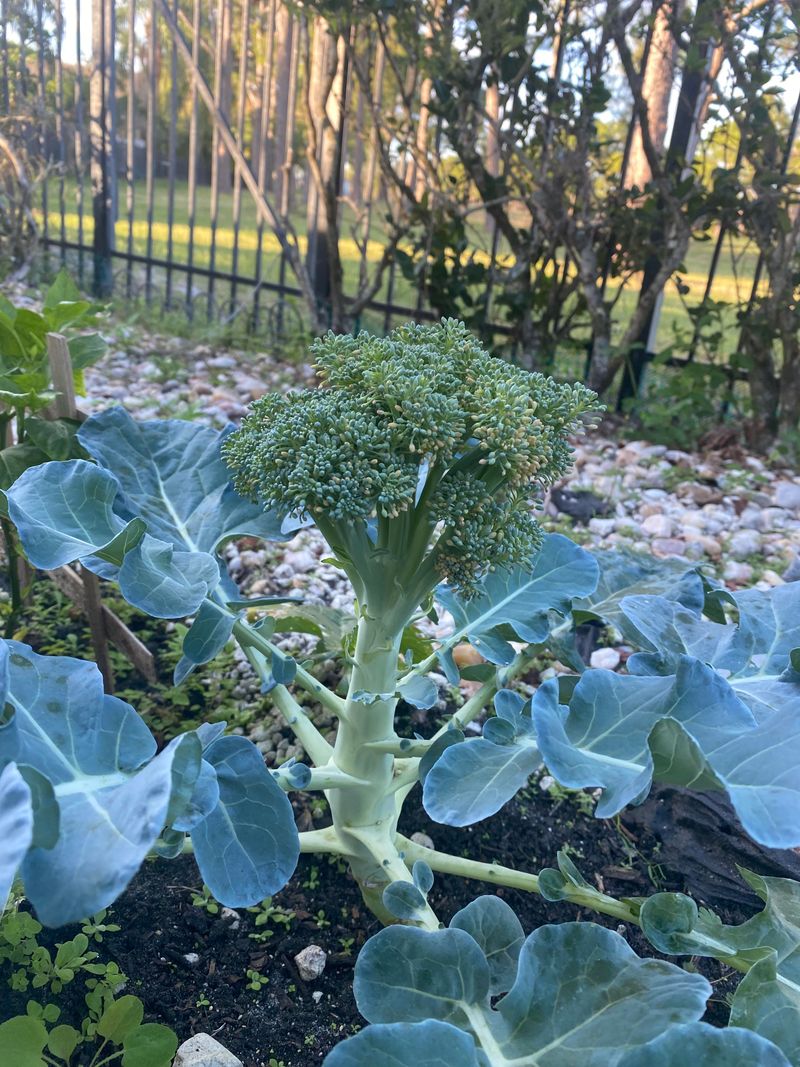
Look closely at a broccoli head and you are looking at a crowd of flower buds that have not opened. That is the whole secret.
Harvest while those buds are small, tight, and closed, and you get the best quality.
Firmness and compactness usually go along with tight buds, since a head with packed buds feels dense and solid. You do not need to score each one separately.
They are different views of the same thing, and Iowa State Extension and Illinois Extension both point to a firm head of tight buds as the sign to pick.
Here is a simple rule. If the head looks developed for its variety and the buds are still tight and closed, harvest it, even if it is a bit smaller than you expected.
If it is big but the buds are starting to loosen, harvest it right away instead of waiting for more size.
Loosening Buds Mean the Harvest Window Is Narrowing
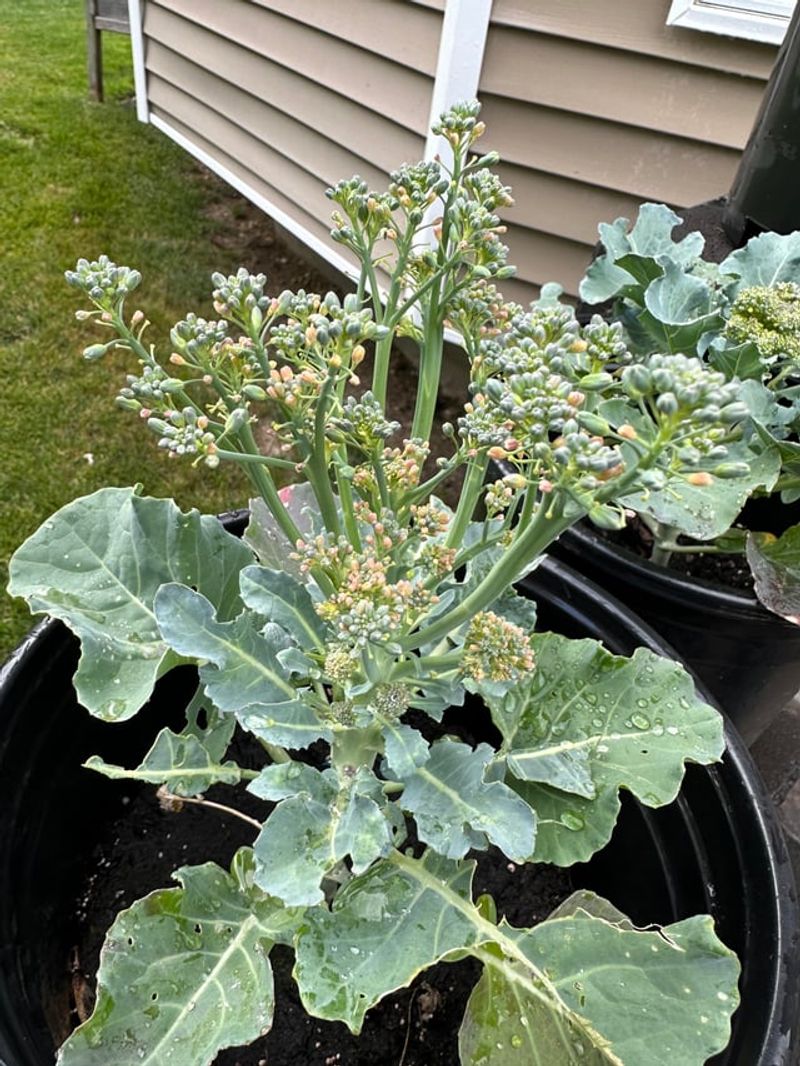
Sometimes you turn your back for a few warm days and the head looks a little fluffy. When the beads start to separate or loosen, treat it as a nudge to pick soon.
University of Minnesota Extension advises cutting a head promptly if the flowers are beginning to open.
Yellow buds or open flowers mean the head has passed the usual quality target. The texture may be less tender and the head less tidy.
That is a quality issue, not a safety alarm.
The same Minnesota guidance describes the tender flower stalks and undeveloped flowers as edible, and Illinois Extension frames the advice around maturity and quality. So a head with a few yellow blooms does not need to go in the trash.
Pick it, trim away anything you do not like, and enjoy it soon.
Read Small Heads in Context
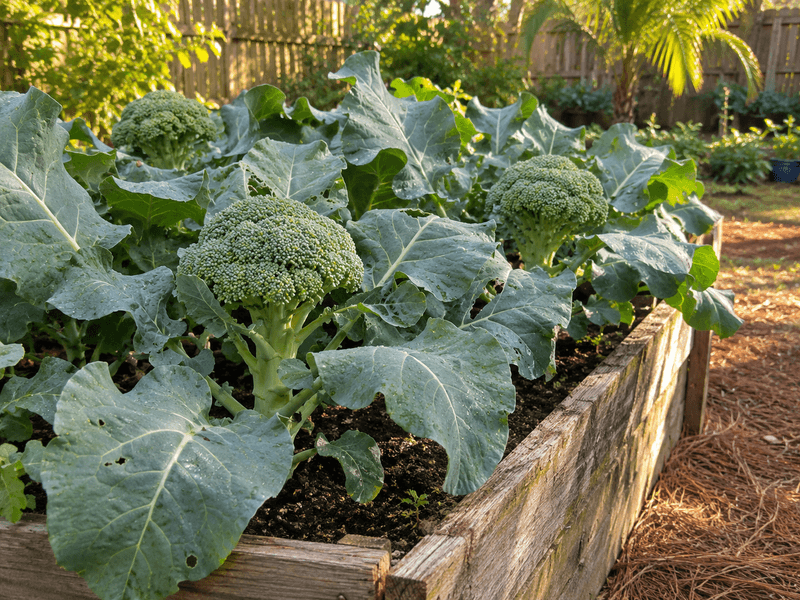
Not every small head is a ready head. Sometimes a plant forms a tiny head early, long before it has grown enough leaves to support a big one.
Illinois Extension and Utah State University Extension describe several possible contributors, including temperature swings, drought or uneven moisture, transplant stress, and chilling.
Notice that these are possibilities, not a diagnosis. You usually cannot name one cause just by looking at a button-sized head.
A head that is simply forming is also not the same thing as the plant bolting.
So go back to the buds. If a small head has firm, tight, closed buds and has developed as much as it is going to, it can be harvested and eaten.
If the plant is still young and growing, check your watering, protect it from stress, and give it time to size up.
Cut the Central Head and Leave Room for Side Shoots
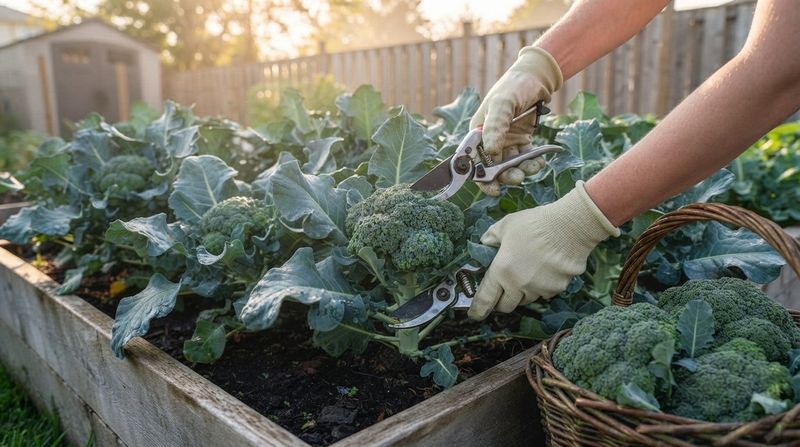
When the moment arrives, grab a clean, sharp knife or pair of pruners. Cut the central head and leave a portion of stem behind.
Illinois Extension recommends 5 to 6 inches of stem.
Leave the rest of the plant in the ground. Many varieties send up smaller secondary heads after the main one is cut, as Iowa State Extension notes.
How many appear, and how fast, depends on the variety and the conditions.
Keep an eye on those side shoots and pick them while their buds are still tight. They are smaller, so go by bud tightness rather than size.
Harvest a developed head while the buds are tight, and move fast once they loosen.
Broccoli rewards the gardener who looks closely, not the one who counts days.