Warning Signs Of Rats In Your Texas Attic
A gap about the size of a quarter lets a sneaky little climber squeeze right into your attic. These furry acrobats run along power lines and tree limbs, then slip under roof edges while Texas sleeps.
Their front teeth keep growing for their whole lives, so chewing on wood and wiring becomes a nightly habit. Warm, quiet attics across Texas give them a cozy hideout with plenty of soft insulation for bedding.
I used to blame every overhead tap on the house settling or the wind brushing the shingles. Nobody warned me that those tiny sounds could mean a growing family was moving in above my bed.
You might notice plenty of clues long before you ever spot a whiskered face peeking from the rafters. So grab a flashlight, because your attic may be telling a story you have not heard yet.
1. Scratching Noises In The Attic After Dark
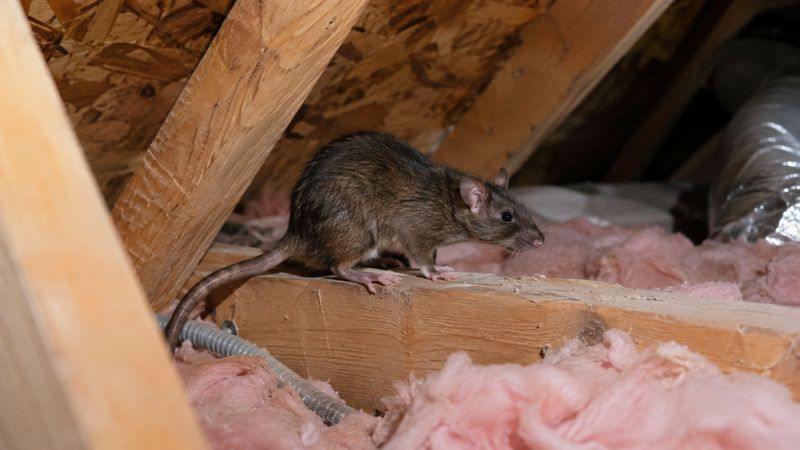
Right around bedtime, a soft skittering sound overhead can turn a calm evening into a full investigation. Roof rats, known to scientists as Rattus rattus, are most active at night and love climbing high.
You might hear quick little scratches as they dash across joists or burrow through fluffy attic insulation. Heavier thumps sometimes happen too, especially when a rat drops from a beam or drags nesting material.
Timing tells you a lot, so pay attention to when the noises start and stop each day. Squirrels mostly move around during daylight, while rats usually get busy after sunset and keep going overnight.
Personally, I keep a small notebook by the bed and jot down the time whenever I hear scurrying. After a week, those notes form a pattern that helps a pest professional figure out what is upstairs.
Faint gnawing mixed with the scampering is another clue, because rats chew constantly to wear down their teeth.
That steady crunching sound often comes from wooden framing or the plastic coating around electrical wires.
Pets can join the detective work, since dogs and cats often hear rodents well before people do. If your cat stares at one ceiling corner every night, take that reaction seriously and check the attic.
Early action matters, because a couple of rats can turn into a crowded colony within a few months. Listening closely now could save you from bigger repairs and much messier cleanup jobs later in the year.
2. Pointed Rat Droppings Near Attic Insulation
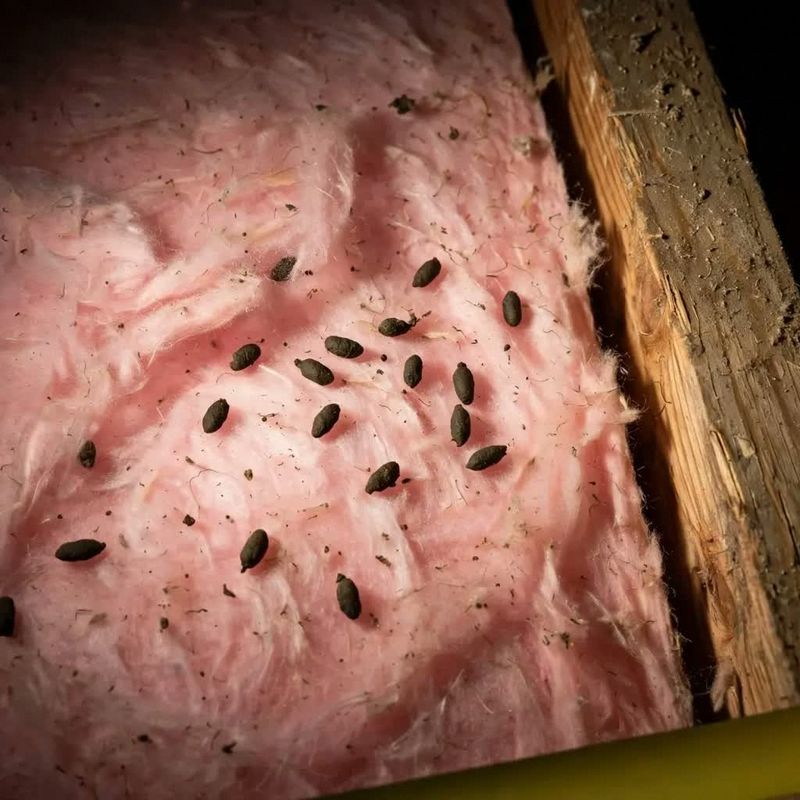
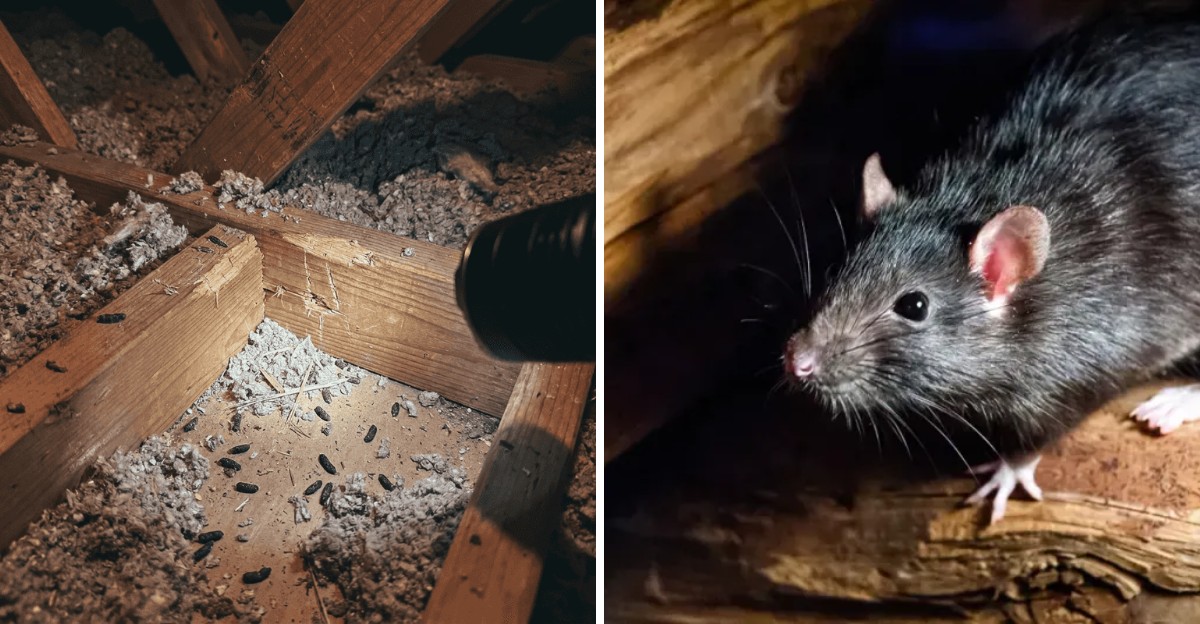
Nobody gets excited about finding tiny dark pellets, yet droppings are often the clearest proof that rats moved in. Roof rat droppings measure about half an inch long and usually have pointed ends, a lot like spindles.
Norway rats leave larger droppings, around three quarters of an inch, with blunt ends that look more like capsules. Mouse droppings are much smaller, closer to the size of a grain of rice, which helps you sort suspects.
Freshness matters too, since new droppings look dark and shiny while older ones turn gray and crumbly. Spotting shiny pellets along insulation paths or near stored boxes means the activity is happening right now.
I have to admit, my first instinct was grabbing the vacuum, which turns out to be risky. Sweeping or vacuuming dry droppings can stir tiny particles into the air you and your family breathe.
Health agencies like the CDC recommend wearing gloves and spraying droppings with disinfectant before wiping them up. Let the spray soak for about five minutes, then pick up the mess with paper towels and bag it.
Rat waste can carry germs linked to illnesses such as leptospirosis and salmonellosis, so careful cleanup really counts.
Wash your hands well afterward, even if you wore gloves the whole time you were working upstairs.
Heavy piles scattered across a wide area usually point to a large, well-settled group living in your attic. At that stage, soiled insulation may need professional removal, so it pays to catch the problem early.
3. Fresh Gnaw Marks On Attic Wood And Wires
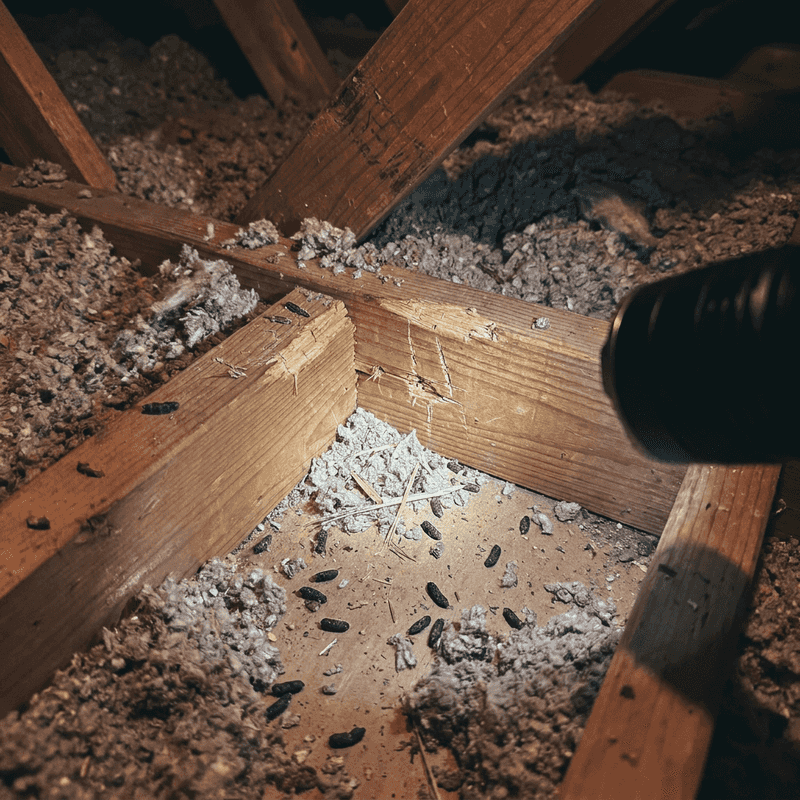
Rats have orange front teeth that keep growing throughout their lives, so chewing is basically a full-time job. Those busy teeth leave rough grooves on rafters and on the cardboard boxes stacked in your attic.
Fresh gnaw marks look pale and raw, with small wood shavings often scattered nearby on the floor. Older marks darken with time and feel smoother, which helps you judge whether rats are still around.
Chewed electrical wiring worries me most, because stripped wires can spark and create a serious fire risk. Check cables near the eaves with a flashlight, looking for missing insulation or exposed copper strands.
Flexible air ducts are another favorite target, and a single chewed hole can leak cool air into the attic. During long, hot summers, that leak forces your air conditioner to work harder and pushes energy bills higher.
Gnawing also reveals where rats are getting inside, since they often widen small gaps near rooflines and vents. A crack around half an inch wide can become a tidy doorway after a few nights of chewing.
Personally, I like sealing those openings with hardware cloth or sheet metal rather than relying on foam alone. Rats chew through spray foam pretty easily, so metal reinforcement holds up far better over time.
Keep stored holiday decorations and old clothes in sturdy plastic bins with tight lids instead of cardboard. That simple swap gives rats less to shred and makes new damage much easier to spot later.
4. Greasy Rub Marks Along Rafters And Pipes
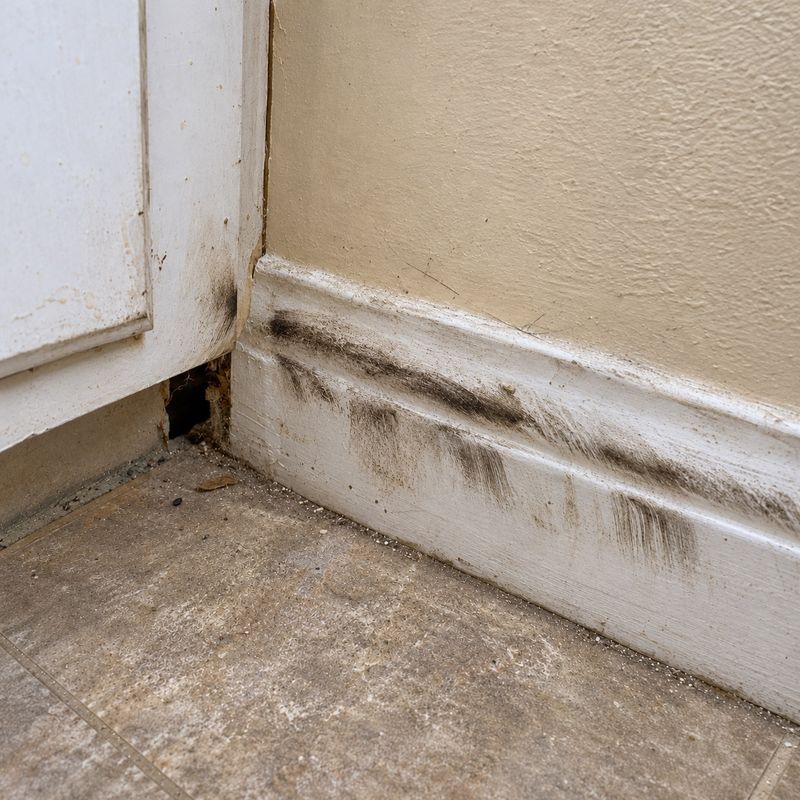
Rub marks work like a secret road map that rats draw for you using their own greasy fur. Body oils and dirt rub off each time they squeeze past the same beam or wall edge.
Rats are creatures of habit, so they follow identical routes between their nest and their food night after night.
Over weeks, those trips leave dark smudges that stand out clearly against pale wood and fresh drywall.
Fresh rub marks feel slightly soft and may smear under your fingertip, while old ones look dusty and flaky. Darker, thicker smudges usually mean a busy highway that many rats have used for quite a while.
I truly believe a good flashlight is the best tool here, especially when aimed low along the rafters. Shine the beam across beams at a sharp angle, and the shiny stains suddenly pop into view.
Look closely around holes and spots where pipes enter the attic, since rats squeeze through those openings.
Roof rats sometimes leave curved swing marks beneath beams where they hang and pivot to the next surface.
A fun trick for confirming activity involves dusting a thin layer of flour along a suspected route. Check the next morning for tiny footprints or a thin line where a tail dragged through the powder.
Mapping these trails helps pest professionals place traps exactly where rats travel instead of guessing blindly. It also shows which entry points deserve sealing first, so your repair work hits the right spots.
5. A Musky Ammonia Smell Drifting From The Attic
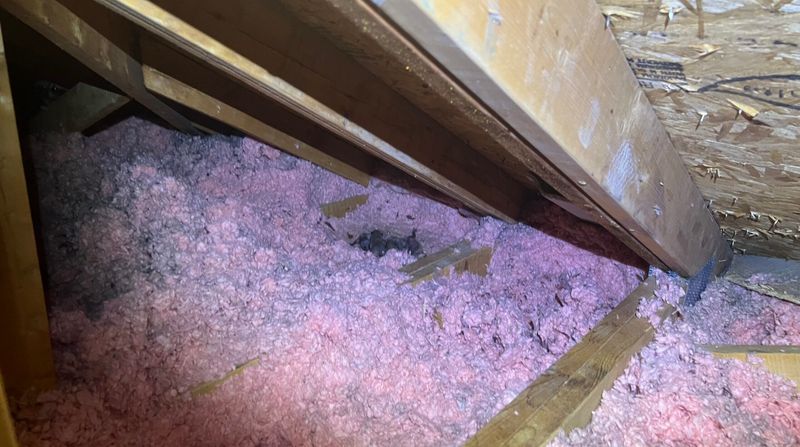
Your nose might catch the problem before your eyes do, especially on a warm afternoon in a closed attic. Rat urine gives off a sharp, ammonia-like odor, and droppings add a stale, musky smell that lingers.
Heat makes everything stronger, which is why many homeowners notice the stink most during the summer months.
In much of Texas, attic temperatures can soar well above outdoor readings, baking that odor into insulation.
Some of that smell can drift downstairs through ceiling gaps and leaky ductwork near the air handler. If a closet or hallway smells oddly musty, the source could be directly above your head.
A sudden sweet, rotten odor deserves attention too, because it can signal a rodent carcass hidden in a wall. That smell usually fades over a few weeks, but removing the source speeds things up considerably.
I can’t imagine relaxing on the couch while that scent hangs in the air every single evening. Opening attic vents helps a little, yet airing out the space will not fix the actual infestation.
Humid stretches along the Gulf Coast can make urine-soaked insulation stay damp, which may encourage mold growth.
Wearing a well-fitted N95 mask during inspections offers your lungs some extra protection from dust and particles.
After rats are removed, professionals often replace soiled insulation and sanitize surfaces to clear lingering odors. That step can feel pricey, but a fresh-smelling attic makes the whole house feel more comfortable.
6. Shredded Insulation Nests In Attic Corners
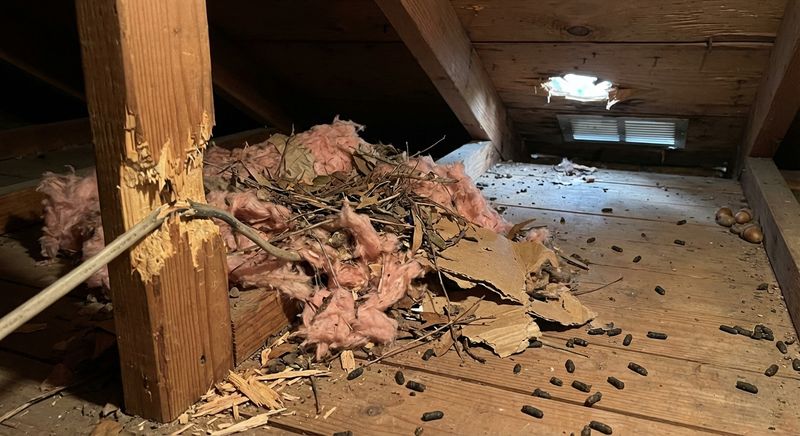
Roof rats are surprisingly fussy home decorators, tearing up soft materials until they have a cozy, hidden bedroom.
Attic insulation is their favorite fluff, though shredded paper and fabric scraps often end up mixed in too.
Most nests sit in quiet corners or tucked deep inside loose insulation near the eaves, away from foot traffic.
You might notice flattened tunnels running through the insulation, almost like tiny hallways connecting different rooms.
Breeding happens fast, since a female roof rat can raise several litters each year with five to eight pups. Those young rats can start families of their own in roughly three to five months after birth.
Damaged insulation also creates a hidden expense, because packed or missing patches let summer heat pour into rooms below.
Your cooling system then runs longer, which slowly nudges your monthly electric bill upward without much warning.
To my surprise, rat nests can look a lot like squirrel nests, so location and materials help tell them apart. Squirrels often build bulkier leaf nests and stay active in daylight, while rat nests tend to be smaller and messier.
Freshly fluffed material with new droppings scattered nearby strongly suggests the nest is still being used. Older nests covered in dust and cobwebs may be abandoned, though a professional can confirm that for you.
Avoid grabbing nests with bare hands, since they often hold urine and fleas hidden among the bedding. Gloves and a mask make removal much safer once the rats themselves have been cleared from the attic.
7. Roof Rats Running Along Fences And Tree Limbs
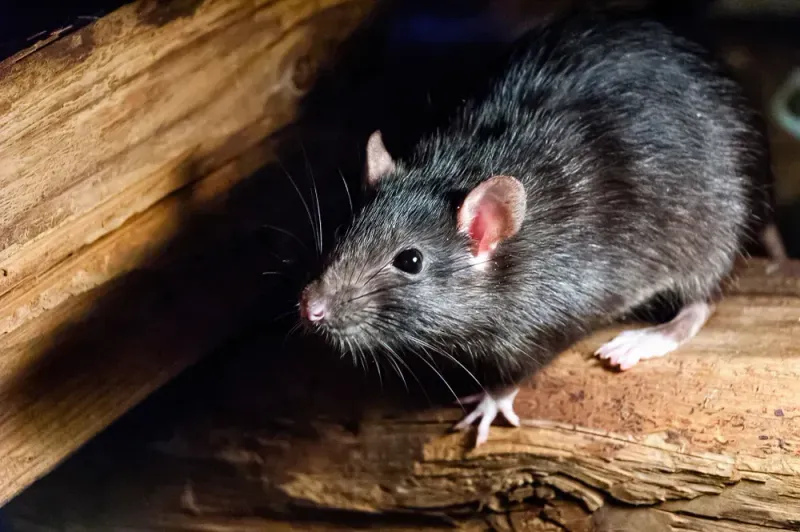
Roof rats are such skilled acrobats that they can scurry along power lines like tiny tightrope walkers at dusk. Spotting one dashing across a fence top or tree limb near your house is a strong hint about attic visitors.
Overhanging branches act like bridges straight to the roof, giving these climbers easy access to gaps along the eaves. Pest experts commonly suggest trimming limbs several feet away from rooftops to cut off that easy route.
Seeing a rat inside during daylight is a bigger red flag, since these animals prefer moving around after dark. Daytime sightings can mean crowded living conditions upstairs, forcing some rats to search for food at odd hours.
Your backyard can also send invitations without you realizing it, especially through fallen fruit and spilled bird seed. Citrus and pecan trees are popular in many Texas yards, and roof rats happily snack on both.
I love my bird feeders, but I now sweep up scattered seed every evening before the sun goes down. Storing pet food in sealed metal or thick plastic containers also removes an easy snack from the menu.
Pets often notice rats first, so a dog barking at the ceiling for no clear reason deserves a second look. Many homeowners say their cats sit beneath one spot for hours, tail twitching, staring at nothing obvious.
Once you confirm rats, setting snap traps in the attic usually works better than scattering poison bait. Bait can leave rodents decaying inside walls and may harm owls or pets, so trapping offers more control.