Sacred Datura in Arizona: A Beautiful Native Plant That Deserves Careful Placement
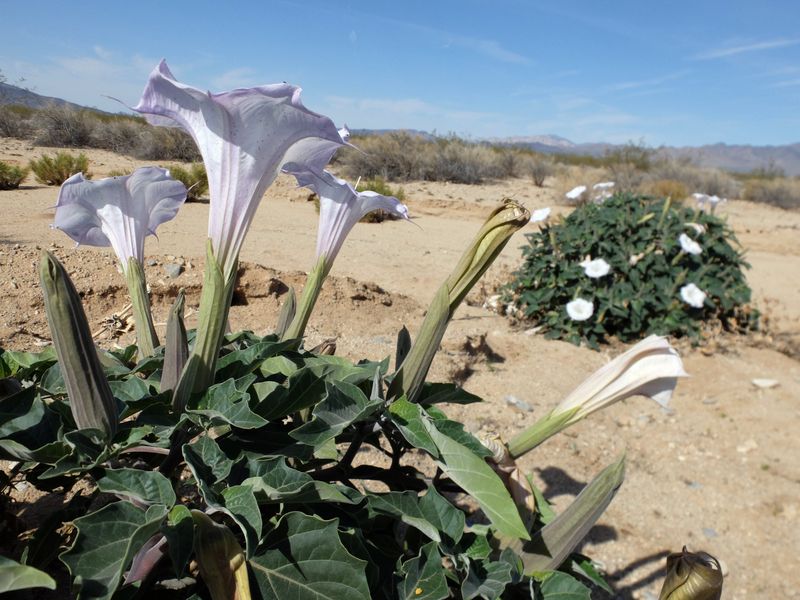
Some Arizona flowers wait until the sun gets low before they unfold. Sacred datura is one of them, and its big white blooms look almost lit from within at dusk.
It is also a poisonous plant, so a smart gardener learns a few simple habits first. Here is how to recognize it, enjoy it, and keep everyone safe.
Recognize Sacred Datura in Arizona
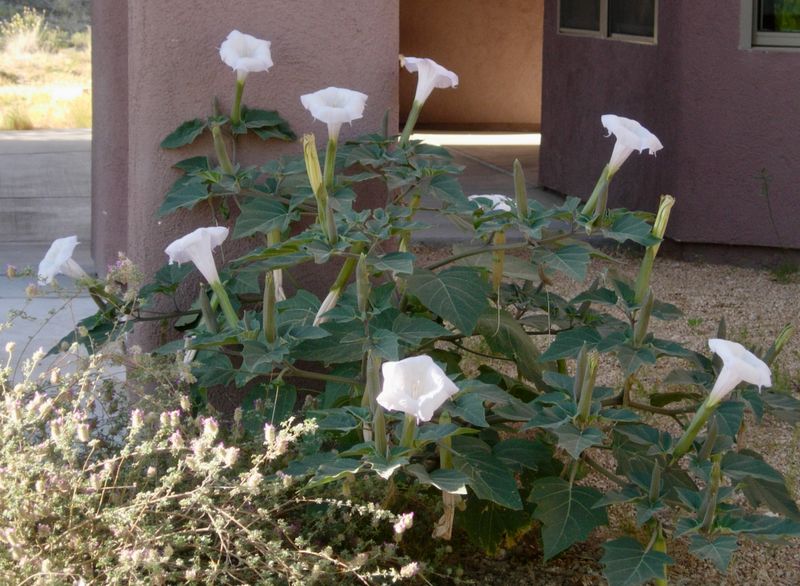
Botanists call this plant Datura wrightii, and that scientific name is your best clue. Common names like Jimson weed get used for different plants, so a nickname alone should not settle an identification.
Even a Utah poison control plant guide lists that nickname for this species.
Look for sprawling, gray-green foliage with a soft, velvety feel. The big white trumpet flowers open late in the day, and the round seed capsules are covered in spines.
Those capsules are an easy way to spot it once the blooms have closed.
It is a native perennial across Arizona, and you will often see it in sandy, well-drained washes, along roadsides, and in disturbed ground. University of Arizona Extension describes plants commonly reaching 2 to 3 feet tall and spreading 6 to 8 feet.
Size and flower dimensions can vary from plant to plant, so treat those numbers as a rough guide.
Evening Flowers Serve Sphinx Moths
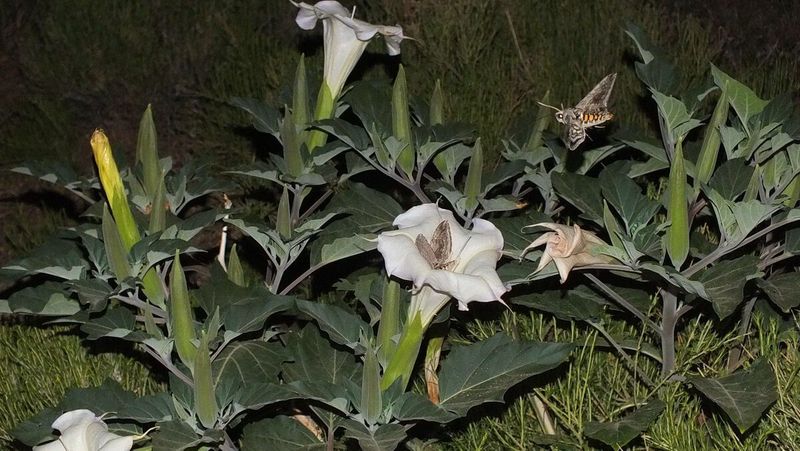
If you have never sat near a datura at dusk, you are missing a small show. The flowers open in the evening, and that timing matches the schedule of sphinx moths, also called hawk moths.
These moths visit to sip nectar, and in the process they pollinate the blooms.
The University of Arizona Arboretum describes this moth relationship in its profile of the plant. Extension guidance also notes that the flowers are pollinated by these moths.
That is a specific, well-documented benefit, so keep your expectations specific too. This plant is not known to repel pests, and it will not draw every pollinator in the neighborhood.
Plant it where you can sit outside after sunset, and you may catch a moth hovering at a bloom.
Treat Every Plant Part as Poisonous
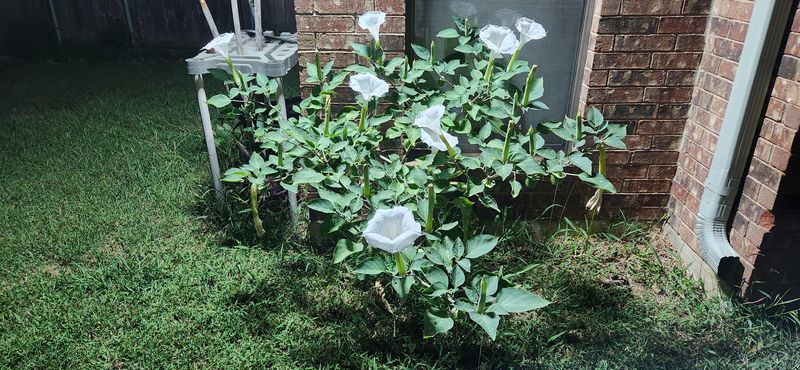
Here is the key fact: all parts of sacred datura are poisonous, including the seeds. University of Arizona Extension warns about this directly.
The Arizona Native Plant Society adds that the plant contains toxic alkaloids.
The concern is eating the plant. Leaves, flowers, seeds, and capsules should never be tasted, brewed into tea, or played with as a curiosity.
Seeds deserve extra respect because they are small and easy to pick up.
Standing near the plant, or brushing past intact foliage, is not the same as ingesting it. You do not need to fear a flower bed.
You simply need to keep plant material out of mouths, and out of the hands of anyone who might put it there.
Choose a Site That Reduces Ingestion Risk
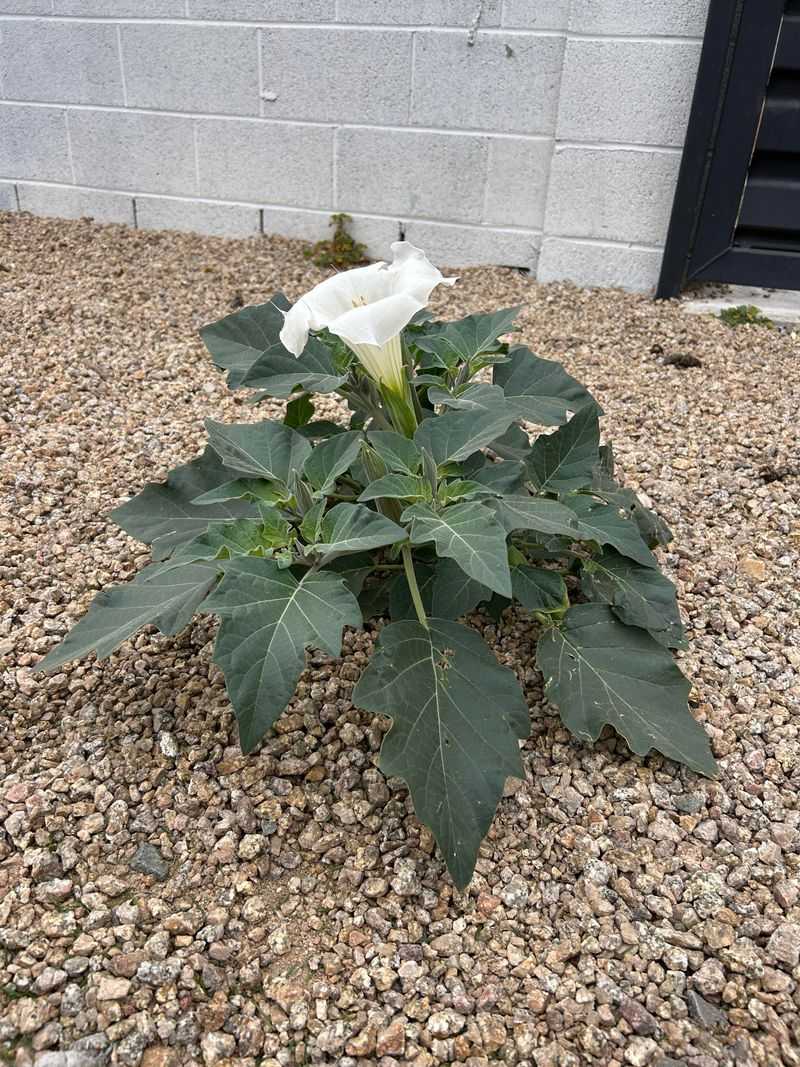
Before you plant, picture who uses your yard. Curious toddlers and chewing puppies are the main reason to think twice about location.
Consider whether they could reach leaves, flowers, or seed capsules, and if so, pick another spot or another plant.
A back corner, away from play areas and pet paths, makes more sense than a sidewalk edge. A fence or a raised position can add distance.
Still, placement lowers risk without erasing it, so stay watchful.
When you prune or clear spent capsules, gloves are a sensible precaution. They are not proof that brief contact causes poisoning.
University of Arizona Extension recommends washing your hands after handling plant parts or seeds.
The Arizona Native Plant Society also advises caution where children or pets could eat plant parts.
Allow Room and Water With Care
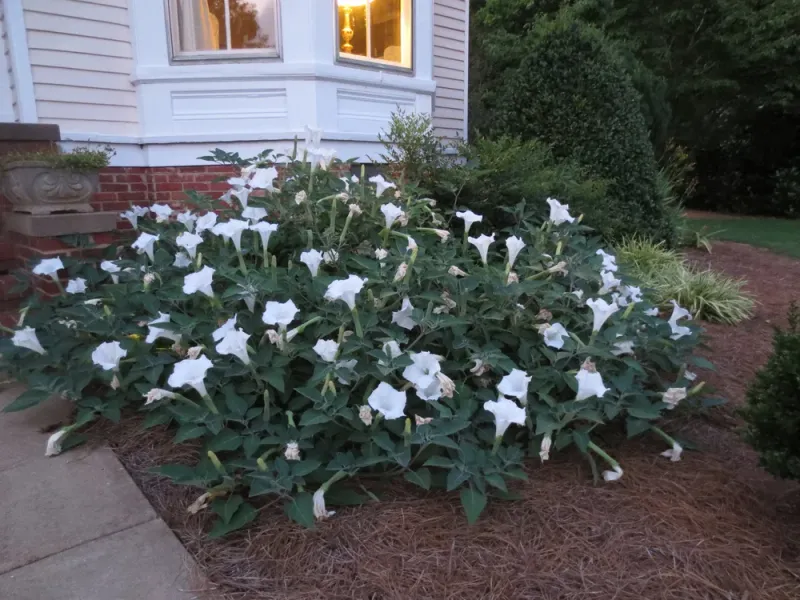
Sacred datura does not stay tidy. It sprawls, and plants can spread 6 to 8 feet across, so give it generous space.
Crowding it next to a walkway will mean constant trimming.
Watering is where many of us overdo it. University of Arizona Extension recommends intermittent watering during the first year while the plant establishes.
After that, it may manage on native rainfall.
Extra irrigation can adversely affect its form and flowering, so more water is not better. Arizona ranges from low desert to high country, and rainfall and conditions differ across the state.
Watch your own plant and your local weather before setting a routine.
The plant naturally favors sandy, well-drained soil, so avoid spots where water pools. In early fall, a quick look at how it is holding up tells you more than a fixed schedule.
Respond Promptly to a Suspected Exposure

If you think someone, or a pet, ate part of this plant, act quickly and stay calm. In the United States, call Poison Control at 1-800-222-1222 for advice that fits the situation.
Poison Control’s help page explains how to reach them.
Call 911 right away if the person collapses, has a seizure, has trouble breathing, or cannot be woken. Do not wait for a callback in those cases.
Do not try to make the person vomit. Instead, keep any leftover plant pieces or a clear photo of the plant to help the experts identify it.
Leave diagnosis and treatment to the professionals.
A plant can be both lovely and risky, and a little planning keeps the lovely part front and center.