Why Cholla Cactus Can Be Difficult To Remove Safely In Arizona
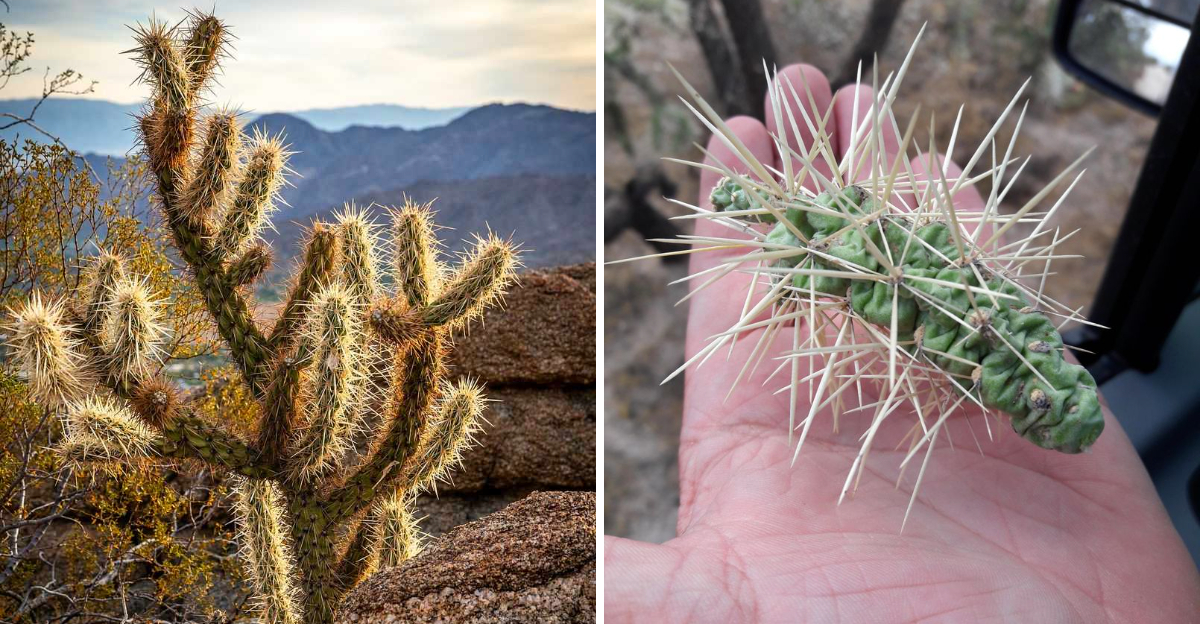
Cholla cactus removal is one of those Arizona yard projects that sounds completely straightforward until about thirty seconds in when a spiny segment has attached itself to your hand and you’re standing there wondering how things escalated so quickly.
If you’ve never had a close encounter with a jumping cholla, the name feels dramatic.
If you have, you understand completely. These cacti are genuinely remarkable at what they do, and what they do is attach themselves to absolutely everything within range using barbed spines that are almost invisible until they’re already in your skin.
And the fun doesn’t stop when the main plant comes down. Fallen joints, scattered fragments, and leftover debris hiding in the gravel can keep things interesting for a long time afterward.
Approaching cholla removal in Arizona without the right preparation is a decision most people only make once.
1. Barbed Spines Can Attach Easily To Skin And Clothing
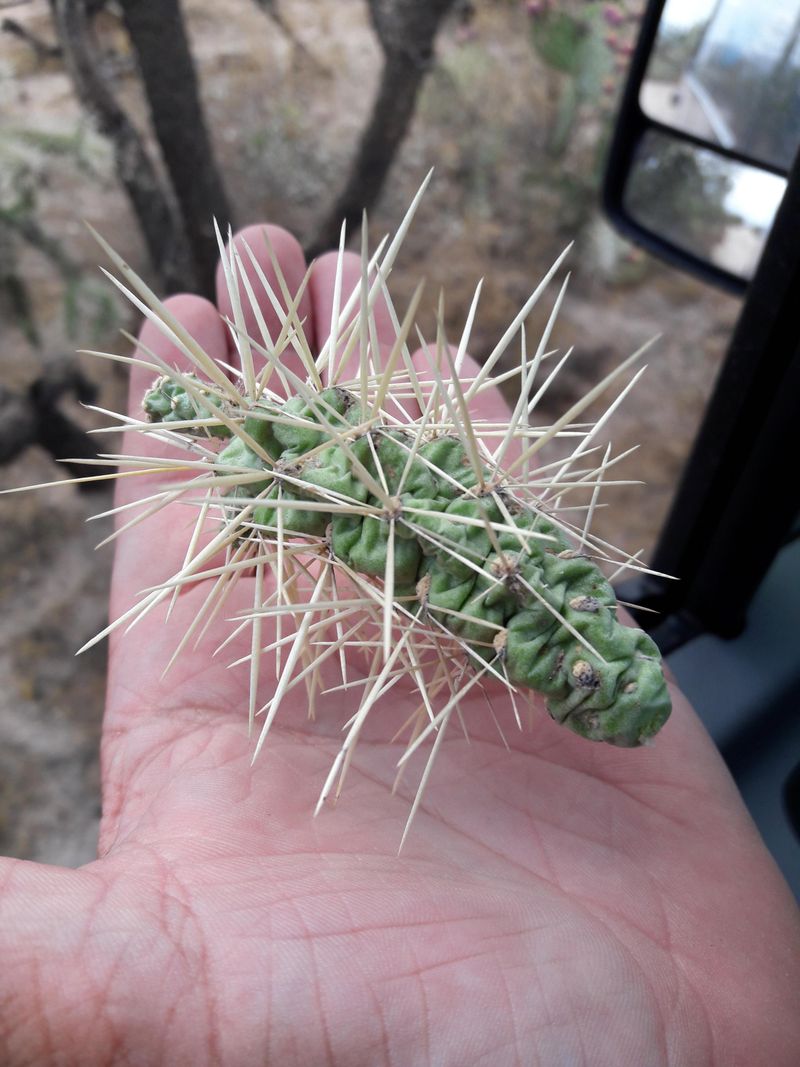
Gravel yards across Arizona are full of surprises, and cholla cactus spines rank among the most unpleasant ones a homeowner can encounter. Unlike smooth cactus spines that simply poke, cholla spines have tiny backward-facing barbs along their length.
Those barbs act almost like fishhooks, grabbing onto fabric, skin, or fur the moment contact is made.
What makes this especially tricky during removal is that you do not need to squeeze or press hard against a cholla for the spines to attach. Even a light brush against a stem can be enough for multiple spines to hook in at once.
Pulling away from the plant often drives the barbs deeper rather than releasing them.
Thick leather gloves offer better protection than standard garden gloves, but even leather can be penetrated by a long, determined cholla spine.
Long sleeves and pants made from sturdy fabric are worth wearing before attempting any cholla work in an Arizona landscape.
Exposed ankles, bare arms, and loose clothing can all become unintended targets.
Removing embedded spines from skin usually requires two sticks or a comb to flick the segment away without touching it directly. Using fingers to pull at an attached segment tends to transfer the spines from one surface to another, making the situation worse.
Taking a slow, deliberate approach rather than a quick grab is genuinely the smarter move when dealing with cholla.
2. Tiny Glochids Can Be Hard To See And Remove
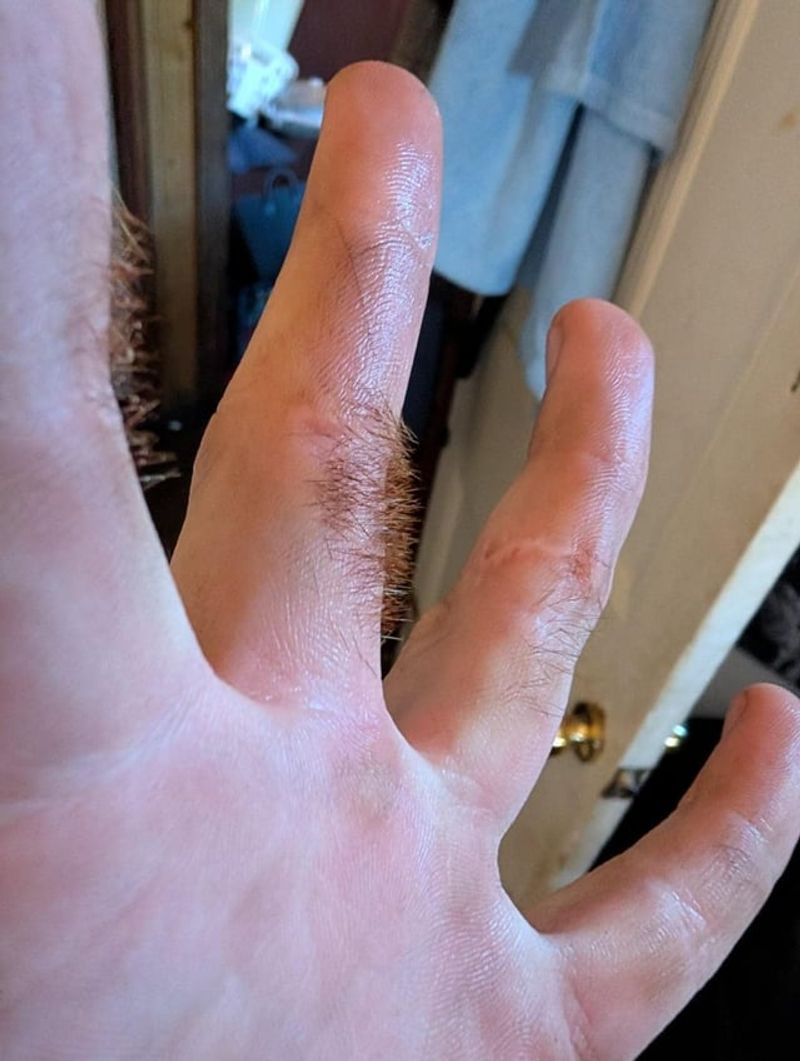
Beyond the obvious long spines, cholla cactus also produces glochids, which are tiny hair-like bristles that cluster near the base of the larger spines.
Glochids are so small they can be nearly impossible to spot with the naked eye, especially outdoors in bright Arizona sunlight where everything seems to blur together.
The frustrating part about glochids is that they detach from the plant very easily and embed themselves in soft skin almost immediately. Once they are in, they tend to work deeper with movement rather than coming out on their own.
A patch of glochids lodged in a fingertip can cause persistent irritation for hours or even days if not removed carefully.
Your Arizona Garden Changes Every Week. Your Plan Should Too.
Gardening in Arizona changes quickly throughout the season. Every Friday you’ll receive a simple weekly plan showing exactly what to plant, prune, fertilize, harvest, and protect so you never miss the right timing.
Tweezers help, but they can be difficult to use on glochids because the bristles are so fine. Some people find that applying a layer of rubber cement or strong tape over the affected area and letting it dry before peeling it away can help lift glochids out.
Medical tape pressed firmly onto the skin and then pulled back quickly is another method some homeowners try with mixed results.
The real challenge during cholla removal is that glochids can become airborne or scatter into surrounding gravel and soil without anyone noticing.
Wearing safety glasses during removal is a reasonable precaution since glochids near the face area can be particularly uncomfortable.
Glochids are one reason why cholla cleanup in Arizona deserves more attention than a quick once-over suggests.
3. Stem Segments May Break Off During Handling
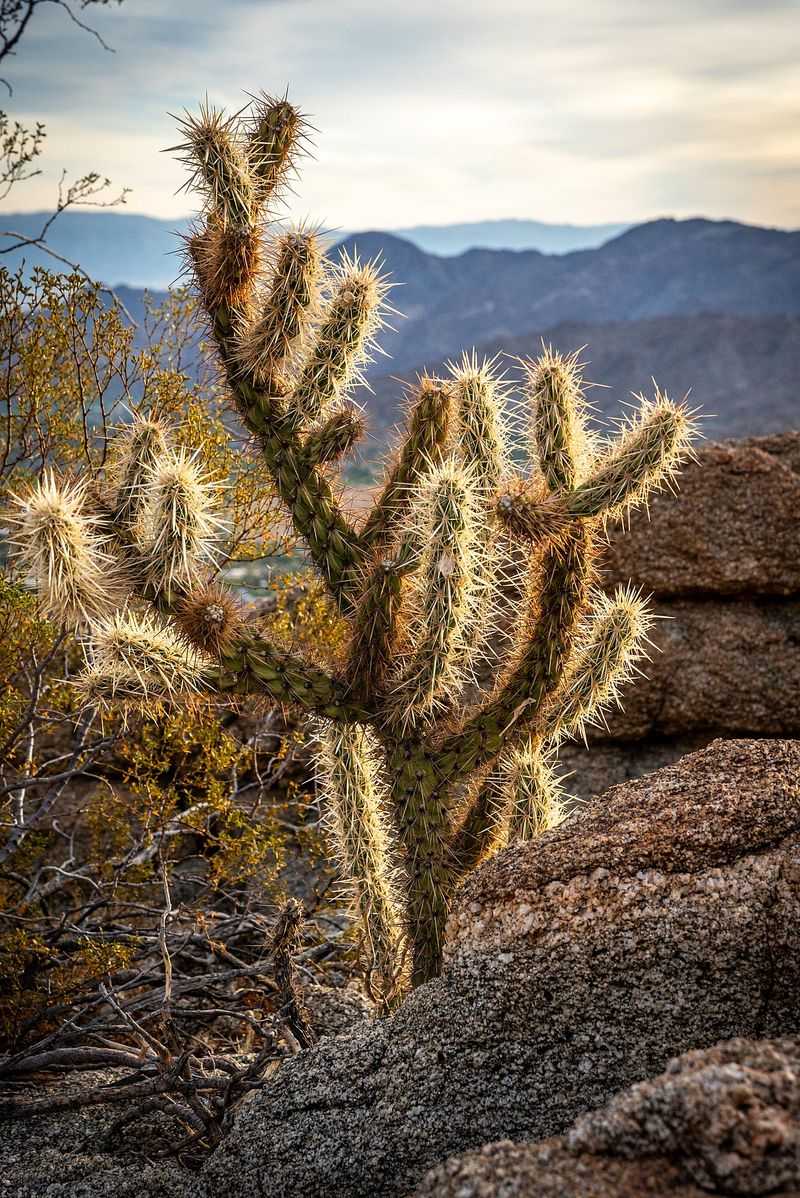
One of the most well-known features of cholla cactus is its ability to release stem segments with very little encouragement.
Many Arizona residents have walked past a cholla and noticed a segment dangling from their pant leg without any memory of brushing against the plant.
The segments are designed by nature to detach and hitch rides on animals, spreading the plant to new locations.
During removal, this tendency becomes a real problem. Cutting or pulling at one part of a cholla can cause multiple segments to drop or fly in unexpected directions.
A segment that lands on a nearby shoe, glove, or tool becomes an instant hazard that needs to be dealt with before the work continues.
Working slowly and deliberately helps reduce the chances of triggering a cascade of falling segments. Using long-handled tools like cactus tongs or thick-gripped grabbers keeps hands farther from the action and gives more control over where cut pieces land.
Placing a tarp or thick cardboard on the ground nearby can make collecting fallen segments easier and safer.
Even after the main plant has been cut down, loose segments scattered around the base can be hard to spot against Arizona’s gravel and rock ground cover.
Stepping on a hidden segment or kneeling near one without noticing can result in a very uncomfortable experience.
Taking time to scan the area carefully after each cut is a habit that makes cholla removal noticeably safer in any Arizona yard.
4. Fallen Pieces Can Create New Contact Hazards
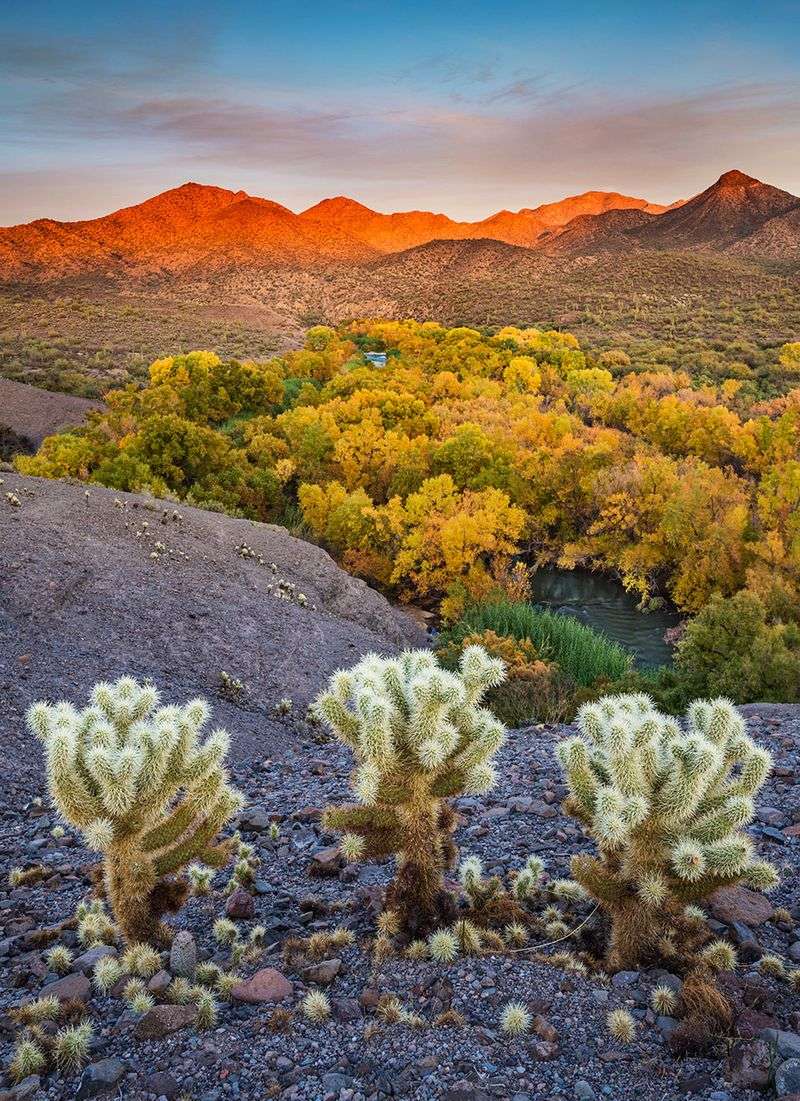
After working on a cholla cactus in an Arizona backyard, the ground around the plant often looks completely different from when you started.
Fallen stem joints, cut sections, and loose spiny debris can spread across gravel, mulch, and walkways during the removal process, sometimes covering a wider area than expected.
Pets are especially vulnerable to leftover cactus debris. Dogs and cats that roam near patio edges or gravel beds can step on or sniff at fallen cholla pieces without any warning.
A segment stuck in a paw or on a nose requires careful removal, and the experience is stressful for both the animal and the owner.
Children playing in the yard face a similar risk. A small cholla joint resting in gravel near a walkway can be nearly invisible from standing height.
Even adults who have finished working on the plant and removed their gloves can accidentally contact leftover debris while cleaning up the area.
Collecting fallen pieces as you go rather than waiting until the end of the job reduces the spread of debris significantly.
Using a pair of long-handled tongs to pick up segments one by one and dropping them directly into a thick plastic bag or bucket keeps them from scattering further.
Doing a final slow walkthrough of the work area before removing protective gear is a practical habit that helps ensure the yard is clear before anyone else enters the space in your Arizona home landscape.
5. Dense Branching Can Make Safe Access Difficult
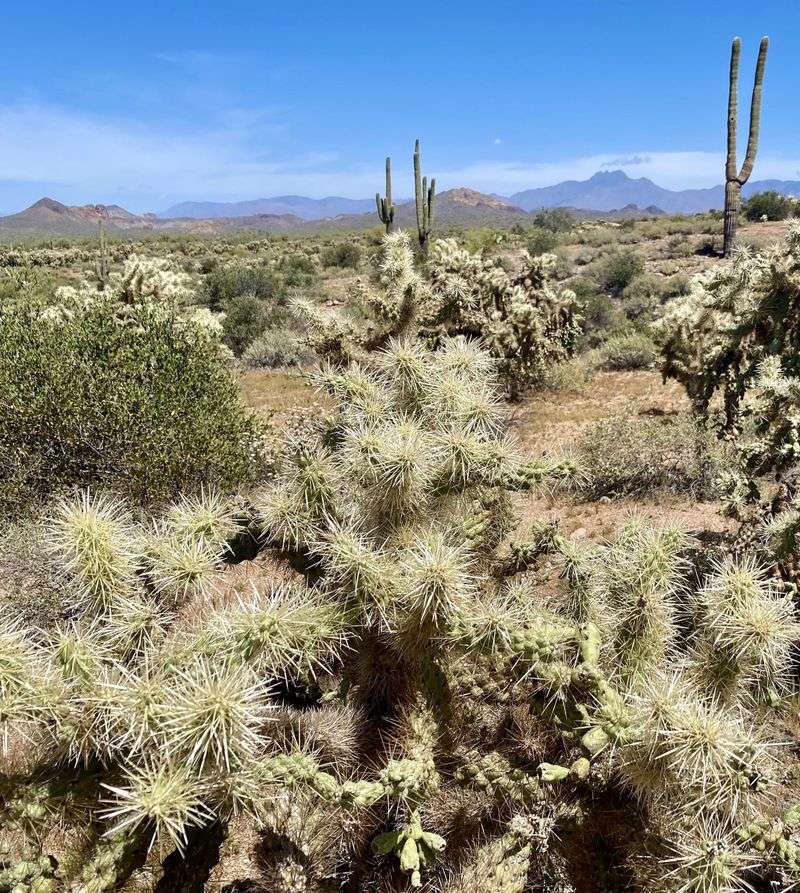
Walking up to a mature cholla cactus in an Arizona side yard can feel a bit like approaching a puzzle with no clear entry point.
The branching pattern of many cholla varieties creates a layered, outward-reaching structure that makes it hard to get close enough to work without putting arms or legs within spine range.
Narrow side paths between a fence and a cholla plant leave very little room to maneuver. Reaching in to cut a branch from one angle can put the other arm or shoulder dangerously close to a different part of the cactus.
Working in tight spaces with a large cholla requires more planning than working in an open area of the yard.
Tall, heavily branched chollas present another challenge because upper segments can fall straight down when cut. A segment dropping from several feet above can land on a hand, arm, or foot before there is time to step back.
Watching for falling pieces while also managing the tool and your footing is a lot to track at once.
Trimming outer branches first to create more working space before tackling the core of the plant is a method that some experienced Arizona cactus handlers recommend.
This step-by-step approach reduces how much of the plant is active at one time and gives better visibility of what is happening near the cuts.
Rushing through dense cholla branching rarely goes smoothly and tends to result in more contact than a slower, methodical approach.
6. Removal May Involve Native Plant Law Rules
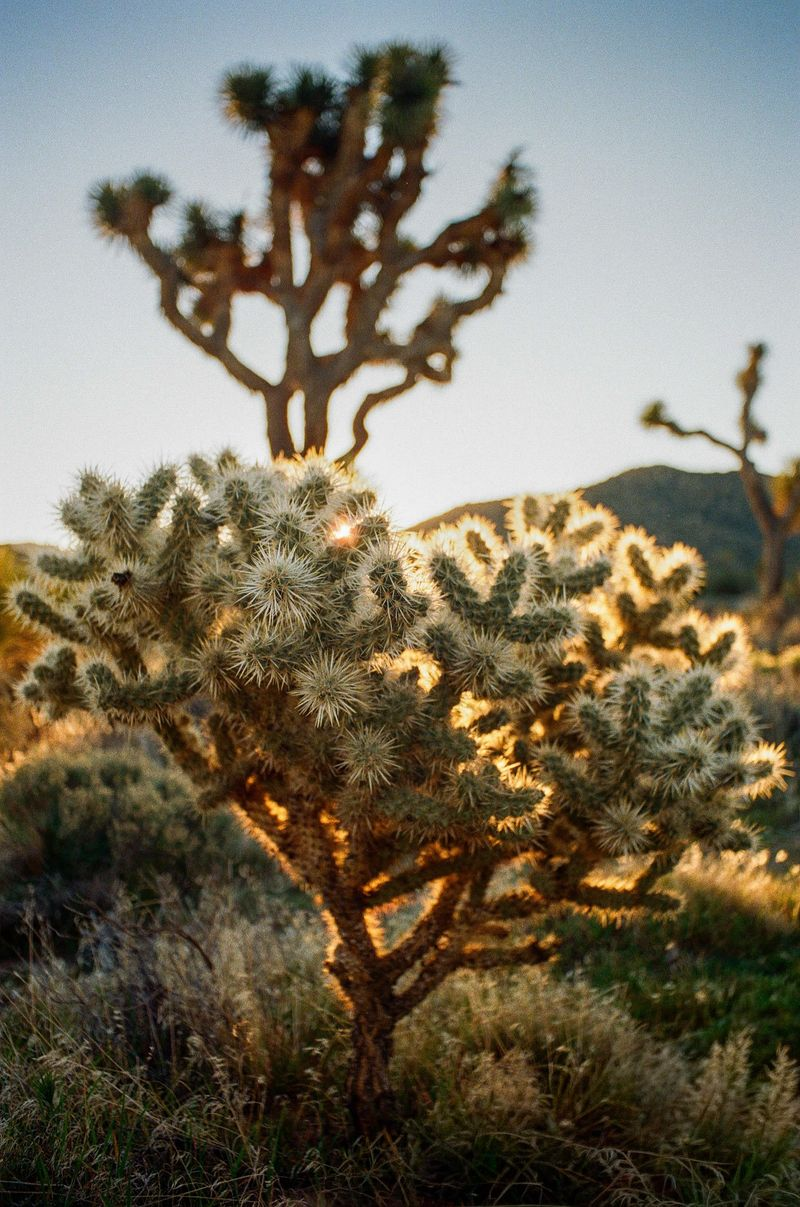
Not every cholla cactus growing in an Arizona yard is a planted ornamental.
Some properties have native chollas that established themselves naturally over time, and those plants may fall under Arizona’s native plant protection guidelines depending on the situation.
Understanding whether a plant is protected before removing it is a step that is easy to overlook.
Arizona has native plant laws that regulate the removal, transport, and salvage of certain protected desert plants. The rules can vary depending on whether the property is in a city, county, or unincorporated area, and whether the plant in question is a protected species.
Homeowners who remove a protected native cactus without following the proper process could face consequences they were not expecting.
Checking with the Arizona Department of Agriculture or your local municipality before removing a cholla that appears to be growing naturally is a reasonable first step.
Some cities also have their own landscape and vegetation ordinances that add another layer of guidance on top of state rules.
A quick phone call or visit to an official website can clarify what applies to your specific property.
If a cholla needs to be removed because it poses a safety concern near a walkway, driveway, or play area, documenting the reason and checking local rules ahead of time puts the homeowner in a much better position.
Native plant considerations are a real part of the cholla removal conversation, and being informed before starting the project is always the smarter path forward.
7. Protective Gear And Tools Are Usually Needed
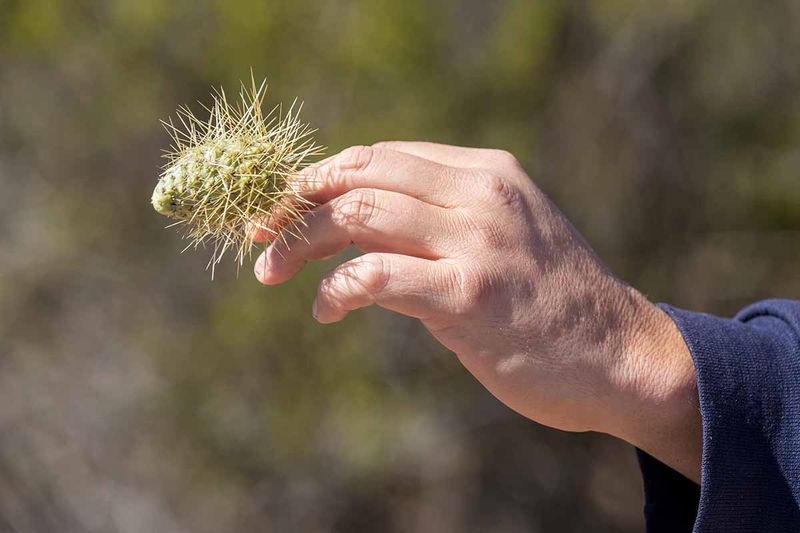
Heavy-duty leather gloves, long sleeves, long pants, and closed-toe boots form the basic foundation of safe cholla handling in an Arizona yard.
Standard garden gloves made from thin cotton or lightweight material offer very little protection against cholla spines, and finding that out mid-removal is not a pleasant experience.
Long-handled cactus tongs are one of the most useful tools for picking up cut segments and fallen joints without getting hands close to the spines. They provide enough distance to handle pieces safely while still giving reasonable control over where the segment goes.
Some hardware stores and garden centers carry cactus-specific tools, and they are worth having before starting any removal project.
Safety glasses are easy to forget but genuinely useful when working near cholla. Spines and glochids can flick toward the face during cutting, especially when using loppers or pruning shears on a branch under tension.
A spine near the eye is a situation that no amount of preparation feels like too much for.
Thick plastic bags or a sturdy container with a lid make disposal safer because they prevent spines from poking through and creating a hazard during transport to the trash.
Some Arizona waste management programs have specific guidance on cactus disposal, so checking local rules before tossing bags into the bin is worthwhile.
Having all gear ready before starting rather than gathering it mid-project keeps the process smoother and reduces the chance of unnecessary contact with the plant.
8. Large Or Awkward Plants May Need Professional Help
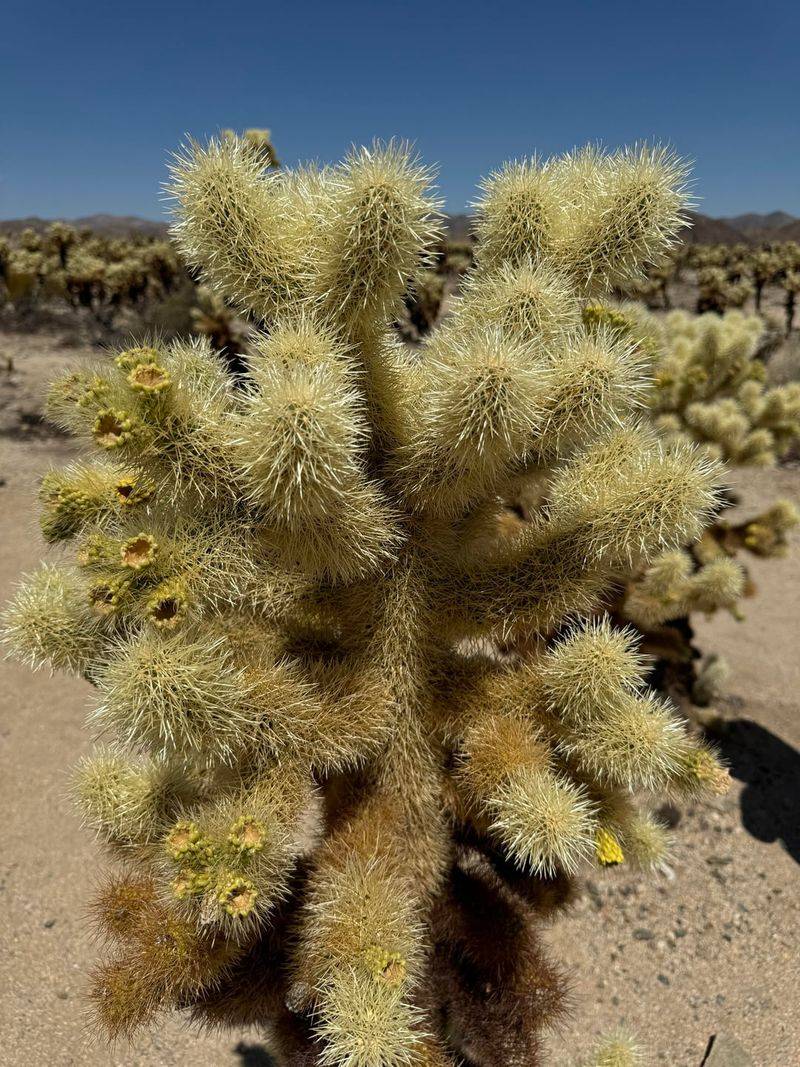
Some cholla cacti in Arizona yards have been growing for a long time and have reached a size that makes solo removal genuinely difficult.
A tall, wide, heavily branched cholla with dozens of spiny segments in every direction is a very different project from removing a small, young plant near a patio edge.
Recognizing that difference before starting is important.
Root systems on established cholla plants can extend further than the above-ground spread suggests.
Digging out the root zone without disturbing surrounding gravel, irrigation lines, or nearby plants adds complexity to what might have seemed like a simple job.
In some Arizona yards, large chollas grow close to fencing, structures, or utility lines, which further limits the safe working space available.
Professional cactus removal services are familiar with the specific challenges that cholla plants present. They bring the right tools, protective gear, and experience to handle large or awkwardly placed plants efficiently and with less risk of injury or property damage.
Some also offer cleanup and disposal services that cover the full scope of the project.
Knowing when a plant is beyond comfortable DIY territory is not a sign of inexperience. It is a practical judgment call that protects both the homeowner and anyone else who uses the yard.
If a cholla is near a frequently used walkway, close to a structure, or simply too large to manage comfortably with basic gear, reaching out to a qualified Arizona cactus removal professional is a reasonable and sensible option worth considering.