Plant These 8 Berry Bushes and Vines in Arizona Before Bare-Root Season Ends
Wild grapes scramble over boulders in Arizona canyons, and the birds often strip the vines before hikers even notice. I learned that lesson the hard way, arriving at a shady creek with a bucket and finding bare stems.
Desert fruit runs on a sneaky schedule that rarely matches the calendar in most national gardening books. Local nurseries usually stock bare-root canes and vines in winter, and the best varieties tend to vanish quickly.
Personally, I love how a few fruiting shrubs turn a dusty yard into a busy buffet for quail and songbirds. You also get sweet snacks to pick in slippers, while hungry lizards hunt insects under the leaves.
October is the smart month to prepare beds and choose favorites before those winter shipments arrive at the nursery. So which tough berry plants truly deserve a sunny spot in your Arizona yard this coming year?
1. Thornless Blackberry
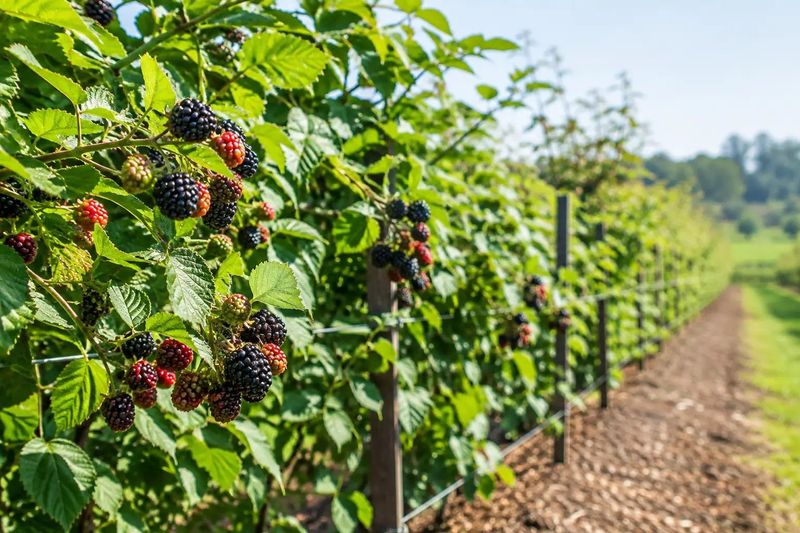
Picking blackberries without scratched arms feels like cheating, and I happily accept that small victory every spring. Thornless types such as Arapaho and Navaho are popular desert choices because they handle heat better than many old-fashioned bramble varieties.
Bare-root canes usually show up at nurseries in January or February, so October is your window to plan the bed. Choose a spot with morning sun and some afternoon shade, since harsh late-day rays can scorch both leaves and ripening fruit.
Work plenty of compost into the native soil, because blackberries prefer looser ground with decent drainage and organic matter. A thick layer of wood mulch keeps roots cooler and helps each drip cycle stretch further during blistering summer weeks.
In the low desert, berries often ripen in late spring, well before the most punishing heat settles over the valley. Canes that fruit one year are removed after harvest, which makes room for fresh canes that carry next season’s crop.
You might notice mockingbirds watching your trellis as closely as you do once the first berries darken. A light netting draped over the rows saves most of the harvest while still letting bees reach the white spring blossoms.
2. Desert Wolfberry
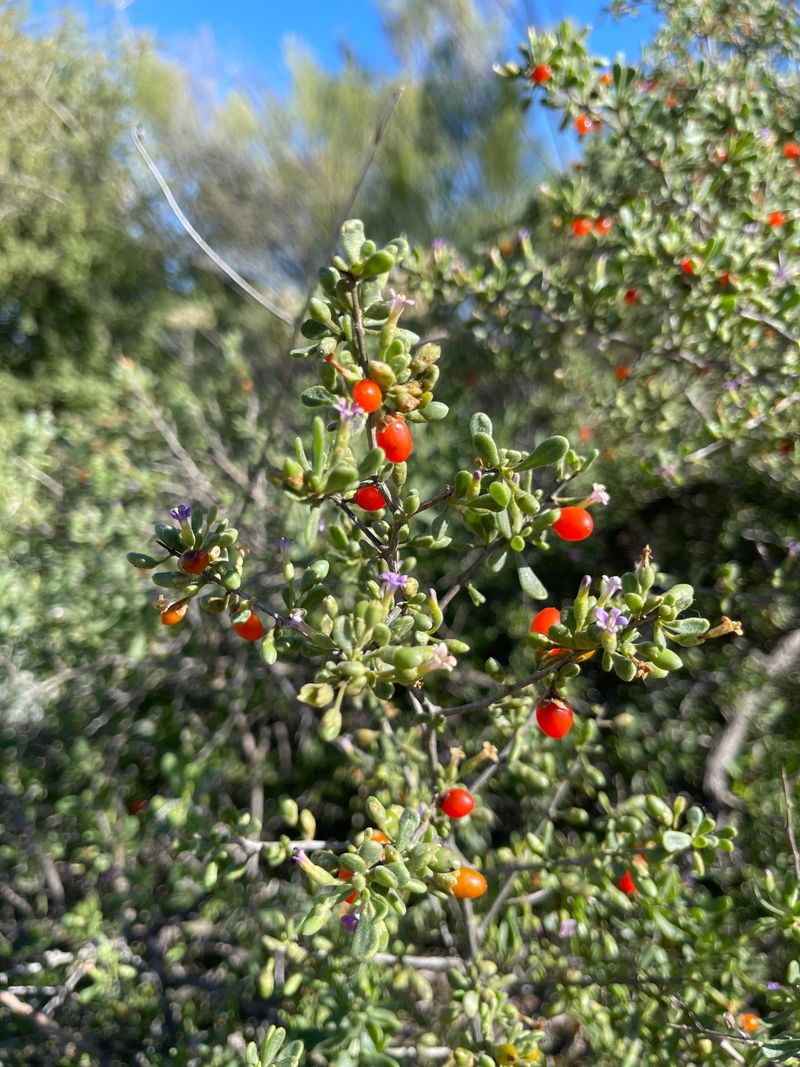
Quail practically line up beneath a fruiting wolfberry, and watching a covey work the ground underneath is pure entertainment. Fremont wolfberry, Lycium fremontii, is a native Sonoran Desert shrub with small red berries that resemble tiny goji fruit.
Unlike the fussier plants on this list, wolfberry thrives in full sun and even tolerates reflected heat from walls. Once established, it needs very little supplemental water, and an occasional deep soak in summer keeps the foliage looking greener.
Pale purple flowers appear from late winter into spring, offering early nectar for native bees and visiting hummingbirds. The bright berries usually follow in spring, and a second flush can appear after summer rains in some years.
Thorny branches create dense shelter where songbirds nest and lizards escape from predators during the day. I like to tuck one along a back fence, where those prickly stems also discourage people from cutting through the yard.
Wolfberry naturally drops leaves during heat or drought, then pushes fresh growth soon after a good rain. Wear sturdy gloves for pruning, and plant container shrubs this fall so roots settle in before the next hot season.
3. Canyon Grape
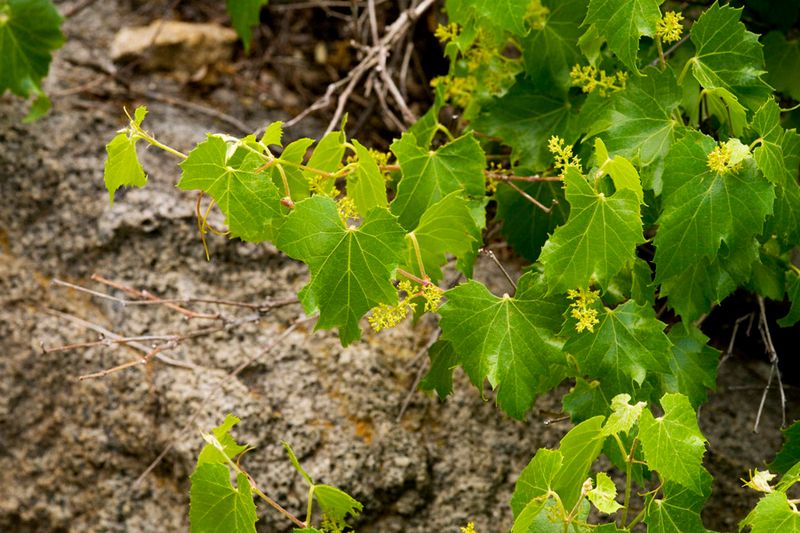
Hikers who stumble across canyon grape along a creek are often surprised to find fruit growing wild in the desert. Vitis arizonica is a native woody vine found at roughly 2,000 to 7,500 feet across the Southwest.
Vines can sprawl about twenty feet, clambering over rocks, fences, and neighboring shrubs with cheerful determination. The heart-shaped leaves carry several lobes with toothy edges, giving a lush look that feels refreshing beside gravel and cactus.
Small dark grapes usually ripen from late summer into fall, and they taste tart but pleasant to many people. Birds and small mammals adore them, so expect plenty of feathered competition once the clusters begin to color up.
Canyon grape prefers well-drained soil with steady moisture, though established vines can ride out short dry spells. Full sun works in cooler elevations, while low desert gardeners should offer some afternoon shade near a wall or larger tree.
Prune during winter dormancy, because cutting actively growing vines can cause heavy sap bleeding from the wounds. I have to admit a shaded arbor covered in native grape leaves makes a wonderful summer retreat for both people and wildlife.
4. Mexican Elderberry
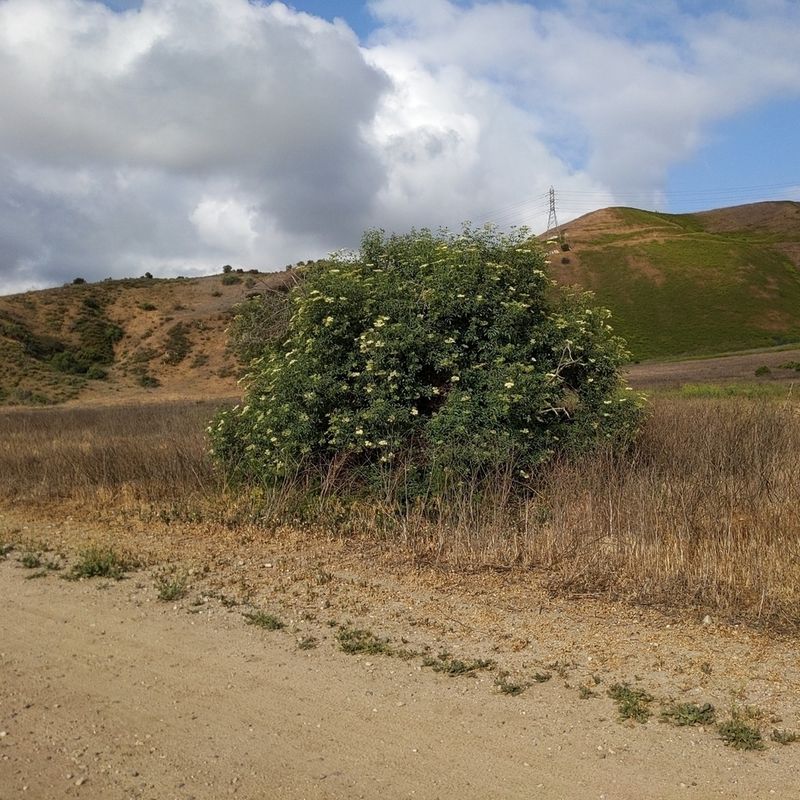
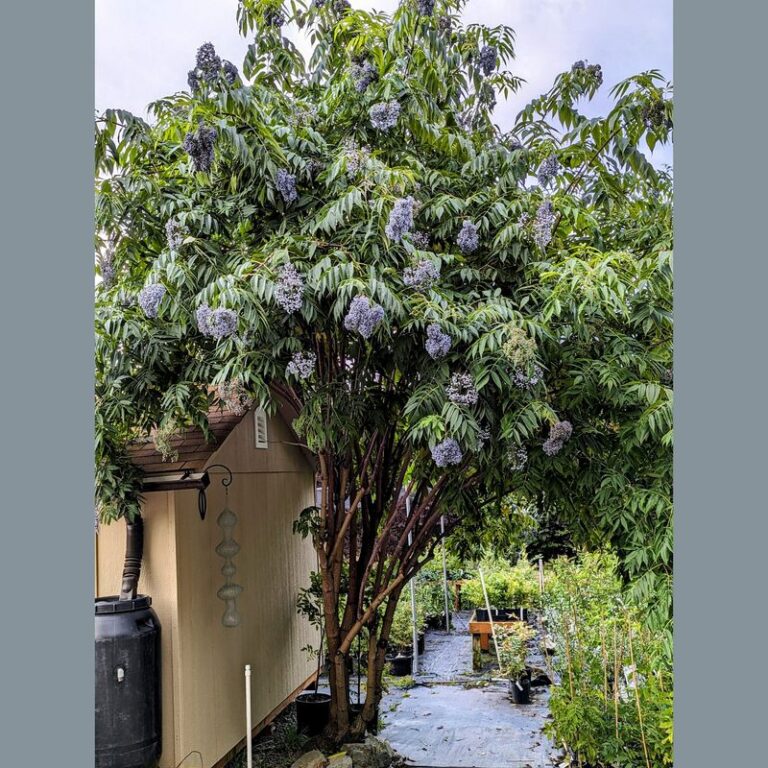
Few desert shrubs grow as fast as Mexican elderberry, which can shoot up several feet in a single season. Its flat clusters of creamy flowers look like lace doilies, and bees cover them during the cooler spring months.
Botanists list this native as Sambucus nigra subspecies cerulea, though many nurseries still sell it under older names. In the low desert, it often leafs out in winter and may drop leaves during the hottest stretch of summer.
Dusty blue berries follow the flowers, and birds such as phainopeplas and finches gobble them quickly. You need to cook the berries before eating, since raw fruit, stems, and leaves can cause stomach upset for people.
Plant elderberry where it gets full sun to partial shade, ideally near a wash or rain-harvesting basin. Deep, occasional watering encourages strong roots, and a generous mulch layer helps the soil hold moisture between irrigation cycles.
Personally, I love using one as a quick-growing screen that also feeds wildlife through several seasons. Fall planting from containers gives the roots months of mild weather to settle in before summer heat returns.
5. Boysenberry
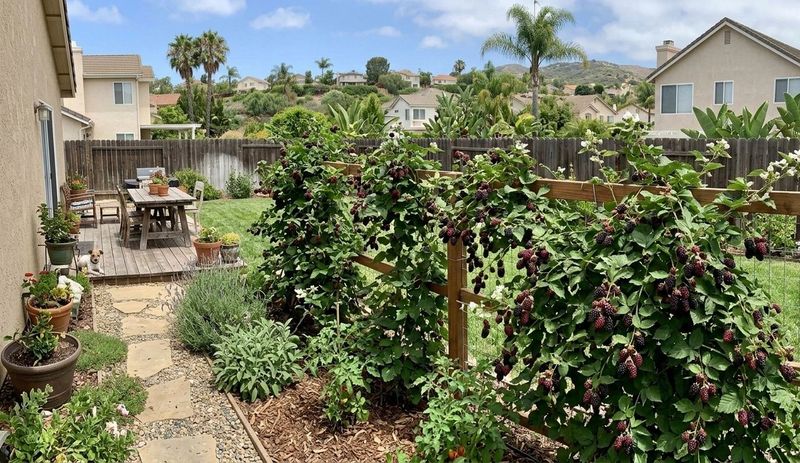
Boysenberries carry a backstory as juicy as the fruit, since a farmer named Rudolph Boysen developed the original plants. Walter Knott later rescued struggling canes in California during the 1930s, and the berry soon became a famous treat.
Each fruit is large, deep maroon, and wonderfully tangy, with a flavor somewhere between raspberry and blackberry. Many gardeners consider fresh boysenberries too soft for shipping, which makes homegrown ones feel like a rare luxury.
The trailing canes need a sturdy trellis, or they will sprawl across paths and tangle with neighboring plants. Fruit forms on canes that grew the previous year, so remove spent canes after harvest and tie up the new ones.
Afternoon shade is helpful in hot desert valleys, where intense sun can sunburn ripening berries quickly. Regular watering keeps the fruit plump, and a rich compost-amended bed mostly beats planting straight into hard native soil.
Bare-root plants usually arrive in winter, so October is a great time to build the trellis and prepare soil. You’re in for a sweet surprise when the first warm berry practically melts before reaching your basket.
6. Pomegranate
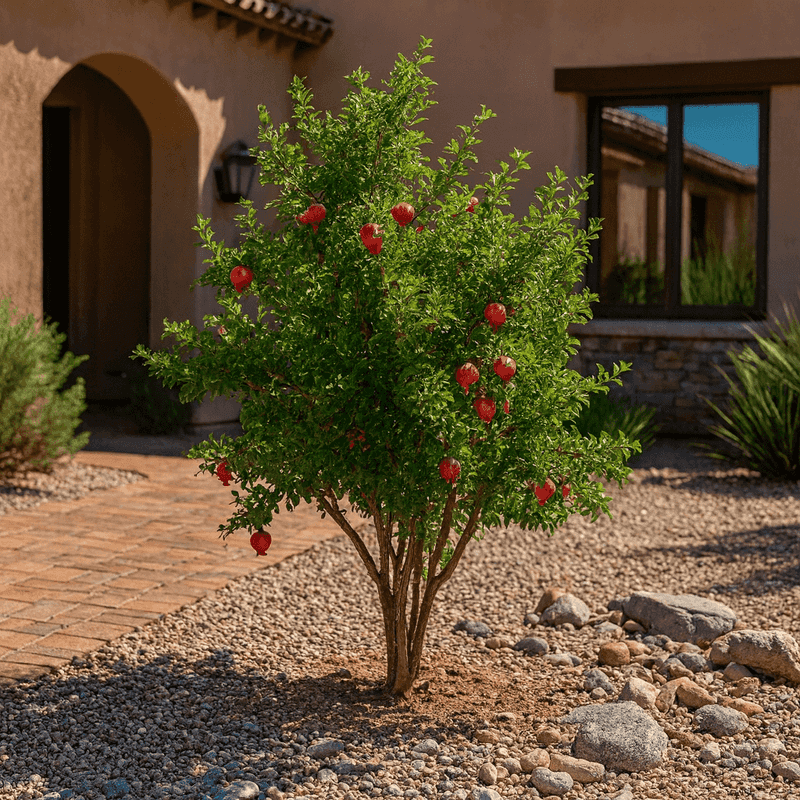
Botanists actually classify the pomegranate as a type of berry, which makes it a fun surprise on this list. Every leathery red fruit hides hundreds of jewel-like seeds, and October is usually peak harvest time in the low desert.
Pomegranates thrive in full sun and handle alkaline soil far better than many fruit trees from cooler climates. Varieties like Wonderful are common, though desert nurseries often carry several sweeter or softer-seeded selections worth sampling first.
Bright orange-red flowers appear from late spring onward, and hummingbirds visit them with obvious enthusiasm. I can’t imagine a better shrub for a sunny corner, since it gives showy blooms and a tasty crop together.
Established plants tolerate drought, yet steady deep watering during summer helps reduce cracked fruit later in the season. Uneven watering is a common reason fruit splits right before harvest, so try to keep the schedule consistent.
Bare-root pomegranates usually appear in winter, but container plants can go in during fall with good results. The leaves turn a lovely buttery yellow before dropping, adding rare autumn color to a desert landscape.
7. Table Grape
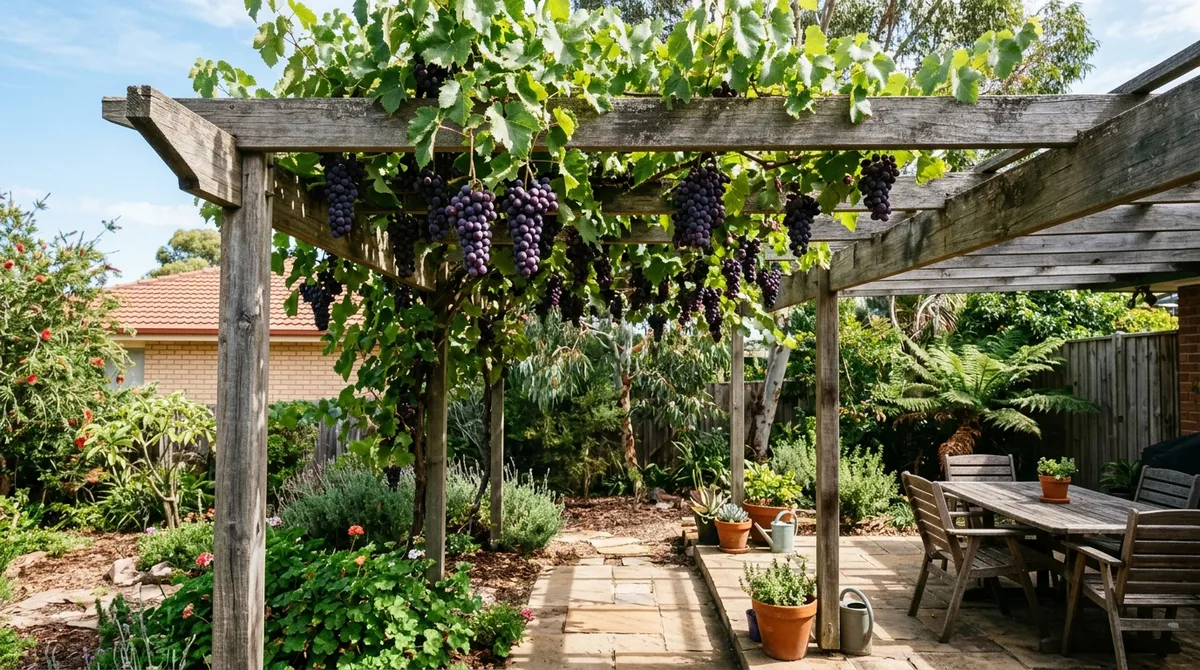
Nothing beats eating cold grapes straight from a backyard arbor while sitting in the dappled shade it creates. Table grapes earn their spot because they pull double duty, feeding your family while cooling a sunny patio.
In the low desert, gardeners often grow early varieties such as Flame Seedless, Perlette, and Thompson Seedless successfully. Early types tend to ripen before the fiercest summer heat, which helps produce sweeter clusters with fewer sunburned grapes.
Bare-root vines usually hit nursery shelves in January and February, so autumn is ideal for building a solid support. A strong arbor or pergola matters, since mature vines grow heavy and can pull flimsy structures over.
Plant in full sun with well-drained soil, then water deeply and less often to encourage roots to reach downward. Winter pruning keeps vines productive, and you might notice how dramatically a well-pruned vine outperforms a neglected tangle.
Birds will happily share your harvest, so slip mesh bags over ripening clusters for protection. Fallen leaves in autumn also let winter sunshine reach the patio, which feels like a clever bonus during cooler months.
8. Strawberry
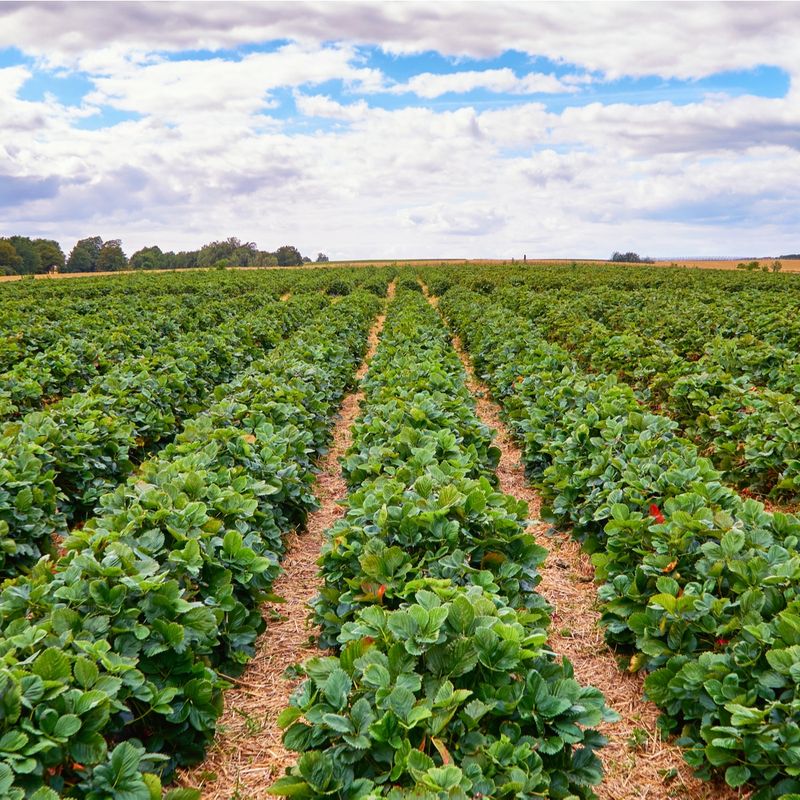
Strawberries break the usual rules in the low desert, where October and November are prime planting months. While most of the country waits for spring, desert gardeners can tuck young plants into beds right now.
Plants grow through the mild winter, then reward you with berries from late winter into spring. Varieties like Chandler and Sequoia have a good reputation in hot regions, although local nursery staff often know the newest performers.
Native desert soil tends to be alkaline, so raised beds or containers filled with rich mix usually work best. Set each crown right at the soil line, because burying it too deep can lead to rot and weak growth.
Shallow roots dry out quickly, which means frequent light watering keeps plants happier than occasional deep soaks. A straw mulch keeps berries clean and helps soil stay cool once spring sunshine starts warming the beds.
What surprises me most is how quickly a small bed produces enough berries for breakfast every morning. Expect bees to visit the white flowers, and protect ripe fruit from birds with lightweight netting.