Can Your Arizona Neighbor Make You Clean Up Leaves That Blew Into Their Yard?
Usually, no. For ordinary leaves that blow in from a neighbor’s tree, local guidance says the yard that receives them handles the cleanup. That surprises a lot of people who figure the tree owner must rake up every leaf.
Here is how the rules work, where they change, and how to keep the peace with the folks next door.
For Ordinary Leaf Fall, Cleanup Usually Falls to the Receiving Yard
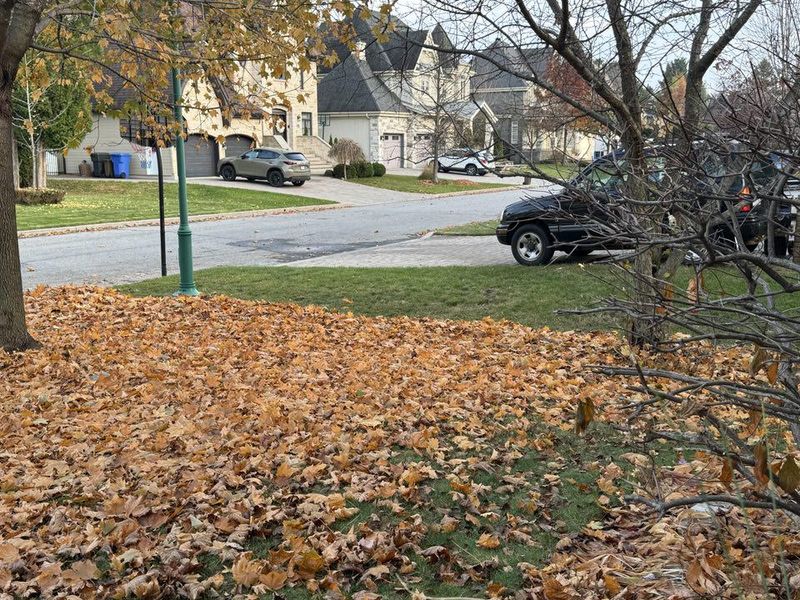
Here is the plain answer. Chandler and Gilbert both explain that when ordinary leaves fall naturally from a neighbor’s tree onto your property, you generally handle the cleanup.
Chandler’s code enforcement FAQ calls it a civil matter between neighbors, and says cleanup is yours unless you reach an agreement or get a civil court judgment.
Gilbert gives similar direction in its civil FAQ. So the tree’s owner is not automatically on the hook for every leaf that drifts over the wall.
One caution matters here. These are city and town explanations, not a single statewide rule that settles every situation.
Your own city or town may say something different, so check before you assume.
Natural leaf fall is the starting point. Deliberate placement, actual damage, hazards, local rules, HOA documents, or a court order can change the picture, and the sections below walk through each one.
Sending Leaves Across the Property Line Is Different
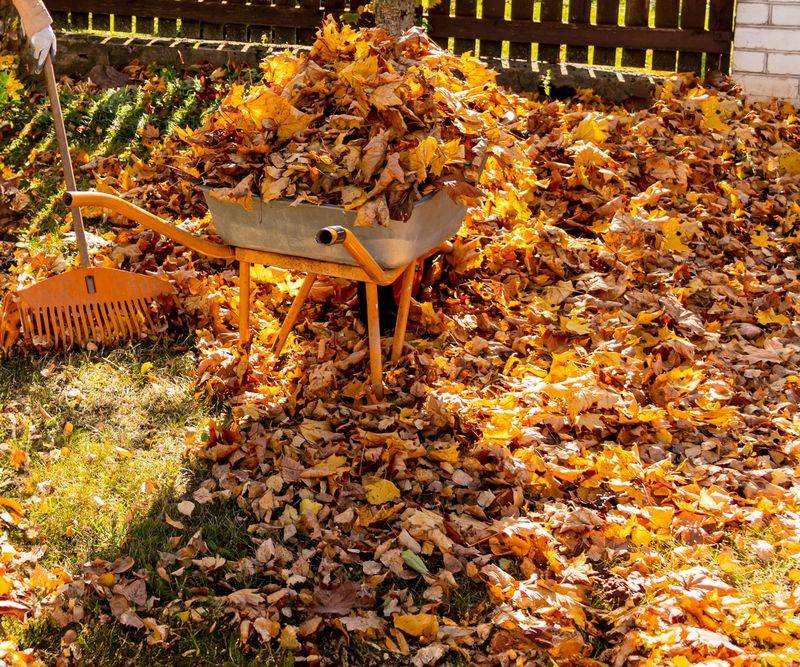
Wind is one thing. Raking, tossing, or blowing a pile of leaves onto someone else’s yard is another thing entirely.
Arizona’s litter law treats those situations differently.
Under A.R.S. § 13-1601, the definition of litter includes organic trash and debris. Then A.R.S. § 13-1603 addresses a person who, without lawful authority, throws, places, or drops litter on another person’s property and does not immediately remove it.
Two details carry weight: whether the person had authorization, and whether the material was removed right away. Those facts can matter a great deal.
That does not mean any particular act leads to a charge or a conviction. Whether the law applies depends on the circumstances, so the safest move is simple: keep your leaves on your side of the line.
Damage and Nuisance Claims Depend on the Facts
Leaves in a pool make a good test case. In Van Baalen v.
Jones, a 2014 Arizona Court of Appeals memorandum decision, the plaintiff complained that a neighbor’s trees shed leaves into a pool, and the court looked at the facts closely. You can read the opinion on Justia.
The court found no evidence of actual damage to the pool system. It also said that, even assuming leaves blew into the pool, that alone did not show a seriously offensive or intolerable invasion, and it noted other vegetation on the plaintiff’s own property.
Treat this as a fact-specific illustration only. It is a memorandum decision, and under Arizona’s Rule 111 such decisions are nonprecedential.
The decision also predates the January 1, 2015 date after which some may be cited for limited persuasive value, as described in the court’s rule order.
So it is not a definitive Arizona rule about leaves. Real damage or a serious nuisance, with solid proof, could be a different story.
Hazards, City Rules, and Leaf Blowers Raise Separate Issues

A few stray leaves are not the same as a heap of rubbish. A.R.S. § 9-499 requires city and town ordinances to address certain accumulations of rubbish, debris, or similar material that create a public health or safety hazard.
It does not hand routine leaf cleanup to a tree owner, and it does not make every leaf pile a violation. Local ordinances and the actual condition of the property matter, so look up your own city or town’s code.
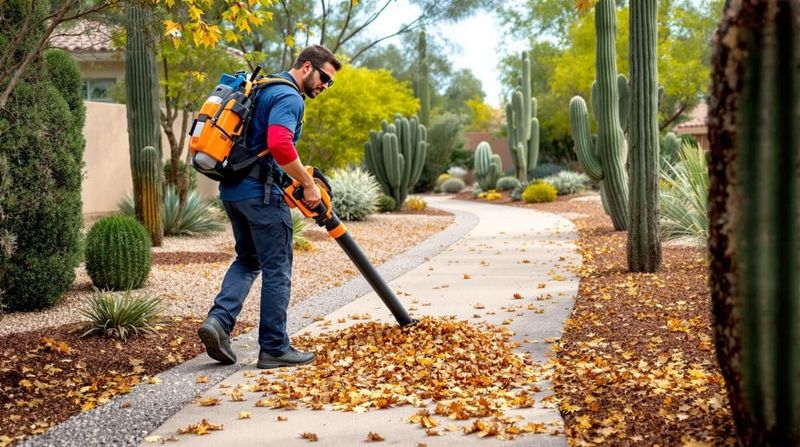
Leaf blowers raise their own questions. Maricopa County’s leaf-blower flyer focuses on air quality and on keeping landscape debris out of public roadways.
It does not create a general duty to collect leaves from another private yard. Roadway and blower rules can apply on their own, no matter who handles naturally fallen leaves.
Check HOA Documents Separately

Living in an HOA adds another layer. Chandler explains in its code enforcement FAQ that HOA maintenance standards may be stricter than city code, and that the association, not the city, enforces them.
That means a yard can pass city code and still draw a notice from your association. The reverse can happen too, so the two systems should not be confused.
Recorded CC&Rs work like contracts that govern certain property-use matters, as the Arizona Legislature’s 2024 homeowners’ association brief describes.
Read your governing documents before you assume anything. Whether a particular HOA rule covers a leaf dispute depends on its exact wording, so look for sections on landscaping, trees, and yard upkeep, and ask your board when the language is unclear.
Talk First, Document the Problem, and Contact the Right Office
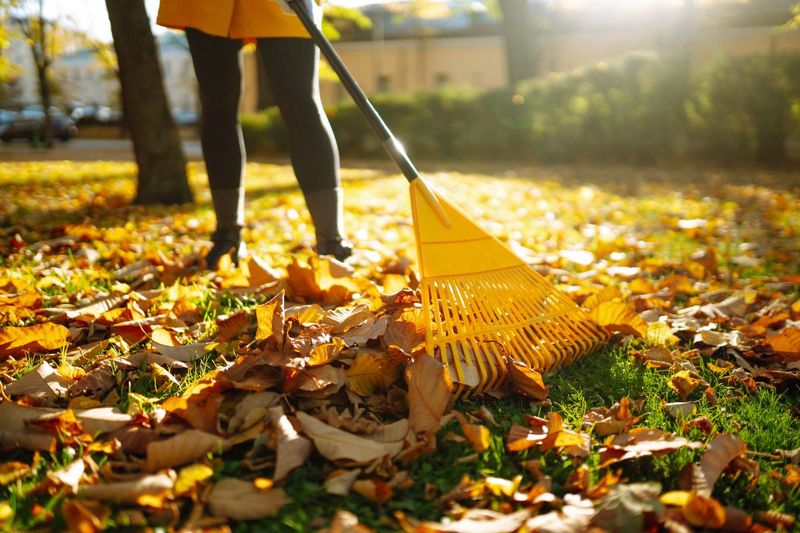
Start with a friendly conversation. Chandler recommends meeting with the neighbor, and its FAQ describes ordinary leaf-fall disputes as civil matters, with agreement, mediation, or civil court as possible routes.
If the problem keeps up, write down what is happening. Take dated photos, note any damage, and keep records of what you and your neighbor said.
Next, check the rules where you live, including your HOA documents. If you suspect a city-code issue, such as a hazardous accumulation, contact your local code enforcement office, since that office handles code matters rather than leaf-fall disputes between neighbors.
Do not toss or blow the leaves back. Unauthorized placement of litter on another person’s property is addressed by A.R.S. § 13-1603, and Chandler warns against it too.
A calm word over the fence usually beats any rake.