Here’s What It Means When This Little Bird Keeps Sticking Close to Your North Carolina Home
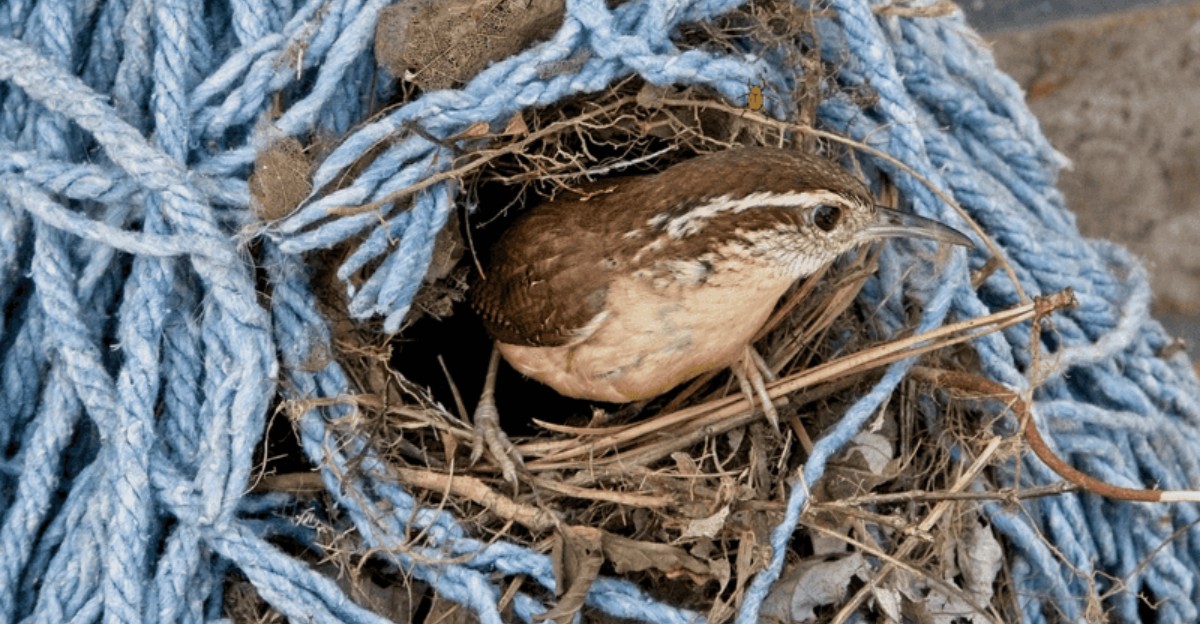
A bird barely bigger than a chickadee once built a nest inside a pocket of a jacket hanging on a porch. Another moved into a mailbox, and plenty have claimed hanging planters, old boots, and grill covers.
That cheeky little houseguest lives right here in North Carolina all year long. It sings like a creature three times its size, and the male can belt out his song dozens of times in a row.
One thing I love about gardening is how often wildlife picks us, not the other way around. I tend to think this bird’s choice says something flattering about your yard.
The real question is what keeps drawing it back to your porch, shed, and shrubs. The answer has more to do with your garden habits than you might guess.
1. That Loud Tea-Kettle Song From Your Shrubs Is a Property Claim
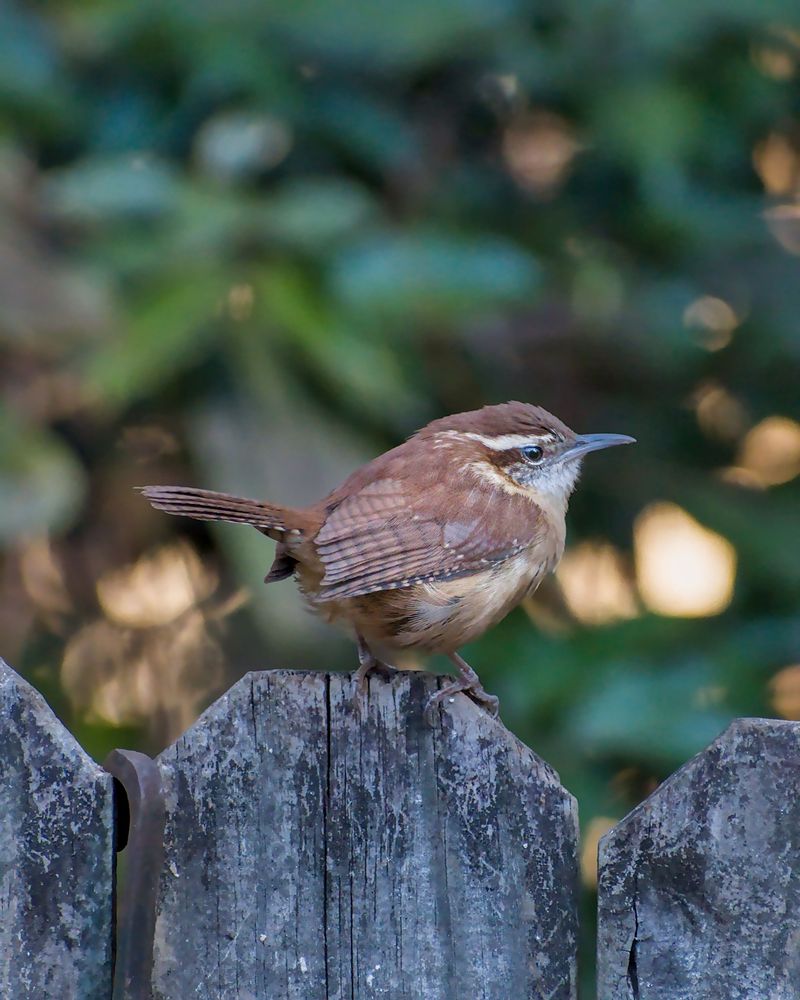
Tea-kettle, tea-kettle, tea-kettle! If that ringing call wakes you up before your coffee, you have a male Carolina wren nearby. He is not just singing for fun.
Male wrens use that song to announce their territory and keep rival males away. Researchers have found a single male can know dozens of song variations, and he may repeat one pattern many times before switching.
For a bird that weighs about as much as a few quarters, the volume is pretty impressive. Carolina wrens do not migrate, so a pair that settles in your yard often stays through every season.
They form strong pair bonds and defend their space together all year. You might even hear the female add a quick chattering reply, which birders often describe as a duet.
So what does this mean for you? Your yard is part of a home range that a resident pair has decided is worth guarding. That usually points to good cover, reliable food, and safe nooks.
Next time the song bounces off your siding, take it as a compliment. A territorial wren rarely sticks around a place that fails to meet its needs.
2. Porches, Sheds, and Hanging Baskets Make Perfect Wren Nesting Nooks
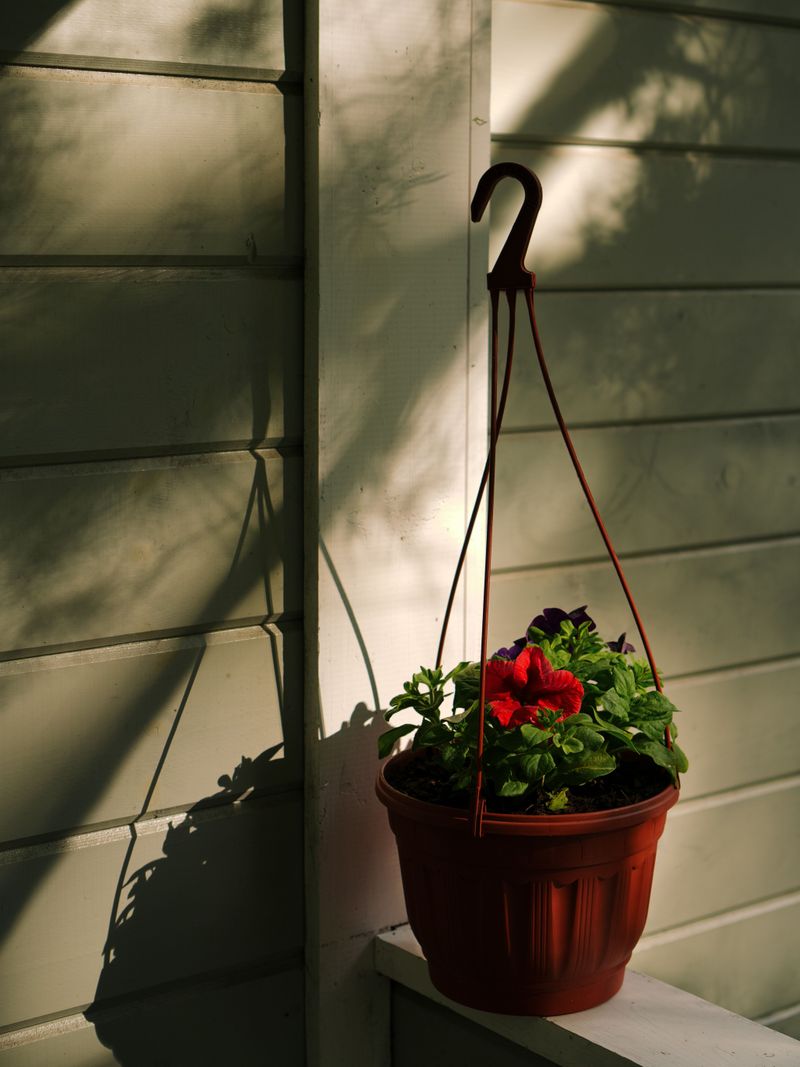
Ask any porch-sitter in the South and you will hear a story about a wren nest in the weirdest spot. Flowerpots, mailboxes, shoe racks, and old coffee cans all make the list.
Carolina wrens nest in cavities and sheltered openings, usually within a few feet of the ground.
They build a bulky cup or dome from twigs, leaves, grass, moss, and sometimes bits of shed snakeskin or plastic. Both partners help gather materials and build the nest together. Your house simply offers lots of ready-made hollows.
Garages, sheds, and covered porches stay dry and hidden, which is exactly what a nesting pair wants. In North Carolina, nesting can begin in early spring and continue into summer, with two or even three broods a year.
If wrens move into a hanging basket, try to water around the nest gently or pause for a couple of weeks.
The eggs hatch in about two weeks, and the young leave the nest roughly two weeks later. Native songbirds and their active nests are protected under federal law, so patience is the best plan.
3. Bug-Hunting Wrens Are Quietly Cleaning Up Your Garden Beds
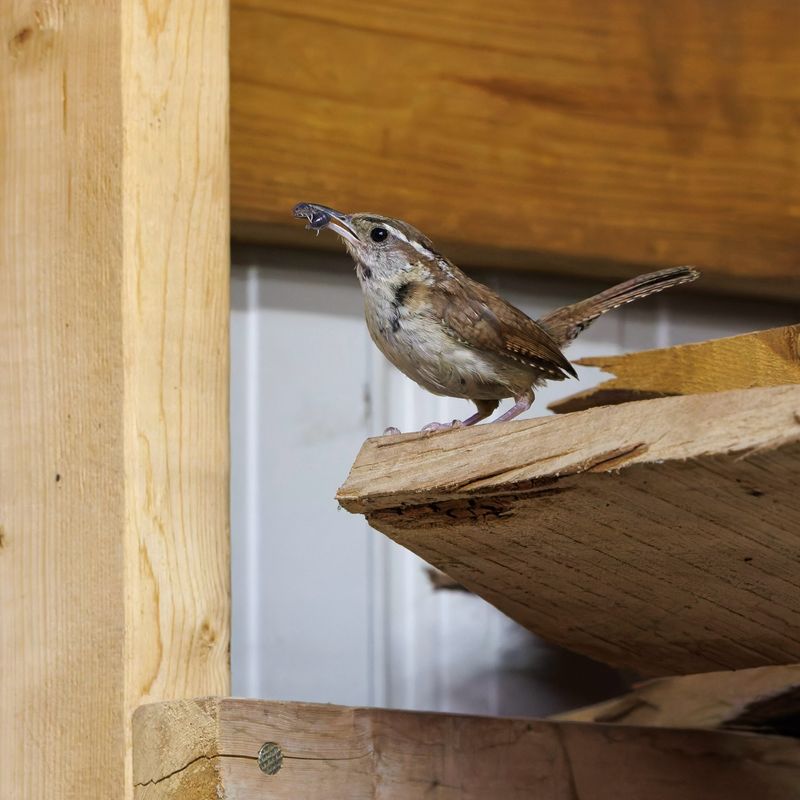
Here’s a garden helper that works for free and never asks for a day off. Carolina wrens spend much of their day poking through leaves, bark, and mulch for insects.
Their slim, slightly curved bills are built for probing cracks and flipping debris. They eat beetles, caterpillars, crickets, grasshoppers, spiders, and many other small critters that can nibble on your plants.
During nesting season, parents carry a steady stream of soft caterpillars to hungry chicks.
I can’t help but think that a wren hopping along your foundation is doing more pest patrol than most sprays could manage. They also check under eaves and around woodpiles, spots where spiders and insects love to hide.
Wrens do eat a little plant material, such as small seeds and berries, especially in colder months. Still, insects make up most of their diet, according to Cornell Lab of Ornithology.
If you notice a wren returning to the same garden bed day after day, it has likely found a good insect supply there. That is a healthy sign for your soil and plants. A busy bug-eater nearby often means your yard has a lively, balanced food web.
4. Brush Piles and Thick Native Shrubs Keep Wrens Coming Back
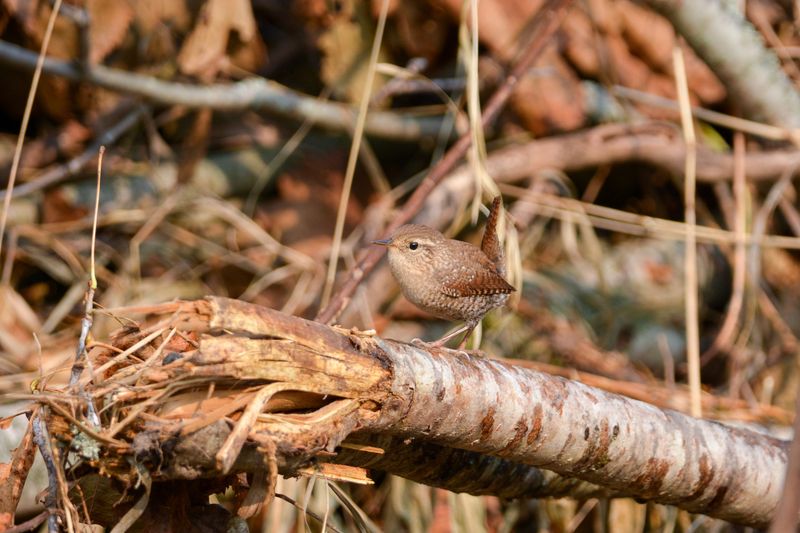
Tidy yards look nice, but wrens prefer a little wildness. A tangle of shrubs or a casual brush pile can feel like a five-star hotel to them.
Carolina wrens like dense, layered cover close to the ground. That cover hides them from hawks and cats while giving them plenty of places to hunt. Leaving some leaf litter under shrubs also feeds the insects these birds depend on.
Native plants are a smart choice because they support far more local insects than many ornamental imports. Good options for North Carolina yards include American beautyberry, inkberry holly, wax myrtle, Virginia sweetspire, and eastern red cedar.
Native vines like crossvine and coral honeysuckle add vertical cover too. Skip invasive plants like Chinese privet, English ivy, and Japanese honeysuckle, even though wrens may use them. These spread into woodlands and crowd out native habitat.
A simple brush pile is easy to build. Stack larger branches on the bottom and smaller twigs on top, placing it in a back corner. In fall, consider leaving some perennial stems standing instead of cutting everything down.
You will give wrens shelter and insects a winter home at the same time.
5. Suet and Mealworms Help Wrens Through Chilly Winter Snaps
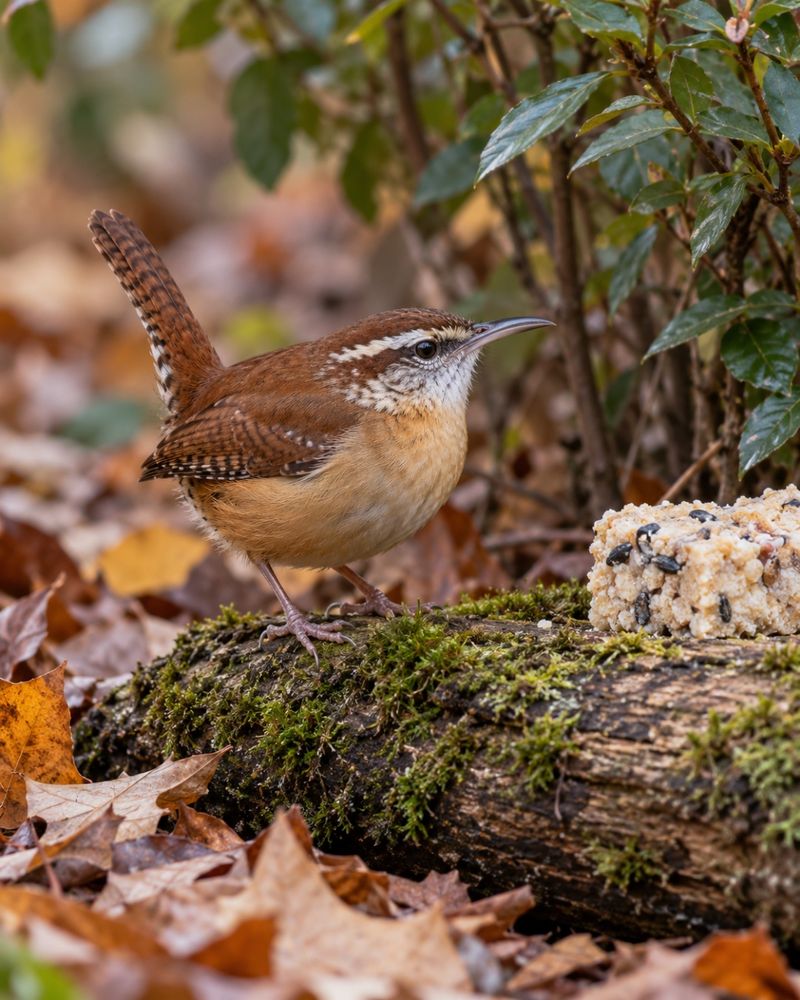
Cold weather is the hardest stretch for a tiny insect-eater. When temperatures drop and bugs disappear, wrens get creative about finding meals.
Carolina wrens are sensitive to harsh winters. Their northern range has been known to shrink after especially cold, snowy years, and many scientists link their gradual northward spread to milder winters and backyard feeding.
In North Carolina, the mountains see tougher winters than the Piedmont or coast, so mountain wrens may need extra help.
Wrens are not big fans of typical seed mixes. They do visit feeders for suet, peanut butter mixes, shelled peanut pieces, and dried or live mealworms. A suet feeder placed near shrubs works well, since wrens like a quick escape route.
Low platform feeders are another great choice. Wrens often forage near the ground and may feel more comfortable at shrub height than up high.
Keep feeders clean, especially if you notice moldy food or crowded conditions. Swap in fresh suet regularly during warm spells, because it can turn soft and messy. If a wren starts visiting daily in winter, you have become one of its most dependable food stops.
6. A Shallow Birdbath and a Pesticide-Free Yard Keep Wrens Safe
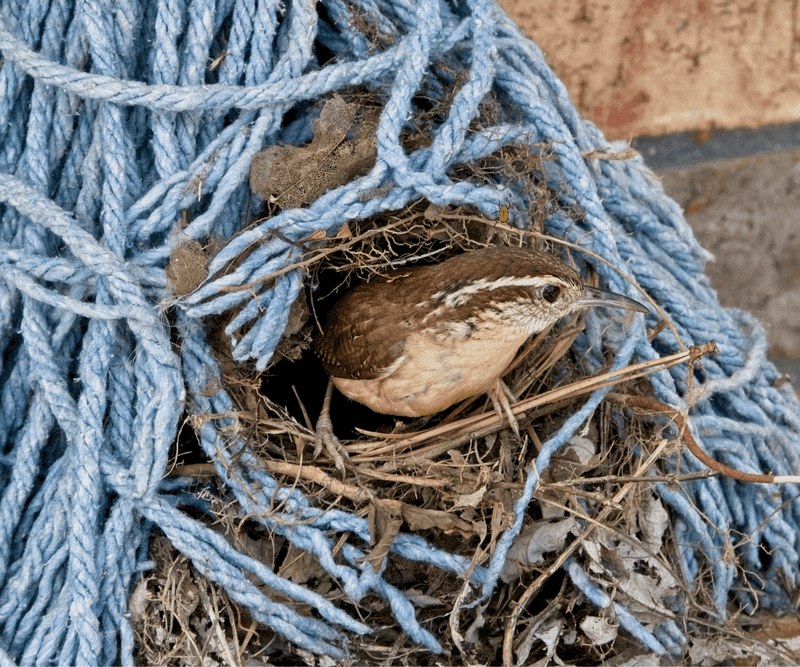
Water might be the most overlooked bird magnet in any yard. Wrens drink it, bathe in it, and splash around with surprising enthusiasm.
Because they are so small, they prefer shallow water. Aim for a bath about one to two inches deep, with a few flat stones for footing. Place it near shrubs so the birds can dash for cover.
Change the water every few days and scrub the basin to reduce algae and mosquito larvae.
Chemicals are a bigger concern. Broad-spectrum insecticides cut down the very bugs wrens need to feed their chicks. Some products can also harm birds directly if they eat treated insects.
NC State Extension encourages integrated pest management, which means using targeted controls only when truly needed.
Outdoor cats are another major threat to ground-foraging birds like wrens. Keeping cats indoors helps protect nests and fledglings, which spend several days hopping around low shrubs.
Small changes add up fast. Hand-pick pests, use row covers, or tolerate a few chewed leaves. Your wrens will reward you with constant patrols and a whole lot of singing.
7. A Small Wren Nest Box Gives Your Porch Visitors a Better Option
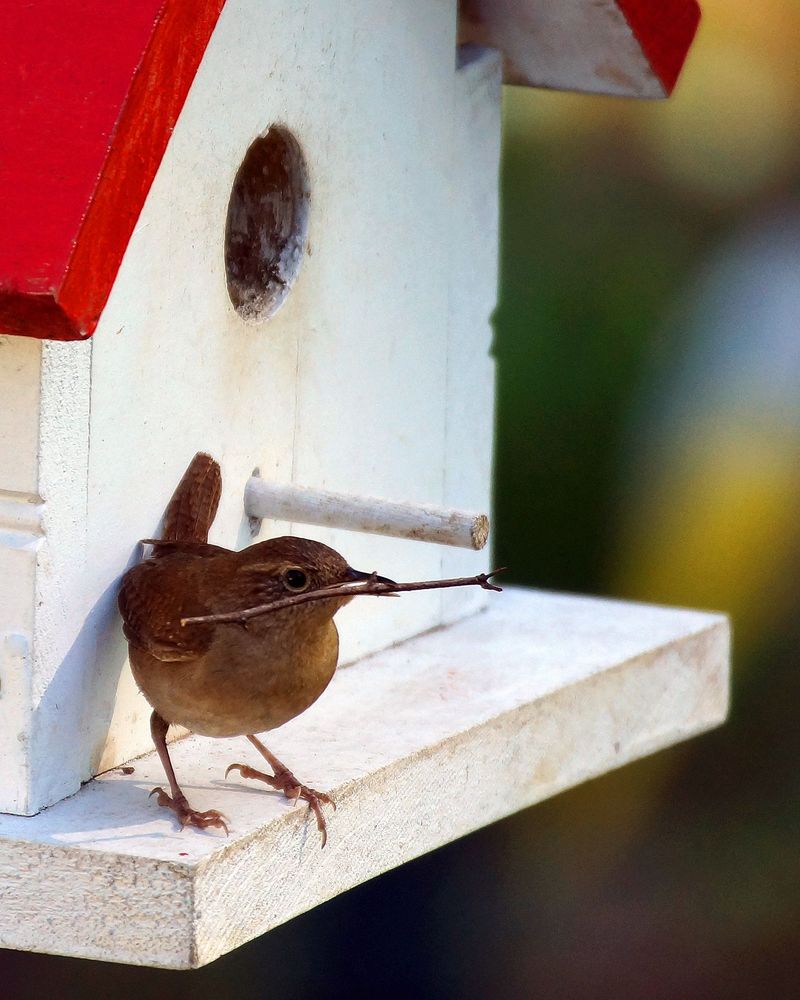
Tired of wrens nesting in your boots or grill cover? A nest box can redirect them to a safer, more convenient spot.
Carolina wrens will use boxes with an entrance hole around 1 1/2 inches wide. Some builders use a larger oval or slot opening, which these birds also accept. Mount the box about five to six feet high on a post, fence, or tree, close to thick shrubs.
Add a predator baffle if you mount it on a pole, since snakes and raccoons raid nests. Include drainage holes in the floor and vent holes near the top. Avoid perches below the entrance, because they help predators more than wrens.
Put boxes up by late winter, before nesting starts in early spring. Clean out old material after the young have left, so the box is ready for another brood. Wrens may also roost in boxes on cold nights, so leaving one up all year makes sense.
Even if they still pick your flowerpot now and then, offering options shows you are a welcoming neighbor. Enjoy the show, because few birds bring this much personality to a backyard.