Christmas Cactus Leaves Going Limp in Michigan? 8 Reasons Why and How to Fix It
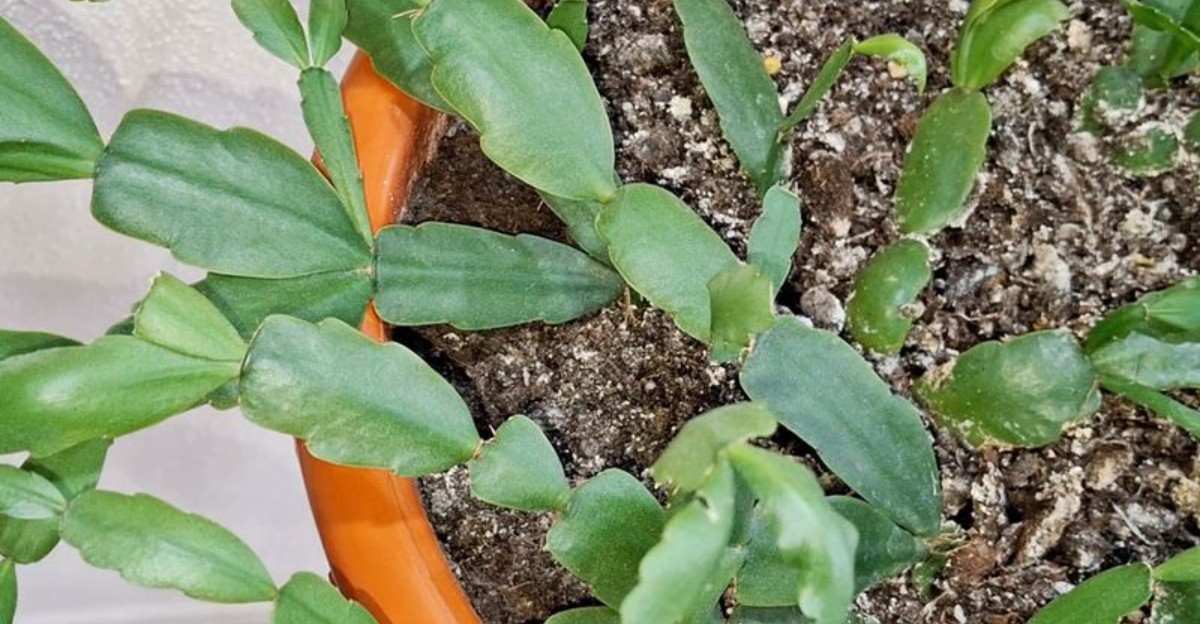
The holiday plant on your windowsill actually comes from misty Brazilian mountain forests, where it clings to tree branches. Its flat green pads are not true leaves at all, but stems that store water like tiny water bottles.
So when those pads turn soft and floppy in a Michigan winter, the plant is sending you a message. Dry furnace air and soggy soil can both trigger that same droopy, tired look in surprisingly different ways.
I love these plants because they forgive mistakes and often bounce back within a few weeks of care. Some of the oldest ones in Michigan homes have been passed down through families for many decades.
The tricky part is that thirsty pads and drowning pads can look nearly identical to the untrained eye. So which problem is hiding inside your pot, and how quickly can you turn things around?
1. Thirsty Christmas Cactus Pads Turning Wrinkled And Soft
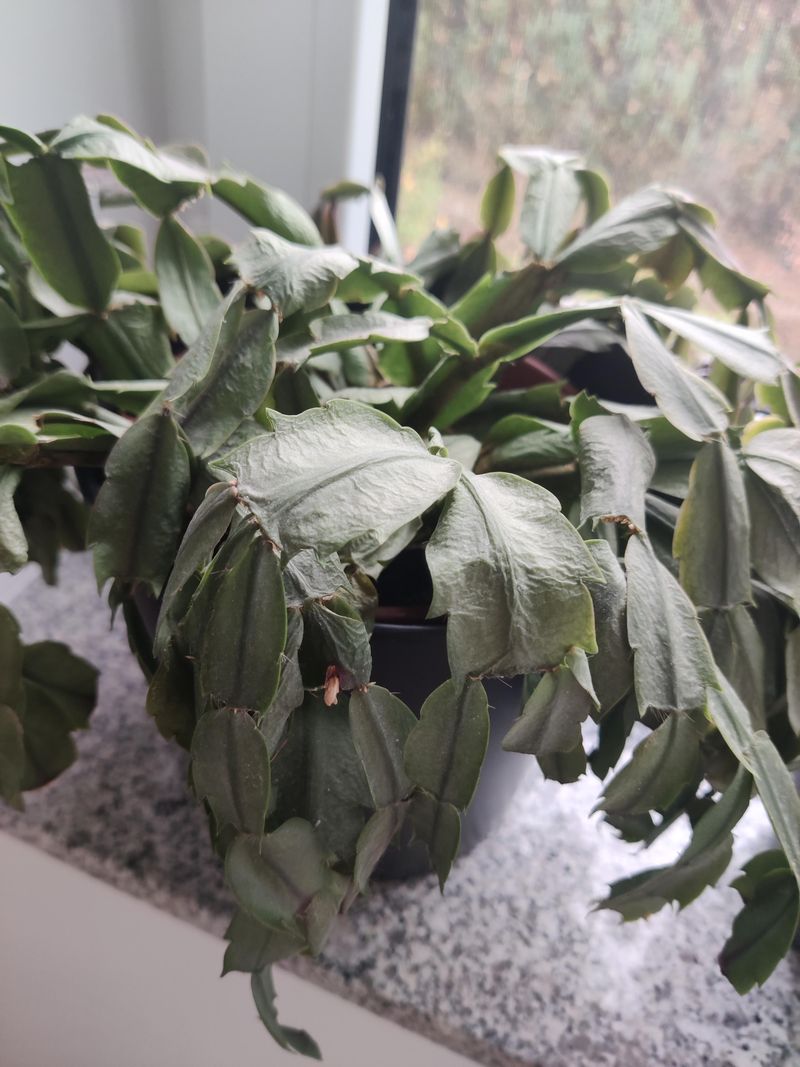
Squeeze a healthy segment gently, and it feels firm and plump, almost like a fresh green bean pod. A thirsty one feels thin and bendy, with fine wrinkles running across its flat surface like crumpled paper.
Those flat pads are really stems that hold water for lean times, much like a camel stores energy. When the reserve runs low, the cells lose pressure, and the whole plant slumps over the pot edge.
Many people hear the word cactus and assume the plant wants desert treatment with barely any water. In my experience, that mix-up causes more limp pads than almost any other mistake holiday plant owners make.
Start by pushing a finger into the soil about an inch or two deep to check the moisture. If it feels dry all the way down, your plant is asking for a proper drink right away.
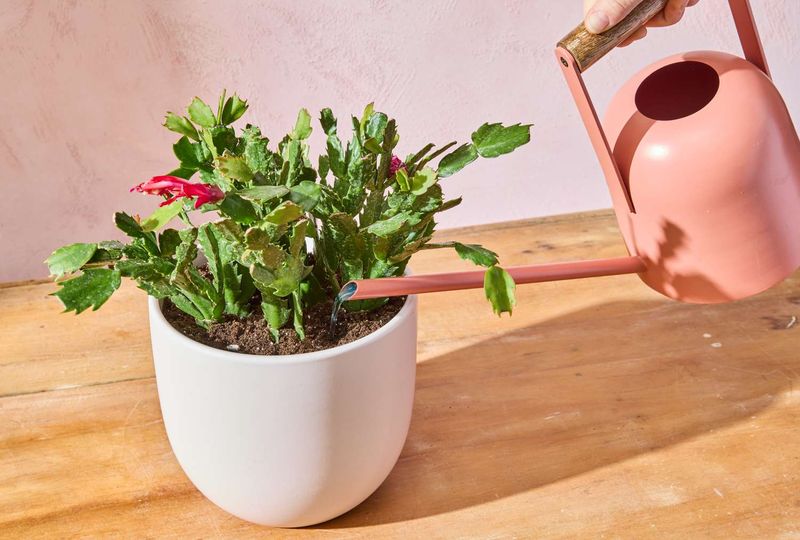
Water slowly and deeply until it runs freely from the drainage holes at the bottom of the pot. Let the extra water drain away, then empty the saucer so roots are not left sitting in a puddle.
Wrinkled pads usually plump back up within several days, which feels like a small magic trick to watch. If they stay flat after a week, check the roots, because damaged roots cannot drink either.
After that rescue, water whenever the top inch or so of soil feels dry to your fingertip. A steady routine keeps the pads full and shiny instead of swinging between thirst and recovery.
2. Soggy Soil Causing Christmas Cactus Root Rot
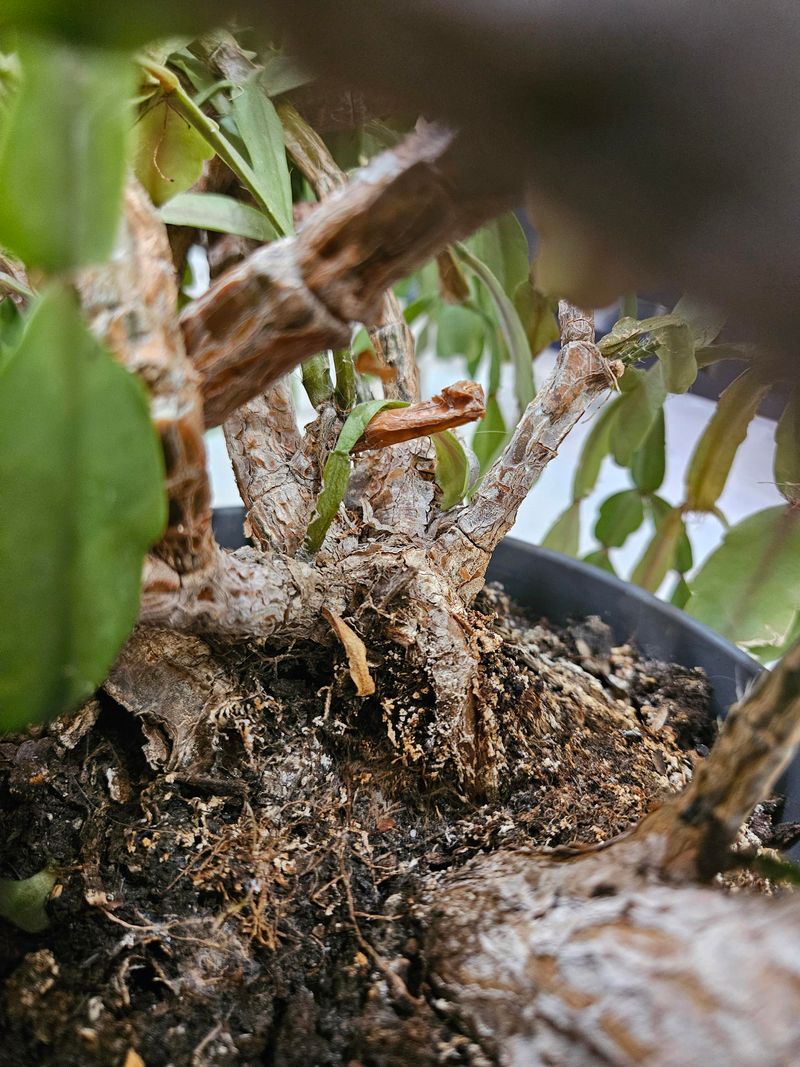
Oddly enough, a plant swimming in water can look just as thirsty as one stuck in bone dry soil. Soggy roots run out of oxygen, then they soften, turn brown, and stop sending moisture upward.
That means the pads go limp even though the pot feels heavy and wet when you lift it. I find that heavy pot test tells me more than any fancy moisture meter ever has.
Root rot is often linked to fungi such as Pythium and Phytophthora, which thrive in waterlogged potting soil. You may also notice a sour smell or pads that turn mushy right where they meet the soil.
To check, tip the plant gently out of its pot and look closely at the root ball. Healthy roots look white or light tan and feel firm, while rotting roots look dark and slide apart easily.
Snip away every soft, brown root with clean scissors, wiping the blades with rubbing alcohol between cuts. Then repot into fresh, well-draining mix and a clean container with at least one drainage hole.
Hold off on watering for several days so the trimmed roots can heal and seal their fresh cuts. If very little healthy root remains, root a few firm segments in moist mix as a backup plan.
Going forward, water only when the top inch dries out, and dump any water left in the saucer. Your cactus prefers a good soak followed by a short breather rather than constant dampness around its roots.
3. Dry Furnace Air Drying Out Christmas Cactus Segments
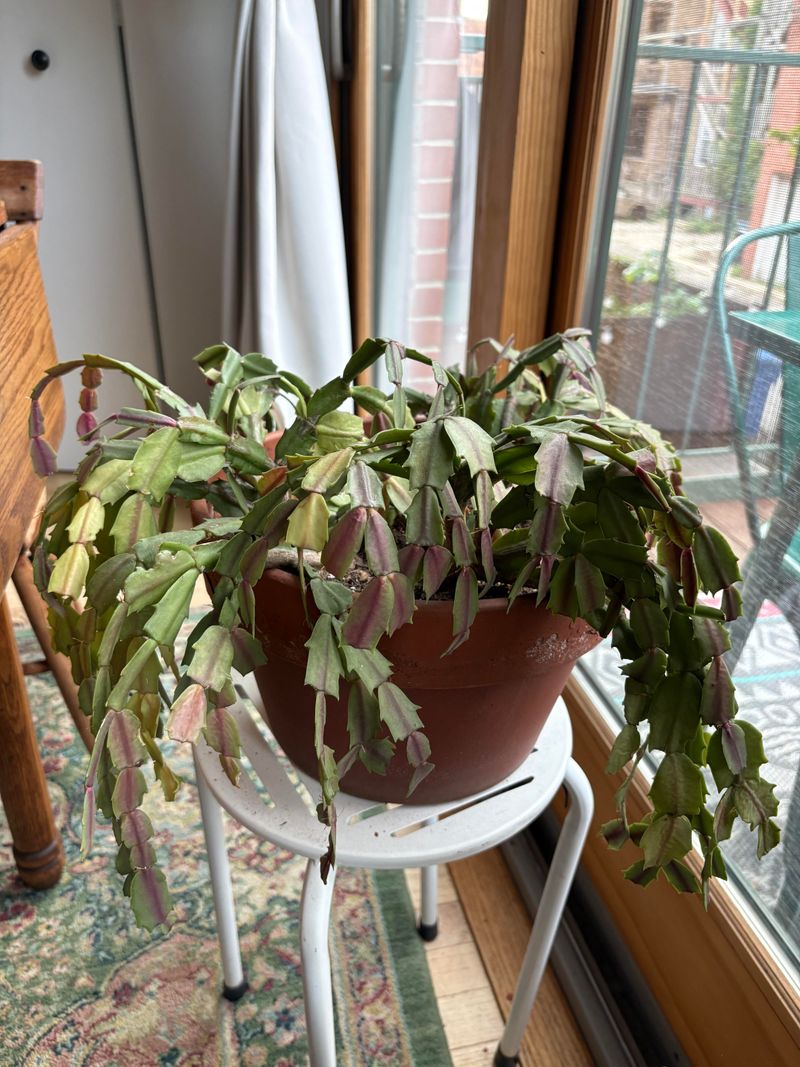
Back home in the Brazilian cloud forests, these plants soak up moisture from foggy air almost every single day. Your living room in January feels nothing like that, especially once the furnace starts humming at full speed.
Indoor humidity in heated Michigan houses can drop well below what tropical plants enjoy during the colder months. Dry air pulls water from the pads faster than roots can replace it, so segments start to sag.
Honestly, I notice the same dry air in my own cracked lips and staticky sweaters each winter. If you feel it, your cactus feels it too, and it does not have lip balm to help.
A small cool-mist humidifier placed nearby works wonders and helps your skin at the same time as a bonus. Running it for a few hours daily can raise moisture around the plant enough to make a difference.
Pebble trays offer another simple option that costs almost nothing to set up on a windowsill or table. Fill a shallow tray with gravel, add water below the stones, and set the pot on top.
Grouping several houseplants together also creates a slightly damper pocket of air as their leaves release moisture. I like clustering my holiday cactus with ferns and pothos for a cheerful little indoor jungle.
Light misting can help briefly, though the effect fades fast, so treat it as an extra rather than a fix. Combine it with a tray or humidifier for steady results during the long heating season ahead.
4. Cold Window Drafts And Hot Radiators Stressing Your Cactus
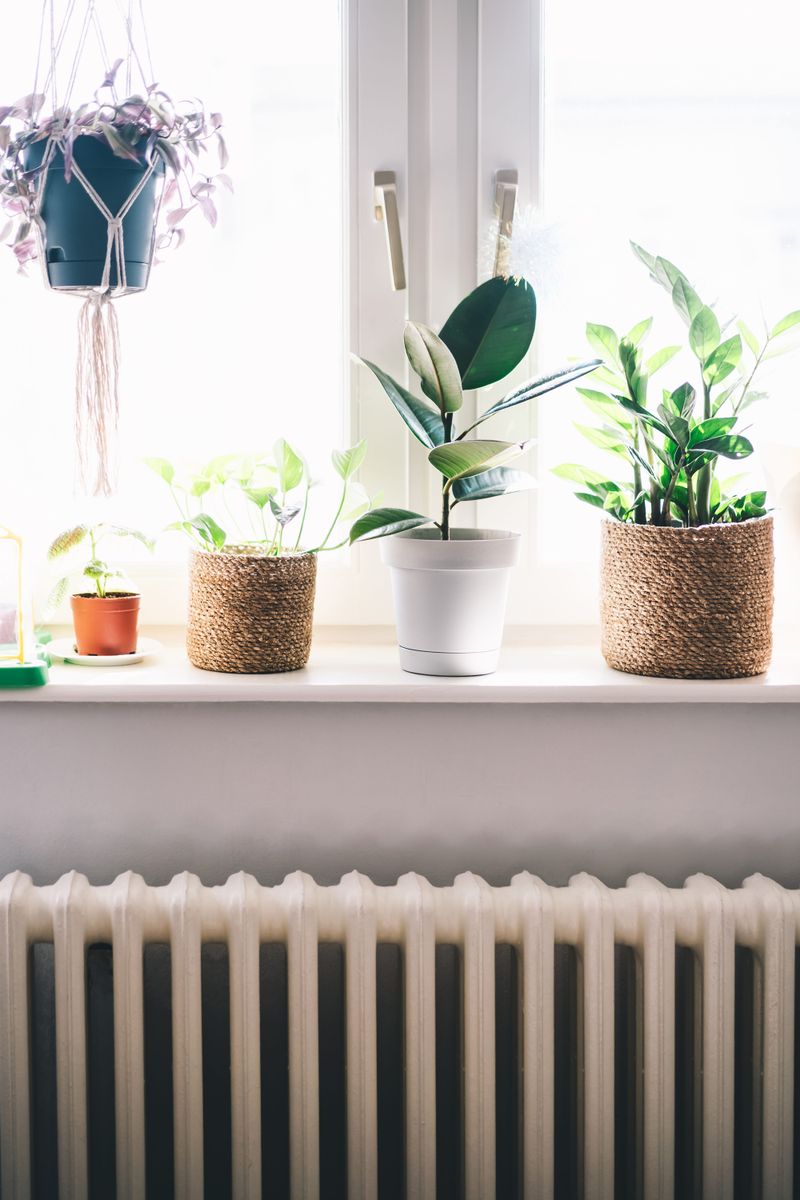
Frosty glass can feel ten or more degrees colder than the rest of the room on a January night. Your cactus pressed against that pane may be shivering while you sit cozy under a blanket nearby.
These plants are happiest with steady temperatures roughly between 60 and 70 degrees Fahrenheit during most of the year. Sudden swings, whether icy or toasty, stress the plant and often show up as droopy, tired pads.
Drafts from a front door that opens constantly during holiday visits can chill the plant again and again. Heat blasting from a vent or radiator does the opposite, drying segments faster than roots can keep up.
I once parked a cactus right above a heating register, thinking warmth meant comfort for a tropical plant. Within a week, half the segments looked sad and floppy, and I learned that lesson the hard way.
Choose a bright spot several feet away from heat sources and exterior doors that swing open all day. At night, slide the pot a few inches back from the glass or close a curtain behind it.
Cool nights near 55 to 60 degrees in fall actually help these plants set flower buds for winter. The problem comes from fast, harsh changes, not from mild coolness that stays fairly steady each evening.
A cheap indoor thermometer placed beside the plant can reveal hidden cold spots you might otherwise miss. It takes guesswork out of the picture and helps you find the calmest corner in your home.
5. Harsh Direct Sunlight Scorching Christmas Cactus Leaves
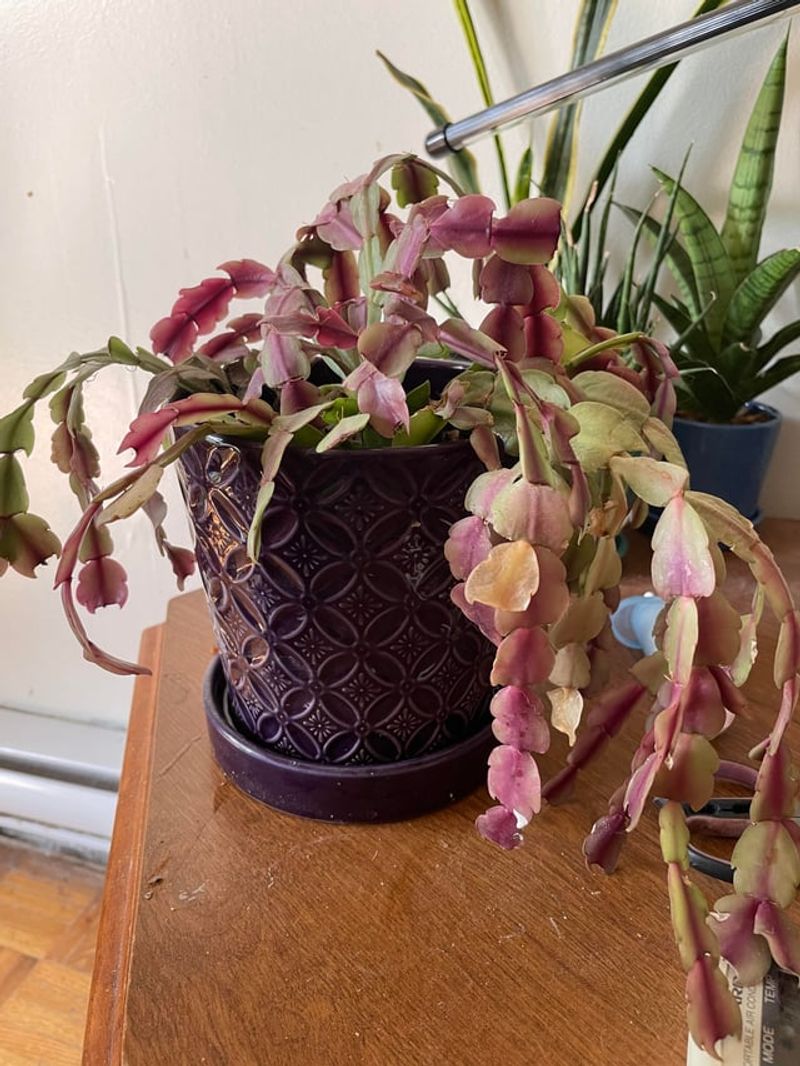
Purple or reddish tints creeping across the green pads can be the plant’s version of a summer sunburn. In the wild, it grows in dappled light under a leafy tree canopy, not out in open sun.
Hours of harsh, direct rays heat the segments and pull out moisture faster than the roots can supply. The result often looks like limp, faded pads that seem worn out by the middle of the afternoon.
Summer can be the sneaky season for this problem, especially if your plant vacations outdoors on a sunny deck. Even indoors, a bare south-facing window may deliver more intensity than this forest dweller enjoys.
Bright, indirect light suits it best, and an east-facing window with gentle morning sun works beautifully for most homes. A spot a few feet back from a sunny window also gives plenty of light without the scorch.
Sheer curtains are my favorite quick fix because they soften strong rays like clouds on a hazy day. You keep the cheerful glow in the room while your cactus avoids that stressed, bleached look.
If you move a plant outside for summer, keep it under a porch roof or a tree with filtered shade. Bring it back indoors well before frost, since this tropical plant cannot handle freezing autumn nights.
Mild reddish color in bright winter light is often harmless and fades once conditions settle down again. Watch for limpness alongside the color change, since that combination tells you the sun is too strong.
6. Crowded Christmas Cactus Roots Packed Inside A Small Pot
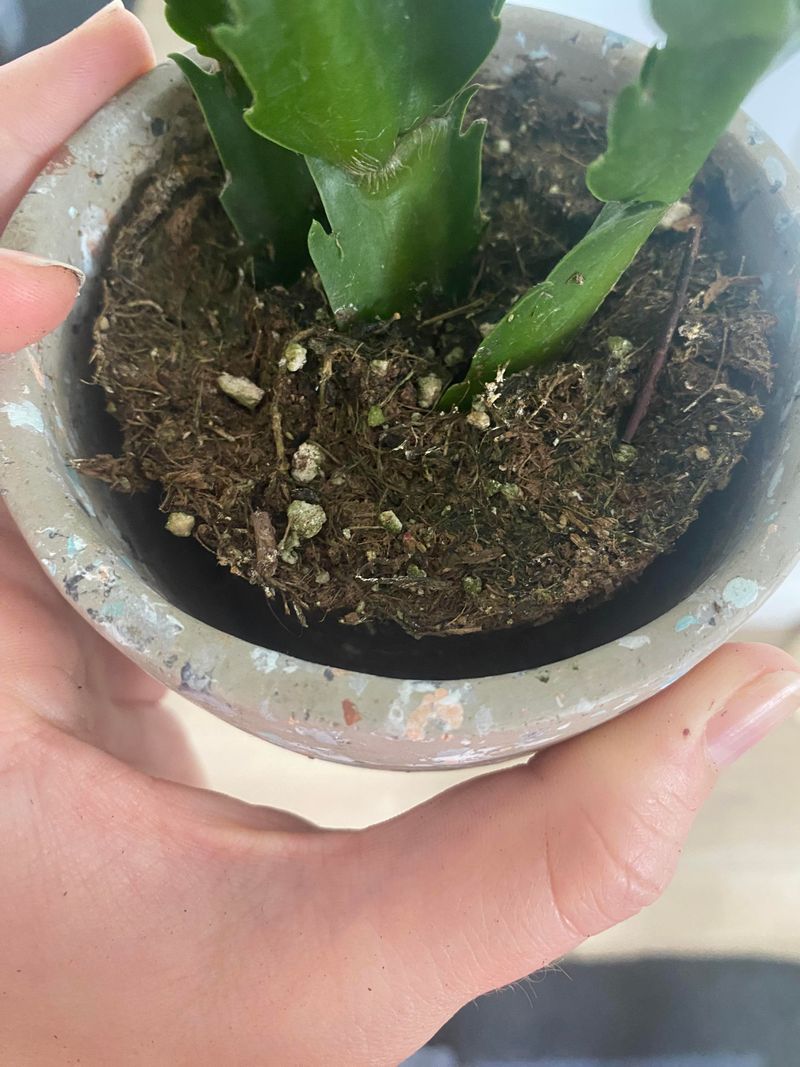
Funny thing about this plant is that it actually likes a snug pot and blooms well when slightly crowded. Still, there comes a point when the roots fill every inch and simply run out of room.
Once roots circle tightly with very little soil left, water rushes straight through without soaking in properly. The plant ends up thirsty even after you water, and the pads respond by going soft and limp.
Look for roots poking out of drainage holes or soil that dries out within a day or two. Lifting the plant from its pot will show you a dense mat of roots wrapped around the edges.
Most growers repot every two to three years, and spring after blooming is usually the ideal window. If your plant looks seriously unhappy, repotting at another time is acceptable when root trouble seems likely.
Choose a container just one size larger, usually about an inch or two wider than the old one. A giant pot holds too much wet soil around small roots, which invites the rot we discussed earlier.
Gently loosen the outer roots with your fingers, then settle the plant at the same depth as before. Fill around it with fresh, airy mix and water lightly to help everything settle into place.
Give the plant bright, indirect light and a little patience while new roots spread into the fresh soil. I usually see perkier segments within a few weeks, which always makes the messy job feel worthwhile.
7. Heavy Potting Mix Trapping Water Around Cactus Roots
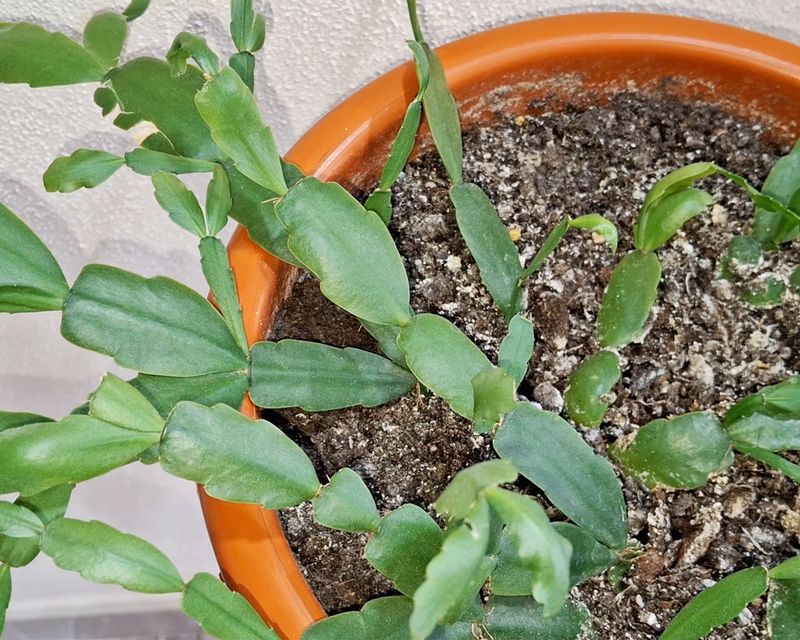
Grab a handful of plain garden soil, squeeze it, and you will probably feel a dense, sticky lump. Now picture tropical tree roots used to clinging to bark and moss trying to breathe in that.
Since this plant naturally grows on trees and rocks, its roots crave plenty of air along with moisture. Heavy or compacted mix holds water too long, which slowly suffocates roots and leaves the pads drooping.
Old potting soil also breaks down over the years, turning finer and denser until drainage barely works anymore. A plant that has sat in the same mix for ages may struggle even with careful watering.
A bagged mix made for cacti and succulents works well straight from the store for most beginners. I like stirring in extra perlite or a little orchid bark for an even lighter, fluffier texture.
You can also blend regular potting soil with perlite or coarse sand to improve drainage at home. Aim for a mix that feels loose and crumbly in your hand rather than wet and heavy.
Drainage holes matter just as much, so skip decorative pots that have a solid bottom with no exit. If you love a pretty cover pot, set a plastic nursery pot inside it and empty it often.
Terracotta pots breathe through their walls and help extra moisture escape between waterings more quickly than plastic. That small change can make a big difference for anyone who tends to water a bit generously.
8. Hungry Christmas Cactus Needing A Fertilizer Boost
Years in the same tired soil can leave a cactus running on fumes, much like skipping lunch on a busy day. Nutrient shortages are rarely the main cause of limp pads, but they can quietly weaken growth.
Watering problems usually deserve your attention first, so rule those out before reaching for plant food. Once roots and moisture look fine, a hungry plant may simply need a gentle nutritional nudge.
Pale, thin, or slow-growing segments often hint that the soil has run low on helpful nutrients over time. Plants that bloom heavily every year can use up their reserves faster than you might expect.
During spring and summer, feed every two to four weeks with a balanced liquid houseplant fertilizer mixed at half strength. Some extension experts also suggest a little Epsom salt occasionally, since these plants appreciate extra magnesium.
Stop fertilizing in late summer or early fall so the plant can shift its energy toward setting flower buds. Feeding during the blooming season adds little benefit and can sometimes interfere with a good flower show.
Always water the soil first before adding fertilizer, because feeding a parched plant can scorch delicate roots. I treat it like eating a meal with a glass of water, a habit that keeps things balanced.
By the time cooler weather returns to Michigan, a well-fed plant should have firm pads and plenty of energy. That sturdy foundation sets the stage for those bright pink and red holiday blooms everyone adores.