Illegal Backyard Crops Washington Gardeners Could Get In Trouble For Growing
A classic green vine that once covered college walls landed on a state quarantine list in 2025. Selling a single pot of it here can now bring a civil penalty reaching five thousand dollars.
Washington keeps official lists of plants banned from sale or transport, and some surprise even longtime gardeners. Federal law adds another layer, so a few pretty flowers from old seed catalogs carry real legal risk.
I was surprised to learn how many shrubs on my own wish list sit on those official lists. You might notice a few of them growing happily in Washington yards today, planted long before the rules changed.
Some of these plants bring a fine or a weed board letter, while others bring felony charges. So which ones are hiding in your garden beds, and how worried should you honestly be about each one?
1. Opium Poppy
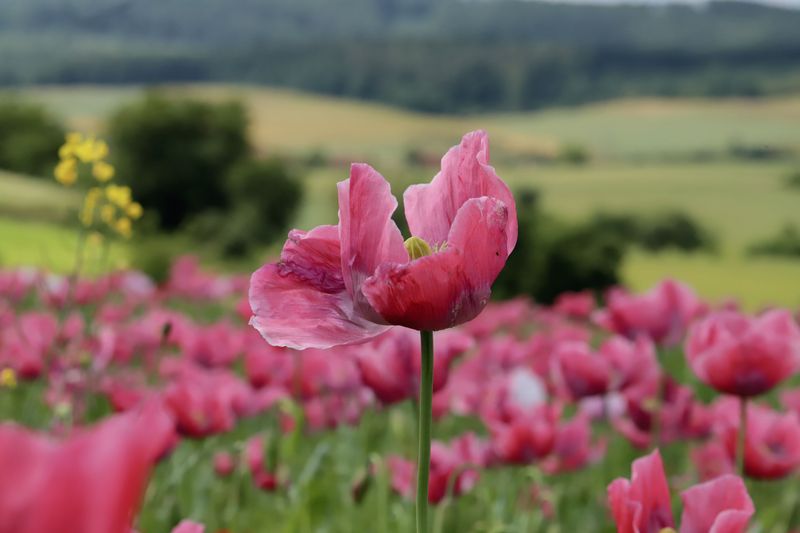
Those silky, crinkled petals look like crepe paper, and the blue-green leaves feel almost waxy under your fingers. Opium poppy, Papaver somniferum, ranks among the prettiest flowers that federal law says you should not grow.
The DEA treats every part of the plant except the seeds as opium, a Schedule II controlled substance. Strangely, you can buy the seeds at any grocery store for lemon muffins and crunchy bagel toppings.
Seed companies sometimes sell them as breadseed poppies, which confuses many gardeners who simply want lovely blooms. Flowers can reach about four inches across in shades ranging from snowy white to deep plum purple.
After the petals drop, green seed capsules swell and slowly turn brown and papery as they dry. Those capsules are the part that draws legal attention, so harvesting or scoring them is a bad idea.
Prosecution of casual flower gardeners is rare, but rare does not mean the risk is nonexistent for you. Self-sown plants pop up easily, so a single packet can quietly turn into dozens of plants next spring.
Plenty of legal poppies give you the same papery charm without any of the legal gray zone. Shirley poppies and big Oriental poppies both thrive in cool Pacific Northwest springs and full sun.
California poppy is legal too, though I keep it contained because it reseeds with real enthusiasm here. Swapping varieties lets you keep the cottage garden look while skipping awkward conversations with anyone wearing a badge.
2. Peyote Cactus
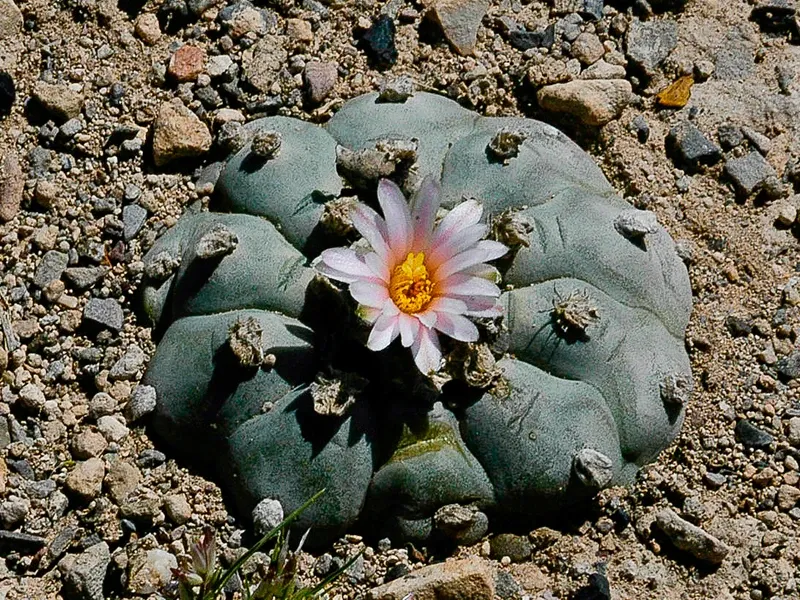
A tiny, spineless cactus that looks like a fuzzy green button can take over a decade to flower from seed. Peyote, Lophophora williamsii, sits on the federal Schedule I list beside some of the strictest controlled substances.
That listing makes possession and cultivation illegal for most people, no matter how small the pot looks. Penalties can range from misdemeanor to felony charges, depending on the amount found and the surrounding circumstances.
Federal law carves out a limited exemption for tribal members using it in traditional Native American religious ceremonies. That exemption does not give ordinary backyard growers or cactus collectors permission to raise their own plants.
Online forums sometimes claim small collector plants are fine, which is simply not supported by federal law. Local enforcement priorities can shift, but federal law still applies to peyote anywhere in the country.
Wild peyote is also slow growing and declining in its native Texas and Mexico desert habitat. Conservation groups ask buyers to avoid it, since poaching and overharvest have thinned many wild populations.
Our rainy western winters would rot a desert cactus outdoors anyway, so few succeed with it here. If you love button-shaped cacti, legal Astrophytum asterias, the sand dollar cactus, offers a similar look.
I keep mine on a bright windowsill with gritty soil and almost no water during the darker months. Your cactus shelf can stay charming and lawful, with no worries about who might recognize the plant.
3. English Ivy
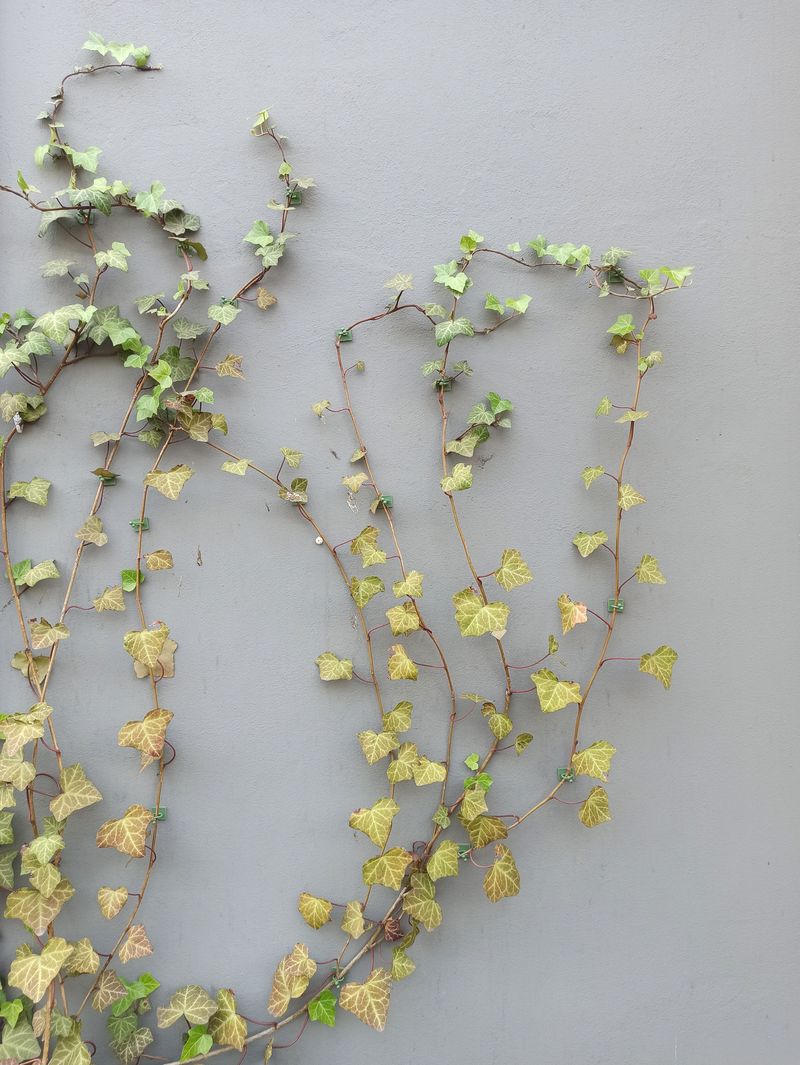
Those glossy, lobed leaves have draped storybook cottages for centuries, which makes this new rule feel shocking. English ivy, Hedera helix, joined the state quarantine list in 2025, so nurseries can no longer sell it.
The quarantine bans selling or distributing the vine, and violations can draw civil penalties reaching five thousand dollars. Plants already growing in your yard are not automatically illegal, but sharing cuttings with friends could cross the line.
Ivy earned its bad reputation by climbing tall trees and adding heavy weight that can topple them in storms. Birds eat the dark berries and spread seeds deep into forests, where the vine carpets native wildflowers.
The sap can irritate skin for some people, so I wear gloves and long sleeves when pulling it. Start by cutting vines at waist height on tree trunks, then pull the ground mats away from the roots.
That simple life-ring trick lets upper stems wither while you safely clear a ring around each trunk. Bag the cuttings instead of composting them, because ivy roots easily from small stem pieces left in piles.
Native groundcovers make lovely replacements, and they welcome local pollinators far better than ivy ever did. Kinnikinnick and low Oregon grape both handle partial shade and spread slowly into tidy, glossy evergreen patches.
Swapping out an ivy-choked slope takes patience, but the cleaner trunks and fresh native growth feel so rewarding. Your trees will breathe easier, and you can stop worrying about sharing a cutting with a curious neighbor.
4. Butterfly Bush
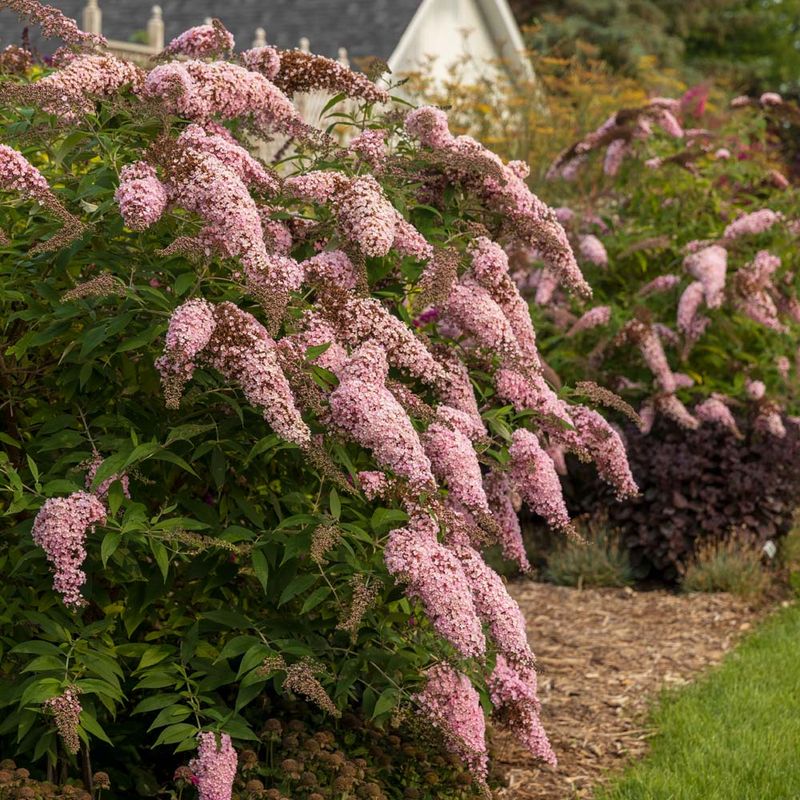
Butterflies swarm those honey-scented purple spikes every summer, which is exactly why so many gardeners planted them. Butterfly bush, Buddleja davidii, is also a Class B noxious weed that spreads along rivers and roadsides.
Each shrub can release huge numbers of tiny, wind-carried seeds that settle onto gravel bars and disturbed soil. Along western rivers, thick stands crowd out willows and other native plants that support local insects.
Because of that, the state quarantine list limits sales, though some sterile cultivars have earned an exemption. Approved varieties produce very few viable seeds, so nurseries may sell those specific named types legally.
If you have an older plant, snip off fading flower spikes before they turn brown and set seed. That one habit greatly reduces spread and keeps your shrub looking tidy through the late summer season.
Your local county weed board may require control in some areas, so give them a quick call first. Rules for Class B weeds vary by county, which means your neighbor across the line may face different expectations.
Adult butterflies sip nectar from butterfly bush, but their caterpillars cannot feed on its leaves at all. Douglas aster and Oregon sunshine feed adult butterflies, while native willows host many hungry local caterpillars.
I still love the fragrance, so I would pick a sterile cultivar and pair it with native nectar plants. You get the summer show without sending seeds downstream to riverbanks that already have enough trouble.
5. Scotch Broom
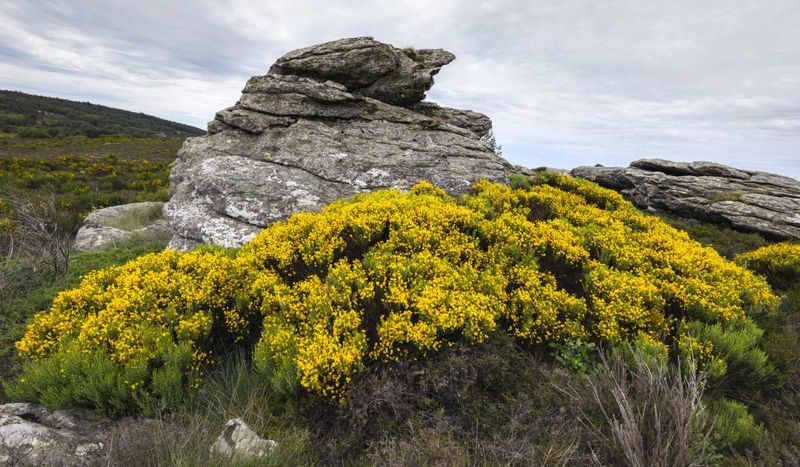
Bright yellow blooms blanket Puget Sound highways each spring, and that roadside glow began with garden ornamental plantings. Scotch broom, Cytisus scoparius, now costs the region huge sums in control work and lost forest growth.
It is a Class B noxious weed on the state quarantine list, so selling or transporting it is prohibited. Some counties require landowners to control it, especially where the shrub threatens prairies or new timber plantings.
A single mature shrub can produce thousands of seeds that may stay viable in soil for many decades. On warm summer days, the ripe black pods snap open loudly and fling seeds several feet away.
That explosive pop is fun to hear, but it means one plant quickly becomes a dense thicket. Broom also raises fire risk because its oily green stems burn hot during dry late summer weather.
Pull small plants when soil is moist, usually in fall or early spring, using a weed wrench for bigger stems. Cutting larger shrubs near ground level during drought often works well, since stressed stumps rarely resprout much.
Expect new seedlings for years, because that seed bank keeps waking up whenever you disturb the soil surface. A thick layer of wood chip mulch helps shade the soil and slows that stubborn flush of seedlings.
Native alternatives like golden currant or tall Oregon grape still bring cheerful yellow flowers to early spring. Your hummingbirds will thank you, and the neighbors will appreciate one less seed factory near their fence.
6. Garlic Mustard
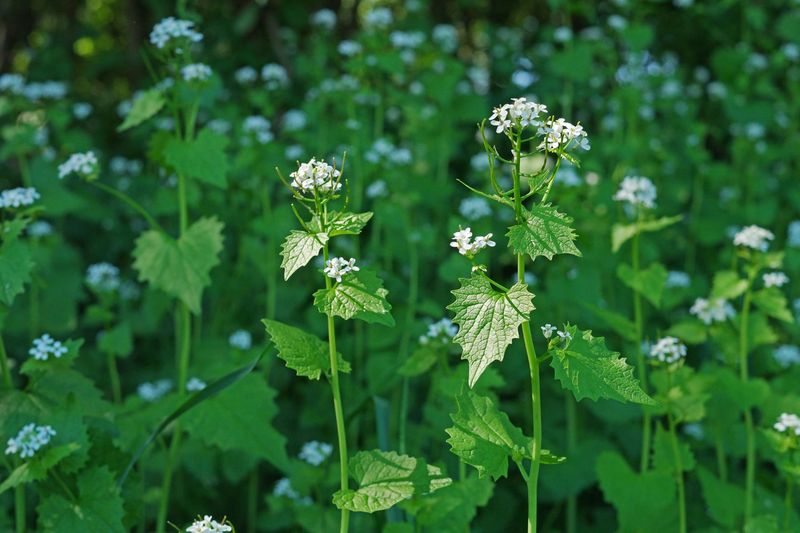
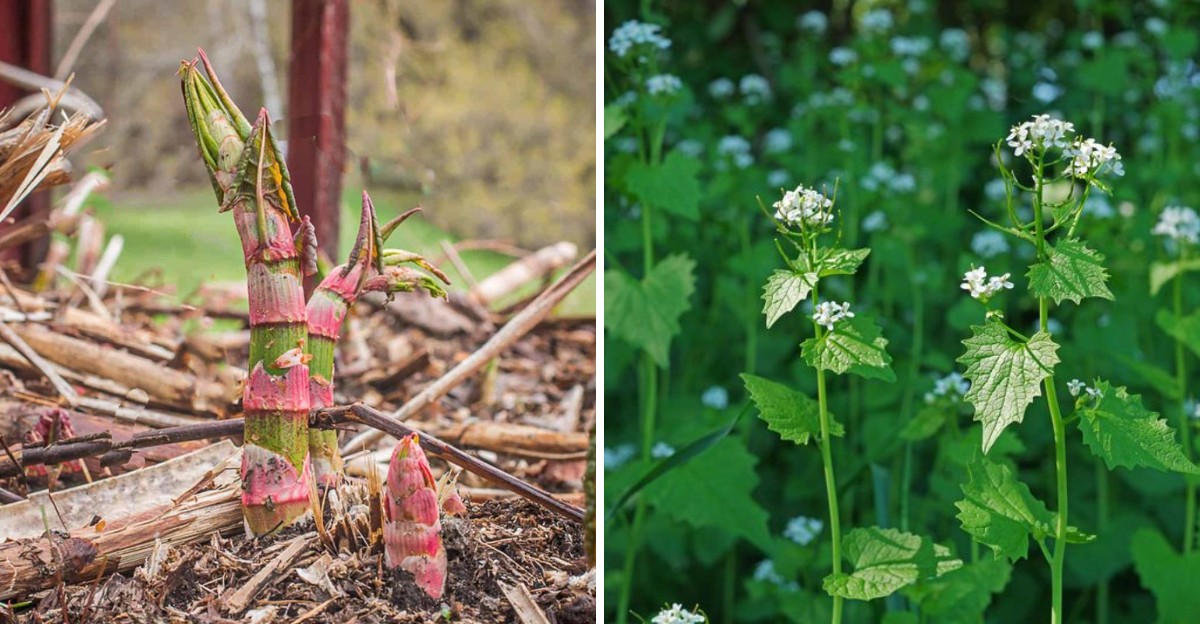
Crush a leaf between your fingers and a sharp garlic smell rises up, which foragers find hard to resist. Garlic mustard, Alliaria petiolata, tastes great in pesto, but it is a Class A noxious weed here.
Class A means the plant is still rare in the state, so landowners must eradicate it by law. Weed boards take every sighting seriously, because catching it early keeps it from spreading into native forests.
First-year plants form low rosettes of kidney-shaped leaves, then flower the following spring on taller stems. Clusters of small white flowers with four petals appear in spring, followed by skinny upright seed pods.
Each plant can scatter hundreds of seeds, and those seeds can stay viable in soil for several years. Its roots also release chemicals that disrupt helpful soil fungi that many native trees and wildflowers need.
Growing it on purpose for salads is a big no, even if a seed swap offers you some. If you suspect a patch, snap a clear photo and contact your county noxious weed control board quickly.
Pull plants carefully before seed pods form, grabbing low near the base to remove the white taproot. Bag everything, including flowering stems, because pulled plants can still ripen seeds while lying on the ground.
For a garlicky green you can legally grow, chives and young garlic greens grow easily in cool climates. I snip my chive clump all season, and it stays politely in its own corner of the bed.
7. Japanese Knotweed
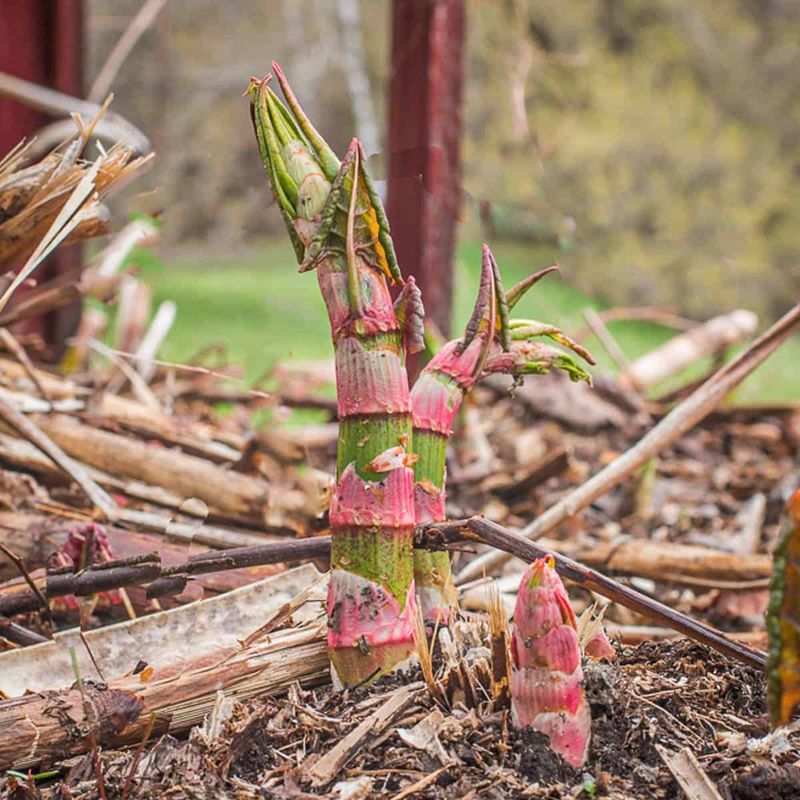
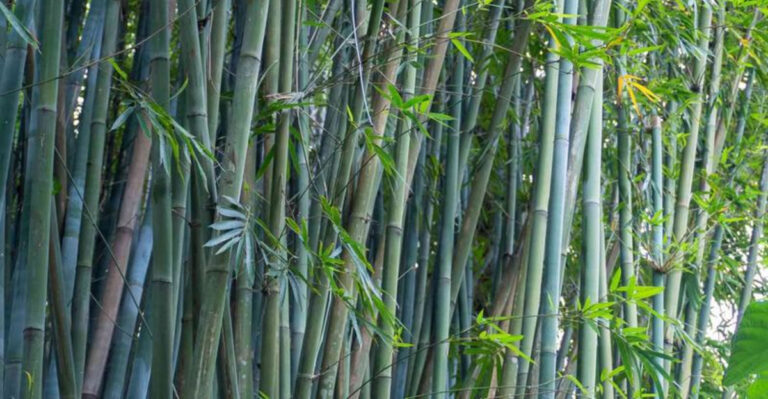
Hollow, bamboo-like canes can push through asphalt cracks and foundation gaps, rising several feet in a few weeks.
Japanese knotweed, Reynoutria japonica, is a Class B noxious weed listed on the official Washington State quarantine list.
Selling or moving it is prohibited, and many counties require control along streams and other sensitive areas. Some older gardens still hold clumps planted decades ago as a fast privacy screen or ornamental hedge.
Spreading happens mostly through thick underground rhizomes, which can reach several feet deep and travel sideways surprisingly far. Even a small rhizome fragment can sprout into a new plant, which makes casual digging surprisingly risky.
Along rivers, dense stands shade out willows and cottonwoods, which leaves banks more prone to erosion in winter. Washington salmon streams are harmed too, because fewer native trees means less shade and fewer leaves feeding aquatic insects.
Mowing or chopping without a plan usually spreads the problem, so resist the urge to grab a tiller. Many county weed boards offer free help, and some even run treatment programs along local creeks.
Late summer through early fall is often recommended for herbicide treatment, since plants move energy down to roots then. Hire licensed applicators near water, because aquatic rules are strict and labels must be followed carefully.
Clumps rarely disappear in one season, so expect several years of follow-up visits to catch new shoots. For a tall summer screen in Washington, I would choose native red-osier dogwood, which glows bright red through winter.
8. Parrotfeather
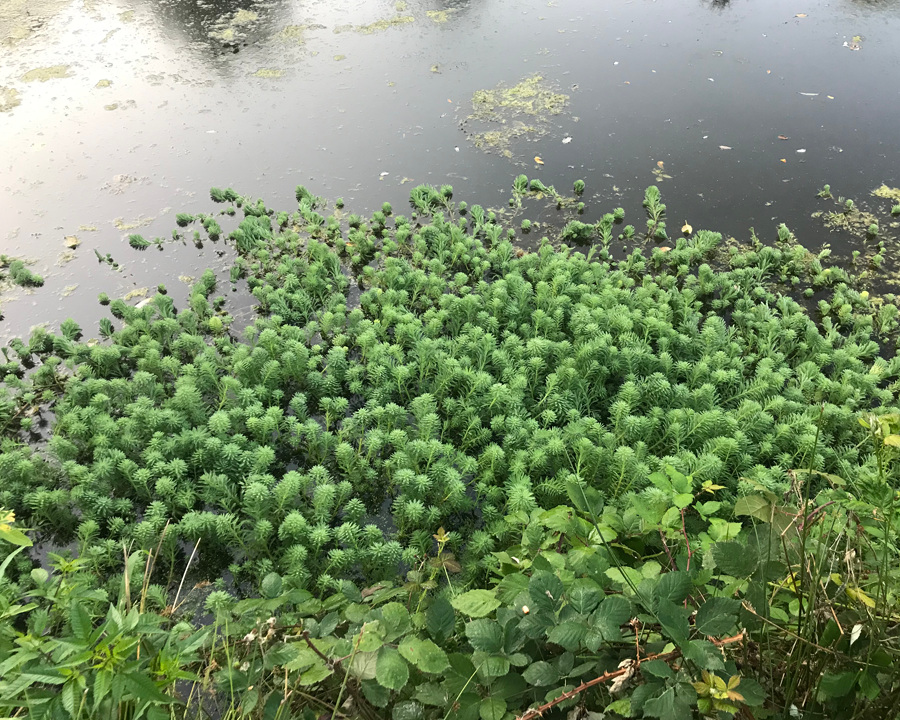
Feathery green whorls poke above the water like tiny fir trees, which explains why pond keepers once adored parrotfeather. Myriophyllum aquaticum is now a Class B noxious weed in Washington, and it sits on the quarantine list.
That listing makes buying or selling it illegal, even though older water garden books still recommend it highly. Online sellers in other states sometimes ship it anyway, so read every aquatic plant listing very carefully.
Most parrotfeather plants in North America are female, so it spreads mostly through broken stem fragments. A single piece washed out during a storm can start a new colony in a nearby creek or lake.
Thick floating mats slow water flow and create stagnant pockets where mosquitoes happily breed through warm weather. They also crowd out native aquatic plants that fish and frogs rely on for food and shelter.
If your pond already has it, scoop it out with a fine net and let it dry on a tarp. Bag the dried material for the trash, keeping every fragment far away from storm drains and ditches.
Ask before you buy any feathery oxygenator, because Eurasian watermilfoil and Brazilian elodea face similar restrictions. Mislabeled pond plants are common, and a quick photo comparison online can save you a real headache.
Native yellow pond lily brings big glossy floating leaves and cheerful blooms that dragonflies seem to adore. I find that a pond planted with locals feels calmer and stays much easier to manage year after year.