Why Native Oaks Feed More Songbirds Than Any Other Trees in North Carolina
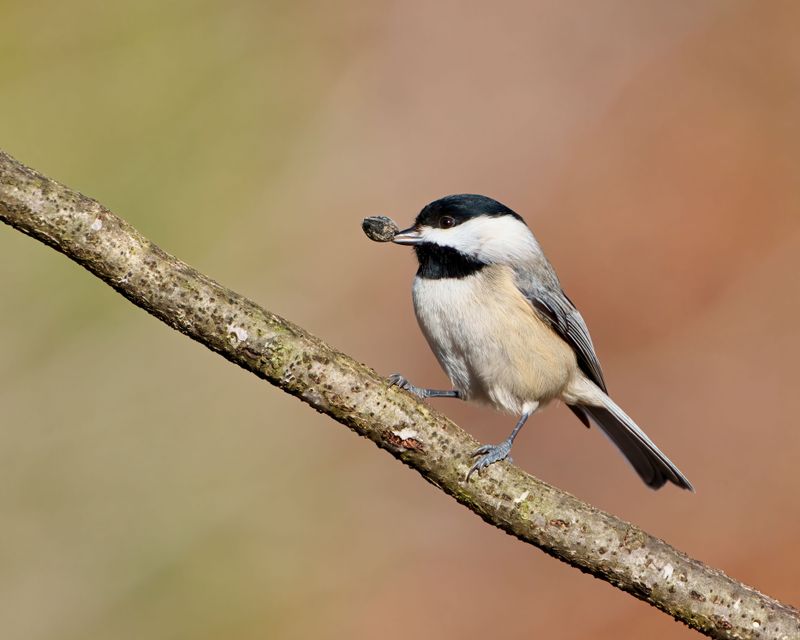
A single pair of Carolina chickadees can haul 6,000 to 9,000 caterpillars to one nest before the chicks fly. That number stopped me cold the first time I read it. Where on earth do all those wiggly snacks come from?
Most backyard songbirds feed their babies insects, not seeds. Soft caterpillars carry the protein and fat that fast-growing chicks need. Even birds that crowd your feeder in winter switch to bug hunting once nesting season arrives.
One thing I love about gardening is how a single plant choice can ripple outward. Some trees in North Carolina barely support any caterpillars at all. Others quietly run a buffet that feeds whole families of wrens, warblers, and titmice.
The real question is which tree carries the heaviest load. The answer was probably standing in your neighborhood long before your house was built.
1. Those Hungry Chickadee Nestlings Need a Mountain of Caterpillars
Feeders are lovely, but they miss the main event. Baby songbirds grow on insects, and caterpillars sit at the top of the menu.
Research by entomologist Doug Tallamy at the University of Delaware found that a Carolina chickadee pair brings roughly 6,000 to 9,000 caterpillars to its nest.
That happens in about 16 to 18 days. The parents make trip after trip, often searching within about 150 feet of the nest.
Why caterpillars? They are soft, easy to swallow, and full of protein and fat. They also carry carotenoids, natural pigments that help young birds develop healthy color and strong immune systems.
Seeds just cannot match that package. Even cardinals and sparrows, famous seed eaters, feed their chicks plenty of insects.
So the trees around your yard matter a lot. A nesting pair needs a nearby tree stuffed with caterpillars, not just pretty leaves.
Some trees host only a handful of caterpillar species. A few host hundreds. That gap decides whether a chickadee family finds dinner close to home or burns extra energy flying around the block.
Next spring, try watching a chickadee for ten minutes. Count how often it returns with something green in its beak. The tree it keeps visiting might surprise you.
2. Oak Leaves Host More Caterpillar Species Than Any Other Tree Group
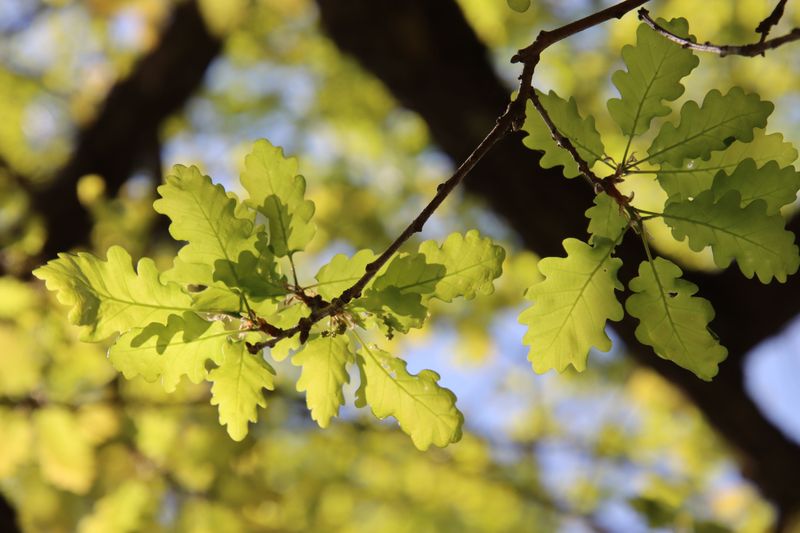
Oaks win this contest, and it is not close. In Doug Tallamy’s research across the eastern United States, the oak genus Quercus hosts over 500 species of moths and butterflies as caterpillars.
Nothing else comes near that total. Native cherries, willows, and birches follow, but they trail by a wide margin. That is why scientists call oaks a keystone plant group.
There is actually a good reason why oaks lead. They have grown in North America for millions of years, so local insects have had loads of time to adapt to their leaves. Many caterpillars specialize on oaks and eat little else.
Look closely at an oak in May and you may spot inchworms, prominent moth caterpillars, and tiny leaf rollers. Most are green or brown and blend in well. Birds are much better at finding them than we are.
Don’t panic about chewed leaves, either. Healthy oaks handle this normal nibbling with ease, and a few holes simply mean the tree is doing its job.
Every leaf with a bite out of it is a sign that the local food web is working. Some gardeners even start to feel proud of their ragged oak leaves. I count myself among them.
3. Warblers and Vireos Turn Your Oak Canopy Into a Busy Diner
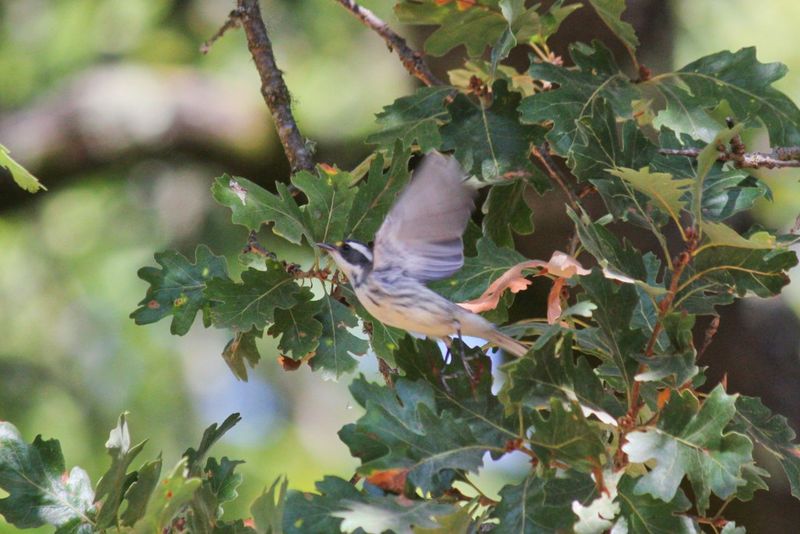
Grab binoculars on a May morning and aim them into an oak. You will likely see quick little birds flicking from twig to twig like they are late for work.
Spring migration lines up beautifully with oak leaf-out in North Carolina. Warblers, vireos, and tanagers pass through or settle in just as fresh oak leaves fill with young caterpillars.
Studies have shown many migrating songbirds prefer foraging in oaks over other trees. Red-eyed vireos glean caterpillars from leaf undersides.
Blackburnian and black-throated green warblers work the high branches. Tufted titmice and Carolina wrens join the crowd, too.
For migrants, this stop is like a fuel station on a long road trip. They need fat reserves to keep traveling north, and oak caterpillars help refill the tank.
Timing varies across the state. Oaks on the coast and in the Piedmont leaf out earlier than those in the mountains, so the feast moves upslope through spring.
Want the best view? Find an oak along a forest edge or park trail where the canopy sits a bit lower. Early morning, after sunrise, usually brings the most action. Bring patience and a neck that does not mind looking up.
4. Acorns Keep Blue Jays and Woodpeckers Fed Through Winter
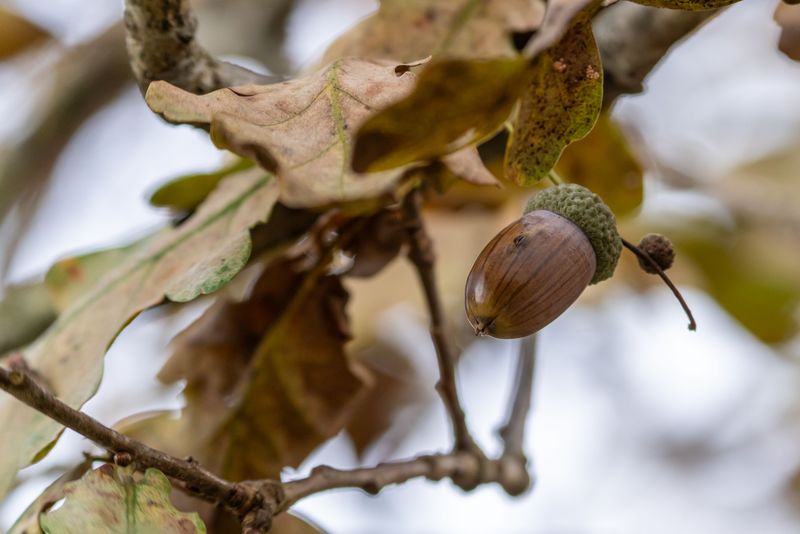
Caterpillars fade in fall, yet oaks keep giving. Acorns arrive just when birds need calories for cold weather.
Blue jays are the stars here. A single jay can cache thousands of acorns in one fall, tucking them into soil and leaf litter. They forget some, and those acorns can sprout into new oaks. Pretty clever tree planting, if you ask me.
Red-bellied and red-headed woodpeckers eat acorns, and so do wild turkeys and wood ducks. Tufted titmice and white-breasted nuthatches will crack smaller pieces. Squirrels and deer join the feast, too.
Acorn crops swing from year to year. Big years are called mast years, and they can be followed by lean ones. That ups and downs pattern is normal and helps more acorns escape hungry mouths.
Fun fact: white oak acorns mature in one season, while red oak acorns take two. Red oak acorns are higher in tannins, so they often last longer in storage and feed wildlife deeper into winter.
Having both groups nearby spreads out the food supply. Leave some acorns under your trees rather than raking every last one away. Your winter birds will notice.
5. Rough Oak Bark and Cavities Shelter Nesting Birds
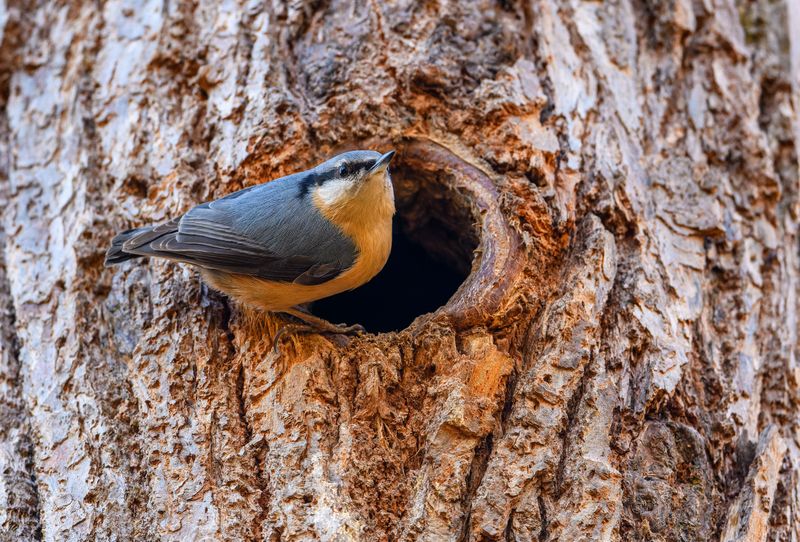
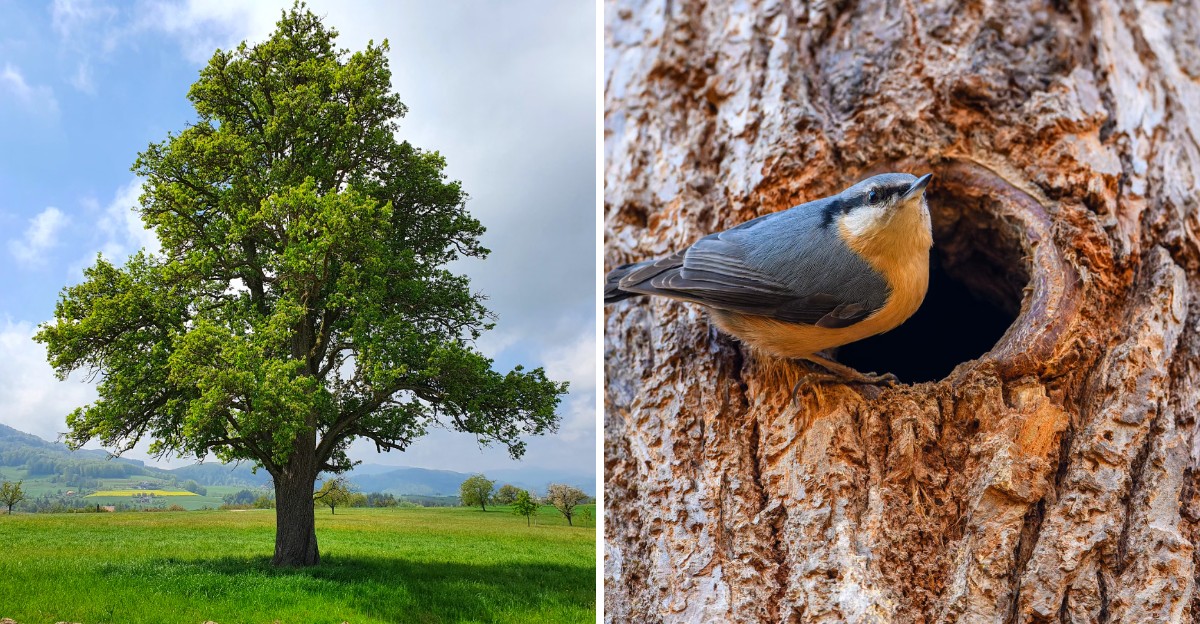
A big old oak is more than a kitchen. It is an apartment building, too. Deep, furrowed oak bark hides spiders, beetles, and insect eggs. Brown creepers spiral up the trunk to pick them out, and nuthatches walk headfirst downward doing the same job.
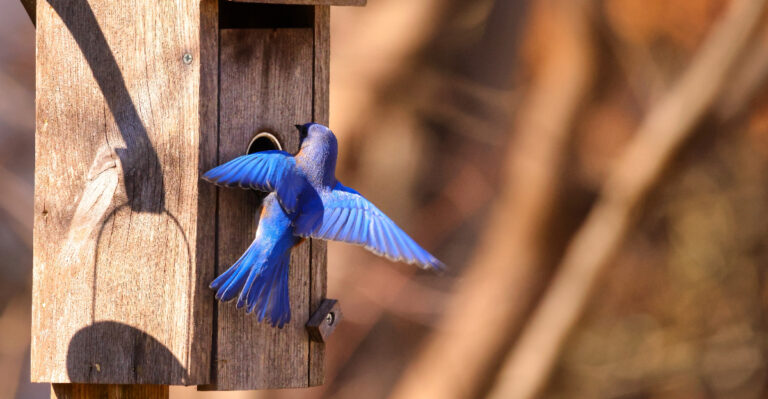
As oaks age, branches break and soft spots form. Woodpeckers carve nest holes in these weak areas. Later, chickadees, titmice, bluebirds, and even screech owls move into the old cavities.
Thick oak limbs also hold cup nests steady in summer storms. Blue-gray gnatcatchers and orchard orioles often build in oak forks.
Some oaks, such as several red oak species, hold onto their brown leaves into winter. This habit, called marcescence, gives small birds a bit of cover from wind.
Practical tip: if a large limb poses no danger to people, roofs, or cars, consider leaving it or the hollow alone. A certified arborist can help you judge safety. Cutting a risky branch to a tall stub, sometimes called a snag, can keep cavity habitat while reducing hazards.
Old oaks with a few scars are often the most valuable trees on the block. Their character and their tenants come together.
6. White Oaks, Willow Oaks, and More Grow Well Across North Carolina
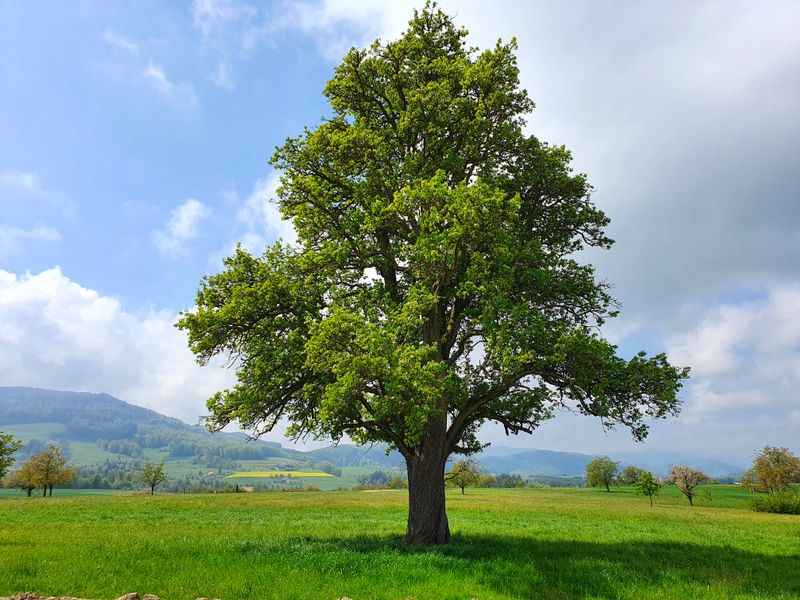
Choosing an oak is fun because the state offers so many. North Carolina has around 30 native oak species, spread from mountain ridges to sandy coastal plains.
White oak (Quercus alba) is a favorite for wildlife. It grows statewide, hosts loads of caterpillars, and drops sweeter acorns that birds and mammals love. It needs room, since it can grow wide and tall.
Willow oak (Quercus phellos) has slim, narrow leaves and handles city streets well. It tolerates wet soils and grows faster than many oaks. Small acorns suit birds like jays and woodpeckers.
Got sandy soil near the coast? Live oak, southern red oak, and turkey oak may fit better. In the mountains, northern red oak and chestnut oak are strong picks.
Short on space? Dwarf chinquapin oak stays shrub-sized, and blackjack oak stays modest too. Check mature size before planting near houses or power lines.
Fall and winter are good planting times across most of the state. Cooler air lets roots settle in before summer heat. NC State Extension’s plant toolbox lists details for every species. Buy from nurseries that sell local native stock when you can.
7. Bradford Pears and Other Imports Leave Baby Birds Hungry
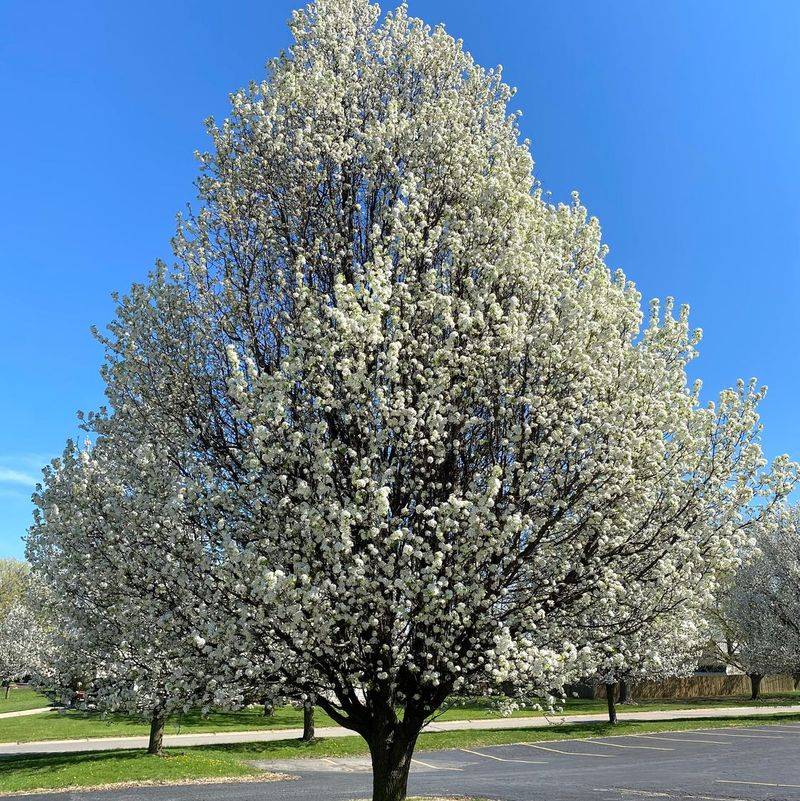
I know how frustrating it can be to learn that a tree you planted is not pulling its weight. Many of us inherited Bradford pears with our houses.
Non-native trees often host very few caterpillars because local insects never adapted to them.
A study by Desirée Narango and colleagues in the Washington, D.C., area found that Carolina chickadees struggled to raise enough young in yards where non-native plants made up more than about 30 percent of the plant mass.
Callery pear, including the Bradford type, is a special problem. It spreads into fields and roadsides, crowding out native plants.
North Carolina has listed it as invasive, and the NC Forest Service has supported bounty programs that swap removed pears for free native trees.
Removal is optional, of course. If you do replace one, an oak, black cherry, or serviceberry adds real food value.
Watch out for other common imports, too. Chinese tallow and mimosa trees also spread aggressively in the state.
Small swaps add up across a neighborhood. One yard can become a stepping stone for nesting birds. A block of them can make a real difference for chickadees and wrens.
8. Plant an Oak Seedling Now and Add a Soft Landing Underneath
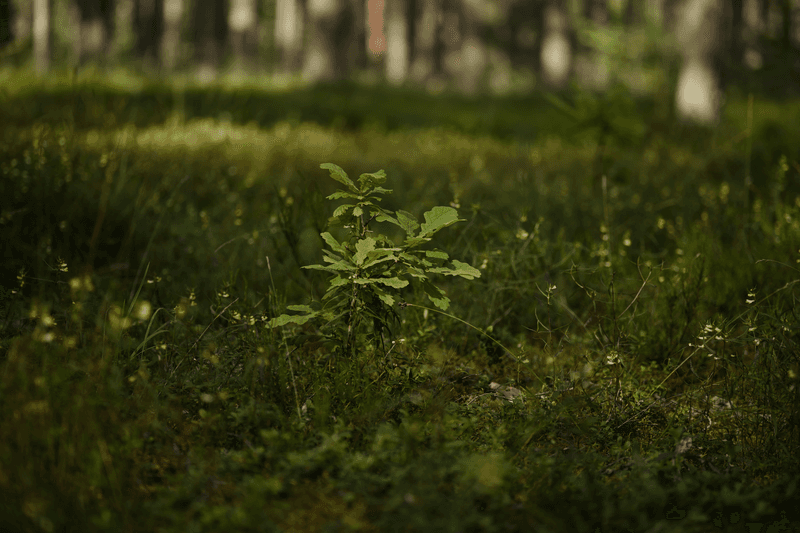
The best day to plant an oak was decades ago. The second best day is this fall or winter.
Small seedlings often catch up to big nursery trees within a few years because their roots settle in faster. They are cheaper too. The NC Forest Service nursery program sells native oak seedlings at low prices each season.
Plant in full sun with plenty of space. Dig a hole as deep as the root ball and wider, then keep the root flare at soil level. Water deeply during dry spells for the first two years.
Now the secret bonus. Many oak caterpillars drop to the ground to pupate in leaf litter and soil. Tallamy calls planted beds under trees soft landings.
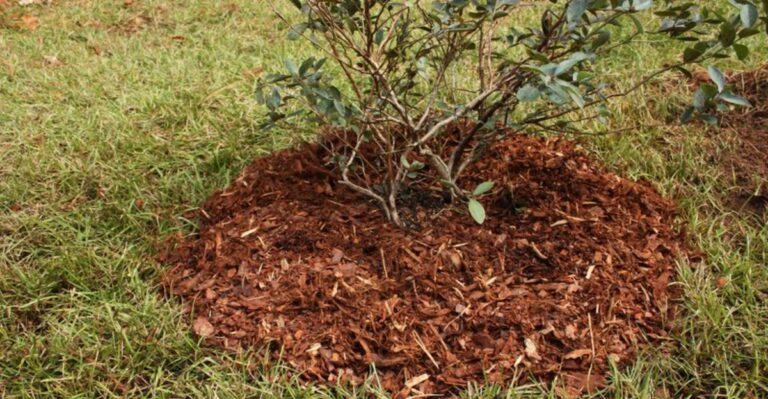
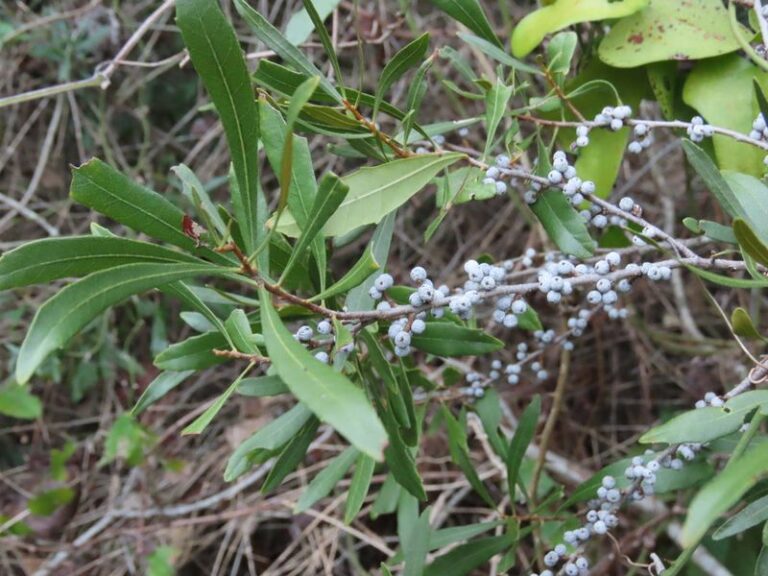
Swap some lawn under your oak for native shrubs and leaves. Try spicebush, highbush blueberry, or arrowwood viburnum. Leave the fallen oak leaves in place as natural mulch.
Skip broad insecticide sprays on oaks. Birds rely on those caterpillars, and natural predators keep most outbreaks in check.
An oak grows slowly, but songbirds begin using it within a few seasons. You are planting food for generations of chickadees. That feels like time well spent.