What Pale New Growth On North Carolina Basil Means Before The Plant Stops Producing Leaves
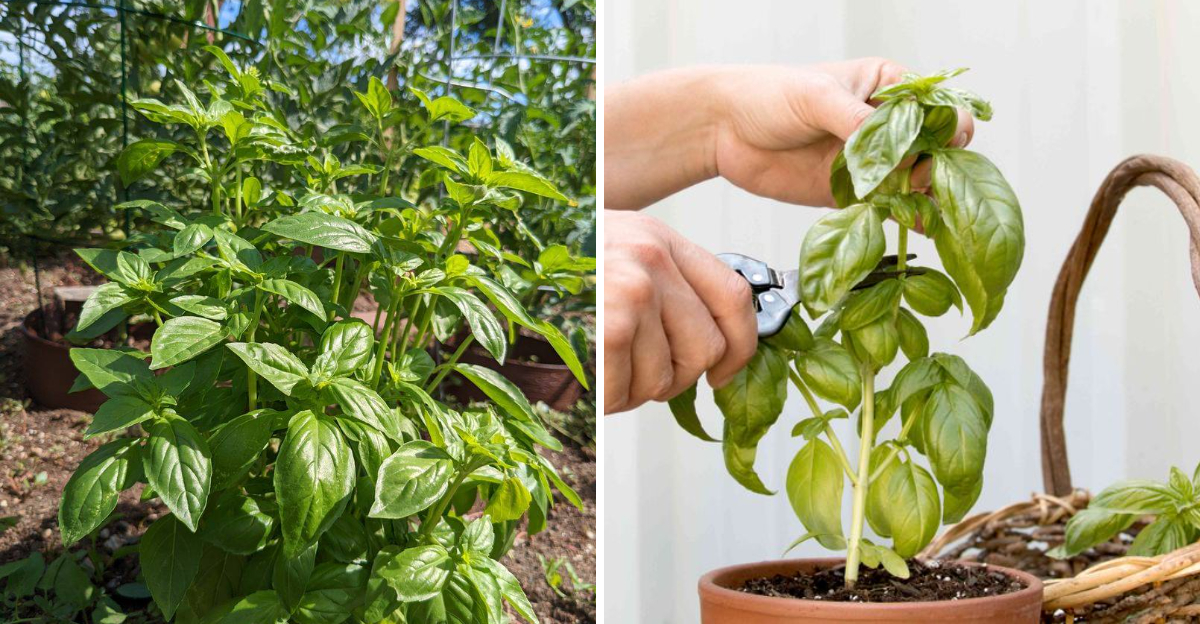
North Carolina basil can look perfect right before it starts complaining.
One week, the plant is glossy, fragrant, and full enough to make you mentally plan pesto. Then the newest leaves at the top start looking pale.
Not fully yellow. Not exactly white. Just washed out, thin, and strangely tired for growth that should be fresh and green.
That color change is a warning.
Basil produces leaves fast in summer, but it also reacts fast when something goes wrong. Heat, soggy roots, tired potting mix, hard harvesting, nutrient loss, and watering swings can all show up first in the newest growth.
Once the plant slows down, it can take longer to bring production back.
So what does pale new growth on basil really mean before the leaves stop coming?
Start by checking the roots, soil, heat exposure, and recent care habits. The plant may need food, but it may also need drainage, shade, a bigger pot, steadier water, or a gentler harvest routine before it can return to deep green growth.
1. Nitrogen May Be Running Low
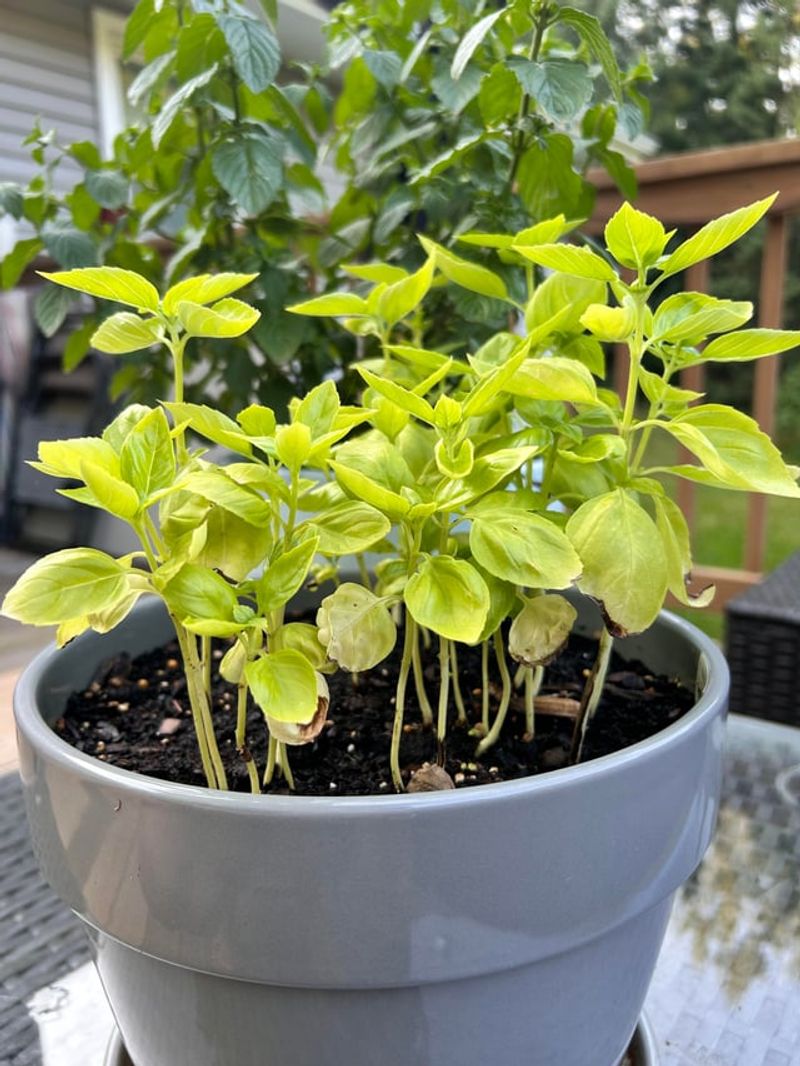
Pale new leaves can point to a hungry plant.
Basil depends on nitrogen to produce lush green growth. Since the whole point of growing basil is steady leaf production, low nitrogen can show up quickly as washed-out tips, slower growth, and smaller new leaves.
Container plants run short faster.
A porch pot has limited soil and limited nutrients. Every watering sends a little fertility out through the drainage holes.
North Carolina summer heat also keeps plants growing quickly, which means basil can use up available nutrients faster than expected.
Do not fertilize blindly, though.
Pale growth can also come from soggy roots, heat stress, or old potting mix. Feeding a plant with damaged roots will not solve the problem and may add more stress. Check moisture, drainage, and root space first.
A true nitrogen shortage usually improves with gentle feeding.
Use a diluted liquid fertilizer made for leafy growth, or apply a balanced slow-release product according to the label. Half-strength feeding is often safer than a strong dose, especially during hot weather.
Watch the new growth.
The old pale leaves may not darken much, but fresh leaves should start looking greener within a week or two once nutrition improves. That is your sign the plant is getting back on track.
Basil is not asking for a banquet.
It is asking for steady, light support so it can get back to making the leaves you actually planted it for.
2. Roots May Be Too Wet
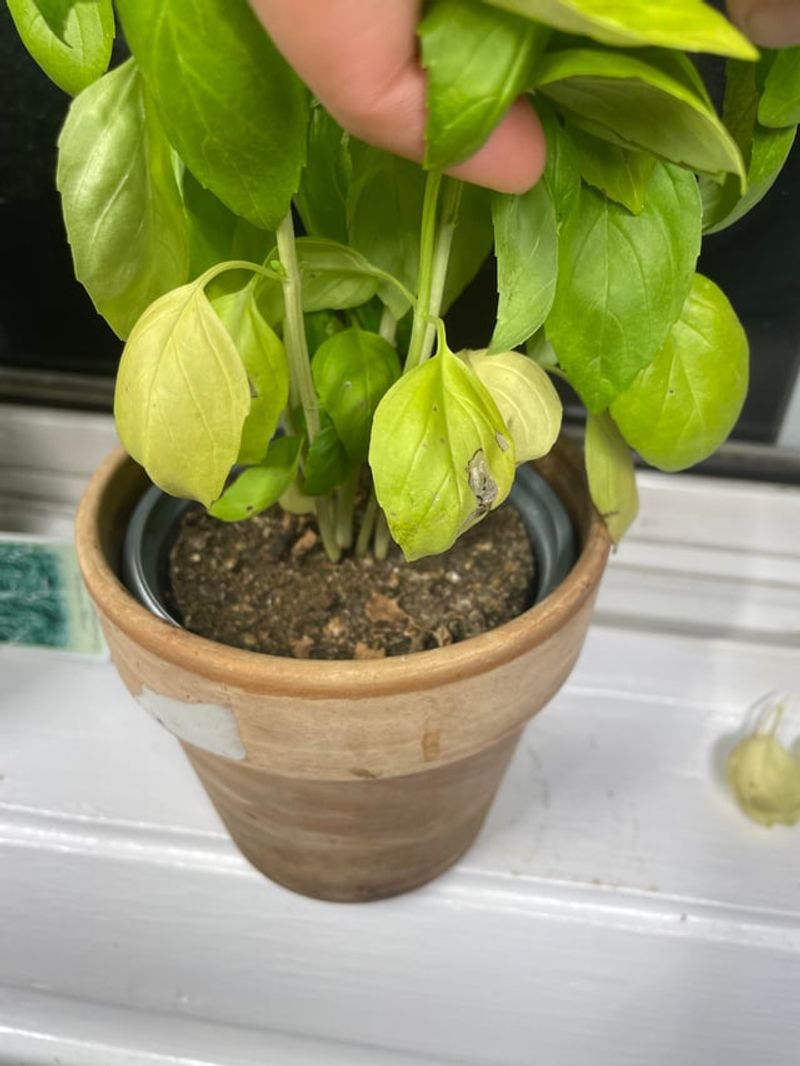
Soggy roots can make basil look underfed.
That is the sneaky part. A plant sitting in wet soil may show pale, limp, or yellowing growth because the roots cannot get enough oxygen.
Without oxygen, roots struggle to absorb water and nutrients properly, even when the pot contains plenty of both.
North Carolina storms can make this happen fast.
A porch pot may get soaked by heavy rain, then sit in a saucer full of water. A container with too few drainage holes may stay wet for days.
Your North Carolina Garden Changes Every Week. Your Plan Should Too.
Gardening in North Carolina changes quickly throughout the season. Every Friday you’ll receive a simple weekly plan showing exactly what to plant, prune, fertilize, harvest, and protect so you never miss the right timing.
Dense potting mix can hold moisture longer than basil wants, especially during cloudy or humid stretches.
Check before watering again.
Push a finger about two inches into the soil. Wet, cool soil means the plant does not need more water. Lift the pot too. A heavy container often still holds plenty of moisture.
Dump saucers after rain.
Basil roots should never sit above a hidden little pond. Move the pot where airflow is better, and let the mix dry slightly before watering again.
Severe cases may need repotting.
Sour-smelling soil, mushy roots, or a plant that keeps declining in wet mix all point toward root trouble. Trim damaged roots gently and move the plant into fresh, well-draining potting mix.
Basil likes moisture.
It does not like having its feet trapped in a swampy porch bathtub. Give the roots air, and the top growth often improves quickly.
3. Heat Is Slowing Growth
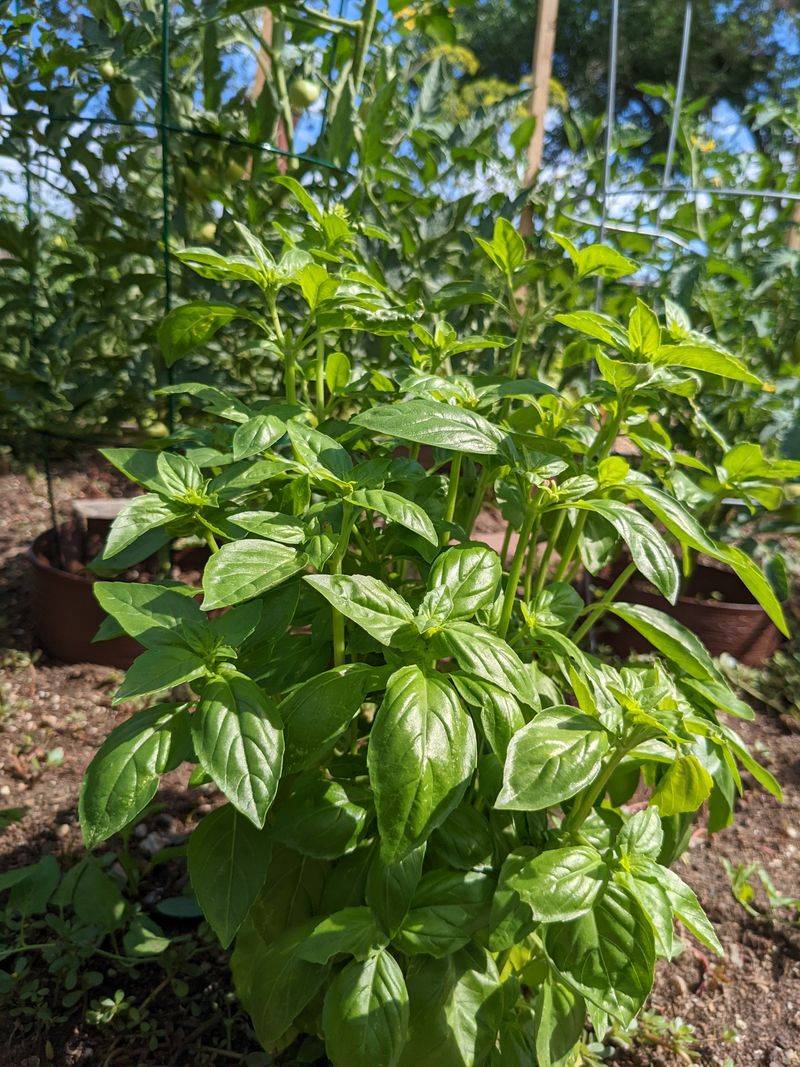
Basil loves warmth, but it still has limits.
North Carolina afternoons can push porch containers into rough territory, especially on west-facing steps, brick patios, or dark decks that radiate heat. Air temperature may be high, but pot temperature can be even worse.
Extreme heat slows the plant’s leaf factory.
Photosynthesis becomes less efficient. New leaves may emerge pale, thin, or smaller than normal. The plant may also start forming flower buds early, which is another sign it is trying to shift out of leafy production mode.
This is not always a fertilizer problem.
A plant can have nutrients available and still struggle to use them during intense heat. Forcing more feeding in that moment may not help. Cooling the growing conditions is usually smarter.
Morning sun is the sweet spot.
Move potted basil to an east-facing porch, a spot with early sun and afternoon shade, or a place that avoids the harshest heat from about noon onward. Basil still needs bright light, but it does not need to bake all afternoon.
Raised-bed plants can get temporary relief.
Use lightweight shade cloth during heat waves, especially through peak afternoon hours. Keep soil evenly moist, because dry soil heats faster and increases stress.
Pinch flower buds as they appear.
That keeps the plant focused on leaves instead of seeds.
Once nights cool slightly and afternoon stress eases, basil often responds with a fresh push of greener growth. It just needed a break from the summer oven.
4. Pots May Be Too Small
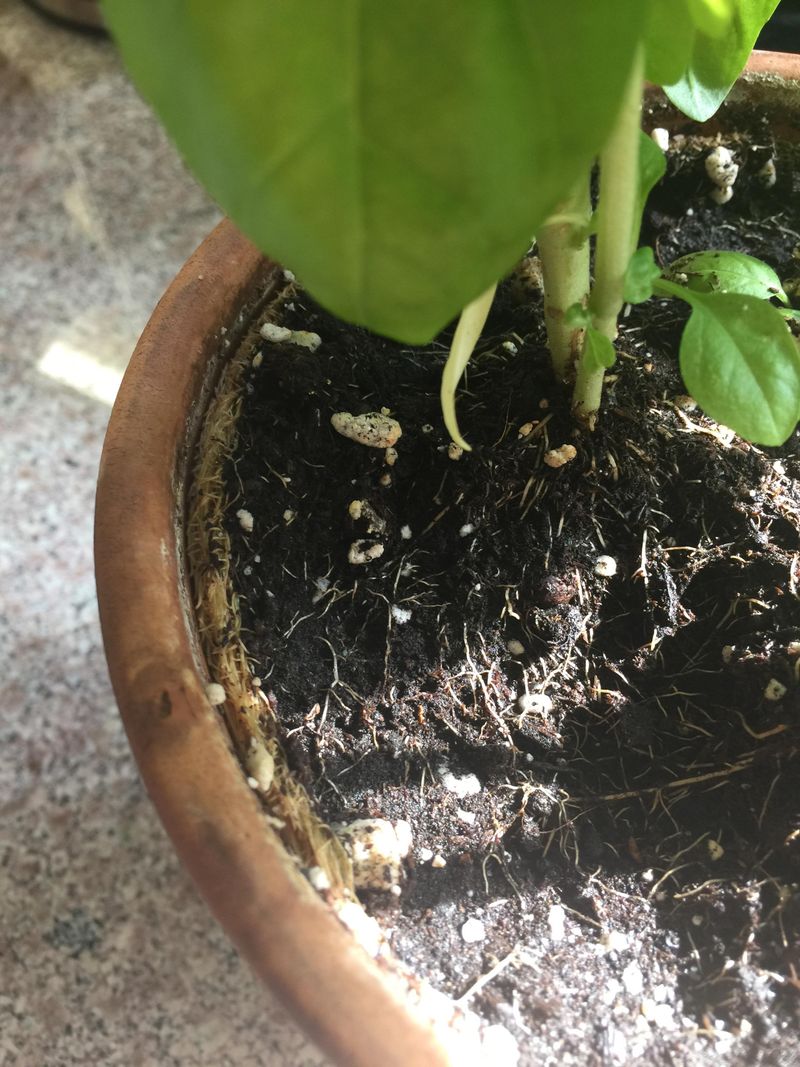
A cramped pot can make basil run out of momentum.
When roots circle the inside of a container, the plant has less access to water, air, and nutrients. The newest leaves often show the stress first because they depend on a steady supply of everything the roots collect.
Fast-drying soil is a major clue.
A pot that goes from damp to bone dry in one hot North Carolina afternoon may be too small for the plant. Water may also run straight through without soaking evenly because the roots have taken over the container.
Check the root ball.
Slide the plant out gently. Roots circling the bottom, packing the sides, or pushing through drainage holes mean the basil needs more room. A tight white mat of roots is not a badge of productivity. It is a plant asking for a larger kitchen.
Move up one practical size.
A container around twelve inches wide and ten to twelve inches deep gives most basil plants enough room for a strong summer root system. Use fresh, well-draining potting mix rather than recycling compacted old soil.
Water well after repotting.
Then place the plant in bright morning sun for a few days while it settles. Avoid heavy harvesting right away. Let the roots reconnect first.
A bigger pot can change the whole season.
More soil means steadier moisture, more nutrient capacity, and less panic every time the afternoon heat hits.
Tiny pots make cute porch decor. Basil wants working space.
5. Harvesting May Be Too Hard
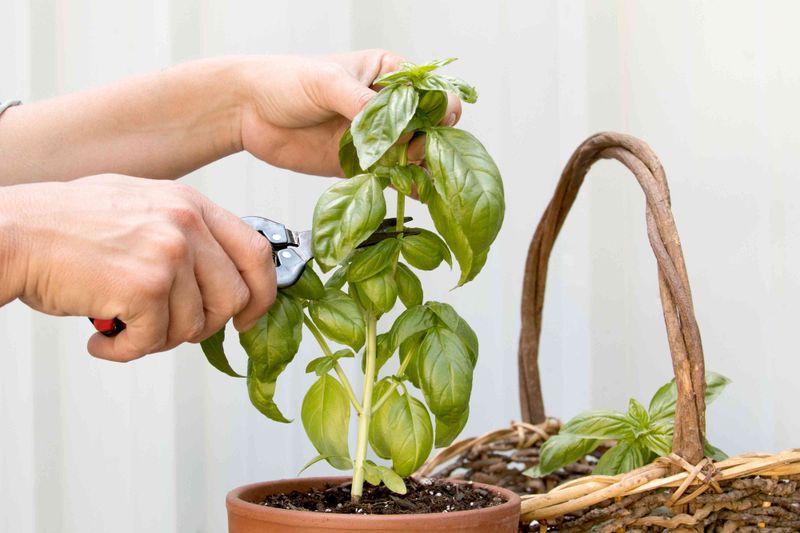
A hard harvest can slow the whole plant down.
Basil responds well to cutting, but only when enough leaves and nodes remain to fuel regrowth. Taking too much at once, cutting too low, or removing most of the active growth points can leave the plant struggling to restart.
Pale new growth can follow that stress.
The plant tries to replace what was removed, but it may not have enough leaf area left to make energy quickly. During a hot North Carolina stretch, that recovery becomes even harder.
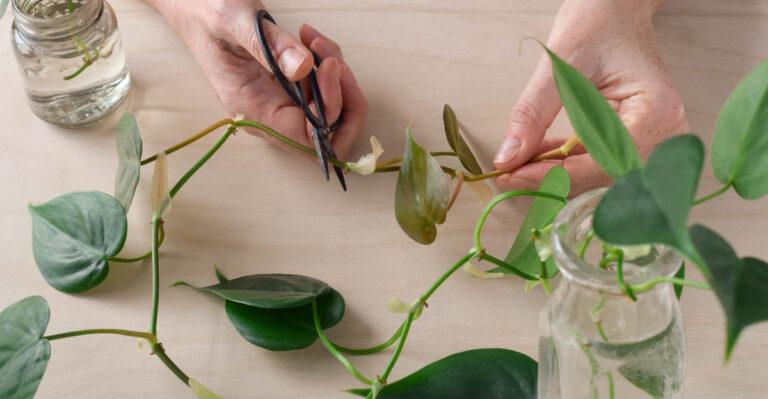
Cut above a leaf node.
That is where new side shoots form. Leave at least two sets of leaves on each stem so the plant can keep photosynthesizing. A stem stripped too far down has fewer options for a strong rebound.
Take no more than one-third of the plant at once.
A big pesto harvest is tempting, but spreading cuts over several days is easier on the plant. The basil stays productive longer when it is harvested regularly and moderately.
Pinch flower buds early.
Flowering shifts energy away from leaf production. Removing buds as soon as they appear keeps the plant bushier and encourages more leafy shoots.
Use clean scissors or pruners. Ragged tears create more stress and can invite disease in humid weather.
Basil likes being used. It just does not like being mugged. Harvest like you want the plant to keep feeding you next week too.
6. Old Mix May Be Spent
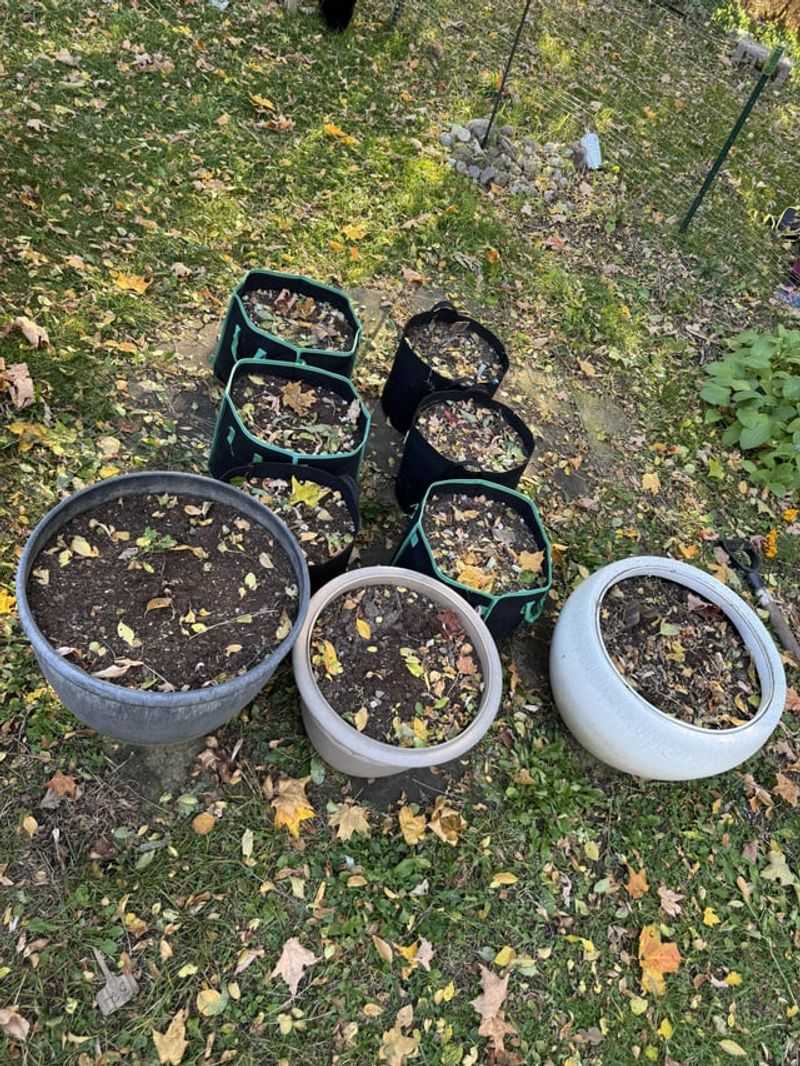
Potting mix does not stay fresh forever.
By late summer, a container that started strong in spring may be running on tired soil. Frequent watering, heat, root growth, and nutrient leaching can leave the mix compacted, pale, crusty, and low on fertility.
Basil notices fast.
Spent mix may hold too much water in some pockets and repel it in others. It may drain poorly, dry unevenly, or offer too little nutrition for steady leaf production. Pale new growth can be one of the first signs that the root zone has lost quality.
Look at how water behaves.
Water racing down the sides of the pot without soaking the center suggests the mix has become hydrophobic or root-packed. Water sitting on the surface for too long points toward compaction.
Topdressing can help mild cases.
Add an inch of finished compost or fresh potting mix to the surface and water it in gently. That gives roots a light nutrient boost and improves the upper layer.
A full refresh may work better for struggling plants.
Slide the basil out, loosen the root ball slightly, remove some exhausted mix, and repot with a fresh, well-draining blend. Avoid burying the stem too deeply.
Do not reuse dense, sour, or crusty mix for herbs.
Basil grows too fast to thrive in soil that has already spent its best energy.
Fresh mix can turn a tired plant around quickly. Sometimes the basil does not need motivation. It needs better dirt.
7. Watering Swings Add Stress
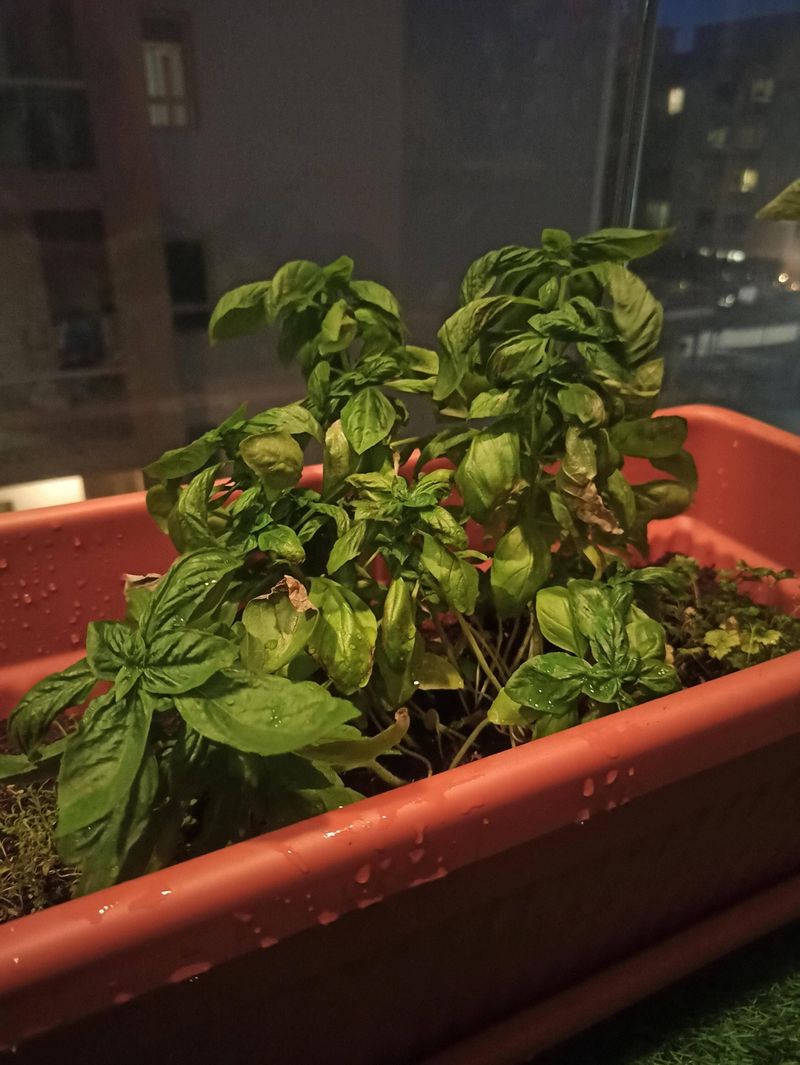
Basil hates the moisture roller coaster.
Bone dry one day, soaked the next, dry again two days later. That pattern stresses roots and interrupts nutrient uptake. Pale, small, or weak new leaves often show up when the plant cannot settle into a steady rhythm.
North Carolina summer makes swings easy.
Hot afternoons dry containers quickly. Thunderstorms can soak them suddenly. Busy schedules can stretch the gap between waterings. The plant is left bouncing between drought stress and soggy-root stress.
Consistency matters more than perfection.
Check the pot every morning during peak heat. Push a finger into the soil. Water when the top inch feels dry but the soil below is still slightly cool. That helps prevent the plant from reaching full wilt before getting a drink.
Drainage still matters.
Steady moisture does not mean constant wetness. A good potting mix should hold enough water for the roots while letting extra drain out freely.
Mulch can help.
A thin layer of straw, shredded leaves, or fine bark over the soil surface slows evaporation. Keep it light, and do not pile it against the stem.
Self-watering containers can be useful.
They help gardeners with irregular schedules keep moisture more stable, as long as the mix stays airy and the reservoir is managed properly.
Basil grows best when the roots trust the routine.
Give it fewer dramatic plot twists, and the new leaves usually look much better.
8. New Leaves Need A Reset
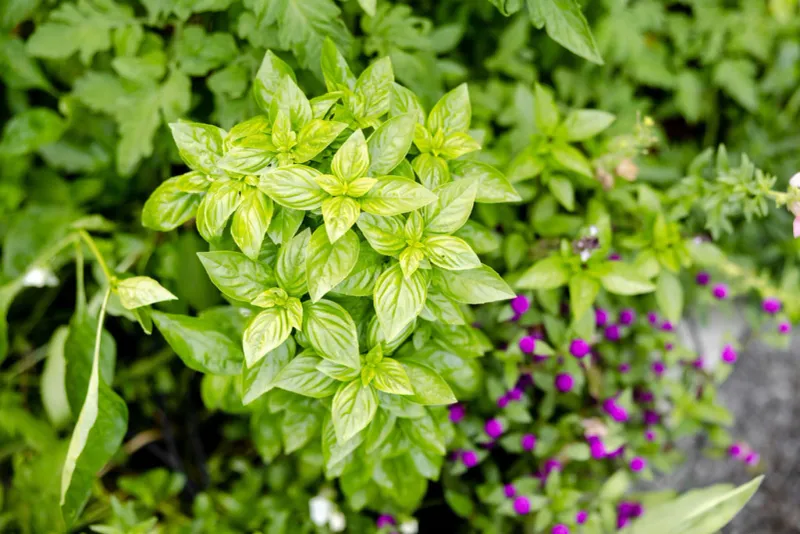
Pale growth is often a pileup, not one single problem.
A slightly small pot, a few missed waterings, a hot porch, tired mix, and one enthusiastic harvest can all stack together. The basil keeps going for a while, then the newest leaves finally show the strain.
A reset can bring it back.
Start with a light trim. Remove flower buds, leggy tips, and weak pale stems by cutting just above healthy leaf nodes. Leave enough foliage behind so the plant can keep making energy.
Check drainage next.
Make sure the pot has open holes and is not sitting in water. Empty saucers after rain. Move the container where air can move around it.
Refresh the root zone.
Topdress with compost, apply a gentle half-strength liquid feed, or repot into fresh mix when the container is cramped or exhausted. Choose the least disruptive fix that matches the plant’s condition.
Shift the light during extreme heat.
Morning sun with afternoon shade is often ideal in July and August. A plant that stops baking every afternoon can restart leaf production faster.
Water with a routine. Check daily, water deeply when needed, then let excess drain.
Avoid both crispy drought and constant sog. Give it a week or two. Fresh green tips are the sign the reset worked. Basil is fast, forgiving, and wonderfully dramatic.
Pale new growth is not the ending. It is the plant tapping the counter and asking for better service.