What It Means When A Brown Thrasher Visits Your Georgia Yard
One backyard singer in my area may know more than 1,100 different song types. That number still makes me laugh, because the bird behind it spends much of its day kicking fallen leaves around like a toddler in a ball pit.
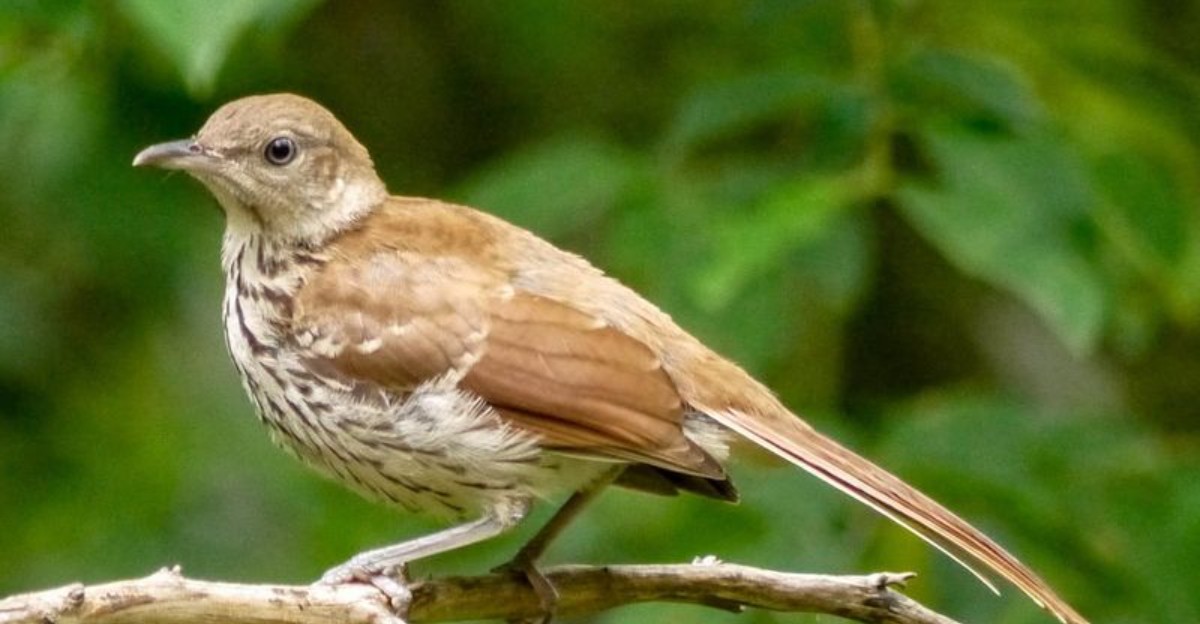
It wears rusty brown feathers, a streaky cream chest, and a long tail that flicks with attitude. Its eyes glow a fierce yellow.
You will often hear it scratching under shrubs long before you spot it.
I think a visit from this bird is one of the best compliments a Georgia yard can get. It is picky about where it hangs out.
It wants thick cover, messy ground, and plenty of bugs, so it rarely stays where those things are missing.
What is that loud rustle under your azaleas really telling you about your garden?
1. That Loud Rustling Under Your Shrubs Has a Famous Source
Most folks expect a squirrel when the leaves start flying. Then a long-tailed, cinnamon-colored bird pops out, and the mystery gets more interesting.
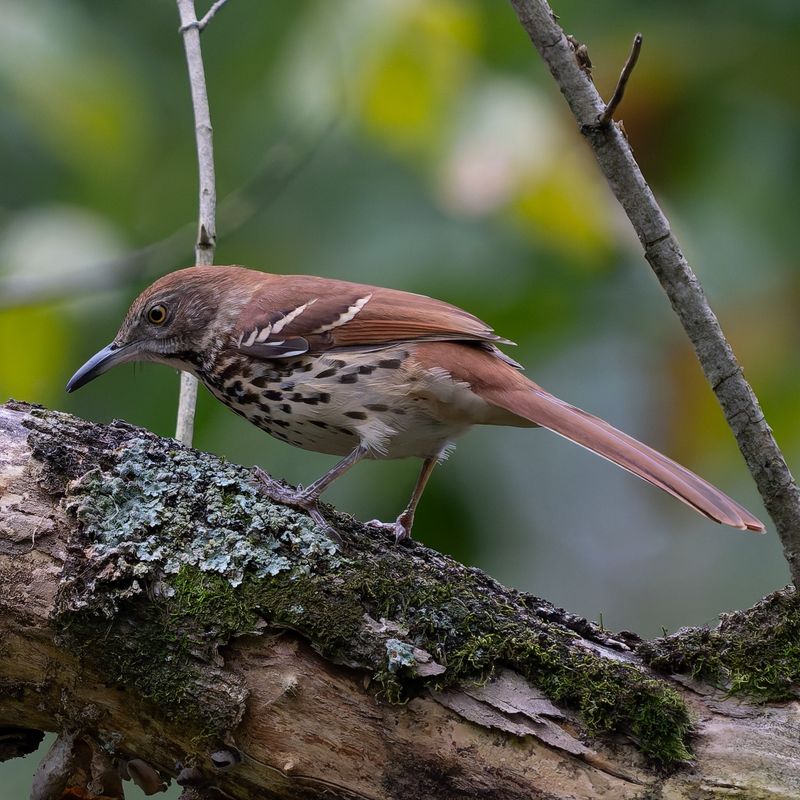
What you likely heard is the Brown Thrasher, Georgia’s official state bird since 1970. It earned its name from the way it forages.
The bird swings its long, slightly curved bill side to side, flipping leaves and digging into loose soil to find hidden snacks.
Identifying one is fairly easy once you know the clues. Look for a bird a bit larger than a robin, with warm reddish-brown upperparts and a creamy chest covered in dark streaks.
Two pale wing bars and bright yellow eyes finish the look.
Many people confuse thrashers with thrushes, like the Wood Thrush. Thrushes have spots and dark eyes, while thrashers have streaks and that piercing yellow stare.
The long tail is another strong hint.
Brown Thrashers live in Georgia year-round, so you can spot them in any season. Some northern birds also travel south in fall, which can mean a few extra visitors in winter.
So the first meaning is simple. Your yard just hosted a true local celebrity, and it came because something there looked useful.
2. Thick Shrubs and Leafy Ground Are Exactly What Brown Thrashers Want
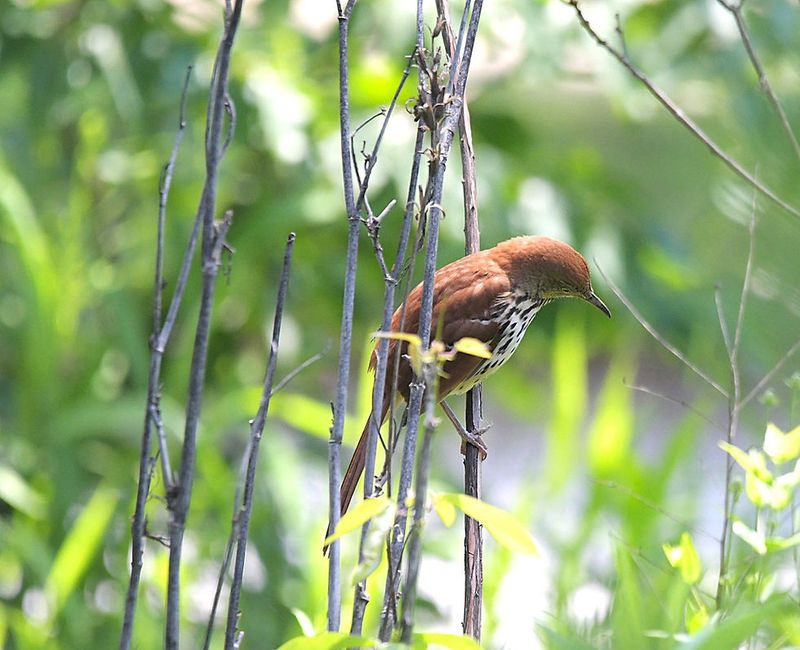
Here is the real compliment hiding in that visit. Brown Thrashers seek out places where dense, brushy cover sits right next to open ground.
If one shows up, your yard likely offers both.
Thick hedges, tangled thickets, and overgrown shrub borders give these birds a safe spot to hide from hawks and cats. A nearby strip of bare soil or leaf litter gives them a dining room.
They rarely wander far from cover while they eat.
I find this really reassuring as a gardener. A super tidy yard with clipped lawn and bare mulch usually does not attract them.
A thrasher sighting suggests you left some healthy mess in the right places.
Leaf litter matters more than many people realize. Fallen leaves hold beetles, caterpillars, spiders, and other small creatures.
Without that layer, a thrasher has far less reason to stop by.
Edges of woodlands, old fields, and shrubby fencerows are their natural favorites. Your backyard may be copying that habitat without you even planning it.
Take a quick look around your property. That spot where your shrubs meet the leaves is probably where the action happens, so treat it as valuable bird real estate.
3. A Brown Thrasher Singing From the Treetop Is a Spring Concert Worth Catching
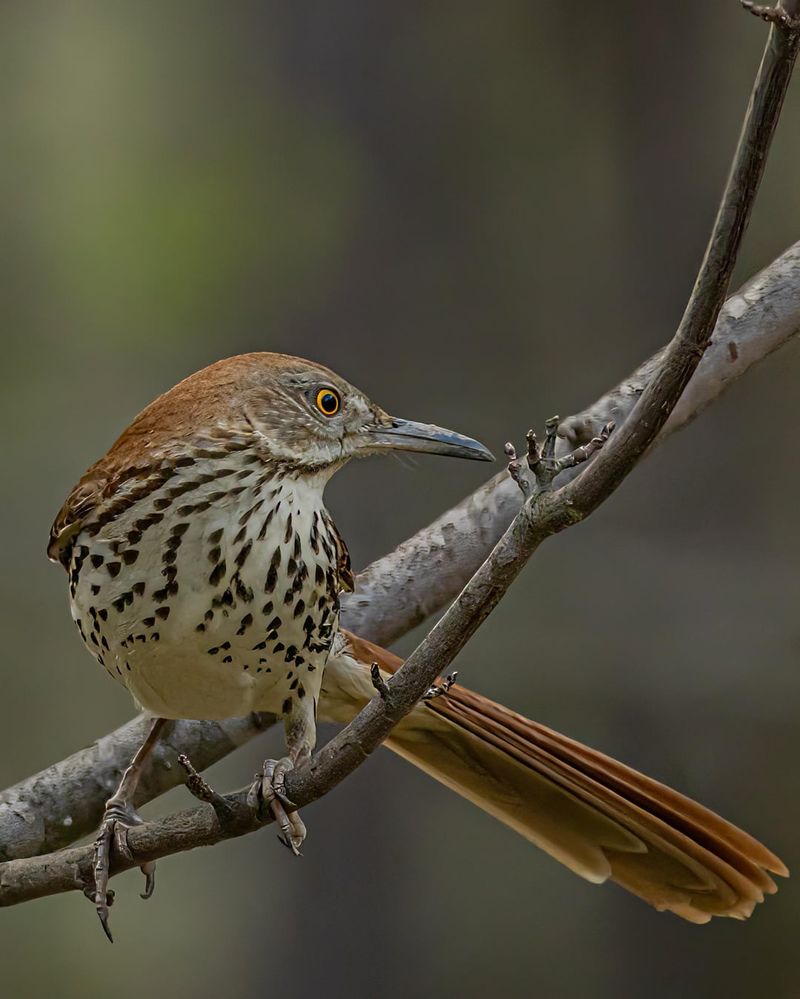
Grab your coffee and step outside on a spring morning. If a bird is belting out a long, jumbled song from the top of a tree, check for a rusty brown singer with a long tail.
Male Brown Thrashers are famous for their huge song collection. Researchers have recorded more than 1,100 song types from a single bird, and some estimates go even higher.
That ranks among the largest repertoires of any North American songbird.
Spring is the season when these shy birds suddenly turn bold. Males perch high in the open to claim territory and attract a mate.
It is one of the few times you can get a clear, long look at one.
Mockingbirds sing similar mixed-up songs, which can make things tricky. A handy trick helps here.
Thrashers usually sing each phrase twice, while mockingbirds repeat phrases three or more times, and catbirds mostly do not repeat at all.
Thrashers do copy some sounds from other birds, but much of their music is their own. Try counting the repeats next time you hear a show.
A singing male on your property in spring may mean he considers your yard part of his territory.
4. Native Berry Shrubs Will Keep Brown Thrashers Coming Back
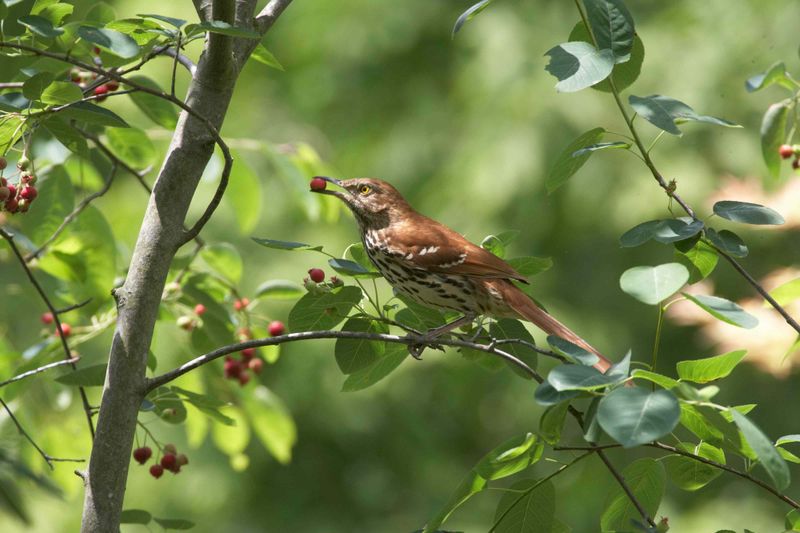
Want more visits? Your plant list can do a lot of the work for you.
Brown Thrashers eat mostly insects in warm months, but they lean on fruit and seeds in fall and winter. Native shrubs that offer both berries and thick cover give them two reasons to stick around.
That combination is hard for them to resist.
Good Georgia natives include American beautyberry, wax myrtle, elderberry, hawthorns, and native viburnums such as arrowwood. Flowering dogwood and native hollies like yaupon also provide fruit that many birds enjoy.
Check with your local UGA Extension office for the best choices for your soil and region.
Please skip invasive shrubs like Chinese privet, nandina, and Japanese honeysuckle. They spread into woodlands and crowd out the native plants that support local insects.
Nandina berries can also be harmful to birds.
Plant in clusters rather than single specimens. A grouping of three to five shrubs creates the dense pocket of cover that thrashers love.
Fall and late winter are great times to plant in most of the state. Cooler weather helps roots settle in before summer heat arrives, so your new shrubs get a strong start.
5. Those Hungry Thrashers Are Quietly Eating Your Garden Pests
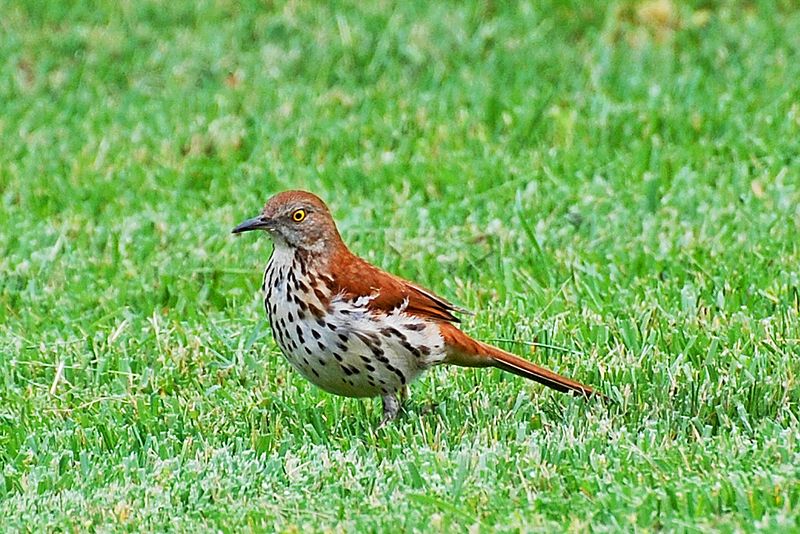
Talk about a helpful houseguest. Every time that thrasher flips leaves under your shrubs, it is hunting for bugs you probably do not want anyway.
Insects and other small creatures make up a large share of the Brown Thrasher diet, especially in spring and summer. Beetles, grasshoppers, caterpillars, cicadas, and spiders are common targets.
They also eat earthworms, snails, and now and then a small lizard or frog.
I love watching one work through a flower bed. It moves with purpose, tossing mulch around in quick bursts.
Sometimes a little mulch lands on the walkway, but that seems like a fair trade for free pest patrol.
A thrasher visit can also hint that your yard has a healthy insect population. Heavy pesticide use reduces the bugs these birds need.
Fewer chemicals often mean more birds.
If you want to offer a snack, try mealworms in a low tray feeder placed near shrubs. Some thrashers also visit suet, especially in winter when insects are harder to find.
Keep feeders close to cover. These birds rarely feel comfortable eating out in the open, so a feeder next to a hedge works far better than one in the middle of the lawn.
6. Hold Off on Pruning When Brown Thrashers Are Nesting
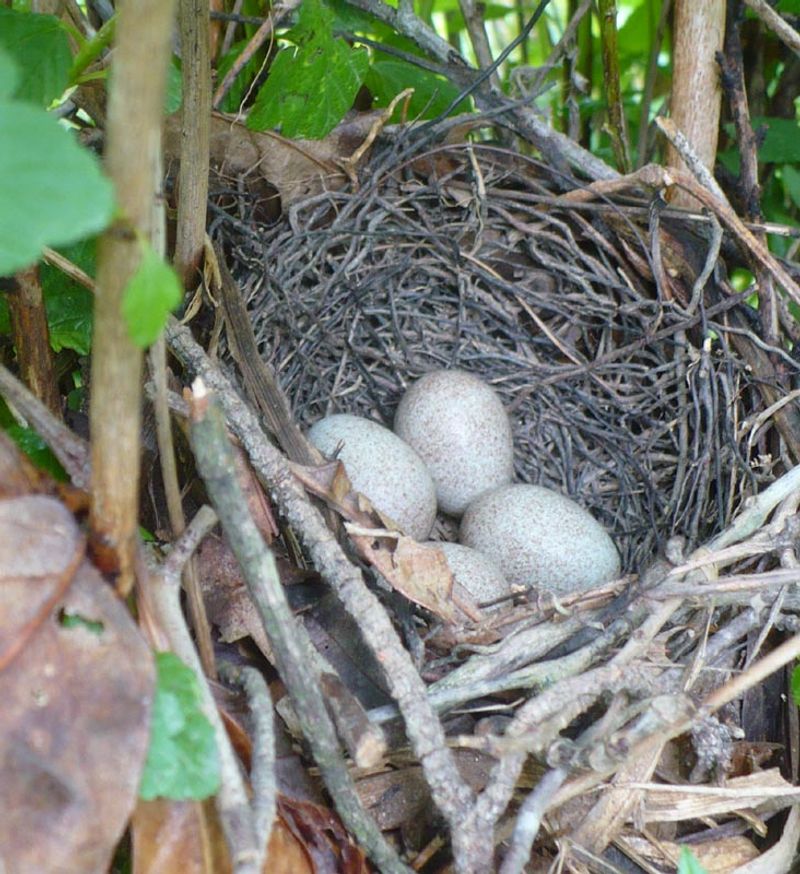
Spring cleanup fever hits hard, I know. Before you take the hedge trimmers to that thick shrub, peek inside for a hidden nest.
Brown Thrashers usually build nests low, often between ground level and about 7 feet up. They prefer dense or thorny shrubs, vine tangles, and thick hedges.
The nest is a bulky cup of twigs lined with grass and rootlets.
Nesting in Georgia runs roughly from early spring into summer, and pairs often raise two broods. Eggs are pale with fine brown speckles.
The young leave the nest quickly, sometimes before they can fly well.
Light trimming can wait until late summer or winter. Heavy pruning in spring can expose nests to predators or cause parents to abandon them.
Brown Thrashers are protected under the federal Migratory Bird Treaty Act, so disturbing active nests is not allowed.
Thrashers defend their nests fiercely. Some will swoop at people or pets that get too close, so give them space.
Outdoor cats pose a real threat to ground-feeding birds like these. Keeping cats indoors is one of the most useful steps you can take.
A low, shallow birdbath near cover is a nice bonus too.
7. Your Georgia State Bird Needs Yards Like Yours More Than Ever
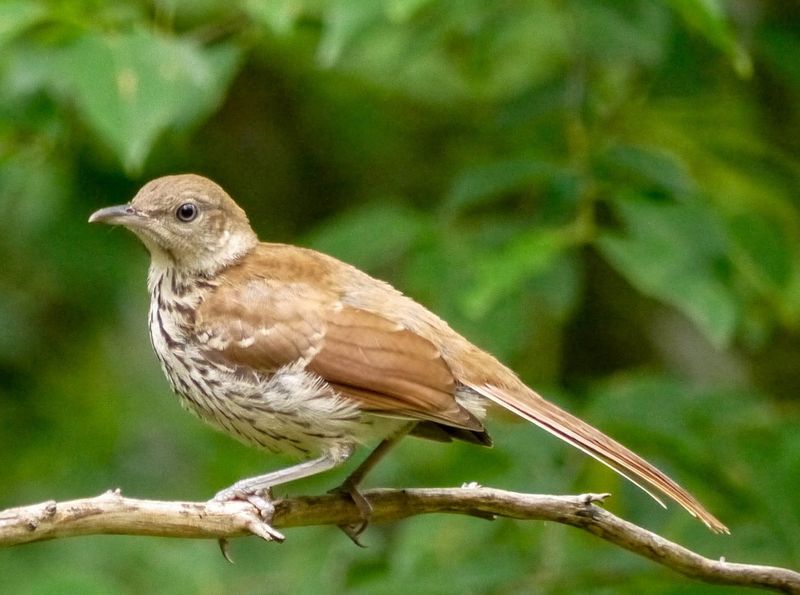
A small brown bird in your garden carries a bigger message. Brown Thrashers are still common, but surveys show their numbers have declined across much of their range since the 1960s.
Habitat loss plays a major role. Old fields and shrubby edges get cleared, paved, or turned into neat lawns.
Each lost thicket means fewer places to nest and feed.
That is why your yard matters. A few native shrubs, some leaf litter, and a quiet corner can create a real refuge.
Home gardens add up across a neighborhood.
A simple brush pile works wonders. Stack branches and trimmings loosely in a back corner.
Birds use it for shelter, and insects move in to provide food.
Leave some fallen leaves under shrubs instead of blowing them all away. Cut back on pesticides when you can.
Choose native plants when you replace older landscaping.
You can also help science by reporting sightings to eBird or joining the Great Backyard Bird Count each February. These records help researchers track how the species is doing.
So the next time leaves fly under your azaleas, smile. Your Georgia yard just passed a test that plenty of tidy lawns fail.