Utility Crews Can Cut Down the Tree You Planted Under Arizona Power Lines
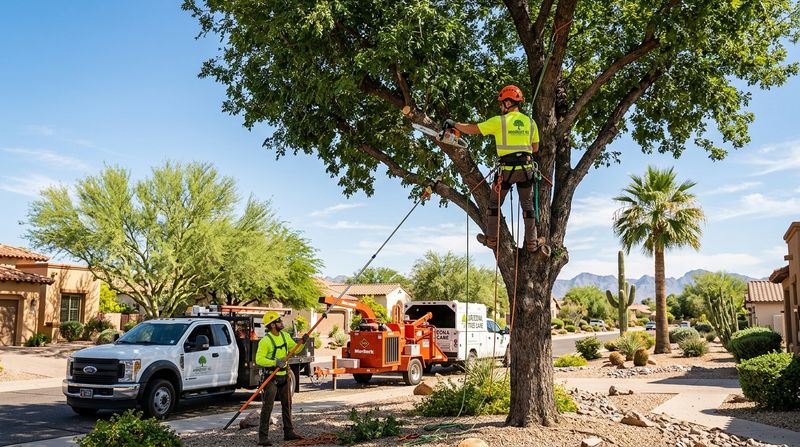
Yes, a utility crew can prune or even remove a tree you planted yourself. It happens when the utility decides the tree is a safety or reliability risk.
The rules depend on the utility, the type of line, and the papers tied to your property. Here is how to sort out what applies to your yard in Arizona.
What Utilities Do When Trees Threaten Lines
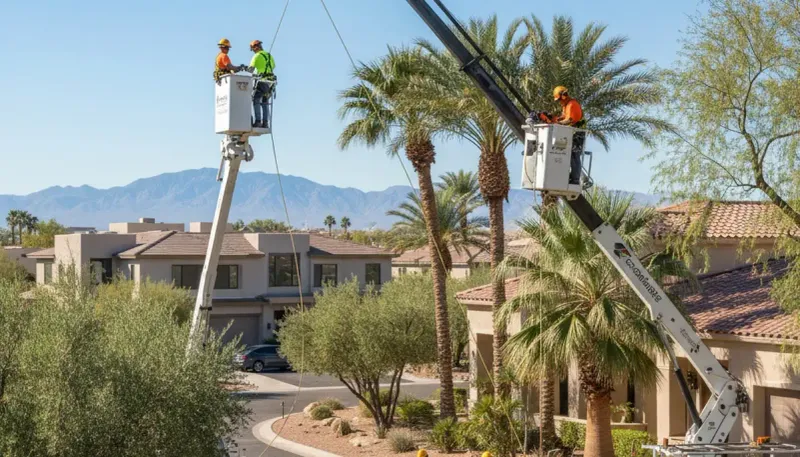
Arizona utilities do prune and sometimes remove trees on residential property when their vegetation-management policies identify a safety or reliability risk. SRP says it may trim or remove trees growing into or too close to overhead lines between poles.
APS describes similar work on vegetation that threatens its high-voltage lines.
Still, being near a line does not by itself give any utility a universal right to take a tree down. The outcome depends on which utility serves you, what kind of line it is, and what any easement or agreement on your property says.
Federal vegetation-reliability standards concern larger transmission facilities. They do not dictate a method such as clear-cutting, and they do not apply to ordinary distribution lines serving homes.
The next sections walk through each piece.
The Line Type Changes Who Handles the Tree
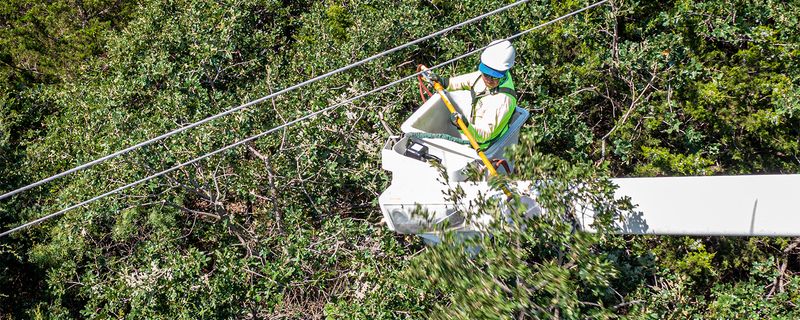
Look up before you assume anything. Overhead lines that run from pole to pole are different from the service line that drops from a pole to your house, a business, or a streetlight.
SRP’s tree program applies to vegetation too close to its pole-to-pole lines. For trees touching a service line, SRP tells customers to arrange qualified professional work and to contact SRP about a temporary disconnection.
TEP draws a similar line. It trims vegetation near its overhead distribution lines, while the customer’s service line to the home is the customer’s responsibility.
So the first job is identifying what the branches are actually touching. A quick photo of the pole, the wires, and the tree can help when you call.
Your Easement Defines the Utility’s Reach
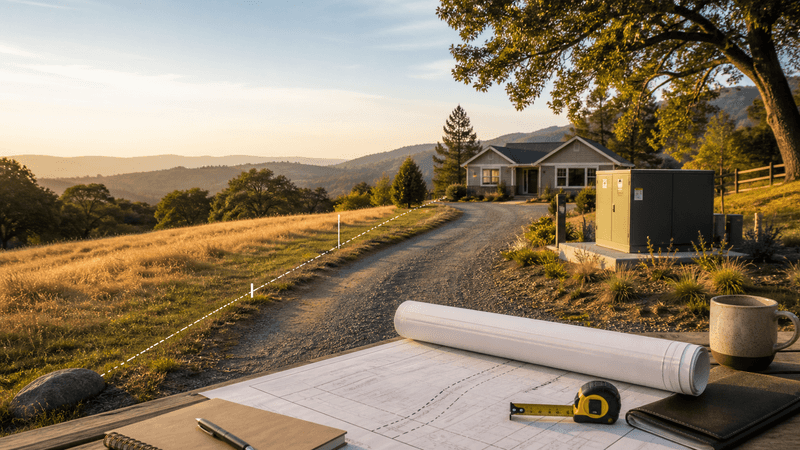
Owning your lot and having full freedom on every inch of it are not the same thing. Maricopa County’s easement waiver notes that land inside a public utility easement stays the owner’s land, but its use is subject to the easement’s terms.
Those terms matter because easements are not all alike. Some are narrow, some are broader, and an easement holder may be allowed to remove obstructions when needed to carry out its purpose.
Nothing about the word easement means unlimited access across a parcel.
FERC advises landowners to review their right-of-way agreement and says owners can ask the utility for a copy. Your title paperwork, plat map, or closing documents are good places to start looking.
Arizona Utilities Set Different Vegetation Policies
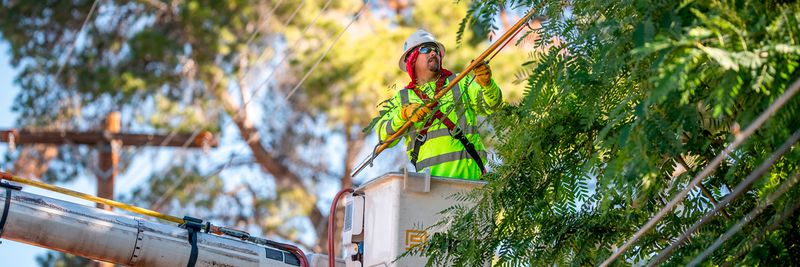
There is no single statewide playbook. Each utility publishes its own approach, so check the one that serves your address.
SRP’s tree-trimming page focuses on overhead lines running pole to pole, and it spells out which situations fall inside that program and which do not.
APS says it prunes or removes vegetation that poses a risk to its high-voltage distribution or transmission lines. It also says only an APS-approved contractor may trim trees near its power lines.
TEP says it trims private-property vegetation near overhead distribution lines on a cycle, and some circumstances may bring more frequent visits. It also makes a good-faith effort to notify residents before planned work.
Schedules, criteria, and contractor rules can differ from one utility to the next.
A Utility Assessment Can Lead to Pruning or Removal
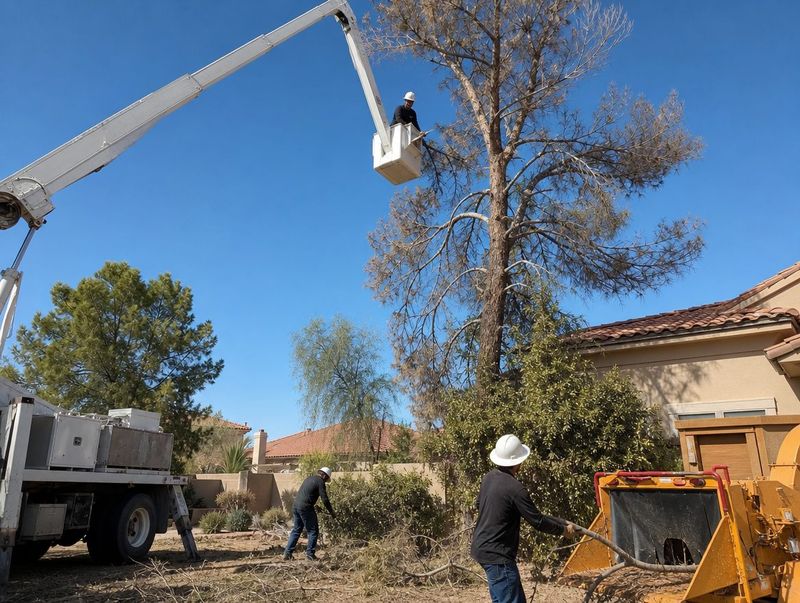
A utility assessment decides what happens next. Depending on its policy and what the assessor sees, the result may be directional pruning, side or L-shaped pruning, or removal.
Nobody can promise that your tree keeps a natural shape. A request for removal also does not guarantee the utility will agree to it.
On cost, the documented terms are specific. SRP and APS describe certain work as free to property owners in the circumstances they specify, such as SRP’s program for trees near its pole-to-pole lines.
SRP says owners remain responsible for stump removal and grinding. Free work does not mean every cleanup task or every tree is covered, so confirm details with your utility.
Call the Utility Before You Hire Anyone
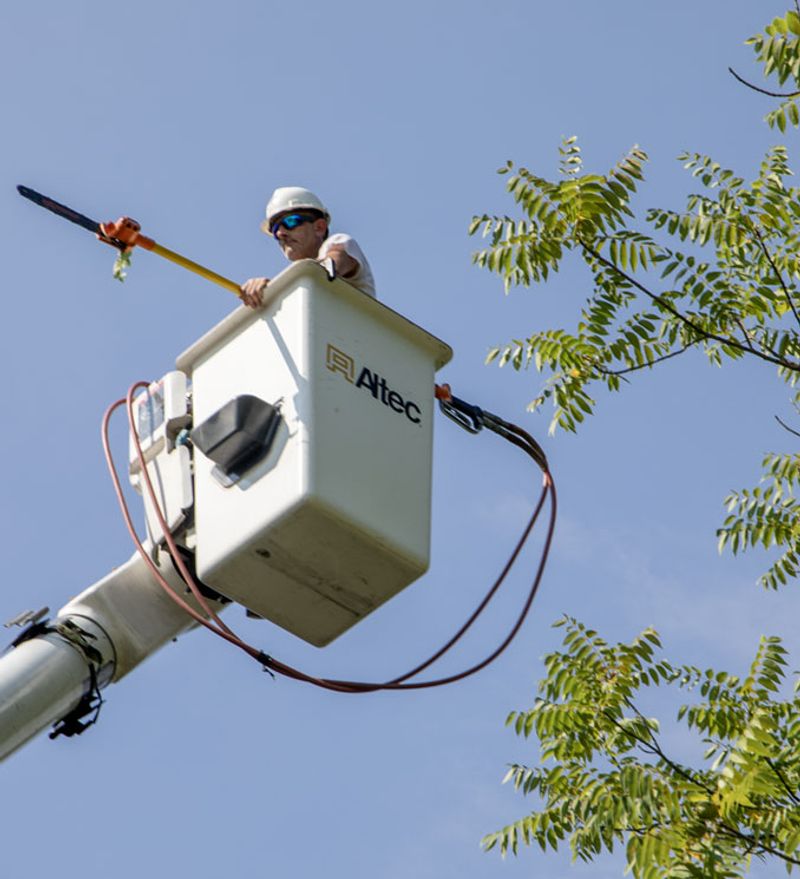
Pick up the phone first. Work out which utility serves you and what kind of line is involved, then ask for guidance or an assessment before booking a tree service.
Do not climb or prune near energized lines yourself, even if the tree is yours and looks easy to reach. Contact the utility, which may point you to qualified line-clearance professionals.
Arizona’s high-voltage rules in A.R.S. 40-360.42 deal with safe clearances for people and equipment working near overhead high-voltage lines.
They are work-safety provisions. They are not a general rule about how tall a tree may grow or when it must come down.
Choose Trees for Their Mature Size
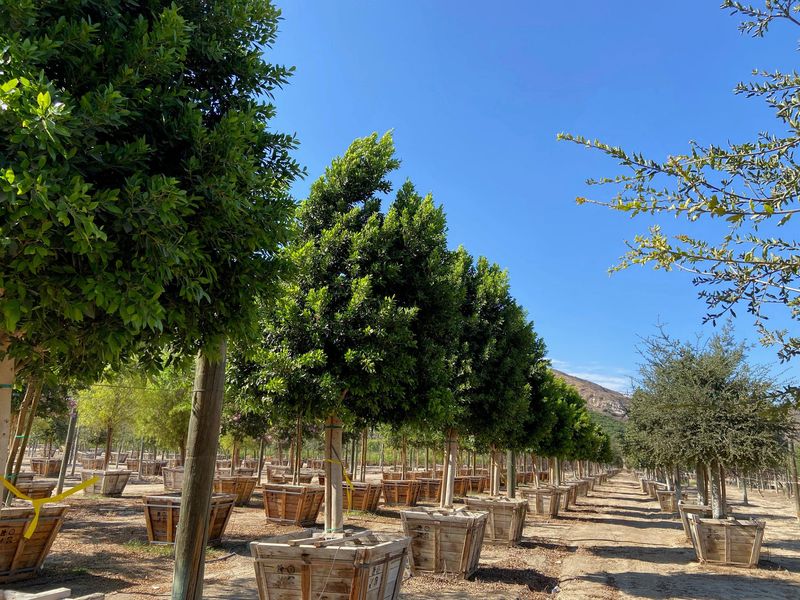
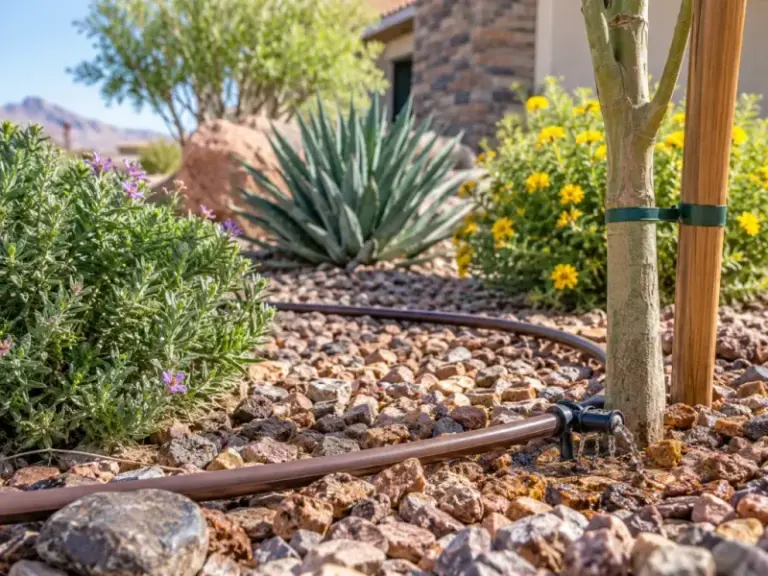
Future headaches start at the nursery tag. Check how tall a tree gets at maturity and what kind of line runs nearby.
The numbers come from different sources. SRP recommends trees no taller than 20 feet at maturity within 25 feet of its lines, and APS tells customers to check mature size and line type.
Arizona’s forestry department, in its Right Tree Right Place guide, says trees taller than 20 feet should not be planted within 15 feet of electric lines.
Treat each figure as that source’s guidance, not a universal legal setback. Before digging, call Arizona 811, a free service that helps locate underground facilities.
It will not tell you anything about overhead-line rights.
Check the Agreement Before the Next Trim
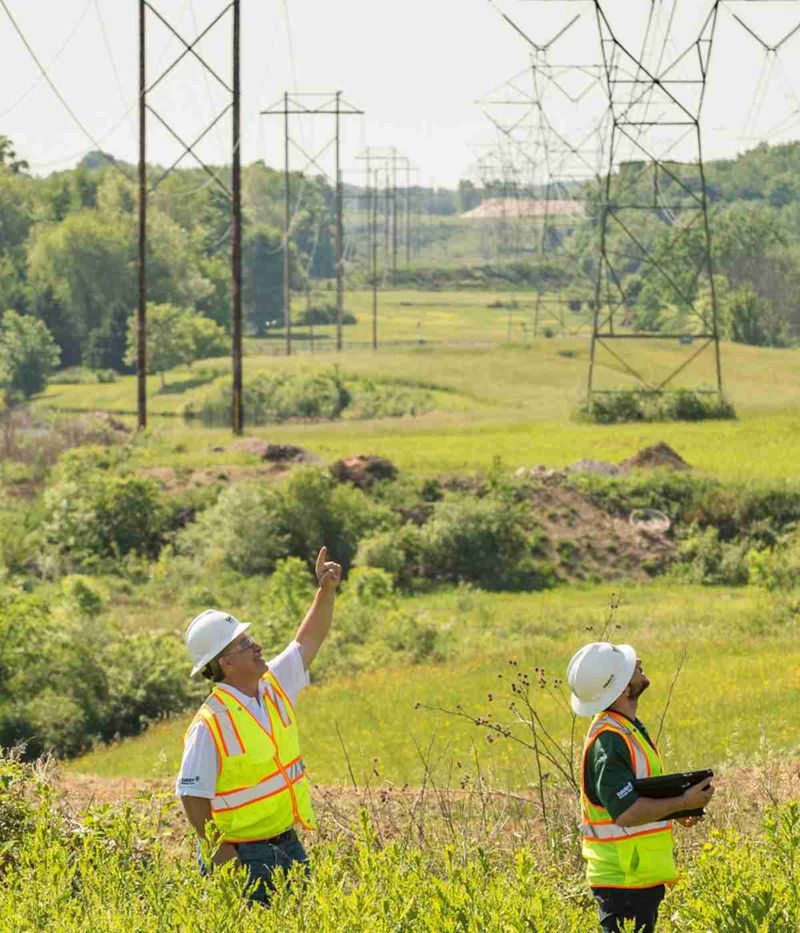
Owning the tree matters, but it is not the whole story. The line, the utility’s policy, and your easement or agreement shape what happens near the wires.
Identify your utility and read the applicable document, asking for a copy if needed, as FERC suggests. Skip both assumptions, that the tree is off limits or that the utility can do anything.
A few minutes with the paperwork beats a surprise stump.