Why Ospreys Keep Nesting on Your Florida Property
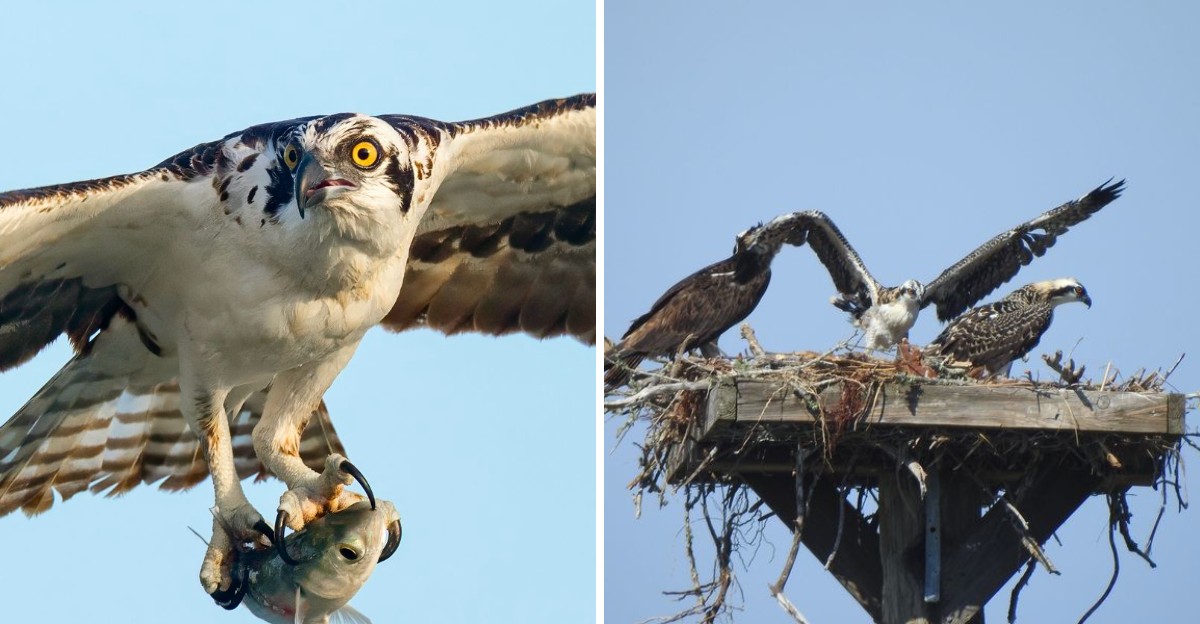
Some ospreys return to the exact same pile of sticks for years, and a few nests grow big enough to hold a person. Talk about a stubborn homeowner.
Here in Florida, those giant stick bundles show up on light poles, boat lifts, channel markers, and even backyard cell towers. It’s fascinating how quickly a bare pole becomes prime real estate once the right pair spots it.
Your yard doesn’t need to offer much to win them over. Nearby water, a tall open perch, and a clear view are often enough to seal the deal, and the same pair may show up again next fall with sticks already in their talons.
What exactly makes your property so tempting to these fish-loving hunters? And what can you legally do about it once the building starts?
1. That Fishing Hawk Overhead Has Already Scoped Out Your Waterfront
Look out at your canal, pond, or bay for a minute. To an osprey, that water is a grocery store that stays open all year.
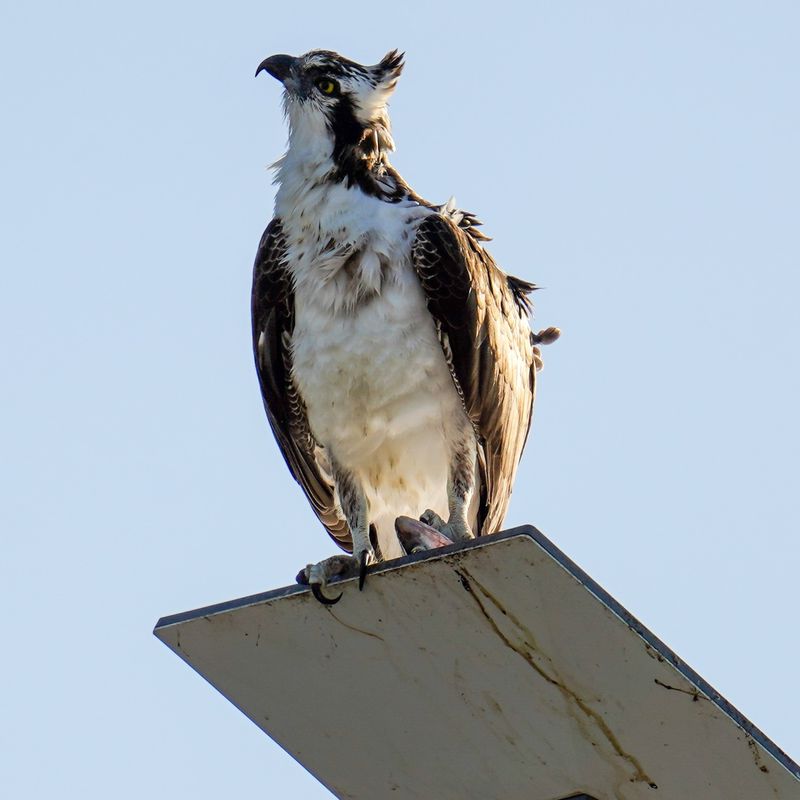
Ospreys eat fish almost exclusively, and fish make up roughly 99 percent of their diet. They hunt by hovering, then plunging feet first to grab fish near the surface.
Shallow, clear water is ideal, so lakes, rivers, canals, and coastal flats all fit the bill.
Most nests sit within a short flight of good fishing water. The adults need to bring back meal after meal while chicks are growing, so a short commute matters a lot.
A home on a fish-rich canal saves them serious energy.
Here’s something worth knowing. Florida has both year-round resident ospreys and northern birds that pass through or spend the winter.
That means many waterfront yards see osprey traffic for much of the year.
Mullet, catfish, sea trout, and bass are common menu items, depending on whether you live near salt or fresh water. If you see an osprey perched nearby eating, it is probably sizing up your neighborhood as a place to stay.
So the first reason is simple. Your property likely sits close to dinner, and that alone puts it on their short list.
2. Tall Poles and Dock Pilings Look Like Penthouse Suites to Ospreys
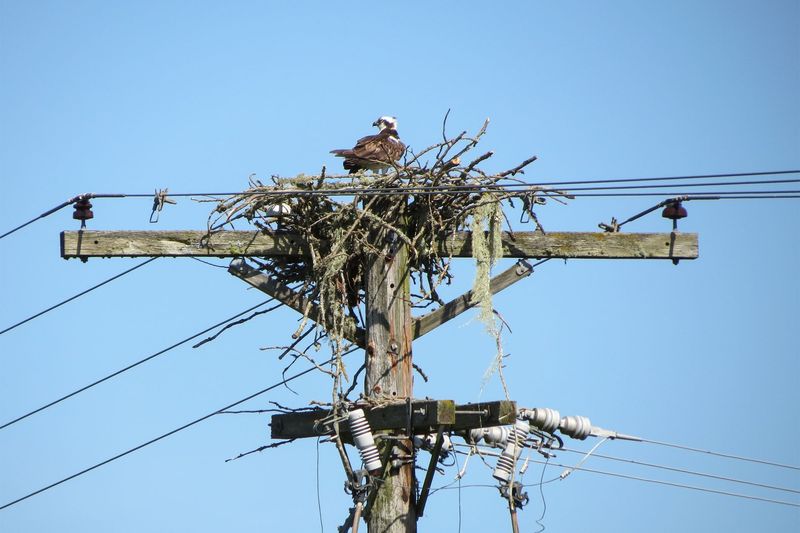
Ospreys are picky about one thing above all. They want a high, open, flat-ish spot with a wide view in every direction.
Historically, they nested on tall snags, which are trees with bare tops. Florida development removed many of those snags, so the birds adapted.
Utility poles, light poles, channel markers, cell towers, boat lifts, and dock pilings now serve the same purpose.
The way I see it, a power pole is basically a perfect snag in an osprey’s eyes. It is tall, sturdy, open on top, and often close to water.
The crossarms even give them a handy base to start stacking sticks.
Height helps them in two ways. It keeps eggs and chicks away from raccoons and other ground predators, and it lets the adults watch for intruders and fish at the same time.
A clear view seems to be a must. A pole tucked under thick tree branches is far less appealing than one standing alone near a shoreline.
If your yard has the tallest open structure around, you have basically put up a vacancy sign. That explains why one particular piling or light pole can attract nest after nest while nearby spots stay empty.
3. Osprey Pairs Come Back to the Same Stick Nest Year After Year
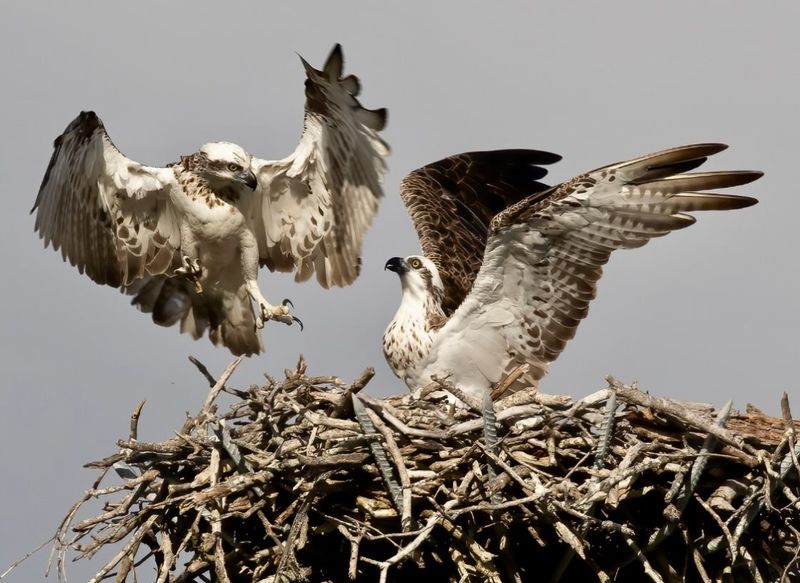
Loyalty is a big part of this story. Ospreys often mate for life, and pairs tend to return to the same nest site season after season.
Each year, they add fresh sticks, moss, grass, and sometimes odd things like rope or plastic. Over time a modest nest can grow into a massive, heavy structure several feet deep.
I never get tired of watching a returning pair get right to work. They fix up the old nest instead of starting from scratch, which saves time and effort before eggs arrive.
Florida’s mild climate gives local ospreys an early start compared to northern birds. In Central and South Florida, nest building often begins in late fall, with eggs commonly laid from about December through February.
North Florida pairs may run a bit later.
Chicks usually hatch after about five to six weeks of incubation. The young fledge roughly eight weeks later, but they often hang around the nest while learning to fish.
Here is the takeaway. If a pair nested on your property once and raised young, they have every reason to come back.
Success breeds return visits, so a single good season can turn your pole into a long-term address.
4. An Active Osprey Nest Is Protected by Federal and State Law
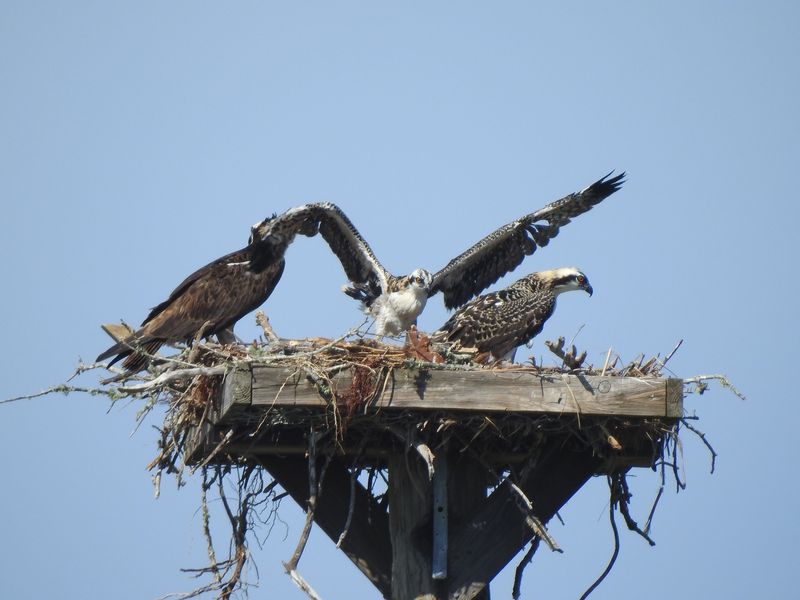
Before you grab a ladder or call a handyman, slow down. Ospreys are protected under the federal Migratory Bird Treaty Act and by Florida wildlife rules.
The key word is active. A nest counts as active when it holds eggs or young that depend on it.
Removing or disturbing an active nest without a federal permit from the U.S. Fish and Wildlife Service is illegal.
Those permits are hard to get. They are generally reserved for real safety situations, such as a nest creating a serious hazard.
Inconvenience or mess usually does not qualify.
Penalties can include hefty fines, and serious cases can bring jail time. The Florida Fish and Wildlife Conservation Commission also handles osprey questions, so they are a smart first call.
You might want to think twice about trying to scare adults off a nest with eggs too. Repeated harassment can count as disturbance under the law.
If a nest is on a utility pole, contact your power company. Many Florida utilities have permits and trained crews who can relocate nests safely or install platforms nearby.
Knowing these rules early keeps you out of trouble. It also helps you plan a fix that works with the calendar instead of against it.
5. Summer Is When You Can Fix That Empty Osprey Nest Spot
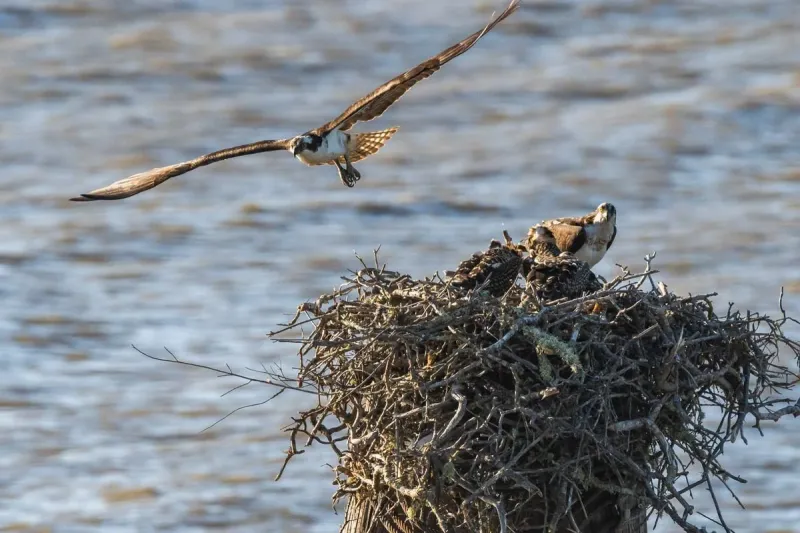
Timing is everything with these birds. Once the young have fledged and left, the nest becomes inactive.
An inactive nest, with no eggs or dependent young, can generally be removed without a federal permit. For much of Central and South Florida, that window often falls in summer, roughly June through September.
Still, confirm the nest is truly empty first, since timing varies by region and by pair.
I could be wrong about your specific pair, so watch for a week or two. If no adults are tending the nest and no chicks are present, you are likely in the clear.
When in doubt, call the FWC regional office.
Removing the sticks alone rarely solves the problem. The same pair often returns in fall and rebuilds right where they left off.
That is why this window is the best time to install deterrents too. Do the cleanup and the prevention work in the same visit.
Plan ahead before cooler weather returns. Many Florida pairs start collecting sticks in October or November, so waiting too long can put you right back into protected nesting season.
Think of summer as your reset button. It is the calm, legal stretch when changes can actually stick.
6. Plastic Owls and Spikes Rarely Stop a Determined Osprey
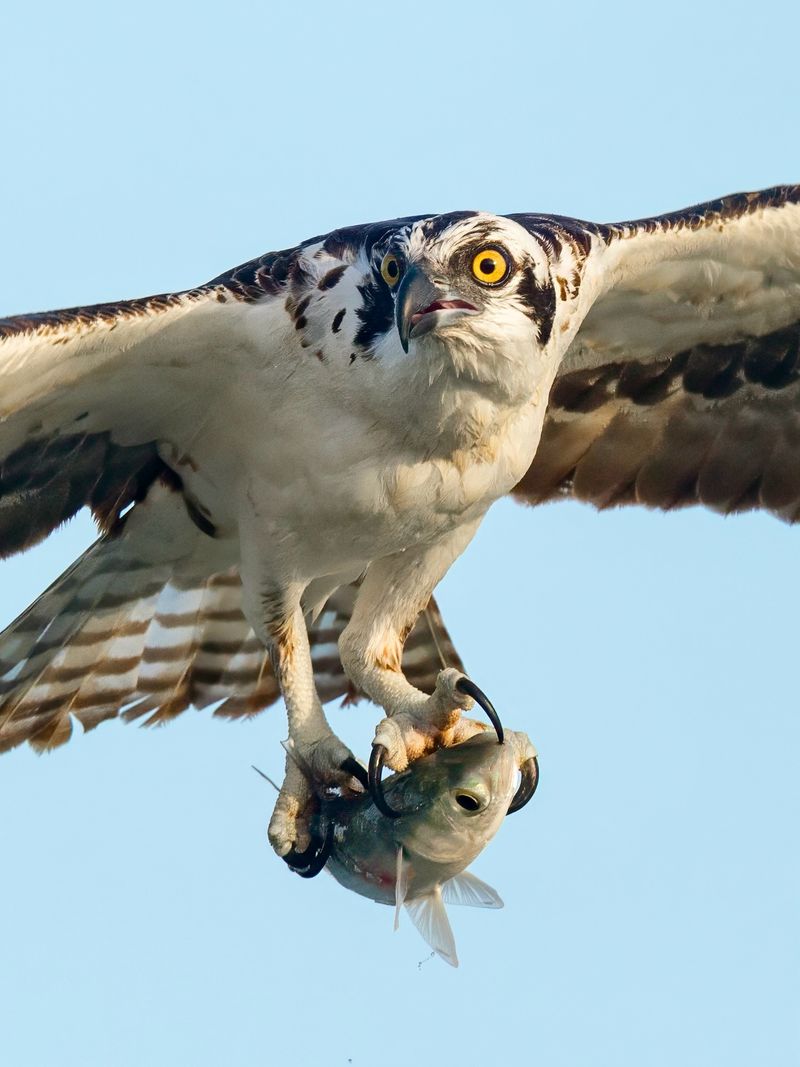
Plenty of homeowners try the plastic owl trick. In my experience reading about these birds, the owl usually ends up as a scenery piece the ospreys ignore.
Ospreys are persistent. Once they pick a spot, simple scare tactics like decoys, shiny tape, or noise makers often lose their effect quickly.
Bird spikes can work in some cases, but ospreys sometimes drop sticks right on top of them. The spikes can even act like a frame that holds the nest together.
Better options block the surface completely. A sloped cone, a pointed cap, or a structure that leaves no stable spot for sticks makes building difficult.
Some wildlife experts also mention bald eagle effigies. Eagles will steal fish from ospreys and can threaten nests, so a realistic eagle figure may discourage them, though results vary.
Be careful with anything near power lines. Never climb or modify electrical poles yourself, and let your utility handle those.
On docks and boat lifts, a sturdy deterrent installed before fall gives you the best chance. Pair it with patience, because a stubborn bird may test it more than once.
The goal is not to chase ospreys out of the neighborhood. You just want them choosing a different perch.
7. A Nearby Osprey Nesting Platform Can Lure Them Off Your Dock
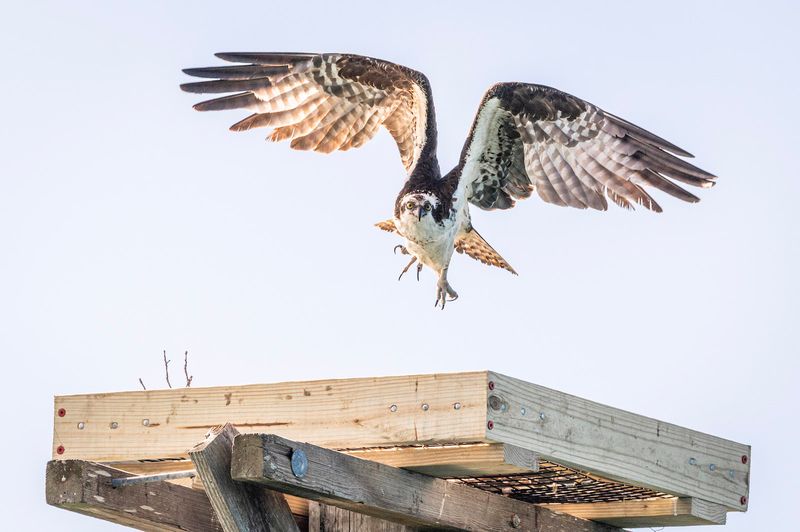
Sometimes the friendliest fix is giving them something better. A nesting platform offers ospreys a safe alternative while keeping your boat lift clear.
Ospreys accept artificial platforms readily. Conservation groups have used them for decades to help osprey numbers recover after pesticide declines in the mid 1900s.
A good platform sits on a sturdy pole, usually at least 15 to 20 feet high. It should be taller than nearby structures, close to water, and open on all sides with a clear view.
Place it well away from power lines and walkways. A spot along a shoreline or in open land works nicely.
A flat square base about 3 to 4 feet across gives them room to build. Adding a few starter sticks can help them notice it faster.
Install the platform during the inactive months, ideally alongside your deterrent. That way, when the pair returns, one spot is blocked and another looks inviting.
Check with your HOA and local permit office before placing a tall pole. Coastal or wetland areas may have extra rules.
Honestly, I can see why so many neighbors end up loving these platforms. You get the show without the sticks in your boat.
8. Living Alongside Florida Ospreys Brings a Front Row Seat to Wild Drama
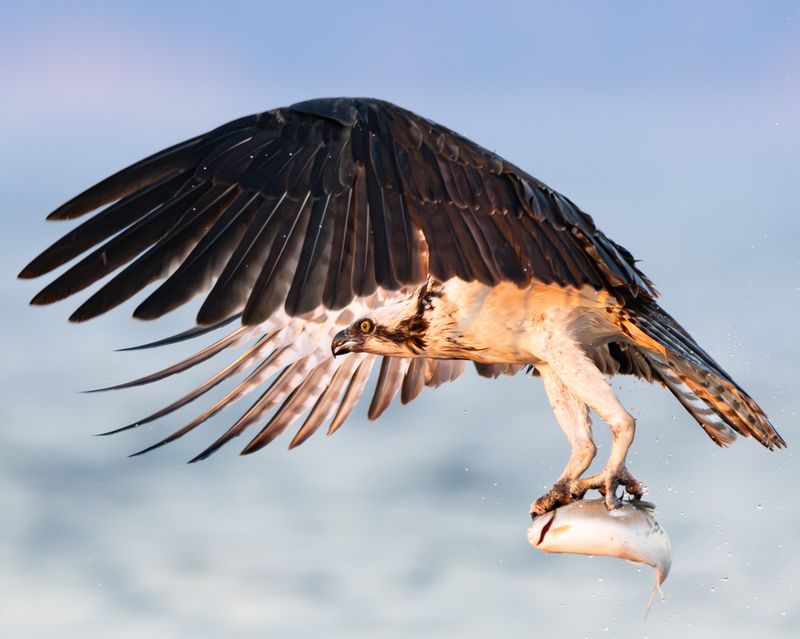
Sharing your yard with ospreys has real perks. Few things beat watching a parent bird drop in with a fresh fish while hungry chicks call from the nest.
There are trade-offs, of course. Sticks fall, fish scraps land on decks, and droppings can stain boats or patios.
Big nests get heavy over the years. On electrical equipment they can cause outages or fire risk, so always report nests on power poles to your utility.
A few simple habits help. Keep boat covers on during nesting season, sweep up debris often, and give the nest plenty of space so the adults do not feel threatened.
Adults may dive or call loudly if you get too close. Back off a bit and they usually settle down.
Watching from a respectful distance can be pure entertainment. Binoculars or a small camera let you follow the season without disturbing anyone.
Ospreys also signal healthy water. Their return across Florida after the DDT era is a genuine conservation success.
So here is my takeaway. If the nest is safe, consider enjoying it.
If it is not, use the summer window, a deterrent, and a platform to guide them somewhere better.