Don’t Prune Virginia Oak Trees Until You Read This
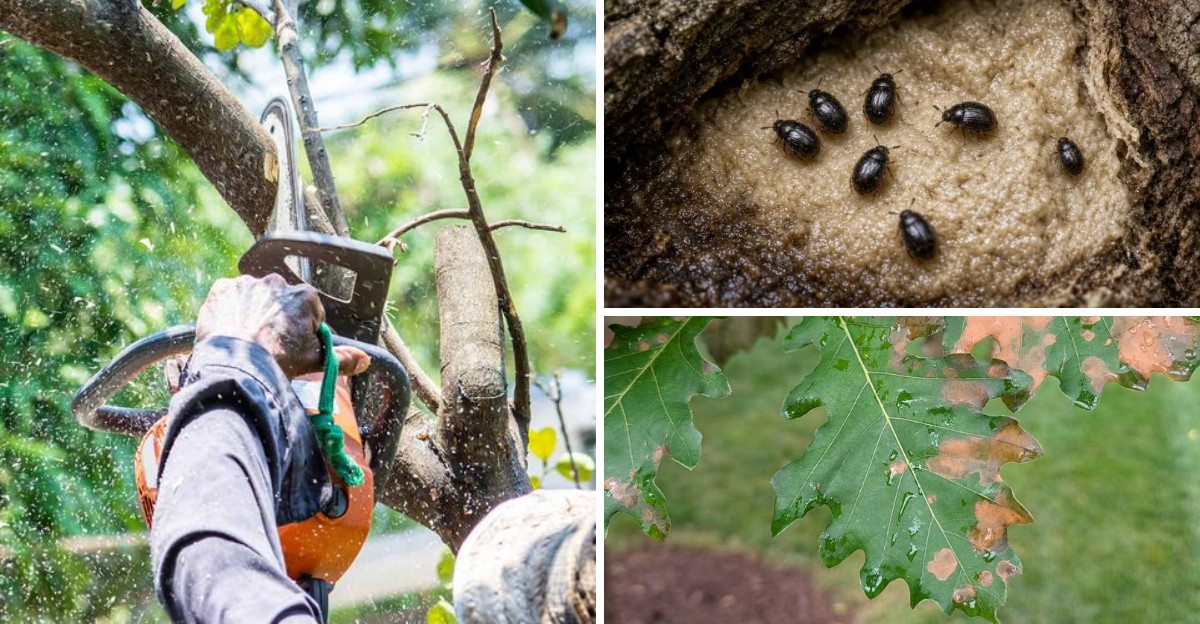
A beetle about the size of a sesame seed can turn a tidy spring trim into a serious tree problem. It follows the sweet scent of fresh sap, and it can carry fungal spores on its tiny body.
Every warm April morning, I itched to grab my loppers and tidy the big shade trees along our Virginia fence line. Those sticky new cuts looked harmless to me.
Spring feels like the perfect moment for yard chores. Buds swell, birds get noisy, and every crooked limb seems to beg for attention. The way I see it, our instincts get the timing backward for one famous group of trees.
The safest window is the cold, leafless stretch most of us spend indoors. A few weeks on the calendar can make a huge difference.
So what makes those warm spring days so risky for your favorite shade giant?
Fresh Spring Cuts on Oak Limbs Send Out an Invitation You Can’t Take Back
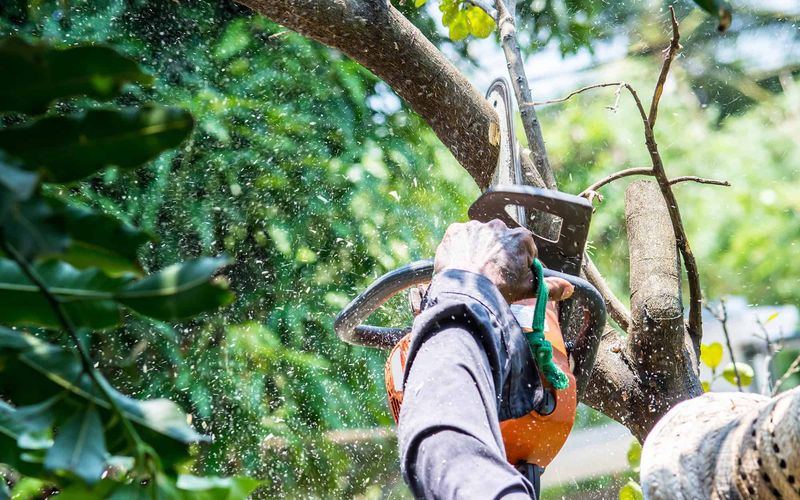
My first big oak cleanup happened on a sunny April Saturday. I felt proud for about a week, until I learned what those pale, sappy cuts were really doing.
A fresh wound on an oak gives off scents that tiny sap beetles find hard to resist. In spring, oaks push water and sugars up toward new leaves, so a cut stays moist and fragrant.
To a beetle, that smell works like a dinner bell.
The trouble is what some of those beetles might carry. In areas where oak wilt is present, sap beetles can pick up spores from infected trees and drop them into new wounds.
Researchers have found that pruning cuts are most vulnerable for only a few days, but that short window is enough.
Spring is the riskiest time for one big reason. The fungus forms its spore mats on infected red oaks mostly in spring, right when beetles are busy and trees are full of sap.
Experts at many university extension programs point to roughly April through June as the high-risk stretch.
So the mistake is not pruning itself. It is pruning when the tree, the beetle, and the fungus all line up at once.
Wait for colder weather, and that lineup mostly falls apart.
Sap Beetles Carry the Oak Wilt Fungus Straight Into Those Wounds
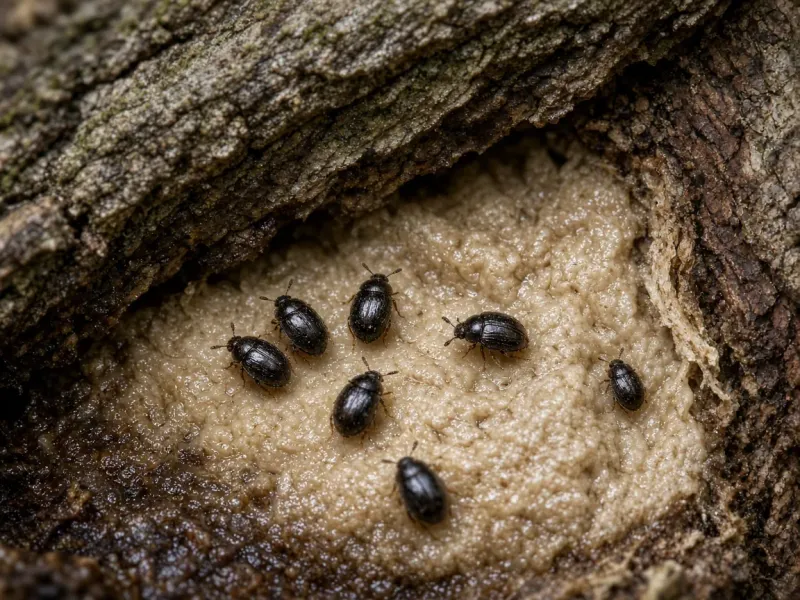
Sap beetles are tiny, often brown or black, and easy to overlook. You may have seen their cousins crawling inside overripe peaches or split tomatoes in late summer.
These little insects belong to a family called Nitidulidae. They love fermenting fruit and oozing sap, and they travel between those treats all season.
When one visits a fungal mat on an infected oak, sticky spores cling to its body.
Next stop might be your freshly trimmed tree. The beetle lands on the wound, and spores slip into the outer sapwood.
From there, the fungus, known as Bretziella fagacearum, moves through the water-carrying tissue.
Once inside, the tree tries to defend itself by plugging its own vessels. That reaction, plus the fungus, blocks water flow to the crown.
Leaves begin to wilt and brown, often starting at the edges and working inward.
Here is a fun bit of trivia to share with your gardening friends. The fungus used to be called Ceratocystis fagacearum, and scientists renamed it in 2017 after DNA studies.
Sap beetles are not villains on their own, and spraying for them is not a practical fix. The smartest move is simply removing the welcome mat by keeping oaks unwounded during their busiest months.
Winter Pruning Keeps Your Oak Safe While the Beetles Rest
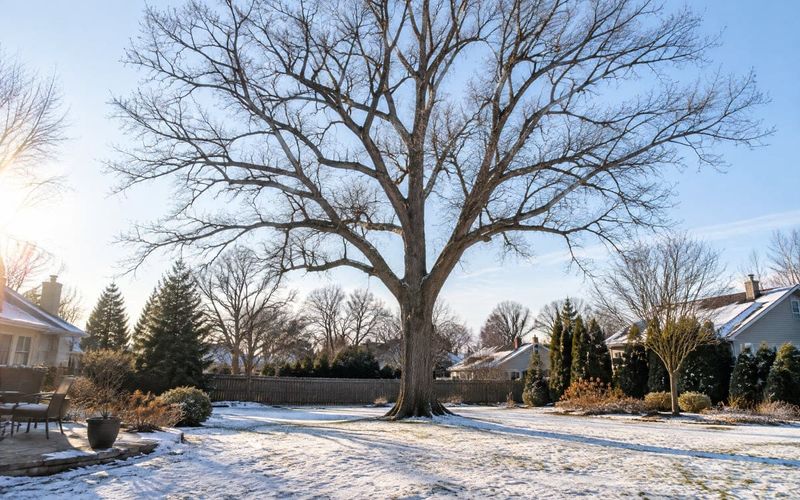
Cold weather is the oak’s best friend when it comes to pruning. Once temperatures drop, sap beetles slow down or go quiet, and the fungus stops forming fresh spore mats.
That is why Virginia Cooperative Extension and most arborists recommend pruning oaks during dormancy. In practical terms, that means late fall through winter, roughly November into February.
Cuts made then have time to dry and begin sealing before beetles get active again.
Dormant pruning comes with bonus perks too. A tree without leaves is easier to read, so you can spot crossing limbs, weak forks, and broken branches.
You also skip hauling piles of leafy brush, which makes cleanup lighter.
I love working on a crisp January afternoon with a thermos of hot cocoa nearby. The yard is quiet, the branches are easy to see, and nothing feels rushed.
It turns a chore into a calm, thoughtful project.
One caution matters, though. Avoid pruning when wood is frozen solid or during an icy spell, since brittle branches can tear.
Pick a dry, mild winter day for the cleanest results.
If a limb is large or high, call a certified arborist. Winter is often their slower season, so scheduling can be easier, too.
Bare Oak Branches Make Winter the Sweet Spot for Pruning
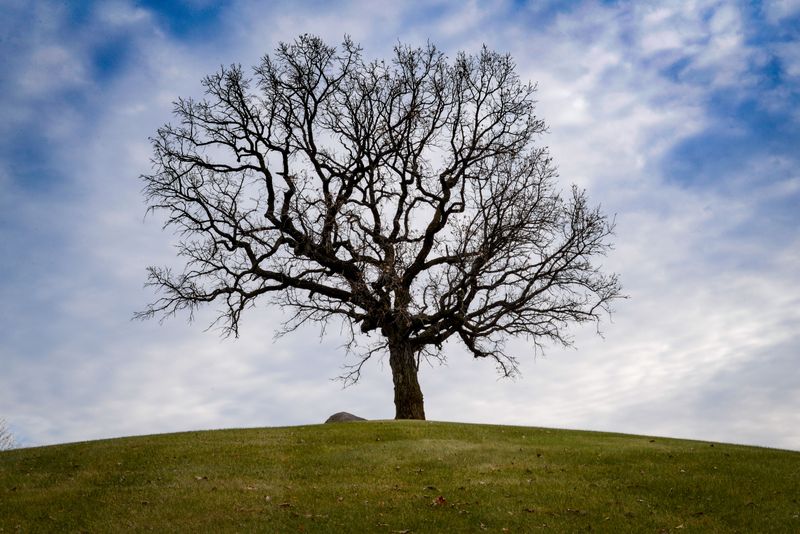
Look up at your oak this week. If the branches are bare and the buds are still tight and brown, you are in the right window.
The key deadline is bud break. Once buds swell and green leaves start to unfold, sap is moving and beetles are waking up.
Finishing your oak work before then is the simplest rule to follow.
Timing shifts across Virginia. Down in Tidewater and the coastal plain, spring arrives early, so wrap up pruning by late February or early March.
In the Piedmont, you may have until mid-March, and the cooler mountains of the Shenandoah Valley and Southwest often stretch a bit later.
A warm spell can fool you, though. If you notice beetles buzzing around or temperatures sitting in the 60s for days, play it safe and pause.
The tree will happily wait until next winter.
A quick checklist helps me decide. Buds still closed?
No new leaves? Cool daytime temperatures?
If all three answers line up, grab your saw.
Late winter also lets you see exactly what storms did over the past months. Snapped limbs and rubbing branches stand out clearly against the sky, so your cuts can be planned rather than guessed.
Red Oaks and White Oaks Don’t Handle Oak Wilt the Same Way
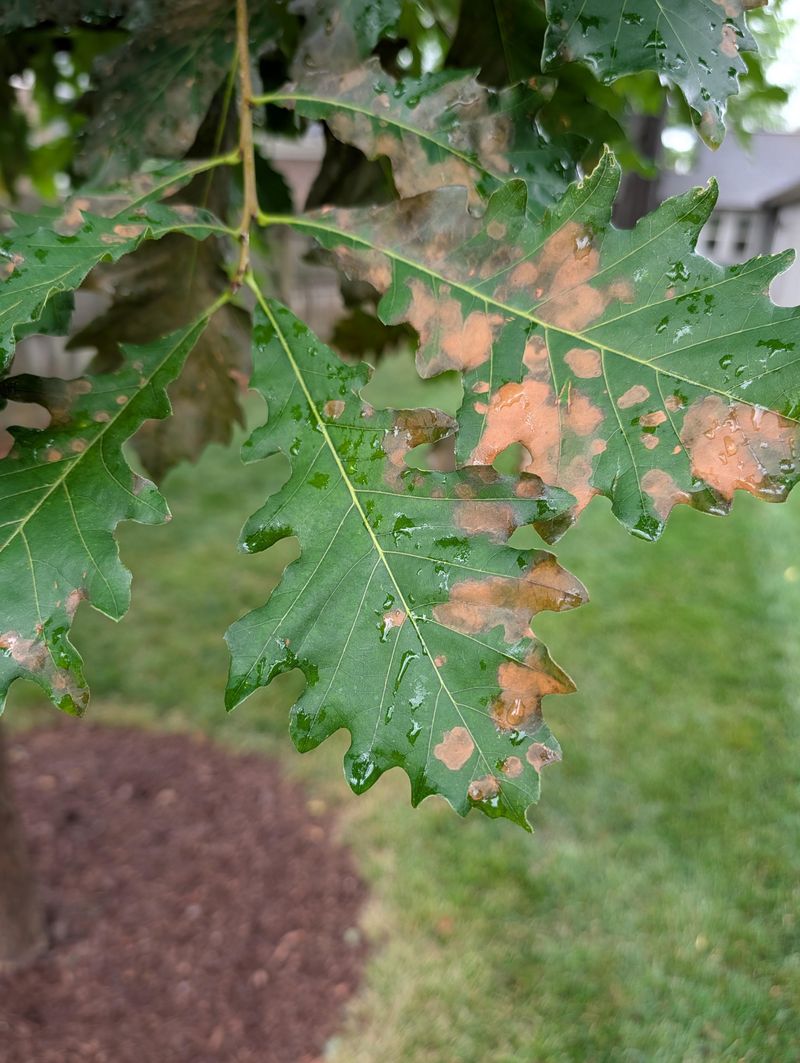
Grab a fallen leaf from your oak and check the tips. That little detail tells you a lot about how much risk your tree faces.
Red oak group leaves have pointed lobes with tiny bristle tips. This group includes northern red oak, pin oak, willow oak, and scarlet oak, all common in Virginia yards.
These trees are highly susceptible and can decline within weeks once infected.
White oak group leaves have smooth, rounded lobes. White oak, chestnut oak, and swamp white oak belong here.
They usually resist the disease better, often losing a few branches at a time over years instead of the whole crown at once.
Red oaks also matter for another reason. They are the trees where spore mats mostly form, so an infected red oak can feed the cycle for neighbors.
The disease can travel underground too. Oaks of the same group growing close together often fuse their roots, and the fungus can pass through those connections.
That is why groves of red oaks sometimes show trouble spreading in a ring.
To be fair, the Virginia Department of Forestry reports that oak wilt has been found mainly in western counties and has not spread widely. Still, careful timing costs nothing and protects your valuable trees.
Storm-Broken Oak Limbs Can’t Wait, but a Quick Coat of Paint Helps
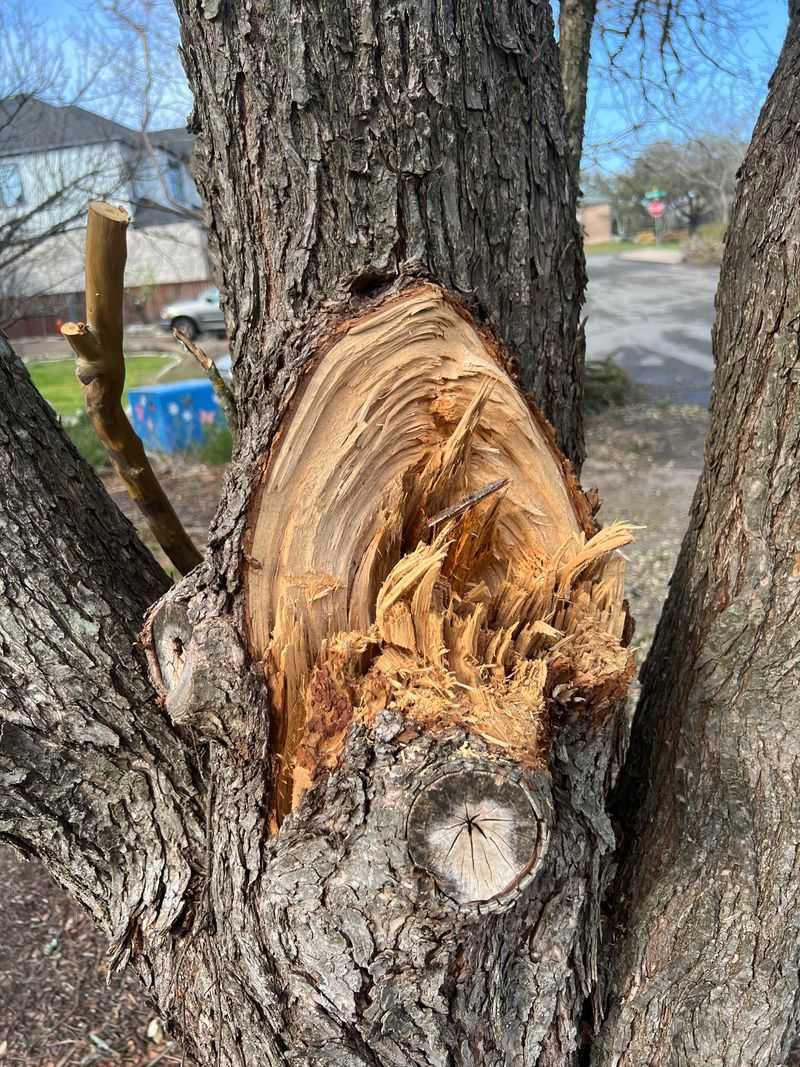
Spring thunderstorms do not care about pruning calendars. A cracked limb dangling over your driveway in May is a safety issue, and it needs attention promptly.
Hazardous or storm-damaged branches should come down whenever they threaten people, cars, or roofs. Large or high limbs belong in the hands of a certified arborist.
Leaning ladders against a storm-damaged tree is a risk nobody needs.
For oaks wounded during the high-risk season, there is one notable exception to standard advice. Most experts say wound dressings are unnecessary on trees.
Oaks cut or injured in spring and early summer are different.
University extension specialists recommend covering fresh oak wounds right away with a thin coat of latex paint or tree wound dressing. The goal is not healing.
It simply masks the scent and blocks beetles from reaching the exposed wood.
Speed matters most here. Paint the cut within minutes if you can, rather than waiting until the next day.
Keep a small can and brush handy in the garage during storm season.
Make only the cuts you need. Remove the broken piece cleanly, save shaping and thinning for winter, and resist the urge to tidy everything at once.
Fewer wounds mean fewer chances for trouble.
Clean Cuts Just Outside the Branch Collar Help Oaks Seal Up
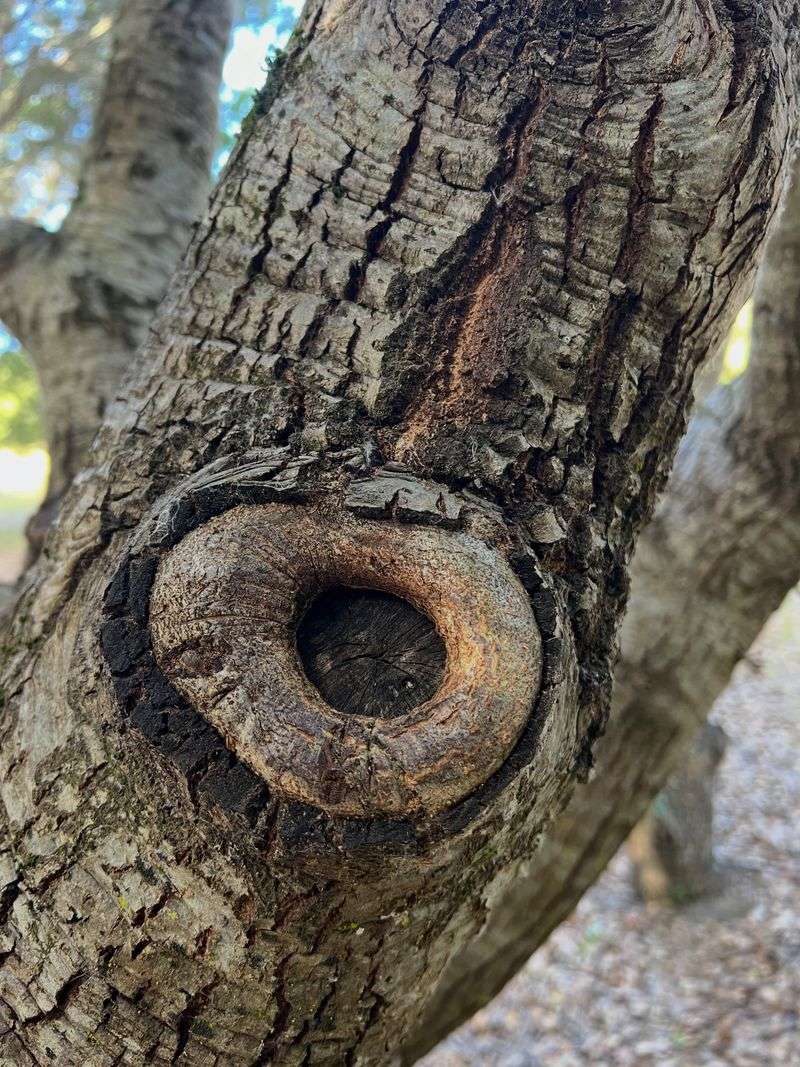
Great timing can be undone by a sloppy cut. Where you place the saw matters almost as much as when you pick it up.
Find the branch collar first. It is the slightly swollen ring where a limb meets the trunk or a larger branch.
That collar holds special tissue that helps the tree wall off and close the wound.
Cut just outside the collar, not flush against the trunk. Flush cuts damage that protective tissue and leave a bigger opening.
Long stubs are a problem too, since the tree struggles to grow over them.
For heavy limbs, use the three-cut method. Make an undercut a foot or so out, then a top cut a little farther out to drop the weight.
Finish with a clean cut at the collar, and the bark will not peel down the trunk.
Keep tools sharp and wipe them with rubbing alcohol or a disinfectant between trees. Clean blades make smoother cuts and limit carrying problems from tree to tree.
Go easy on the amount, too. Many arborists suggest removing no more than about a quarter of the live canopy in one season.
Topping an oak, which means chopping off main leaders, weakens it for years and invites decay.
A Pruning Calendar on the Fridge Can Protect Your Backyard Oaks
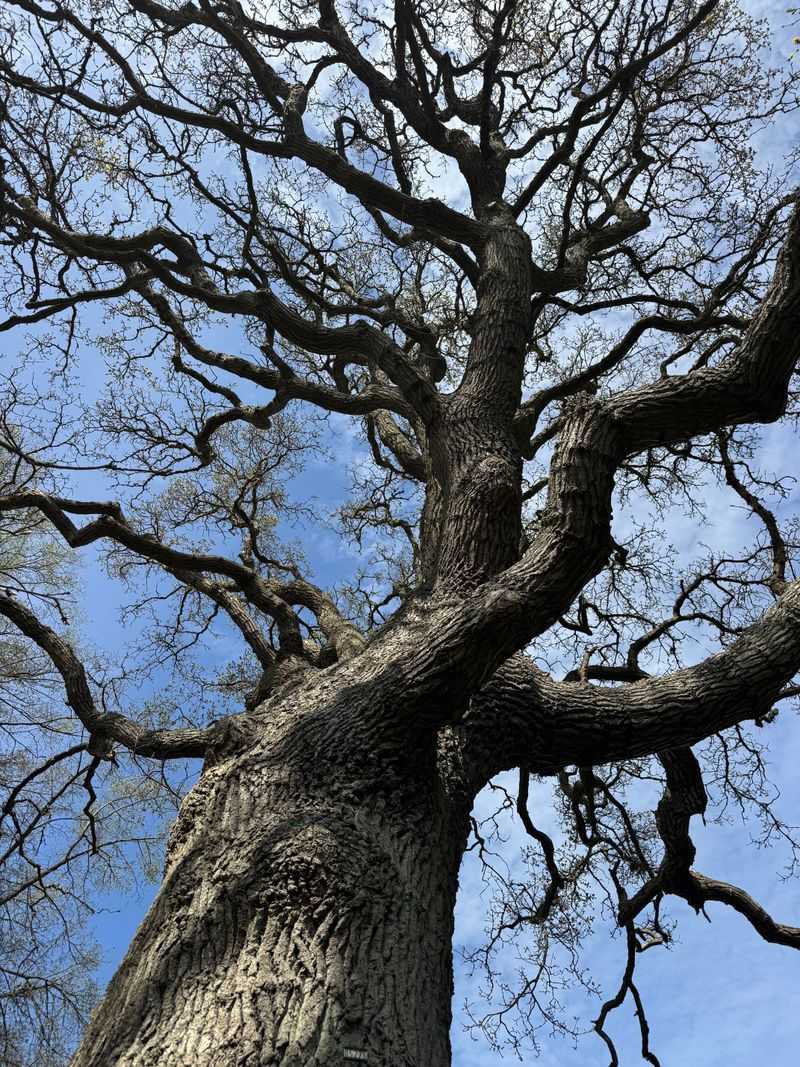
A sticky note saved my oaks. After my spring mistake, I wrote one simple line on the fridge calendar: oaks get trimmed in winter, period.
Habits change easier with a reminder. Mark November through February as your oak window, and add a note for early March as the last call in warmer parts of the state.
Then circle April through June with a quick warning: no oak cuts unless it is an emergency.
Share the plan with anyone who works on your yard. Landscape crews sometimes trim everything in spring out of routine.
A friendly heads-up can spare your oaks a risky haircut.
Keep watch during summer, too. If an oak suddenly shows wilting, bronzing leaves, or heavy leaf drop in June or July, contact your local Virginia Cooperative Extension office.
They can help with diagnosis, and confirmed cases help the state track the disease.
Moving firewood is another hidden risk. Buy or gather it locally instead of hauling oak logs across counties, since infected wood can carry the fungus.
The bigger lesson feels simple. Our trees run on their own schedule, and working with it pays off.
A little patience in spring gives you healthier, sturdier oaks shading your yard for decades.