Cottonmouth vs Water Snake: How Georgia Residents Can Tell Them Apart
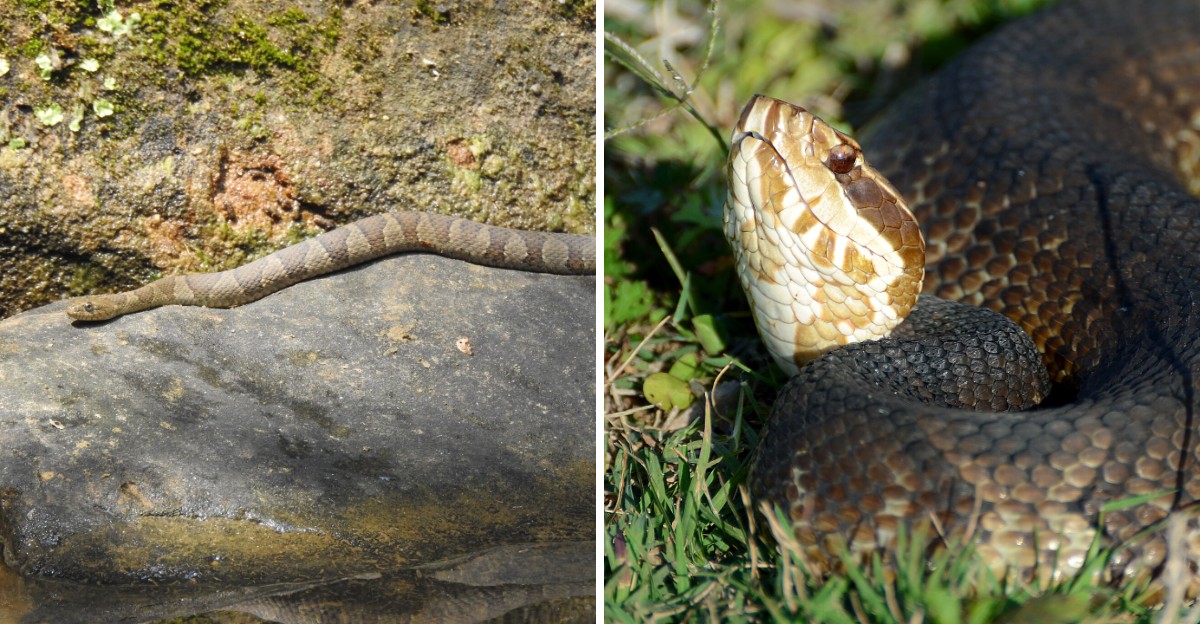
Baby versions of one Southern swamp snake wiggle a sulfur-yellow tail tip like a tiny fishing lure. Curious frogs fall for it.
Grown-ups of the same species lose that bright tail and turn dark and chunky. Several harmless lookalikes share the same creeks, ponds, and ditches.
Even seasoned anglers mix them up.
I’ve stood frozen beside a garden pond in Georgia more than once, staring at a thick, dark shape on a log. My heart raced while my brain scrambled for anything useful.
You deserve better clues than a racing pulse.
Some useful clues, such as body markings and coloration, can be observed from a safe distance, although no single feature guarantees identification. What should you look for without getting any closer when that dark shape slides off the log?
1. Swimming Style Alone Cannot Reliably Identify a Cottonmouth
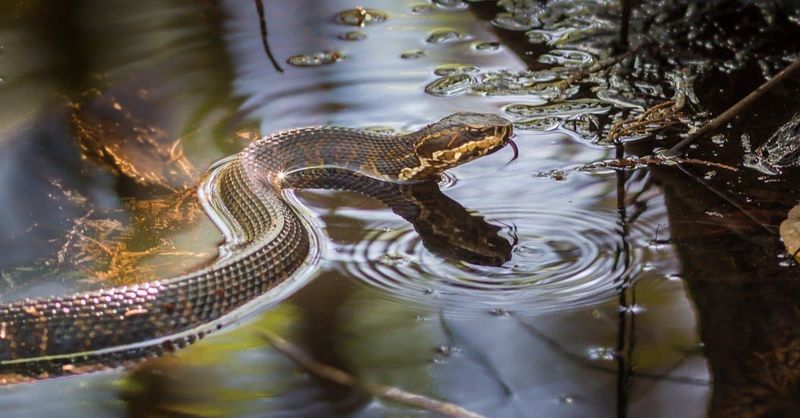
Water alone cannot tell you whether a snake is venomous. Cottonmouths can swim with much of their body above the water, but nonvenomous water snakes can do the same.
From the bank, the snake can look like a thick stick drifting along.
Water snakes can swim both at the surface and beneath it. Sometimes, they look sleek and low, like a little submarine with a periscope.
I find it helpful to observe snakes from a good distance. A snake floating high and lazy deserves just as much space as one swimming low.
Both cottonmouths and water snakes can swim with only their heads above the surface.
A water snake resting on a mat of floating plants can look buoyant, and a cottonmouth sometimes slips under to escape. Do not rely on swimming style to distinguish venomous snakes from nonvenomous species.
Fun fact: the cottonmouth is the only semi-aquatic pit viper in the United States. Many snakes you see paddling across a Georgia pond belong to the harmless crowd.
2. A Blocky Cottonmouth Head and Masked Eye Give the Game Away
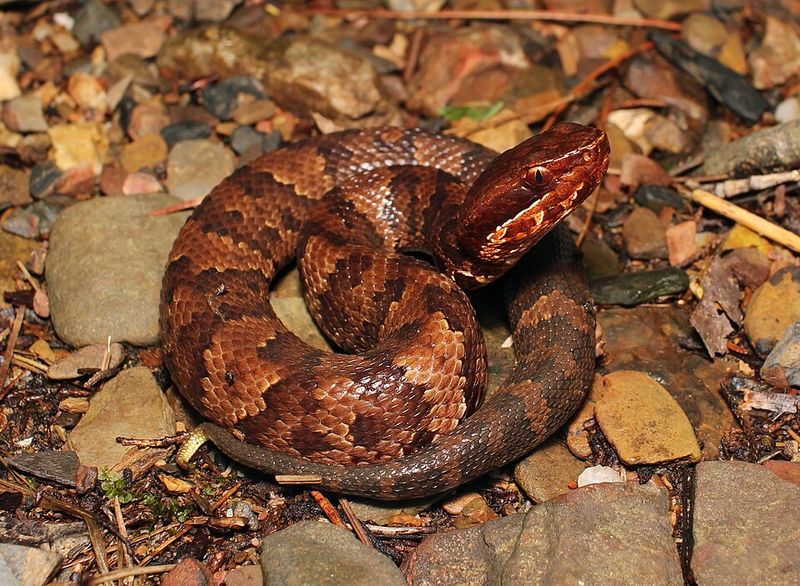
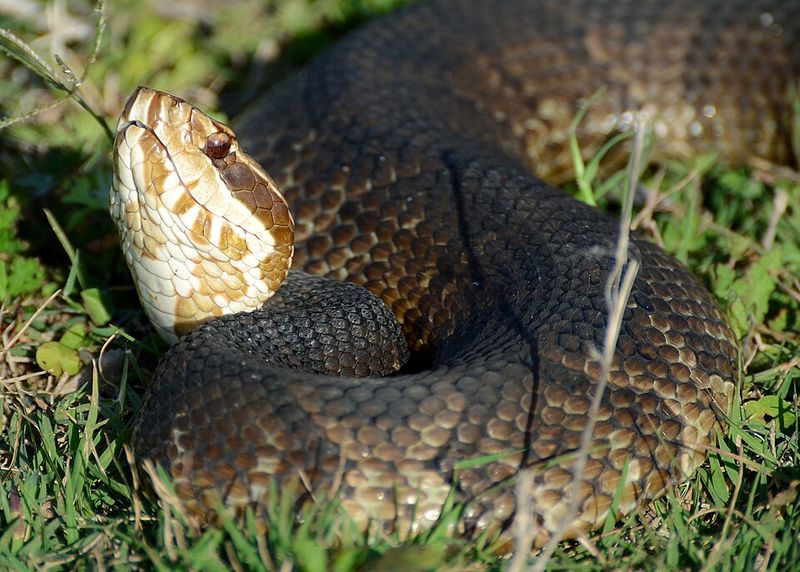
Up close, a cottonmouth’s face looks a bit grumpy. The head is thick and blocky, clearly wider than the neck, with a flat top and heavy jaws.
Many water snakes flatten their heads when nervous, though, so a triangle shape alone can fool you.
Better clues sit around the eyes. Cottonmouths have a dark stripe running from the eye back toward the jaw, like a bandit mask.
Their eyes also have vertical, cat-like pupils, and a bony brow ridge hides them when you look down from above.
Water snakes found in Georgia have round pupils, and their eyes bulge out a little from the side of the head. Seen from above, you can usually spot both eyes clearly.
There is one more feature worth knowing. Cottonmouths are pit vipers, so they have a small heat-sensing pit between each eye and nostril.
Those pits help them find warm prey at night, even on moonless evenings.
Personally, I use binoculars or a phone zoom for these details. Getting within striking range to check pupils is a bad trade.
Stay at least six feet back, and let the camera do the close work while you admire that grumpy face from a comfortable spot.
3. Water Snake Bands Get Wider on the Back, Not the Sides
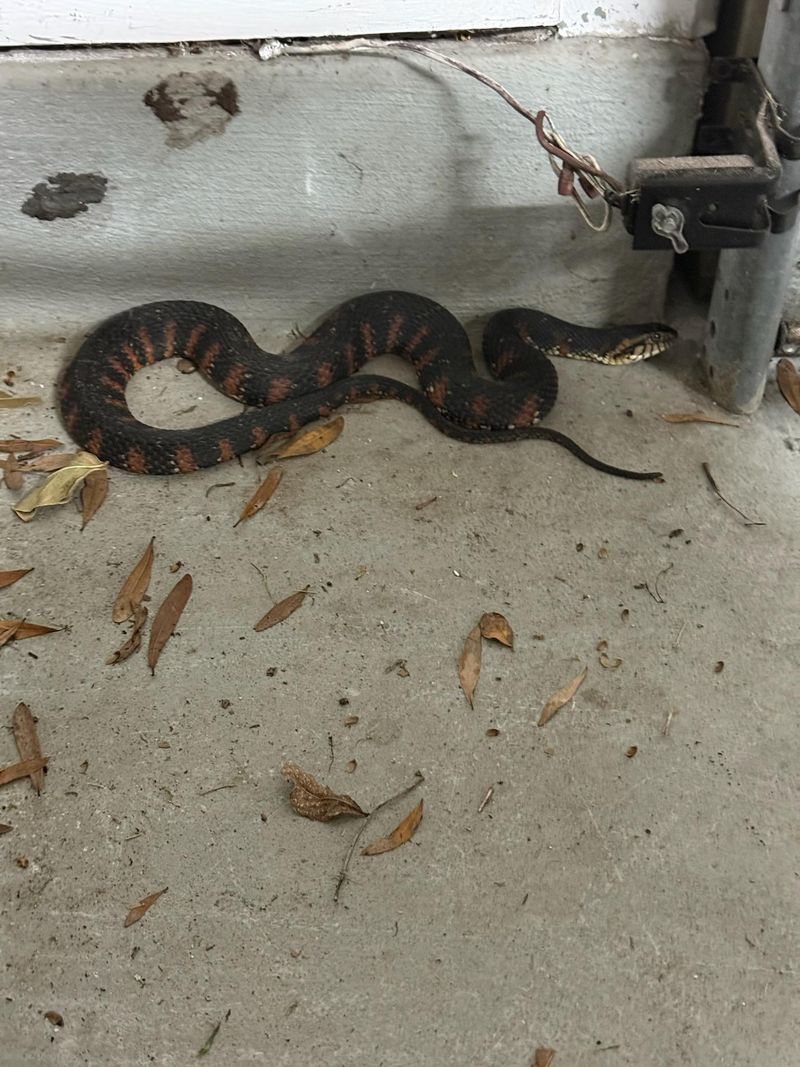
Color is the clue most folks reach for first, and it is also the trickiest. Older cottonmouths often darken to plain black, olive, or brown, hiding their patterns.
Plenty of water snakes darken with age, too, especially when wet and muddy.
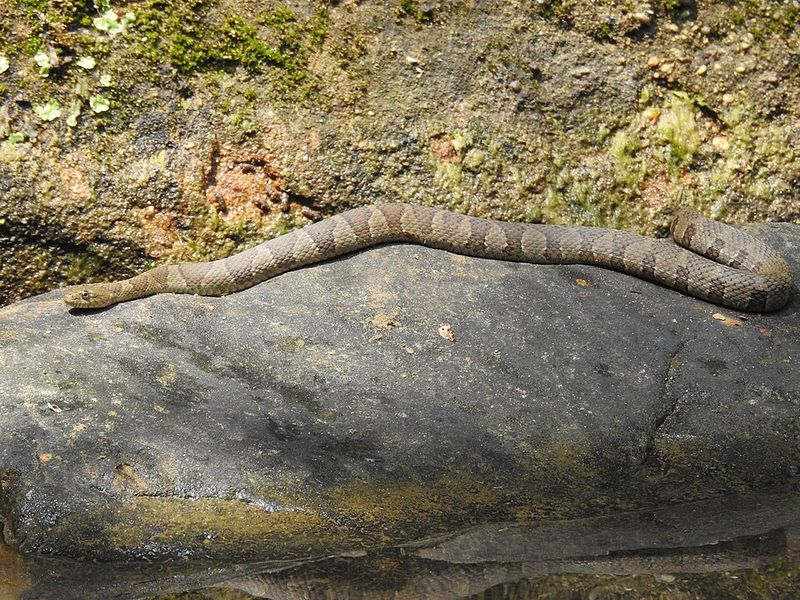
Bands help more than color. On a cottonmouth, the dark crossbands tend to be wider on the sides and narrow toward the spine, giving an hourglass look.
Many water snakes, like the northern and banded water snakes, show the reverse, with blotches widest across the back.
Brown water snakes, common in southern rivers, wear square dark blotches down the back with smaller ones staggered along the sides. Red-bellied water snakes look plain brown on top with a bright orange or red belly.
Young cottonmouths are a different story. They look bright and coppery with bold bands, and the tip of the tail glows sulfur yellow.
Babies wiggle that tail to lure frogs and lizards close, and the yellow fades as they grow over the first year or two.
Since color shifts with age, mud, and light, treat it as supporting evidence when identifying snakes in Georgia. A dull, patternless snake could be either kind, so check other clues before deciding.
4. The White Mouth Gape Tells You to Back Off
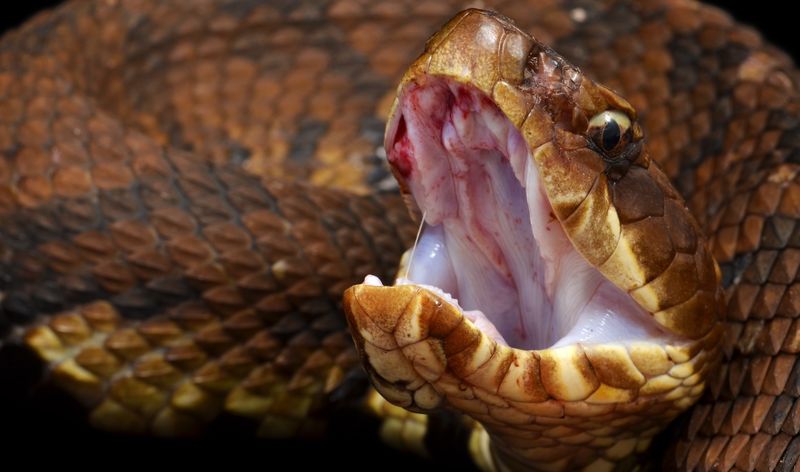
Walk up on a water snake, and it usually bolts. Splash, and it’s gone.
Water snakes prefer escape over a standoff, and they rarely stick around for a staring contest.
Cottonmouths tend to hold their ground. Startled ones often coil, tilt the head up, and open the mouth wide to flash that bright white lining.
That cotton-white gape is where the name comes from, and it sends a clear message to step away. Some also vibrate their tails in dry leaves, making a buzzing sound.
Field research by snake scientists shows cottonmouths are calmer than their reputation suggests. In tests, most tried to flee or used warning displays rather than biting.
They do not chase people, despite the old campfire stories.
Water snakes aren’t pushovers, though. Cornered or grabbed, they flatten their bodies, strike repeatedly, and smear a stinky musk on you.
Their bites carry no venom, but they can bleed quite a bit because of a substance in their saliva that slows clotting.
So behavior gives you useful hints when identifying snakes in Georgia. A snake that stays put and gapes white at you should earn plenty of space.
Both cottonmouths and nonvenomous water snakes may retreat into the water when disturbed.
5. Coastal Plain Swamps Are Cottonmouth Country
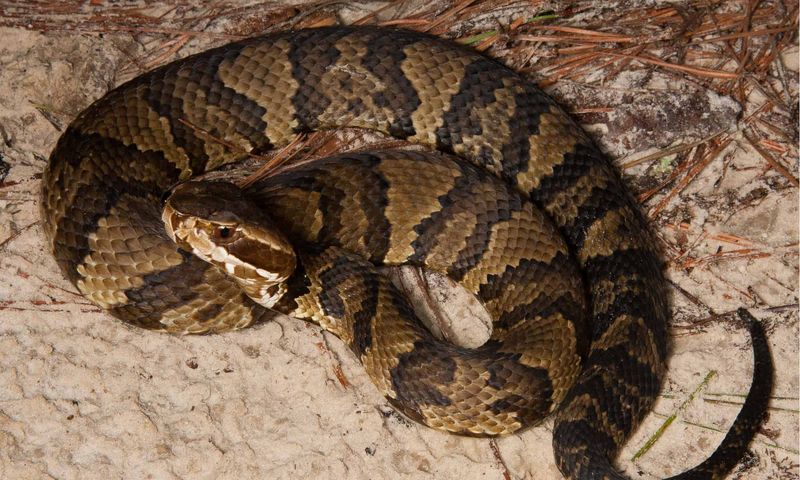
Location matters more than many people realize. In Georgia, cottonmouths mostly live in the Coastal Plain and lower Piedmont, roughly south of the fall line running through Columbus, Macon, and Augusta.
They love swamps, cypress ponds, slow creeks, and marshes.
Head north into the upper Piedmont and mountains, and they become scarce. The state Department of Natural Resources notes they are absent from most of the northern part of the state.
A snake in a mountain trout stream near Blue Ridge is almost certainly a northern water snake.
Water snakes, on the other hand, show up in nearly every county. Northern water snakes cover the upper part of the state, while banded, brown, and red-bellied water snakes fill southern rivers and ponds.
Coastal marshes even host the Florida green water snake in a few spots.
I think this clue is underrated. Before worrying about pupils or bands, ask yourself where you’re standing.
Range edges are fuzzy, though, and scattered records turn up a bit north of the fall line, especially in western counties.
Snakes don’t read range maps. Still, geography can shift the odds a lot in your favor when that dark shape appears.
6. Snakes Draped on Branches Over the Water Are Usually Brown Water Snakes
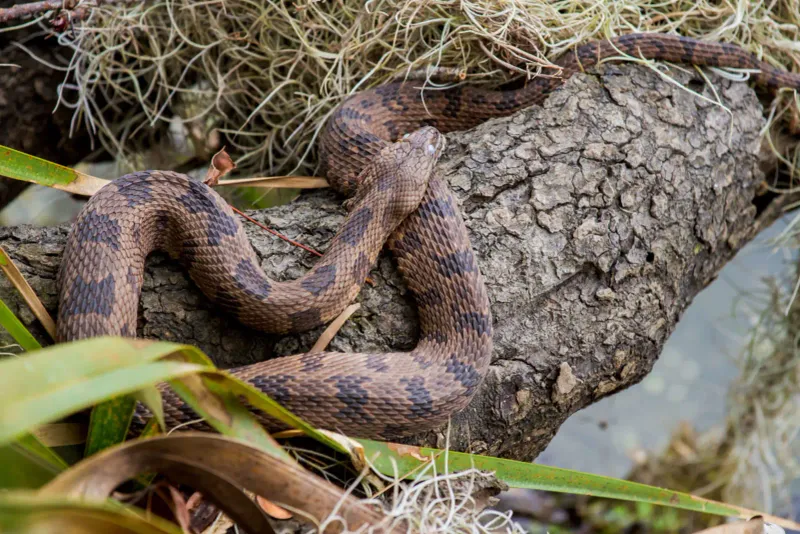
Kayakers on southern rivers know the scene well. A thick, brown snake lounges on a branch above the water, then drops in with a plop as you paddle past.
That climber is usually a brown water snake, not a cottonmouth.
Brown water snakes are big, heavy, and often mistaken for water moccasins. Adults can stretch past four feet, and their broad heads add to the confusion.
Yet they love basking in shrubs and trees overhanging rivers, sometimes several feet up.
Cottonmouths do climb a little, especially onto low logs, stumps, and tangled roots. Still, they mostly rest close to the ground or right at the water’s edge, often coiled in a sunny patch of mud or on a flat bank.
A tip from my own river trips might help. If you spot a snake stretched along a branch high above the water, enjoy the view and give it room.
Odds are good it belongs to the harmless crowd.
Of course, steer your boat or fishing line away anyway. Any startled snake landing nearby can bite out of fear.
A friendly distance keeps both of you calm, and you get a great story for later.
7. A Tidy Garden Pond Edge Makes Snakes Less Likely to Linger
Snakes visit gardens for two main reasons, food and cover. A pond full of frogs, fish, and tall weeds is basically a snake buffet with a privacy fence.
Change that setup, and visits often drop.
Start by trimming grass and weeds around pond edges and creek banks. Keep brush piles, stacked boards, and loose rock piles away from water features.
Snakes feel exposed in short grass and tend to move along.
Rodents draw snakes too. Store birdseed and pet food in sealed bins, and clean up spilled seed under feeders.
Fewer mice means fewer hungry visitors slipping through the flower beds.
Skip the mothballs, sulfur, and snake-repellent powders. University extension experts report little evidence that these products work, and mothballs can harm pets and wildlife when used outdoors.
Wear boots and gloves when clearing thick plants near water, and use a rake or stick to part the vegetation first. Warm summer evenings are prime hunting time, so carry a flashlight on nighttime garden walks.
I like keeping one wild corner far from the house for frogs and toads. That way wildlife still has a home, while the paths I walk daily stay open and easy to scan.
8. A Cottonmouth Sighting Calls for Calm Steps, Not a Shovel
Spotting a dark snake by your pond can make anyone reach for a hoe. Please resist the urge.
Many bites happen when people try to handle or harm a snake, and Georgia law protects nonvenomous species, including every water snake in the state.
Instead, step back slowly and give the snake a clear exit. It usually wants out more than you want it gone.
If a snake keeps returning to a spot near your home, call a licensed wildlife removal service.
If a bite does happen, stay calm and call 911 right away. The Georgia Poison Center at 1-800-222-1222 also offers expert help around the clock.
Remove rings and watches before swelling starts, and keep the bitten limb still and roughly level with the heart.
Skip the old movie tricks. No cutting, sucking, ice, or tight tourniquets.
Many hospitals stock antivenom, and quick care makes a huge difference in recovery.
My biggest takeaway after years near ponds is simple. Learn two or three reliable clues, keep a safe distance, and respect the job these snakes do.
Water snakes eat fish and frogs, cottonmouths help control rodents, and both belong in healthy southern wetlands.