Rabbits Can Start Damaging Young Georgia Trees Before Winter Even Arrives
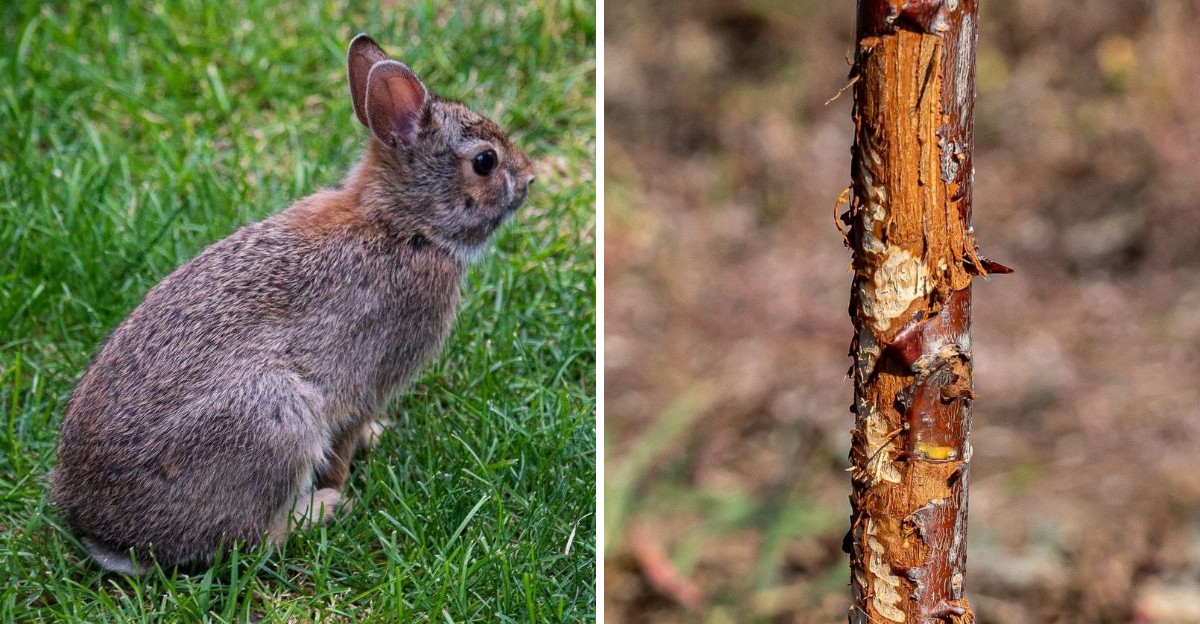
A fluffy little animal that weighs about as much as a bag of sugar can girdle a sapling in a single night. I learned that the hard way, staring at a pale, chewed ring on a tree I had babied all summer.
In Georgia, mild weather keeps these nibblers active all year. They do not wait for frost to go looking for a woody snack.
When fall greens fade, tender bark starts to look like a buffet.
I used to blame deer for every bite in my yard. Then I noticed the cuts were low, neat, and angled, like someone used tiny garden snips.
You can learn a lot from where a bite sits and how clean it looks.
The clues to who’s been snacking on your saplings after dark are probably already sitting at the base of your trunks.
1. Those Clean Angled Cuts on Your Sapling Tell a Story
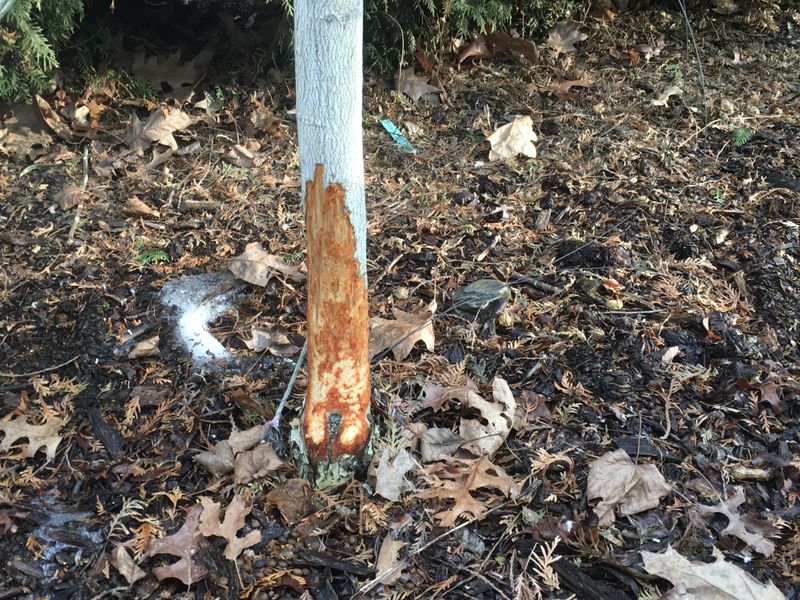
Rabbits are tidy eaters, and their bite marks prove it. Their sharp front teeth slice young stems at a clean 45-degree angle, almost like a pruner made the cut.
Deer work differently. They have no upper front teeth, so they tear twigs and leave ragged, shredded ends.
Squirrels and voles leave their own clues, too, so it pays to look closely before you pick a culprit.
Height is another big hint. Rabbit damage usually sits within about two feet of the ground, though deep snow can lift that line in colder states.
In most of Georgia, snow is rare, so the chewing stays low and close to the soil.
You may also spot small, round, pea-sized pellets scattered near the trunk. Fresh ones look dark and moist, while older ones turn pale and dry.
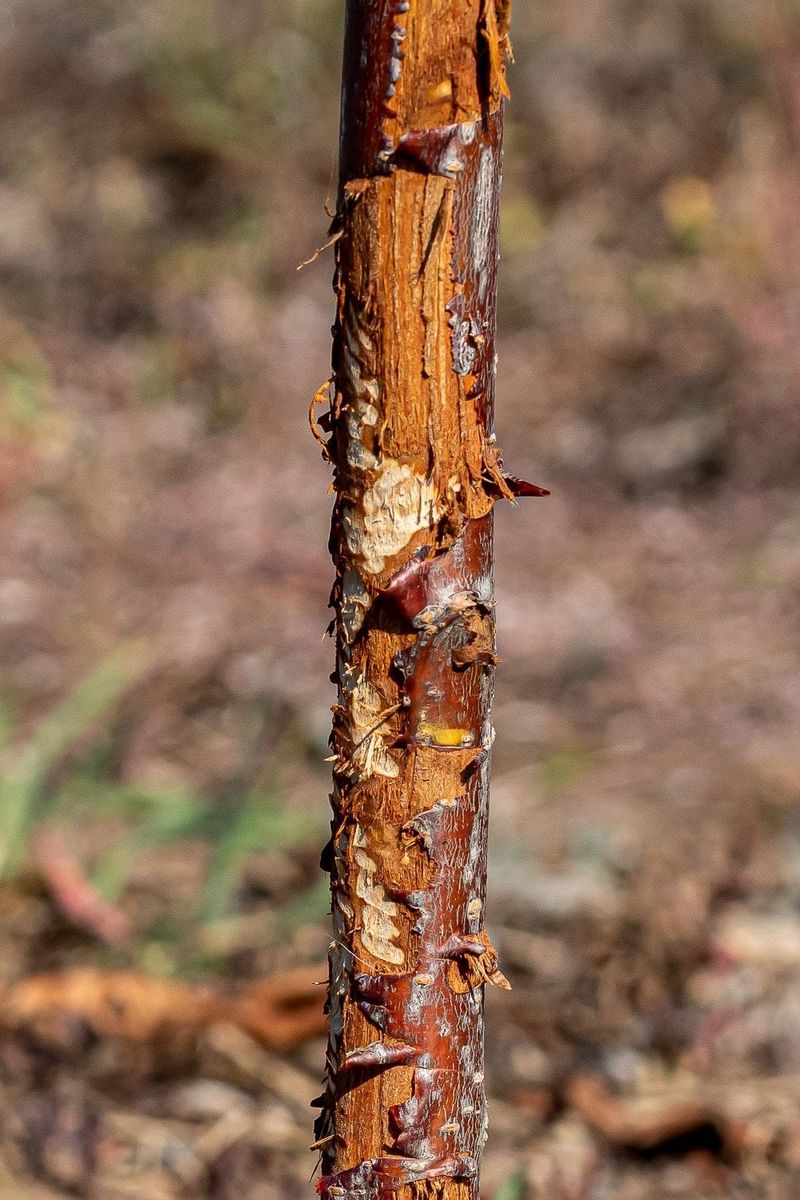
Look for patches where bark has been stripped away, exposing pale wood underneath. Tiny paired tooth grooves often show up on those bare spots.
I like to do a quick walk around my young trees each week once fall arrives. A flashlight check at dusk can reveal a visitor in the act.
Catching the first nibbles early gives you time to protect the tree before real harm sets in.
2. Fall Hunger Pushes Cottontails Toward Tender Bark
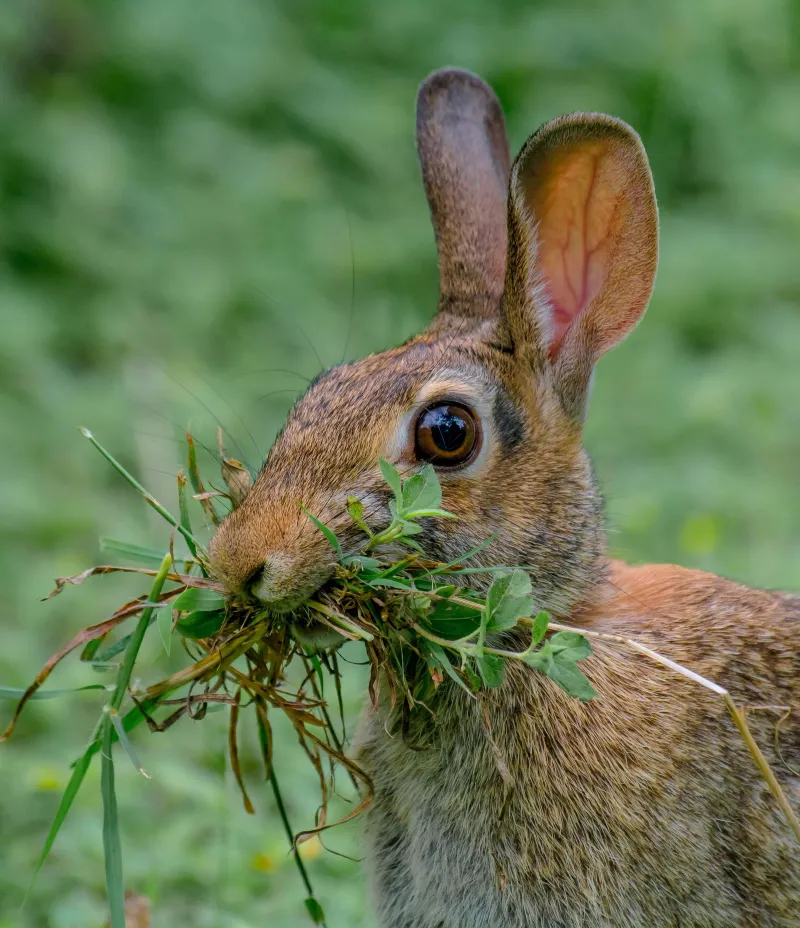
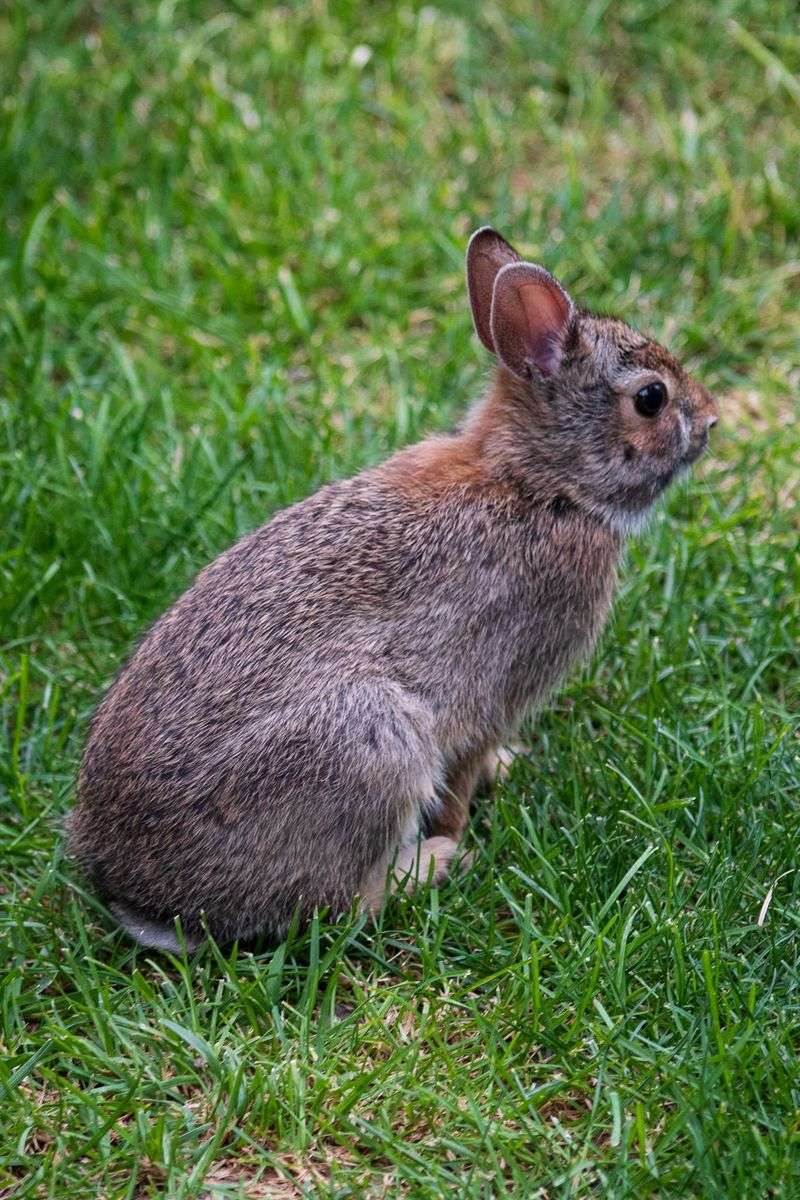
Georgia is home to the eastern cottontail across most of the state, plus the marsh rabbit along the coast. Both spend spring and summer munching on clover, grasses, and tender garden greens.
Fall changes the menu fast. As grasses go dormant and leafy plants fade, rabbits shift toward twigs, buds, and bark to fill their bellies.
That switch can begin weeks before winter shows up on the calendar. A cool snap in October or November can thin out green food in a hurry, even in warm parts of the state.
Young trees make an easy target. Their bark is thin, smooth, and full of the nutrient-rich tissue rabbits crave, while older trunks grow rough, thick bark that most bunnies skip.
Rabbits do not hibernate, so they keep eating every single day. A cottontail usually stays in a fairly small home range, so one hungry neighbor can return to the same sapling night after night.
Here is a helpful way to see it. Your newly planted tree is not being targeted out of spite.
It simply sits right where food is easiest to find when the season turns lean.
3. Wire Tree Guards Are Your Best Line of Defense
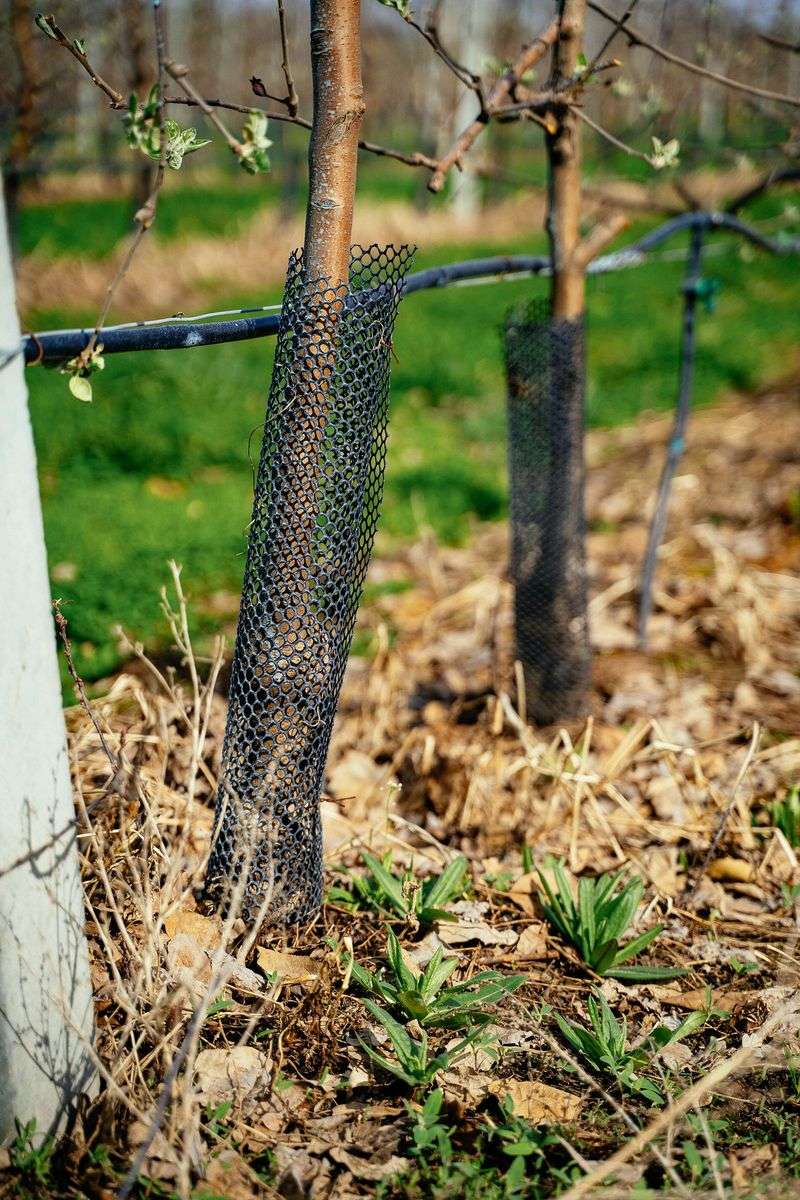
Ask almost any extension specialist about rabbits and you will hear the same answer first. A physical barrier beats nearly every other option.
Hardware cloth with quarter-inch or half-inch openings works beautifully for single trees. Wrap a loose cylinder around the trunk, leaving a couple of inches of space so the bark can breathe and grow.
Make the guard at least 24 inches tall, and taller is better. Push the bottom a few inches into the soil or pin it down so rabbits cannot squeeze or dig underneath.
For a whole bed or small orchard, a fence of chicken wire or hardware cloth can protect many plants at once. Bury the bottom edge several inches deep, or bend it outward like an L to stop digging.
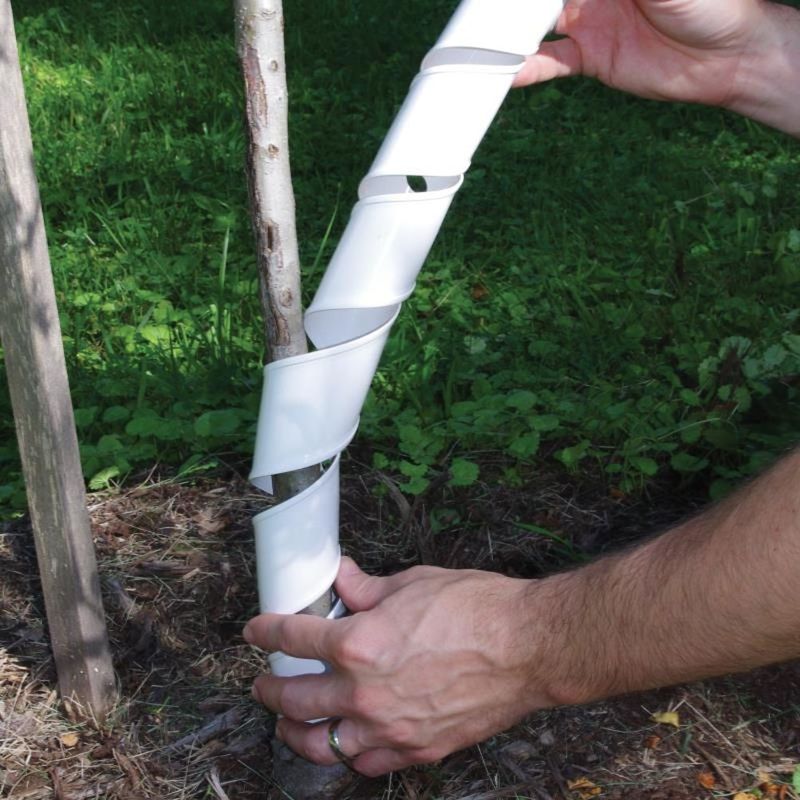
Plastic spiral wraps and corrugated tubes also help, especially on smooth young trunks. I prefer wire, though, because it lets air flow and lasts for years.
Check guards a few times each season. Loosen them as trunks thicken so they do not pinch the bark.
A little wire and an hour of work can save a tree you spent years waiting to enjoy.
4. September and October Are the Sweet Spot for Protecting Saplings
Timing is the sneaky part of rabbit control. Most gardeners wait until they see damage, and by then the bark is already gone.
Early fall is the smarter window. Getting guards and fences in place by September or October means your trees are ready before green food runs short.
Georgia has a wide range of climates, from the cooler mountains in the north to the mild coastal plain.
North Georgia often sees an earlier drop in tender plants, so mountain gardeners may want to start a bit sooner.
New plantings deserve extra attention. Fall is a popular time to plant trees in the South because cooler air and warm soil help roots settle in, but those fresh saplings are also the most tempting snack in the yard.
I like to protect any new tree the same day it goes into the ground. That way I do not forget, and the bunnies never get a free sample.
Mark your calendar for an early fall check each year. Look over existing guards, replace worn ones, and add protection to anything planted since last season.
5. A Chewed Ring Around the Trunk Is a Serious Warning
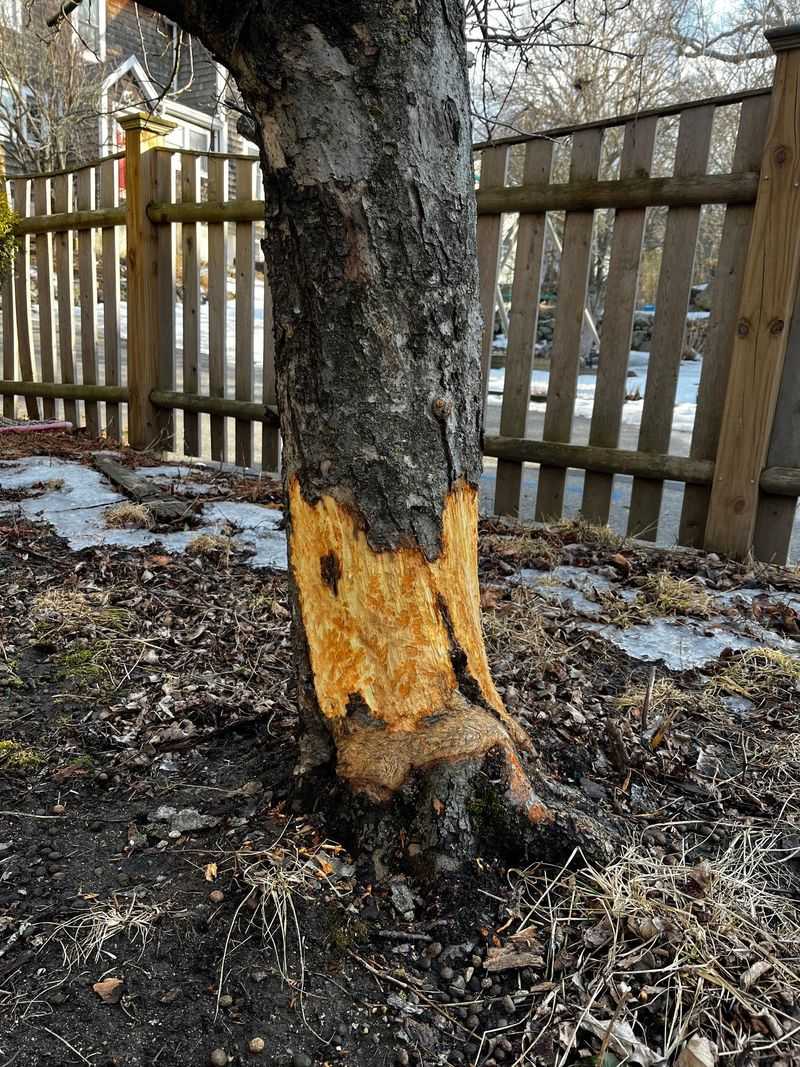
One small patch of missing bark is a nuisance. A full ring of missing bark is a real emergency.
That ring is called girdling. Just under the bark sits a thin layer of living tissue that moves sugars from the leaves down to the roots, so when rabbits chew all the way around, that flow gets cut off.
A girdled tree may leaf out normally next spring, which fools a lot of people. Over the following months, the roots run low on energy and the tree often declines or fails.
Partial damage is easier to recover from. If a strip of healthy bark still connects the top and bottom, the tree has a decent chance to heal over time.
Resist the urge to slather wounds with paint or sealant. Research from university extensions shows trees generally heal better on their own.
For valuable trees with full girdling, an arborist may suggest bridge grafting in spring. Young saplings are often cheaper to replace, but always ask a pro before giving up.
Smaller trees with damage low on the trunk sometimes resprout from the base, too.
6. Brush Piles and Tall Weeds Make Rabbits Feel at Home

Rabbits are nervous little creatures. They rarely wander far from a hiding spot, because hawks, foxes, and owls are always on the lookout.
That makes cover a big deal. Brush piles, overgrown fence lines, tall weeds, and stacks of old lumber give bunnies a safe place to rest close to your trees.
Tidying up those spots can make your yard much less inviting.
Mow tall grass near young plantings, clear weedy corners, and move brush piles farther away from the trees you care about most.
Watch the mulch around trunks, too. A thick volcano of mulch piled against the bark can hide chewing and give small critters a cozy spot, so keep mulch a few inches away from the trunk.
Of course, brush piles can help birds and other wildlife you might enjoy. If you love that habitat, just place it at the far edge of your property, away from your saplings.
Habitat changes rarely solve the problem alone. They do lower the pressure, and they work even better when paired with sturdy wire guards around your youngest trees.
7. Fruit Trees and Maples Top the Rabbit Snack List
Some trees seem to come with a rabbit welcome sign. Young fruit trees lead the pack, especially apple, pear, crabapple, and peach.
Peaches might sting the most here. Georgia is famous for them, and a backyard peach sapling is a prime target in its first few years.
Ornamentals can draw attention, too.
Extension guides often list maples, honey locust, serviceberry, and willow among the frequent victims, along with shrubs like roses, blackberries, raspberries, and dogwood.
Young pines and other evergreens can get clipped as well. Rabbits often snip off low branches and leave the cut pieces lying nearby.
No list is perfect. A hungry rabbit in a lean season will try almost anything, so even plants called resistant may show a few bites.
I find it helpful to rank my yard by risk. Fruit trees and small maples get wire guards first, while tougher older trees wait their turn.
If you are planning new plantings, think about protection before you buy. Budget a few extra dollars for hardware cloth alongside every young tree, and you will thank yourself next spring.
8. Repellents Help Most When Paired With Trunk Guards
Repellents are a handy backup plan, not a magic fix. They work by making bark taste bitter or smell like trouble to a rabbit.
Common products use ingredients like putrescent egg solids, capsaicin from hot peppers, or thiram.
Always read the label, follow directions, and skip any product not approved for edible plants on fruit trees.
Timing matters here, too. Apply repellents before damage starts, then reapply after heavy rain or a stretch of new growth, since protection fades over time.
Switching between products can help. Rabbits may get used to one scent or taste, so rotating keeps them guessing.
Still, a very hungry rabbit may ignore a bad taste when food runs low. That is why experts suggest using repellents alongside barriers rather than instead of them.
My simple plan looks like this. Wire guards go on every young trunk in early fall, repellent goes on low branches outside the guard, and I walk the yard weekly for fresh signs.
That small routine fits into a busy season. Your saplings get a real shot at growing big enough to shrug off bunny bites on their own.