A Bald Eagle Circling Over Your New York Property Isn’t Random. Here’s What It’s Doing
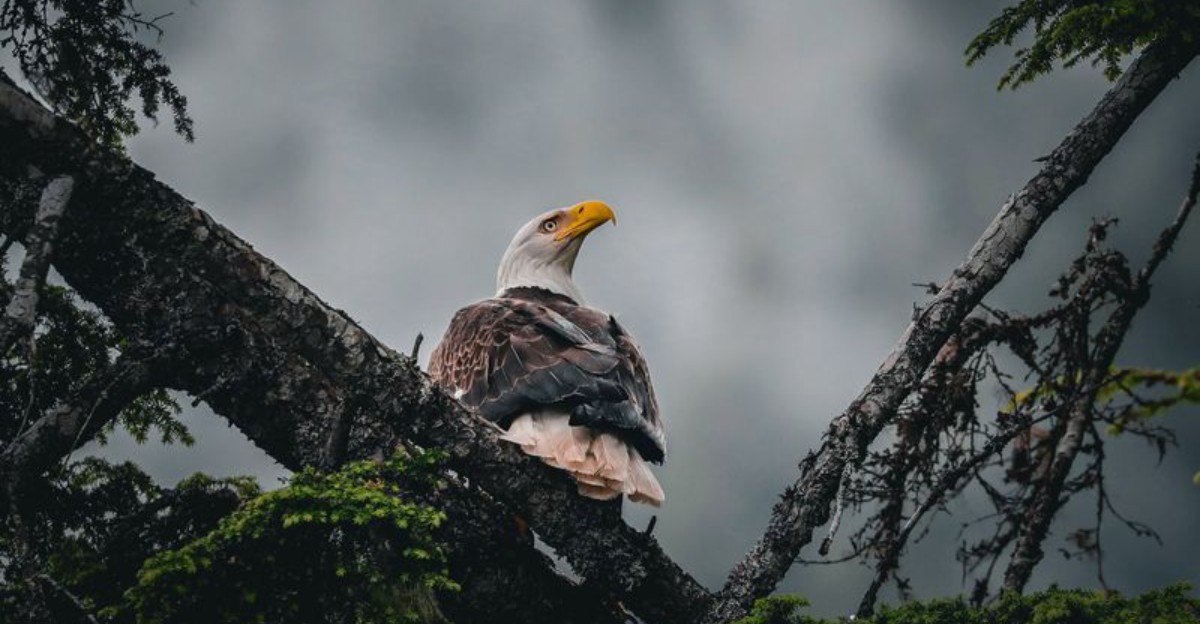
Back in 1976, New York had exactly one active bald eagle nest left in the whole state. One. Today, wildlife officials count hundreds of nesting pairs, and some of them are soaring over ordinary backyards like yours and mine.
I’ll never forget the first time a huge shadow slid across my vegetable beds. I looked up expecting a hawk. Instead, I saw a bright white head, a yellow beak, and wings that seemed as wide as my garden gate.
Let me be straight with you. Those lazy loops overhead are not a sightseeing tour. That bird is reading the sky, the land, and maybe even your pond, with eyes far sharper than any of ours.
So what exactly is it looking for up there? And should a gardener feel thrilled, worried, or a little bit of both?
Those Wide Eagle Circles Are Powered by Something You Can’t See
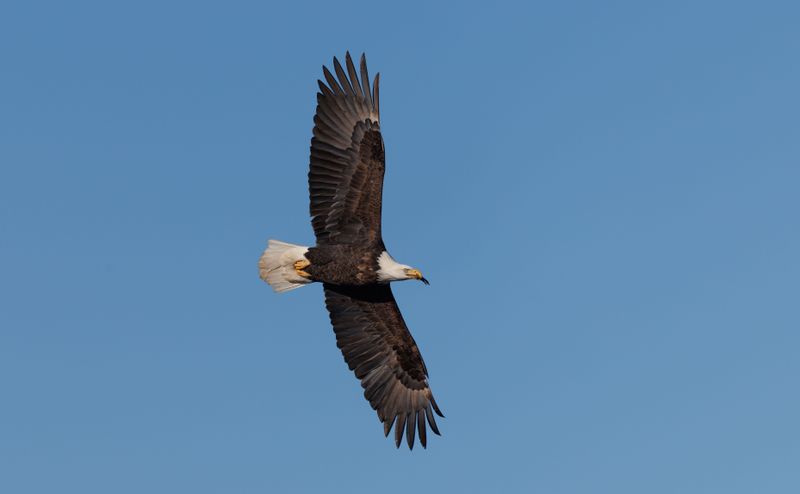
Watch a bald eagle long enough and you’ll notice something odd. Those giant wings barely flap at all, yet the bird keeps climbing higher and higher.
The secret is warm air. On sunny days, fields, driveways, and rooftops heat up faster than the land around them.
That warm air rises in invisible columns called thermals, and eagles ride them like an elevator.
By turning in tight or wide circles, an eagle stays inside the rising column. With a wingspan that can stretch close to seven feet, it can gain hundreds of feet of height while spending very little energy.
Once it reaches the top, it can glide a long way before finding the next thermal.
Gardeners can actually use this to predict sightings. Late morning through mid-afternoon on clear, warm days tends to be prime circling time.
Cool, cloudy, or rainy days usually mean fewer soaring birds, because thermals are weaker.
Wind matters too. Along ridges and lake shores, steady breezes bounce upward off slopes, creating another free ride.
That is one reason Hudson Valley hillsides and Finger Lakes ridges can be such good spots for watching.
So the next time an eagle loops above your tomato patch, give it some credit. It is saving fuel like a seasoned pilot, and your sun-warmed yard may be part of its flight plan.
Fish Dinner Is the Top Thing on That Bald Eagle’s Mind
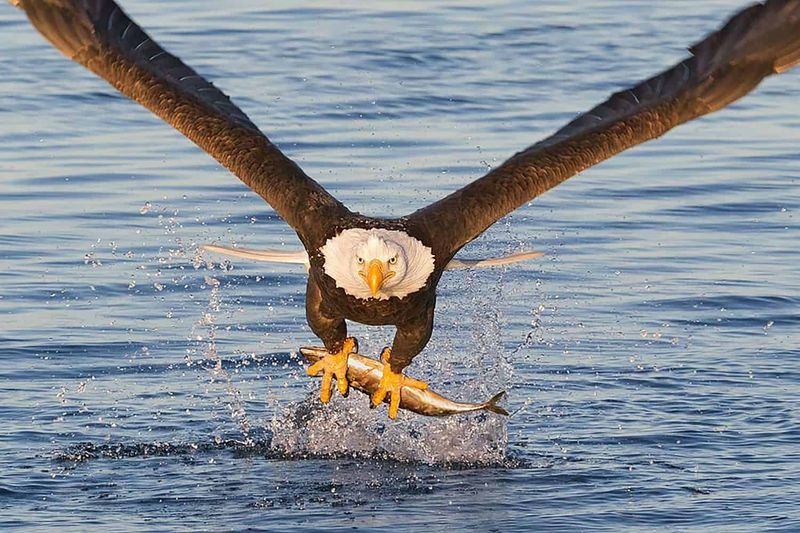
Most of the time, a circling eagle is shopping for food. Fish make up the biggest part of a bald eagle’s diet, so a property near a river, lake, reservoir, or large pond is a natural magnet.
Those famous eyes are worth bragging about. Scientists estimate eagle vision is several times sharper than ours, letting them spot a fish flashing near the surface from high above.
When they find one, they swoop low and snatch it with their talons rather than diving underwater.
Fish are not the only item on the menu, though. Eagles are opportunists and will also eat ducks, gulls, muskrats, and rabbits.
In winter, when lakes freeze, carrion like deer remains becomes an important food source.
Eagles are also known for stealing. They often chase ospreys until the smaller bird drops its catch, then grab the prize in midair.
Benjamin Franklin famously grumbled about this habit, though the bird won the national title anyway.
If you keep a backyard pond stocked with koi or goldfish, take note. A sharp-eyed eagle or heron may see it as a free buffet.
Adding pond netting, deeper water zones, or underwater hiding spots like stone caves gives your fish a fighting chance.
For most of us, though, the eagle is just passing over, scanning for the nearest big water.
A Nesting Eagle Pair May Be Patrolling Its Territory Overhead
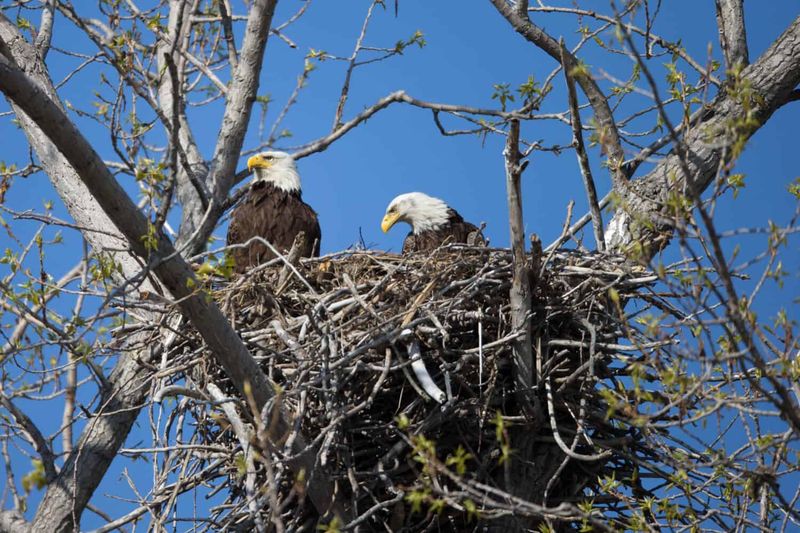
Sometimes that circling bird is not hunting at all. It may be checking the borders of home.
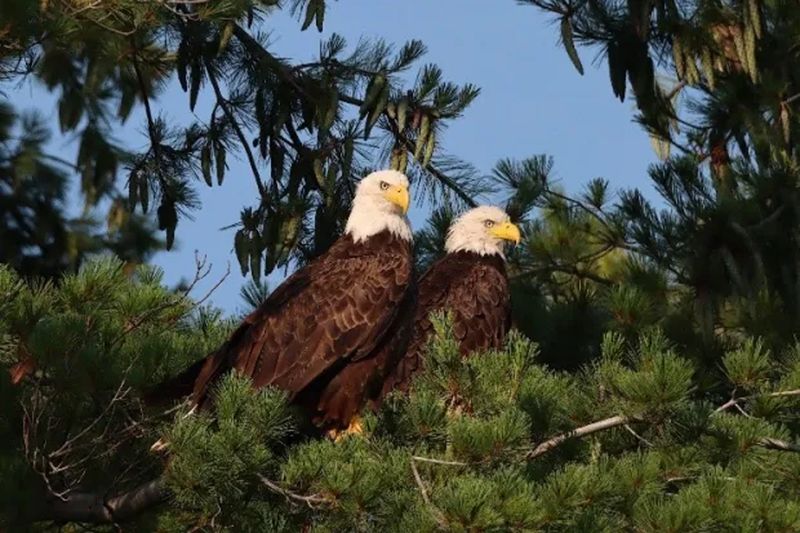
Bald eagles usually pair up for life and return to the same nesting area year after year. In New York, breeding season starts early, with courtship and nest repair often happening from late winter into early spring.
Eggs typically arrive around February or March, and young eagles leave the nest by early summer.
During this time, the pair defends its territory from other eagles. High, slow circles let them keep watch and show off their presence to any intruder.
If you ever spot two eagles soaring together, rolling, or even locking talons in midair, you are likely seeing courtship or a territorial display.
Repeated sightings in the same spot are a strong clue. If an eagle circles your neighborhood day after day in spring, a nest may be within a mile or two.
Nests are often in tall trees near water, though some New York eagles now nest farther inland as their numbers grow.
I find this part the most exciting. A regular eagle in your sky could mean a family is being raised nearby.
Keep a notebook of dates and times, and you may start to see a pattern emerge across the seasons.
Tall White Pines and Big Old Trees Catch an Eagle’s Eye
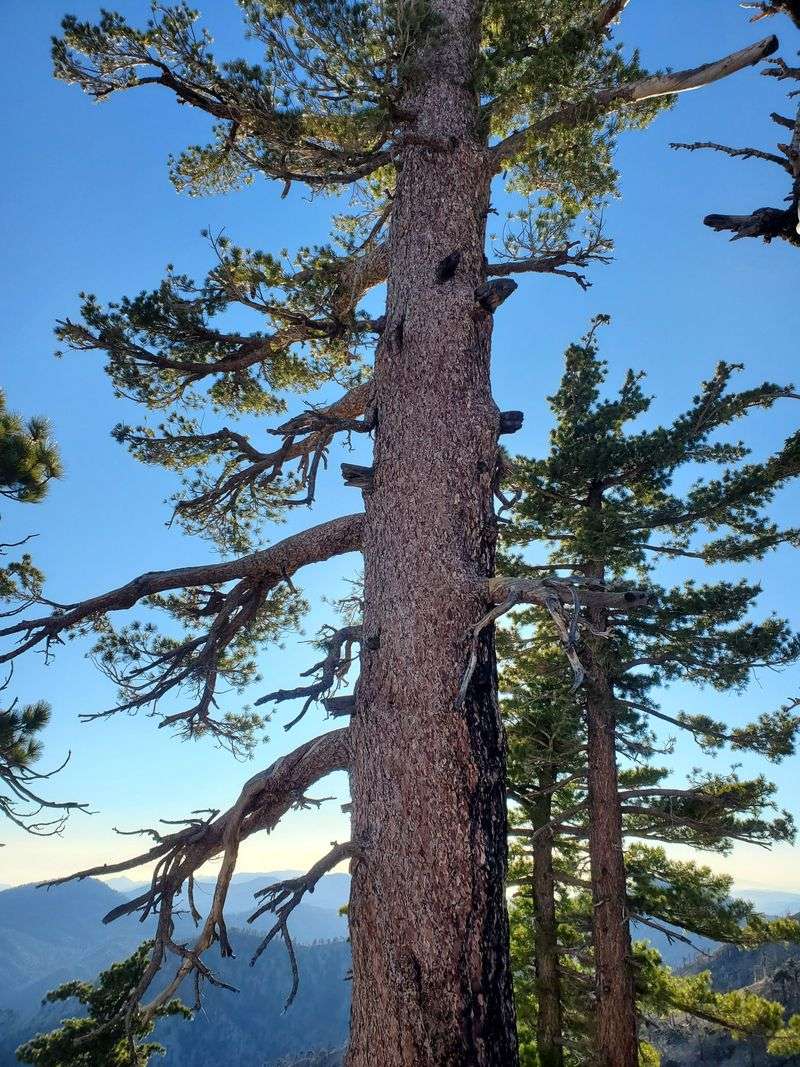
Got a giant old tree near water? That tree might be the most interesting thing on your property, at least from an eagle’s point of view.
Bald eagles favor tall, sturdy trees with strong branches and open views. In New York, white pines are a classic pick, along with big oaks, cottonwoods, and sycamores.
The birds like a clear flight path in and out, plus a lookout over nearby water.
Their nests are enormous. A new nest might be about five feet across, and pairs add sticks every year.
Some long-used nests grow to weigh well over a ton, which explains why only strong trees can hold them.
Eagles also use tall trees as perches, even without nesting. A bare-topped or open-branched tree along a shoreline makes a perfect hunting lookout.
Wildlife biologists often suggest leaving these large trees standing when they pose no safety risk to homes or people.
As a gardener, I see this as a reason to value mature trees instead of rushing to cut them down. Planting native white pines or oaks now is a gift to wildlife decades from now.
They grow slowly, but so does any good legacy.
If a big tree on your land needs work, call a certified arborist first.
Winter Brings Visiting Eagles From Canada to New York Rivers
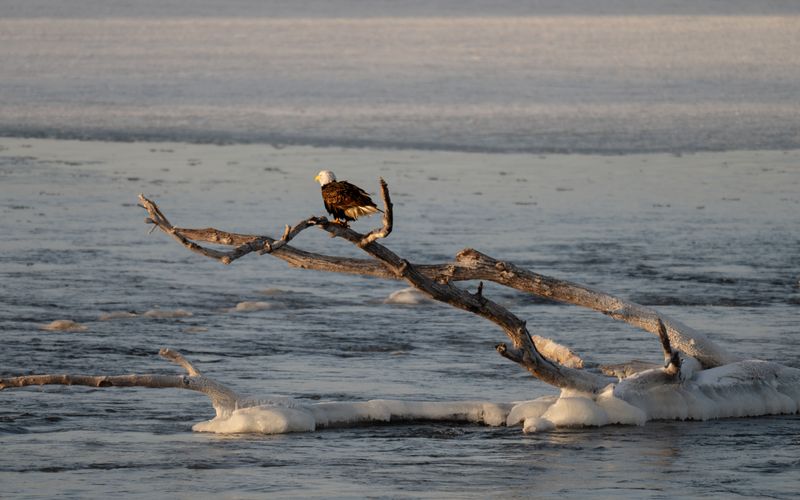
Spot an eagle circling in January, and it may not be a local at all. Each winter, bald eagles from Canada and northern areas move south looking for open water.
When lakes up north freeze solid, fishing becomes nearly impossible. So eagles head for rivers and reservoirs that stay partly open, often below dams where moving water resists ice.
New York becomes a winter hot spot, with some estimates of several hundred extra eagles arriving each season.
The Delaware River area, the Hudson River, the Mongaup reservoirs, and spots along the St. Lawrence are well known for winter viewing. Parks and nature groups even host eagle-watching events during the coldest months.
Young eagles add another twist. Juveniles look brown and blotchy for about four to five years before earning their white heads and tails.
Many people mistake them for hawks or golden eagles, so a big dark raptor over your yard might be a teenage bald eagle.
Winter sightings often cluster in the morning, when birds feed. Midday flights may involve soaring between roosts and fishing spots.
Bundle up, grab binoculars, and check open water near you. Watching an eagle against gray ice and snow is one of my favorite winter gardening breaks, even when there is nothing to plant.
Small Pets and Backyard Chickens Rarely Top the Eagle Menu
Let me save you some worry. A circling bald eagle is very rarely sizing up your cat or small dog.
Eagles prefer easy, familiar meals, and fish or carrion are far simpler than a pet with an owner nearby. Reports of eagles taking pets do exist, but they are uncommon.
Hawks and owls are more often the culprits when small animals go missing.
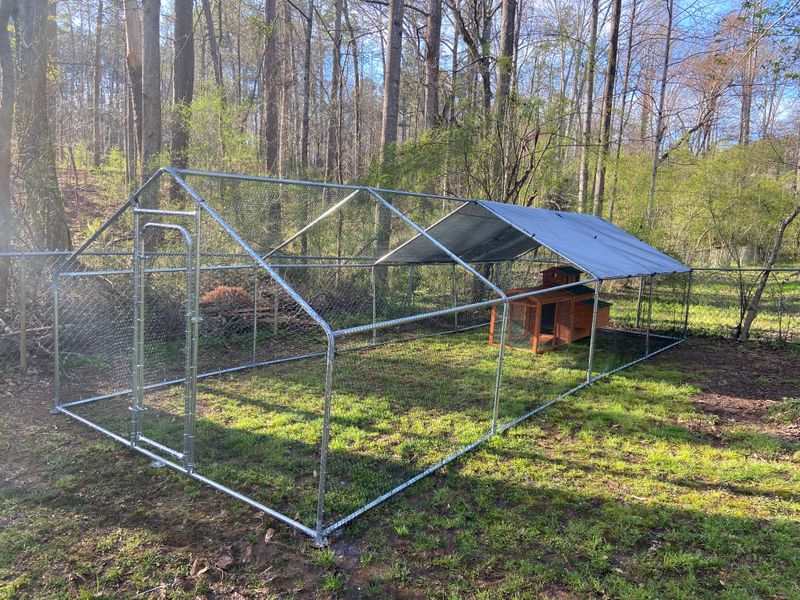
Backyard chickens are a different story. Free-range hens in an open yard can tempt hungry raptors, including eagles, especially in late winter when food runs low.
A few simple steps go a long way.
Covered runs with wire or netting overhead stop attacks from above. Shrubs, small trees, or a sheltered area give birds a quick place to hide.
Many keepers also find that a watchful rooster helps sound the alarm.
For tiny dogs, staying close outside is the easiest fix. A leash or supervised yard time removes nearly all risk.
One firm rule matters here. You cannot harm, trap, or harass a bald eagle to protect animals, even on your own land.
Protection must come from shelter and smart management, not from chasing off the bird.
Honestly, the hawks are usually the bigger problem for my flock.
Federal and New York Laws Protect Every Bald Eagle Nest
Here is a fact that surprises plenty of homeowners. Even though bald eagles came off the federal endangered list in 2007, they are still strongly protected.
The federal Bald and Golden Eagle Protection Act makes it illegal to harm, possess, or disturb eagles, their eggs, or their nests. Disturbance includes anything that causes a pair to abandon a nest or fail to raise young.
The Migratory Bird Treaty Act adds more protection.
In New York, the bald eagle is still listed as a threatened species. That gives the state Department of Environmental Conservation a say in activities near nests.
What does this mean for you? Picking up a feather is technically against federal law, so admire it and leave it.
Cutting a nest tree or building close to an active nest may need review with wildlife officials. Guidelines often suggest keeping noisy work hundreds of feet away, and farther during nesting season.
Watching respectfully is easy. Use binoculars or a zoom lens, stay well back, and leave if a bird seems alarmed or keeps calling.
Drones near nests are a firm no.
If you find an injured eagle, contact the DEC or a licensed wildlife rehabilitator instead of handling it yourself.
An Eagle Over Your Garden Is a Sign of a Healthy Landscape
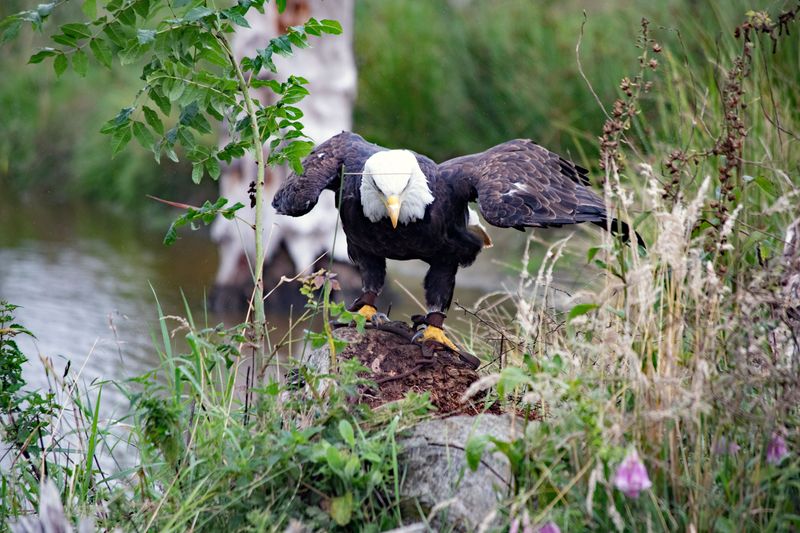
Few comeback stories feel as good as this one. In the 1970s, the pesticide DDT thinned eggshells so badly that New York’s eagle population nearly vanished.
The state started a restoration program in 1976, raising and releasing young eagles. Combined with the DDT ban and cleaner waterways, numbers climbed steadily.
The DEC has since documented hundreds of breeding territories across the state, from Long Island to the Adirondacks.
That success says something about your neighborhood. Eagles sit at the top of the food chain, so they need clean water, healthy fish, and plenty of space.
When they show up regularly, it often means the local ecosystem is in decent shape.
Gardeners can help keep it that way. Cutting back on pesticides protects the insects, fish, and small animals that feed bigger creatures.
Native plants along streams and ponds slow runoff and filter water before it reaches the fish eagles depend on.
Lead is another quiet hazard. Eagles that eat carcasses with lead fragments can become poisoned, so hunters and anglers switching to lead-free gear makes a real difference.
If you ask me, the best takeaway is simple. Keep your yard wildlife-friendly, report nest sightings to the DEC, and enjoy the show.
That eagle is proof your corner of the world still works.