9 Low-Water Vines That Cover An Ugly Arizona Block Wall In One Season
That tan block wall around your backyard soaks up the sun all day and throws heat right back at you all evening. A fast vine can turn it into a living green screen in just one warm season, and it can do it without draining your water bill.
The right climber also cools the wall, feeds hummingbirds and butterflies, and gives your yard a reason to feel alive. Here are nine tough vines that handle low-desert heat and get the job done fast.
1. Cat’s Claw Vine
Picture a bare wall in March and a solid sheet of green by October. Cat’s claw vine pulls off that trick better than almost anything, often stretching past 30 feet in a single season.
Tiny hooked tendrils grab onto block like little climbing hooks, so you won’t need a trellis at all.
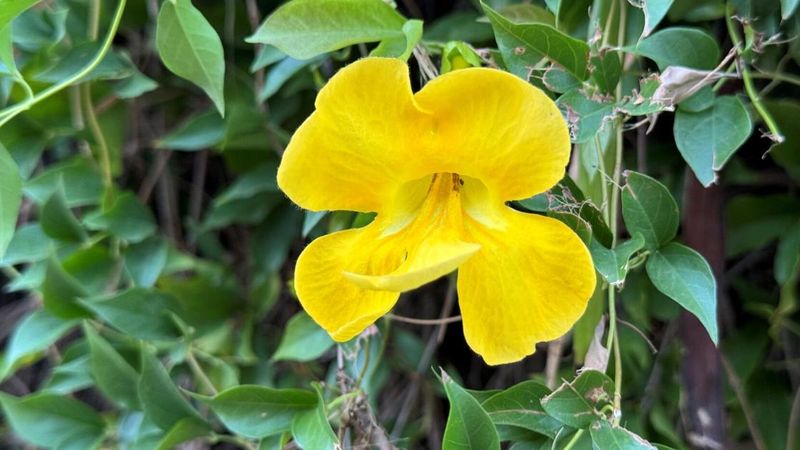
Once roots settle in, it gets by on surprisingly little water. Bright yellow trumpet flowers show up in spring, and bees love them.
Rabbits tend to leave it alone, which matters if they snack on everything else in your yard.
Now for the honest part. Speed comes with a catch, because this vine can wander onto roofs, into trees, and under siding if you ignore it.
Give it a wall with nothing nearby to invade, and plan on a hard trim once or twice a year to keep it in its lane.
Plant in fall or early spring, water deeply every few days for the first month, then stretch watering out to once a week or less. A thick mat of leaves on a west wall can also shade the block and may help lower the heat that radiates toward your patio at night.
Few vines cover ground this quickly.
2. Queen’s Wreath
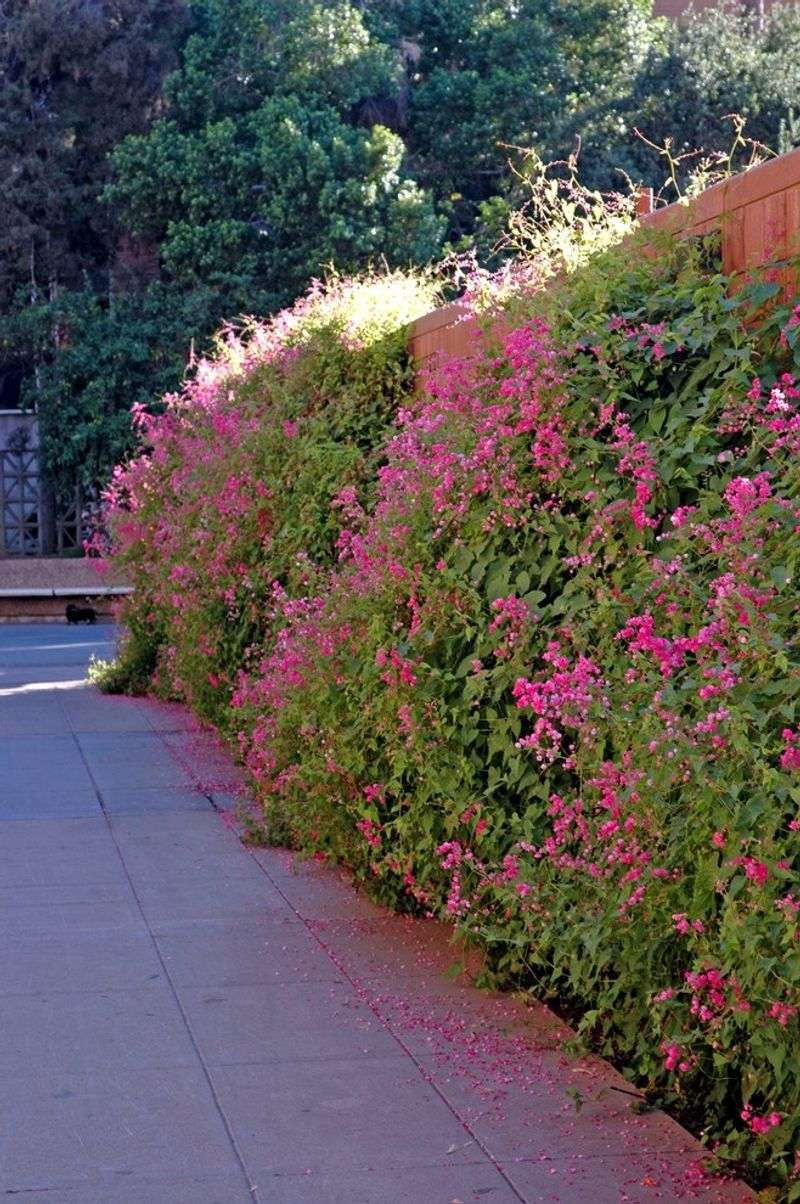
Ask any longtime Tucson gardener about summer color, and someone will mention queen’s wreath. Also called coral vine, it thrives when temperatures climb past 105 degrees and other plants sulk.
Clusters of pink blooms drape over walls like a party decoration that nobody had to hang.
Growth is wild in the best way. A healthy plant can run 25 to 40 feet, and much of that happens in one summer once the heat kicks in.
Monsoon rains seem to give it an extra boost.
Butterflies and bees visit constantly, turning a boring wall into a busy pollinator stop. That buzz of activity is part of what makes a yard feel like habitat instead of a parking lot.
Winter frost may knock it back to the ground in colder pockets of the valley. Don’t panic.
Tuberous roots stay safe underground, and fresh shoots usually return quickly once warm weather comes back.
Water deeply every week or two in summer after the first year, and much less in winter. Give it a sturdy wire or mesh to twine around, since it climbs with tendrils rather than sticky pads.
Full sun is a must for heavy blooming.
3. Tangerine Beauty Crossvine
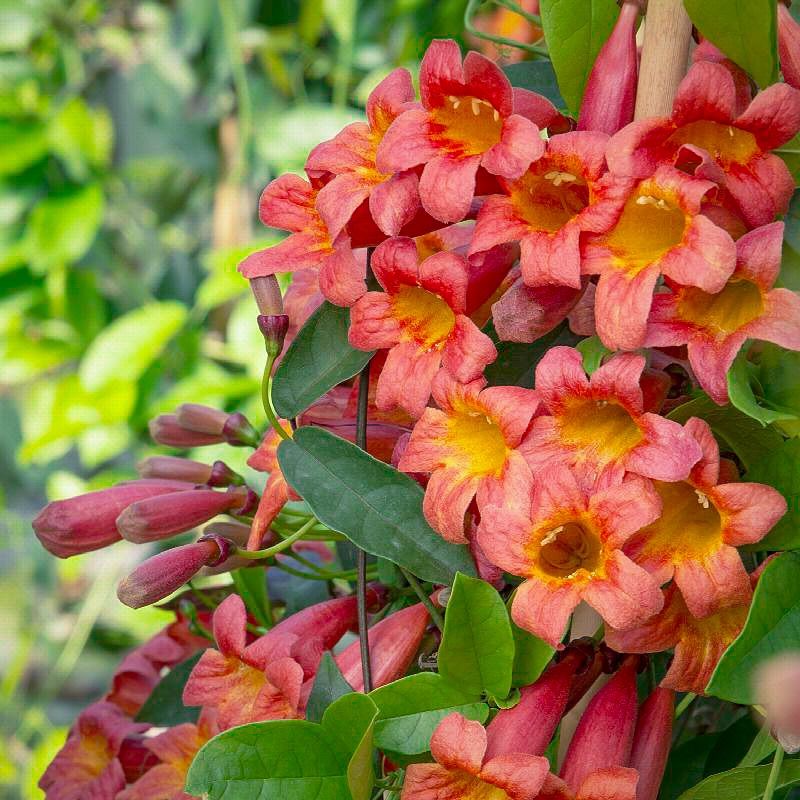
Hummingbirds seem to have a map with every Tangerine Beauty crossvine in Phoenix marked on it. The bright orange trumpets open in spring and keep popping off for weeks, drawing tiny visitors right up to your wall.
Your Arizona Garden Changes Every Week. Your Plan Should Too.
Gardening in Arizona changes quickly throughout the season. Every Friday you’ll receive a simple weekly plan showing exactly what to plant, prune, fertilize, harvest, and protect so you never miss the right timing.
Unlike many climbers, crossvine attaches itself with small clinging pads, so it scales block on its own. Expect 20 to 30 feet of reach over time, with quick coverage in its first warm season if roots get a good start.
Here’s a helpful tip for the low desert. A wall facing east or north, or one that gets some afternoon shade, keeps the leaves looking lush through July.
Full western blast can scorch it a bit, though it usually bounces back after monsoon.
Water needs land in the low to moderate range once it’s established. Deep soaking once a week in summer and every few weeks in winter is usually plenty.
Mulch around the base helps hold moisture in caliche soil.
The leaves stay green most of the year, giving you a screen in January too. If you want a vine that feels lively and keeps wildlife coming back, this cheerful climber earns its spot on any wall.
4. Pink Trumpet Vine
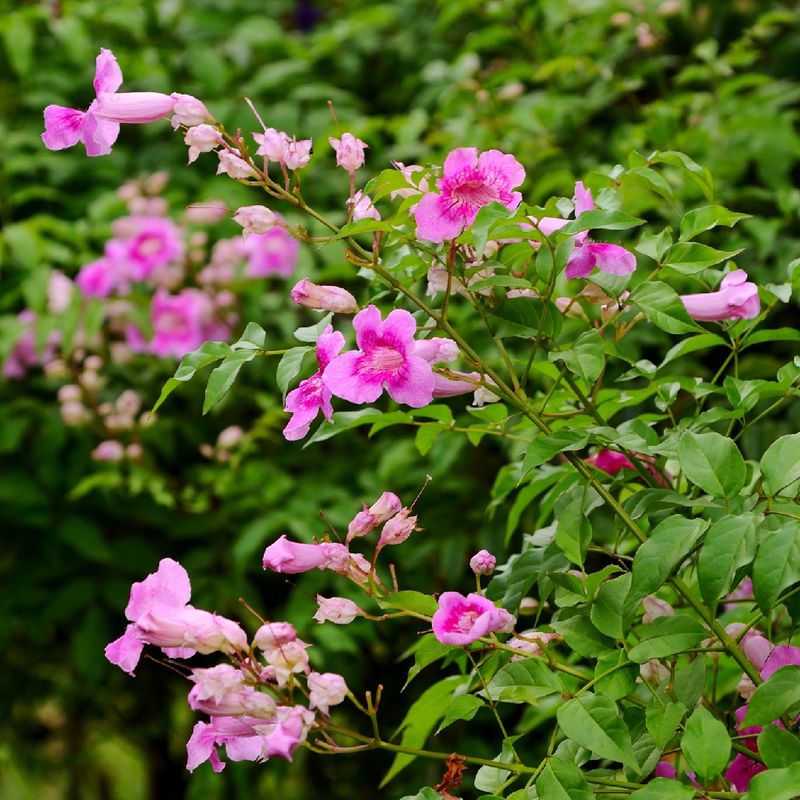
Some vines flinch at reflected heat. Pink trumpet vine practically asks for it.
That west-facing wall that bakes your feet at 5 p.m. could be exactly where this South African climber looks its best.
Soft pink trumpets with darker throats cluster at branch tips, especially in spring and fall when the weather mellows. Hummingbirds and butterflies stop by often, so your wall becomes a feeding station instead of an eyesore.
Growth runs 15 to 25 feet, which suits most standard backyard walls nicely. It doesn’t cling by itself, so tie the long stems to wire, hooks, or a simple trellis as they grow.
A few minutes of guiding early on saves a tangled mess later.
Once established, it gets along on low to moderate water. A deep drink every week or so through summer works well, with lighter watering in the cool months.
Heavy frost may singe the tips, but new growth usually returns in spring.
Trim after a bloom flush to keep it tidy and push more flowers. Many homeowners like pairing it with a desert shrub at the base for layered cover.
Bright, forgiving, and heat-happy, it makes tough exposures look easy.
5. Red Trumpet Vine
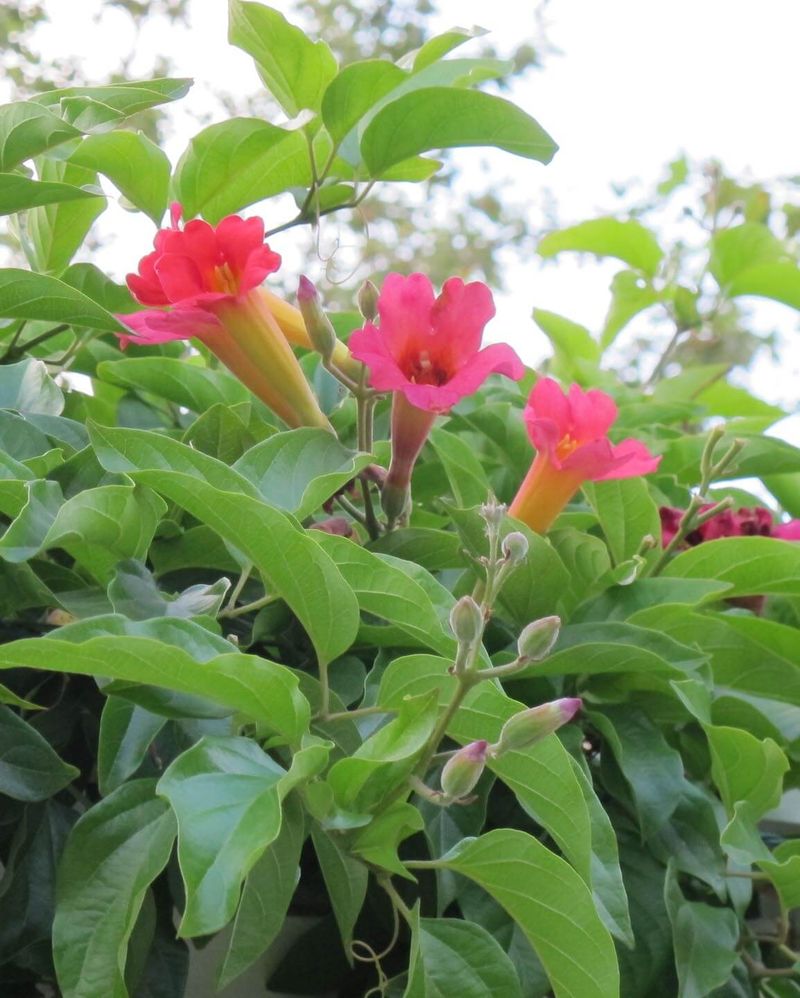
Glossy leaves, scarlet flowers, and a growth habit that just won’t quit. Red trumpet vine, also known as blood-red trumpet vine, gives a block wall the look of a tropical resort with far less water than you’d guess.
With age, stems can reach around 40 feet. That makes it a strong pick for long property lines or tall walls where smaller vines would look skimpy.
It climbs with tendrils that grab surfaces, though a bit of support helps it get started.
Flowers appear in waves through the warmer months, and hummingbirds treat them like a buffet. Those deep-green leaves stay on most of the year, so you get privacy even when the blooms take a break.
A quick reality check helps. In the hottest spots, it may appreciate a little afternoon relief, and hard freezes can damage tender growth.
A wall with morning sun and some late-day shade suits it nicely.
After the first summer, water every 7 to 10 days during heat waves and back off in winter. A layer of mulch keeps roots cooler in July.
Prune in early spring to shape it and remove any frost-nipped stems. Bold color, minimal fuss.
6. Lavender Trumpet Vine
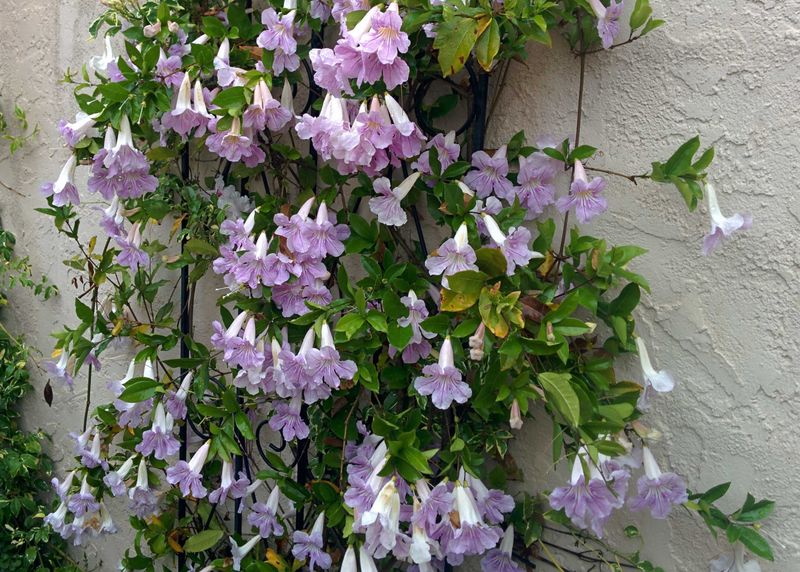
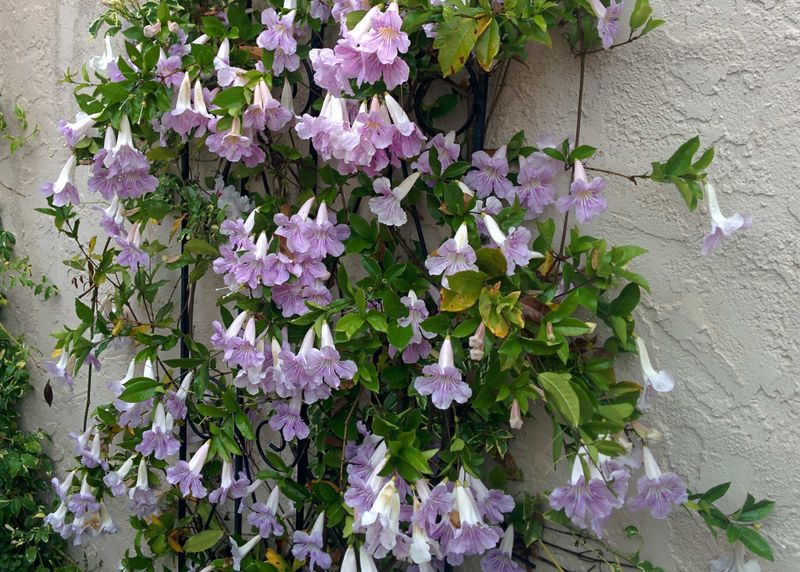
Tired of orange and red? Lavender trumpet vine, sometimes sold as violet trumpet vine, brings a cool splash of purple that feels calm next to all that sun-bleached block.
Each flower shows pale lavender petals with deep purple veins, almost like someone painted them by hand. Blooms run from late spring into early fall, and bees and other pollinators drift in for the nectar.
Tendrils and twining stems pull this evergreen up a wall quickly, often reaching 15 to 25 feet. A wire grid or mesh gives it something to grip, and from there it handles most of the climbing on its own.
Drought and heat tolerance make it a smart fit for water-wise yards. Once established, a deep watering every week or two in summer usually keeps it happy.
Like many vines, it benefits from a bit of afternoon shade in the harshest spots of the valley.
Maintenance stays light. Snip back wandering stems after flowering and clear out any tangled sections each winter.
Because the leaves hang on year-round, your wall stays covered while neighbors stare at bare branches. Gentle color and steady coverage make it a refreshing change of pace.
7. Cape Honeysuckle
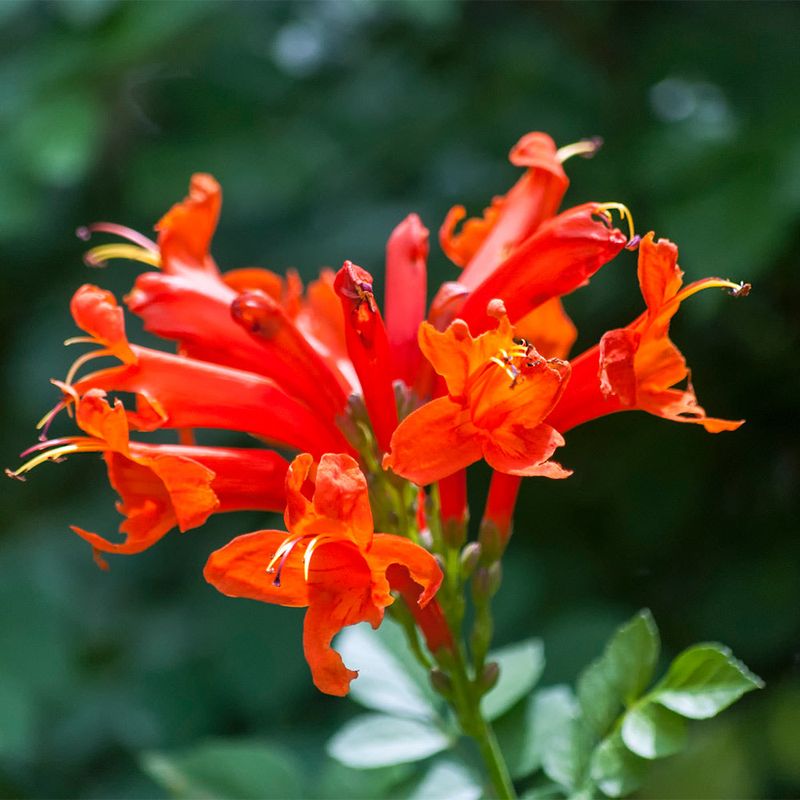
Most people think of cape honeysuckle as a shrub. Tie it to a wall, though, and it scrambles upward into a thick, leafy screen that hides block faster than you might expect.
Bright red-orange tubular flowers appear from fall through winter and often into spring. That timing matters, because hummingbirds that spend winter in the valley need nectar when little else is blooming.
Your wall becomes their go-to stop.
Fun fact: despite the name, it isn’t a true honeysuckle at all. It belongs to the same family as trumpet vines and comes from southern Africa.
Placement can make a real difference. A south or west wall soaks up heat during the day and releases it at night, which may help shield the plant from frost damage.
In summer, it handles that same heat with a moderate drink every week or so.
Since it doesn’t climb on its own, attach stems to eye hooks and wire as they lengthen. Shear lightly after the main bloom season to keep it dense.
The thick growth also gives small birds a sheltered perch. Easygoing and dependable, it fills gaps that fussier plants leave behind.
8. Trumpet Creeper
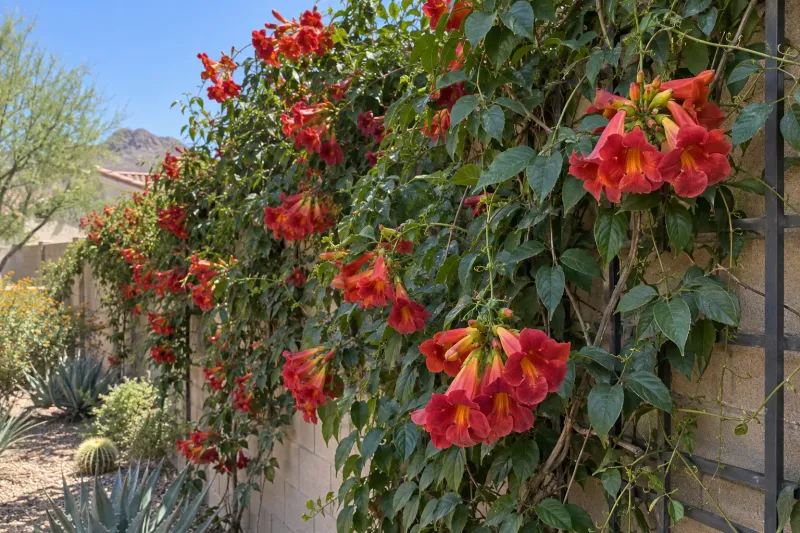
Got a long, ugly stretch of wall and zero patience? Trumpet creeper was practically built for that job.
Few deciduous vines blanket large spaces as aggressively once summer heat arrives.
Aerial rootlets let it climb block, stucco, and fence posts without help. Orange-red trumpet flowers form in clusters through summer, and hummingbirds zip between them all day long.
Water needs stay low once roots dig in. A deep soak every week or two in summer is often plenty, which makes it a solid choice for a back wall far from the hose.
A few cautions keep things friendly. Leaves drop in winter, so you’ll see bare stems for a couple of months.
Those rootlets can also leave marks on painted surfaces, and suckers may pop up nearby, so keep it away from your house and plan on pulling strays now and then.
Plant in early spring or fall and let it ramble. A firm prune in late winter controls size and actually encourages more blooms on new growth.
When summer rolls around, you’ll have a wall dripping with color and buzzing with tiny wings. For sheer coverage per dollar, it’s tough to beat.
9. Arizona Passion Vine
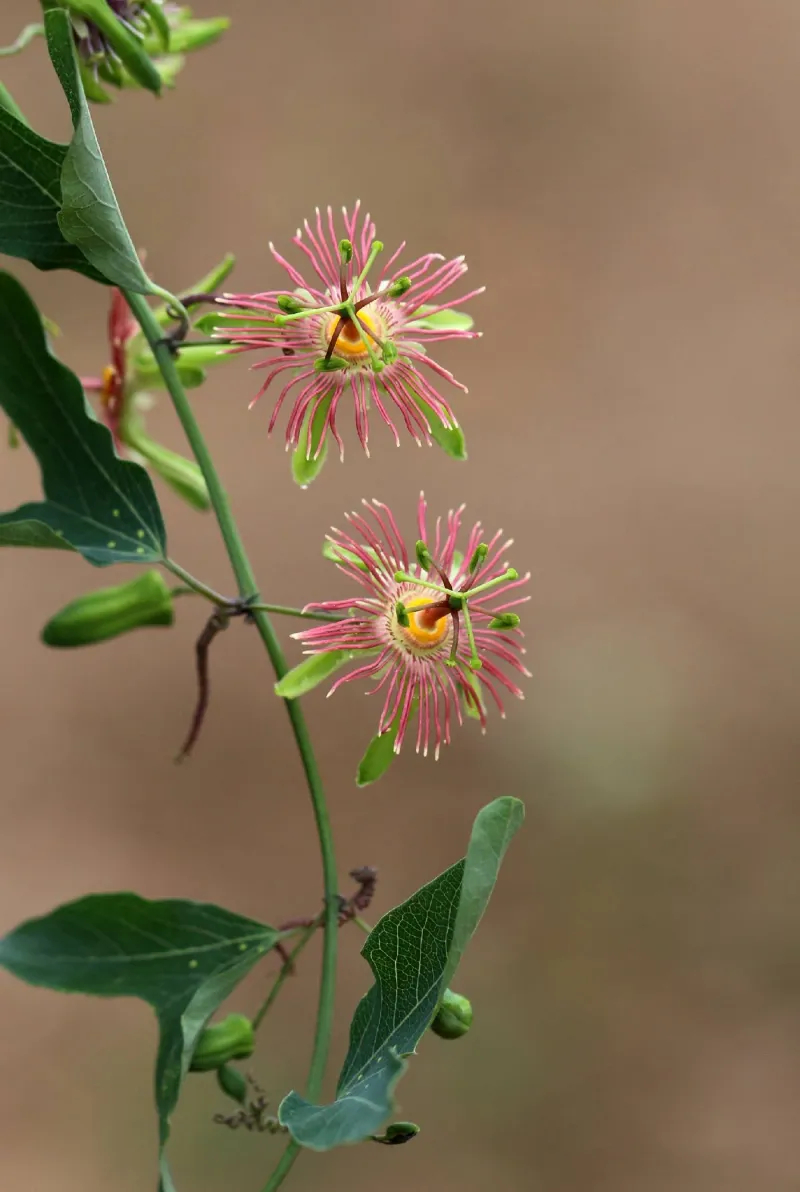
Every list needs a hometown hero. Arizona passion vine grows wild in the canyons of southern Arizona, which means it already understands caliche, monsoons, and brutal June afternoons.
The flowers look almost unreal, with frilly filaments arranged like a tiny clock face. Bees and butterflies visit often, and Gulf Fritillary butterflies lay eggs on the leaves.
You’ll see some chewed foliage, but those caterpillars turn into bright orange butterflies drifting across your yard.
Growth is fast in warm weather. Related passion vines can cover around 20 by 15 feet in a year, so a plain wall can disappear in one summer with a simple trellis for the tendrils to grab.
Water needs stay low to moderate. Deep watering every week during the hottest stretch, then tapering off in fall, generally keeps it thriving.
Because it’s native, it tends to need less pampering than imported picks.
Cold winters may knock it back. No worries, since it usually resprouts from the roots once spring warms up.
Plant in fall or early spring for the strongest start. If you want a wall that feeds local wildlife and celebrates the desert, this one belongs at the top of your shopping list.