7 Annual Flowers Texas Gardeners Plant When They Want Butterflies Visiting Through Summer And Into Fall
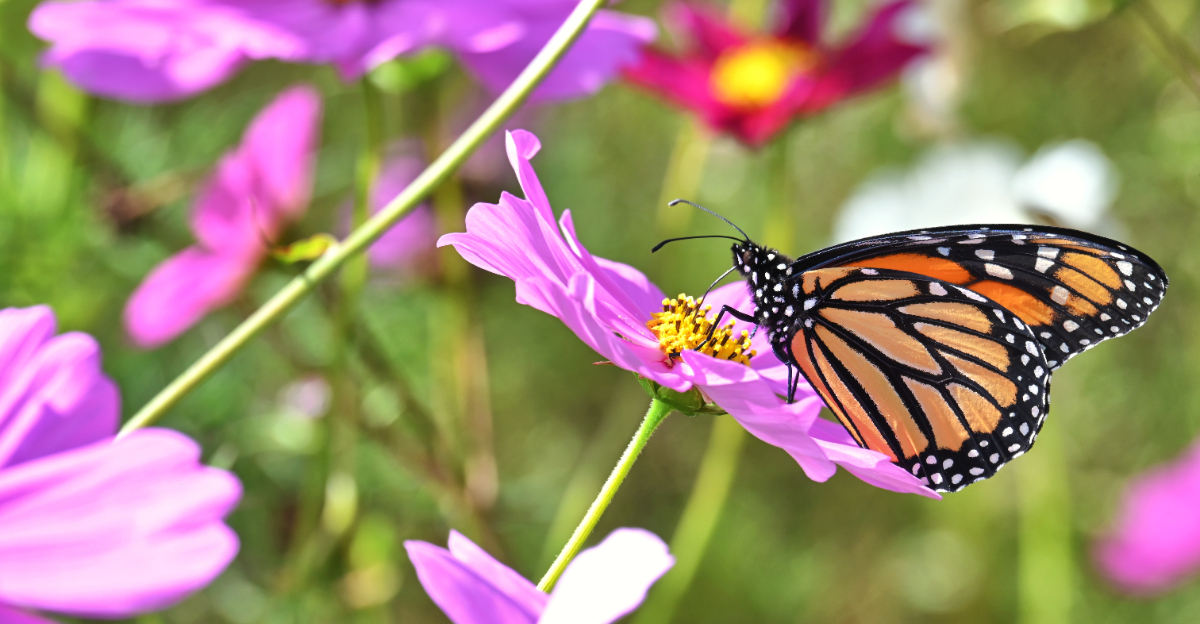
Texas summer has a reputation for ending gardens early.
The heat arrives in June and does not apologize. Most flowering plants that looked promising in April start struggling by July, and by August the yard can look like it has simply given up on the whole project.
A specific group of annuals completely ignores that reputation.
These plants were not developed for mild coastal climates or cool Pacific Northwest summers. They were built for heat, and several of them specifically originated in the kind of conditions Texas delivers every single year without fail.
Butterflies follow nectar. Nectar follows bloom. Bloom follows plants that were designed for the conditions they are actually growing in.
That chain of logic is why some Texas gardens stay full of butterfly activity from June through October while others go quiet by July.
The difference between those two gardens is plant selection made in spring before the heat arrives, with seven annual flowers tough enough to keep the color coming and the wings arriving.
1. Plant Zinnias For Summer Traffic
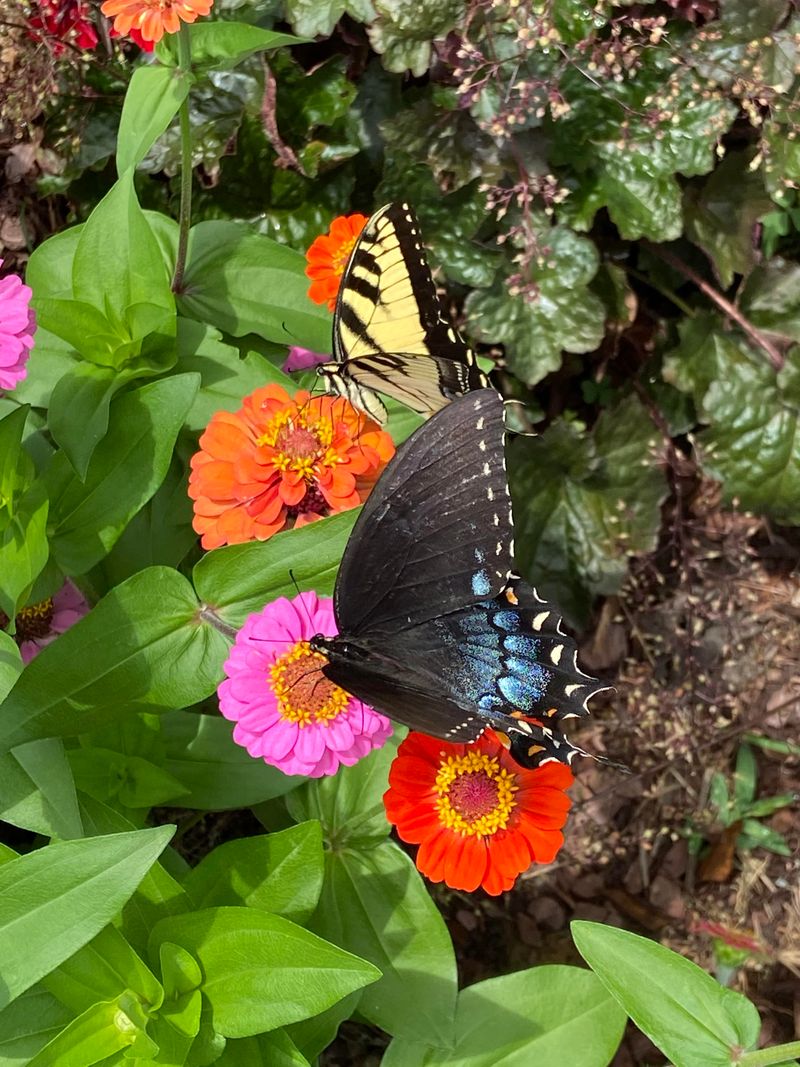
A blazing July afternoon in a Texas backyard and the thermometer pushing toward triple digits.
Somehow a monarch butterfly is floating casually from flower to flower across a riot of red, orange, and hot pink blooms.
That is zinnias doing exactly what they were designed to do, and doing it without any visible awareness that the conditions are supposed to be difficult.
Zinnias thrive in full sun and handle summer heat without complaint.
The large, flat flower heads give butterflies a stable landing pad, and the steady nectar production keeps them returning throughout the day rather than making a single pass and moving on.
Swallowtails, monarchs, painted ladies, and skippers all visit consistently through the Texas summer.
Plant seeds directly in the ground after the last frost, typically around March in most of Texas. Germination is fast and blooms arrive within about eight weeks.
Space plants about a foot apart to allow air circulation and reduce powdery mildew pressure through the humid parts of the season.
Trimming spent blooms regularly keeps new buds forming and extends the productive window well into fall. The Benary’s Giant and Profusion series both perform reliably in Texas heat.
Profusion types stay compact and bloom heavily without demanding constant attention.
Planting in bold drifts rather than single rows creates a landing area wide enough for multiple butterflies simultaneously and keeps them in the garden considerably longer per visit.
A patch of mixed zinnias in a sunny Texas border is the most straightforward butterfly investment available for the price of a seed packet.
2. Grow Lantana For Heat Loving Nectar
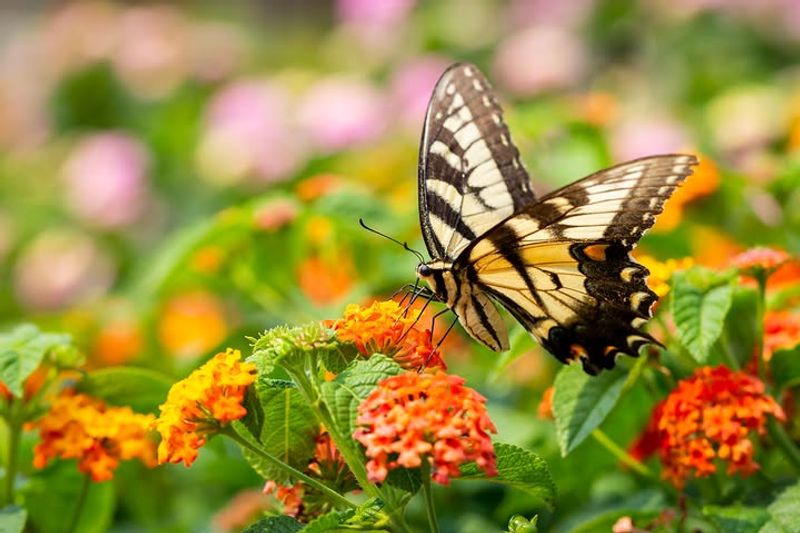
While some plants tolerate Texas heat, Lantana schedules its best performance around it.
While other flowers slow down and struggle through August, lantana treats rising temperatures as a production signal.
The tight dome-shaped flower clusters called umbels increase in output as heat climbs, which is exactly when butterflies need reliable nectar sources and most of the competition has already stepped back.
Your Texas Garden Changes Every Week. Your Plan Should Too.
Gardening in Texas changes quickly throughout the season. Every Friday you’ll receive a simple weekly plan showing exactly what to plant, prune, fertilize, harvest, and protect so you never miss the right timing.
Each cluster holds dozens of tiny individual flowers packed with nectar. Swallowtails and sulfurs can feed from multiple florets without leaving the same bloom head.
That efficiency makes lantana one of the most productive feeding stations in any Texas butterfly garden on a per-square-foot basis.
Lantana behaves as a perennial in southern Texas but is widely grown as an annual farther north. Either way, it blooms from spring through the first frost without significant slowdowns.
Full sun and well-drained soil are the primary requirements. Water young plants consistently until established, then transition to occasional deep watering as plants mature.
Lantana actually produces more flowers under mild stress. Overwatering and heavy nitrogen fertilization push leafy growth at the expense of blooms, which is the opposite of what the garden needs.
Varieties like Bandana Cherry Sunrise and Dallas Red perform consistently across Texas conditions. Trailing types in containers near patios put the butterfly activity at eye level where it is genuinely entertaining to watch.
Plant lantana in the hottest, most reflected-heat spot in the yard. That is not the compromise location. That is the ideal location.
3. Use Pentas For Steady Visits
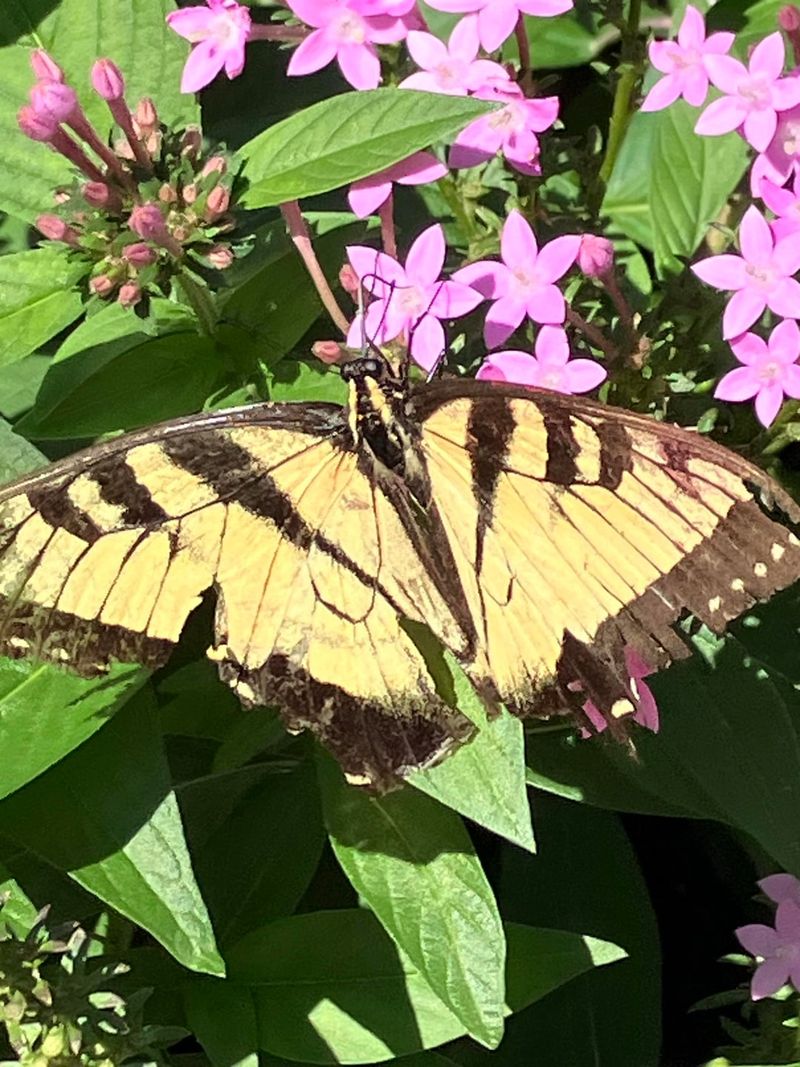
Walk past a healthy pentas plant on a warm September morning in Texas and there is a strong probability a butterfly is already working the blooms.
The dense rounded clusters of small star-shaped flowers deliver nectar consistently from late spring straight through fall.
The plant maintains that production during the hottest weeks when other annuals are running significantly below their early-season output.
That extended reliability is what separates pentas from plants that perform well in May and struggle to maintain pace by August.
Pentas barely notices the heat transition. It keeps blooming and keeps attracting visitors through the entire difficult stretch of the Texas summer.
Flower clusters come in red, pink, white, and lavender. Red varieties tend to draw the most butterfly activity, though all colors attract pollinators reliably.
The tubular base and flat open face of each flower makes nectar accessible to a wide range of butterfly species.
Pentas tolerates afternoon shade better than most summer annuals, which makes it flexible for beds that receive partial tree cover rather than uninterrupted full sun.
Keep soil consistently moist but well-drained, and fertilize monthly with a balanced formula to sustain continuous blooming.
Compact varieties like Graffiti and Butterfly series stay tidy at the front of beds. Taller types fill the middle of a mixed border with steady color and consistent butterfly traffic.
Grouping pentas with zinnias and lantana builds a layered nectar station that covers the full Texas season from one planting decision made in spring.
4. Add Tithonia For Tall Orange Color
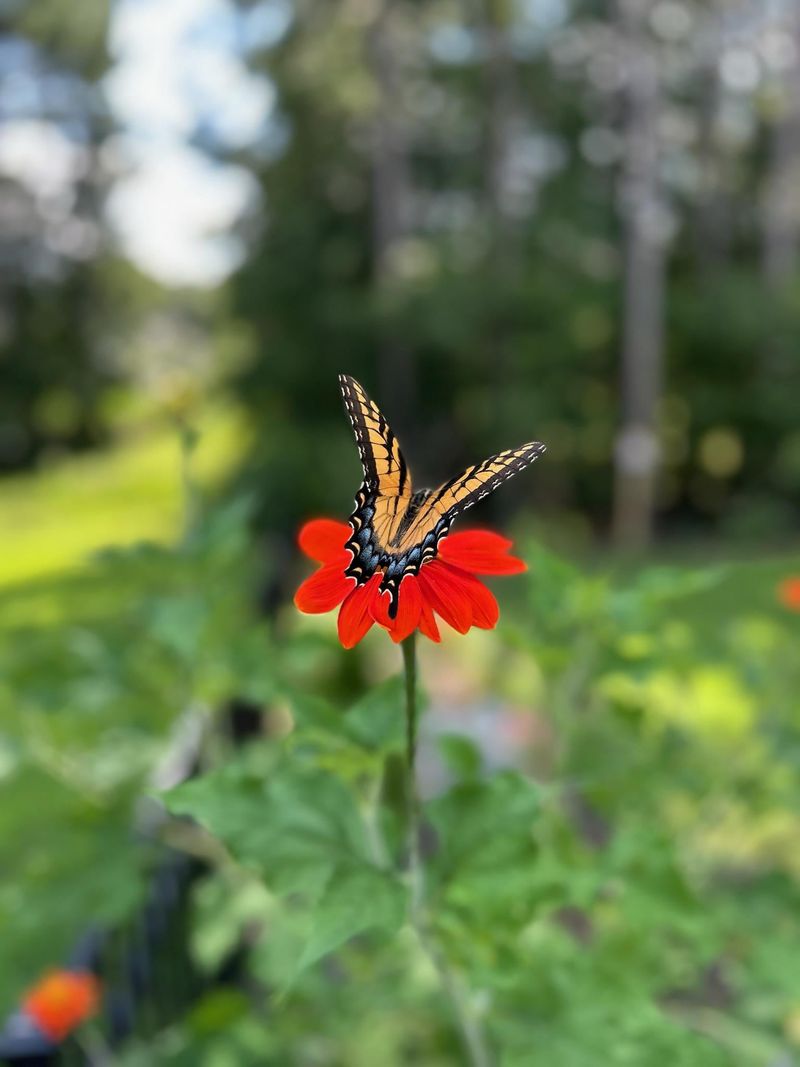
That flash of vivid tangerine visible from across the yard in August usually means tithonia is performing at full height, and it is almost certainly occupied.
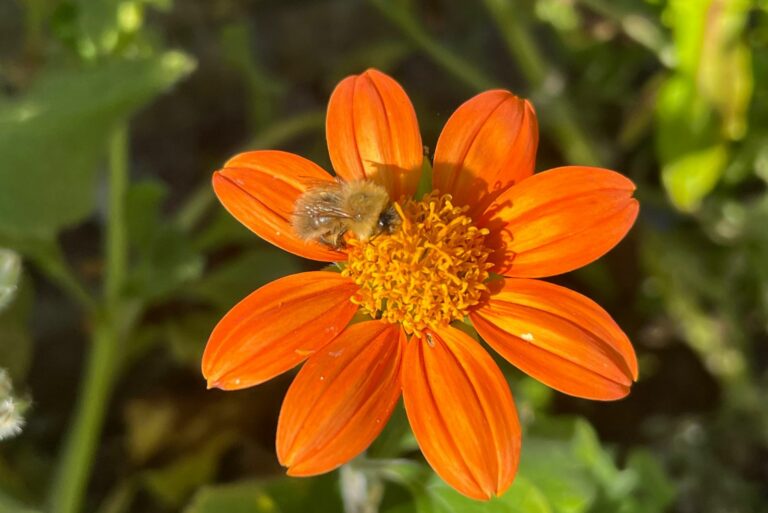
Mexican sunflower pushes three to four feet tall by midsummer and covers itself in brilliant orange blooms that read like small sunflowers from a distance.
The color functions as a long-range signal for monarchs and swallowtails moving through Texas. The blooms are large, flat, and loaded with nectar, making them prime real estate for multiple butterfly species throughout the season.
Tithonia is native to Mexico and Central America, which means Texas conditions are not a challenge for it. Heat, dry spells, and full summer exposure are the environment it evolved for.
Plants bloom from midsummer through frost and require minimal intervention once established.
Start seeds indoors about four to six weeks before the last frost date, or direct sow after soil warms in spring.
Full sun and well-drained soil are the basic requirements. Overly rich, heavily amended beds reduce flowering, so lean soil suits tithonia better than generously prepared beds.
The stems are hollow and can snap in strong Texas wind, so staking tall plants in exposed locations is a practical precaution worth taking at planting time.
Torch is the most widely available variety and delivers consistently strong performance across Texas gardens.
Plant in groups of three or more at the back of a border where the height creates a dramatic late-season feature without blocking shorter plants growing in front of it.
5. Plant Cosmos For Easy Flowers
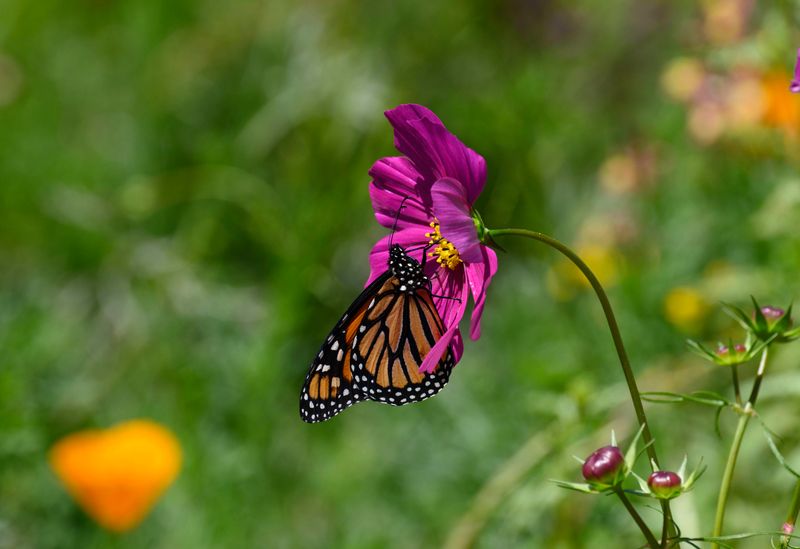
There is something almost unreasonably easy about cosmos. The seeds go in, the sun arrives, and the plants largely manage themselves from that point forward.
The feathery open-faced flowers produce nectar that butterflies find consistently appealing, and the whole operation requires less maintenance than almost any other annual on this list.
Cosmos sulphureus handles Texas heat particularly well with its warm orange and yellow tones.
Cosmos bipinnatus in pink, white, and magenta performs best in the slightly cooler conditions of early summer before the most intense heat arrives, then transitions into a supporting role as the season progresses.
The open bowl-shaped flowers are exactly what skippers, sulfurs, and hairstreaks need. There are no deep tubes or complex structures requiring specific anatomy to access.
Everything is straightforward, which keeps smaller butterfly species active in the garden alongside the larger swallowtails working nearby plants.
Cosmos prefer lean soil. Overly rich beds push leafy growth at the direct expense of flowering, so the correct approach is to skip the heavy fertilization and let the plants focus on what they are actually good at.
Direct sow seeds after the last frost in a sunny spot with decent drainage. Thin seedlings to about a foot apart as they develop.
Cosmos self-sow freely, meaning this season’s planting contributes to next season’s garden without any additional effort.
A plant that does its own replanting while also feeding butterflies has clearly figured out an arrangement that works in its favor.
6. Try Gomphrena For Hot Beds
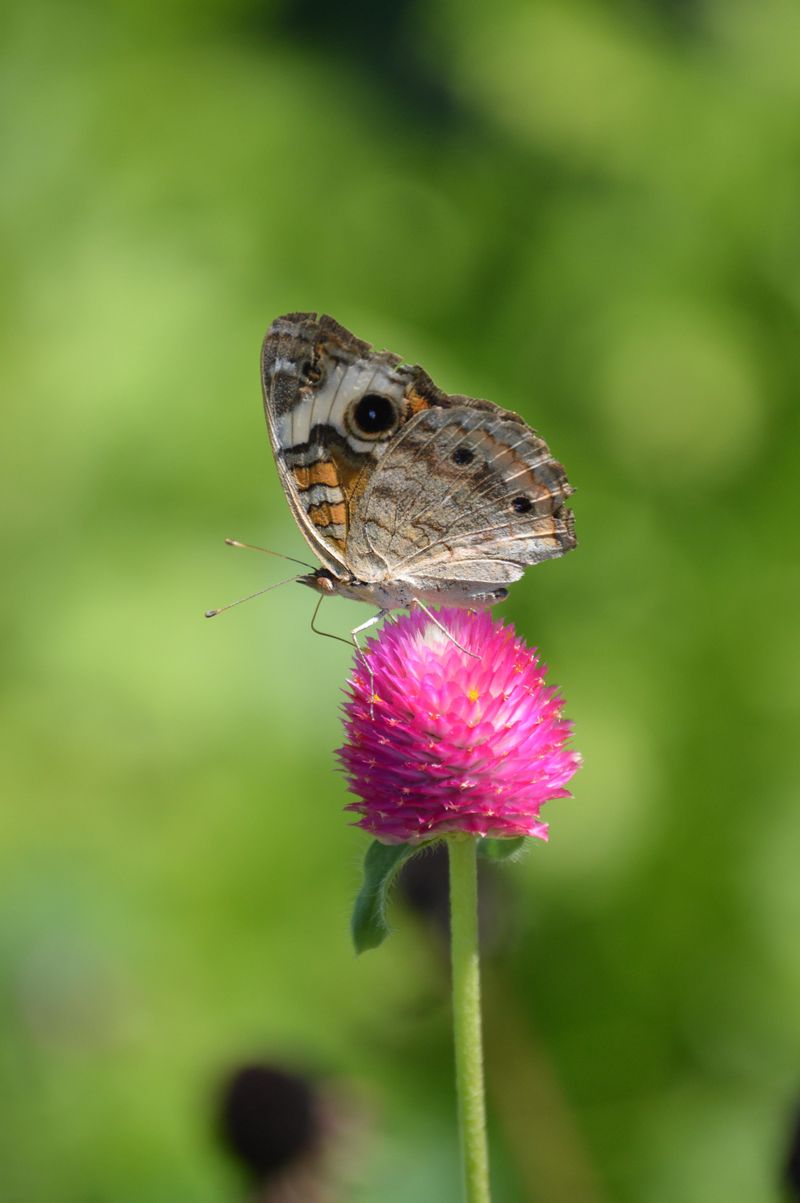
August in Texas is the month that separates the plants that truly belong in this climate from the ones that were always going to struggle.
Gomphrena, commonly called globe amaranth, makes that distinction obvious by continuing to produce its cheerful clover-like flower heads in magenta, purple, pink, orange, and white while the temperature refuses to drop below 90 degrees.
The globe-shaped blooms are papery and dense, which contributes to their exceptional longevity both on the plant and in a vase.
Skippers and sulfurs work gomphrena blooms steadily through summer and into fall. Each rounded flower head offers multiple small nectar access points clustered closely together, creating an efficient feeding stop that keeps smaller butterflies active in the bed.
Gomphrena is one of the most heat-tolerant annuals available for Texas planting. It handles heat, humidity, and occasional drought without visible complaint.
Full sun is essential for peak performance. Partial shade produces leggy plants with significantly reduced bloom output.
Start seeds indoors about four weeks before transplanting outdoors, or purchase transplants from a nursery in spring. Space plants about twelve inches apart.
Water consistently until established, then ease off. Good drainage is important because gomphrena does not perform well in soggy soil conditions, particularly in the heavy clay soils present across parts of Texas.
QIS series and Gnome dwarf types stay tidy at the front of beds. Taller varieties like Strawberry Fields fill the middle of a mixed border effectively.
Pairing gomphrena with pentas and lantana creates a heat-proof combination that stays genuinely active from June through October.
7. Use Salvia For Nectar Spikes
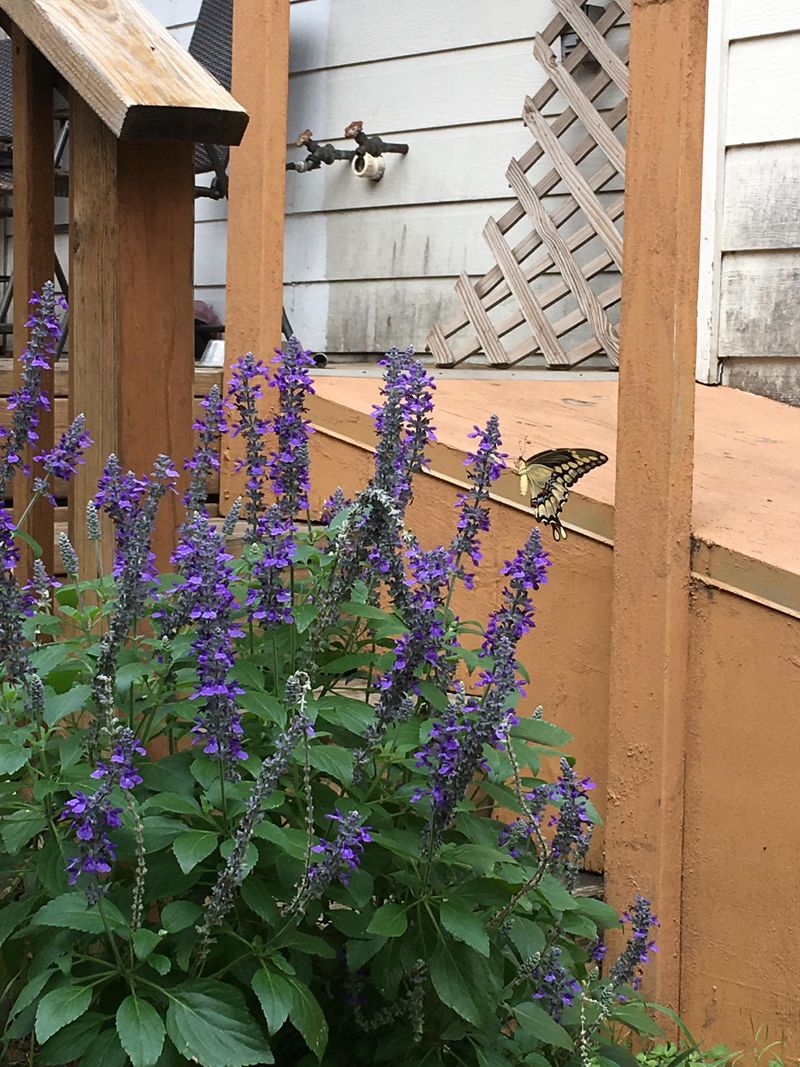
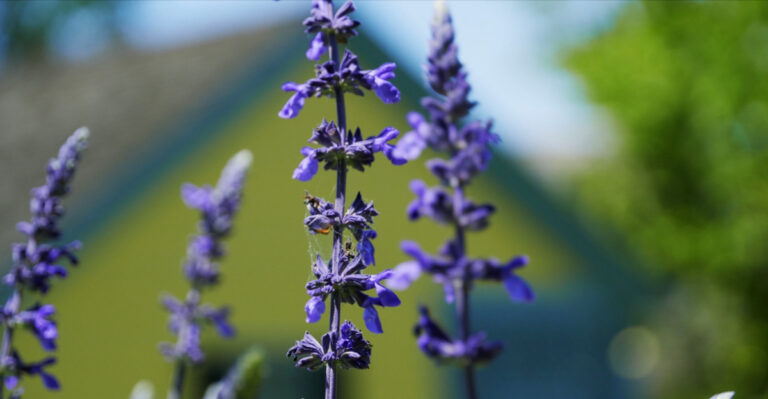
Every serious butterfly garden needs a vertical element.
Salvia delivers it with the kind of reliable consistency that makes it non-negotiable once you have watched swallowtails work their way up those upright flower spikes in a Texas garden.
The spikes rise above surrounding foliage like dedicated nectar stations, and butterflies make regular circuits around them throughout the afternoon.
Swallowtails, monarchs, and painted ladies are all frequent visitors. Hummingbirds also compete for the nectar, which makes salvia one of the more entertaining plants to position near a seating area.
Salvia coccinea, commonly called Texas sage or scarlet sage, is particularly well-suited to the state because it tolerates both heat and humidity and reseeds readily over time, gradually naturalizing in a bed without any replanting effort.
The tubular flower structure of salvia is well-matched to butterflies with long proboscises, giving them efficient access to nectar without the awkward maneuvering that more complex flower shapes require.
Plant annual salvia in full sun for the heaviest bloom production. Partial shade is tolerated but reduces flowering noticeably.
Keep soil consistently moist during establishment, then water deeply but less frequently as plants mature.
Cutting stems back by about one-third in midsummer encourages a fresh flush of blooms heading into fall just as late-season migrants are moving through Texas looking for fuel.
Lady in Red is a classic Texas-tough variety that performs reliably in both beds and containers. Mix it with orange tithonia or yellow gomphrena for a warm-toned border that stays productive well past Labor Day.
A garden with salvia in it is a garden with a reason to keep watching through October.