Are Texas Spiny Lizards Good For Your Garden? Here’s The Truth
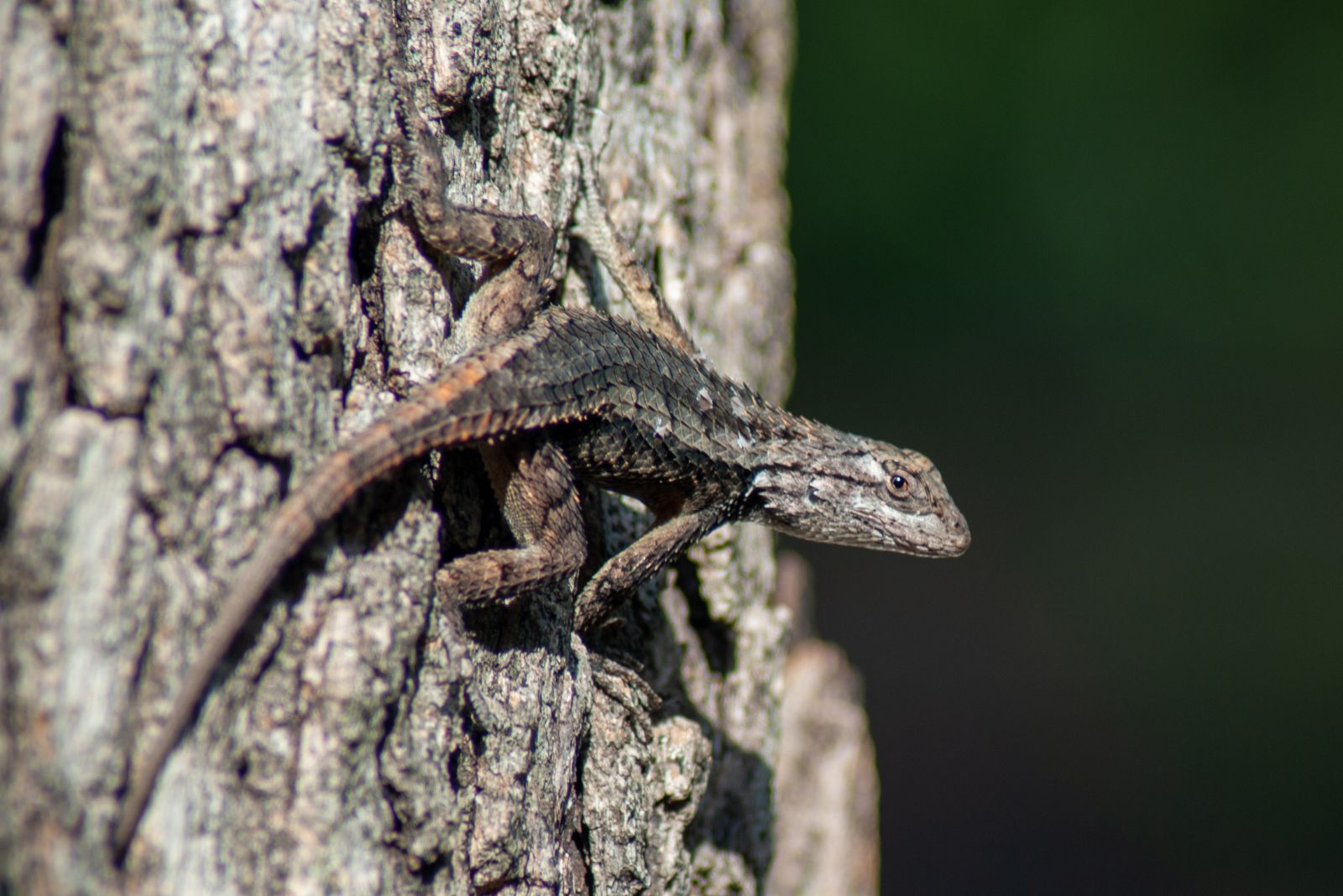
If you have Texas spiny lizards in your yard, you’ve probably noticed they’re not shy about making themselves at home. Fence posts, brick walls, the sunny side of the garden bed, the top of a pot you’re about to pick up.
These lizards claim their territory with confidence and hold it with an impressive combination of stillness and sudden speed. Most Texas homeowners simply get used to them. But are they actually good for your garden?
It’s a question more people should ask, because the answer is more nuanced and more interesting than a simple yes or no.
Texas spiny lizards are doing real work in your yard, some of it genuinely beneficial and some of it less straightforward than the average wildlife friendly gardening guide would have you believe.
Their diet, their territorial habits, and the role they play in the broader garden ecosystem all factor into an honest answer.
Here’s the truth about what Texas spiny lizards are actually doing in your garden and whether having more of them is something worth encouraging.
Yes, Texas Spiny Lizards Are Generally Good For Gardens
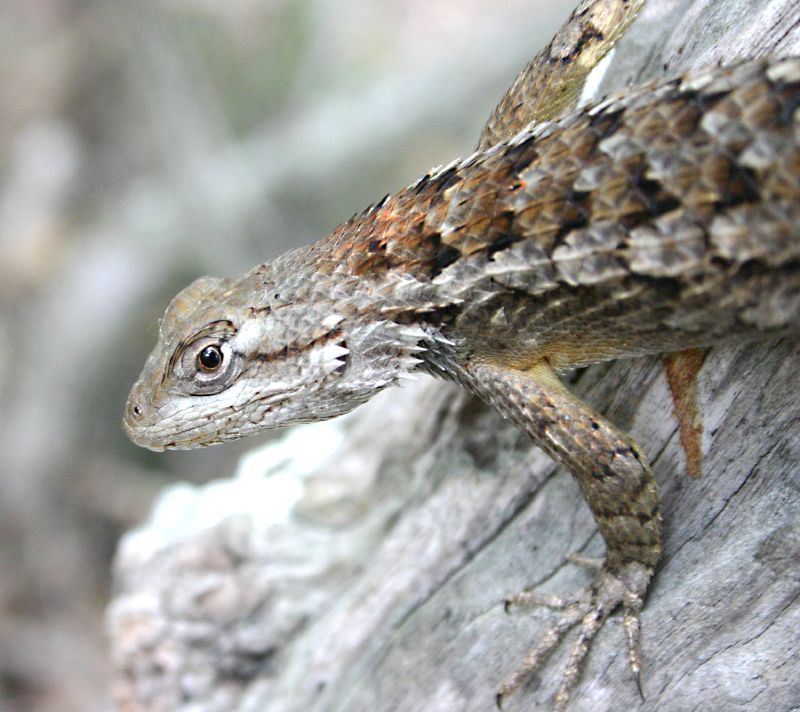
Spotting a lizard in your garden might feel surprising at first, but a Texas spiny lizard is actually a welcome guest. These native reptiles are natural insect hunters, and they spend their days searching for bugs around trees, fences, and garden beds.
That means they are quietly working in your yard without you even asking them to. Texas spiny lizards do not chew on your plants, dig up your roots, or damage your flowers. Their focus is entirely on hunting small creatures that crawl or jump through your garden.
Because of this, they fit naturally into the role of a helpful predator in the backyard ecosystem.
Having one or two of these lizards around can support a more balanced yard environment. They add to the community of natural predators that includes birds, frogs, and spiders. Each of these animals helps keep insect populations from getting out of control.
That said, Texas spiny lizards are not a magic fix for every pest problem. One lizard cannot wipe out a large infestation of aphids or caterpillars on its own. Think of them as one helpful piece of a bigger puzzle rather than a complete solution.
Gardeners who appreciate native wildlife tend to see the most benefit from these lizards. When you avoid using harsh chemicals and keep natural shelter in your yard, lizards feel safe enough to stay.
And when they stay, your garden gets a steady, natural form of pest control that costs you nothing at all.
About The Texas Spiny Lizard
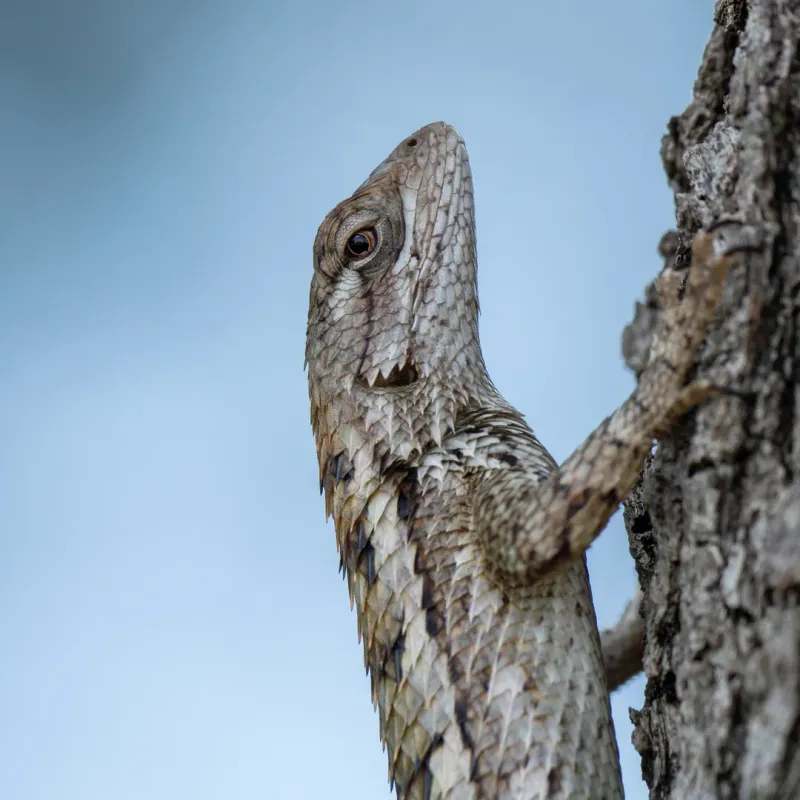
Not every lizard you see in a Texas backyard looks the same, but the Texas spiny lizard has a look that is hard to forget once you know what to watch for.
Its scientific name is Sceloporus olivaceus, and it is one of the most common lizards found across much of Texas. You might also spot it in parts of Oklahoma and northern Mexico.
Your Texas Garden Changes Every Week. Your Plan Should Too.
Gardening in Texas changes quickly throughout the season. Every Friday you’ll receive a simple weekly plan showing exactly what to plant, prune, fertilize, harvest, and protect so you never miss the right timing.
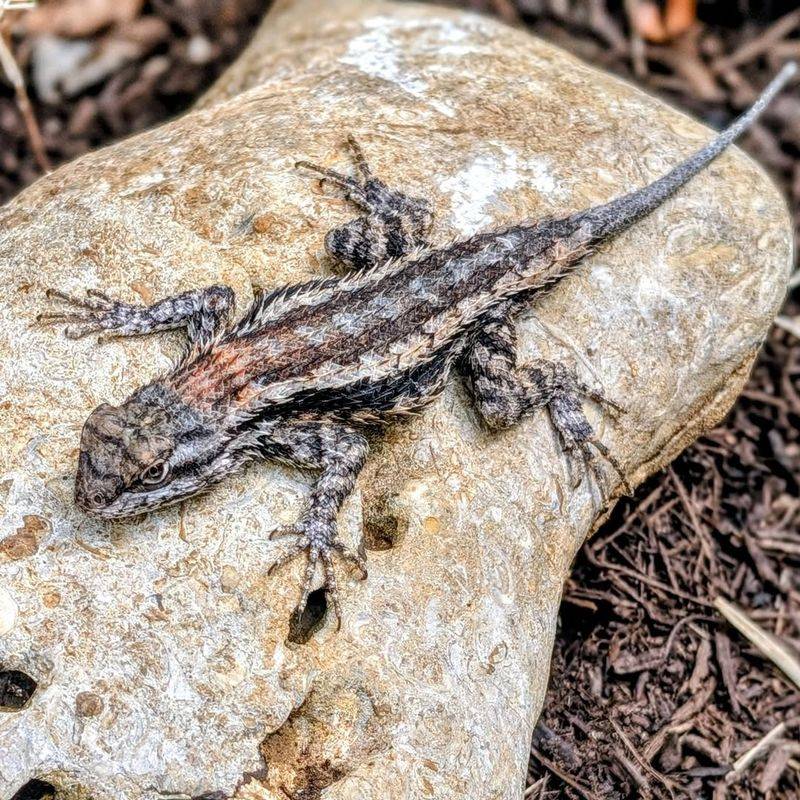
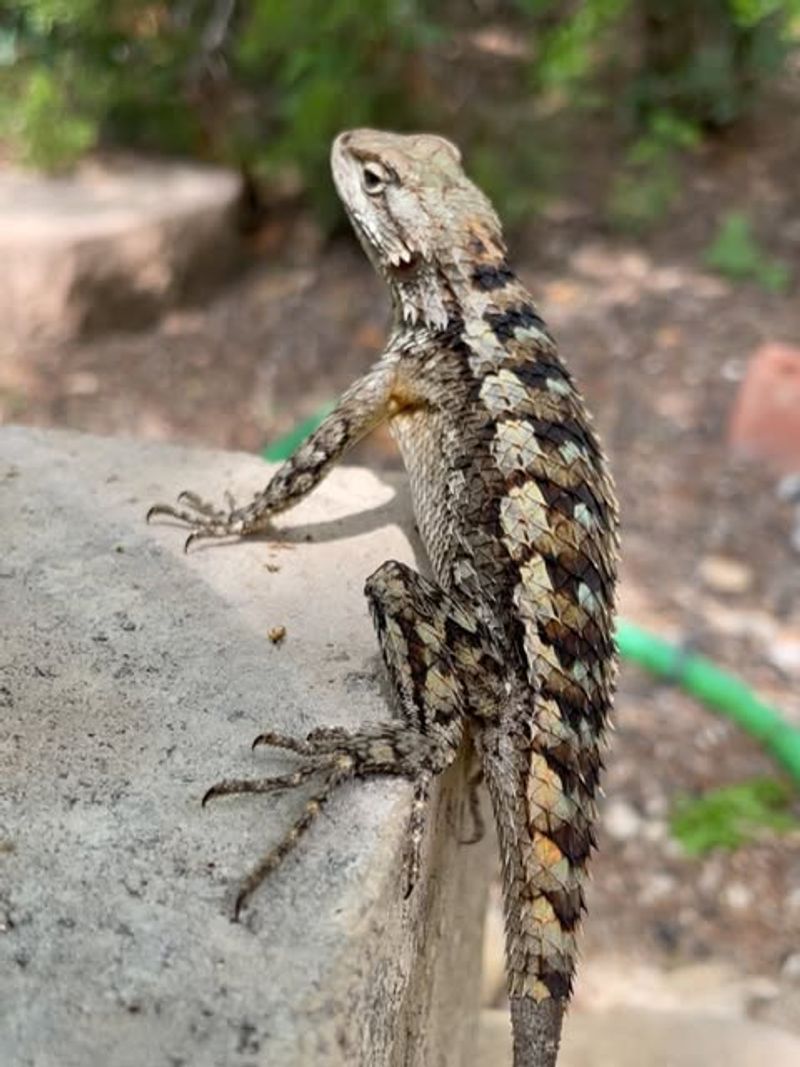
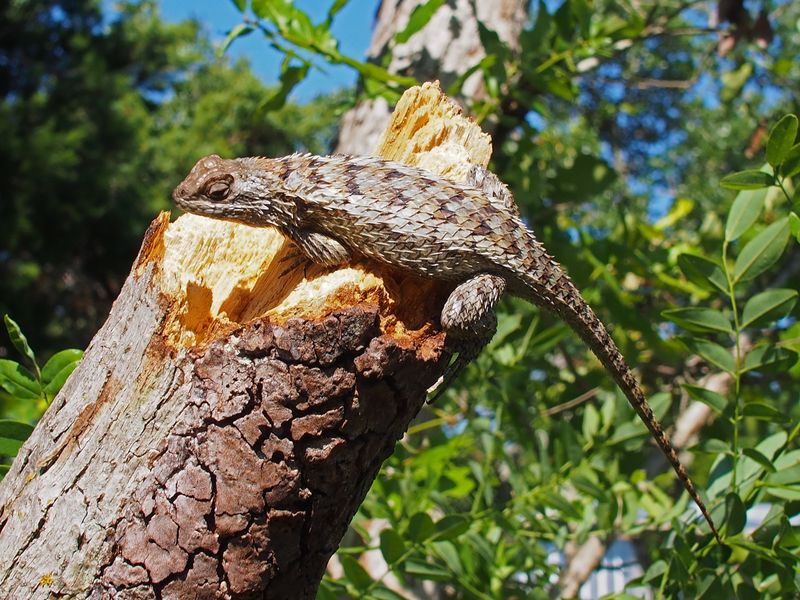
The Texas spiny lizard has rough, spiky scales that give it a tough, almost prehistoric appearance. Its coloring ranges from gray to brown to tan, which helps it blend in perfectly with tree bark, wooden fences, and stone walls.
That camouflage makes it an expert at going unnoticed, even when it is sitting right in front of you.
One of the most noticeable things about this lizard is how comfortable it is climbing. Long, curved claws allow it to grip tree trunks, wooden boards, brick walls, and chain-link fences with ease. You will rarely find one sitting on open ground for very long.
Texas spiny lizards are active during the day, which makes them easier to observe than many other reptiles.
They tend to bask in warm sunlight during the morning hours to warm up their bodies before starting their hunt for food. On very hot afternoons, they may retreat to shaded spots to cool down.
Adult Texas spiny lizards typically grow between seven and eleven inches long, including their tail. Males often have patches of blue or green on their belly, which they show off during territorial displays.
Females tend to be plainer in color but are just as capable of hunting and surviving in the wild.
Which Garden Pests They Eat
Few things are as satisfying as knowing that something in your yard is naturally handling pests for you. Texas spiny lizards are active hunters, and their diet includes quite a few insects that gardeners would rather not have around.
Grasshoppers are one of their favorite meals, and those hopping insects can do serious damage to garden plants if left unchecked.
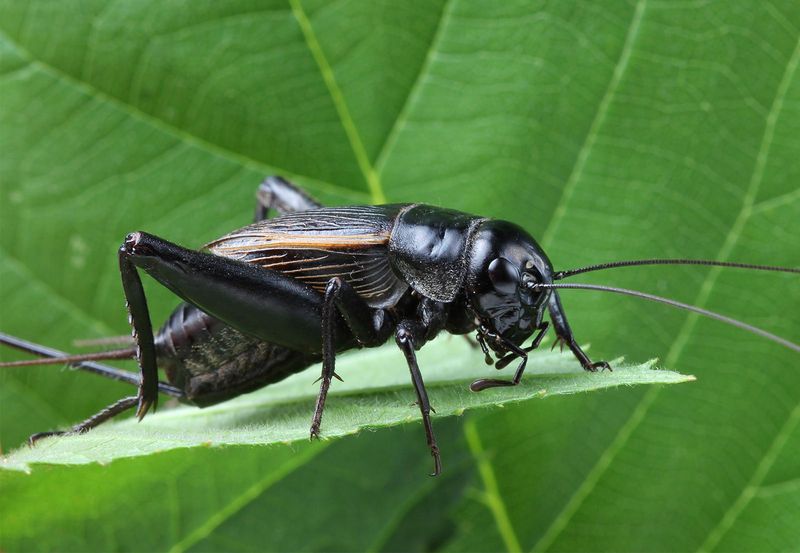
Crickets are another common food source for these lizards. While crickets are not always destructive, large numbers of them can chew on seedlings and soft plant material.
Having a lizard patrol the area around your garden beds can help keep cricket populations from growing too large.
Cockroaches and beetles also make up a regular part of the Texas spiny lizard’s diet. Beetles, in particular, can be harmful in both their adult and larval stages, since beetle grubs often feed on plant roots underground.
A lizard that snaps up adult beetles before they lay eggs helps reduce future damage. Beyond those main targets, Texas spiny lizards may also eat spiders, small caterpillars, and other invertebrates they come across during their daily hunts.
They tend to focus their activity around trees, shrubs, wooden fences, and structures where insects naturally gather and hide.
It is worth pointing out that these lizards do not pick and choose only the most harmful insects. They eat what is available and what they can catch.
Still, because so many of their preferred prey items are common garden pests, their feeding habits tend to work in the gardener’s favor more often than not. They are a naturally occurring part of the pest-management team in any healthy Texas backyard.
What They Cannot Do For Your Garden
As helpful as Texas spiny lizards can be, it would be a mistake to think one lizard can solve every pest problem in your yard. A single reptile simply cannot eat enough insects to wipe out a serious infestation.
If your tomato plants are covered in aphids or your squash is being devoured by caterpillars, a lizard is not going to fix that on its own.
Another thing to keep in mind is that Texas spiny lizards do not target only harmful insects. They eat what they can find and catch, which sometimes includes completely harmless bugs.
Occasionally, they may even snap up a beneficial insect like a ground beetle that was actually helping control other pests. Their hunting is not selective enough to be considered a precise pest-control tool.
Lizards also cannot protect every corner of your garden at once. They have favorite spots where they patrol and hunt, and other areas may receive little to no attention from them.
Large gardens or yards with many separate planting areas will not be fully covered by just one or two lizards.
Gardeners who rely too heavily on lizards for pest control may end up disappointed when damage still occurs. The smarter approach is to treat lizards as one part of an integrated pest-management plan.
That means regularly inspecting your plants for early signs of pest damage and being ready to act when necessary.
Using physical barriers, companion planting, and targeted organic treatments alongside natural predators gives you the best overall protection.
Texas spiny lizards are a bonus, not a replacement for good gardening habits. Keeping realistic expectations helps you get the most out of having them around.
Why They Are Not Harming Your Plants
One of the most common concerns gardeners have when they see a lizard climbing through their vegetable beds is whether it is eating their plants.
The answer is almost certainly no. Texas spiny lizards are carnivores, which means their diet is made up entirely of animal prey. Leaves, roots, fruits, and flowers hold no interest for them whatsoever.
When you see a Texas spiny lizard resting on a pepper plant or sitting inside a tomato cage, it is not there to snack on your vegetables.
It is most likely hunting for insects hiding among the leaves, soaking up warmth from the sun, or simply using the plant as a perch to get a better view of its surroundings. That is completely normal behavior for this species.
Some gardeners worry when they notice small disturbances in mulch or loose soil near their plants and wonder if a lizard caused it. In most cases, a lizard moving quickly through garden beds is just passing through in search of prey.
Their movements do not cause meaningful damage to plant roots, soil structure, or ground cover.
Texas spiny lizards do not chew bark, strip leaves, or dig burrows the way some other animals might.
They are light, quick movers that leave very little trace of their presence behind. Any minor soil disturbance they create is far outweighed by the insects they remove. Treating these lizards as harmless visitors rather than pests is the right call.
Once you understand their plant-free diet and their hunting-focused lifestyle, it becomes easy to see that they pose no real threat to a well-tended garden. They are far more interested in bugs than in your begonias.
How To Safely Welcome Them Into The Yard
Creating a yard that Texas spiny lizards want to live in does not require a lot of effort or money. The most important thing you can do is provide good shelter.
Mature trees, dense shrubs, rock piles, and old logs all give lizards safe places to hide, sleep, and warm up. A yard with some natural clutter is much more inviting to wildlife than a perfectly manicured lawn.
Reducing your use of broad-spectrum pesticides is another big step in the right direction. When you spray chemicals that wipe out large numbers of insects, you also remove the food supply that lizards depend on.
Fewer insects means fewer reasons for a lizard to stick around. Targeted, minimal pesticide use protects your plants without chasing away helpful wildlife.
Outdoor glue traps are something to avoid entirely if you want to protect lizards and other beneficial animals. These traps are not selective, and a lizard that wanders across one can become seriously injured.
If you need to manage specific pests, choose traps or methods that target only the problem species.
Keeping pet cats indoors or closely supervised outside is also important. Cats are skilled hunters and are one of the biggest threats to small reptiles and birds in residential neighborhoods.
A lizard that feels safe from predators is much more likely to take up permanent residence in your yard.
Finally, enjoy watching Texas spiny lizards from a respectful distance. Catching, handling, or relocating them causes unnecessary stress and can disrupt their natural behavior.
Simply observing them as they hunt and bask is the best way to appreciate these remarkable little reptiles without interfering with the helpful role they play in your garden.