Arizona Agaves Show These Warning Signs When Watering Goes Too Far
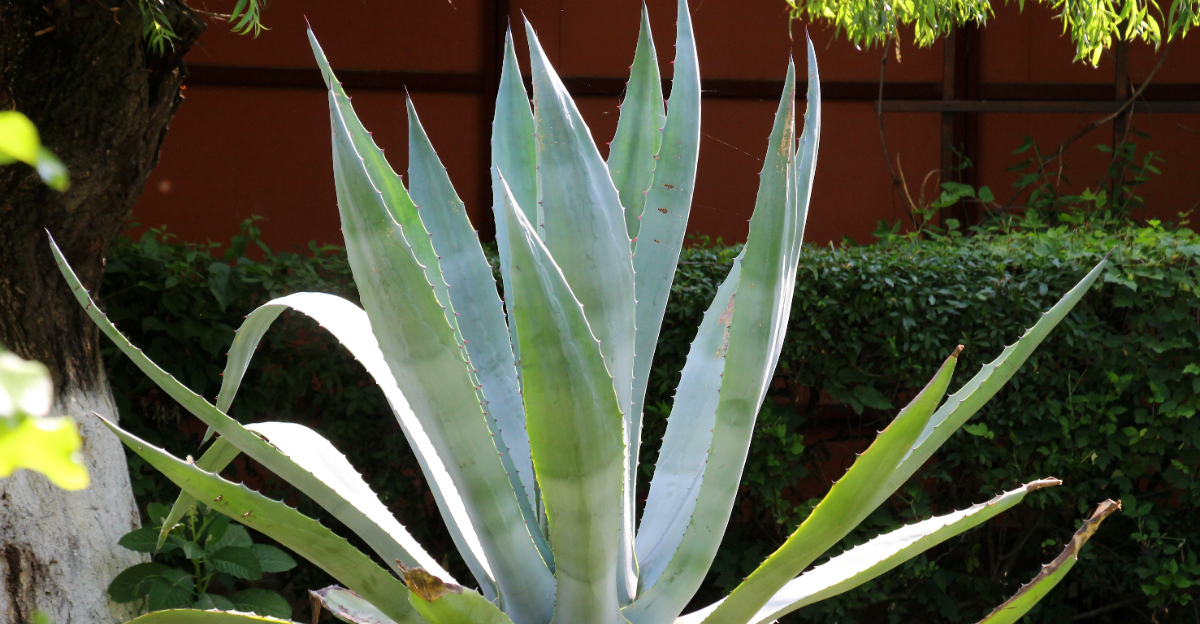
Your agave looks a little off, but you cannot quite put your finger on why.
You have been watering it regularly, maybe even a little more than usual during the hot Arizona summer, and you assumed that extra care would help the plant push through the heat.
Here is the twist: too much water is often the real culprit behind a struggling agave, not too little.
Arizona agaves are built for desert life, evolved over thousands of years to survive on minimal rainfall and long dry stretches between storms.
When they get more moisture than they can handle, they send out some pretty clear distress signals, but most of those signals get misread as a sign the plant needs even more water, which only makes the problem worse.
Eight warning signs reveal exactly what overwatering looks like on an agave, from yellowing lower leaves to roots that have already begun breaking down underground.
Every gardener growing agaves in Arizona should know how to read these signals before the damage becomes permanent.
1. Lower Leaves Turn Yellow First
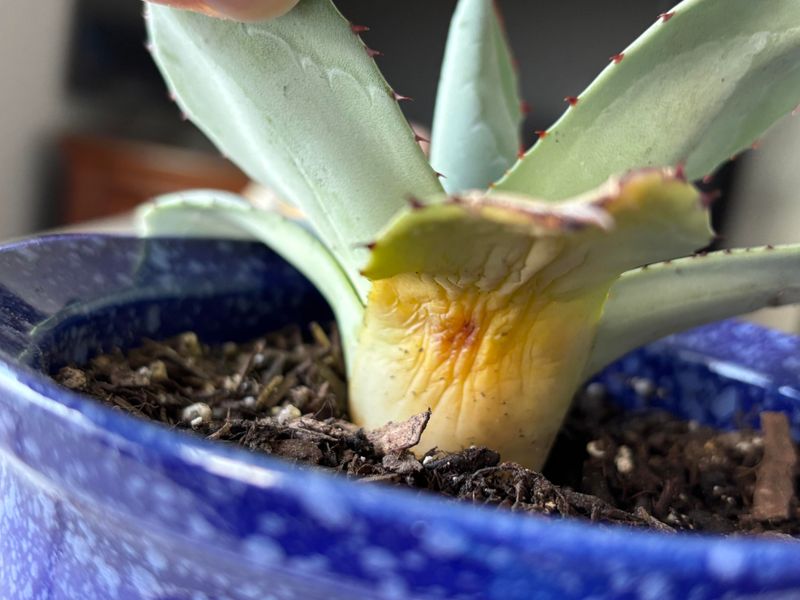
Yellowing leaves on an agave can fool you into thinking the plant needs more water.
That instinct makes sense for most plants, but agaves play by different rules. When the lower leaves start fading from green to a dull, washed-out yellow, it is usually a sign that the roots are sitting in too much moisture and struggling to do their job.
Agaves store water in their thick, fleshy leaves.
When the soil stays too wet, the roots cannot absorb oxygen properly. Without good airflow around the roots, the plant starts pulling nutrients from its older, lower leaves first.
That yellowing creeps upward over time if the watering habit does not change.
University of Arizona Cooperative Extension recommends that established agaves in the Phoenix and Tucson areas rarely need supplemental irrigation once they are rooted in.
Rainfall alone often covers their needs during cooler months. In summer, a deep watering every three to four weeks is usually enough for most species.
Check the soil before reaching for the hose.
Push a finger or a wooden dowel about two inches into the ground near the plant base. If the soil feels damp or the dowel comes out with wet dirt clinging to it, skip the watering session.
Letting the soil dry out completely between waterings gives the roots a chance to breathe and recover.
2. Centers Start Looking Soft
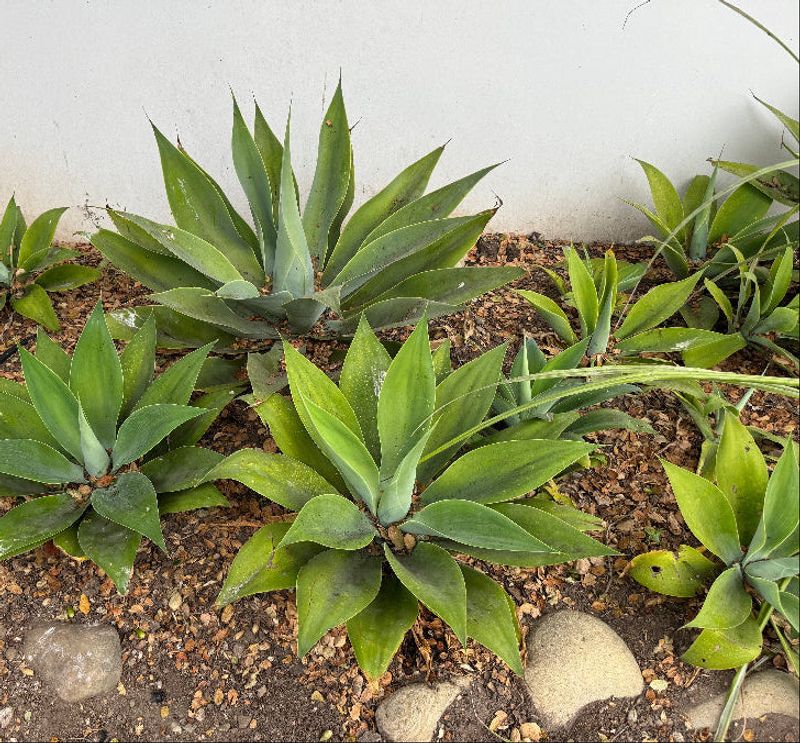
Many people panic when an agave center starts looking odd. The center, also called the crown, is the growing heart of the entire plant.
When it begins to look waterlogged, slightly translucent, or feels spongy to the touch, that is a serious red flag that excess moisture has moved past the leaves and into the most sensitive part of the plant.
A healthy agave crown is firm and tightly packed.
The leaves should feel rigid and hold their shape even under light pressure. Softness in the center usually means water has pooled around the growing point and the tissue is breaking down from the inside out.
Your Arizona Garden Changes Every Week. Your Plan Should Too.
Gardening in Arizona changes quickly throughout the season. Every Friday you’ll receive a simple weekly plan showing exactly what to plant, prune, fertilize, harvest, and protect so you never miss the right timing.
This can happen surprisingly fast during monsoon season when rain combines with regular irrigation schedules.
One of the most overlooked causes of crown softness is simply not adjusting the watering schedule when rain arrives.
Many homeowners set their irrigation timers and forget about them. The system keeps running even after a solid monsoon storm drops an inch of rain overnight. That extra moisture has nowhere to go, especially in clay-heavy Arizona soils that drain slowly.
Suspend irrigation immediately if the crown feels soft.
Move any mulch or ground cover away from the base of the plant to improve airflow and let the surface soil dry faster.
Avoid pressing or poking the crown repeatedly, since agave tissue is delicate and any damage can invite fungal problems.
3. Leaf Bases Feel Mushy
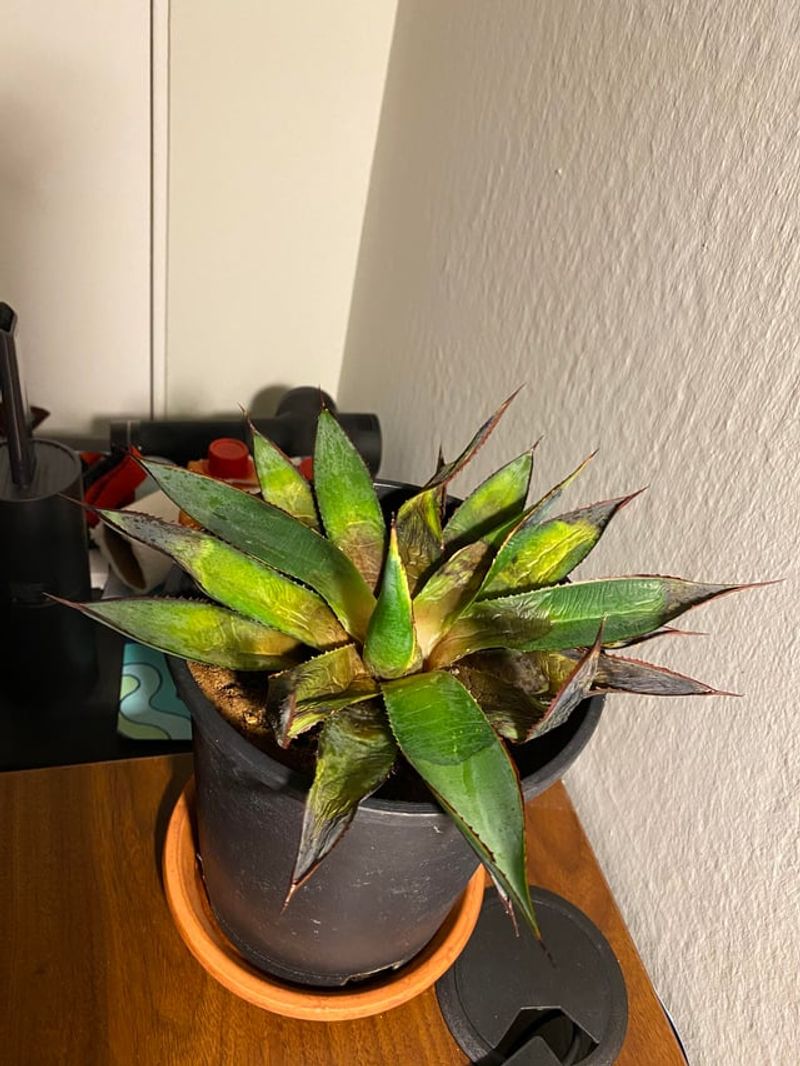
Run your hand along the base of an agave leaf where it meets the central stem.
It should feel like pressing against firm, thick rubber. If it gives way under gentle pressure and feels wet or squishy, something is wrong below the surface.
Mushy leaf bases are one of the most telling signs that the plant has taken on far more water than its tissue can handle.
This mushiness develops when excess moisture breaks down the cell walls inside the leaf tissue.
Agave leaves are designed to hold water efficiently, but they are not built to be constantly saturated from the outside.
When the soil stays wet for extended periods, the lower portion of each leaf begins to soften from the base upward, almost like a slow-moving tide of damage.
Texture changes like these tend to appear before any visible color change, which makes them easy to miss if you are only doing a visual check.
Make it a habit to do a quick touch test every few weeks, especially after periods of heavy rain or if your drip irrigation lines run frequently. You do not need to press hard. A gentle squeeze at the base of two or three leaves tells you a lot.
If several leaf bases feel soft, pull back on watering right away and check your drainage situation.
Raised planting beds or mounded soil around the plant can help redirect water away from the base. Good drainage is not optional for agaves. It is the whole game when it comes to keeping them healthy in Arizona soil.
4. Black Spots Spread After Moisture
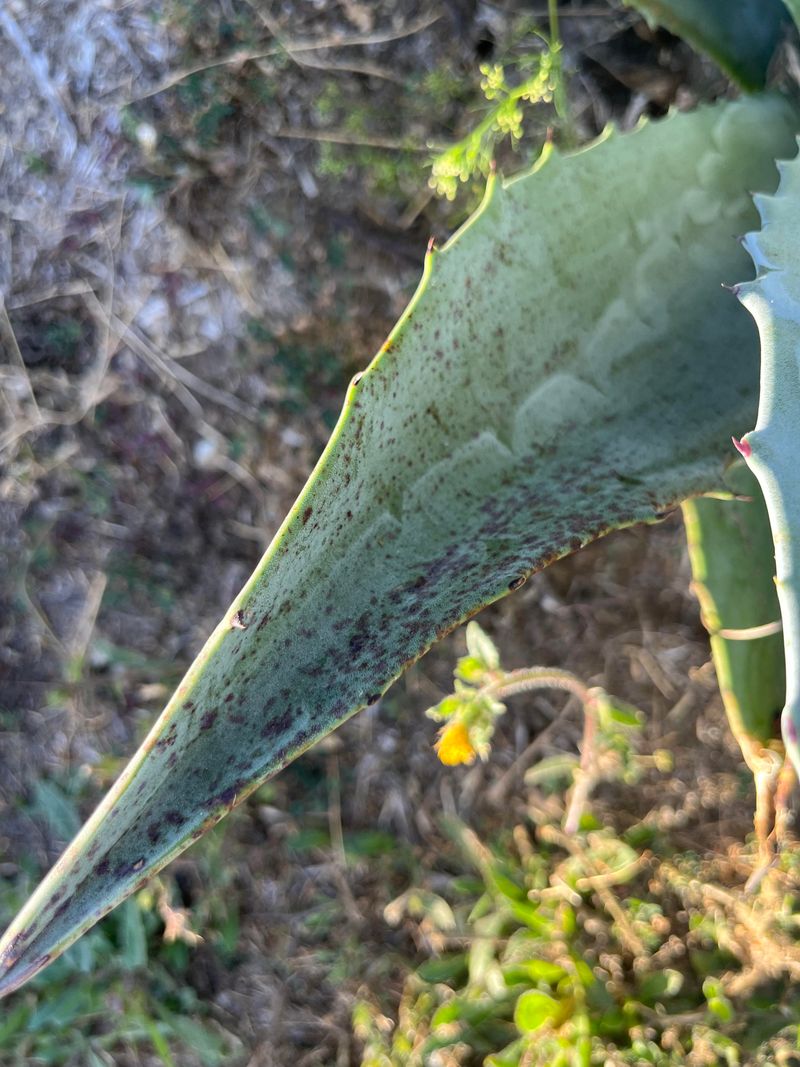
Spotting dark patches on agave leaves after a rain or irrigation cycle is not just a cosmetic issue.
Black spots that appear or grow larger following a wet period are a clear sign that the plant’s tissue is under stress and moisture is creating the perfect environment for fungal activity.
This is one of those warning signs that tends to be ignored until the spots multiply and spread across multiple leaves.
Agaves naturally tolerate heat, drought, and reflected sunlight without much trouble.
Prolonged leaf wetness is a different story. When water sits on the leaf surface or collects at the base for hours after watering, it creates humid pockets that allow opportunistic pathogens to get a foothold.
The spots may start small and dark brown, then deepen to black as the tissue beneath breaks down.
Spacing matters here too.
Agaves planted too close together trap humidity between their leaves and slow down the drying process after rain.
University of Arizona Extension guidance on desert landscaping emphasizes proper plant spacing to allow airflow, which reduces moisture-related leaf problems significantly.
Even in a dry climate, a crowded planting bed can feel surprisingly humid at ground level.
Adjust irrigation so water hits the soil near the root zone rather than spraying directly onto the leaves.
Drip emitters placed six to twelve inches from the plant base work much better than overhead sprinklers for agaves.
5. Soil Stays Wet Too Long
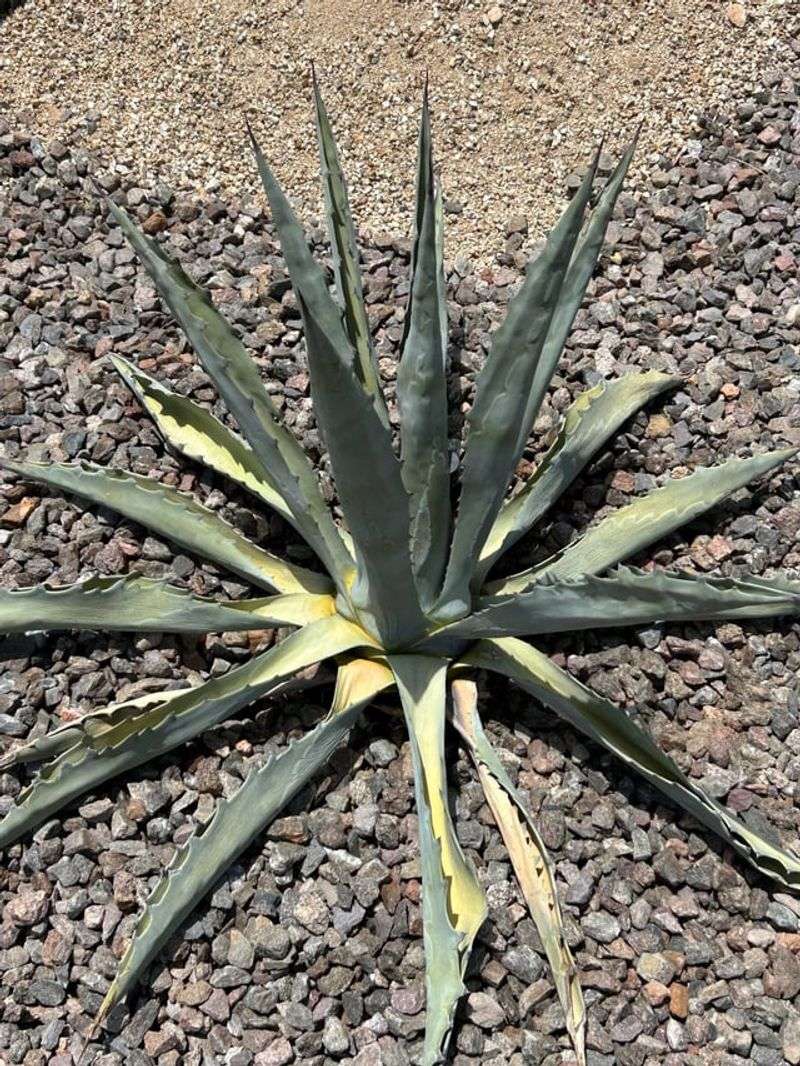
Here is a simple test worth doing right now if you have agaves in your yard.
Water the area around one of your plants and then check back 24 hours later. Stick a finger into the soil near the root zone.
If it still feels wet or even damp after a full day, your drainage situation needs attention. Agaves need soil that dries out fairly quickly between waterings.
Arizona soils vary quite a bit depending on location.
Some areas have sandy, fast-draining soil that agaves love. Others, especially in newer developments or areas with heavy clay content, hold moisture for days after irrigation.
Caliche layers, which are common across Arizona, can act like an underground dam and prevent water from draining downward at all.
Irrigation timing is just as important as irrigation amount.
Watering in the evening might seem smart since it reduces evaporation, but it also means the soil stays wet overnight when temperatures drop and evaporation slows to almost nothing.
Morning irrigation gives the soil the entire day to dry out, which is a much better rhythm for desert plants.
Consider mixing coarse sand or decomposed granite into the planting area to improve drainage before you install new agaves.
For existing plants, pulling back the watering schedule and letting natural rainfall carry more of the load during monsoon season can make a noticeable difference in how quickly the soil dries between cycles.
6. New Growth Looks Weak
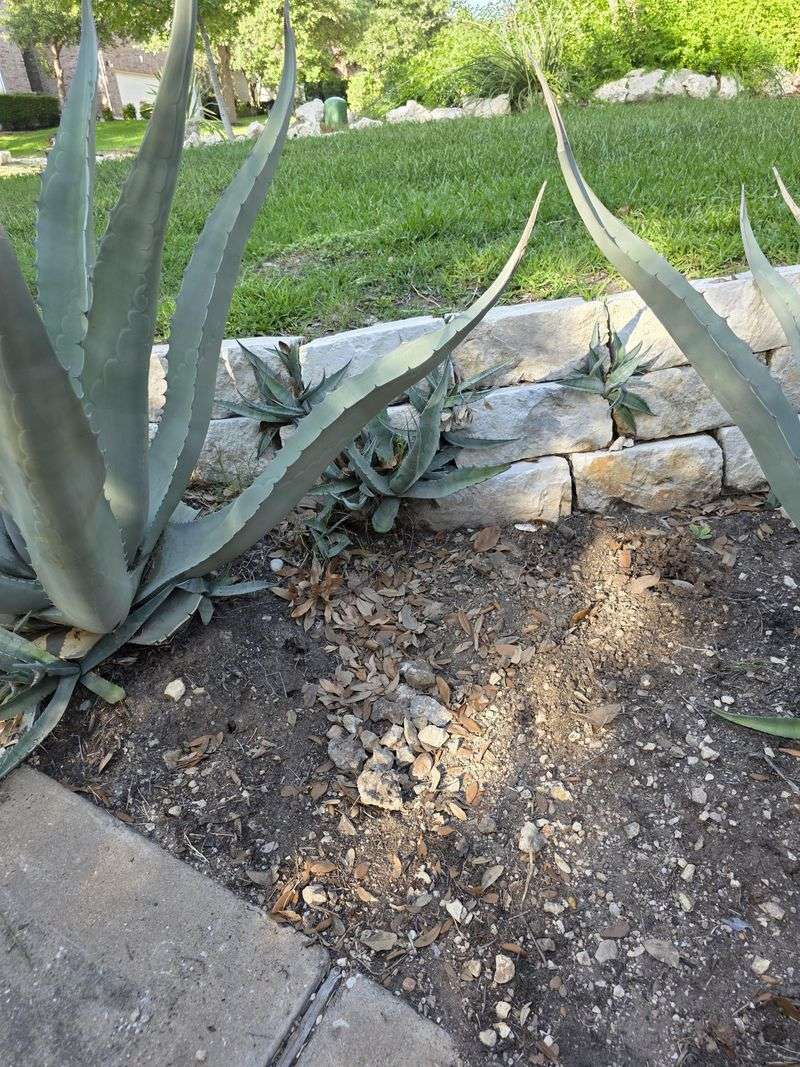
Healthy agave growth is bold and assertive.
New leaves push out from the center with stiff, upright confidence, and they usually match the deep green or blue-green color of the rest of the plant.
Weak, pale, or floppy new growth tells a completely different story. When the newest leaves look washed out or bend easily instead of standing firm, the plant is signaling that something is off at the root level.
Excess water dilutes the concentration of nutrients available to the plant.
Agaves are efficient feeders in dry conditions, but when roots are sitting in soggy soil, their ability to pull in minerals like nitrogen and iron drops sharply.
The result shows up first in the newest growth, which needs those nutrients most to develop properly.
Stretched or elongated new growth, sometimes called etiolation, can also appear when the plant is stressed.
The center leaves may look longer and thinner than normal, almost as if the plant is reaching for something. This kind of growth tends to be fragile and does not harden off the way healthy agave leaves should.
This pattern also shows up when a plant is placed in too much shade, so rule out light as a factor before assuming water is the only issue.
Cutting back on irrigation and confirming the plant gets full sun for most of the day are the two most practical steps.
7. Plant Crowns Sit Too Low
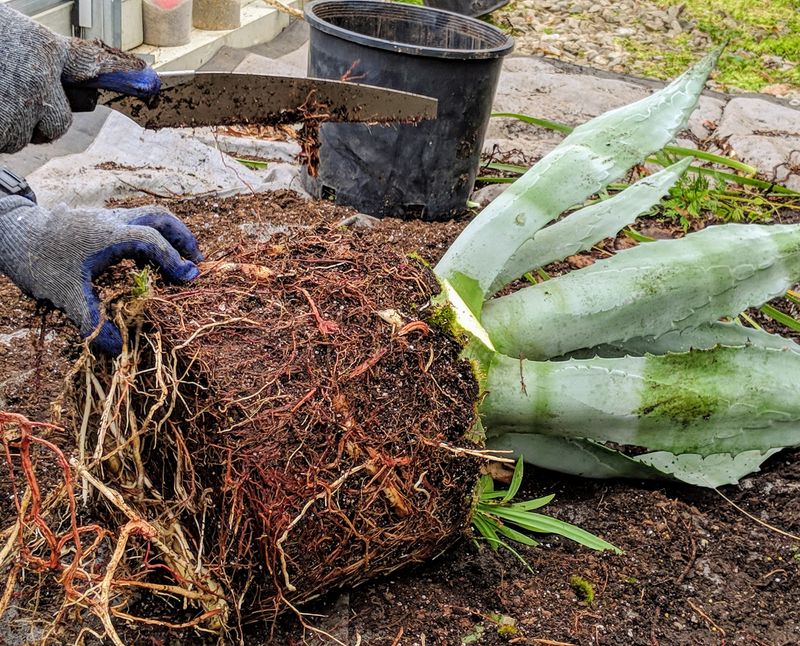
Planting depth might not seem like a watering issue at first glance, but it absolutely is.
When an agave crown sits below the surrounding soil grade, water naturally flows toward it every time it rains or the irrigation runs.
The crown becomes a collection point for moisture instead of a place where water sheds off and drains away.
This is one of the most common installation mistakes made in Arizona landscaping.
Agaves look tidy when they sit flush with the ground or slightly lower, but that visual preference works against the plant’s health.
University of Arizona Extension guidelines recommend planting agaves with their crown slightly above the surrounding soil level, often by one to two inches, so water moves away from the base rather than pooling around it.
You can spot a low-sitting crown by looking at the plant from the side after a watering or rain event.
If water visibly pools around the base or the soil right at the crown stays darker and wetter than the surrounding area, the plant is sitting too low.
This problem can be corrected by carefully mounding amended soil around the base to redirect water flow.
Getting the planting depth right from the start saves a lot of trouble.
When installing new agaves, mound the soil slightly before placing the plant and tamp it down gently. That small upward slope around the base keeps moisture moving outward and gives the crown the dry, airy conditions it needs.
8. Roots Smell Sour When Checked
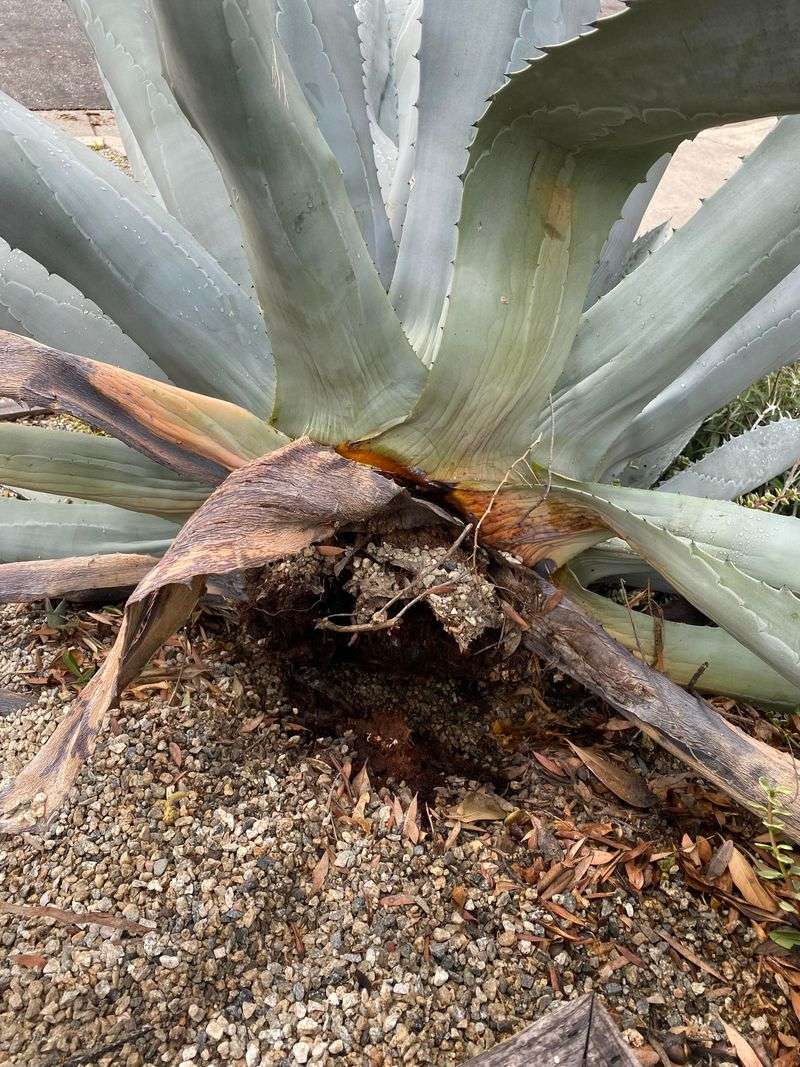
Checking an agave’s roots is not something you do casually or without a good reason. Digging around the base of an established plant disturbs the root system and can cause stress on its own.
But if multiple warning signs are already showing up above ground, a careful root inspection can confirm whether the damage has reached below the soil line.
Healthy agave roots are firm, light tan to white in color, and have no noticeable odor.
Roots that have been sitting in saturated soil for too long begin to break down. They turn dark brown or gray, feel soft when pressed between your fingers, and give off a sour or fermented smell that is hard to miss once you encounter it.
That sour odor is a byproduct of anaerobic bacteria that thrive in waterlogged, low-oxygen soil conditions.
If you detect that smell, carefully remove any visibly damaged roots with clean, sharp pruning shears.
Allow the cut ends to dry out for a day or two before replanting or backfilling soil around the plant. Do not apply any homemade remedies or strong solutions to the roots. Simple drying and improved drainage do most of the work on their own.
Going forward, the most effective fix is adjusting the irrigation schedule and improving soil drainage around the plant, restoring the balance agaves genuinely thrive in across the Arizona desert landscape.