Arizona Homeowners Are Swapping These Popular Shade Trees For Smarter Alternatives
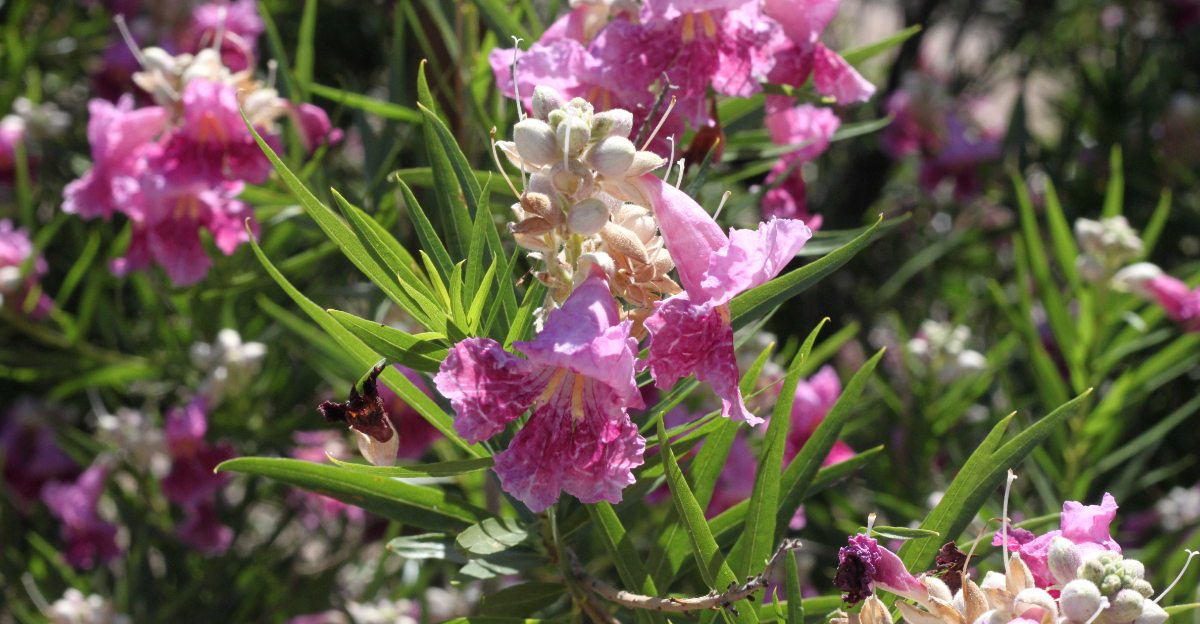
Finding the perfect shade tree often seems simple at first. A tree looks great at the garden center, grows quickly, and promises years of cooling shade.
Then time passes, and some homeowners begin noticing things they did not think about when the tree was first planted.
Extra maintenance, messy debris, aggressive roots, or a size that no longer fits the space can slowly change how they feel about their original choice.
That is why tree preferences tend to evolve over time. What seemed like the best option years ago may not be the best fit for today’s landscape goals.
More people are looking for trees that provide shade without creating as many long-term challenges. Appearance still matters, but ease of care, water needs, and overall performance are becoming just as important.
In Arizona, that shift is leading homeowners to reconsider some long-standing favorites.
A growing number are choosing alternatives that better match the realities of modern desert landscaping while still delivering the shade and beauty they want.
1. Mulberry Trees Leave Behind Constant Messes
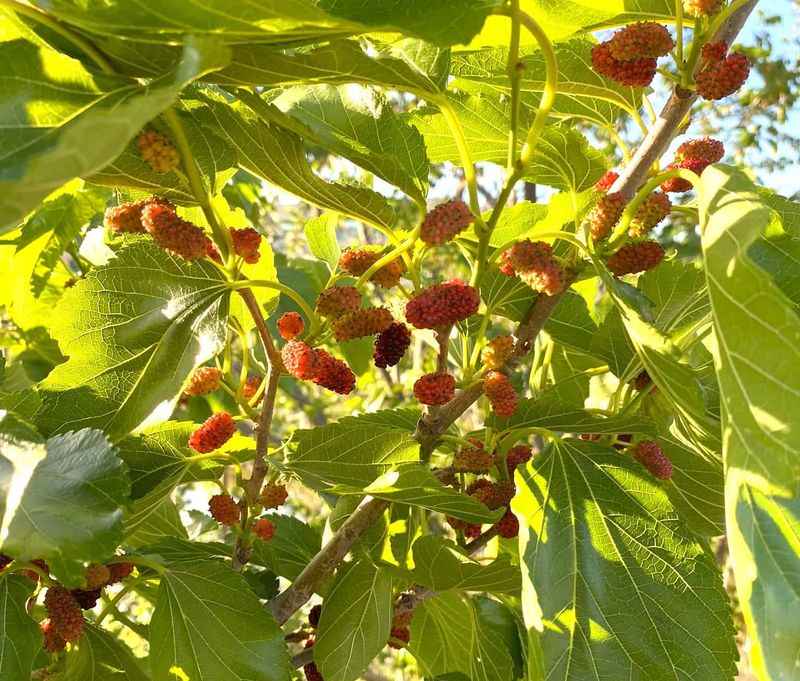
Purple stains on your patio are not a good look. Mulberry trees produce massive amounts of fruit, and most of it ends up smashed onto concrete, tracked into the house, or rotting in flower beds.
Cleanup becomes a near-daily chore during fruiting season.
Fruitless mulberry varieties were once sold as the fix. They grow fast and cast wide shade, which sounds ideal for hot summers.
But even fruitless types drop enormous amounts of leaves and brittle branches. Wind events leave yards looking trashed.
Root behavior is another serious concern. Mulberry roots spread aggressively and can reach underground pipes, irrigation lines, and foundation edges.
Planting one close to a structure is a gamble that rarely pays off well.
Homeowners who remove mulberries often say the same thing: they wish they had chosen something else from the start. Faster growth does not always mean better results.
A tree that creates constant work ends up costing more time than it saves in shade.
In late spring and early summer, fallen fruit can also attract insects and birds, which adds even more mess around driveways and walkways.
The staining from crushed berries often sinks into porous concrete, making it difficult to fully remove even with regular washing.
For many homeowners, switching to lower-maintenance shade trees ends up being a long-term solution that keeps outdoor spaces cleaner and easier to manage.
2. Sissoo Roots Create Long-Term Problems
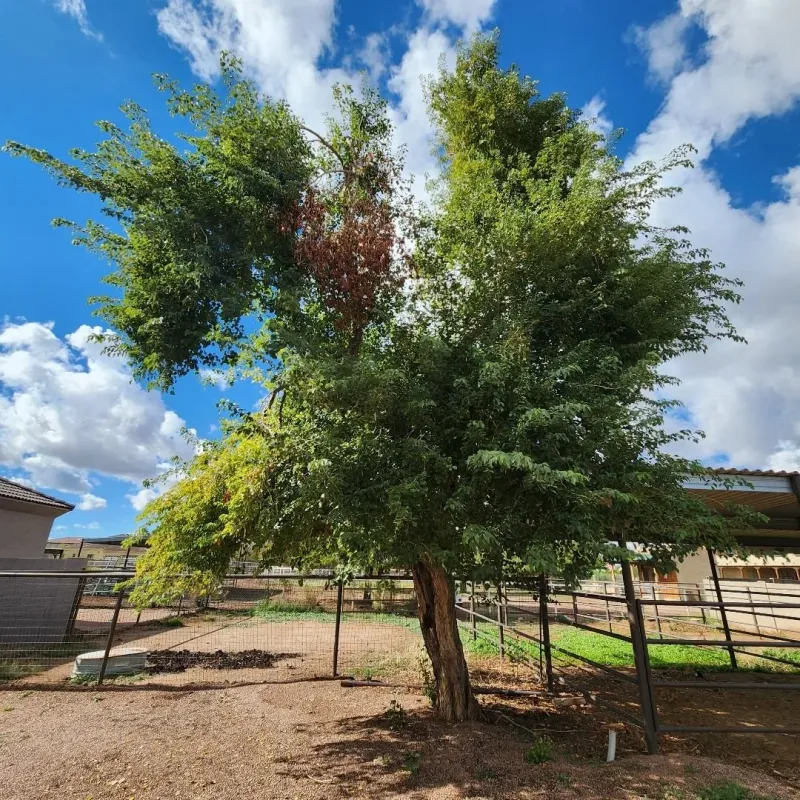
Sissoo trees fooled a lot of people. Fast growth, decent shade, and an attractive canopy made them a popular pick for desert landscapes in the 1990s and early 2000s.
Nurseries sold them quickly, and neighborhoods planted them everywhere.
Then the roots started moving. Sissoo, also called Indian rosewood, develops an extremely aggressive root system.
Roots spread far beyond the canopy and grow close to the surface. Sidewalks crack, driveways lift, and irrigation systems get invaded.
Beyond the root damage, Sissoo can spread into natural desert areas. Seeds travel easily, and seedlings pop up in spots where they were never planted.
Your Arizona Garden Changes Every Week. Your Plan Should Too.
Gardening in Arizona changes quickly throughout the season. Every Friday you’ll receive a simple weekly plan showing exactly what to plant, prune, fertilize, harvest, and protect so you never miss the right timing.
That kind of spread raises real concerns about displacement of native plants in surrounding landscapes.
Removal is expensive and physically demanding. Roots regrow from stumps if not handled thoroughly, which means one removal job can turn into multiple follow-up visits.
Homeowners who planted Sissoo years ago are now spending serious money undoing that original decision.
Choosing a tree with a less invasive root structure saves money and protects your hardscape long-term. Plenty of desert-adapted trees offer shade without tearing up everything underground.
Sissoo is one of those lessons that the desert Southwest learned the hard way, and most experienced landscapers now steer clients away from it completely.
Even mature Sissoo trees can continue sending up new shoots from remaining root fragments, which makes long-term control difficult even after cutting them down.
3. Eucalyptus Requires More Maintenance Than Many Expect
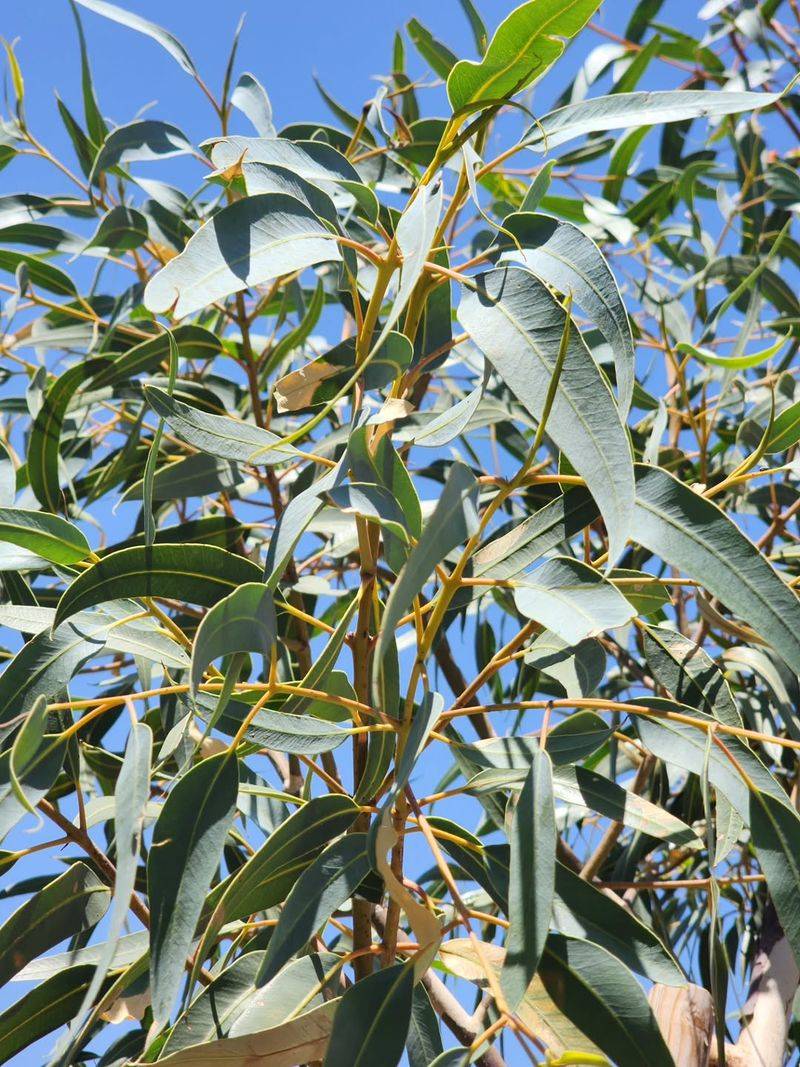
Eucalyptus looks dramatic and grows fast. Both of those qualities attract homeowners who want quick results.
But fast growth comes with a hidden cost that becomes obvious after a few years of ownership.
Bark sheds constantly. Leaves drop year-round.
Seed pods and woody capsules litter the ground beneath the canopy in every season. Raking under a eucalyptus is basically a permanent part-time job.
Mulching helps, but the volume of debris is hard to fully manage.
Branch failure is a genuine safety concern. Eucalyptus wood is brittle under stress.
During monsoon season, large limbs can drop without warning. A falling branch from a mature eucalyptus causes real damage to structures, vehicles, and fencing.
Regular professional trimming reduces risk but adds ongoing cost.
Water use is another factor worth considering. Established eucalyptus trees can draw heavily from the soil, which affects surrounding plants.
In a garden designed around water efficiency, that kind of competition creates problems.
Removing a mature eucalyptus is a major project. Stumps resprout aggressively and need to be treated carefully to prevent regrowth.
Homeowners who planted eucalyptus expecting a low-effort shade solution often find themselves managing a high-effort tree instead. Better options exist that deliver shade without the constant debris, structural risk, and removal headaches eucalyptus brings along.
4. Cottonwood Comes With High Water Demands
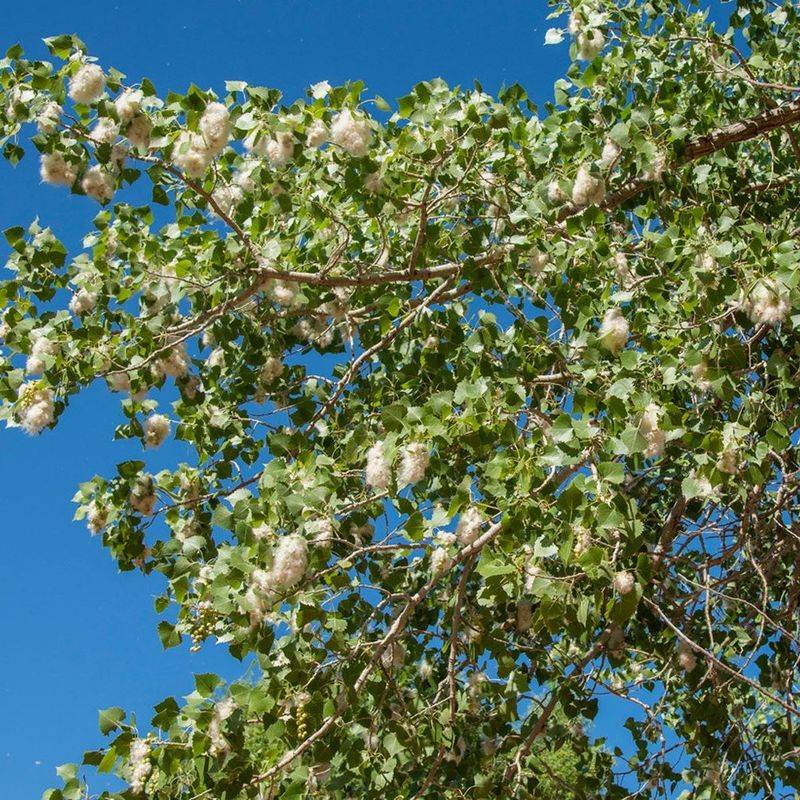
Cottonwood trees belong near rivers. That is where they evolved, and that is where they genuinely thrive.
Planting one in a typical residential yard puts you in the position of artificially recreating riparian conditions in a place that naturally gets very little rain.
Water demand is substantial. Cottonwoods need regular, deep watering to stay healthy in dry conditions.
Without consistent moisture, they show stress quickly. Leaf drop, branch decline, and a generally tired appearance signal that the tree is not getting what it needs.
Seed cotton is the other well-known issue. Mature cottonwoods release enormous amounts of fluffy white seeds each spring.
That cotton drifts into pools, clogs air conditioning filters, sticks to screens, and coats outdoor furniture. Neighbors are not always happy about it either.
Root systems follow water sources aggressively. Irrigation lines and plumbing become targets.
Roots have been known to work into pipe joints and cause blockages that are expensive to locate and repair.
Cottonwoods do have genuine charm. Their rustling leaves and fast growth are hard to ignore.
But in a water-conscious landscape, the math does not work in their favor.
Even in well-sited conditions, cottonwoods require more maintenance than most homeowners expect, especially when debris builds up around gutters, patios, and pool areas.
Over time, their size alone can also become a challenge in smaller residential lots, where they quickly outgrow the space available.
5. Chinese Pistache Provides Reliable Summer Shade
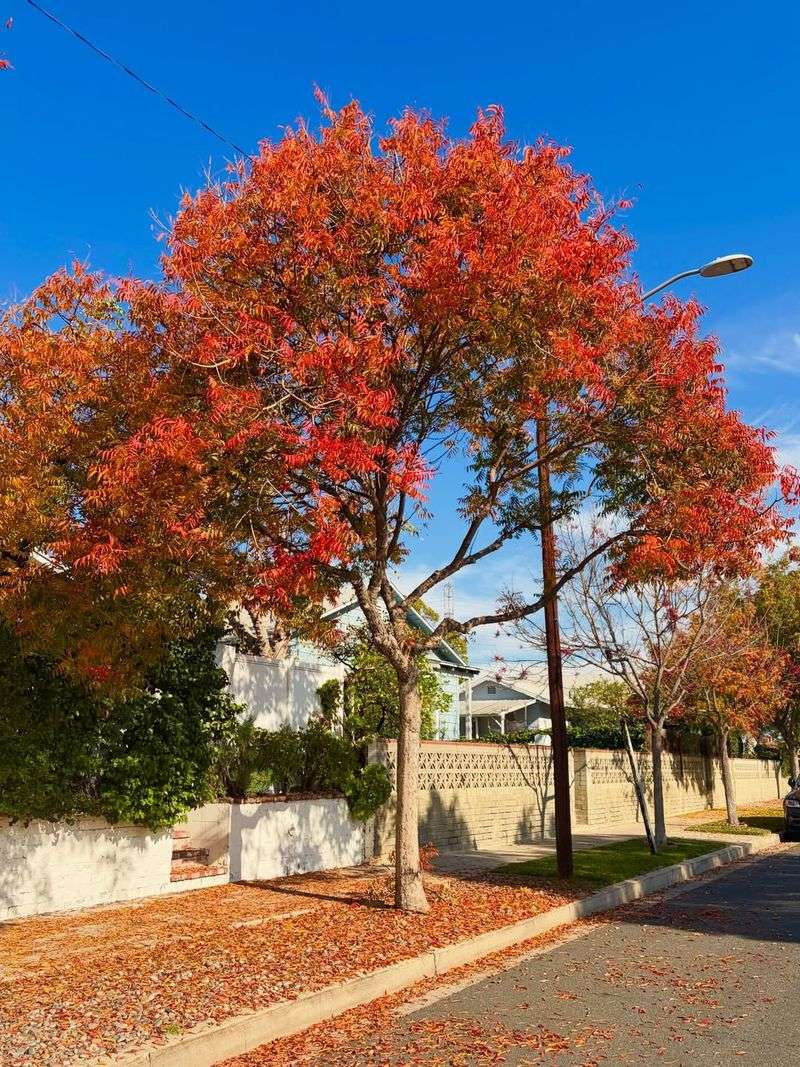
Reliable shade in triple-digit heat is not something to take lightly. Chinese pistache delivers a broad, dense canopy that actually does the job homeowners need.
Midday sun gets blocked effectively, and outdoor spaces become usable again even on the hottest afternoons.
Fall color is an unexpected bonus in the desert Southwest. Chinese pistache turns brilliant shades of orange and red in autumn, which stands out dramatically against the typically muted desert palette.
Neighbors tend to notice and ask what the tree is.
Water needs are moderate once the tree is well established, which typically takes two to three years of consistent deep watering. After that establishment window, irrigation can be reduced significantly.
Drought tolerance improves with age, making it a practical long-term choice for water-conscious homeowners.
Root behavior is generally well-mannered compared to more aggressive species. Roots tend to grow deeper rather than spreading aggressively near the surface.
Hardscape damage is far less common with Chinese pistache than with trees like Sissoo or cottonwood.
Pest and disease problems are minimal under typical conditions. Aphids occasionally visit, but established trees usually handle minor infestations without intervention.
Overall, Chinese pistache rewards patience during the establishment phase with decades of dependable shade, attractive seasonal color, and relatively low maintenance needs that fit well into a practical desert landscape plan.
6. Desert Museum Palo Verde Thrives With Less Water
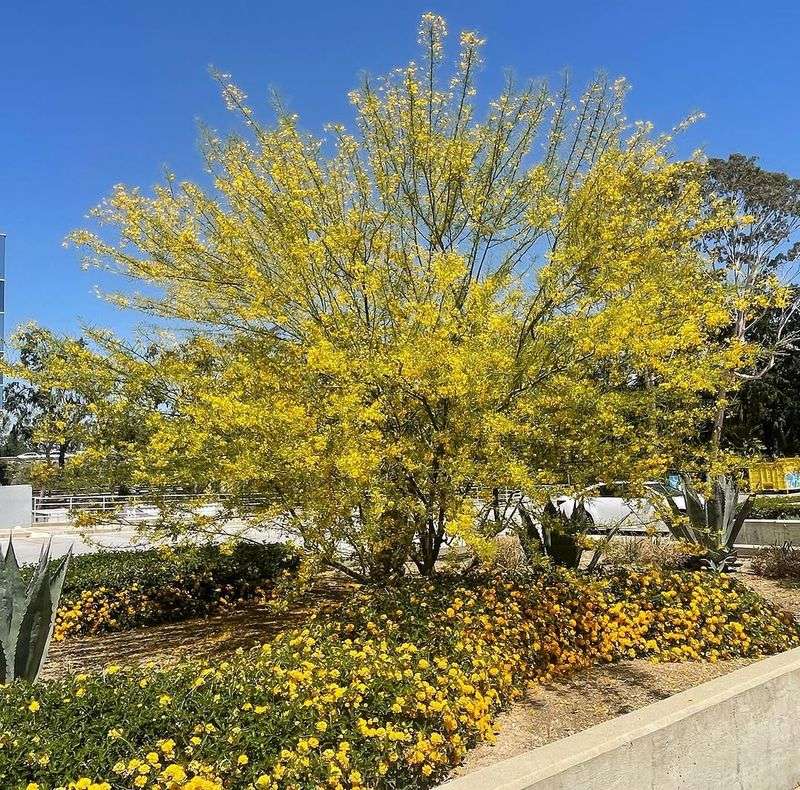
Green bark is not something most people expect from a shade tree. Desert Museum palo verde carries chlorophyll in its trunk and branches, meaning it photosynthesizes even after leaves drop during drought stress.
That adaptation is genuinely clever biology at work.
Flower season is spectacular. Bright yellow blooms cover the entire canopy in spring, usually around April and May.
The display lasts several weeks and attracts pollinators in significant numbers. After flowering, the tree settles into a clean, open-branched structure that filters light rather than blocking it completely.
Water needs are low once established. Deep watering every two to three weeks during summer is typically sufficient.
Palo verde evolved in dry desert conditions, so it handles heat and low rainfall without showing the stress symptoms that plague less-adapted trees.
No thorns is one of the biggest selling points of the Desert Museum variety specifically. Wild palo verde species have sharp spines that make pruning and general maintenance unpleasant.
Desert Museum was bred to eliminate thorns while preserving all the best qualities of the species.
Pod production is also reduced compared to wild types, which means less litter. Canopy size stays manageable for most residential lots.
Homeowners who want a tree that truly belongs in the desert landscape without demanding extra resources will find Desert Museum palo verde hard to beat on nearly every practical measure.
7. Netleaf Hackberry Handles Desert Conditions With Ease
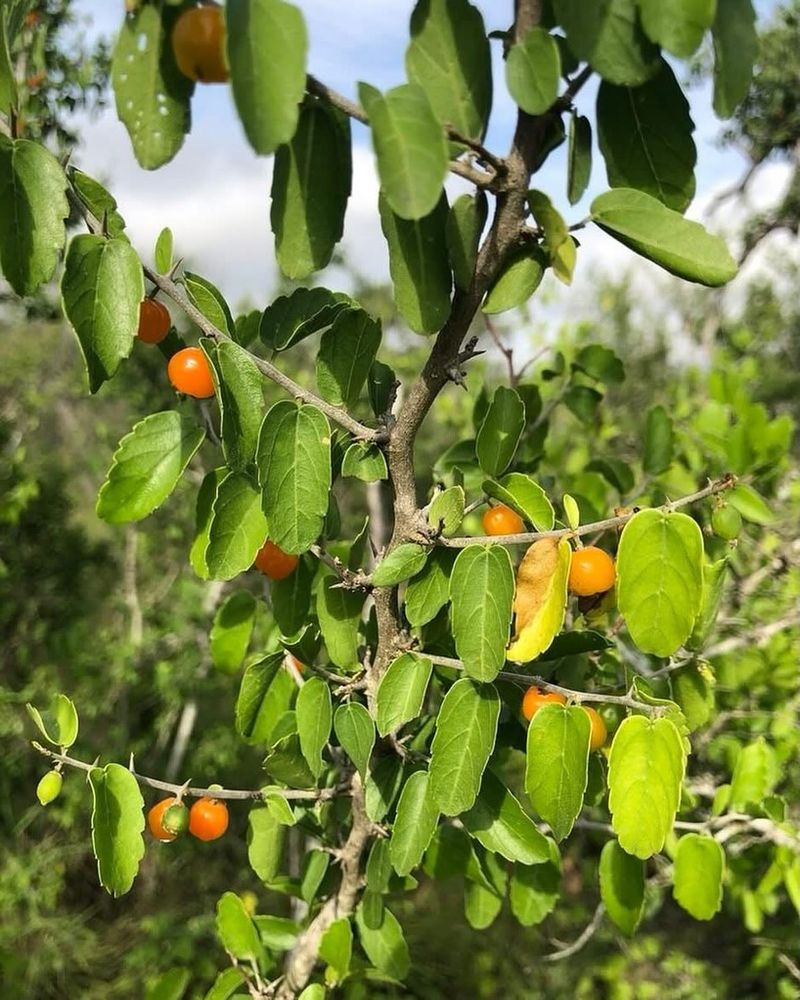
Tough trees rarely get the credit they deserve. Netleaf hackberry grows in rocky desert canyons, dry washes, and exposed hillsides with almost no help from anyone.
Bringing that kind of resilience into a residential yard is a genuinely smart move.
Shade quality improves steadily as the tree matures. Young trees start modest, but established specimens develop a broad, irregular canopy that provides real coverage.
Leaf texture is slightly rough, and the overall appearance has a natural, unmanicured quality that suits desert landscapes well.
Wildlife value is high. Small berries ripen in fall and attract birds reliably.
Cedar waxwings, robins, and other species visit regularly during migration and winter months. A tree that feeds wildlife while shading your yard earns its place twice over.
Water requirements drop sharply after establishment. Netleaf hackberry evolved to survive on rainfall alone in its native habitat.
Supplemental irrigation during the first two summers helps it get established, but deep-water dependence fades as roots extend into the soil.
Soil flexibility is one of its strongest traits. Caliche layers, rocky ground, and poor drainage that defeat other trees rarely stop hackberry from growing.
Root systems adapt to difficult conditions rather than giving up.
For homeowners dealing with challenging soil situations that have caused problems with previous plantings, netleaf hackberry often succeeds where other species have repeatedly struggled and failed to establish.
8. Desert Willow Fits Arizona Landscapes More Naturally
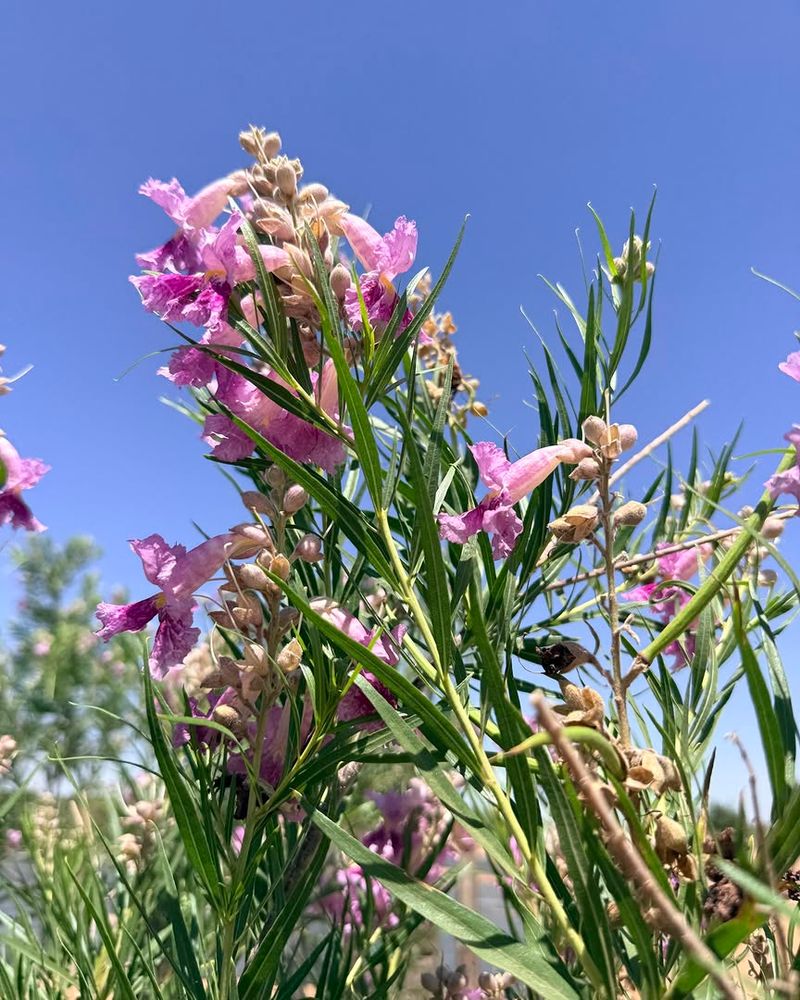
Few trees put on a show quite like desert willow in bloom. Long, trumpet-shaped flowers in shades of pink, purple, and white appear repeatedly from late spring through early fall.
Hummingbirds visit constantly, and the display is genuinely hard to beat.
Despite the name, desert willow is not a true willow. It belongs to the catalpa family and behaves very differently from water-hungry willows.
Once established, it handles dry conditions well and rarely needs supplemental water beyond a deep soak every couple of weeks during summer heat.
Canopy size is moderate rather than massive. For smaller yards or spaces near structures, that is actually an advantage.
Shade coverage is decent without overwhelming the surrounding landscape. Root behavior stays relatively contained, which makes it a safer choice near patios and walkways.
Cold hardiness is reasonable for most lower-elevation desert areas. Established trees handle brief frost events without major damage.
In higher-elevation zones, some winter tip damage can occur, but recovery is usually quick once temperatures warm up.
Growth rate falls somewhere between fast and moderate depending on soil and water. Expect noticeable progress each season without the explosive, uncontrolled expansion that causes problems with more aggressive species.
Desert willow earns its reputation as a smart, low-fuss choice that genuinely belongs in the landscape where it is planted.