Arizona Landscapers Are Warning Homeowners About Artificial Turf In The Summer, Here’s Why
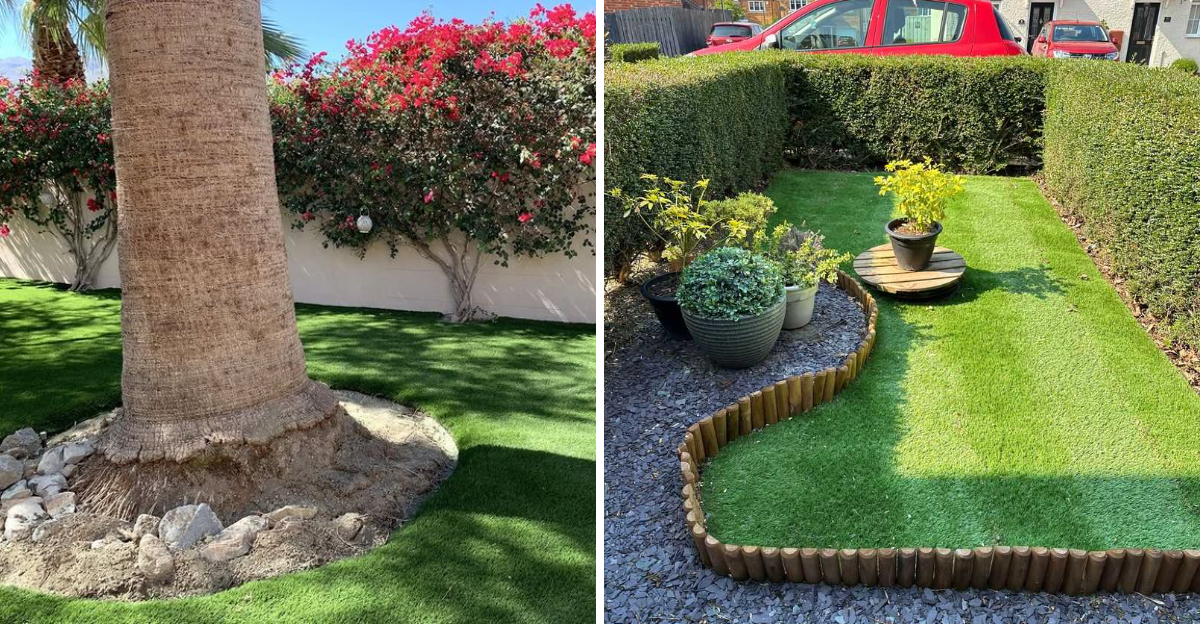
Artificial turf was supposed to solve Arizona’s lawn problem. No water bills. No mowing. Stays green through July, August, and every brutal month in between.
However, landscapers are now having a very different conversation about it.
Not about the appearance. Not about the installation cost. About what actually happens to a yard full of synthetic grass when temperatures climb past 110 degrees and stay there for weeks.
Have you ever touched artificial turf on a July afternoon in Phoenix? Not glanced at it from inside. Actually pressed your hand against it.
The answer changes the conversation entirely.
Professional landscapers across the Valley are flagging concerns that many homeowners never heard when the turf was sold to them.
Some of it involves comfort. Some involves safety. A few of the issues are ones most people would never think to consider until it is already affecting their yard, their pets, and the plants growing next to it.
1. It Can Turn Patios Into Heat Traps
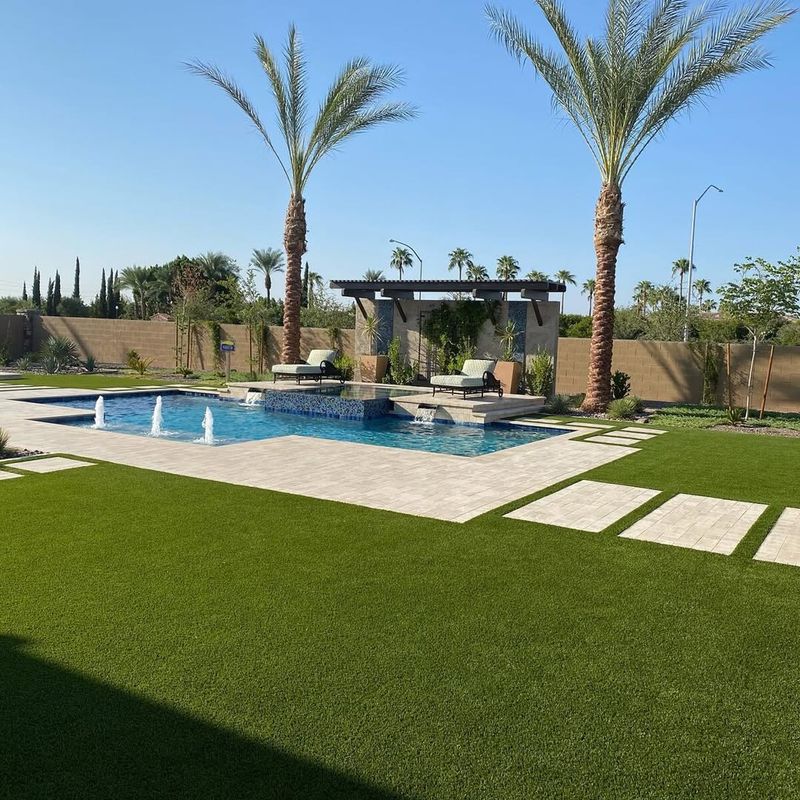
Synthetic grass gets very hot under direct sun. It absorbs heat throughout the day and radiates it outward in every direction. Seating areas, covered patios, and outdoor dining spaces nearby can all feel hotter because of it.
Natural grass uses a process called evapotranspiration to release moisture and cool the surrounding air. Artificial turf has no cooling mechanism at all. It simply collects heat and pushes it back into the yard.
Surface temperatures around synthetic turf can climb 20 to 50 degrees above the ambient air temperature.
On a 110-degree Arizona afternoon, that translates to surfaces radiating heat at 150 degrees or more near your favorite outdoor chair. That is not a patio. That is a slow cooker with furniture in it.
Shade structures positioned directly over turf areas help interrupt that heat cycle. Potted plants nearby also break up some of the radiated load.
Landscapers specifically recommend avoiding turf installation near south-facing walls and enclosed patios where heat accumulates with nowhere to go.
The enclosed patio problem is particularly significant. Heat bounces between the wall, the turf, and any other hard surface nearby until the entire space feels unlivable. Airflow is the only natural escape valve, and enclosed spaces have very little of it.
Planning shade as part of the original turf design rather than adding it after installation makes a meaningful difference in how usable the space stays through summer.
Your patio was built for relaxation. Artificial turf in full Arizona sun has other plans for it.
2. Plastic Grass Holds Heat Longer Than Living Lawn
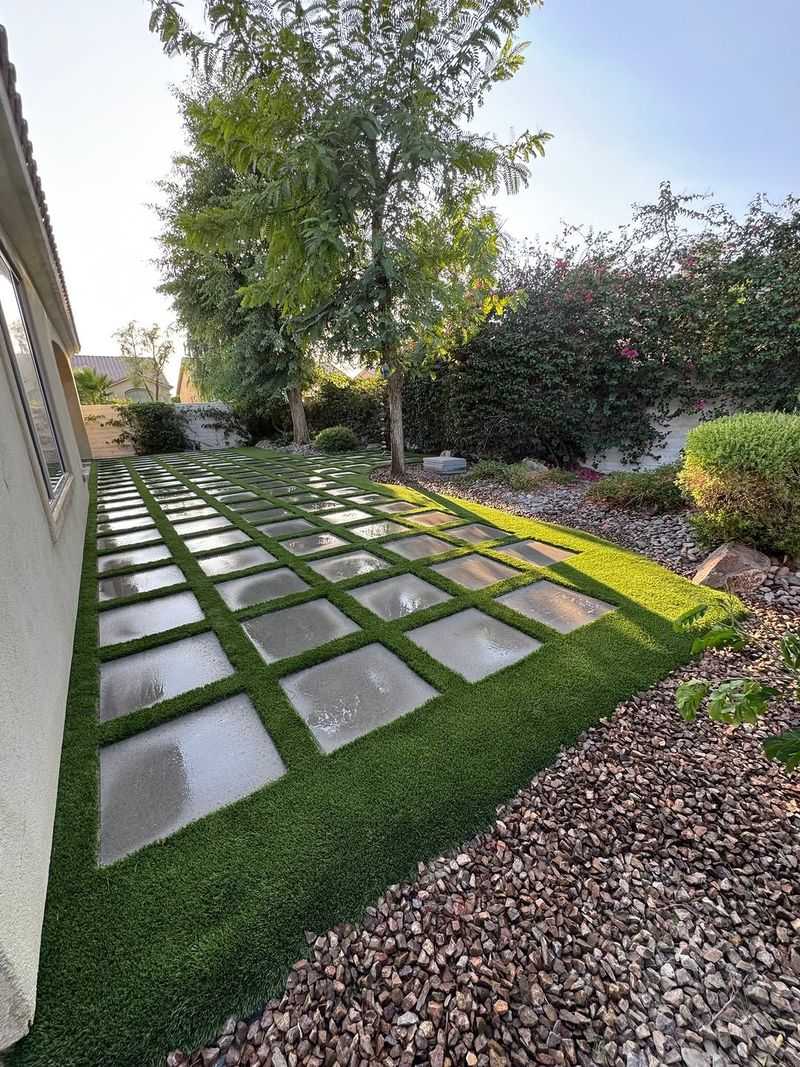
Arizona evenings are supposed to offer relief. The sun drops, the air softens slightly, and outdoor time becomes manageable again.
A yard full of artificial turf complicates that relief considerably. Synthetic fibers made from polyethylene or nylon hold onto heat for hours after the sun goes down.
Living plants release stored moisture into the air as temperatures fall, which accelerates the cooling process. Plastic cannot do that. It simply holds what it absorbed and releases it slowly through the night.
Research consistently shows that artificial turf surfaces remain significantly hotter than natural grass for hours after sunset.
Your Arizona Garden Changes Every Week. Your Plan Should Too.
Gardening in Arizona changes quickly throughout the season. Every Friday you’ll receive a simple weekly plan showing exactly what to plant, prune, fertilize, harvest, and protect so you never miss the right timing.
That extended heat retention affects more than just comfort. Young children and older adults are particularly sensitive to prolonged heat exposure.
Evening outdoor time loses much of its value when the surface underfoot is still radiating afternoon temperatures.
The heat retention also affects the broader yard microclimate. Walls, fences, and nearby structures absorb radiated heat from the turf and release it slowly, which keeps the entire space warmer through the night.
Between June and September, a fully turfed Arizona yard can struggle to truly cool down before the next day’s heat cycle begins.
Using artificial turf in smaller, shaded sections rather than full yard coverage reduces the overall thermal impact significantly.
Pairing it with decomposed granite, flagstone, or native groundcovers in open sunny areas helps distribute the heat load rather than concentrating it in one continuously radiating surface.
The evening should feel like a reward. A yard that never cools down makes that harder to access than it should be.
3. Bare Feet And Pet Paws Feel The Surface Fast
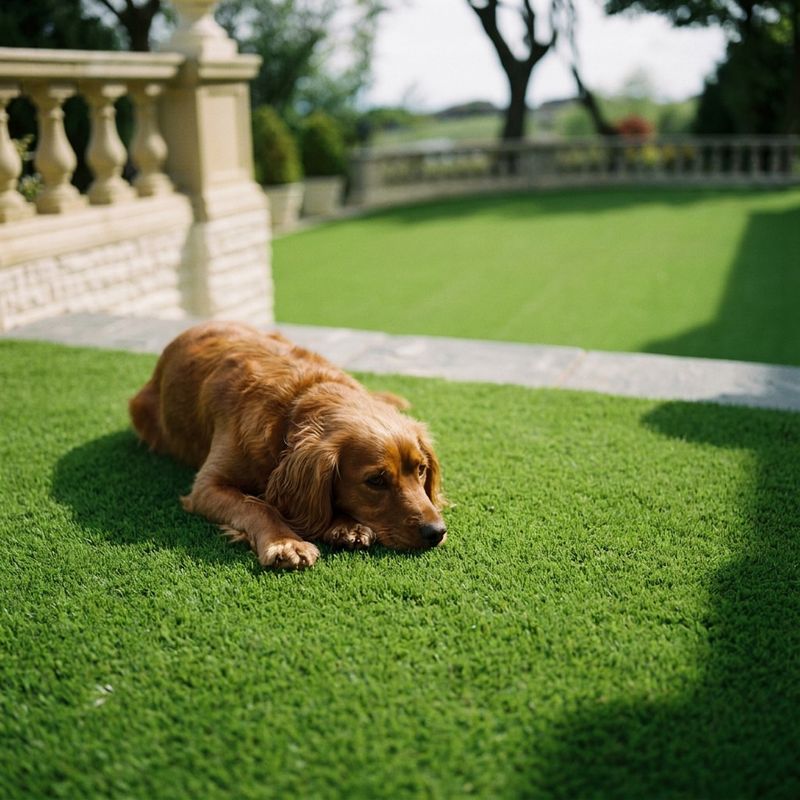
Your dog sprints to the back door after just a few seconds outside and you wonder why. Then you press your hand against the artificial turf and pull it back just as fast.
Surface temperatures on synthetic grass in direct Arizona sunlight can reach 150 to 180 degrees Fahrenheit. That is hot enough to cause burns on sensitive skin within seconds of contact.
Children and pets are particularly at risk. They spend more time low to the ground and may not recognize the danger until contact has already caused harm.
Dogs have sensitive paw pads that can blister quickly on a superheated surface. Children playing on turf may sit, crawl, or roll without a second thought.
Parents and pet owners are often caught off guard because the turf looks perfectly normal from a distance. Nothing about its appearance signals a problem until someone gets close to the ground.
Shade is the most practical protective measure. A shade sail or pergola positioned over the turf area can drop surface temperatures by 30 degrees or more.
Timing also matters. Keeping pets and young children off synthetic turf between 10 a.m. and 5 p.m. during peak months reduces contact risk significantly.
Misting the turf with water before letting kids or pets outside provides temporary cooling and takes about two minutes to do.
The turf looks safe from the kitchen window. The temperature at ground level tells a different story entirely.
4. Nearby Plants Get Hit With Reflected Heat
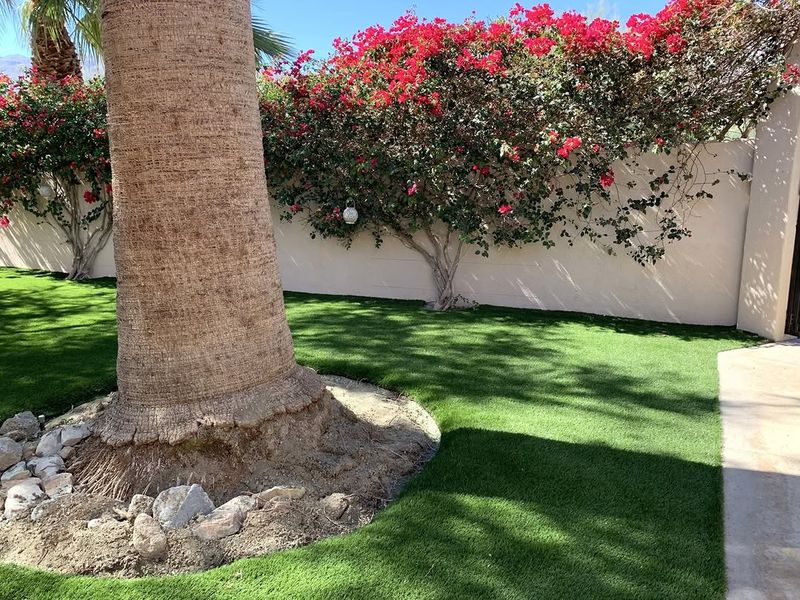
A native plant border next to synthetic lawn looks appealing in spring. By July, those same plants are absorbing radiated heat from two directions simultaneously.
Artificial turf pushes heat outward in all directions, and plants growing closest to the edge absorb that thermal load on top of the direct Arizona sun they are already managing.
Even genuinely heat-tolerant desert plants have limits, and reflected heat from synthetic surfaces can push them past those limits faster than the weather alone would.
Tender annuals, succulents with soft tissue, and newly transplanted specimens are particularly vulnerable.
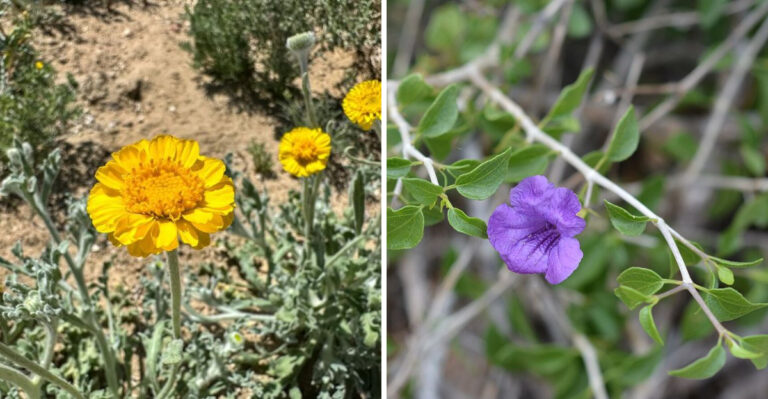
Established native plants like desert marigold and globe mallow can show stress symptoms when positioned between a hot wall and a synthetic lawn edge. Leaf scorch, reduced blooming, and early dormancy are the most common signs.
Keeping sensitive plants at least three to four feet from the turf edge provides a buffer from the worst of the radiated heat.
Mulching around plant bases insulates roots and helps retain soil moisture, which supports the plant’s ability to handle elevated temperatures.
For plants placed close to synthetic turf, species with genuinely proven heat tolerance perform better than species that are merely drought-tolerant.
Desert spoon, brittlebush, and lantana handle that extra thermal pressure more reliably than softer desert plants.
Landscapers recommend treating the area immediately surrounding artificial turf as its own microclimate rather than standard landscape conditions.
Native does not automatically mean indestructible. Radiated heat from synthetic turf has a way of proving that point by August.
5. Soil Under Turf Loses Natural Cooling Power
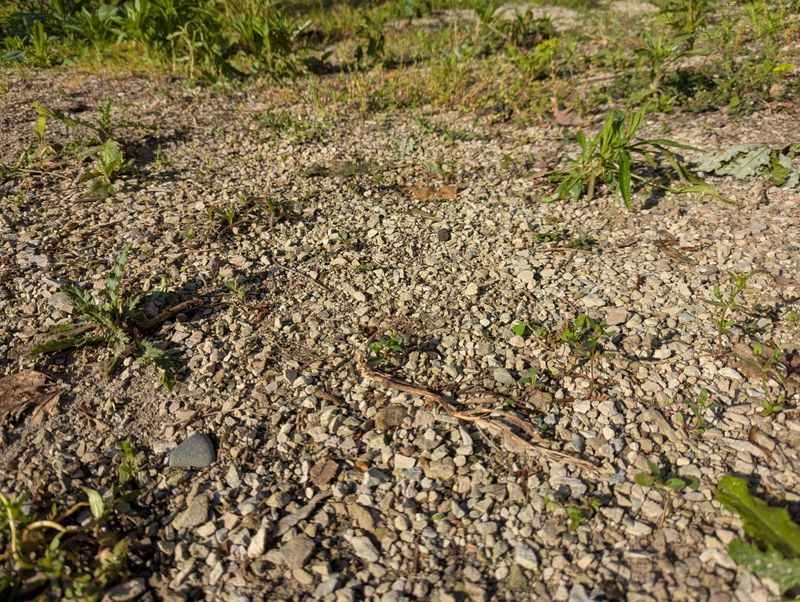
Healthy soil is not inert material. It stores moisture, supports microbial activity, and plays a direct role in regulating ground temperature through evaporation at the surface.
When artificial turf gets laid over soil, that system gets sealed off. No sunlight reaches the surface. Rain cannot penetrate meaningfully.
Airflow stops. Over time, the soil beneath compacts, dries out, and loses the moisture-evaporation process that contributes to natural ground cooling.
Living groundcovers, mulch, and decomposed granite all allow some moisture exchange with the soil below.
Artificial turf installed over rubber or plastic backing creates a barrier that cuts off that exchange almost entirely. The ground gets hotter, biological activity drops, and the surface above holds more heat as a result.
Homeowners sometimes assume that because the turf feels soft underfoot, the ground beneath it must be in reasonable condition. That assumption tends not to hold after several Arizona summers of sealed, compacted soil.
For yards that already have artificial turf installed, periodically aerating or removing sections allows the soil to recover some function. The improvement is gradual but measurable.
For homeowners still deciding, low-water groundcovers like buffalo grass, native sedge, or creeping thyme in partial shade areas require significantly less irrigation than traditional lawns while allowing the soil beneath to function naturally.
A cooler yard often starts several inches below the surface. Synthetic turf blocks access to that cooling at the source.
6. Small Yards Can Feel Hotter With Too Much Turf
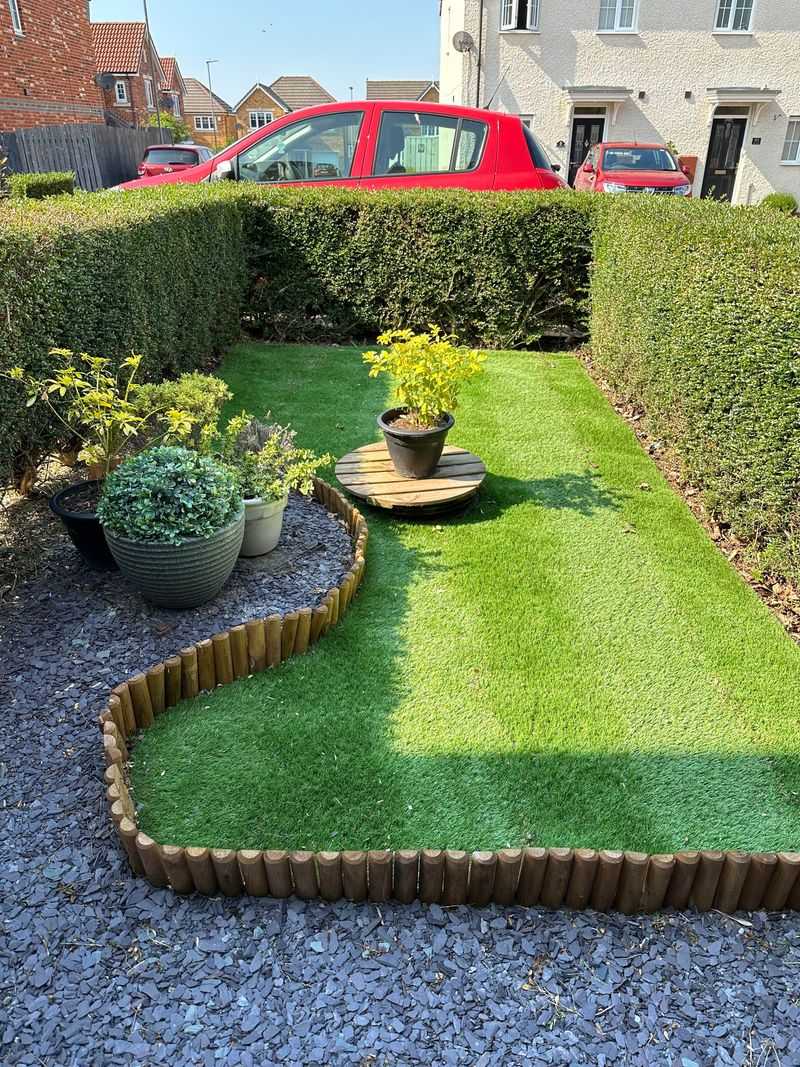
Compact Arizona yards are already working against themselves thermally. Block walls on three sides. Stucco siding reflecting heat. Concrete paths absorbing and radiating throughout the day.
Add full artificial turf coverage and the heat problem multiplies rather than staying constant.
The issue comes down to geometry. In a small enclosed yard, every heat-radiating surface is close to every other one.
The walls absorb heat from the turf and radiate it back. The turf absorbs heat from the walls and pushes it outward again. There is very little space for that energy to escape, and limited airflow to carry it away.
Larger yards have more surface area and more natural airflow to help dissipate heat. Small yards have neither of those advantages working in their favor.
Landscapers working across the Phoenix and Tucson metro areas consistently identify small yards with complete synthetic coverage as among the hottest residential spaces they encounter in summer.
Breaking up the turf with other materials is the most effective intervention. Flagstone pavers, gravel pathways, and raised planting beds interrupt the continuous radiating surface and create thermal variety.
Even a few large potted desert plants at corners disrupt heat flow and create localized shade.
Shade sails overhead block direct sun before it reaches the turf, which reduces the surface temperature the turf reaches in the first place.
A small yard should feel intimate and comfortable. Full artificial turf coverage in Arizona summer tends to make it feel like a different kind of enclosed space entirely.
7. Shade Becomes Essential Around Synthetic Lawn
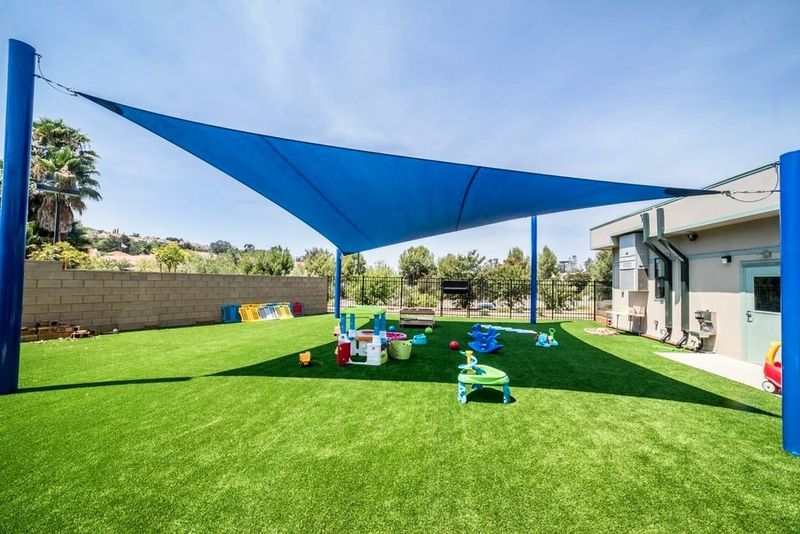
Shade in Arizona summer is not a luxury feature. It is the primary factor that determines whether outdoor space gets used or avoided between May and September.
When artificial turf is involved, shade becomes even more critical because the synthetic surface amplifies heat without any of the natural counterbalance that living landscapes provide.
Landscapers across the Phoenix Valley now recommend building a shade plan into any artificial turf installation from the beginning rather than treating it as optional.
Trees are the most effective long-term solution. A mature palo verde, mesquite, or desert willow positioned to shade turf during peak afternoon hours reduces surface temperatures meaningfully.
Tree canopy coverage is consistently identified in urban heat research as one of the most effective tools available for reducing surface and ambient temperatures in residential settings.
The limitation is time. Trees take years to provide meaningful coverage.
Pergolas and shade sails deliver faster results. A well-positioned shade sail covering 60 to 70 percent of the turf area can drop surface temperatures by 30 degrees or more immediately after installation.
Combining overhead shade with vertical greenery, such as a trellis planted with native vines, adds cooling from two directions simultaneously while improving the visual quality of the space.
The consistent professional recommendation is to plan shade at installation rather than after the yard already feels unbearable.
Installing artificial turf without a shade plan in Arizona is a bit like buying a convertible and being surprised it gets hot in July. The information was available.
8. Desert Friendly Plants Cool Spaces Better Than Plastic
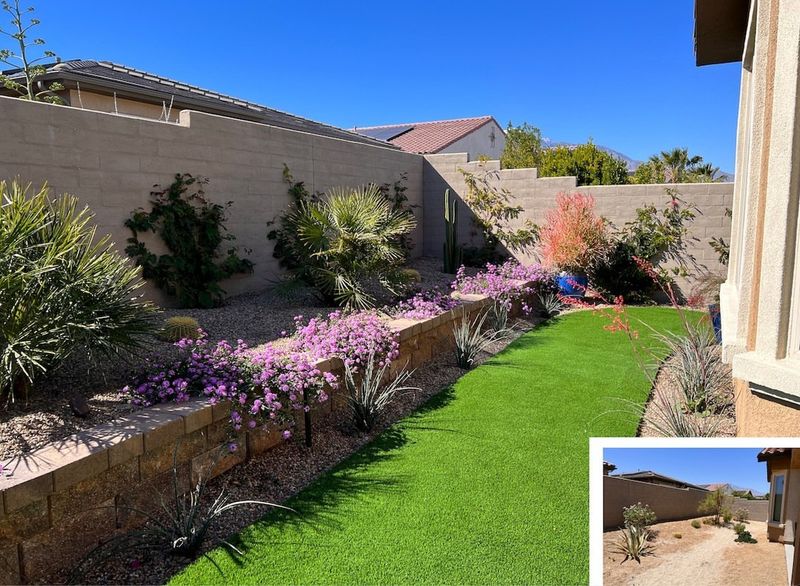
Native and desert-friendly plants help cool the air around them. As the weather gets hotter, they release water vapor through their leaves. This process is called evapotranspiration.
A yard filled with living plants, even drought-tolerant ones that use minimal water, genuinely lowers the temperature of the surrounding space. Artificial turf cannot do any of that. It absorbs heat and holds it.
The difference on a 110-degree afternoon is not subtle.
Plants like desert willow, yellow bells, Texas sage, and agave require very little water, provide real shade and structure, attract pollinators, and contribute to a measurably cooler yard environment.
They deliver the low-maintenance appeal that originally made artificial turf attractive, without the summer heat penalty.
Replacing even a portion of synthetic lawn with a native plant bed and decomposed granite mulch creates a noticeably cooler microclimate compared to a fully turfed surface.
Landscapers recommend layering plants by height for maximum cooling effect. Tall trees provide overhead canopy.
Mid-size shrubs create structure and shade at intermediate height. Low groundcovers cover the soil surface and prevent heat from building at ground level.
Each layer contributes to the overall cooling effect in a way that synthetic turf simply cannot participate in.
A living landscape is greener in the philosophical sense and genuinely, measurably cooler in the physical sense on a blazing Arizona afternoon.
The desert figured out how to handle this climate long before synthetic turf arrived. It might be worth listening to what it already knows.