Many Pennsylvania Gardeners Regret Planting These Fast Growing Privacy Shrubs
Fast growing privacy shrubs are one of the most appealing ideas in landscaping and one of the most commonly regretted purchases Pennsylvania gardeners make.
The promise of a quick green screen between your yard and the neighbors sounds straightforward, and nurseries do a reliable job of making it look even more so.
What the tag rarely communicates is what that shrub will look like, how large it will get, and how much work it will demand five or ten years after planting.
Some of the most popular fast growing options in Pennsylvania have a way of becoming problems at roughly the same pace they become screens, requiring aggressive pruning, sending roots where they are not wanted, or turning into the kind of invasive spread that extends well beyond the original planting.
The gardeners who regret them most are not the ones who made careless choices. They are the ones who followed popular advice without knowing what they were actually signing up for long term.
1. Leyland Cypress
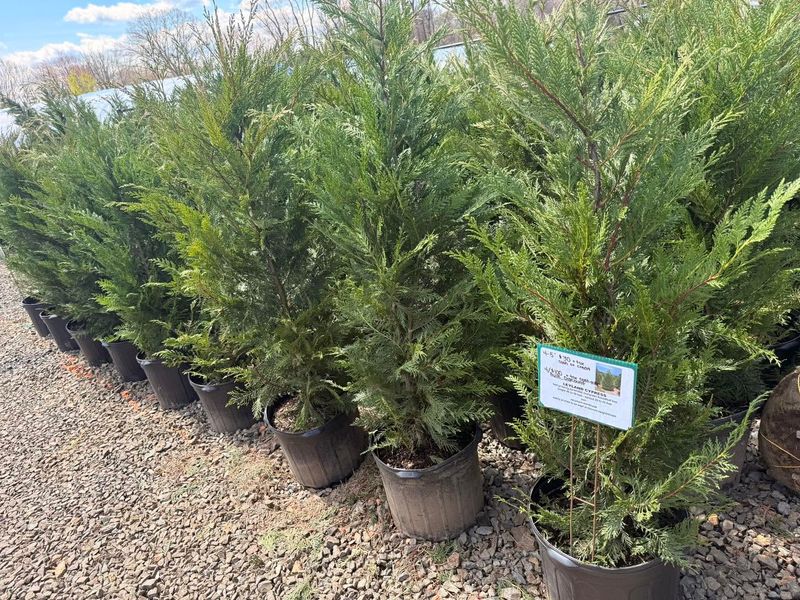
Picture this: you plant a row of skinny little trees, and within five years they are towering over your roofline. That is exactly what happens with Leyland Cypress.
This tree can shoot up three to four feet every single year, which sounds amazing at first. But that rapid growth quickly turns into a full-time pruning job that never seems to end.
The biggest complaint from Pennsylvania gardeners is how fast these trees outgrow their space. What starts as a tidy hedge soon becomes a wall of green that blocks sunlight from your yard, your neighbor’s yard, and sometimes even your house.
Trimming them back is exhausting work, and if you skip a season, they bounce back even thicker and taller.
Another serious problem is what happens at the bottom of the hedge over time. The lower branches thin out, turn brown, and stop filling in properly.
That means the privacy screen you worked so hard to create starts looking bare and patchy right where you need it most, near the ground.
Pennsylvania’s humid summers also create the perfect conditions for fungal diseases like Seiridium canker and Botryosphaeria canker. These diseases cause large sections of the tree to turn brown and look completely dry.
Once a Leyland Cypress gets infected, recovery is very difficult. Many gardeners end up removing entire rows of these trees after years of frustration.
If you want a fast screen, there are healthier options better suited to Pennsylvania’s climate and soil conditions.
2. Arborvitae Green Giant
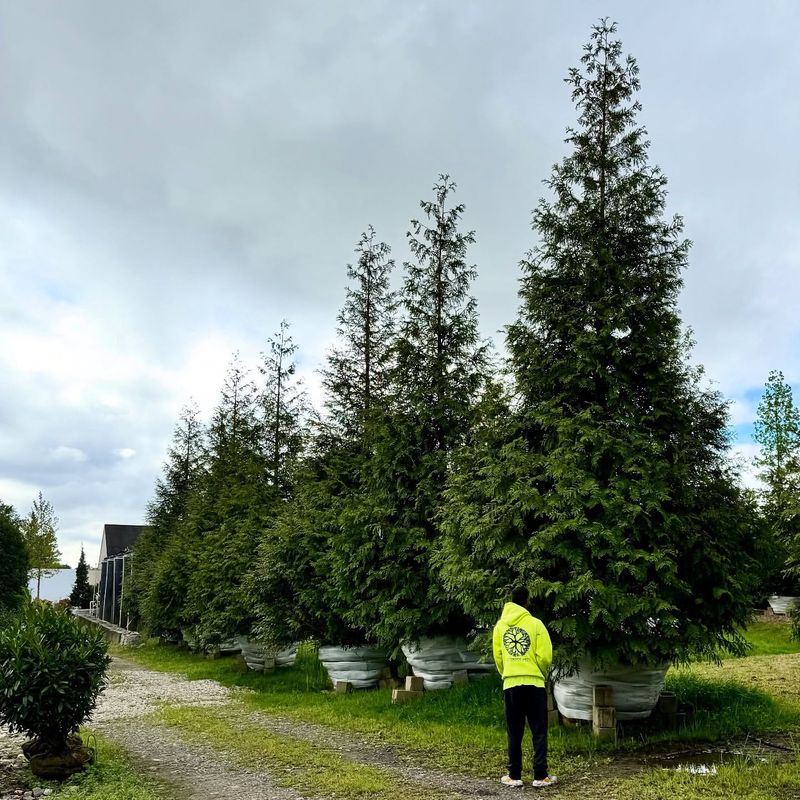
Walk through almost any Pennsylvania neighborhood and you will spot a row of Green Giant Arborvitaes lining someone’s yard. They are everywhere, and for good reason.
They grow fast, stay mostly green year-round, and look tidy when they are young. Nurseries market them as the perfect privacy solution, and plenty of homeowners believe it.
The trouble starts around year three or four. Green Giants can grow up to five feet per year under good conditions.
Before long, what was supposed to be a neat eight-foot hedge is now a twenty-foot wall of green. Pruning becomes a serious chore that requires a tall ladder, proper tools, and a lot of free time on weekends.
Your Pennsylvania Garden Changes Every Week. Your Plan Should Too.
Gardening in Pennsylvania changes quickly throughout the season. Every Friday you’ll receive a simple weekly plan showing exactly what to plant, prune, fertilize, harvest, and protect so you never miss the right timing.
Width is another issue that catches gardeners off guard. Green Giants can spread six to twelve feet wide at maturity.
If you planted them too close together or too close to a fence, they will start crowding each other and pushing into structures. Fixing that problem means cutting back aggressively, which can leave ugly bare patches that take years to fill back in.
Lower branches also tend to thin out as the trees mature and compete for light. That bare-bottom look defeats the whole purpose of planting a privacy screen.
Some gardeners solve this by planting shorter shrubs in front, but that adds more maintenance to an already demanding plant.
Green Giants are not a bad choice overall, but going in without realistic expectations about their size and upkeep leads to a lot of regret down the road in Pennsylvania landscapes.
3. Photinia
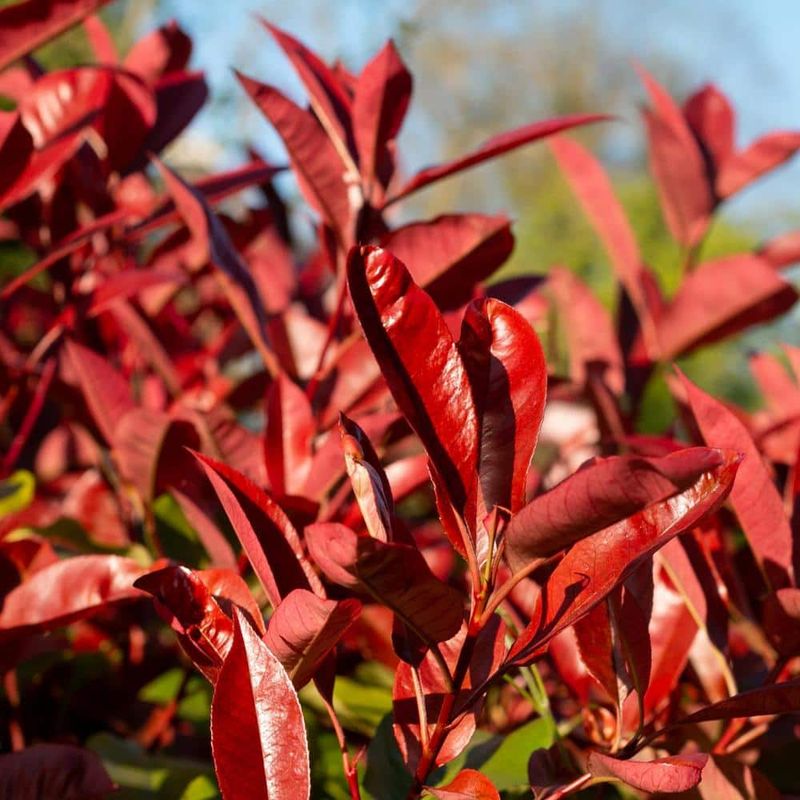
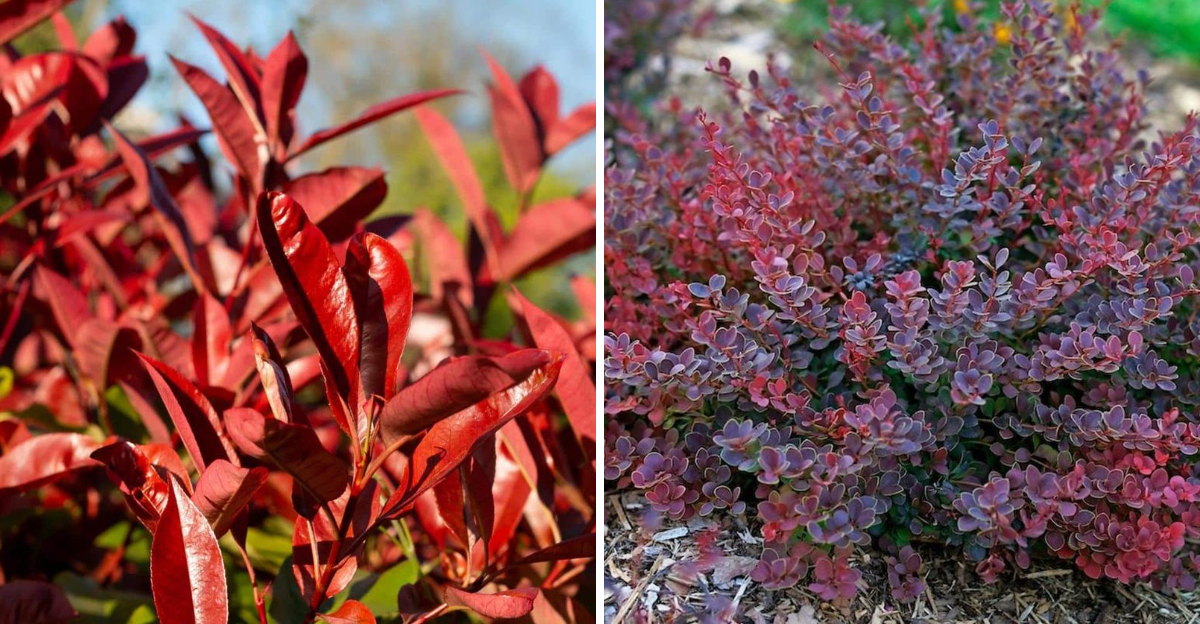
Few shrubs put on a showier display in spring than Photinia. Those bright red new leaves are genuinely stunning, and that visual pop is exactly why so many Pennsylvania gardeners rush to plant it along their fences and property lines.
For the first year or two, it really does look like a winner. Then the humidity hits. Pennsylvania summers are warm and wet, and Photinia absolutely struggles in that kind of climate.
Entomosporium leaf spot is a fungal disease that spreads rapidly in humid conditions, leaving dark red and purple spots all over the leaves.
Infected leaves drop early, leaving the shrub looking thin and ragged. Without regular fungicide treatments, the problem only gets worse each season.
Keeping Photinia healthy in Pennsylvania means committing to a spray schedule, raking up fallen leaves so the fungus does not spread, and pruning out damaged branches regularly. That is a significant amount of work for a plant that was supposed to be a carefree privacy screen.
Many gardeners find themselves spending more time managing disease than enjoying the beauty that attracted them in the first place.
Grooming is also non-negotiable. Without regular trimming, Photinia grows in an uneven, wild way that looks messy rather than polished. It can grow six to ten feet tall and wide if left alone.
Some gardeners in drier parts of Pennsylvania have better luck with it, but in most of the state, the combination of humidity, disease pressure, and high maintenance makes this shrub a regret waiting to happen for many homeowners.
4. Privet (Ligustrum spp.)
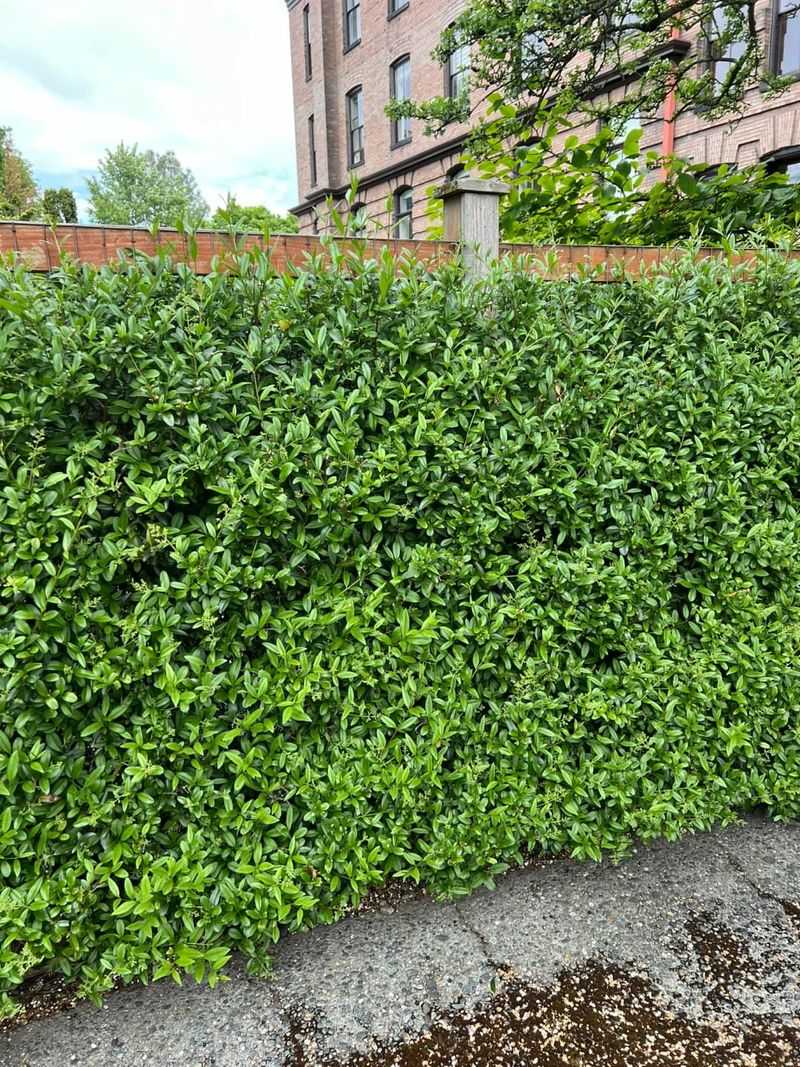
Back in the day, Privet was the go-to hedge plant across America. It grew fast, stayed dense, and gave neighborhoods that classic, manicured look.
Plenty of older Pennsylvania properties still have Privet hedges that have been around for decades. But what was once considered a landscaping staple has earned a very different reputation in recent years.
Privet is notoriously weedy. It self-seeds aggressively, meaning it drops berries that sprout into new plants all over your yard, your neighbor’s yard, and nearby natural areas.
Birds love the berries and carry seeds far and wide. Before long, you are pulling up Privet seedlings from garden beds, lawn edges, and places you never intended to plant anything. It becomes a constant battle to keep it contained.
Without regular and aggressive pruning, a Privet hedge turns into a dense, tangled thicket that looks more like a neglected mess than a tidy privacy screen. It can grow several feet per year and will quickly swallow up smaller plants nearby.
Skipping even one pruning season means spending twice as long cutting it back the next time around.
Pennsylvania’s Department of Conservation and Natural Resources has flagged several Ligustrum species as invasive plants that threaten local ecosystems.
That is a serious concern for gardeners who care about supporting native wildlife and keeping natural areas healthy.
Fast and cheap is how most people describe Privet, and that is exactly the problem. The upfront convenience almost always leads to long-term headaches that many Pennsylvania gardeners wish they had avoided from the very beginning.
5. Nandina
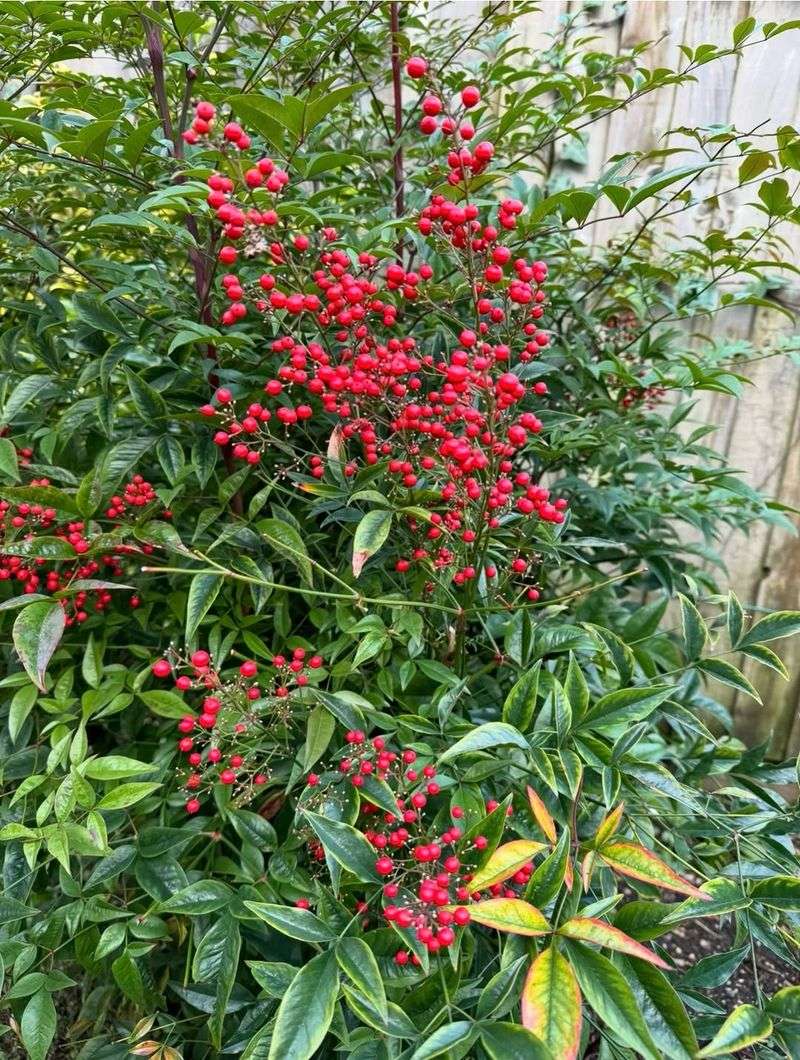
The name Heavenly Bamboo sounds almost magical, and the plant does have a certain charm.
Nandina has delicate, feathery foliage that turns brilliant shades of red and orange in fall, and it produces clusters of bright red berries that look beautiful against a winter landscape.
Gardeners are drawn to it because it seems elegant, low-maintenance, and tough all at once.
Here is the catch though. Nandina is considered semi-invasive in parts of Pennsylvania, and its spread is largely driven by birds.
Robins, cedar waxwings, and other birds eat the berries enthusiastically and deposit seeds in places far from where you originally planted.
New Nandina plants start popping up in garden beds, along fence lines, and at the edges of wooded areas where they compete with native plants for space and resources.
Beyond the spreading issue, Nandina can crowd out native understory plants that local wildlife depends on. Pennsylvania’s natural areas are home to many native shrubs and wildflowers that simply cannot compete with an aggressive spreader like Nandina.
Planting it near woodland edges or natural areas is especially risky and can cause lasting damage to local ecosystems over time.
Some sterile cultivars have been developed that produce fewer seeds, which reduces but does not completely eliminate the spreading problem.
Even so, many Pennsylvania gardeners who planted Nandina for its looks now spend significant time pulling volunteer plants from spots they never intended.
The maintenance burden adds up quickly. For a plant marketed as nearly effortless, Nandina has a surprising way of creating a lot of extra work for its owners over the years.
6. Viburnum Fast-Growing Hybrids
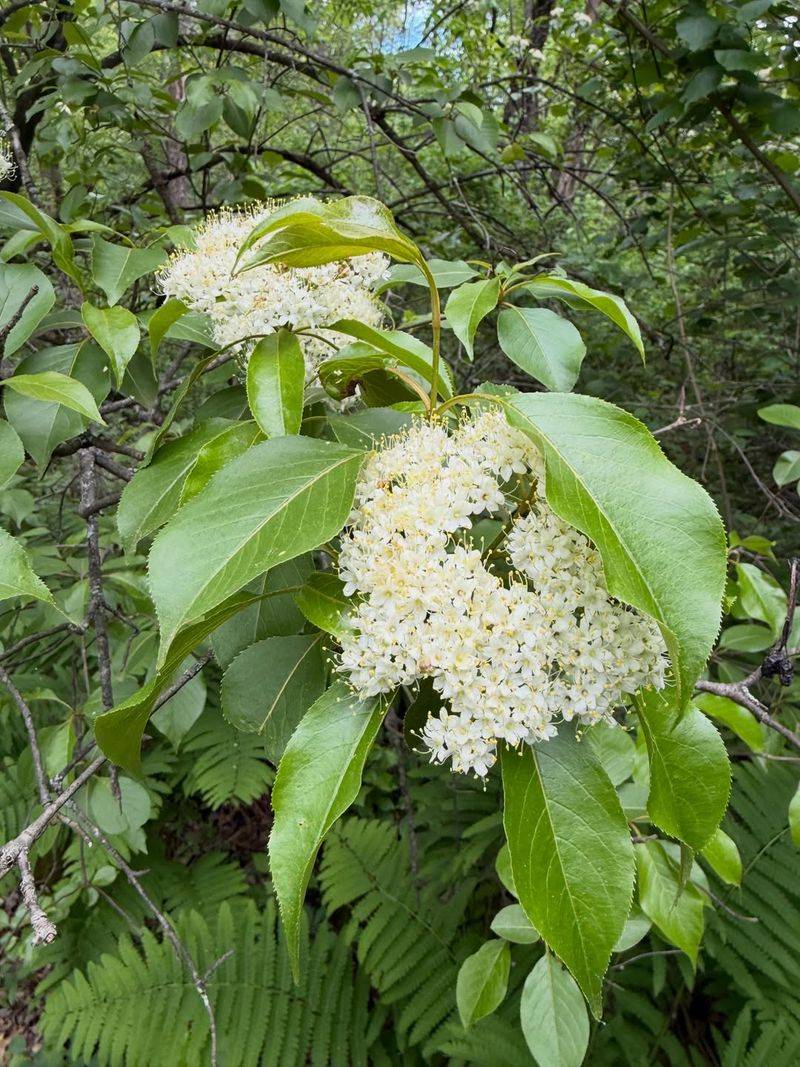
Viburnums have a loyal fan base among gardeners, and honestly, many species deserve that love. They offer beautiful flowers, wildlife-friendly berries, and solid fall color.
But some of the larger, faster-growing hybrid varieties, like Alleghany and Eskimo, have a habit of growing much bigger and bulkier than their nursery tags suggest, catching homeowners completely off guard.
The problem with fast-growing Viburnum hybrids is how quickly they bulk up. A plant that looks perfectly proportioned at three feet can balloon into a sprawling eight-foot-wide shrub within just a few seasons.
Without regular and sometimes aggressive pruning, the shape becomes unruly and awkward. Getting it back under control after it has been neglected for a season or two is a genuinely tough job.
Mixed sun and shade situations create another layer of frustration. Viburnums planted along fence lines or near trees often receive uneven light throughout the day.
In those conditions, they tend to grow leggy and sparse at the base while staying thick and dense at the top. That uneven growth pattern looks sloppy and completely defeats the purpose of a privacy hedge at ground level.
Pest pressure is also worth mentioning. Viburnum leaf beetle has spread steadily across Pennsylvania in recent years, and it can strip entire shrubs of their foliage if left unchecked.
Managing the beetle requires monitoring, timing, and sometimes multiple treatments per season.
For gardeners who planted these shrubs hoping for a hands-off privacy solution, the reality of ongoing pruning and pest management often leads to real disappointment with their landscape choices.
7. Japanese Barberry
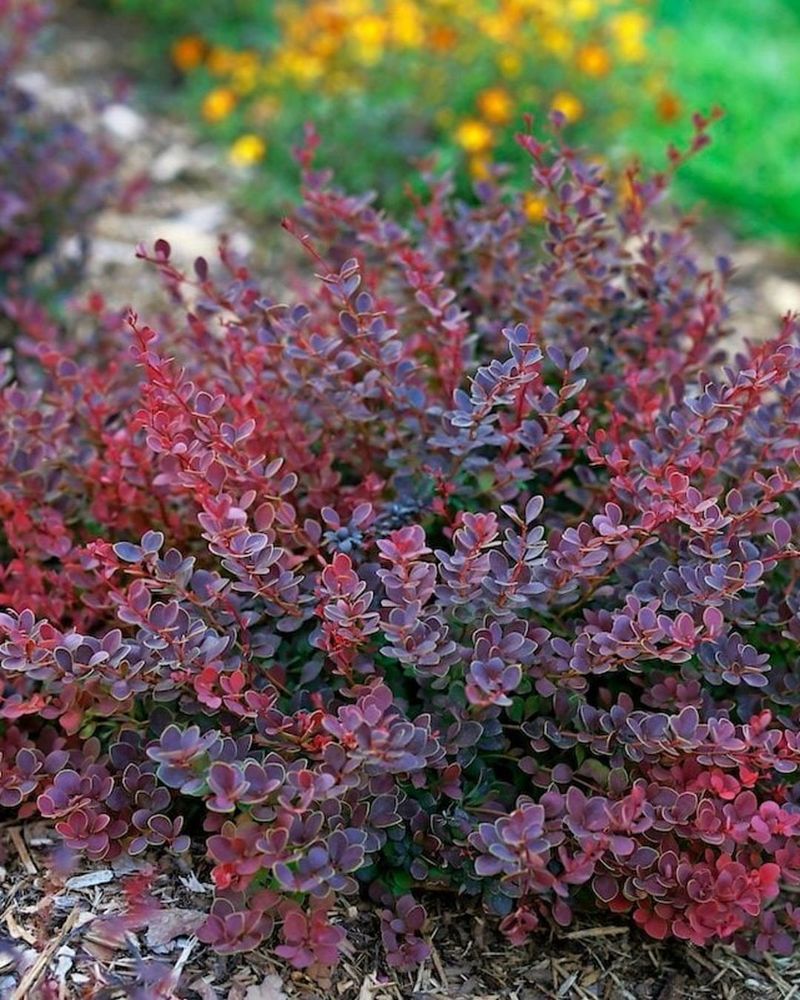
Japanese Barberry looks tough and colorful, and for a long time it was one of the most popular landscape shrubs in the entire northeastern United States.
The deep burgundy or bright green foliage, the tiny red berries, and the dense thorny branches made it seem like the perfect low-maintenance hedge.
Pennsylvania gardeners planted it by the millions, lining driveways, borders, and property edges with confidence.
Now many of those same gardeners are dealing with serious regret. Japanese Barberry is officially classified as invasive in Pennsylvania, and for good reason.
It spreads aggressively into wooded areas, forest edges, and natural spaces where it crowds out native plants. Birds eat the berries and scatter seeds widely, and the plant roots easily in disturbed soil.
Once it gets established outside of your yard, it is extremely difficult to remove. The thorns that make Barberry such a tough hedge also make it a nightmare to maintain. Pruning it requires thick gloves, long sleeves, and real patience.
Any branch that snaps back can leave a painful scratch. Over time, the shrub becomes a dense, thorny tangle that is uncomfortable to work around and nearly impossible to remove without proper tools and protective gear.
Pennsylvania’s Invasive Species Council strongly discourages planting Japanese Barberry, and some states have already banned its sale entirely.
Gardeners who still have it in their yards are encouraged to remove it carefully and replace it with native alternatives like native Spicebush or Inkberry Holly, which offer similar structure and wildlife value without the invasive spread or thorny maintenance headaches that come with Barberry.