Arizona State Parks Where Fall Color Shows Up When The Desert Finally Cools
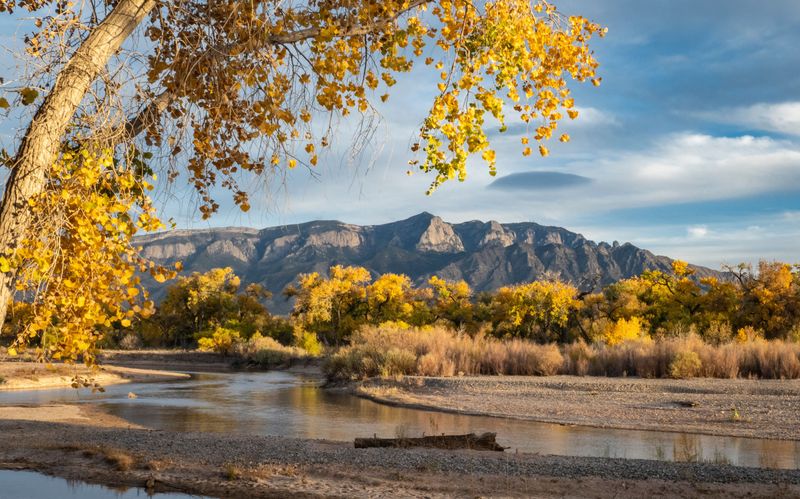
After months of 110 degree days, Arizona finally takes a deep breath in late October. That is when cottonwoods, sycamores, and ash trees along our rivers and canyons start glowing gold, orange, and red.
You do not need to drive to Colorado to see it, because several Arizona State Parks put on a real autumn show. Even better, many of the same trees can bring shade, birds, and pollinators to your own desert yard.
1. Red Rock State Park
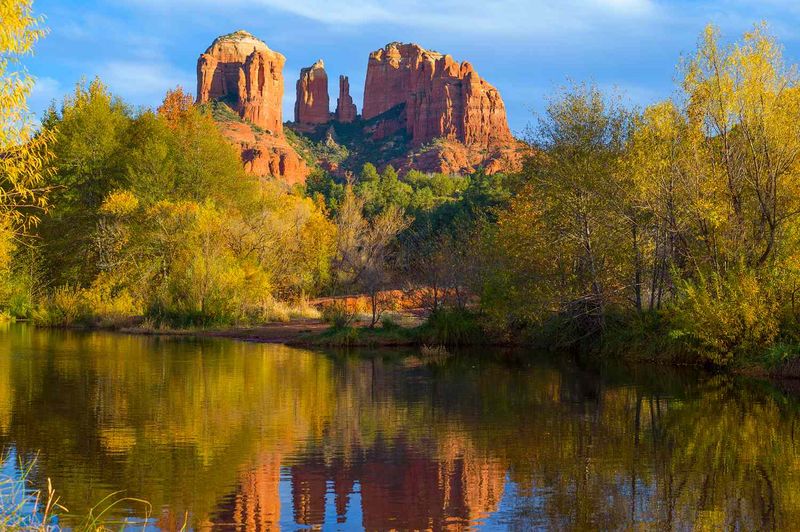
Picture amber leaves glowing against red sandstone, and you already understand why Sedona fills up every autumn. Red Rock State Park sits along Oak Creek, where a lush riparian strip holds Fremont cottonwood, Arizona sycamore, velvet ash, and Arizona alder.
From late October into early November, the creek corridor turns a buttery gold that almost looks fake next to the rust-colored cliffs.
The easy loop trails stay close to the water, so you can enjoy the color without a punishing climb. Morning walks are cool and quiet, and you may spot herons, kingfishers, or mule deer moving through the shade.
Bring a light jacket, since creekside air can feel surprisingly crisp at this time of year.
Here is the yard takeaway for Valley homeowners. Velvet ash, also called Arizona ash, is a native tree that handles low-desert heat and turns bright yellow in fall.
Planted on the west side of a home, it can help shade walls during brutal afternoons. Fall is the right planting window in Phoenix and Tucson, giving roots several mild months to settle in before summer returns.
Deep, occasional watering helps it grow tough rather than thirsty.
2. Tonto Natural Bridge State Park
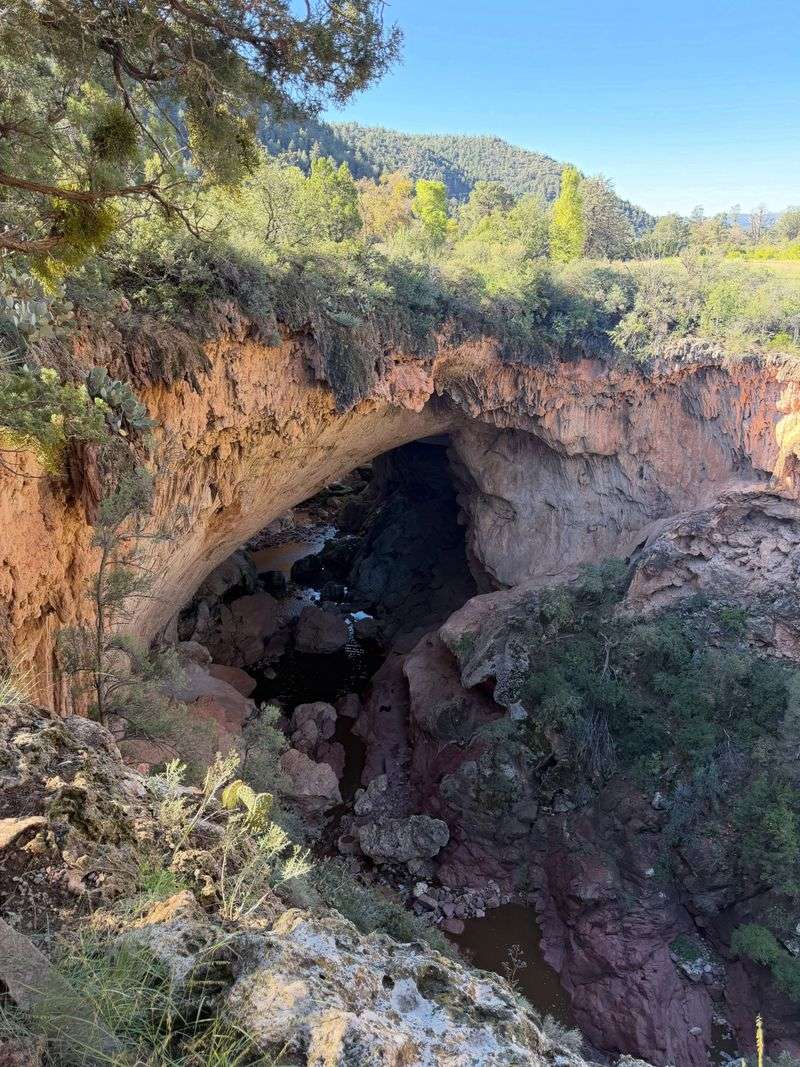
Few places let you stand on top of a giant stone bridge and look down at fall leaves. Near Payson, Tonto Natural Bridge spans a canyon about 183 feet high, and it is believed to be the largest natural travertine bridge in the world.
Around it, oaks, alder, hackberry, cottonwood, Arizona sycamore, and sumac start shifting color in late October.
Sumac steals the show here. Skunkbush sumac and sugar sumac add pops of red and orange that contrast with the yellow trees and pale stone.
Peak color usually lands between late October and early November, so plan a weekday trip if you want fewer crowds on the steep trails.
Back home, skunkbush sumac is a smart, tough shrub for larger desert yards. It tolerates poor, rocky soil and can form dense clusters that may give quail and small songbirds cover from hawks.
The berries feed birds in fall, and the plant needs little water once established. Tuck it along a back fence or near a wash where it can spread a bit.
Plant in October or November, water deeply for the first year, then let it handle much of the work.
3. Boyce Thompson Arboretum
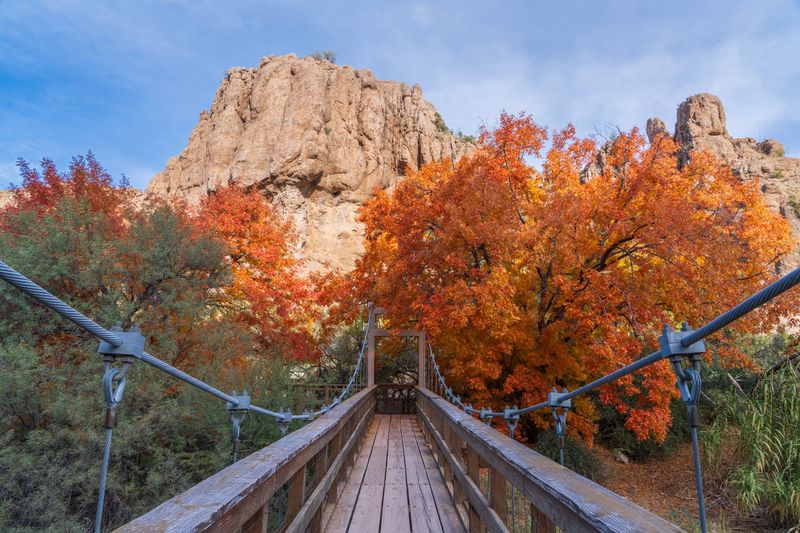
Valley folks, this is your closest bet. Boyce Thompson Arboretum, a state park near Superior, sits just an hour east of Phoenix, and its fall peak runs later than the high country, from mid-November into early December.
Your Arizona Garden Changes Every Week. Your Plan Should Too.
Gardening in Arizona changes quickly throughout the season. Every Friday you’ll receive a simple weekly plan showing exactly what to plant, prune, fertilize, harvest, and protect so you never miss the right timing.
That timing works well for anyone who thinks October in the desert still feels like summer.
The star is the Chinese pistache grove, which burns scarlet and orange under Picketpost Mountain. Pomegranates turn yellow, while canyon hackberries, willows, pecans, and cottonwoods add their own shades.
It is one of the rare low-desert spots where you can see fall color next to saguaros and agaves.
What you learn here translates straight to a Phoenix or Tucson backyard. Chinese pistache is not native, but it is well adapted, drought-tolerant once established, and tends to shrug off pests and disease.
It creates dense shade that can cool patios, and female trees produce small red fruit that birds enjoy. Netleaf or canyon hackberry is a native alternative whose berries attract birds and whose thorny branches may offer nesting cover.
Either tree goes in best during fall, so a visit can double as a planting inspiration trip.
4. Catalina State Park
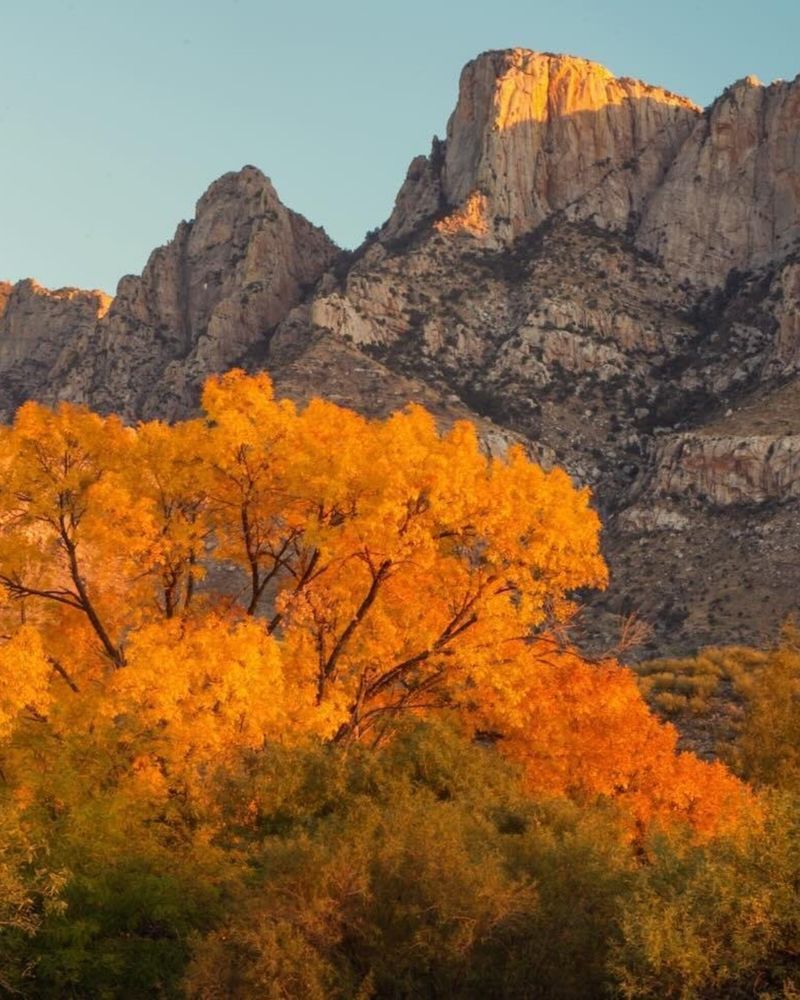
Tucson residents sometimes joke that fall is just summer with better manners. Catalina State Park proves there is a little more to it.
At the base of the Santa Catalina Mountains, the park’s washes hold Arizona sycamores that turn bright yellow, especially along the Canyon Loop and Romero Canyon trails.
The mix is pure Sonoran Desert. You get golden sycamore leaves, giant saguaros, and jagged granite peaks all in one view.
Birders love this park, too, since more than 150 species have been recorded here, and cooler mornings bring out roadrunners, cactus wrens, and wintering sparrows.
For home landscapes, the lesson is about placement. Sycamores in the wild grow where water collects, so they are not a fit for a dry gravel front yard.
If your property has a low spot, a rain basin, or a spot that catches monsoon runoff, a native tree that loves moisture can be a reasonable choice there. Smaller yards may do better with mesquite or palo verde, which handle the heat with less water.
Either way, harvesting rainwater in a basin can help any tree stay healthy while trimming your water bill.
5. Patagonia Lake State Park
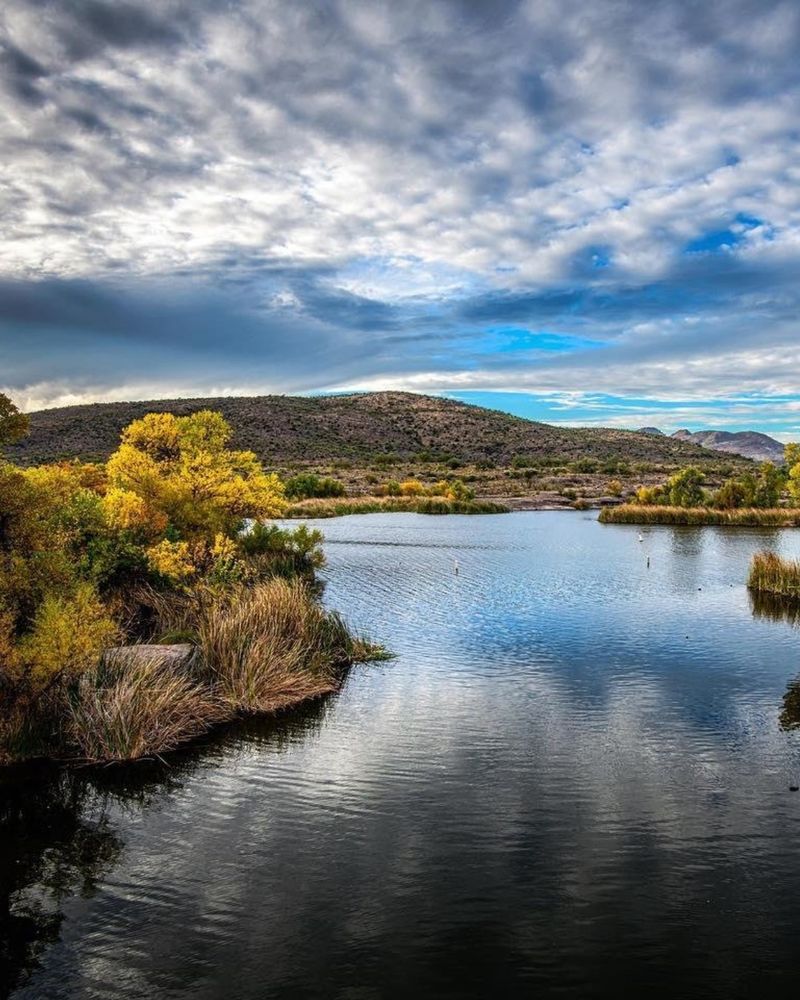
Down near the border, the grasslands turn tawny and the creek trees turn gold. Patagonia Lake State Park offers a peaceful southern Arizona escape where cottonwoods and willows ring the water and Sonoita Creek.
Fall color here often arrives a little later, giving you a second chance if you missed the northern parks.
Bird lovers know this spot well. The creek trail is famous for drawing hundreds of bird species over the years, including vermilion flycatchers, kingfishers, and wintering ducks.
Paddle out on a calm morning and you can watch golden leaves reflect on the lake while herons stalk the shallows.
Nearby, Patagonia Town Park adds Arizona walnut and desert willow to the color mix. Desert willow is one of the best native trees a low-desert homeowner can plant.
It handles full sun, needs modest water once established, and produces pink to purple trumpet flowers that pull in hummingbirds and native bees through the warm months. In fall its narrow leaves turn yellow before dropping, and the light canopy stays manageable near patios.
Plant it in October or November in Phoenix or Tucson and it can help turn a bare corner into pollinator habitat.
6. Rockin’ River Ranch State Park
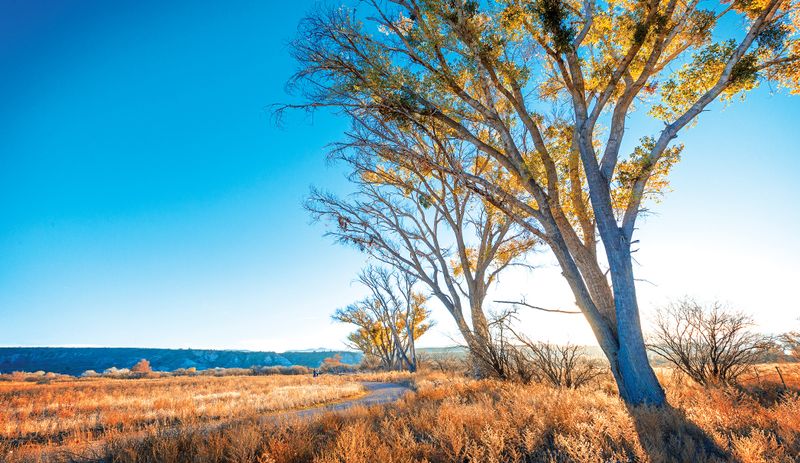
New kid on the block alert. Rockin’ River Ranch State Park in Camp Verde is one of Arizona’s newest state parks, built on former ranch land along the Verde River.
It still feels uncrowded, which makes it a nice surprise for anyone tired of fighting for parking in Sedona.
Cottonwoods and sycamores line the river corridor, and when they turn in fall, the whole valley floor glows. The open pastures make the trees stand out even more.
Wildlife sightings are part of the charm, since the river attracts deer, javelina, beaver signs, and plenty of birds looking for shelter.
The river here shows why trees near water matter so much in a dry state. Shade from a big canopy keeps the ground cooler, and leaf litter feeds insects that birds depend on.
At home, you can borrow that idea on a small scale. Leave a layer of fallen leaves under native shrubs instead of blowing every one away, since it can help hold moisture in the soil.
A shallow bird bath placed in shade can also draw lizards and birds that may help keep insect numbers in check. Small habitat choices tend to add up.
7. Slide Rock State Park
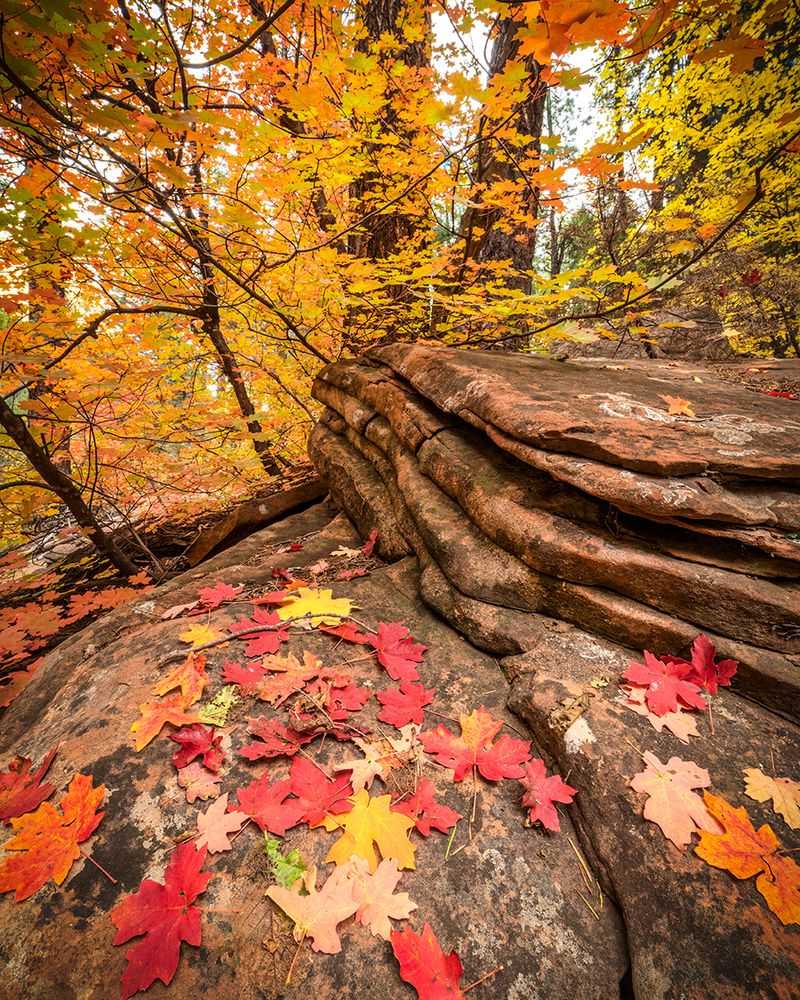
Most people remember Slide Rock as a summer swimming hole, slippery red rock and all. Come back in late October, and the place feels like a different park entirely.
The crowds thin out, the creek runs cold, and Oak Creek Canyon lights up with color.
Bigtooth maples tucked along the canyon walls flash red and orange, while sycamores, cottonwoods, and ash glow yellow. Fun fact: the park was once a homestead, and its historic apple orchard still produces fruit.
You can wander past the old trees and cabins, then walk down to the creek to see leaves drifting through the chutes.
Bigtooth maple will not thrive in Phoenix heat, so admire it here instead of buying one for the backyard. That honesty saves water and money.
If you want orange or red tones at home, try a pomegranate, which handles alkaline soil, turns yellow in fall, and gives you fruit. Native shrubs like skunkbush sumac or desert hackberry deliver color and bird food too.
Choosing plants built for our heat means less babysitting during July and a yard that can support wildlife year after year.
8. Verde River Greenway State Natural Area
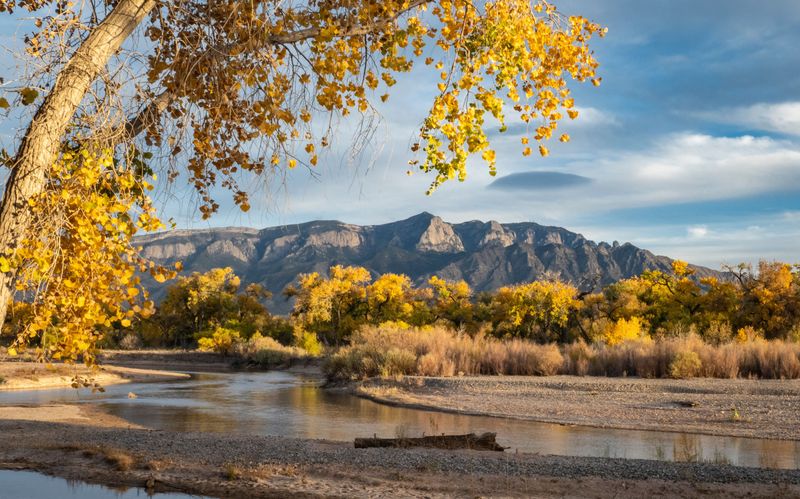
Ever wonder how the town of Cottonwood got its name? Walk the Verde River Greenway in late October and you will have your answer.
Towering Fremont cottonwoods line the riverbanks here, part of one of the rarest forest types in the Southwest, and they turn a rich gold that seems to glow at sunset.
Goodding willows, Arizona ash, and netleaf hackberry fill in the understory with yellows and tans. The greenway protects a long stretch of river, making it a key corridor for wildlife.
Bald eagles, great blue herons, river otters, and countless songbirds rely on these trees for food, shelter, and nesting space.
Fremont cottonwood is thirsty and grows huge, so most suburban lots are not the right spot for one. Still, the greenway teaches a useful lesson about layering.
Tall trees, mid-height shrubs, and ground cover together create shelter for many kinds of creatures. In a desert yard, you can mimic that with a palo verde or mesquite, a desert willow, and native groundcovers like penstemon.
That layered setup may attract insect-eating birds and bats, which can help keep mosquitoes less of a nuisance on warm evenings.