Signs Your Arizona Tree Is Leaning or Loosening After the Storm and When to Call Someone
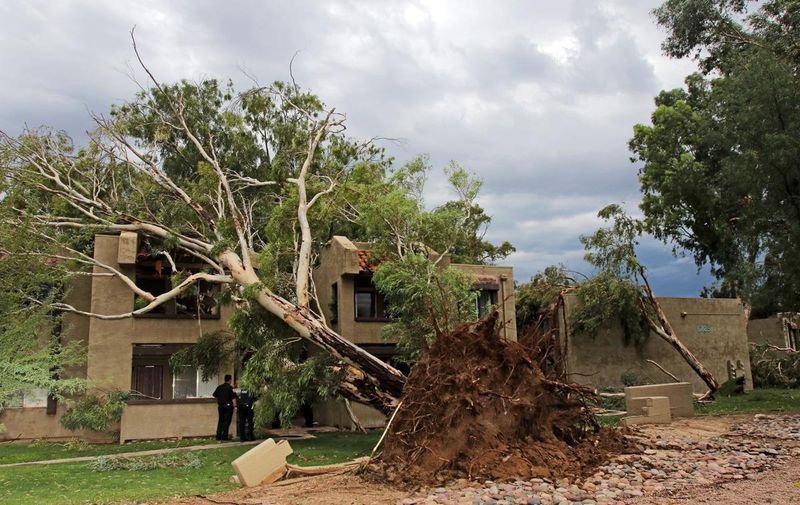
A tree can shift a few degrees in one windy night and look almost normal by morning. That small change may matter more than the angle itself.
Knowing what to look for helps you protect your family and your yard. Here is how to tell a fresh problem from an old lean, and when to pick up the phone.
Did the Lean Change After the Storm?
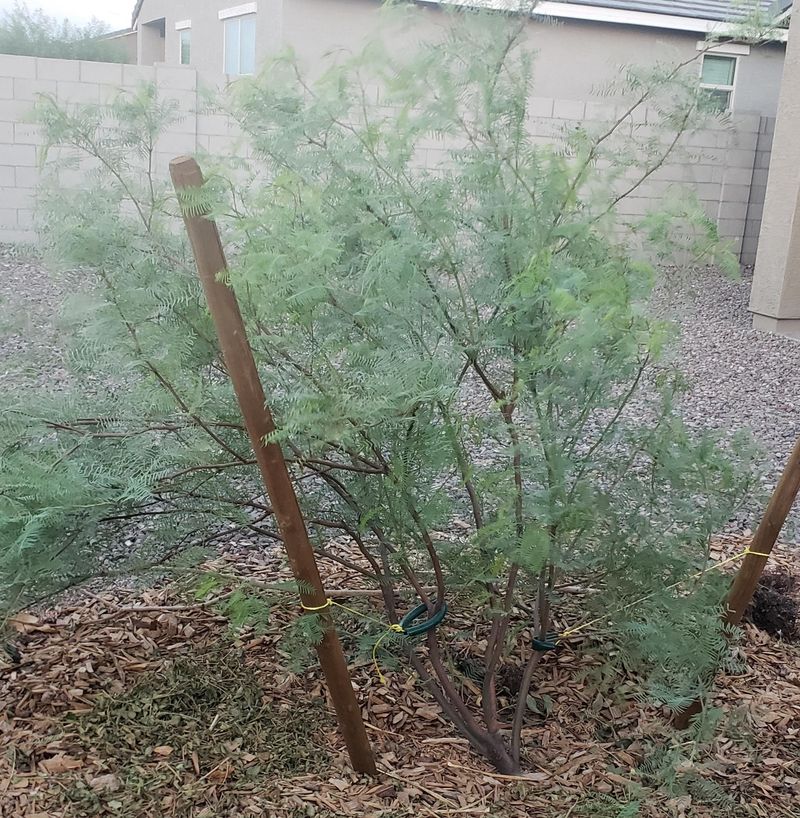
Think back to how the tree looked before the storm. If the lean is new or looks worse, that is your first clue.
A tree that has leaned the same way for years is a different story from one that shifted overnight.
Arizona context matters, but only in a limited way. University of Arizona Cooperative Extension lists high winds as a cause of storm damage.
Chandler’s tree-care guidance adds that wet soil can weaken a tree’s footing during heavy winds. That does not mean every storm or every yard carries the same risk.
Comparing before and after is a starting point, not a diagnosis. Old photos, such as family snapshots or phone pictures taken near the tree, can help you remember its position.
Next, look for signs you can spot from a safe distance, beginning with the ground around the trunk.
Soil Movement Can Point to Root-Plate Trouble
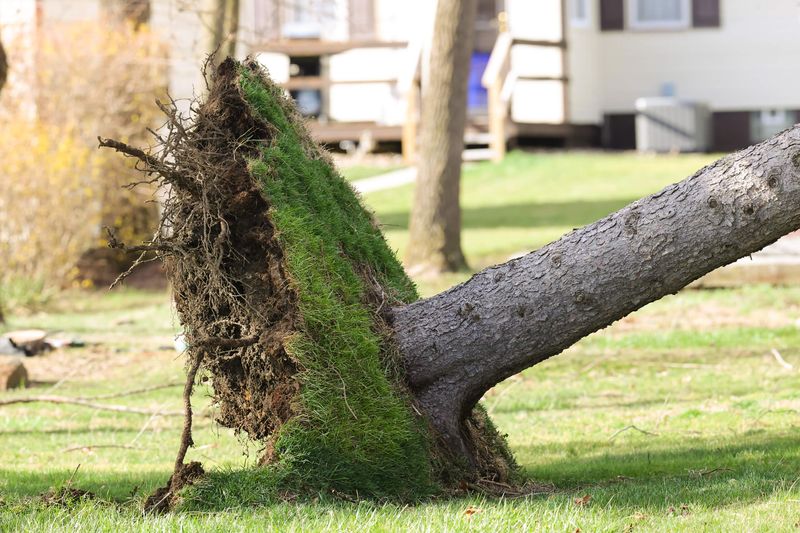
Stand back and study the soil around the base. Mounded or cracked ground, or roots that look lifted, often show up on the side opposite the lean.
A dip in the soil may appear on the side the tree leans toward.
Guidance from the USDA Forest Service treats these changes as signs of possible root movement. They are warnings that call for professional attention.
They do not prove the tree will fall.
Look without stepping close, and keep kids and pets back. If you see no cracks, that does not mean the tree is safe.
Root damage can sit below the surface where you cannot see it.
An Older Lean May Show Compensatory Growth
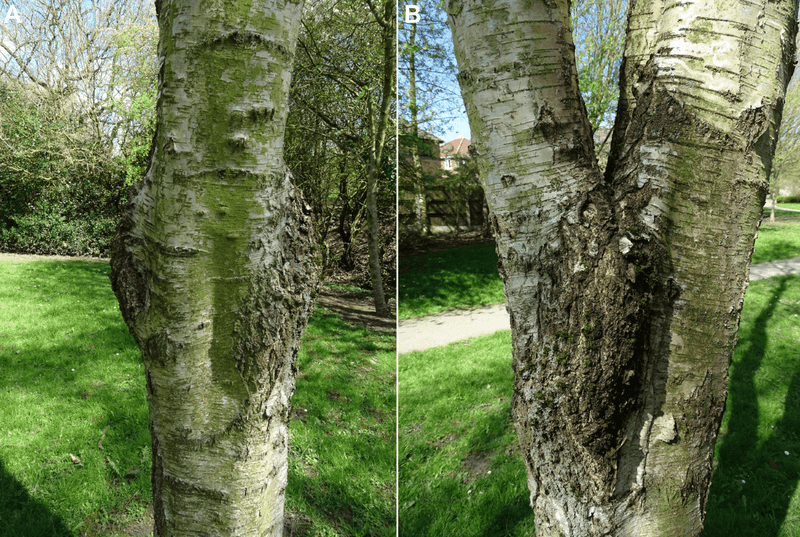
Some trees have leaned for decades and grown around it. The trunk or upper stem may curve back toward vertical, or the crown may have grown to balance the angle.
Those shapes take years to form, which hints that the lean is not new.
The Penn State Extension advice is to watch for change instead of judging by angle alone. A lean that stays the same is not automatically an emergency.
Still, curved growth is not a safety certificate. It tells you about the tree’s history, and you cannot see root health from the outside.
If the lean shifts or the ground starts to change, treat it as new.
The Lean Alone Cannot Measure the Risk

Risk depends on more than how far a tree tilts. It also depends on what the tree could hit and how much root or trunk damage exists.
A tree over a walkway, car, or roof is a bigger concern than one in an open corner of the lot.
The International Society of Arboriculture frames risk around likelihood of failure and the targets nearby. No single angle works as a pass or fail line.
That is why an on-site look matters. A professional weighs the lean along with roots, trunk, other defects, and what sits within reach.
Neither a big tilt nor a small one settles the question alone.
Keep People Clear and Leave Power Lines Alone
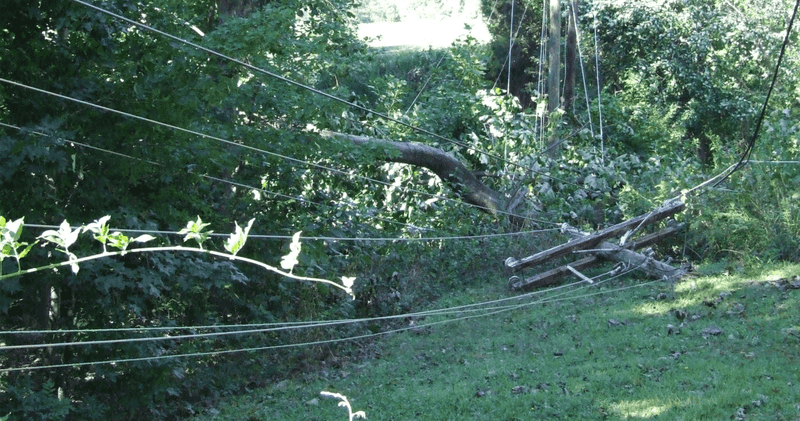
If a tree has newly leaned and the soil looks disturbed, keep people and pets away from it. Block off the area under the crown if you can do so from a distance.
Then arrange a prompt professional assessment.
Power lines change everything. Do not approach a tree or branch that is on or near a line.
Call the utility, as advised by Utah State University Extension, and keep others back too.
This step is about staying safe while help is arranged. Choosing a company can wait until everyone is clear of the tree.
Do Not Try to Straighten or Prune a Shifted Tree
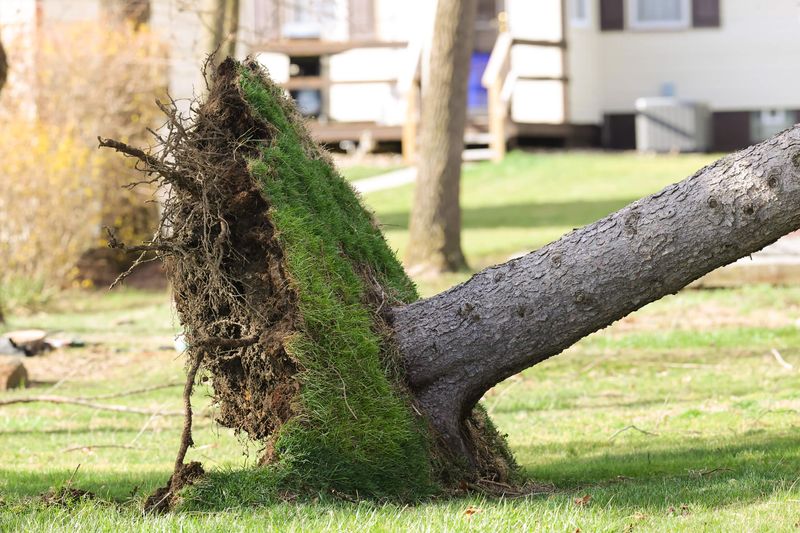
It is tempting to grab a rope and pull. Do not winch, tie, or brace a mature storm-shifted tree, and do not cut hanging limbs yourself.
Storm-damaged trees and branches can move without warning, which is why University of Arizona Cooperative Extension points readers toward trained help for hazardous work.
Young, recently planted trees can be different. Some may be candidates for correction, but roots and trunk need assessment first.
Staking is not a universal fix.
Leave correction and cleanup to professionals who have the equipment and training for it.
An Arborist Can Recommend the Right Mitigation
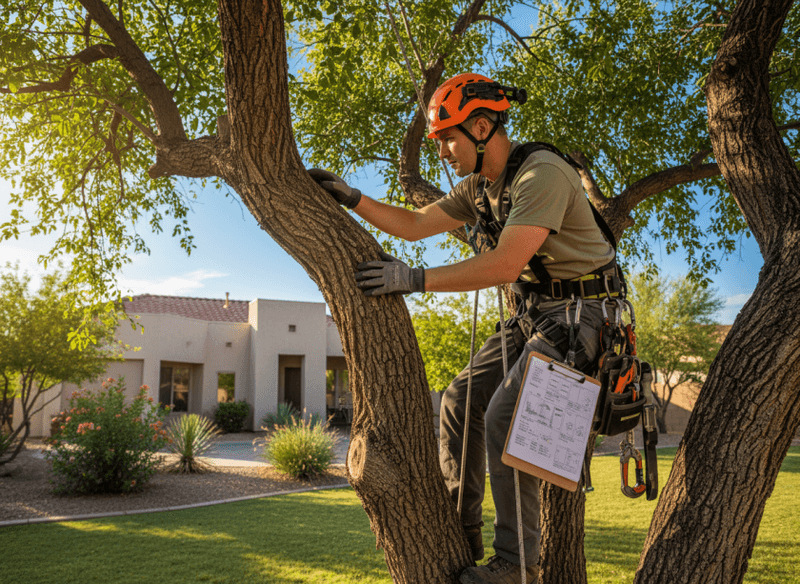
For a non-emergency evaluation, look for an ISA Certified Arborist. A formal risk assessment may call for an ISA Tree Risk Assessment Qualified professional.
The International Society of Arboriculture offers guidance on both.
What the arborist finds on site should guide the plan. A new lean does not predetermine removal, and the right step depends on roots, trunk, and nearby targets.
Before hiring, check credentials, insurance, references, and written estimates, as University of Arizona Cooperative Extension advises. Certification is helpful but does not guarantee quality work, so those other checks still count.
Treat a New Lean as a Reason to Assess
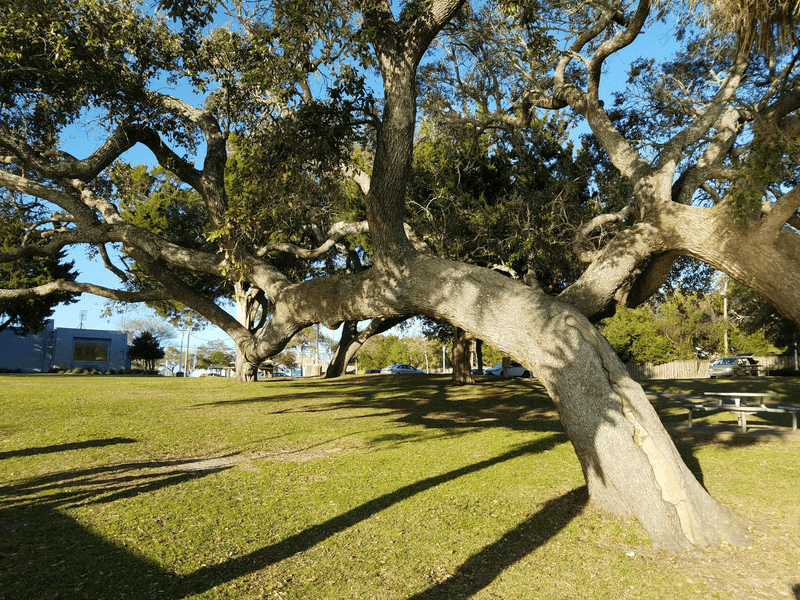
A fresh or worsening lean, especially with possible root movement, deserves prompt attention. An unchanged lean is not automatically an emergency.
When in doubt, keep clear and let a qualified professional decide what suits your tree.
A lean tells you where to start looking, not where the story ends.