Banana Spiders Are Building Massive Webs Across Georgia Yards This September
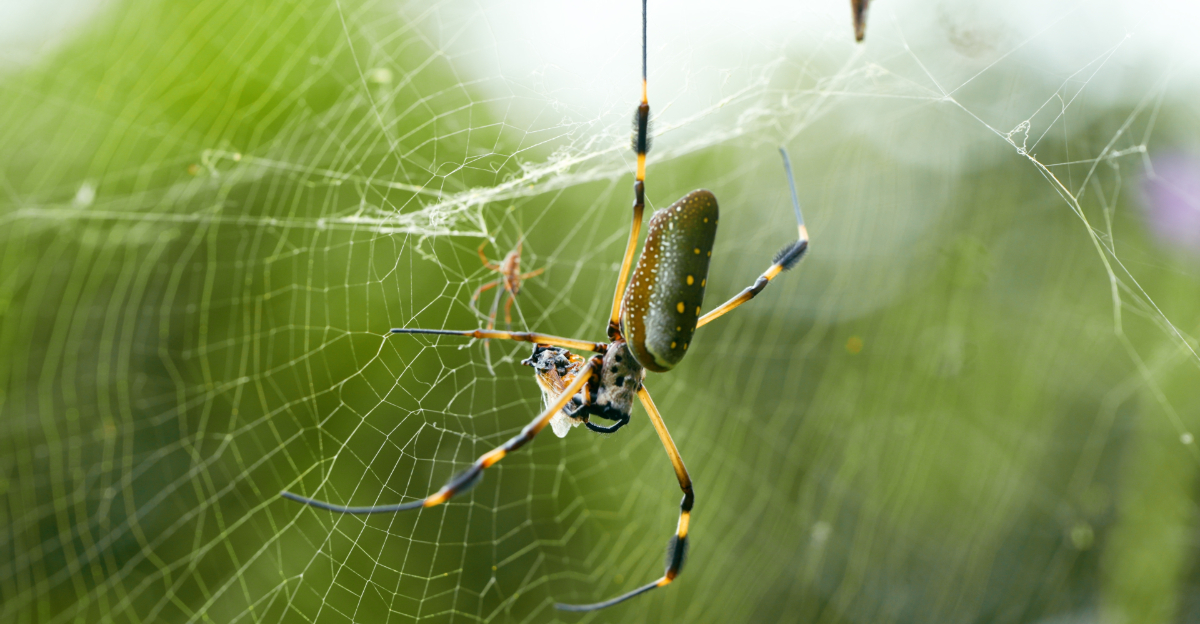
September can bring an impressive sight across Georgia yards as enormous golden webs begin stretching between trees, shrubs, and porch corners. The spider sitting in the center can look intimidating, especially when you nearly walk into its web.
That size often makes the encounter seem more alarming than it needs to be. These large orb weavers are busy taking advantage of abundant insects while conditions remain warm.
Their webs may appear in places you use every day, which makes knowing what you are seeing especially helpful. Before reaching for a broom, take a closer look.
These spiders generally prefer staying with their webs rather than bothering you.
Give an out-of-the-way web some space, and it can remain an interesting part of the landscape.
That massive September web may be far less concerning than it looks.
1. Meet the Golden Silk Orbweaver Behind the Yellow Threads
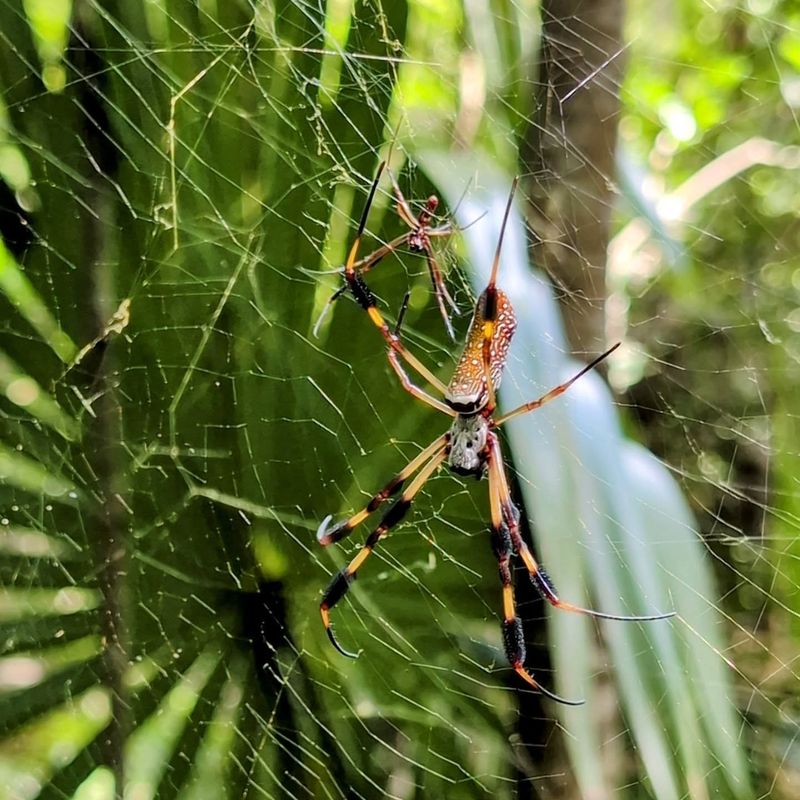
The spider Georgians call a banana spider has an official name, Trichonephila clavipes, better known as the golden silk orbweaver.
Females stretch impressively long when you count their legs, with a slender yellow-spotted body and dark legs wearing fuzzy tufts like tiny leg warmers. Males are dramatically smaller and often go unnoticed sitting at the edge of her web.
The nickname comes from the elongated, banana-shaped abdomen and the yellowish tint of the silk itself.
Hold a strand up against a shaded background and you can see a faint golden shimmer, which is where the golden silk part of the name comes from.
Worth knowing, the same nickname gets used for a very different spider in Central and South America, which is why some people panic when they hear it.
The one hanging over your Georgia driveway is a mild-mannered orbweaver, not the aggressive wanderer from tropical shipping stories. Confusing the two has caused a lot of unnecessary yard evacuations.
Once you learn the look, you start spotting them everywhere from Savannah to the north Georgia foothills.
They favor humid, wooded, or shrubby spots, which describes roughly every Georgia yard in September. Give one a long look and it is hard not to be a little impressed.
2. Why Their Webs Look Enormous Right Now
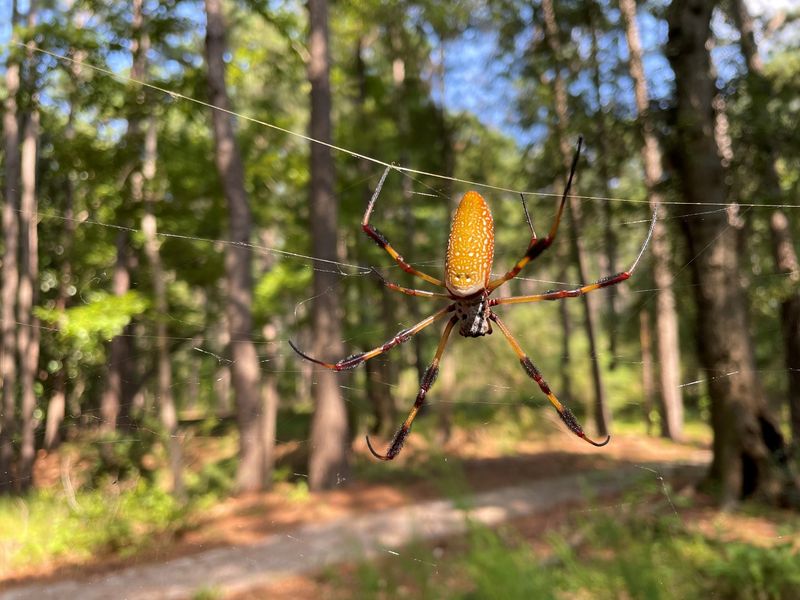
Nothing appears overnight, even if it feels that way.
These spiders hatched back in spring as specks barely worth noticing, and they have spent the whole warm season eating and growing. By late summer they have molted many times, and each molt means a bigger body and a bigger web.
Georgia’s long, humid summer feeds an enormous supply of flying insects, and that buffet fuels the growth spurt.
Adult females build orb webs that can span several feet across, often anchored with support lines running much farther to nearby trees, gutters, or fence posts. Those long anchor lines are usually what you walk into first.
September also happens to be when females reach full size just before egg-laying season.
A larger spider needs a larger snare, so the webs peak in size right when people are outside enjoying cooler mornings. The timing feels personal, but it is just biology lining up with your schedule.
Your Georgia Garden Changes Every Week. Your Plan Should Too.
Gardening in Georgia changes quickly throughout the season. Every Friday you’ll receive a simple weekly plan showing exactly what to plant, prune, fertilize, harvest, and protect so you never miss the right timing.
Sunlight angles help too, since lower autumn sun catches the silk and makes webs visible that were there all along.
You may have walked past the same web for weeks without seeing it. One dewy morning, suddenly it looks like something out of a nature documentary hanging between your azaleas.
That combination of peak growth and better lighting is why September feels like banana spider season.
3. Are They Dangerous? The Honest Answer
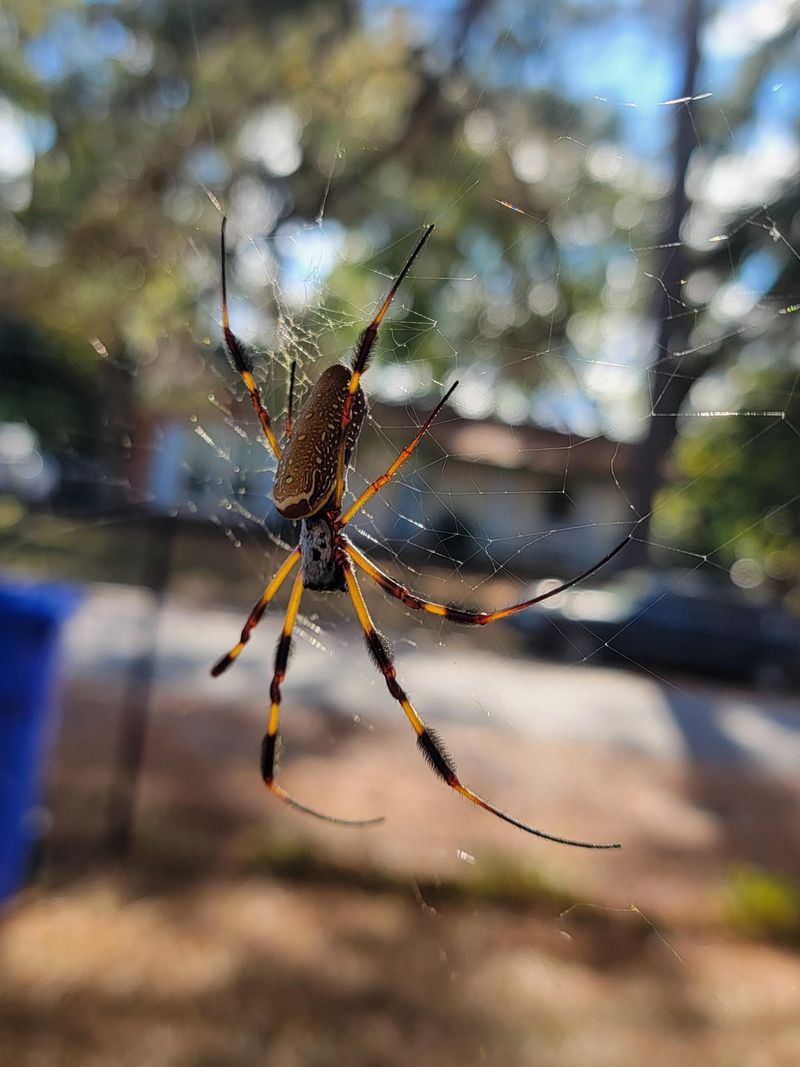
Short version, they are venomous like nearly all spiders, but they are not considered medically significant to people.
Golden silk orbweavers are shy by nature and would rather drop to the ground or shake their web than confront something the size of a human. Bites are uncommon and usually happen when a spider gets pressed against skin.
When a bite does occur, reports generally describe brief localized pain, redness, and mild swelling that fades on its own.
Some people compare it to a bee sting that settles quickly. Anyone with unusual symptoms or a known sensitivity should contact a doctor or poison control, which is sound advice for any bite.
They also lack the aggression people imagine.
Stand near a web and the spider usually holds still or scoots toward an anchor line. Vibrate the silk and it may bounce the whole web, a defensive move meant to blur its outline against predators.
Georgia’s genuinely concerning spiders are different animals entirely.
Black widows and brown recluses hide in dark, undisturbed spots like woodpiles, sheds, and cluttered garages, not in showy webs strung across open air.
A spider sitting boldly in the middle of a big web is broadcasting that it relies on hiding less than you think.
Learning that difference saves a lot of unnecessary worry each fall.
4. Free Pest Patrol Working Your Backyard
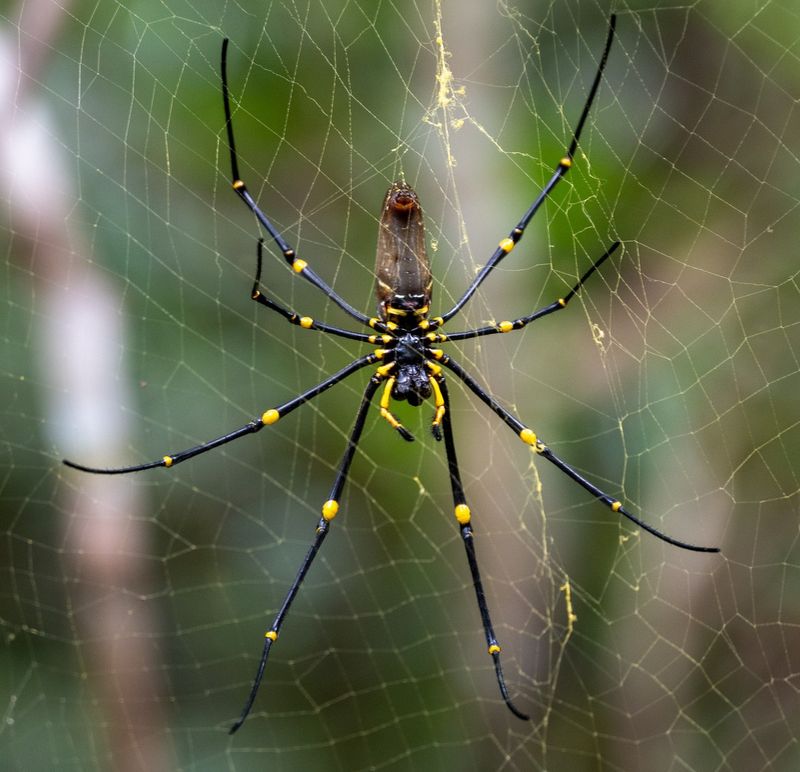
Think of each web as a tiny, self-installed insect trap that costs you nothing.
Golden silk orbweavers catch flies, mosquitoes, gnats, wasps, moths, beetles, and whatever else blunders through the air at chest height. In a Georgia yard during September, that adds up to a steady stream of captures.
They are generalists, meaning they eat what the web catches rather than hunting specific prey.
A single well-placed web near a damp corner or a porch light can intercept a surprising amount of nighttime insect traffic. Porch lights draw bugs, and spiders figure that out fast.
Gardeners often notice them near vegetable beds and flowering shrubs.
They are not picky enough to spare every helpful insect, so pollinators occasionally get caught too. Overall though, most homeowners come out ahead having a few around.
There is a bonus nobody talks about, which is how little maintenance they require.
No feeding, no spraying, no equipment. The spider builds, repairs, hunts, and eventually leaves when the weather turns.
If you have been fighting mosquitoes all summer, the orbweaver hanging by your downspout is quietly on your side.
Leaving one undisturbed in a low-traffic corner costs you nothing and may cut down on the bugs circling your patio table. That is a decent trade for a little shared space.
5. Moving a Web Without Harming the Spider
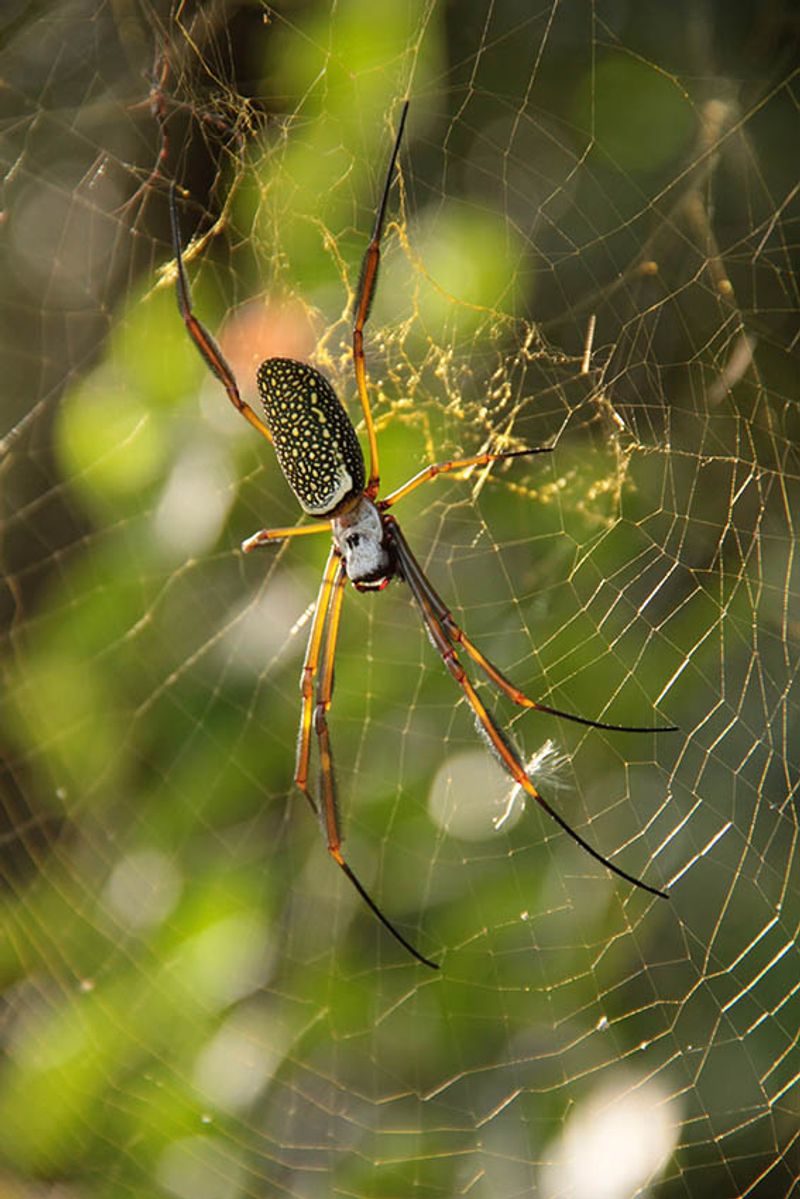
Sometimes a web ends up right where you walk, and that is a fair reason to make a change.
The gentlest approach is to relocate rather than destroy. Wait until the spider is calm, then use a long stick or broom handle held near an anchor point.
Coax the spider onto the stick or let it walk on by itself, then carry it to a shrub or tree line several yards away.
Set the stick against branches and give it time to step off. Most will move on their own within a minute or two.
Breaking the anchor lines without the spider attached also works if you would rather keep your distance.
Orbweavers rebuild readily, and a spider that loses its spot usually relocates rather than rebuilding in the exact same gap. Doing this in the evening gives it time to spin a fresh web overnight.
Skip the pressure washer and the spray bottle for something this harmless.
Chemical products aimed at outdoor webs tend to affect other insects you would rather keep around. A stick and thirty seconds handles the job.
For repeat offenders near doorways, look at what is attracting them.
Swapping a bright porch bulb for a warm-toned or yellow one draws fewer insects, which makes that spot less appealing for web building in the first place.
6. Where They Love to Hang Out in Georgia Yards
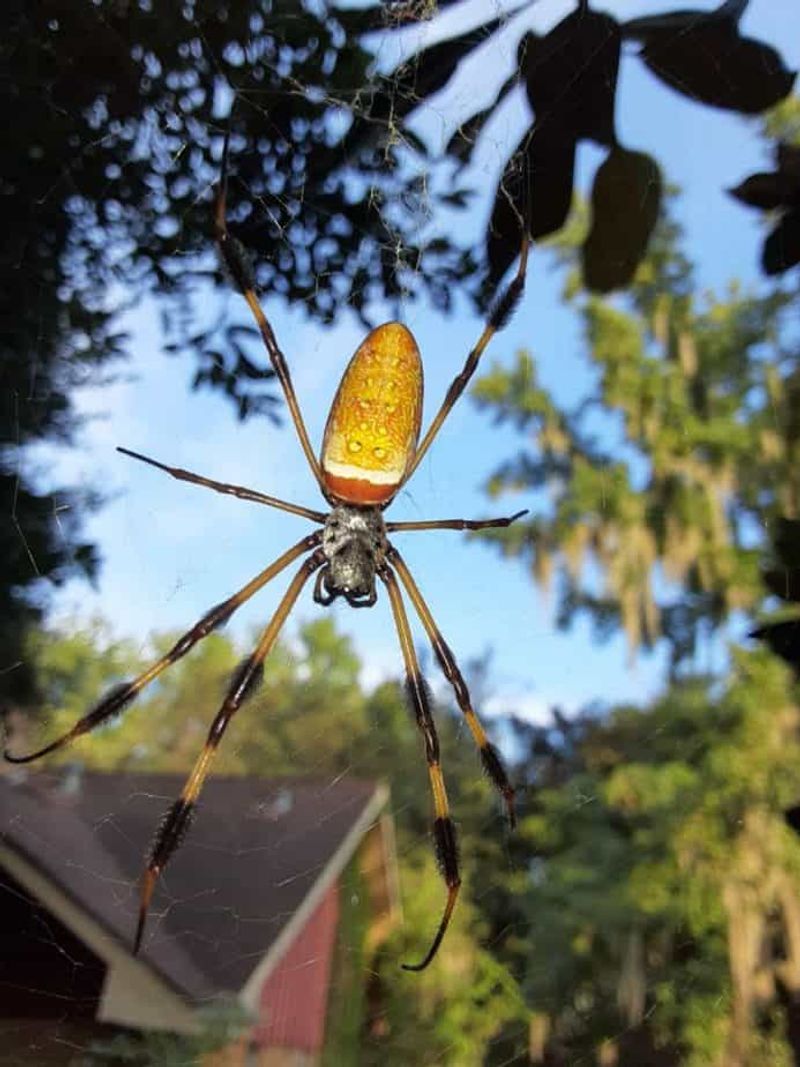
Certain spots practically advertise themselves to a spider looking for real estate.
Gaps between shrubs and fences, the space under eaves, corners of carports, and open lanes between trees all offer what an orbweaver wants. Clear flight paths for insects and sturdy anchor points on both sides.
Wooded edges are prime territory.
Where a lawn meets pines or hardwoods, humidity stays higher and insects funnel along the boundary. That transition zone in Georgia yards tends to hold the biggest webs of the season.
Water features and damp low spots attract them too.
Rain barrels, birdbaths, drainage ditches, and shaded creek banks all support mosquito and midge populations, and the spiders follow the food. A yard backing up to a stream often has several webs within a short walk.
Doorways and garage entrances get chosen for the same reason.
Lights pull in moths and beetles all night, creating a reliable delivery service. Any spider that sets up nearby gets fed without much effort.
Knowing the favorite spots helps you plan.
Walk your usual paths in the morning with a stick held out in front, and check the same three or four locations each week. Once you learn where they gather, you stop getting surprised, and the whole thing becomes a lot less startling.
7. What Happens When Georgia Cools Down
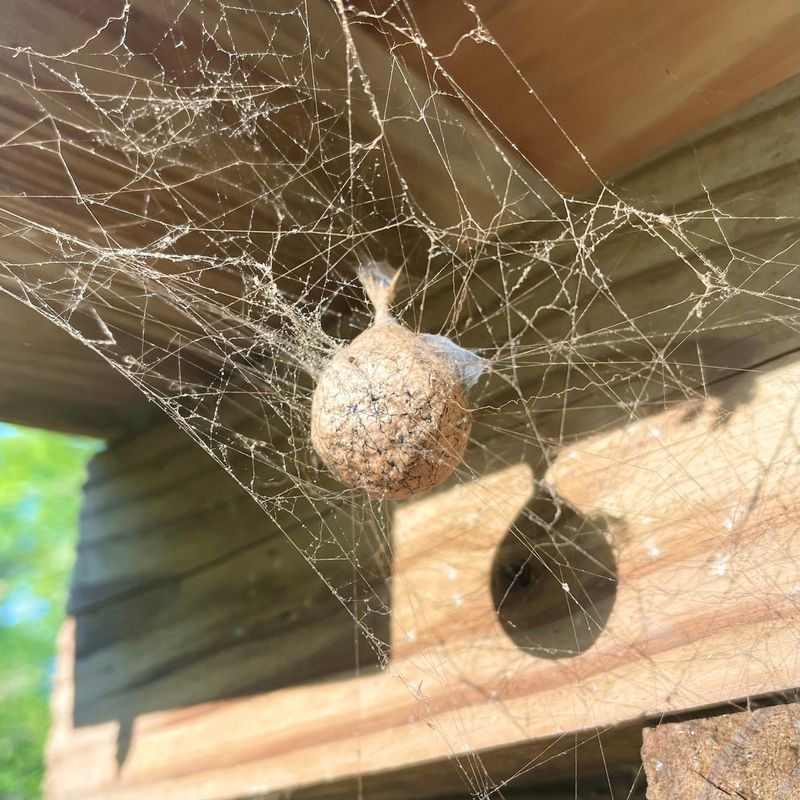
Every big web in your yard has an expiration date, and it is closer than you think.
Golden silk orbweavers live about one year, growing all summer and reaching full size in late season. Once autumn settles in across Georgia, the adults finish their cycle.
Before that, females produce egg sacs.
She wraps hundreds of eggs in a fluffy mass of silk and tucks it onto bark, a fence rail, or nearby vegetation, often somewhat away from the main web. Those sacs overwinter quietly through the cold months.
Spiderlings emerge in spring, tiny and easy to overlook.
Many disperse by releasing a strand of silk and catching a breeze, a travel method called ballooning. It is how next year’s yard residents spread out across neighborhoods.
The webs themselves break down on their own.
Wind, rain, and falling leaves tear apart the abandoned silk within weeks, and by mid-autumn most yards look clear again. No cleanup crew required.
Understanding the cycle takes the edge off the September surge.
The spiders are not moving in permanently or multiplying out of control, they are just finishing a season that started back in spring.
Come next summer, a new generation grows up in the background, unnoticed until the webs get big enough to catch the morning light again.