Why You May Notice More American Robins In Your Georgia Yard This Fall
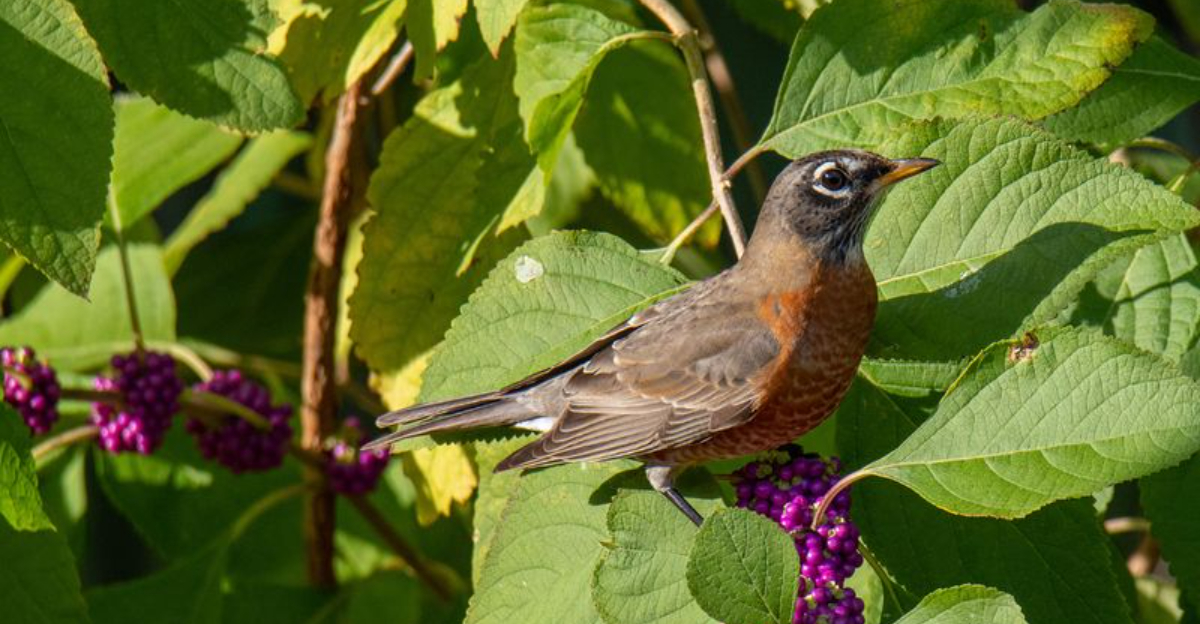
That familiar orange breast may suddenly seem much easier to spot once fall settles over the yard. Robins can become more noticeable as their seasonal habits begin to change.
Instead of staying spread out in smaller summer groups, many start gathering and moving around together.
That shift can bring larger numbers into places offering useful food and shelter. In Georgia, yards with the right natural features may become temporary stops as these birds move through the season.
Their fall behavior can look quite different from what you watched during spring and summer.
Pay attention to open ground, berry-producing plants, and nearby trees when activity picks up. Understanding what draws robins closer makes those sudden gatherings much less mysterious.
Your yard may simply be fitting into a much larger seasonal routine happening all around you.
1. Those Extra Robins In Your Yard May Be Seasonal Visitors
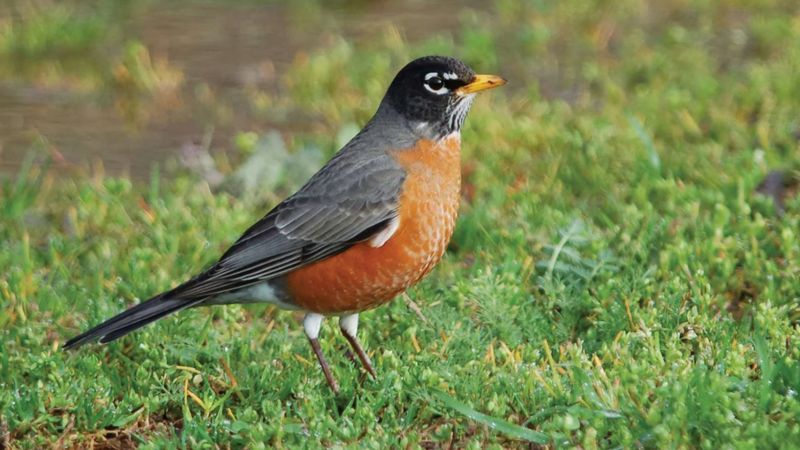
Not every robin in your yard grew up there.
Robins nesting in the northern states and parts of Canada move south as cold weather settles in. Some of them spend the colder months in Georgia.
That means the birds hopping around your lawn in November may be strangers passing through or settling in.
Numbers can jump quickly. One week the yard looks normal, and the next there are two dozen birds working the grass.
Local robins are still around too, so the groups you see are often a mix of residents and newcomers.
Telling them apart by sight is tough. Plumage varies a little between individuals, but there is no reliable backyard way to know which bird came from where.
What you can notice is behavior. Visiting flocks tend to move as a unit, feed hard, then leave together.
Weather up north pushes birds along, so a cold snap in the Midwest can show up in your yard days later.
Timing shifts from year to year, which is why some falls feel loaded with robins and others feel quiet.
Keep a simple note on your phone with dates and rough counts. After two or three seasons, patterns start showing up.
It turns a random sighting into something you can actually track.
2. Fall Brings Changes In Where American Robins Spend Their Time
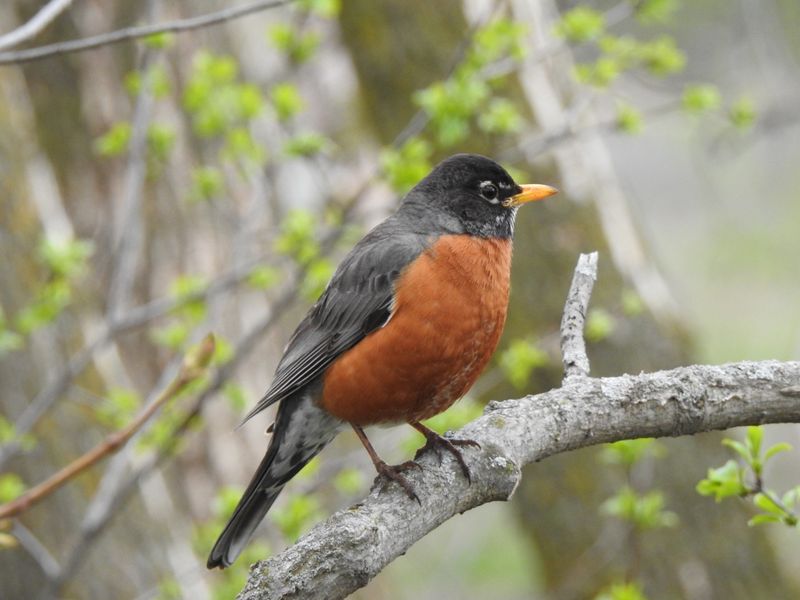
Robins trade territories for roaming once nesting ends.
During spring and summer, pairs stick to a defended patch. They guard it, sing from it, and raise young there.
All of that structure loosens in fall.
Birds start following food instead of defending turf, which sends them into woods, orchards, pastures, and neighborhoods.
Your yard might sit empty for a week, then fill up because a nearby holly finally ripened.
Movement can be local rather than long distance. A flock may circle the same few blocks for days before drifting elsewhere.
Wooded edges matter a lot here. Robins like the mix of open ground for feeding and cover for resting.
Yards backing up to a creek, treeline, or greenbelt often see more traffic than yards in the middle of open subdivisions.
Roosting habits change too, with birds gathering in thick trees at night instead of scattering to separate nests.
Your Georgia Garden Changes Every Week. Your Plan Should Too.
Gardening in Georgia changes quickly throughout the season. Every Friday you’ll receive a simple weekly plan showing exactly what to plant, prune, fertilize, harvest, and protect so you never miss the right timing.
None of this follows a strict schedule. Warm autumns in north Georgia can delay the shift, while early cold speeds it up.
If you want more sightings, leave some leaf litter under shrubs rather than raking every inch clean.
Robins flip leaves looking for insects and spiders, and bare ground gives them nothing to work with.
3. Robins Often Gather In Larger Flocks Outside The Breeding Season
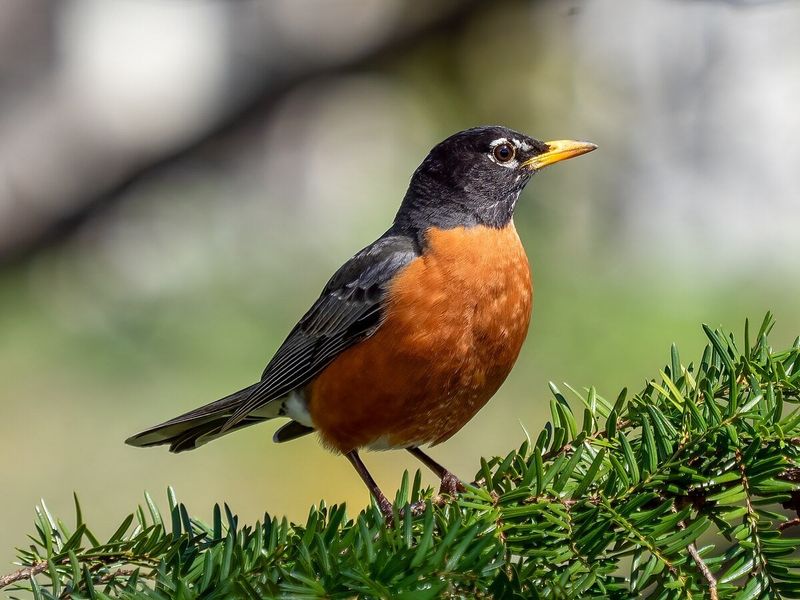
A dozen robins in one tree looks odd until you know why.
Territorial behavior fades after nesting, and birds that once chased each other now feed side by side.
Flocking pays off in cold months.
More eyes mean quicker warning when a hawk cruises through, and it also means faster discovery of food.
One bird finds a loaded berry bush, and the rest follow within minutes.
Group size swings wildly. Some flocks hold ten or fifteen birds, while others in the Southeast can number in the hundreds or more.
Big flocks tend to show up where fruit is heavy. Old farm hedgerows and unmanaged fencelines around Georgia often pull crowds.
Noise is part of the package. A flock chattering in a water oak at dawn can wake the whole street.
Feeding on the ground looks chaotic but has a rhythm. Birds spread out, run a few steps, pause, then repeat.
Do not expect flocks to stay put. They move on once the local food thins out, sometimes overnight.
If a group parks in your yard, resist the urge to shoo them. They rarely damage lawns and often eat pest insects.
Watching one flock closely for a week teaches more than a dozen quick glances.
4. Fruit Becomes An Important Food Source As The Season Changes
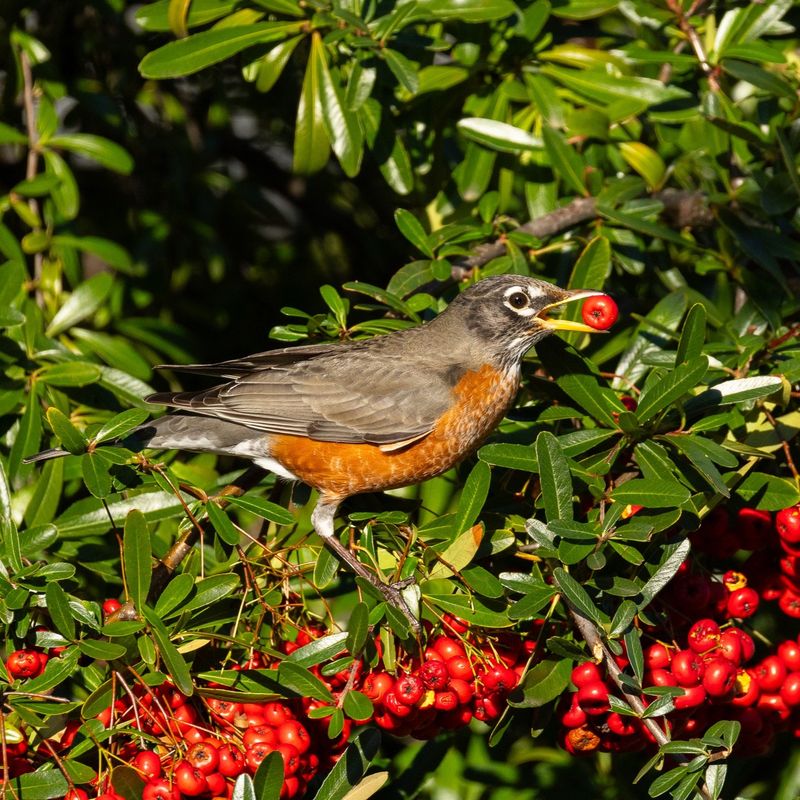
Worms get scarce when the ground cools.
Earthworms move deeper and insect activity drops, so the classic image of a robin tugging a worm fits spring far better than late fall.
Fruit fills the gap.
Robins switch heavily to berries and soft fruit through the colder months, which changes where they feed and how they move.
Instead of pacing a lawn, they work through branches and hover awkwardly to reach hanging clusters.
Native fruit sources carry a lot of the load. Dogwood, black gum, wax myrtle, sumac, and eastern red cedar all get visited.
Ornamental plants count too. Hollies and crabapples in Georgia yards can hold fruit well into January.
Fruit availability shifts by year. Drought, late frost, or a heavy crop the season before can all change how much is out there.
You may notice birds ignoring a bush for weeks, then stripping it in two days. Some fruit softens with cold and becomes easier to eat.
Seed feeders rarely interest them, since robins are not built for cracking shells.
Chopped apple, raisins soaked in water, or mealworms on a platform feeder sometimes work.
Results vary a lot, so treat it as an experiment rather than a sure thing.
5. Open Lawns Still Give Robins Places To Search For Food
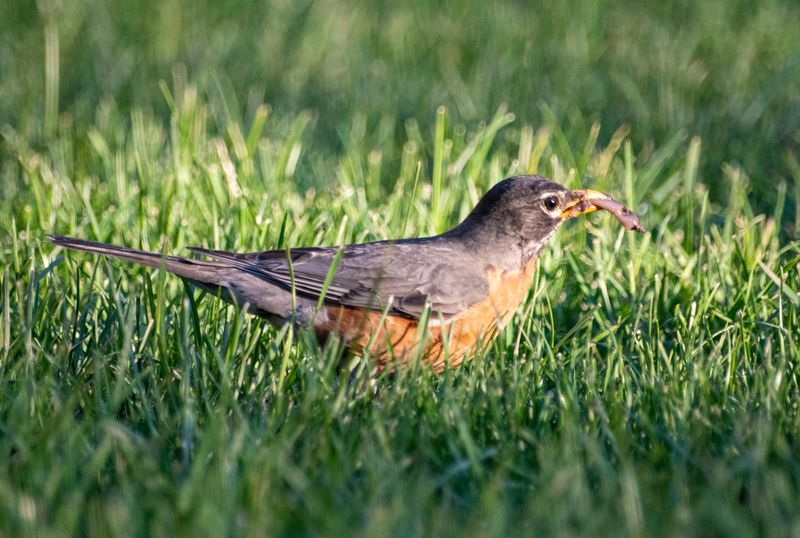
Grass is not just decoration to a robin.
Short, open turf lets them spot movement in the soil surface, and they hunt by sight far more than most people realize.
Head tilting is part of that.
A robin cocks its head to line up one eye with the ground, then strikes when something shifts.
Damp lawns after rain usually produce the best action, since soil creatures come closer to the surface.
Warm spells in a Georgia winter can bring worms back within reach, which explains sudden bursts of lawn feeding in January.
Chemical use is worth thinking about. Broad insecticide treatments reduce the small creatures robins hunt.
Cutting back on blanket applications helps, and spot treating problem areas is usually enough for most home lawns.
Mowing height plays a role too. Grass left extremely tall makes hunting harder, while a moderate cut keeps the surface visible.
Bare dirt patches under trees are fine to leave alone.
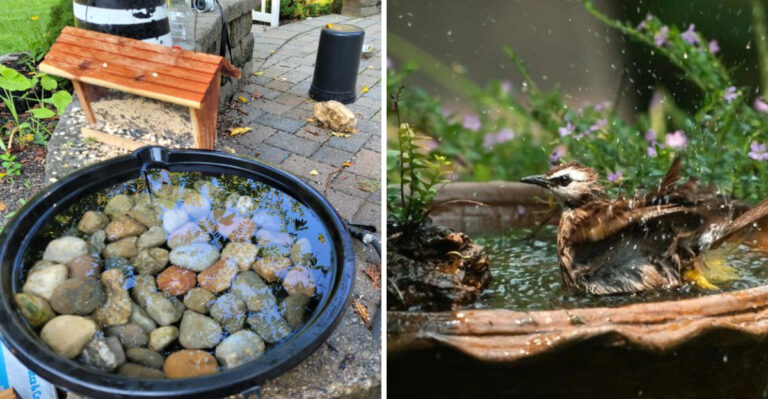
Water helps as much as food. A shallow birdbath kept clean gives robins a place to drink and bathe when natural sources run low.
Rinse it every few days and refill with fresh water, especially during dry stretches.
Small habits like that keep birds returning all season.
6. Berry Producing Shrubs Can Bring Flocks Closer To Your Yard
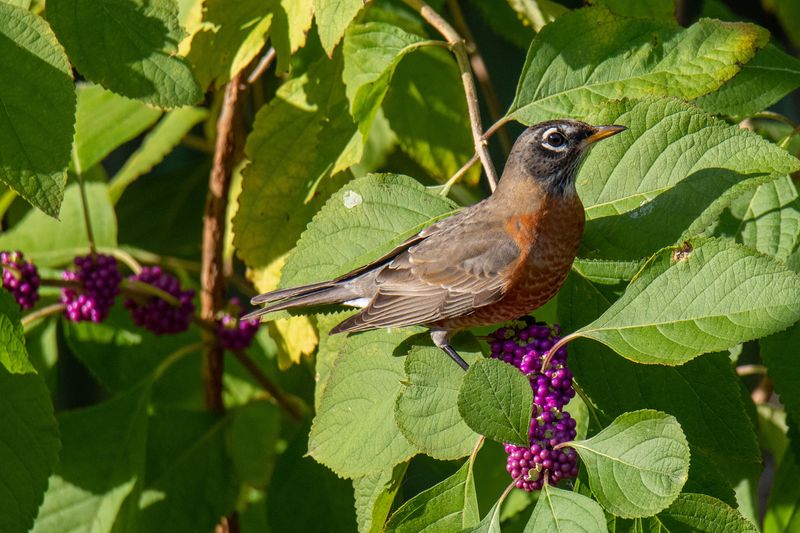
Plant the food and the birds handle the rest.
Shrubs that hold fruit into late fall and winter are the single biggest draw for robins in a home landscape.
American holly ranks near the top.
Female hollies produce the red fruit, so you need a male plant nearby for pollination if you want a good crop.
Yaupon holly and possumhaw work well in the Southeast too, and both handle heat without much fuss.
Beautyberry is another solid pick. The purple clusters get eaten by several species, though timing depends on what else is available.
Eastern red cedar deserves a spot if you have room. Its blue cones feed robins and cedar waxwings alike.
Wax myrtle handles poor soil across much of Georgia and gives cover along with fruit.
Placement matters more than people expect. Shrubs near a fence or treeline give birds an escape route, which makes them feel safer feeding.
Skip the heavy pruning in late summer. Cutting then can remove the buds or developing fruit you were hoping for.
Growth speed varies with soil, drainage, and rainfall, so a new holly may take several years to fruit well.
Water new plantings through the first couple of dry summers and be patient.
7. Some Robins May Remain In The Area Through Winter
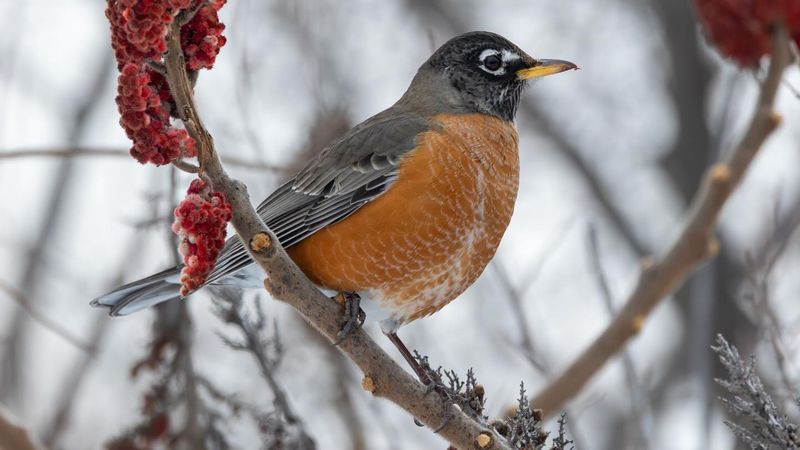
Robins are not strictly migratory, and that surprises people.
Plenty stay south through the cold months, and mild winters across much of Georgia keep food available longer than in northern states.
Presence does not equal permanence.
The robins in your yard in December may not be the same individuals you see in February, since flocks rotate through.
Fruit supply drives most of it. When berries run out in one area, birds shift to another.
Cold snaps change behavior fast. Birds cluster tighter, feed longer, and roost in dense evergreens for warmth.
Roosts can be surprisingly large. Hundreds of birds sometimes pack into a stand of cedars or pines at night.
By late winter, singing picks up again as breeding season approaches.
That dawn song returning in February is a decent sign the seasonal shuffle is winding down.
Helping them through is mostly about leaving things alone. Keep some fruiting shrubs unpruned, skip the perfectly manicured beds, and let leaf litter stay in a corner.
Open water matters during freezes, since ice cuts off drinking spots.
A heated birdbath works, though a simple daily refill with lukewarm water does the job in most Georgia winters.
Conditions vary year to year, so results will differ.