7 Best Low-Fuss Florida Shrubs For Homeowners Who Are Always Away
You leave for two weeks. You come back to what appears to be a jungle. This is Florida gardening for anyone who travels with any regularity, and it is a very specific kind of frustration.
The heat, the rain, the growing season that never actually ends: Florida is genuinely generous to plants, which is wonderful until your yard gets ahead of you while you are in another time zone.
There is a better way to landscape for this reality. Florida has native and Florida-friendly shrubs that were built for benign neglect.
They establish, handle drought without drama, hold their shape without constant trimming, and actually improve while you are gone, attracting birds and pollinators and doing all the things a well-planted yard should do.
None of them need babysitting. All of them reward a good first-season start with years of low-effort performance. The right shrub in the right spot is essentially a yard that takes care of itself.
Want to see which ones made the list?
1. Simpson’s Stopper Stays Polished With Little Help
Coming home after three weeks away to find the yard looking exactly as tidy as when you left: that is what Simpson’s Stopper delivers with consistency.
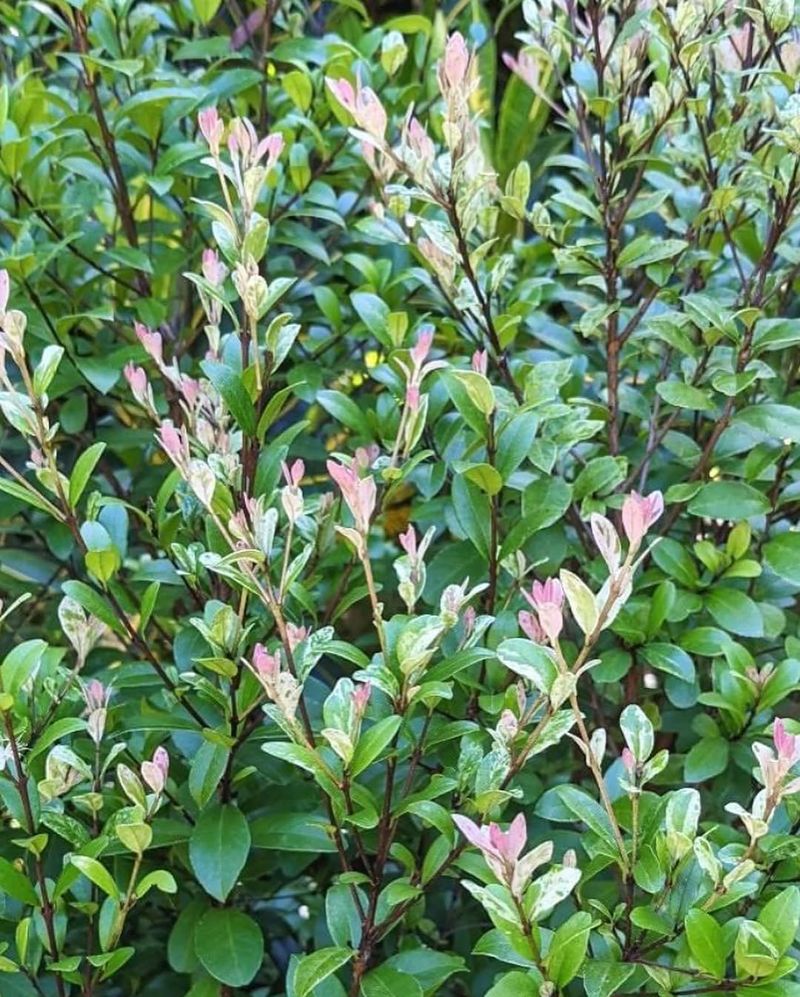
This native evergreen shrub is naturally compact and well-behaved, holding its shape season after season without regular trimming.
In a state where most plants interpret “full sun and regular rain” as an invitation to grow as large as possible, that kind of self-restraint is a genuine asset.
Native to South and Central Florida, Simpson’s Stopper thrives in full sun and partial shade, which gives it more placement flexibility than strictly sun-dependent shrubs.
It handles drought well once established, meaning a missed watering cycle or two while you are traveling is not a crisis.
The dense, glossy foliage maintains its structure without inputs, and it does not drop leaves dramatically or look stressed between waterings the way less-adapted plants do.
Tiny white flowers bloom in clusters and release a sweet fragrance that pollinators find irresistible. After the flowers fade, small red and orange berries appear and draw mockingbirds, robins, and other native birds to the yard.
Wildlife activity without any extra effort from you is one of the more satisfying outcomes of planting natives.
Simpson’s Stopper grows slowly and steadily, reaching six to fifteen feet tall depending on conditions.
Plant it in well-drained soil, give it consistent water through the first season to establish a strong root system, and then step back.
The investment in year one pays for itself many times over in years two through twenty.
Few shrubs deliver this much polish for this little ongoing effort. Simpson’s Stopper looks cared for even when it is not, which is essentially the highest compliment a traveling homeowner can give a plant.
2. Coontie Adds Structure Without Constant Care
Coontie has been growing in Florida for thousands of years, long before anyone thought about irrigation systems or landscaping schedules.
It handled Florida’s conditions throughout all of that time without any help from a homeowner, which is perhaps the most reassuring thing you can know about a plant before putting it in your yard and flying somewhere for two weeks.
Your Florida Garden Changes Every Week. Your Plan Should Too.
Gardening in Florida changes quickly throughout the season. Every Friday you’ll receive a simple weekly plan showing exactly what to plant, prune, fertilize, harvest, and protect so you never miss the right timing.
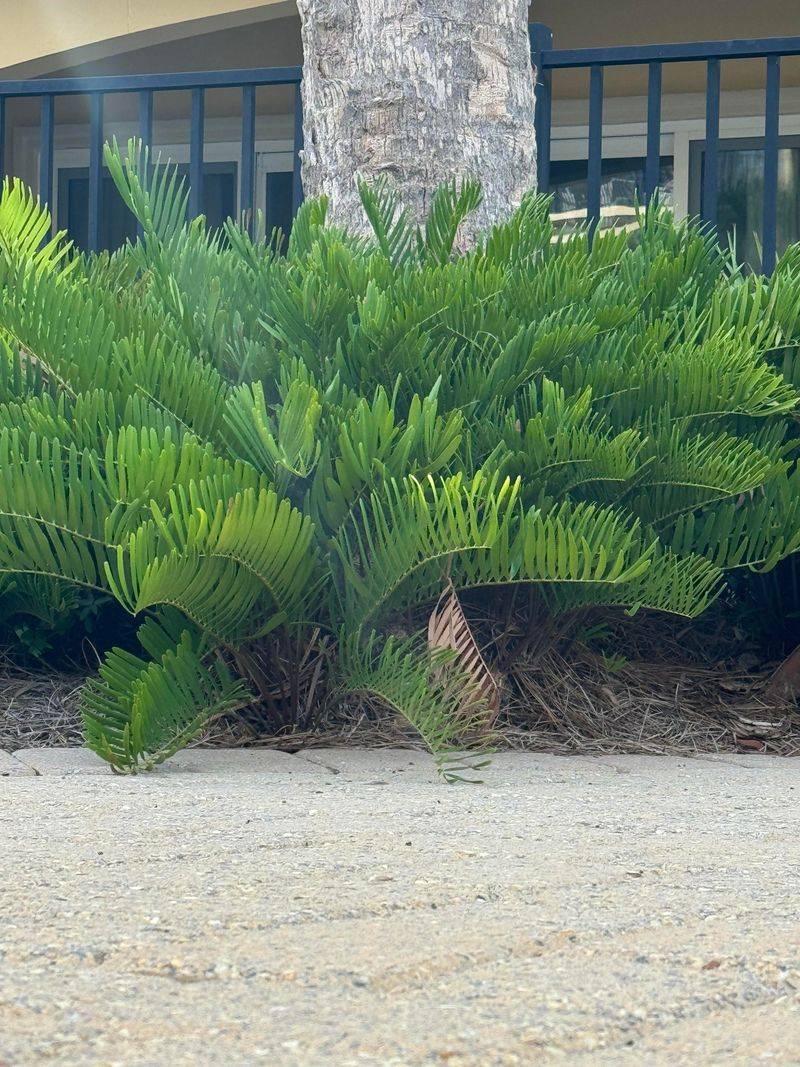
It looks like a small palm with dark, glossy, feathery fronds arching gracefully from a central base. It stays low, typically reaching two to three feet tall, which means no runaway growth while you are away.
The structure is clean and architectural without any pruning required, giving the yard a polished look that holds through heat waves, dry spells, and the general chaos of a Florida summer.
Once established, Coontie is among the most drought-tolerant plants available for Florida yards.
Sandy soil, clay soil, partial shade, full sun: it adjusts without complaint across a wide range of conditions that would stress most ornamental shrubs. After the first growing season, supplemental watering becomes largely optional.
Coontie is the only larval host plant for the Atala butterfly, a striking native species that was once considered largely absent from Florida.
Plantings of Coontie have contributed directly to the recovery of Atala populations across the state. You get a low-maintenance architectural shrub that is also quietly participating in a conservation success story.
That is an unusual combination for something that costs under twenty dollars at a native plant nursery.
Thousands of years of Florida track record. No irrigation required. An Atala butterfly possibly laying eggs on it right now while you are on a flight somewhere. Coontie is very comfortable managing without supervision.
3. Yaupon Holly Holds Shape While You Travel
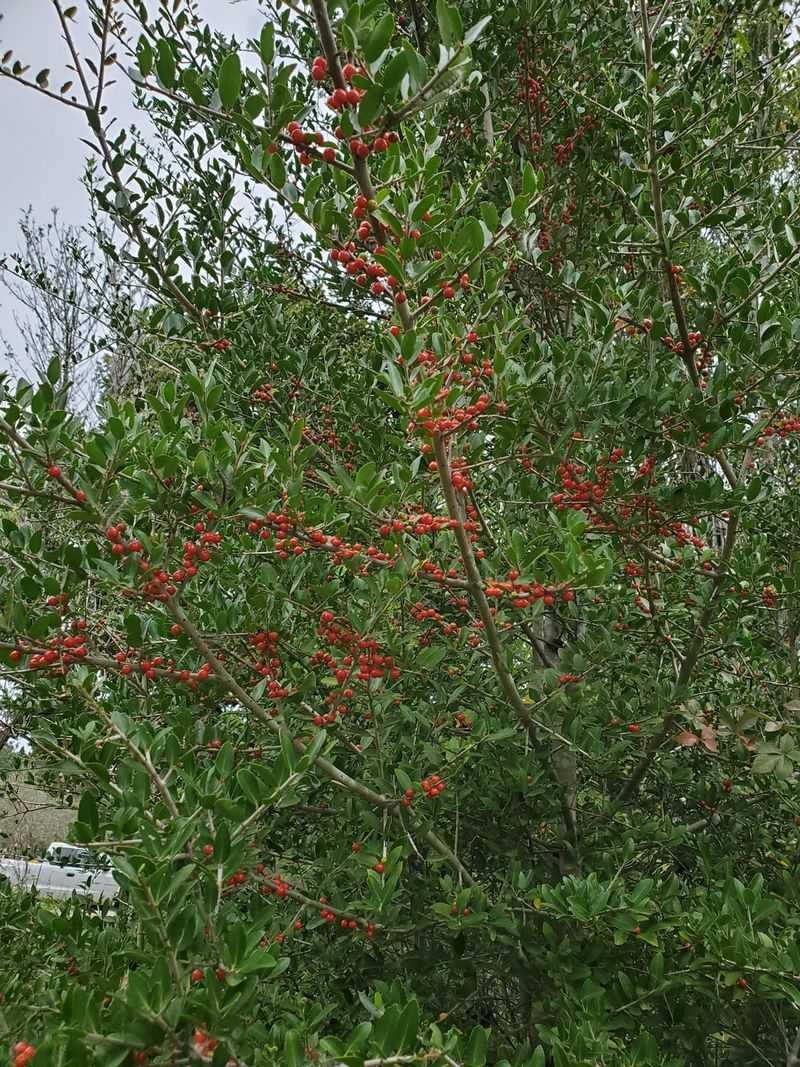
Pulling into the driveway after a long trip and finding a shrub that looks like it just got a fresh trim: Yaupon Holly does that without anyone scheduling the trim.
It keeps a naturally tidy, rounded form on its own, which is a genuinely rare quality in Florida’s fast-growing climate where most plants interpret any period of rain and warmth as an opportunity to push their luck.
This native holly is one of the most adaptable plants in the Southeast. Drought, salt spray, occasional flooding, poor soil, and intense heat: Yaupon handles all of it without visible stress.
For homeowners in coastal Florida or areas with sandy, nutrient-poor soil, it is a dependable choice that does not require the kind of ongoing attention that less-adapted plants demand.
Once established, the watering can stays in the shed for the long stretches between visits.
The berries are a major seasonal highlight. Small, bright red fruits cover the branches in fall and winter in a display that looks almost deliberately decorative.
Cedar waxwings and bluebirds flock to the plant for those berries, turning it into a wildlife hub that operates entirely on its own schedule regardless of whether anyone is home to watch.
Yaupon Holly comes in several sizes, from dwarf compact varieties under three feet to larger forms that function as privacy screens.
That range of options makes it easy to match the right size to the right spot. It performs well across most of Florida and rarely needs fertilizer once established.
For a traveling homeowner, it is one of the highest-return investments in the yard.
Yaupon Holly has a self-sufficiency that most plants do not even attempt. It does not need you to look good, which is a very practical quality in a Florida yard whose owner has a full calendar and a frequent flyer account.
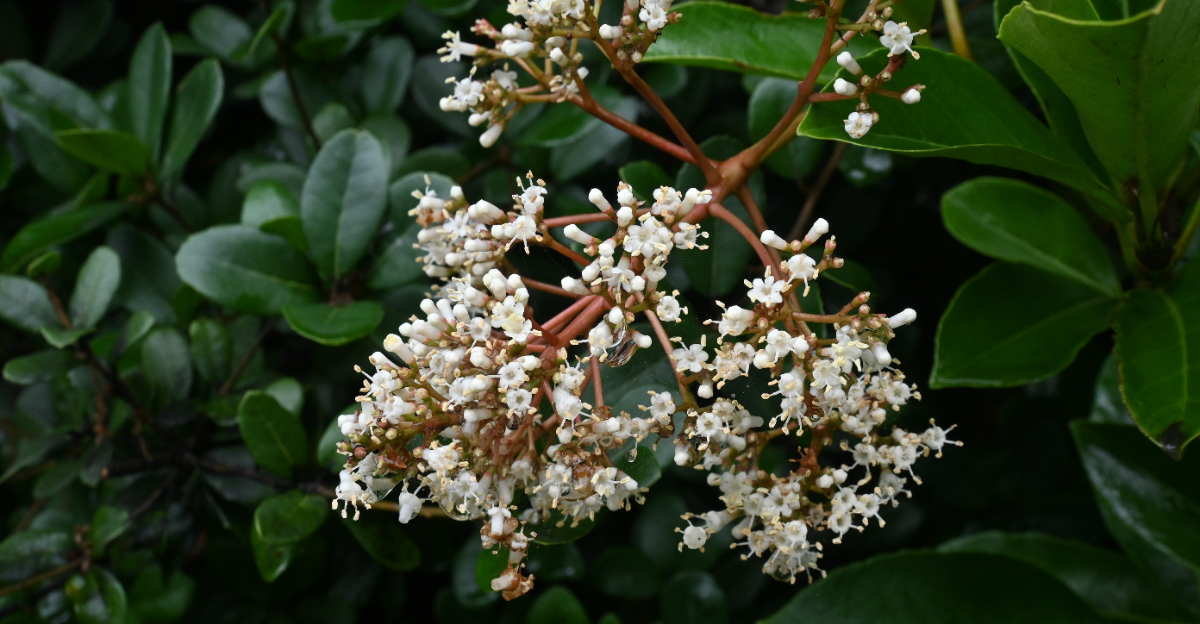
4. Walter’s Viburnum Creates Easy Screening
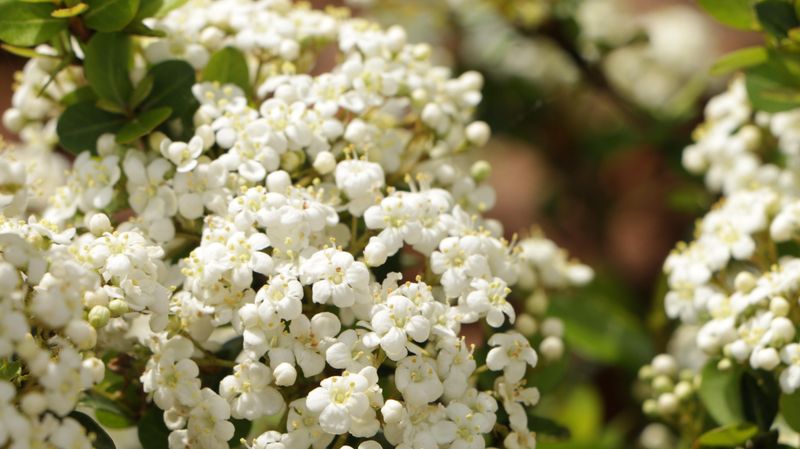
Neighbors close by, no fence, a driveway that faces directly into someone else’s porch: that is the moment most Florida homeowners start thinking about a screening shrub.
Walter’s Viburnum is one of the best answers the state offers, and it earns that position by growing quickly, screening effectively, and then mostly handling itself from year two onward.
It reaches ten to twenty feet tall and creates a thick, lush privacy barrier that operates through full sun and partial shade.
After the first establishment season, it handles Florida’s swings between drought and monsoon-style afternoon rain without missing a beat.
The barrier stays green and dense regardless of what the weather has been doing while you were away.
Spring brings clusters of small white flowers that cover the plant in a fragrant display that pollinators appreciate.
The dark berries that follow attract wildlife through the fall. The plant stays evergreen, so the screening holds through winter rather than disappearing when the temperatures drop, which is a meaningful practical advantage over deciduous screening options.
Walter’s Viburnum responds well to pruning for shape but also looks fully respectable when left to grow naturally.
That flexibility means the maintenance commitment is genuinely optional rather than required for the plant to look appropriate in a designed landscape. It works either way, which is a quality worth paying for.
A screening shrub that grows fast, stays evergreen, feeds wildlife, and does not require weekly attention is a very specific and useful thing.
Walter’s Viburnum is that thing. Your privacy situation improves while you are on the road and continues improving after you return. That is a good dynamic in any landscaping relationship.
5. Firebush Brings Color Without Fussing
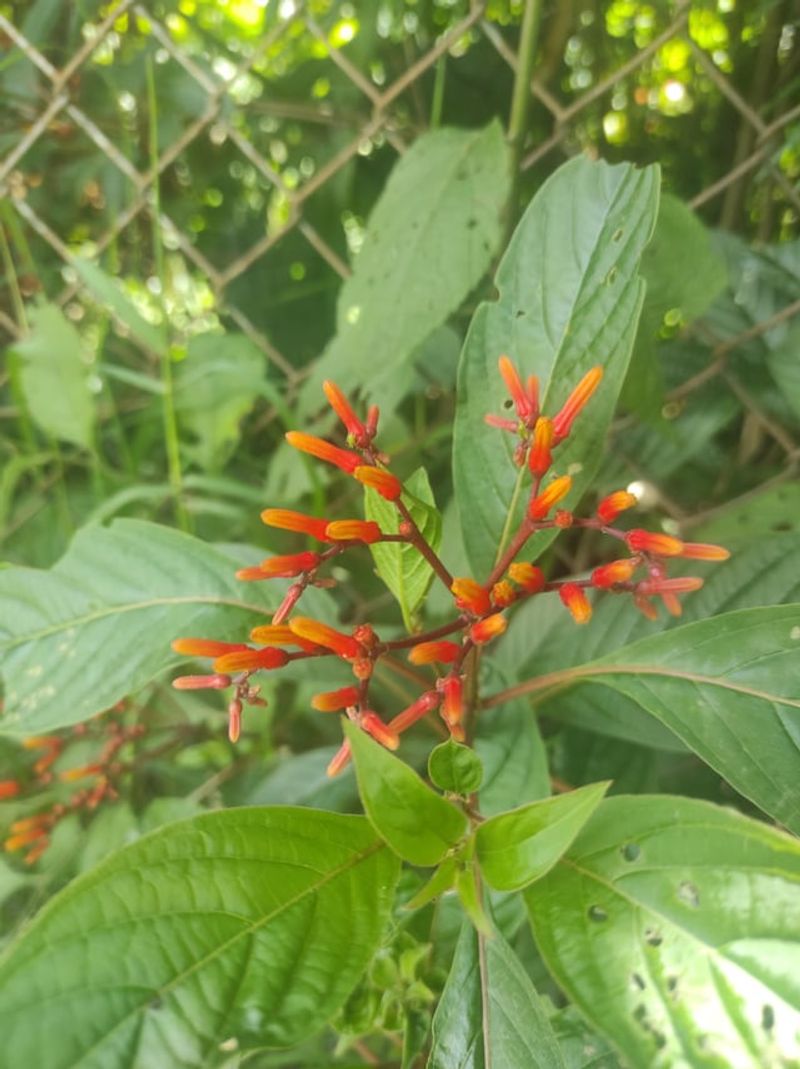
Not every low-maintenance shrub has to be quiet about it.
Firebush runs clusters of tubular orange and red flowers from spring straight through fall, and it does all of that without asking for anything unusual in return.
For a yard that needs real color but cannot support a high-maintenance planting schedule, few plants compete with what this one delivers on a consistent basis.
Native Firebush grows vigorously in full sun and thrives in Florida’s heat in a way that imported ornamentals often do not.
It can reach six to eight feet in a single good growing season, which means it fills empty space quickly and makes a yard look lush and full even after a period of minimal attention.
That fast fill-in is exactly what a traveling homeowner needs from a shrub planted in a prominent spot.
Hummingbirds, butterflies, and native bees visit Firebush consistently throughout the bloom season. The small dark berries that follow the flowers attract birds through fall and into early winter.
The wildlife activity is essentially continuous, running on its own schedule and requiring nothing from the homeowner to keep going. The yard becomes a busy, productive habitat while you are somewhere else entirely.
Use the true native species rather than the non-native cultivar, which can spread more aggressively and offers less ecological value to local wildlife.
The native form performs beautifully and supports the local food web. One annual cut-back in late winter if the plant gets leggy, and then it bounces back fast. Beyond that single session, Firebush runs on sunshine and rain.
A shrub that produces months of vivid color, feeds hummingbirds all summer, and needs one haircut per year has a very favorable maintenance-to-reward ratio.
Firebush understands the assignment and does not overthink it.
6. Beautyberry Delivers Berries With Minimal Effort
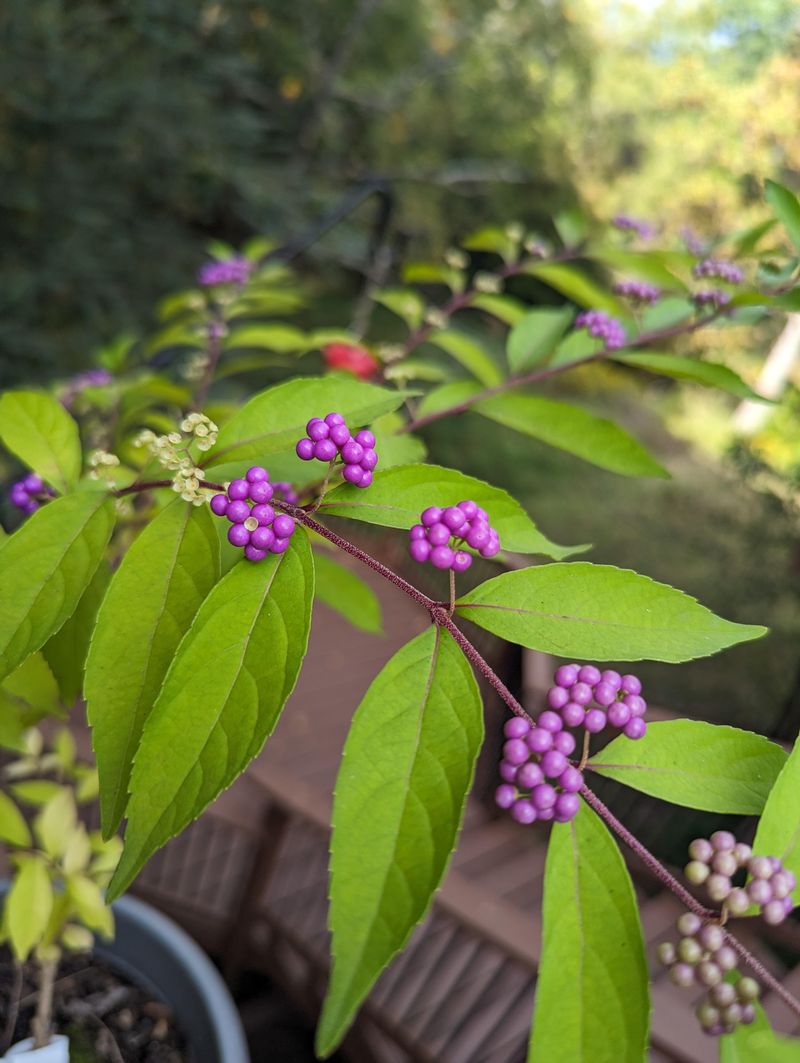
There is a moment in fall when Beautyberry stops everyone who walks past it.
Clusters of bright, almost electric purple berries wrap tightly around long arching stems in a display that looks too vivid to be entirely natural. The striking part is not just how it looks. It is how little work went into producing it.
American Beautyberry grows with a relaxed, arching habit that is not about tight formal shape.
It is loose, lush, and natural-looking in a way that fits cottage gardens, woodland borders, and any spot where a plant that looks good without looking manicured is the right call.
The form is part of the appeal. A frequently trimmed Beautyberry loses some of the graceful arc that makes the berry display so dramatic in fall.
It handles partial shade and full sun, though it produces more berries with at least a few hours of direct light. Established plants are quite drought-tolerant and rarely need supplemental water beyond what Florida’s rain delivers.
Missing a few weeks of watering during a trip does not produce visible stress in a well-established plant.
More than forty bird species feed on Beautyberry fruits, including mockingbirds, cardinals, and brown thrashers.
The foliage has also been studied for natural insect-repelling properties, which is an unexpected bonus for a plant already doing so much.
Cut it back by about half in late winter and it returns with strong new growth and a fresh season of that jaw-dropping fall display.
Beautyberry stops pedestrians cold in October without requiring anything from you except one cut-back in February. That is a remarkable return on a very modest annual investment. The birds agree, and they vote with their visits every single fall.
7. Wild Coffee Handles Shady Corners Calmly
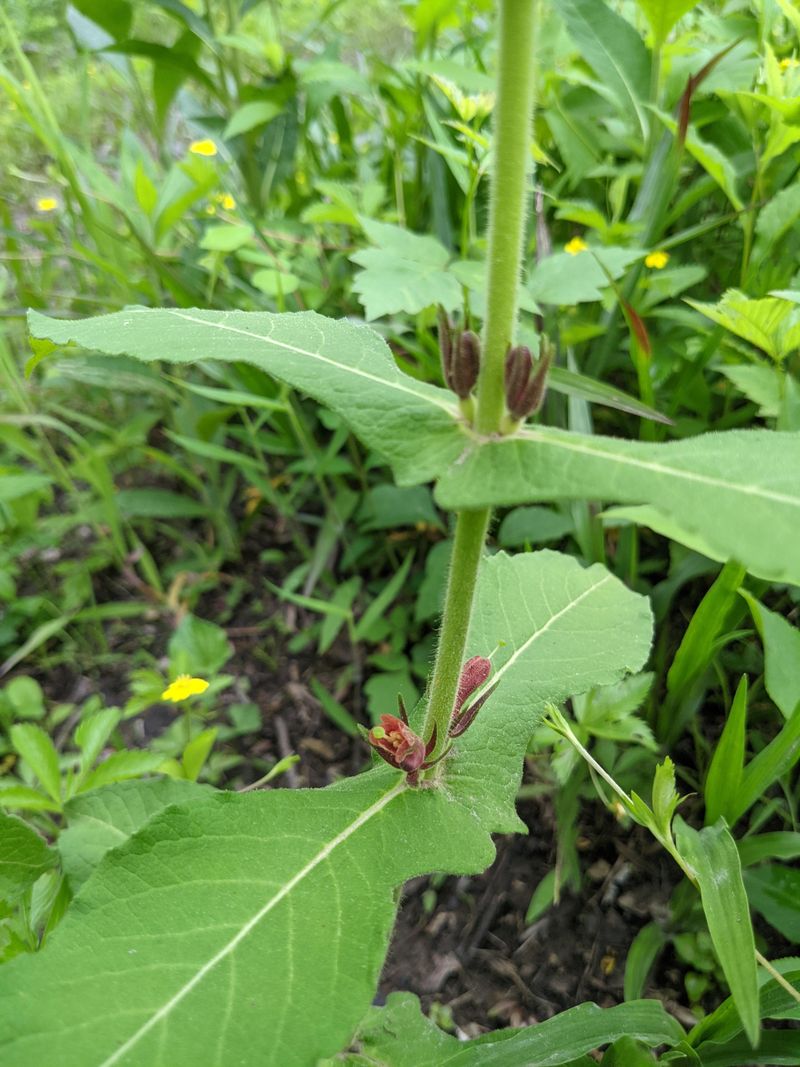
Most yards have at least one spot that resists every planting attempt: under a live oak, along a north-facing fence, tucked beneath the canopy of something too large to move.
These shaded corners accumulate failed experiments from plants that needed more sun than the spot offered. Wild Coffee was built specifically for those corners, and it approaches them without any drama.
This native Florida understory shrub genuinely prefers low light.
It grows slowly and steadily to four to six feet tall, filling shaded areas with rich, glossy, deeply veined leaves that look polished year-round without any intervention.
The texture of the foliage alone transforms a neglected corner into a finished part of the landscape. It does not stretch toward light or look stressed by the shade the way sun-dependent plants do when placed in the wrong spot.
Small white flowers bloom in spring, followed by red berries that ripen through summer and fall.
Thrushes and vireos that prefer foraging in sheltered spots are drawn to those berries, making the plant a discreet wildlife hub in a part of the yard that most homeowners have given up on producing anything useful.
Wild Coffee is drought-tolerant once established, needs no fertilizer to perform well, and does not spread aggressively into neighboring plants.
It stays exactly where you put it, which is a quality that sounds modest but matters considerably when the surrounding plants are competing for space.
Plant it in the difficult corner, establish it through the first season, and then leave it to do its job.
Wild Coffee is calm, reliable, and specifically suited for the spots other plants treat as impossible. It does not compete for attention.
It just looks good in the corner where nothing else would grow, season after season, whether you are home or not. Honestly, that is the most useful kind of plant a Florida homeowner can have.